PART 5: The Name on the Empty Chair 046
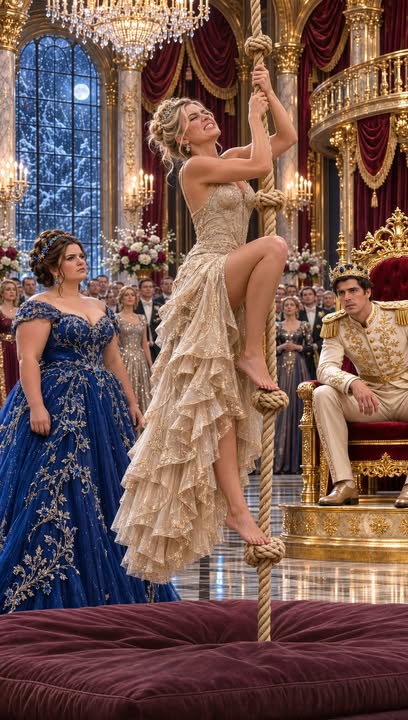
Part 5 – The Choice They Hadn’t Asked For
“The child’s name is Mara.”
The words on the page seemed to hold the whole room still.
I read the sentence again, then looked at Mrs. Bell.
“Who added this?”
“We don’t know,” she said. “The ink is different from your mother’s, but the note was filed with the record.”
“Was it written before or after she asked for the file to be sealed?”
“After, by the appearance of the ink.”
I turned to Adrian.
“Did your family know this record existed?”
“I didn’t.”
“But someone did.”
“Yes.”
“And they decided that now was the time to unseal it.”
He looked at the page, his jaw tightening.
“Apparently.”
The discovery did not feel like a key turning in a lock.
It felt like finding a door that had been closed for years, then realizing someone else had opened it while I was still standing outside.
The selection ceremony was scheduled for that evening.
The palace had planned a gathering in the main ballroom, where the judges would announce the finalists and Adrian would make his decision about the next stage.
I had spent days thinking the trials would determine what happened to me.
Now I understood that the palace had brought me here for reasons I had never been allowed to weigh.
“Does the selection committee know about the trust?” I asked Mrs. Bell.
“Some members have seen Eleanor’s records,” she said. “They do not all agree about what should happen next.”
“That isn’t the same as knowing the truth.”
“No,” she said. “It isn’t.”
Adrian took the folder from the table and closed it gently.
“I’ll speak to my mother before the ceremony.”
“I want to speak to her too.”
“I understand.”
“No,” I said, keeping my voice steady. “You understand that I’m asking. I don’t think you understand why.”
He accepted the correction without defending himself.
“Then tell me.”
“I came here believing I was being judged as a candidate. Maybe I was. But the palace also used my grandmother’s name to bring me into a story it hadn’t finished telling.”
“I’m sorry.”
“I know you didn’t write the invitation.”
“But I’m part of the institution that did.”
That answer softened something in me, though it didn’t undo the harm.
“I won’t ask you to carry responsibility for every decision your family has made,” I said. “I’m asking you not to help them hide behind good intentions.”
“I won’t.”
Mrs. Bell lifted the records and placed them back in their protective folder.
“The safest course would be to delay any announcement until the documents have been examined fully.”
“How long?” I asked.
“A few days for the first review. Longer to establish what happened to the trust.”
The clock on the wall ticked through the quiet.
The palace had waited years to tell the truth.
A few more days might have seemed reasonable if the truth were the only thing at stake.
But that evening, people would gather expecting an answer.
I knew what they wanted from me before anyone said it aloud.
A grateful smile.
A graceful acceptance.
A photograph beside the prince, with Eleanor’s name somewhere in the program and the hard parts left safely in the archive.
“I’m not going to stand there and pretend this is simple,” I said.
“You shouldn’t,” Adrian replied.
“I also won’t make a decision about marriage because a roomful of people expects one.”
“I wouldn’t ask you to.”
“You might not. The palace might.”
His gaze moved to the folder in Mrs. Bell’s hands.
“Then the palace will have to hear the answer from me too.”
I wanted to believe him.
I wanted to be certain that the promise would last beyond this quiet room, beyond the moment when the ballroom lights came up and everyone began watching us.
Instead, I said, “Let’s speak with your mother.”
The prince’s mother received us in a sitting room off the east gallery.
She was poised, silver-haired, and dressed in a pale green suit that made her look less like a figure in a portrait than a woman who had stepped away from a long day of work.
When Adrian explained what Mrs. Bell had found, she listened without interruption.
At the mention of the note naming me, her expression changed.
Not with surprise, exactly.
With recognition.
“You had seen this record before,” I said.
“I had seen a summary,” she replied. “Not this page.”
“Did you know the summary said my name?”
“I knew Eleanor had a granddaughter.”
“That is not what I asked.”
The princess folded her hands in her lap.
“I knew your mother had asked the palace not to enter you into its records until you were old enough to choose for yourself.”
“And you invited me anyway.”
“We invited you because Eleanor’s work deserved to be remembered, and because your mother’s name appeared in the family papers.”
“You knew who I was.”
“I knew you were Eleanor’s granddaughter.”
I waited.
The silence stretched between us.
“Did you know I had never been told?”
“No.”
“Did you ask?”
Her face went still.
“No,” she said. “I assumed your mother had told you.”
“Why would you assume that?”
“Because I thought she would want you to know about Eleanor.”
“She wanted me to choose my life without the palace deciding my place in it.”
The princess lowered her eyes.
“I see that now.”
“Did you move the chair beside mine?”
“Yes.”
The admission was plain, almost gentle.
“Why?”
“I thought the connection would make the tribute more meaningful.”
“For whom?”
She did not answer at once.
“For the court,” she said finally. “For the guests. For people who remembered Eleanor’s work.”
“And for me?”
“I thought it might help you feel welcome.”
“I was sent to the servants’ entrance.”
A faint line appeared between her brows.
“I’m sorry.”
“Then the room laughed when Vanessa said I couldn’t climb a rope.”
“I heard about that.”
“Did you know how the evening felt from where I stood?”
“No,” she said. “I did not.”
The honesty was not enough to make me forgive her, but it was enough to make me hear the regret beneath her composure.
Adrian stood beside the window, silent.
The princess looked from him to me.
“I did not intend to make you feel displayed,” she said.
“But you did.”
“Yes.”
For several seconds, we listened to the muted sounds of the palace beyond the door, the distant movement of staff preparing for the ceremony.
“Why did you believe the selection was the right way to honor Eleanor?” I asked.
“Because she had helped shape it.”
“Was she a candidate?”
“No,” the princess said. “She advised the household on its charitable program and on how the court might engage with the public more honestly.”
“Then why place her name beside mine?”
“I thought her granddaughter’s presence would remind people that her work had reached beyond the palace.”
“You could have told me that before I arrived.”
“Yes.”
“You could have asked whether I wanted to participate.”
“Yes.”
“And you could have told the public that Eleanor was an adviser who protected a charitable trust, rather than letting them imagine the story was about a hidden royal family.”
Her expression tightened, but she did not look away.
“Yes,” she said again.
The answers made it harder to cast her as a villain.
They also made it impossible to pretend the mistakes had been small.
“Does the trust still exist?” I asked.
“The papers suggest it does, though its accounts have not been properly reviewed in years.”
“Did Eleanor’s work ever get publicly cleared?”
“Not fully.”
“Why not?”
“After her death, the court focused on correcting the accounts and replacing the official who had managed them. The review was private. Her name was not formally cleared because no accusation was ever formally made.”
“That sounds convenient.”
“It was,” the princess said. “And it was wrong.”
Adrian turned from the window.
“Mother, what would it take to make the records public?”
“A review by the household archivist, the trust’s current trustees, and independent auditors.”
“How long?”
“Several weeks, perhaps longer.”
“And would the palace release the review?”
“If it found that Eleanor had been treated unfairly, we would release it.”
“That is not the same as releasing the records,” I said.
The princess regarded me for a long moment.
“No,” she said. “It is not.”
The clock in the gallery chimed the half hour.
A palace aide entered, carrying a printed schedule.
“The finalists are gathering in the ballroom,” she said. “The announcement is expected in twenty minutes.”
“Thank you,” the princess replied.
The aide withdrew.
The schedule sat on the table between us.
At the top, beneath the crest, the ceremony was described as a celebration of the selection’s next chapter.
Near the bottom, a line listed the expected announcement: Prince Adrian to name his preferred finalist.
My name was not on the page.
My life was.
“I won’t accept a match tonight,” I said.
Adrian’s mother looked at me.
“I’m not asking you to.”
“The public will think I have.”
“Then I will clarify that no marriage decision has been made.”
“That isn’t enough.”
“What would be enough?”
I looked at the schedule.
“Tell them the palace invited me because I’m Eleanor’s granddaughter. Tell them my mother had not chosen to bring me into the palace story, and you did it without asking either of us.”
The princess drew a slow breath.
“I can say that.”
“And tell them the trust has not been properly reviewed.”
“I can say that too.”
“Will you say that the palace should have told me before I accepted the invitation?”
She paused.
“Yes.”
“And will you allow the records to be examined by people outside the palace?”
“That will require the trustees’ agreement.”
“Then ask for it.”
Adrian’s mother looked at her son.
He said nothing, leaving the choice with her.
Finally, she nodded.
“I will ask.”
The promise was not a resolution.
It was a beginning, and beginnings could still be postponed, softened, and quietly forgotten.
I had learned that much from the history of my family.
The ballroom was full when we entered.
The finalists stood together along one side, while the judges occupied the front row.
Vanessa was near the end of the line.
When she saw me, she gave me a small, steady nod.
I returned it.
The place card with Eleanor’s name had been removed from the ballroom.
In its place sat a plain card identifying the empty chair as reserved for a former member of the household.
The adjustment looked tidy.
It also looked like another attempt to make a complicated history easier to display.
The prince’s mother took her place at the front.
Adrian stood beside her, his shoulders held straight beneath his formal coat.
I remained a little behind the other finalists, where no one could mistake my stillness for anticipation.
The princess addressed the room.
She spoke first about Eleanor’s years of service, the community programs she had helped build, and the charitable trust created to support families outside the palace.
She described Eleanor as a royal adviser, not a royal relative.
The correction mattered.
I saw some guests shift in their seats as if they had expected a more romantic story.
Then the princess acknowledged the invitation.
“Mara Williams was invited to participate in this selection because she is Eleanor Williams’s granddaughter,” she said. “That decision was made by the palace without first telling Mara or her mother why the invitation had been extended.”
The ballroom grew quiet.
The princess continued.
“We believed we were honoring a family legacy. We failed to understand that a legacy cannot be offered as a gift when the people who carry it have not been given the truth.”
I felt Vanessa’s hand brush mine.
She did not take it.
She simply stood close enough for me to know she was there.
The princess spoke of the trust’s unfinished review and promised that independent auditors would be invited to examine its records.
She did not explain why it had taken so long.
She did not try to call the delay a misunderstanding.
When she finished, the room remained quiet.
Then Adrian stepped forward.
“There is something else I need to say,” he began.
He glanced at the printed program in his hand, then folded it shut.
“I have spent this selection listening to people explain what a good partner for me should be. I have not spent enough time asking what I should be willing to change.”
A few people in the audience shifted.
“I was told the selection made the court seem open,” he continued. “I believed that was true because I had never been the person entering a room without knowing what it held.”
His eyes found mine.
“I don’t want Mara to be asked to accept a life chosen for her before she has had the chance to decide what she wants.”
The hush deepened.
“I am asking the household to postpone any decision about marriage. I am also asking that the records connected to Eleanor’s work be made available to independent reviewers, even if the findings are uncomfortable for my family.”
His mother looked at him.
It was not anger in her face, but something more difficult: the realization that he had said aloud what the palace had hoped to handle privately.
The head judge rose.
“Your Highness,” he said, “the selection process requires a decision this evening.”
“Then the process will have to wait for the truth.”
“That is not how the rules were written.”
“Then the rules were written before this situation was understood.”
The judges exchanged glances.
The audience watched Adrian as if they had never heard him disagree with a palace official.
I had not either.
The princess stood beside him.
“His Highness is right,” she said. “No decision about marriage will be announced tonight.”
A murmur moved through the ballroom.
The head judge lowered his papers.
The ceremony had changed direction, though no one could yet tell where it would lead.
I stepped forward.
“I want to say something too.”
The princess looked at me and nodded.
I had not prepared a speech.
I had only the letter in my memory, the rope’s rough braid against my palms, and the feeling of learning that my grandmother had been both loved and misrepresented.
“My grandmother was not a princess,” I said. “She was an adviser who believed the work mattered more than the title.”
The room remained still.
“My mother left this palace because she wanted a life that belonged to her. I think she also wanted that for me.”
I looked at the rows of faces, at the people who had come expecting a bride to be chosen.
“I will not accept a marriage decision tonight. I won’t let my presence be used to make the palace look reconciled with a history it has not finished examining.”
A few people lowered their eyes.
“I am asking for time. I am asking for the records to be opened. And I am asking that Eleanor’s work be told accurately, whether or not the truth makes this place uncomfortable.”
The princess’s face held no anger.
Adrian’s expression was difficult to read, but his hands were open at his sides.
“I don’t know whether I will return to the selection,” I continued. “That has to be my choice, not the palace’s.”
The head judge closed the folder in front of him.
“No announcement will be made tonight,” he said.
The words were formal, but the room responded with a soft stir of uncertainty.
I stepped back.
Vanessa leaned toward me.
“You said what you needed to say.”
“I hope so.”
“You did.”
Adrian walked over after the judges dispersed.
“I meant what I said,” he told me.
“I believe you.”
“Would you be willing to talk tomorrow?”
“Not about marriage.”
“Not about marriage.”
“Not about what the palace wants the story to become.”
“Then what should we talk about?”
“Whether you can live with the choice you made tonight after everyone stops watching.”
He nodded.
“That seems fair.”
His mother approached us before I could answer.
“Mara,” she said, “I owe you more than an apology.”
I waited.
“I can’t undo the invitation or the way it was handled. I can make sure the records are reviewed and that your mother is included in the process if she wants to be.”
“She should choose that herself.”
“Yes,” the princess said. “She should.”
“I’m not promising to come back.”
“I understand.”
“And I’m not accepting a place in the palace just because Eleanor once had one.”
“I understand that too.”
The princess looked toward the empty chair.
“Eleanor would have wanted you to have the freedom to decide.”
I thought of her letter.
Let them choose their life before anyone gives them a place in ours.
“I wish she had been allowed the same freedom,” I said.
The princess did not argue.
“I do too.”
By the time I returned to my room, the ceremony had ended without the announcement anyone had expected.
My phone showed a message from my mother.
I’ve found the letter. I’ll send you a photograph now, and we’ll talk as soon as you’re ready.
The image arrived a moment later.
It showed a second page I had not seen in the archive, one my mother had kept folded behind Eleanor’s letter.
At the top, in her handwriting, was a date from the year before my birth.
I stared at the first line.
Eleanor’s former assistant called today. She says the palace has found the old trust records and wants me to return.
Below it, my mother had written:
I told them no. I will not let Mara be drawn into the palace before she is old enough to choose.
I read the words twice.
Then I noticed the line beneath them, written in a different hand, in the same blue ink as the instruction on the seating plan.
She has already been chosen.
My phone began to ring.
It was my mother.
I answered, and for a moment neither of us spoke.
Then she said, “Mara, I need you to listen carefully. That line wasn’t on the page when I put the letter away.”
My gaze returned to the unfamiliar handwriting.
“What do you mean?”
“I mean someone added it later.”
A soft knock sounded at my door.
When I opened it, Mrs. Bell stood in the corridor holding a sealed envelope.
“There’s been another discovery,” she said. “The trust’s original ledger is missing from the archive.”
I looked down at the note in my hand, at the words that claimed I had already been chosen.
“Who has it?” I asked.
Mrs. Bell met my eyes.
“We don’t know,” she said. “But the record shows the last person to sign it out was your mother.”
**–END OF PART 5–CLICK “NEXT” AT THE BOTTOM OF THE PAGE TO CONTINUE READING**
* * *
[PREVIOUS: PART 4](https://echoesofstories.idolsgift.com/blog/part-4-the-name-on-the-empty-chair-046) | [NEXT: PART 6(THE END)](https://echoesofstories.idolsgift.com/blog/part-6-the-end-the-name-on-the-empty-chair-046)
✓ Lynn R. Adams
Part 5 – The Choice They Hadn’t Asked For “The child’s name is Mara.” The words on the page seemed to hold the whole room still. I read the sentence again, then looked at Mrs. Bell. “Who added thi…