PART 5: The Name in the File 047
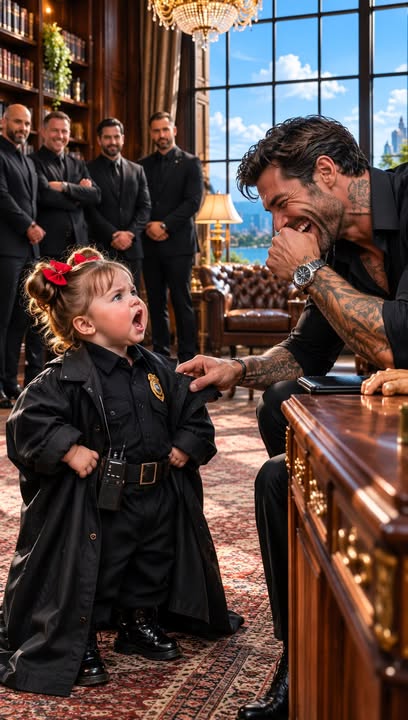
Part 5 – The Cost of Choosing
The signature belonged to Martin Vale, Stonegate’s general counsel.
For several seconds, Franklin and Julian stood over the page without speaking.
The archive’s old clock ticked steadily above them, each small sound making the silence feel more deliberate.
“Martin still works for Stonegate,” Julian said.
“He does,” Franklin replied.
“And someone added that note years later.”
Franklin traced the pencil words without touching them.
“Keep this out of the family archive.”
“Do you recognize the handwriting?”
“I can’t be certain.”
Julian looked at him.
“Is it my father’s?”
“I don’t think so.”
“That leaves you.”
The accusation was quiet, but it carried years of trust and all the ways that trust had been made uncertain.
Franklin lowered his eyes.
“It might be mine.”
Julian drew a slow breath.
“Do you remember writing it?”
“No.”
“Then we find out.”
The answer surprised Franklin.
He had expected anger, perhaps a demand that he explain himself before they moved another step.
Instead Julian stood very still, looking at the page as if the evidence mattered more than the impulse to assign blame.
Franklin knew that restraint was not forgiveness.
It was a choice Julian was making, one careful breath at a time.
“I’ll speak with Martin,” Franklin said.
“Not alone.”
“He may be more honest if I go by myself.”
“Or he may be more careful.”
Julian picked up the carbon copy and slid it into its envelope.
“We’ll ask him to meet us here tomorrow.”
“Emma should know what we found.”
“She knows Martin’s name is on the message.”
“She should know before he does.”
Julian paused.
“Yes.”
They found Emma in the small sitting room adjoining the staff quarters.
Mia was asleep on the sofa, curled around her toy rabbit, one hand resting on her paper badge.
A book lay open on Emma’s lap, though she had not turned a page.
She looked up as Julian entered, and the movement of her eyes went first to Franklin, then to the envelope in Julian’s hand.
“You found something,” she said.
“A message from the man who approached you,” Julian replied.
Emma put the book aside without waking Mia.
“May I see it?”
Julian gave her the envelope.
She read the carbon copy slowly.
When she reached the last line, her face tightened, but she did not look away.
“‘Mr. Cross has not been informed of the child,’” she read aloud.
The words seemed to take up more space than the page could hold.
Then she turned to the signature.
“Martin Vale.”
“He’s Stonegate’s legal counsel,” Julian said.
“I know who he is.”
“You’ve met him?”
“Once, when I started working here.”
She folded the paper along its old crease.
“Did he know who I was?”
“We don’t know,” Franklin said.
“He wrote that I had left town as directed.”
“He could have been repeating what someone told him.”
“Or confirming he had followed the instruction.”
“Yes.”
Emma looked at the note beneath the signature.
“Who wrote this?”
“Franklin may have,” Julian said. “He isn’t sure.”
Her eyes settled on Franklin.
He met them without looking away.
“I’m sorry,” he said.
Emma’s expression did not soften.
“You keep apologizing for things I still don’t understand.”
“That’s fair.”
“I need the truth more than I need another apology.”
“You’ll have it,” Julian said.
She studied him.
“Will you?”
“Yes.”
“You’ve spent years surrounded by people who could make things disappear.”
“I know.”
“People, too,” she said.
The words were not an accusation about what Julian had done.
They were a reminder of what his name could make possible.
He nodded.
“That’s why I’m asking you to tell me when I’m wrong.”
Emma gave a small, weary shake of her head.
“I shouldn’t have to teach you how to be honest.”
“No,” he said. “You shouldn’t.”
On the sofa, Mia shifted in her sleep and tucked her face more deeply into the rabbit’s fur.
Emma reached out to draw a blanket over her.
Julian watched the simple gesture, then looked back at Emma.
“I’ll meet Martin tomorrow with Franklin present.”
“And then?”
“I’ll find out what he knows.”
“And if what he knows is ugly?”
“I’ll still find out.”
Emma set the envelope on the table.
“What if telling the truth puts us in danger?”
The question quieted the room.
Franklin answered first.
“Then we’ll make a plan to keep you safe before anything becomes public.”
“Who is we?”
“Julian and I.”
Emma’s gaze moved to Julian.
“Your family has already made decisions about my safety without asking me.”
“I won’t repeat that.”
“You can’t promise me no one else will.”
“No,” he said. “I can’t.”
It was not the answer she wanted, but it was honest.
“I can promise that you won’t be left out of decisions that affect you and Mia.”
Emma looked toward her sleeping daughter.
“I don’t want her life turned into an argument between men who think the truth belongs to them.”
“It doesn’t,” Julian said.
“Then remember that tomorrow.”
“I will.”
She stood and picked up the envelope.
“Keep this where I can see it.”
Julian nodded.
“I’ll bring you every document we find.”
“And if there’s nothing else?”
“Then you’ll know that too.”
Emma held his gaze for a moment longer.
“I hope you understand that I’m not waiting to see whether you choose me.”
“I do.”
“I’m watching what you choose when it costs you.”
Julian looked at the envelope in her hand.
“So am I.”
The next morning, Martin Vale arrived at Stonegate shortly after nine.
He was a careful man in his late fifties, with silver hair combed neatly back and a habit of pausing before every answer.
He had served the family for more than two decades, first as an outside attorney, then as Stonegate’s general counsel.
He had never raised his voice to Julian.
He had never needed to.
Franklin met him in the small conference room beside the archive.
Julian was already there.
The old carbon copy rested on the table between them, protected beneath a clear sleeve.
Martin glanced at it and lost some of the practiced ease in his expression.
“Where did you find this?”
“In a box of my father’s papers,” Julian said.
“Who handled the archive?”
“Franklin and I did.”
Martin’s gaze shifted to Franklin.
“Do you know who wrote the note?”
“No.”
“Does the signature belong to you?”
“It may. I don’t remember writing it.”
Martin placed his hands on the table.
“I signed the original message.”
Julian did not sit.
“Why?”
“My father asked me to document the outcome of a conversation.”
“You spoke to Emma.”
“I did.”
Franklin watched Martin’s face as the old answer came back to life.
“Did you offer her money?” Julian asked.
“Yes.”
“Did she accept?”
“No.”
“Did you tell my father she had?”
“No.”
The answer came so quickly that Julian’s expression changed.
“Then how did he come to believe she had?”
“I don’t know.”
“You signed that she had left town as directed.”
“I was told she had left.”
“By whom?”
“Your father’s office.”
“Which person?”
Martin took a breath.
“I don’t remember.”
Julian’s eyes remained steady.
“You’re a lawyer.”
“I was not writing a legal opinion.”
“You were writing a record of a meeting involving a pregnant woman, a payment, and an instruction to disappear.”
Martin looked down at the sleeve.
“I should have been more precise.”
“More precise?” Franklin said.
Martin’s gaze lifted.
“You arranged to have the note hidden.”
“I did not.”
“Someone wrote that instruction on the paper.”
“I don’t recognize the handwriting.”
Julian leaned toward the table.
“Did you know I was the child’s father?”
Martin did not answer immediately.
The pause was enough.
“You suspected,” Julian said.
“I understood there was a possibility.”
“And you said nothing.”
“I was told the matter had been resolved.”
“By my father?”
“Yes.”
“Did you ask Emma whether she was safe?”
“No.”
“Did you ask her whether she had left?”
“No.”
Julian turned away from the table and looked toward the conference room window.
The garden beyond it was bright with cold morning light.
“What did you say to her?” he asked.
Martin folded his hands.
“I told her your family knew about her relationship with you.”
“You knew my father had never told me.”
“He had not.”
“Did you tell her that I didn’t know?”
“No.”
“Why not?”
“Your father believed that any contact between you would lead to a crisis within the family.”
“That doesn’t answer me.”
Martin’s voice softened.
“I thought I was preventing a young woman from being pulled into a dangerous family dispute.”
“You made the choice for her.”
“Yes.”
“And for me.”
“Yes.”
Franklin watched Julian absorb the admission.
The room held no shouting, no grand displays of anger.
Only the weight of what had been done in quiet offices by people who had convinced themselves they were being practical.
“What happened after she refused the money?” Julian asked.
“I told your father she would not accept it.”
“Did you tell him she was afraid?”
“I told him she wanted to be left alone.”
“Those are not the same thing.”
“No.”
“Did you contact her again?”
“No.”
“Did anyone?”
Martin lowered his eyes.
“Not that I know of.”
Julian turned back to him.
“Your knowledge has not been especially reliable.”
Martin accepted the rebuke.
“That’s true.”
Franklin looked at the message again.
“Do you know who added the note?”
“No.”
“Could your office have kept a copy?”
“Possibly. Our records were moved twice after your father died.”
“Could you look?”
“I can.”
Julian’s gaze sharpened.
“Could you look without deciding what should be kept from us?”
“Yes.”
“Then do it.”
Martin drew a thin breath.
“There is something else you should know.”
Franklin’s hand tightened on the edge of the table.
“Go on,” Julian said.
“When your father’s affairs were reorganized after his death, I was asked to review certain legacy files. Some concerned business matters, others concerned personal disputes.”
“Who asked you?”
“Your father’s former assistant.”
“Her name?”
“Lydia Shaw.”
Franklin knew the name.
Lydia had worked for Julian’s father for nearly thirty years, but she had retired before the old man died.
“Did she tell you what was in the files?” Franklin asked.
“Only that the Milwaukee matter should remain closed.”
“Those were her exact words?”
“Yes.”
Julian’s expression hardened.
“Where is she now?”
“Retired. She lives in Evanston.”
“Did she have access to the old archive?”
“She did.”
“Why did you never mention this?”
“I did not understand it was connected to Emma.”
“You knew the file existed.”
“I knew there had been a brief personal matter. I did not know it involved a child until this week.”
Julian considered him.
“If Lydia still has records, I want them found.”
“I can contact her.”
“Not before we speak with her together.”
Martin nodded.
“Understood.”
Julian looked toward Franklin.
“Anything else?”
Franklin examined the carbon copy.
“Not yet.”
That afternoon, Julian convened a meeting with the senior managers of Stonegate’s legitimate businesses.
He did not invite Martin to speak for him.
He did not ask Franklin to soften what he intended to say.
Emma chose to sit in the room, though she did not want to be presented as the reason for Julian’s decisions.
She took the chair nearest the exit and kept her hands folded in her lap.
Julian stood at the head of the table.
He looked, Franklin thought, like a man who had entered a room expecting to inherit it and found himself deciding whether he had the right to remain.
“For years, Stonegate has operated through companies that were legal in name and compromised in practice,” Julian said.
No one interrupted.
“Some businesses were built by my father using intimidation, concealed payments, and arrangements designed to keep people quiet.”
The silence shifted.
Not disbelief, exactly.
Recognition.
Several of the managers had known enough to understand the shape of what he was saying.
“I inherited those operations and continued to protect them,” Julian said. “That ends now.”
A woman from the shipping division leaned forward.
“What does that mean for the companies?”
“It means independent audits, a full review of our contracts, and cooperation with authorities where there is evidence of illegal conduct.”
A man at the far end of the table said, “That could expose people who have worked here for decades.”
“It might.”
“It could destroy the company.”
“It could.”
Julian did not look away.
“Then the company will have to change.”
One of the directors shifted in his chair.
“You’re talking about surrendering control.”
“I am.”
“Your father spent his life building this.”
“My father spent his life deciding that other people could be made to pay for it.”
The director glanced at Emma, then back at Julian.
“Is this about the housekeeper?”
Emma’s spine straightened.
Julian answered before anyone else could.
“This is about what we have done, what we have hidden, and what I will no longer protect.”
“I didn’t mean to suggest—”
“I know what you meant.”
Julian’s voice stayed calm.
“But no one in this room gets to reduce the truth to a woman’s presence.”
The director fell silent.
Emma looked down at her hands, not because she was embarrassed, but because she was trying to keep the room from seeing what the exchange had cost her.
Franklin watched Julian draw a breath.
“I will cooperate with an outside review,” Julian continued. “I will provide access to the company records and suspend any operation that cannot be shown to be lawful.”
“What about the people who are still involved?” someone asked.
“They will be given a chance to come forward through proper channels. I will not promise protection from the consequences of their actions.”
“And you?” the shipping manager asked.
“I will give the investigators whatever they ask for.”
“Even if it implicates you?”
“Yes.”
The room remained quiet.
Julian did not ask for approval.
He did not call it sacrifice.
He had finally understood that giving up control was not the same as doing a brave thing if he still expected praise in return.
It was simply the necessary cost of refusing to continue.
After the meeting, Emma waited in the hallway.
Julian joined her a few minutes later.
“You didn’t have to sit through that,” he said.
“I wanted to hear what you would say when I wasn’t the only person listening.”
“What did you think?”
“I think you’ve opened a door.”
“That’s all?”
“I don’t know what’s on the other side yet.”
He nodded.
“That’s fair.”
“You could lose the house.”
“I know.”
“You could lose your businesses.”
“I know.”
“You could lose your freedom.”
“I know.”
“And you still think it’s the right choice?”
“Yes.”
Emma looked at him for a long moment.
“Why?”
“Because if I hide what happened to you, then I’m still asking you to bear the cost of protecting me.”
“That isn’t the only reason you’re doing this.”
“No.”
“Some of it is guilt.”
“Yes.”
“Some of it is because Mia might be your daughter.”
“Yes.”
“And some of it is because you want to believe you can become someone better.”
Julian did not deny it.
“Probably.”
Emma’s voice softened, but not enough to become comfort.
“Then don’t confuse becoming better with being owed a place in our lives.”
“I won’t.”
“I mean it.”
“So do I.”
Mia appeared at the far end of the corridor, holding her rabbit by one ear and her badge in the other hand.
“Mommy!”
Emma turned.
Mia hurried toward her, then stopped beside Julian and looked up at him.
“You have meeting?”
“I did.”
“Bad people?”
“Some people were worried.”
“Did you fix it?”
“Not yet.”
Mia considered him.
“Keep trying.”
“I will.”
She handed him the badge.
“Your turn guard.”
Julian accepted it with great care.
“Thank you, Agent Hayes.”
Mia leaned against his leg for a second, then went back to her mother.
Emma watched him hold the paper stars in his palm.
“I won’t promise you anything,” she said.
“I’m not asking you to.”
“Good.”
She took Mia’s hand and walked away.
Julian remained in the corridor with the badge.
Franklin joined him.
“She trusts you more than she did a week ago,” Franklin said.
“She trusts me to hold a piece of paper.”
“That matters.”
“It matters because it’s hers.”
The distinction stayed with Franklin as they returned to the archive.
That evening, Julian asked Emma and Mia to meet him in the library, where he laid out the records they had found.
Emma arrived with Mia on her hip.
The toddler slid down and went straight to the plate of cookies.
“Cookies are not a legal document,” Emma said.
Mia gave her a grave look.
“Important.”
Julian almost smiled.
“Agent Hayes may begin her review.”
Mia took a cookie and brought it to Emma before choosing one for herself.
Emma accepted it and sat in the chair near the window.
Franklin placed the carbon copy, the letter from Julian’s father, and the hotel receipt on the desk.
Julian had added a new sheet, listing what they knew and what remained uncertain.
“Martin confirmed he offered you money,” Julian said. “He says he never reported that you accepted it.”
“Then your father made that part up.”
“Or someone else did.”
“Do you believe Martin?”
“I believe he told us what he remembers.”
“That isn’t the same as believing him.”
“No.”
Franklin leaned against the desk.
“He has agreed to search his office records and contact Lydia Shaw.”
“Together?” Emma asked.
“Together,” Julian said.
Mia climbed into the chair beside her mother and ate her cookie in small bites.
Emma read the list.
“Here you say you’ll cooperate with authorities.”
“Yes.”
“Have you spoken to them?”
“Not yet.”
“Why not?”
“I wanted to make sure the first records I gave them were complete.”
“What if they’re not?”
“Then I’ll tell them what is missing.”
Emma looked up.
“You can’t control what happens after you make the report.”
“No.”
“You can’t choose what they do with your businesses.”
“No.”
“You can’t choose whether the old people involved decide to protect themselves.”
“No.”
She set the page down.
“Then make sure you do this because it is right, not because you think it will make you safe.”
Julian took that in.
“I will.”
The next morning, he sent a formal notice to an independent legal firm and asked for an external review of Stonegate’s records.
He also instructed the company to suspend several operations until their contracts could be examined.
By noon, three senior partners had resigned.
By evening, one of the banks froze a line of credit pending review.
The consequences arrived faster than Julian had expected, but he did not reverse the decision.
He spent the night in his office, reading old agreements with Franklin while the house settled around them.
At dawn, Emma found him asleep in the chair by the window, his hands still resting on an open folder.
She did not wake him.
She placed a glass of water beside his elbow and left a clean blanket over the back of the chair.
When he woke an hour later, the glass was empty.
Franklin was in the doorway with another file.
“Lydia Shaw has agreed to meet us,” he said.
“When?”
“Tomorrow afternoon.”
“Does she have the missing page?”
“She wouldn’t say.”
“Did she confirm the note was hers?”
“No.”
Julian rubbed his eyes.
“Then we ask her.”
Franklin set the file down.
“There is something else.”
Julian sat upright.
“What?”
“Martin found an old record in his office. It shows that someone requested a copy of the Milwaukee correspondence six months after your father died.”
“Who?”
“The request was signed by an account number, not a name.”
“Can it be traced?”
“Possibly. Martin is checking.”
Julian stood and went to the window.
A small boat crossed the gray water far beyond the grounds.
“Someone kept returning to this,” he said.
“Yes.”
“Why?”
“I don’t know.”
Julian looked back.
“Was the request recent?”
“Six months after your father died. It’s been more than three years.”
“And the note on the carbon copy?”
“We don’t know when it was written.”
Julian’s gaze moved to the closed archive door.
“Someone wanted the record hidden, but someone also wanted it kept.”
“Or simply kept from you.”
The two possibilities were not the same, but neither felt reassuring.
That evening, Franklin went to the archive to return the hotel receipt to its protective sleeve.
The room was dark except for the desk lamp.
He opened the drawer where they had stored the old inventory card.
It was not there.
He checked the envelope, the cabinet, and the folder where he had placed the receipt.
The inventory card had vanished.
Franklin searched the desk again, then the surrounding shelves.
A single sheet rested on the table where the card had been.
It was a recent printout, clean and white, with a message typed across the center.
“Do not let Julian speak to Lydia Shaw alone.”
Beneath it was a time and a place for the meeting.
And in the bottom corner, written in blue ink, was the name of the person who had sent it.
**Emma Hayes.**
**–END OF PART 5–CLICK “NEXT” AT THE BOTTOM OF THE PAGE TO CONTINUE READING**
* * *
[PREVIOUS: PART 4](https://echoesofstories.idolsgift.com/blog/part-4-the-name-in-the-file-047) | [NEXT: PART 6(THE END)](https://echoesofstories.idolsgift.com/blog/part-6-the-end-the-name-in-the-file-047)
✓ Lynn R. Adams
Part 5 – The Cost of Choosing The signature belonged to Martin Vale, Stonegate’s general counsel. For several seconds, Franklin and Julian stood over the page without speaking. The archive’s old cl…