PART 5: The Name He Shouldn’t Know 041
Part 5 – The Cost of Speaking
Dante stared at the letter as if the page had become a door he had once walked past and could never open again.
Celeste had gone quiet beside him.
Across the table, I watched his hand hover above Sofia’s handwriting without touching it.
“Do you want me to read it?” I asked.
He swallowed.
“No,” he said. “I need to.”
He lifted the page carefully, as though the paper might tear beneath the weight of what it contained.
Sofia’s words were written in a steady hand, but the lines grew crowded near the bottom, as if she had been afraid there wouldn’t be time to finish.
Dante read in silence.
The conference room’s open doorway let in the low murmur of the office outside, a telephone ringing once, footsteps passing and fading.
No one interrupted.
When he reached the end, he closed his eyes.
“What did she say?” I asked.
He kept his gaze on the letter.
“She wrote that the boy was frightened before anyone realized he was ill.”
“I know.”
“She wrote that a volunteer asked for the blue room, and the request was refused.”
“I know that too.”
“She wrote that the event’s emergency information had been available, but no one thought to check it until she did.”
I felt my hands curl against my knees.
“And then?”
Dante set the page down.
“She said the charity director told her to leave the family’s name out of the report. She believed Victor Sloane had influenced that decision.”
The words struck like a familiar blow, but I had become too tired to flinch.
“Did she say why?”
“She said the director told her that public attention could harm the charity and upset your family.”
“My family was already living with what happened.”
“I know.”
“Did she believe that?”
“No,” Dante said. “She wrote that she thought the family deserved to know she had been with Eli at the hospital. She wanted to contact you directly.”
“Why didn’t she?”
He looked down at the letter again.
“She wrote that Sloane had warned her not to make the matter personal, and that our foundation should keep its distance from the charity’s internal review.”
“Our foundation?”
“Yes.”
“Did he threaten you?”
“Not in the letter.”
“Did he threaten her?”
Dante’s jaw tightened, but his voice stayed measured.
“She said he had made it clear that any public dispute would put our family’s work and Lucia’s privacy under scrutiny.”
My stomach tightened.
“Lucia was a child.”
“She was.”
“And he used that to keep Sofia quiet.”
“He may have.”
“May have?”
“I don’t want to tell you more than the letter proves.”
The discipline in his answer did not make the words less painful.
I leaned forward.
“Did Sofia tell you?”
“No.”
“Did she ask you to do something?”
“She asked me to read the letter and decide whether protecting the foundation was worth letting a false account stand.”
Dante’s face had gone pale.
“She wrote that she understood my instinct to avoid conflict. She said it was the same instinct that had made me good at keeping people away from our family, but that it could also make me stand aside when someone needed help.”
The room held still around him.
I thought of the ballroom, of Lucia curled against the grand staircase with her hands over her ears, and of Dante trying to keep the event moving before he heard what she was telling him.
I thought of Sofia, writing down the name of a boy she had barely known because she could not bear to let the night become a neat, convenient story.
“She understood you,” I said.
“She understood the parts of me I didn’t want to look at.”
He lowered his head.
“I never saw the letter.”
“How can a letter stay unopened in your own archive?”
“I don’t know.”
The woman from the archive shifted near the door.
“It was in a sealed envelope, mixed among the charity correspondence,” she said. “The box wasn’t catalogued properly.”
Dante looked toward her.
“Who sent it to the archive?”
“There’s no record of that.”
“Was it opened before it arrived?”
“I can’t tell.”
He turned back to me.
“I’m sorry.”
I held his gaze.
“For the letter?”
“For not finding it. For not asking more questions when Sofia stopped talking about the fundraiser. For having money and influence tied to an event that failed your brother, then allowing the silence around it to benefit me.”
He said the last part with visible difficulty.
“I don’t know what you could have done if you didn’t know.”
“I could have tried to find out.”
“That’s true.”
“I could have asked why she was frightened.”
“That’s true too.”
He drew a breath, then let it go slowly.
“I can’t change what I failed to ask.”
“No.”
“But I can decide what I do now.”
The woman at the door placed a thin folder on the table.
“These are the foundation’s records from the year of the fundraiser,” she said. “There are payment approvals, board minutes, and correspondence with the charity.”
Dante opened the folder.
I watched his eyes move over the pages.
He turned one sheet, then another.
“What is this?” he asked.
“A summary of the foundation’s contribution to the event,” she said. “The amount was substantial, but there’s no record that your office reviewed the charity’s incident report.”
“There should have been.”
“Yes.”
“Did my father approve these payments?”
“The payments began before you took over the foundation.”
“Then they continued under me.”
The woman nodded.
“Did we receive a revised report?” Dante asked.
“Not that I’ve found.”
“Did anyone from my office ask why the review was closed?”
“Not according to the records.”
He sat back, his expression stripped of every polished defense.
“I told myself the foundation had done its part by funding the work,” he said. “It’s a convenient thing to believe.”
I had no answer for him.
The records on the table were only paper, but they held the shape of a choice he had not known he was making: to let a powerful charity keep its version of events because no one close to him had forced the question.
“Who has seen these?” I asked.
“Only the archive staff and Celeste.”
“And the charity?”
“Not yet.”
“What are you going to do?”
Dante looked at Sofia’s letter.
Then at the foundation records.
“I’m going to take them to an attorney who isn’t connected to my business or the foundation,” he said. “I want an independent review.”
“And after that?”
“If the records show what they appear to show, I’ll provide them to the investigators handling the charity’s current inquiry.”
“An inquiry already exists?”
“The state charity commission reopened its review last week. Sloane’s office hasn’t been notified that we found the letter.”
“Why not?”
“Because I wanted to know whether the file was authentic and what the foundation records contained before sending anything.”
“Did you consult your attorneys?”
“I spoke to one this morning. He advised me to keep the documents confidential until the review was complete.”
“Was he connected to your business?”
“Yes.”
“Then you need the independent lawyer you just mentioned.”
“I agree.”
He said it without a pause.
The woman from the archive looked as though she had expected a harder decision.
Dante turned to Celeste.
“Can you get copies of everything in the box, including the original envelope?”
“I can.”
“Don’t alter or sort it.”
“I’ll preserve the order it was found in.”
“And make a record of who handles it.”
“I will.”
I looked at him.
“You’re moving quickly now.”
“I should have moved sooner.”
“That doesn’t mean you get to move without thinking.”
“I know.”
“And this isn’t only about you and Sofia.”
“No.”
“It’s about Eli, and my family, and the people who believed the event’s account because no one corrected it.”
“Yes.”
“Are you prepared to let an investigation look at your foundation too?”
His eyes met mine.
“If it needs to.”
“Even if it finds that your money kept that charity safe?”
“I don’t know what it will find,” he said. “But I won’t ask them to hide it.”
The answer was not triumphant.
It sounded like a man counting the cost of opening a door he had spent years avoiding.
I stood.
“I need to go.”
Dante didn’t rise until I had collected my coat.
“I’ll have Celeste send you copies,” he said. “You can decide what you want to do with them.”
“I don’t want to be in your process.”
“You don’t have to be.”
“I may want to give my own statement.”
“You should do that because it’s right for you, not because I ask.”
I paused at the open door.
“Is that what you’re choosing?”
“What?”
“To do what’s right even if it costs you.”
He looked at the evidence spread across the table.
“I’m trying to choose it now.”
The next day, the independent lawyer met with Dante and Celeste.
I did not go.
I spent the morning at work, carrying trays and watching the people around me move through a bright room without noticing the way a small child near the windows had begun to cover his ears.
His father knelt beside him and asked whether he wanted to step into the corridor.
I kept walking, but the sight stayed with me.
At lunch, I called Jonah.
He had found the statement he wrote after the fundraiser.
“I want you to know what’s in it before I send it anywhere,” he said. “I wrote that the children’s space was crowded, that I didn’t check the allergy form promptly, and that the request for the quiet room was refused.”
“Did you include Sofia?”
“Yes. I wrote that she recognized Eli might be having an allergic reaction and helped get emergency services.”
“Did you say the event had failed to provide his medication?”
“I wrote that I hadn’t found it before the ambulance arrived.”
“That’s not the same thing.”
“No,” he said. “It isn’t.”
“Do you want to give the statement to the investigators?”
“I do.”
“You know it could mean questions about your work that night.”
“Yes.”
“Why are you doing it?”
He went quiet for a moment.
“Because I spent three years telling myself it was too late for my words to matter. I don’t know if they do. But I know staying silent hasn’t helped anyone.”
I closed my eyes.
“Send me a copy first.”
“I will.”
When the call ended, I sat alone in the staff room with my hands on the table.
For years, I had kept the memory of the fundraiser folded inward, as if carrying it quietly could protect my mother from more pain.
Now it seemed the only way to honor Eli was to stop protecting the silence that had grown around him.
That evening, I met Dante and the independent lawyer at the foundation office.
The lawyer was a woman named Lydia Kline, with a calm voice and a worn leather notebook.
She explained what the records might mean, what she could and could not promise, and how a witness statement could be shared with the state commission.
“Mr. Vale has asked that I review the documents without representing the foundation,” she said. “I’m here as independent counsel to preserve the records and advise about disclosure.”
“Who does he represent?” I asked.
“Only himself, for purposes of this review.”
“And the foundation?”
“It will need separate counsel.”
Dante nodded.
“I’ve already asked the board to appoint someone.”
The lawyer turned to me.
“Your participation is voluntary. You can submit a statement about what you remember, but you don’t have to make one today.”
“I know.”
“I want to be clear that the process may involve questions about your family.”
“I know that too.”
My mother had been with me when I asked whether she wanted to be part of any formal inquiry.
She had looked at Sofia’s letter and said she would answer questions about the information she had given the event organizers, but she did not want to speak for Eli.
That distinction mattered to her.
It mattered to me as well.
“I’ll give a statement about what I saw and what I remember,” I said.
Dante’s hand shifted on the table, but he did not speak.
Lydia opened her notebook.
“We can schedule a recorded interview with the commission. You may have a support person present, and you can stop at any time.”
“When?”
“Tomorrow, if you’re ready.”
I looked at Dante.
He sat with both hands folded in front of him, not leaning toward me, not trying to persuade me.
“If I testify,” I said, “the foundation’s name will be part of the story.”
“Yes,” Lydia replied.
“And Dante’s.”
“Yes.”
“People may ask why the records stayed hidden.”
“Yes.”
Dante looked at me.
“I’ll answer that.”
“You may not know the answer.”
“Then I’ll say that.”
“People will still blame you.”
“I understand.”
“Lucia could hear about it.”
His face tightened.
“We’ll protect her privacy without hiding the evidence.”
“That’s not entirely under your control.”
“No,” he said. “It isn’t.”
“Are you ready for that?”
“I’m not ready,” he said. “But I’m willing.”
The distinction was familiar to me.
Readiness was often something people waited for because they were afraid to begin.
I signed the witness-consent form.
My hand shook once, then steadied.
The next morning, I sat in a small interview room with Lydia beside me and my mother across the table.
A commission investigator asked what I remembered from the fundraiser.
I told her about Eli saying the room was too loud.
I told her I had gone for water.
I told her I did not know he was having an allergic reaction, and neither, I thought, did he.
I did not call myself guilty.
I did not call myself blameless.
I told the truth as I remembered it, including the parts that left me uncertain.
When the interview ended, I felt emptied out but not relieved.
That afternoon, Dante provided the foundation’s records to the commission.
He also agreed to answer questions about the donations and the missing review.
He told me only after it was done.
“I thought you should know,” he said over the phone.
“Are the records safe?”
“They’re with the commission.”
“Did your board agree?”
“They did after I told them I would release them with or without their approval.”
“Did they threaten to remove you?”
“They’re discussing whether I should remain chair.”
I looked out the kitchen window.
A row of bare branches moved in the wind.
“Do you want to stay chair?”
“I want to keep the foundation useful,” he said. “That may not require me in charge.”
The answer surprised me.
“You’re willing to step away?”
“If that’s what the board or investigators require.”
“And your other businesses?”
A pause followed.
“Some of them may not survive scrutiny.”
I thought of the city’s whispers about him, the careful way people had described his power without naming its edges.
“Are they connected to this?”
“Not to the fundraiser,” he said. “But I can’t ask for accountability here and keep pretending the rest of my life is beyond it.”
“Are you talking about reporting your businesses?”
“I’m talking about letting independent counsel examine them. I don’t know what the consequences will be.”
I wanted to believe this was courage rather than a decision made after the outcome had become unavoidable.
“Why now?” I asked.
“Because I finally understand that keeping people safe by controlling what they can see is not the same as protecting them.”
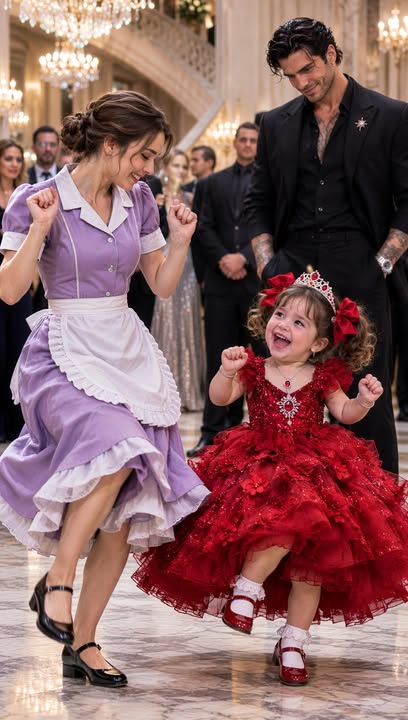
I thought of Lucia, small beneath the ruby-red gown, and his voice filling the room until she said loud.
“Don’t make yourself into a better man just because the past gave you an audience.”
“I won’t.”
“Do it because Lucia deserves a father who listens.”
“I will try.”
“Try when there’s no one to applaud.”
“I understand.”
He sounded tired.
I could hear a soft, irregular patter in the background.
“Is that Lucia?”
“She’s tapping a spoon against her cup.”
“Is the sound bothering her?”
“No. She’s doing it because she likes the pattern.”
“Did you ask?”
“I did.”
A faint laugh came through the phone, followed by Lucia’s voice.
“One, two, twee.”
I found myself smiling.
Dante’s voice softened.
“She’s been practicing.”
“Tell her I’m proud of her.”
“I will.”
We ended the call soon after.
Two days later, Victor Sloane’s attorney contacted Dante’s office.
He wanted a private meeting.
Dante declined.
A written message arrived that afternoon, addressed to Dante and copied to the foundation’s board.
It said the documents were incomplete and that public disclosure could damage the charity, harm the people it served, and expose the foundation to legal consequences.
The message included no direct threat.
Its pressure was in the careful arrangement of concerns, each one presented as a reason to wait.
Dante sent the letter to Lydia.
“What do we do?” Celeste asked him.
“We preserve it.”
“And the board?”
“They can decide whether to respond.”
“What about Mara?”
“She should see it if she wants to.”
I read the letter at the library meeting room that evening.
It was polite, polished, and unmistakable in its request: return Sofia’s papers, withdraw any public statements, and allow the charity to address the matter privately.
The signature belonged to Sloane’s attorney.
I set the letter down.
“He wants the file back.”
“He says he wants the review handled through proper channels,” Dante replied.
“Then why ask you to withdraw your statement?”
“He says my statement would create confusion.”
“Would it?”
“I don’t know what questions they’ll ask.”
“That isn’t the same thing.”
“No.”
I studied him.
“Do you want to withdraw yours?”
“No.”
“Even if the board removes you?”
“Yes.”
“Even if the foundation loses money?”
“Yes.”
“Even if the investigation reaches your other businesses?”
He hesitated.
“Yes.”
I searched his face for the old confidence, the belief that he could control how every story ended.
It wasn’t there.
There was only a man who had finally understood that a choice could not be made safe merely by making it in private.
“Why did you invite me to see this?” I asked.
“Because it may affect what you choose to do next.”
“It doesn’t change what I remember.”
“No.”
“Or what I’m willing to say.”
“I know.”
“Then don’t ask me to help you defend yourself.”
“I won’t.”
I gathered my coat.
Dante rose but stayed on his side of the table.
“I want to say something,” he said.
“Go ahead.”
“You are free to leave this process whenever you want. Your statement is yours. Your grief is yours. You don’t owe me your trust because I finally chose to do what should have been done.”
The words reached somewhere I had kept guarded.
“I know,” I said.
“I also know that if you leave, I may wish you’d stayed.”
“Wanting something doesn’t make it mine to give.”
“No,” he said. “It doesn’t.”
I left without touching his hand.
The next morning, I came to the foundation office to review the documents Lydia had copied for the commission.
I wanted to check the date on Sofia’s final letter before it was included in the file.
Dante was not in the conference room.
Celeste was at the archive desk, sorting the records into labeled boxes.
“You came early,” she said.
“I couldn’t sleep.”
She nodded and returned to her work.
I found the letter where it had been placed beside the donor correspondence.
The envelope was still sealed.
Dante’s name was written across the front in Sofia’s hand.
Under it, faintly visible through the paper, was another line, written by someone else.
I tilted the envelope toward the window.
The hidden words emerged slowly, a ghost beneath the ink.
RETURN TO SENDER—NO DELIVERY AUTHORIZED.
I stared at them.
Celeste saw my expression and came around the desk.
“What is it?”
I pointed to the envelope.
She read the words, then looked toward the hallway.
“Who wrote that?”
“I don’t know.”
The conference-room door opened.
Dante entered carrying a small folder.
He took one look at our faces.
“What happened?”
I held out the envelope.
“Someone made sure Sofia’s letter never reached you.”
Dante read the hidden line.
For several seconds, he did not move.
Then he turned the envelope over.
A small stamp had been pressed into the lower corner, almost covered by the paper’s yellowing edge.
It bore the emblem of the foundation’s former office.
Dante lifted his eyes to mine.
“My father’s office handled the mail.”
Beyond the open door, someone called his name.
A commission investigator had arrived early, carrying a new document and asking for Dante Vale.
**–END OF PART 5–CLICK “NEXT” AT THE BOTTOM OF THE PAGE TO CONTINUE READING**
* * *
[PREVIOUS: PART 4](https://echoesofstories.idolsgift.com/blog/part-4-the-name-he-shouldn-t-know-041) | [NEXT: PART 6(THE END)](https://echoesofstories.idolsgift.com/blog/part-6-the-end-the-name-he-shouldn-t-know-041)
✓ Lynn R. Adams
Part 5 – The Cost of Speaking Dante stared at the letter as if the page had become a door he had once walked past and could never open again. Celeste had gone quiet beside him. Across the table, I …