PART 5: The Name Beneath the Lie 041
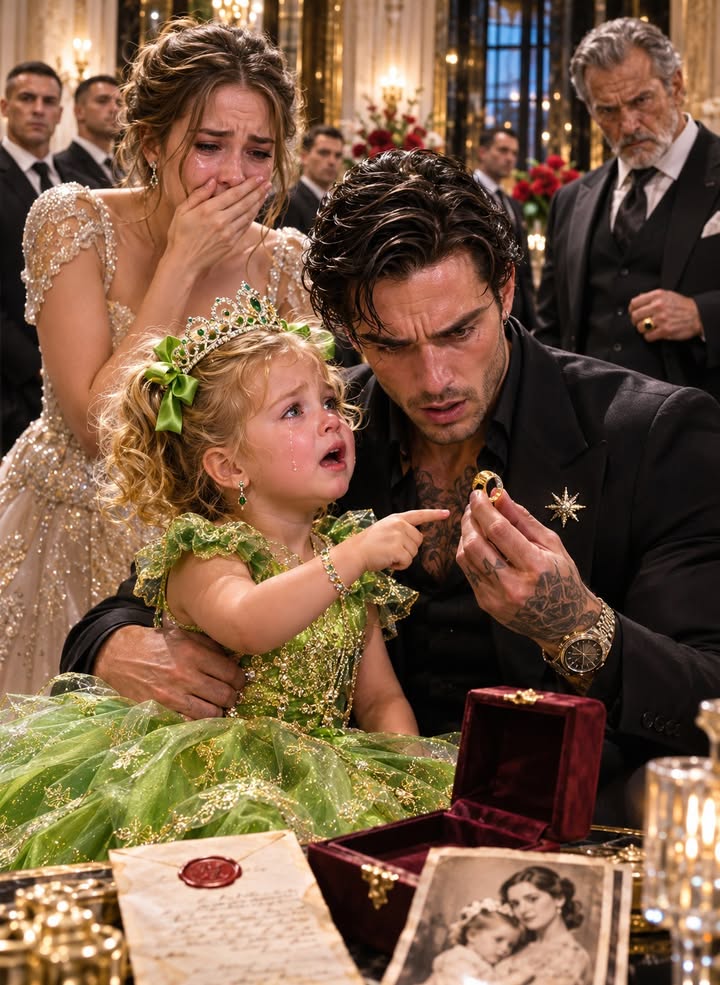
Part 5 – The Choice That Belonged to Her
“The council already has it.”
My mother’s message glowed on the phone between us.
Grace read the words again, then returned the phone without a comment.
Across the room, Lily was making her wooden blocks into a small crooked house, humming to herself as if our silences were only another part of the afternoon.
Richard stayed by the window.
“What document?” I asked him.
“I don’t know,” he said. “Your father spoke of a guardian, but I never saw anything naming one.”
“You knew he had named a guardian and said nothing?”
“I knew he had considered it. I didn’t know whether he completed the document.”
Grace’s gaze sharpened.
“Who would have been allowed to see it?”
“The family counsel, perhaps,” Richard replied. “And your mother.”
“Then she knows what it says,” I said.
“Possibly.”
I looked down at the message.
The council knew about the document.
My mother knew about it.
Richard had heard enough to remember it, but not enough—or had chosen not to tell us.
And Grace, the person who had carried Lily through every year of her life, had been left to learn about it from a warning sent to my phone.
“What does the council want?” she asked.
Richard’s answer came slowly.
“To decide whether your father’s intention changes the succession.”
“And whether Lily should be presented as heir,” I said.
“They may argue that if the document names a guardian, it proves your father meant to establish a claim.”
“They can argue whatever they like,” Grace said. “It doesn’t make Lily theirs.”
“No,” I replied. “It doesn’t.”
She looked at me carefully.
“You said you would give up the inheritance.”
“I meant it.”
“Do you understand what that means?”
“It means refusing to use Lily’s name to secure my position.”
“It could mean the council takes control of parts of the family’s affairs.”
“It could.”
“It could make your work harder.”
“Yes.”
“And if they say your father’s plan should be honored?”
“Then they can hear what he actually wrote, not just what they want it to mean.”
Grace held my gaze.
“You could lose more than a title.”
“I know.”
I was not sure I did.
The Hayes family’s authority had been threaded through every part of my life, so deeply that I had mistaken it for the ground beneath my feet.
But I knew what I could not let happen.
Lily could not be turned into a symbol before she had learned to spell her own name.
My mother’s message had described the coming meeting as a choice between obedience and concealment.
It was neither.
I did not have to announce Lily as heir.
I did not have to bury my father’s wishes again.
There was a third path, though I had no idea whether the council would accept it.
“We should tell them the truth,” I said. “Privately.”
Grace’s arms closed more securely around Lily.
“Tell them what?”
“That my father named you as the child he hoped to welcome, and that he intended you to have a choice when you were old enough to make one.”
“Not that she is the heir.”
“Not as an announcement. Not as a public claim.”
“And if the council says the documents are binding?”
“Then we ask them to suspend the succession dispute until Lily can decide what she wants.”
Grace’s expression remained guarded.
“You’re asking a group of men who have spent generations making decisions for this family to wait for a child to grow up.”
“I’m asking them to accept that a child’s life is not theirs to settle.”
“Will they?”
“I don’t know.”
The honesty seemed to matter more than a reassuring promise would have.
Grace looked down at Lily.
“Your father left her an option,” she said. “He didn’t leave her an obligation.”
“I agree.”
“Then don’t let them make it one.”
“I won’t.”
The answer was easy to give.
Keeping it would be harder.
Richard stepped away from the window.
“There is a way to present the documents without naming Lily as a claimant,” he said. “The council can meet in closed session. You can ask them to preserve the records and suspend any decision.”
“You helped hide those records,” Grace said.
“I did.”
“Why should we trust your advice now?”
“You shouldn’t have to.”
Richard’s voice was quiet, without the old certainty.
“I can tell you what the council’s procedures allow. You can decide whether the information is useful.”
Grace studied him.
“Did you hide the records because you thought Lily would be in danger, or because you thought the council would challenge Alexander?”
“Both.”
“Which mattered more?”
He looked at her for a long moment.
“I told myself it was Lily’s safety. I also didn’t want the family divided while Alexander was young and unprepared.”
“Those are not the same reason.”
“No.”
“And you used the first to make the second sound noble.”
Richard lowered his eyes.
“Yes.”
The admission did not repair anything between them.
But it was the first time he had stopped trying to make his motives sound cleaner than they were.
Marian had returned to the archive to make secure copies of the letters, and I called her to ask whether she had found anything else in my father’s papers.
She said she had not found the guardian document, but she had located a note in the legal index confirming that a sealed instruction had been registered with the family counsel.
“Your father wrote that it should be opened only if you rejected the succession claim,” Marian said.
Grace heard her through the speaker.
“Does the council have the original?”
“The index says the original was given to the family counsel after your father’s death.”
“Which counsel?” I asked.
“Elias Voss. He retired years ago, but his firm still holds the family records.”
“Can you reach him?”
“I can try.”
“Please do.”
When the call ended, Grace looked at me.
“If the document names my mother,” she said, “I want to know why.”
“I understand.”
“If it names you, I want to know what duties it gives you.”
“I’ll read every word with you.”
“And if it names someone else?”
“Then we ask whether that person is someone we trust.”
Grace searched my face.
“You keep saying ‘we.’”
“Because this concerns you and Lily as much as it concerns me.”
“More,” she said.
“Yes. More.”
Her hand rested over Lily’s back.
For years, I had believed being a father meant having the right to make decisions.
Now I was beginning to understand that it meant accepting the limits of my authority.
Lily looked up from her blocks.
“Dada, house fall.”
I crouched beside her.
The wooden tower leaned to one side, a block perched precariously on top.
“Would you like help?”
She nodded.
I steadied the bottom while she placed another block, then another.
The house became less crooked but not perfectly straight.
Lily considered it and smiled.
“Good house.”
“It’s a very good house,” I said.
Grace watched us from the sofa.
Her expression softened, but she did not look away from the parts of me she still distrusted.
That was fair.
The council meeting was set for the following afternoon.
It would take place in a private conference room at the family’s legal offices, not in the grand boardroom where the family usually settled its affairs.
I chose the smaller room because it had no portraits, no raised platform, and no place from which anyone could pretend their age or title made them wiser.
Grace agreed to attend on one condition.
She would not be asked to speak for Lily’s future.
She would speak for her own.
I agreed.
We spent the evening with Marian’s copies spread across Grace’s kitchen table.
The ledger entry, the letters from my father, Richard’s note, and my mother’s unsent letter lay in neat stacks beneath the warm light.
Lily slept upstairs while Grace and I read each page.
“I keep thinking there must be one letter where your mother explains it,” Grace said.
“Explains what?”
“Why she believed she had the right to decide everything.”
“Maybe she can’t explain it.”
“Maybe she can. That doesn’t mean I’ll accept it.”
I watched her turn my mother’s letter over, studying its blank back.
“You don’t have to accept anything before you’re ready.”
“I know.”
She set the letter down.
“I don’t want Lily to grow up thinking that love means other people get to choose what she can bear.”
“Neither do I.”
“Then don’t make her inheritance a promise you think you have to keep.”
“I won’t.”
“And don’t tell her she was chosen for a purpose.”
“I’ll tell her my father hoped she would be born. I’ll tell her the rest when she’s old enough to ask.”
“That’s better.”
Our hands rested on opposite sides of the table, close enough that I could see the faint scar across her knuckle from when we had once tried to assemble a bookshelf together.
Neither of us reached across the space.
It felt right to let the distance remain.
A few minutes later, Grace said, “You can stay tonight.”
I looked up.
“For Lily?”
“For Lily,” she said. “And because I don’t want to drive across the city after the meeting tomorrow.”
It was not an invitation to return to our old life.
I understood that.
“Thank you,” I said.
She nodded.
When Lily woke briefly in the night, she saw me in the chair beside her bed and smiled before closing her eyes again.
I stayed until morning.
The family counsel’s office was a narrow building in Midtown, set between a law firm and a small art gallery.
The council members arrived in pairs, wearing dark suits and carrying the careful expressions of people accustomed to treating every conversation as a negotiation.
My mother came alone.
She looked composed until she saw Grace.
Then something in her face faltered.
“Alexander,” she said.
“Mother.”
Her gaze moved to Lily, who held Grace’s hand.
For a moment, my mother looked as though she might reach for her.
She did not.
“Grace,” she said.
“Marianne.”
The formal name placed a clear distance between them.
My mother accepted it without complaint.
Richard sat at the far end of the room, separate from the council and from us.
Marian stood beside a folder containing copies of the archive documents.
Elias Voss, the retired family counsel, joined us by video call from his office.
His face appeared on the screen above the conference table.
“I can confirm that your father registered a sealed instruction with my firm,” he said. “The original is in the firm’s custody. I have not opened it.”
“Why not?” I asked.
“Because the instruction explicitly states that it should remain sealed unless you reject the succession claim or request its release.”
The council members exchanged glances.
One of them, a silver-haired man named Pritchard, leaned toward the speaker.
“Then the document was intended for the family council.”
“No,” Voss replied. “It was placed in counsel’s custody. That is not the same thing.”
“The distinction is technical.”
“It is legally and ethically meaningful.”
The room grew quiet.
I looked at the council.
“We are here because my father’s private records have been uncovered,” I said. “They show that he reserved the name Lily Hayes for a child he hoped to welcome, and that after Grace became pregnant, he intended that child to have a choice about her place in the family.”
Pritchard folded his hands.
“Your father’s intentions are clear enough.”
“His intentions were to protect Lily’s right to choose.”
“His intentions were to name her as a successor.”
“Those are not the same thing.”
“Your father believed the family required a stable line of succession,” Pritchard said. “If the records are valid, the council must determine how they affect your position.”
Grace shifted beside me.
I remembered our conversation and did not answer for her.
“I am not asking the council to name Lily as heir,” I said. “I am asking you to preserve the documents and suspend any succession decision until she is old enough to understand what is being asked of her.”
“Until she is an adult?” another council member asked.
“Until she can choose without pressure from this family.”
“That could take years.”
“Yes.”
“And the business cannot remain in uncertainty for years.”
“It will not. I will continue managing it under the existing arrangements, but I will not use my daughter’s name to secure my authority.”
The members exchanged another look.
Pritchard’s expression remained controlled.
“You understand that the council could interpret this as a refusal of your father’s intended plan.”
“I am refusing to turn his intention into Lily’s obligation.”
“You may be placing your own position at risk.”
“I know.”
My mother sat motionless, her hands clasped in front of her.
I wanted her to speak.
I also knew she had no right to explain Grace’s choices for her.
The council’s attention shifted toward my mother.
“Marianne,” Pritchard said, “you were aware of the pregnancy and the proposed designation.”
My mother nodded.
“Yes.”
“Why did you withhold it?”
She looked at Grace.
“Because I believed the council would make Lily a target in a dispute she could not understand.”
“You thought the offer of money would be safer?” Grace asked.
My mother’s throat moved.
“Yes.”
“You thought telling Alexander I took it would be safer?”
“No.”
“Then why did you say it?”
My mother lowered her eyes.
“I was afraid he would come looking for you and bring the family’s conflict to your door.”
“He did not come looking for me.”
“I know.”
“You let him believe I had left willingly.”
“I did.”
Grace’s voice remained steady, but the pain beneath it was impossible to miss.
“You made me the person who abandoned him.”
“I know.”
“You took away my chance to explain.”
“I know.”
“And you took away his chance to choose whether he wanted to be a father.”
My mother looked at me.
“I know.”
There was no excuse in her voice.
That did not make the confession easier to hear.
“What do you want from me now?” she asked Grace.
“Nothing.”
My mother nodded, as if she had expected no more.
“I’m sorry,” she said. “I thought I could protect you both by deciding what you were allowed to know. I was wrong.”
Grace watched her.
“I can hear your apology,” she said. “I can’t give you forgiveness today.”
“I understand.”
My mother’s hands tightened briefly, but she did not ask Grace to soften the answer.
The honesty was small.
It was still more than I had heard from her before.
Elias Voss spoke through the screen.
“The sealed instruction can be retrieved and opened here, with the parties present.”
The council members looked at one another.
“Does the document name a guardian?” I asked.
“It does,” Voss replied. “I cannot tell you the contents until it is opened.”
Pritchard sat back.
“If it names a guardian, that person may be required to hold Lily’s interests in this matter.”
Grace’s expression cooled.
“No one will be required to make decisions for Lily without speaking to us.”
“The document may say otherwise,” he replied.
“Then the document will need to be read,” I said. “It will not be obeyed without discussion.”
Voss arranged to have the sealed envelope brought from his firm.
While we waited, the council asked for a formal statement of my position.
I had prepared one the night before.
I had written it, crossed it out, and rewritten it until the words no longer sounded like a defense of myself.
I read it aloud.
“I recognize that my father intended Lily Hayes to have a place in this family and the right to decide what that place should mean. I will not present her as a claimant, an heir, or a symbol while she is a child. I ask that the council preserve every record, suspend any succession challenge, and keep Lily’s identity and private life out of public discussion.”
I looked around the table.
“I will continue my responsibilities to the family while this process remains private. If the council believes that refusing to use Lily’s name weakens my position, I accept that consequence.”
Grace was very still beside me.
The council conferred in low voices.
Their disagreement did not become a spectacle.
No one raised his voice.
No one threatened to remove me from the business.
They asked practical questions about governance, voting rights, and whether the records would be shared with the family’s attorneys.
I answered what I could.
Where I did not know, I said so.
At last, Pritchard looked up.
“The council will consider a temporary suspension. We cannot promise that every member will agree, but we will not take a formal vote today.”
“That is enough for today,” I said.
“It may not be enough forever.”
“I know.”
For the first time since the meeting began, I saw a trace of respect in his expression.
Not approval.
Not trust.
Only the recognition that I understood the cost of the choice I had made.
Elias Voss returned to the screen holding a long, sealed envelope.
“The instruction is here,” he said. “Before I open it, I must ask whether you still want it read.”
My mother looked toward me.
Grace did not.
She was watching Lily, who had grown tired of the meeting and was tracing the edge of a blank notepad with one small finger.
I thought about my father’s note.
Do not decide for Alexander.
Do not decide for Grace.
Tell them what I intended, and let them choose what happens next.
“Yes,” I said. “Open it.”
Voss broke the seal.
He removed a single sheet and read it silently.
His face changed.
“What does it say?” I asked.
“It names a guardian for the child your father expected.”
“Who?”
Voss hesitated, then lowered the paper.
“Grace Mitchell.”
Grace’s breath caught.
My mother closed her eyes.
The room around us went still.
I looked at Grace, but she was already reading the first lines on the screen, her face pale with disbelief.
“This is dated before Lily was born,” she said.
“Yes,” Voss replied.
“Did my father ever ask me to do this?”
“No,” he said. “The document gives you the right to decline.”
“Why did he choose me?”
Voss returned his attention to the page.
“The letter attached to the instruction explains that.”
He unfolded a second sheet.
The first line bore my father’s unmistakable handwriting.
**Grace, if you are reading this, then Alexander has refused to make Lily’s future a family decision.**
Beneath it, the letter continued.
**There is one thing I did not tell you while I was alive: the name Lily was not the only name I chose for the child I hoped would come.**
Grace looked up.
“What other name?”
Voss turned the page over.
A second name had been written beneath my father’s signature.
It was the name of the person who had carried Lily to the gala.
**–END OF PART 5–CLICK “NEXT” AT THE BOTTOM OF THE PAGE TO CONTINUE READING**
* * *
[PREVIOUS: PART 4](https://echoesofstories.idolsgift.com/blog/part-4-the-name-beneath-the-lie-041) | [NEXT: PART 6(THE END)](https://echoesofstories.idolsgift.com/blog/part-6-the-end-the-name-beneath-the-lie-041)
✓ Lynn R. Adams
Part 5 – The Choice That Belonged to Her “The council already has it.” My mother’s message glowed on the phone between us. Grace read the words again, then returned the phone without a comment. Ac…