PART 5: The Mark Beneath the Chair 057
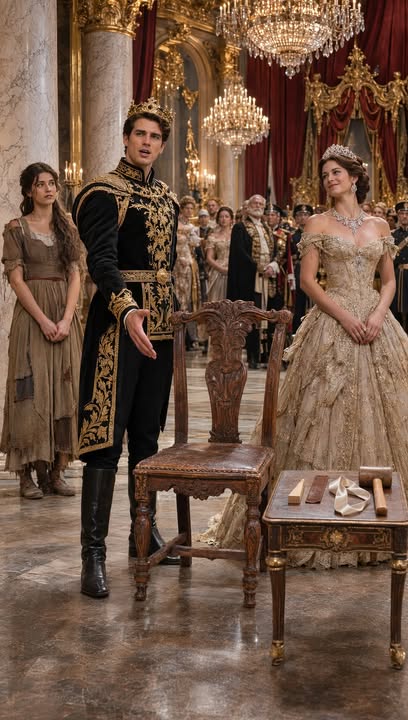
Part 5 – The Price of the Truth
Mara read her father’s words again, though the ink did not change.
“Received, with thanks. I ask only that the floor be made safe before anyone else is blamed.”
For a moment, the archive seemed to hold its breath around her.
She had imagined her father leaving the palace with nothing but his tools and a silence he could not explain.
Now she knew he had received Lord Aveline’s letter, and that he had answered it with the same plain fairness he had carried into every workshop.
“He knew someone believed him,” she said.
Julian stood beside the table, his eyes on the small receipt.
“He knew Lord Aveline believed the chair was sound,” he replied. “But he may not have known whether the court would correct the record.”
Eveline looked down at her grandfather’s signature.
“He wrote in support of your father, and still the mark was concealed.”
“Perhaps the letter was meant to help,” Mara said. “But it did not make the floor safe, and it did not keep Father in his position.”
The words came quietly, without blame, yet they seemed to settle heavily between them.
Eveline folded her hands before her.
“I’m sorry.”
Mara turned toward her.
“You didn’t make that decision.”
“No, but my family’s name is in the account, and my grandfather’s approval is in the margin.”
“You have brought us the records.”
“I know.” Eveline’s voice wavered, then steadied. “I only wish bringing them could undo what happened.”
“So do I.”
Julian asked the archivist to preserve the receipt with the other papers.
Then he requested certified copies of the floor inspection, the workshop accounts, Lord Aveline’s letter, and the note about concealing the maker’s mark.
He did not ask for the documents to be hidden or carried away.
Instead, he asked for a complete list of every record that mentioned the chair, Elias Hart, or the west ballroom floor.
The archivist promised to prepare it.
When they left the archive, the palace corridors felt unusually bright.
Mara walked beside Eveline, while Julian followed a few paces behind, deep in thought.
At the turn toward the service wing, Eveline slowed.
“I’m afraid,” she said.
Mara looked at her.
“Of what?”
“Of finding that my grandfather tried to do the right thing and still helped leave a wrong uncorrected.”
Eveline looked through the high windows at the palace gardens, where spring sunlight rested on the new leaves.
“I have spent my life hearing that he was a good man. I still believe he was. But I don’t want goodness to become an excuse for refusing to look at what he did.”
Mara remembered the letter, its careful lines, and the small receipt bearing her father’s hand.
“Maybe being good is not the same as getting everything right.”
Eveline gave a faint, rueful smile.
“No. I suppose I am learning that.”
They stood together for a moment, each carrying a different worry that had become part of the same story.
Then Eveline touched Mara’s arm lightly.
“When the records are presented, I want to speak in support of your father.”
“You may not need to.”
“I want to, whether I am needed or not.”
Mara saw no eagerness for attention in her face.
Only resolve.
“Thank you,” she said.
That evening, Mara returned to the little rooms she shared with Thomas and Nell.
She told them what the archive had found, including the copy of Lord Aveline’s letter and their father’s written reply.
Thomas listened with his elbows on the table.
“So Father knew at least one person believed him.”
“Yes.”
“But the palace still let everyone think he had built the chair badly?”
Mara did not answer at once.
The paper had been received.
The mark had been covered.
The chair had remained in the palace as a demonstration piece, while the record called it defective.
“Yes,” she said. “That is what it seems.”
Nell placed her mending aside.
“Did Father ever tell us about the letter?”
“No.”
“Maybe he thought it would be fixed,” Thomas said.
“Maybe,” Mara replied. “Or perhaps he did not want us to carry a hurt he could not mend.”
Nell reached across the table and took Mara’s hand.
“He shouldn’t have had to carry it alone.”
Mara squeezed her sister’s fingers.
“No.”
The family sat quietly, while the candle burned lower and the palace settled around them.
Mara thought of the phrase her father had written: before anyone else was blamed.
He had not asked for his name to be honored.
He had asked for the room to be safe, and for someone to tell the truth when the next person was judged.
The next morning, Julian asked Mara to meet him in the small music room.
A narrow table had been set beneath the window, and the chair stood nearby with its maker’s mark still partly hidden.
Eveline was already there, along with the palace archivist and the building steward.
The steward had brought a plan of the ballroom floor, marked with the shallow dips discovered during the inspection.
“We can begin the repairs next week,” he told Julian. “The room will need to be closed for several days, and the furniture moved to the adjoining gallery.”
“Then that is what we will do,” Julian said. “The room will not be used until the floor has been properly checked.”
The steward nodded and unrolled the plan.
Mara studied the marked places.
The dip beneath the chair was only one point among several, but it was enough to make her think of all the tables, seats, and people that had passed across the ballroom over the years.
“When the repairs are finished, we should test the floor again,” she said. “Not just where the chair stood.”
“We will,” the steward replied. “I will also have the other public rooms inspected.”
Julian thanked him, then looked to the archivist.
“Have you found any further records?”
“I have found no evidence that the palace formally cleared Elias Hart’s name,” the archivist said. “The letter from Lord Aveline remained among the household papers, and the official register still describes the chair as defective.”
Eveline lowered her gaze.
“What does the employment record say?” Mara asked.
“That Mr. Hart was released from service after the incident. It does not state that he was dismissed for misconduct, but the note beside his name refers to the chair’s failure.”
Mara felt the old story tightening around her father once again.
A person could be blamed without anyone ever writing the word blame.
Julian rested his hands on the table.
“The records are enough to establish that the court failed to act on a warning, then allowed an inaccurate description of the chair to stand.”
The archivist nodded.
“They are.”
“And the chair’s maker?”
“The matching workshop mark, the payment to Elias Hart, the demonstration notation, and Lord Aveline’s letter make a strong case that Mr. Hart built it.”
Mara looked at her father’s gauge, which she had set beside the documents.
The initials E. H. seemed less like a private memory now and more like a name waiting to be spoken aloud.
Julian continued.
“I intend to make a public statement before the royal gathering. I will acknowledge the findings, clear Elias Hart’s name, and explain the repairs to the ballroom.”
The words brought a quiet relief, but not a simple one.
“Will the full records be made available?” Eveline asked.
“Yes.”
“Even the note approving the delay?”
Julian met her eyes.
“Especially that note.”
Eveline drew a breath and nodded.
Mara studied the prince.
His decision would put the palace’s failure before the public, including the part played by Eveline’s grandfather.
It would also make clear that Julian’s own family had kept the chair while allowing its history to disappear.
“You know this may trouble people who did not make the original decision,” Mara said.
“I do.”
“Some may say the letter shows Lord Aveline tried to help.”
“It does show that,” Julian answered. “And it also shows that the floor remained unsafe, the repair was postponed, and the record was never corrected.”
Eveline’s voice was quiet but certain.
“My family should not be protected by showing only the parts that flatter it.”
She looked at the papers.
“If my grandfather supported your father, that should be recorded. If he approved the delay, that should be recorded too.”
The archivist began arranging the documents into a neat stack.
Julian remained silent for a few moments.
“What troubles me most,” he said at last, “is how easily the court mistook a polished surface for a sound answer.”
Mara thought of the ribbon around the loose support, elegant and useless.
She had wanted only to make the chair safe.
Yet the chair had brought her to a truth no wedge could set level by itself.
Julian turned to her.
“There is another matter I would like to discuss.”
Mara waited.
“I want to offer you a position at court, working with the palace workshops and the building steward to inspect and restore the royal furnishings.”
The room grew quiet.
The offer was generous, but Mara felt its weight before she could feel its promise.
A place at court would provide steady wages.
It could help her support Thomas and Nell.
It would give her work she understood and a chance to learn from skilled artisans.
It might also turn her father’s vindication into something the palace appeared to grant as a reward.
Mara touched the worn leather of her measuring gauge.
“Would the position be permanent?”
“It could be, if that is what you choose. It would be paid work, with training available if you wished to take it.”
“And would I be expected to restore the chair?”
“Only if you wished to. You would not be required to accept any task you did not feel qualified to do.”
Mara looked at the documents on the table.
“Would I be free to say that the palace made a mistake?”
Julian’s expression did not change.
“Yes.”
“Even after I accepted the position?”
“Yes.”
“Would my work be judged by what it holds, not by what people think of my family?”
“I would expect it to be.”
Mara appreciated the care in his answers, but she still felt a barrier between the offer and the truth she needed first.
“I am grateful, Your Highness,” she said. “But I cannot accept it yet.”
Eveline looked at her, not with disappointment but with understanding.
Julian listened.
“Tell me what you need.”
“I need my father’s name cleared publicly before I become a palace employee.”
The words were steady, though her pulse had begun to quicken.
“I do not want anyone to say he was honored because I impressed you in a competition. He should be cleared because the records show the chair was sound, and because he warned the court about the floor.”
Julian lowered his head.
“That is fair.”
“I want the truth to stand on its own, whether I accept the position or not.”
“It will.”
Mara studied his face, trying to distinguish a promise from a decision.
Julian did not look away.
“I will present the evidence and make the correction before the gathering,” he said. “You will not have to accept the position to earn that.”
“Thank you.”
“I should have made this clear before offering it.”
The admission surprised her.
“You offered because you believe I can do the work.”
“I do.”
“But I do not want the offer to soften what the court owes him.”
“It should not.”
The quiet between them felt honest.
Eveline stepped nearer the table.
“When the records are read, I will stand with you,” she said. “I will tell the court what I found in my family’s ledger, including the note my grandfather signed.”
“You would put your family’s name beside the delay?” Julian asked.
“I would put the whole truth beside it.”
Mara looked at her, remembering the noblewoman who had once laughed at a servant’s suggestion.
Eveline had not become someone who never made mistakes.
She had become someone willing to look at them without turning away.
“That may be difficult,” Mara said.
“Yes,” Eveline replied. “But hiding it would be worse.”
The archivist lifted the old report and checked its seal.
“Your Highness, there is still one issue of wording,” he said. “The chair’s official description was not corrected after the inspection. We can say the evidence strongly supports Mr. Hart’s authorship and shows the floor, not the chair’s construction, caused its movement.”
“Is there any uncertainty about the maker’s mark?” Julian asked.
“Only that the mark itself was partly covered. The family records identify it as the Hart workshop sign, and the accounts connect Elias Hart to the demonstration chair. Lord Aveline’s letter names him as its builder.”
“Then that is what we will say.”
The archivist placed the papers in a folder.
“I will prepare copies for the royal council and a public record.”
Mara glanced again at the mark beneath the chair.
“Before anyone repairs the support, could the maker’s mark be examined and uncovered carefully?”
“Yes,” the archivist replied. “A conservator can remove the later patch without damaging the wood.”
“Then I would like it done.”
Julian nodded.
“So would I.”
The meeting ended with practical arrangements.
The building steward would close the ballroom for repairs.
The archivist would prepare the documents.
Eveline would provide the family’s original ledger when it arrived.
Julian would present the findings at the gathering scheduled for the end of the week.
Mara returned to her duties with the measuring gauge in her pocket and a new uncertainty in her heart.
She had thought being offered a place at court would feel like a door opening.
Instead, it felt like standing before a threshold while people waited to see whether she would step across.
That evening, she spoke with Nell and Thomas.
Thomas was pleased when he heard about the offer.
“You could work in the workshop,” he said. “You would have your own bench, perhaps.”
“Perhaps.”
“And steady wages,” Nell added. “That would make everything easier.”
“Yes.”
Mara sat beside the hearth, turning her father’s gauge between her fingers.
“But I told him I would not accept until Father’s name was cleared publicly.”
Thomas nodded.
“Would the work still be there afterward?”
“Julian said it would be.”
Nell leaned her shoulder against Mara’s.
“Then you do not have to decide tonight.”
Mara looked down at the initials on the gauge.
“I know.”
“Are you afraid they will think you are ungrateful?”
“Maybe.”
Thomas shook his head.
“Father did not teach you to accept a good tool just because someone handed it to you.”
A smile touched Mara’s mouth.
“No, he taught me to check whether it was the right tool.”
They sat together, listening to the fire settle.
Nell took Mara’s hand.
“If you accept, accept because you want the work. If you refuse, refuse because it is not right for you. Not because you think you have to prove something to anyone.”
Mara looked at her sister.
The words eased the knot in her chest.
“I will try.”
The night before the gathering, the palace felt restless.
Servants carried fresh linen to the great hall.
Musicians rehearsed near the gallery doors.
The archivist worked late, checking each copy of the records against the originals.
Mara was asked to bring her father’s measuring gauge to the archive, so the conservator could compare its mark to the chair’s hidden sign.
When she arrived, a small work lamp illuminated the underside of the chair.
The conservator had carefully softened the dark patch and lifted away a narrow layer of old filler.
Beneath it, the maker’s mark could be seen clearly.
E. HART.
Beside the name was a small line and an emblem shaped like a joined pair of measuring angles.
Mara’s throat tightened.
The conservator compared it to the gauge.
“The workshop mark matches,” he said. “There is no doubt about the initials now.”
Mara traced the air just above the carved letters, careful not to touch the fresh work.
Her father’s name had been hidden for years beneath a patch of dark wood.
Tomorrow, it would be spoken in the great hall.
Julian came in as the conservator finished covering the chair with a clean cloth.
“Is the mark clear?” he asked.
“It is,” Mara said.
Julian looked at her.
“The statement is ready. The council has reviewed the copies, and the records will be made public after they are read.”
“Will the full letter be included?”
“Yes, along with the receipt and the floor report.”
“And the note about removing the mark?”
“Yes.”
Mara took in a slow breath.
“Then they will hear all of it.”
“They will.”
For a moment, Julian seemed as uncertain as she felt.
“Are you ready?” he asked.
“I don’t know.”
“Neither do I,” he said. “But we can still do what is right.”
Mara studied him in the warm pool of lamplight.
She had once imagined that a prince would always know what to do.
Julian had begun to matter to her because he did not pretend that responsibility made uncertainty disappear.
“I am glad you chose the truth,” she said.
“So am I.”
He looked toward the covered chair.
“Whatever happens tomorrow, the palace will repair the floor.”
“And keep the maker’s name where it can be seen.”
“Yes.”
Mara nodded.
The chair was ready to be shown.
The records were ready to be read.
All that remained was the moment when the palace would have to hear what it had once known and failed to correct.
The following afternoon, the great hall filled with invited guests, palace workers, household officers, and several members of the royal council.
No contest table had been set out.
No prizes had been placed beneath the banners.
At the center of the hall stood the chair, its rear support repaired and its maker’s mark uncovered beneath the seat.
Mara remained near the side aisle with Eveline.
Eveline wore a pale blue gown without a tiara, her hair arranged simply at the nape of her neck.
She looked composed, though her fingers were tightly folded.
“Do you think your mother is here?” Mara asked.
“She is near the back,” Eveline said. “She asked me to tell the truth, even if she did not know what it would cost.”
Mara understood the courage in that.
At the front of the hall, Julian stood beside the archivist.
The room quieted when he raised his hand.
“I invited you here because the chair before us has been part of the palace for many years, and its history was not recorded honestly.”
His voice carried without strain.
“This week, a maid named Mara noticed that the chair’s movement came from an uneven ballroom floor, not from a failure in its construction.”
He paused.
“That observation led us to records showing that the chair was built by Elias Hart, a palace carpenter, as a demonstration of the floor’s unevenness. Mr. Hart warned the court that the room should be repaired before it was used for a royal gathering.”
Several people turned toward Mara.
She kept her gaze on the chair.
“The warning was received,” Julian continued. “The repair was deferred. After the chair moved, the official record described it as defective, and Mr. Hart lost his position before the record was corrected.”
A hush settled across the hall.
Julian did not soften the facts or sharpen them for effect.
“The surviving evidence shows that Mr. Hart’s workmanship was sound, and that he had identified a real danger. The palace failed to act on his warning and failed to restore his name.”
Mara felt the weight of the room’s attention shift from her to the words.
For years, she had been afraid that her father’s story would be treated as a private sadness.
Now it stood in public, supported by paper, ink, and a chair that could finally be examined.
Julian continued.
“On behalf of the palace, I apologize to Elias Hart’s family for the injustice done to him, and to all the workers whose knowledge was overlooked because their position made it easy to dismiss them.”
Eveline stepped forward.
Her voice trembled at first, then steadied.
“My grandfather, Lord Aveline, signed the note delaying the floor repair. He also wrote in support of Elias Hart and confirmed that the chair was sound. Both records belong in this history. I will not ask the palace to show only the part that reflects well on my family.”
Her mother bowed her head near the back of the hall.
Eveline looked toward Mara.
“I am sorry that Mr. Hart’s name was hidden, and that my family’s records did not help restore it sooner.”
Mara met her gaze.
There was no triumph in that moment.
Only the difficult relief of seeing the truth carried by more than one person.
The archivist read the relevant entries aloud.
The floor report.
The workshop account.
The note postponing repairs.
Lord Aveline’s letter.
The line ordering the maker’s mark concealed until responsibility was settled.
Finally, he read Elias Hart’s reply from the receipt.
“Received, with thanks. I ask only that the floor be made safe before anyone else is blamed.”
The words passed through the hall, clear and unhurried.
Mara thought of her father sitting at a table like the one at home, writing carefully so the court could understand him.
He had asked for safety before praise.
He had asked for fairness before recognition.
Julian turned toward the chair.
“The palace will now repair the ballroom floor and inspect other public rooms. We will also establish paid apprenticeships for workers’ children, so practical skill is valued wherever it is found.”
A low murmur moved through the hall.
The announcement was not a grand flourish.
It was a promise of work, training, and a better habit of listening.
Julian looked toward Mara.
“Elias Hart’s name will be restored to the palace record as the chair’s maker. The chair will remain here, not as a symbol of fault, but as a reminder to examine the whole problem before judging the person nearest to it.”
The hall stood quiet.
Then the palace workers began to applaud, followed by the council members and the guests.
Mara heard the sound as if from a great distance.
For years, she had imagined what it might be like for someone to say her father’s name without suspicion.
She had not imagined a room full of people hearing it together.
Eveline stood beside her, her eyes bright.
Mara reached for her hand, and Eveline took it.
When the applause faded, Julian approached them.
“The records will be available for anyone who wishes to read them,” he said. “The ballroom will stay closed until the floor is repaired and inspected.”
“Thank you,” Mara replied.
“You gave the palace the question it had failed to ask.”
Mara looked at the chair.
“I only followed the scrape.”
“And your father taught you to notice it.”
Julian glanced at the measuring gauge in her hand.
“I still hope you will consider the position in the workshop.”
Mara felt the weight of that choice return, but it no longer seemed tangled with her father’s name.
The record had been corrected before she accepted anything.
“I will consider it,” she said. “But I would want the position to be paid, and I would want the work to remain practical. I don’t want to be displayed as proof that the palace has changed.”
“It would be paid,” Julian said. “And you would decide what work you take on.”
“Then I will think about it.”
“That is all I ask.”
The gathering began to disperse.
People approached the chair to view the restored mark, while the archivist remained nearby to answer questions.
Mara saw several workers among them, including the elderly footman who had first noticed her in the ballroom.
He gave her a quiet nod.
She returned it.
For the first time, she felt that she could stand in the great hall without wishing to disappear.
Yet as the last guests began to leave, the palace archivist returned to Julian with a folded paper in his hand.
“Your Highness,” he said, “there is one more record I found while preparing the public copies.”
Julian’s expression grew attentive.
“What is it?”
“A note from the palace workshop, written after Mr. Hart left service. It appears to have been filed among the apprentice applications rather than with the chair.”
Eveline stepped closer.
“Does it mention Elias?”
“It does.”
The archivist unfolded the paper.
The writing was faint, but the signature at the bottom was clear.
Mara recognized her father’s hand before the archivist had finished reading the first line.
“‘I leave the attached plans for the ballroom floor and the chair demonstration in the workshop, in case the palace chooses to repair what remains unfinished.’”
Julian looked toward the chair.
“Are the plans included?”
“The note says they were placed in a drawer beneath the old measuring bench.”
Mara’s breath caught.
The palace workshop had been closed and rearranged many times since her father worked there.
No one had mentioned that the old bench still existed.
The archivist unfolded a second slip, which had been tucked behind the note.
There, in her father’s careful hand, was one more sentence.
“Should the court ever wish to understand the chair completely, do not begin with the wood—begin with the floor beneath the royal throne.”
**–END OF PART 5–CLICK “NEXT” AT THE BOTTOM OF THE PAGE TO CONTINUE READING**
* * *
[PREVIOUS: PART 4](https://storyly.idolsgift.com/blog/part-4-the-mark-beneath-the-chair-057) | [NEXT: PART 6(THE END)](https://storyly.idolsgift.com/blog/part-6-the-end-the-mark-beneath-the-chair-057)
✓ Lynn R. Adams
Part 5 – The Price of the Truth Mara read her father’s words again, though the ink did not change. “Received, with thanks. I ask only that the floor be made safe before anyone else is blamed.” For …