PART 5: The Life She Had Already Chosen 028
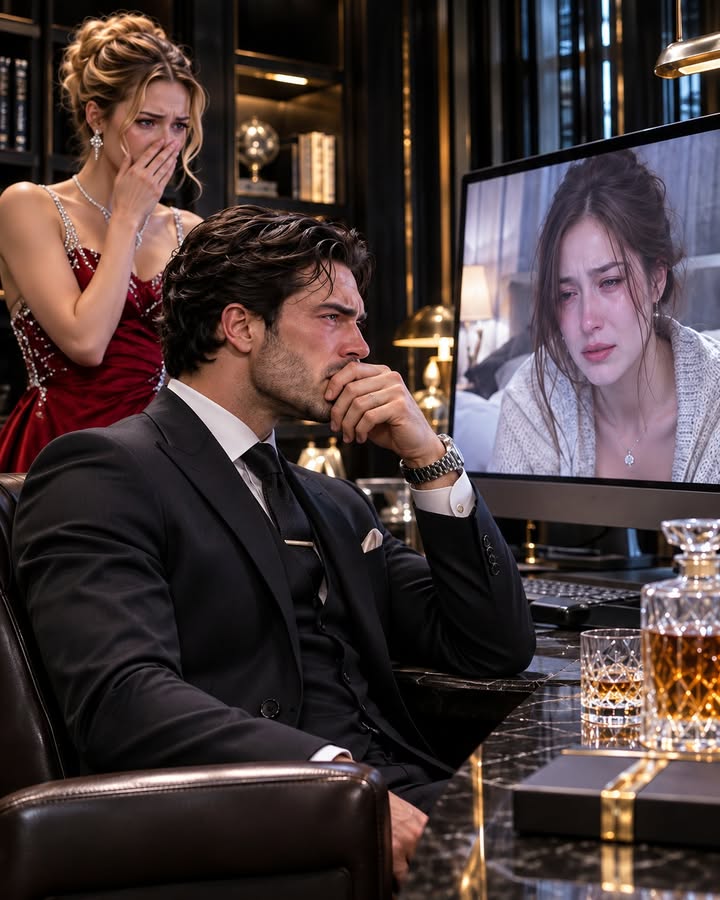
Part 5 – The Door She Chose
“Alexander, if you are reading this, Claire has decided you are ready to know what I asked her to keep.”
Claire read the line again, her thumb resting along the edge of the old paper.
She had expected the note to explain why Lucia had trusted her with the orchid, but something in its wording made the room seem to draw still around her.
The note was addressed to Alexander, yet it had been in Claire’s keeping for years.
She had never seen it before.
She sat down at the worktable and began to read.
“Your grandmother brought the orchid here when she had almost nothing else from home,” Lucia had written.
“She told me that it bloomed only after she stopped trying to force it and learned what it needed.”
Claire glanced at the plant beside the window.
Its roots had begun to settle into the new pot, though one leaf still leaned toward the light.
Lucia’s note continued.
“I have asked Claire to care for it because she understands that attention is not the same as control.”
“I wanted you to know this one day, but I did not want the request to become another obligation you could fulfill without understanding.”
Claire stopped.
She read the last sentence twice, then continued.
“If you ever love her, learn what matters to her without needing me to explain it.”
The words did not feel like an accusation.
They felt like a mother’s hope, tender and restrained, offered to a son who had not yet learned how to receive it.
At the bottom of the page, Lucia had added a final line.
“Claire says she will tell you when the time is right.”
Claire lowered the note.
She had not said that.
She remembered Lucia asking her to keep the orchid safe, and she remembered promising not to explain its meaning to Alexander until he asked.
Perhaps Lucia had understood her promise in a different way.
Perhaps, even then, Claire had believed there would be a right moment when Alexander noticed the plant and asked why it mattered.
A moment that never came.
Her attorney called that afternoon.
“Have you read the note?” she asked.
“Yes.”
“Do you want us to send it to Alexander?”
Claire looked at the photograph of Lucia beside the greenhouse, her hand resting lightly near the orchid.
“I think he should have it.”
“I can arrange that.”
“Please tell him it changes nothing about the divorce.”
“I’ll be clear.”
“And I don’t want him to think this is an invitation to contact me.”
“I understand.”
Claire folded the note and placed it beside the letter.
She had once thought that keeping the secret meant she was protecting Alexander from an obligation.
Now she saw that she had also been protecting herself from the possibility that he would understand what she had hoped for, and still not choose to meet her there.
The thought hurt, but it did not undo her decision.
That evening, the residency director found her sitting by the window, the orchid’s shadow falling across the table.
“The committee has made a decision about Florence,” he said.
Claire stood.
“They’re offering you the extended residency.”
For a moment, she heard only the faint ticking of the studio clock.
“How long?”
“Six months to begin with, and there may be an opportunity to extend it.”
The offer was everything she had been trying not to wish for too openly.
A new studio, new work, unfamiliar streets, and a life shaped around her own choices rather than the aftermath of her marriage.
“When would I need to decide?”
“By the end of the month.”
Claire nodded, though her thoughts had already begun racing ahead.
The director smiled.
“You don’t need to answer tonight.”
“Thank you.”
After he left, Claire called her attorney and told her about the offer.
“I’ll review the residency agreement,” the attorney said.
“Just to make sure the terms are clear.”
“I’d appreciate that.”
“Are you excited?”
Claire looked at the half-finished painting.
“Yes,” she said, then after a pause, “And frightened.”
“That sounds like a meaningful answer.”
It was.
For years, fear had meant something was wrong, something she needed to hide or overcome before anyone noticed.
Now the fear sat beside possibility rather than replacing it.
The following day, the divorce papers arrived.
Alexander had signed the agreement without contesting her terms.
He had relinquished any claim to her artwork, her residency placement, and the personal belongings she had taken from the house.
The remaining pages required only Claire’s signature.
She read every line carefully.
Nothing in the agreement asked her to forgive him.
Nothing promised that she would return.
Nothing tried to make her future contingent on his regret.
That evening, her attorney forwarded Lucia’s note to Alexander.
Claire did not ask how he responded.
She only asked that the signed documents be held until she was ready to complete them.
At the Moretti house, Alexander read his mother’s note alone.
He had received the original letter days earlier, but the small note had arrived separately, enclosed with a copy of the photograph.
He read it once without moving, then sat down and read it again.
The line about understanding what mattered to Claire stayed with him.
He had bought her beautiful things.
He had arranged the studio she once wanted.
He had given her keys, jewelry, trips, and rooms in a house large enough to swallow every silence between them.
But he had treated attention as something he could offer in grand gestures, instead of something he needed to practice in ordinary moments.
His mother had known the difference.
Claire had known it, too.
He did not write back to her.
Instead, he called his therapist and confirmed the next appointment.
He had begun therapy at his attorney’s suggestion, but he kept going after the first session because he had realized that regret alone could become another way of centering himself.
He spoke about the years when Claire called and he ended the conversations because he did not know what to say.
He spoke about the way he had framed his absences as work, and how often he had treated emotional needs as inconveniences that could be solved with money.
His therapist did not tell him that he had changed.
She asked him what he planned to do differently when no one was watching.
He thought about that question while driving back from the office.
At work, he began changing boundaries in ways that were small enough to be easy to overlook.
He stopped asking junior employees to remain late simply because he had scheduled a meeting too close to the end of the day.
He no longer treated after-hours messages as emergencies unless they truly were.
When a colleague asked him to attend a dinner that conflicted with a family commitment, he declined without offering a long explanation.
None of it was proof that Claire should return.
He understood that now.
It was simply the work he should have been doing years ago.
A week later, Alexander asked through their attorneys whether Claire would consider meeting.
The request included no place, no explanation, and no suggestion that she owed him an answer.
Claire read it at her studio table.
She did not respond that day.
She carried the question through the next morning, through a painting session and a walk beneath the bare trees.
When she called her attorney, she said, “I’ll meet him once.”
“Are you comfortable with that?”
“Yes.”
“Do you want me there?”
“No. But I’d like the meeting in a neutral place, and I want it to be about the divorce and the orchid.”
“I’ll arrange it.”
The meeting took place in a quiet room at the attorney’s office.
There were two chairs on one side of the table and one on the other.
Claire chose the chair nearest the window.
Alexander arrived on time and sat across from her, leaving the space between them untouched.
For a few seconds, neither spoke.
He looked thinner than she remembered, though she could not tell whether it was exhaustion or simply that she had not seen him clearly in months.
The first thing he said was, “Thank you for agreeing to meet.”
“I’m here to discuss the paperwork and the orchid.”
“I understand.”
He placed a folder on the table.
“Everything is signed.”
Claire opened it and checked the marked pages.
“You’ve accepted the terms?”
“Yes.”
“You’re not going to contest my work or the residency?”
“No.”
“I don’t want the studio at the house, either.”
“It’s yours if you want it, but I won’t ask you to take it.”
“I don’t.”
“Then it stays with the house.”
Claire closed the folder.
There was no triumph in getting what she had asked for.
Only a quiet easing of the burden she had carried while imagining she might have to defend every piece of her life.
Alexander looked at his hands.
“I read my mother’s note.”
Claire waited.
“I’m sorry I never asked what the orchid meant to you.”
The apology was plain and did not ask her to tell him that he had done enough.
She let it rest between them.
“It belonged to Lucia before it belonged to me,” she said.
“She asked me to care for it when she was ill.”
“I know.”
“She didn’t want you to care for it because she had asked you to.”
“I understand that now.”
Claire studied his face.
For once, he did not rush to explain what he had meant.
“I kept waiting for you to notice it,” she said.
“I thought if you saw me tending to it, you might wonder why it mattered.”
“I’m sorry I didn’t.”
“You’ve said that.”
“I know.”
He stopped, leaving the silence intact.
After a moment, Claire asked, “How is it?”
“The orchid?”
She nodded.
“It’s at the residency?”
“Yes.”
“Is it doing well?”
“The roots are settling. One leaf is damaged, but it’s alive.”
He breathed out, almost a laugh, but it did not quite become one.
“That sounds like you know what you’re doing.”
“I’ve had practice.”
He looked at her, then lowered his gaze again.
“I know I can’t ask you to come home.”
“No.”
“I’m not going to.”
The answer surprised her with its simplicity.
“I’m not asking you to change your plans,” he continued.
“I’m not asking you to consider the marriage unfinished or to give me another chance because I’ve finally understood what you were saying.”
Claire felt something inside her loosen, though it was not relief exactly.
It was the absence of pressure where she had expected to find it.
She folded her hands in her lap.
“What do you want from this meeting, Alexander?”
He took a moment before answering.
“To give you the signed papers, and to tell you that I’m sorry without making that apology your responsibility.”
“Why now?”
“Because you’re leaving, and I wanted to see you before the paperwork was complete.”
He paused.
“That isn’t a reason for you to stay.”
“No,” she said. “It isn’t.”
He nodded.
“I know.”
For a while, they spoke only about the remaining practical matters.
The old correspondence would be returned to Claire, including Lucia’s letters and the photograph.
The orchid would remain with her.
The divorce would be filed as soon as both attorneys completed the final review.
At the end, Alexander pushed the folder across the table.
“It’s all there.”
Claire rested her hand on it but did not take it immediately.
“I’m accepting the Florence residency,” she said.
He looked up.
“Congratulations.”
“I haven’t decided whether I’ll stay the full six months.”
“You don’t have to decide that today.”
It was a small thing to say, yet it landed differently than his old assurances had.
He was not suggesting she choose the path he preferred.
He was leaving the decision where it belonged.
“I leave in three weeks,” she said.
“I hope the work goes well.”
“Thank you.”
He stood.
Claire remained seated for a moment, then followed.
At the door, he stopped but did not reach for her.
“I won’t contact you directly,” he said.
“If there’s something important, I’ll use the attorneys.”
“Thank you.”
He gave a brief nod and left.
Claire watched him walk down the hall, then turned toward the window.
The meeting had not mended anything.
But it had given her a glimpse of what respect might look like when it was offered without a hidden request.
That night, she signed the divorce papers.
She also signed the acceptance for Florence.
The two decisions sat side by side on the desk.
She read each one carefully, then placed them in their envelopes.
For a few minutes, she stood without moving.
Her life was no longer waiting on Alexander’s recognition.
That should have made the choice simple.
Instead, the future felt both wider and more frightening than she had imagined.
She packed the orchid’s travel container, checked the roots, and added a small label with instructions for the residency staff in case she needed help transporting it.
Then she put her sketchbooks in a box.
The next morning, her attorney called to confirm that the divorce filing had been submitted.
“Everything is in order,” she said.
“Thank you.”
“Claire, the residency director called while you were in the studio.”
“Did something happen?”
“The Florence program has offered you a larger workspace than originally planned, and they’d like you to lead a small exhibition at the end of the term.”
Claire sat down.
“That’s wonderful.”
“It is.”
The attorney hesitated.
“There was another question from Alexander’s counsel.”
“What question?”
“They asked whether you would prefer the orchid to be transported by a professional plant courier or sent with your belongings.”
Claire looked toward the window, where the orchid leaned toward the light.
“Have it sent with my belongings.”
“I’ll tell them.”
After the call, Claire returned to her painting.
The unfinished canvas no longer looked like an image of survival.
It looked like a plant turning toward a window, not knowing what waited beyond it, but growing anyway.
Three days before her departure, a courier delivered the final envelope from the Moretti estate.
Claire expected the remaining divorce documents.
Instead, she found a small, flat parcel wrapped in brown paper and tied with string.
There was no card.
Inside lay a sheet of watercolor paper, a set of charcoal pencils from her grandmother’s collection, and a folded note in Alexander’s handwriting.
Claire stared at the note for a long time before opening it.
It contained no request to meet, no promise, and no appeal to their years together.
It said, “I found these among the things you left. I’m sending them back because they are yours. I’m sorry I treated what mattered to you as if I could replace it with something easier. You owe me no answer.”
Claire read the words once, then folded the paper.
The pencils were old, their wooden sides worn smooth from years in her hand.
She had searched for them when she packed, then assumed they had been left in the house.
She set them beside her sketchbook.
For a moment, she imagined the life she had wanted at the beginning of the marriage, and the life she might have if Alexander continued changing.
She also imagined Florence, with its unfamiliar streets and the studio that was waiting for her.
The two futures did not cancel each other out.
But only one of them had been chosen without requiring her to wait for someone else to become ready.
On the last morning before she left, her attorney called.
“The divorce has been finalized,” she said.
Claire looked out at the residency garden.
“Thank you.”
“There’s one more thing. Alexander’s counsel has returned the original letter from his mother.”
“I’ll make sure it’s safe.”
“He asked me to tell you that he understands the letter was yours to share, not his to claim.”
Claire closed her eyes briefly.
That, too, was a kind of change.
She placed the letter in her suitcase beside the photograph, then carried the orchid to the transport crate.
As the staff secured the plant, the residency director arrived with a printed copy of the Florence schedule.
“Your train leaves at nine,” he said.
“Yes.”
“Are you ready?”
Claire looked at the studio behind her.
The walls held the marks of a few weeks’ work: charcoal studies, color tests, and the painting of the orchid.
“I think so.”
She picked up the crate.
At the station, she placed it carefully beside her seat and opened her sketchbook.
A message from her attorney arrived just as the train doors were about to close.
It contained a photograph from Alexander.
He was standing in the sunroom, beside the empty place where the orchid had once rested.
In his hands was a small envelope.
Beneath the photograph, the message read: “He asked me to give you this only if you wanted it, and said you could leave it unopened.”
Claire looked at the train window, where her own reflection hovered over the platform.
Then she looked at the orchid beside her.
The doors began to close.
She had a choice to make before the train pulled away.
**–END OF PART 5–CLICK “NEXT” AT THE BOTTOM OF THE PAGE TO CONTINUE READING**
* * *
[PREVIOUS: PART 4](https://puretales.idolsgift.com/blog/part-4-the-life-she-had-already-chosen-028) | [NEXT: PART 6(THE END)](https://puretales.idolsgift.com/blog/part-6-the-end-the-life-she-had-already-chosen-028)
✓ Lynn R. Adams
Part 5 – The Door She Chose “Alexander, if you are reading this, Claire has decided you are ready to know what I asked her to keep.” Claire read the line again, her thumb resting along the edge of t…