PART 5: The Letters He Never Saw 034
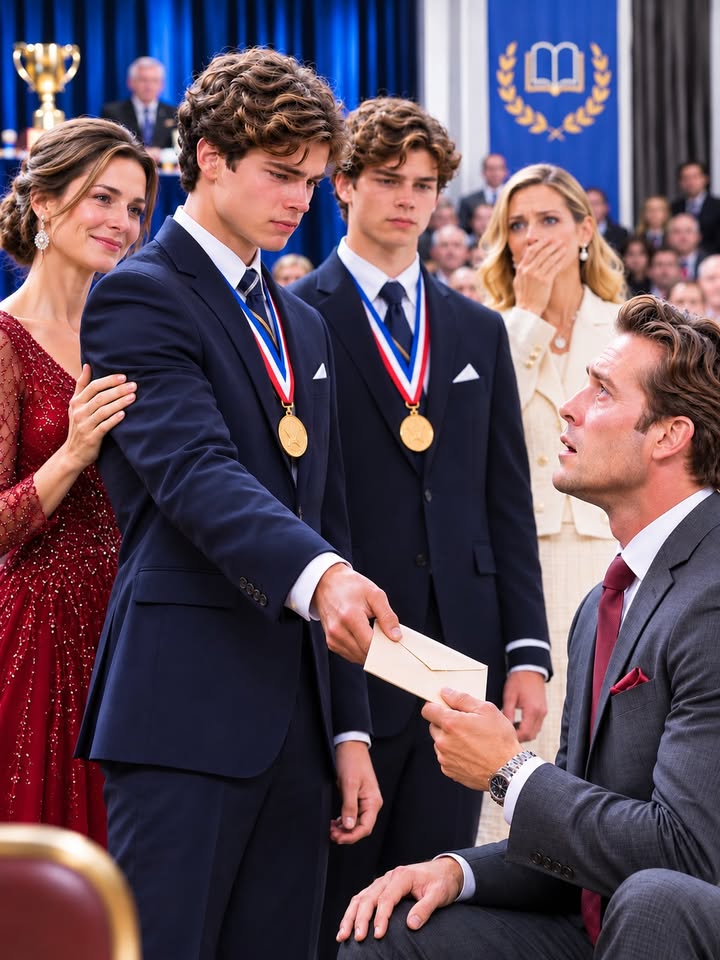
Part 5 – The Place He Chose
“I think I may have written back to you—and never known it was sent.”
For a moment, the kitchen held only the sound of the refrigerator humming.
My sons stared at the phone as if Brian’s words had made the distance between us suddenly visible.
“Can you read it?” my older son asked.
“I need to open the sleeve first,” Brian replied. “I wanted to make sure you wanted to know.”
“We do,” said his brother.
“I’ll call you back as soon as I’ve read it.”
The line went quiet.
My younger son lowered his eyes to the table.
“Do you think he sent it?”
“I don’t know,” I said.
“Do you think it was about us?”
“I don’t know that either.”
My older son pushed his chair back, then stopped before standing.
“I hate that we have to keep waiting for answers from grown-ups.”
The words were not angry so much as exhausted.
I reached for his hand, but let him decide whether to take mine.
After a moment, he turned his palm upward.
“I know,” I said.
He squeezed once, then let go.
Brian called that evening.
He had opened the sleeve and read the letter twice before calling us.
“It’s short,” he said. “I don’t know if it explains anything, but I’ll read it to you if you still want me to.”
The twins exchanged a glance.
“Read it,” my older son said.
Brian began carefully.
“‘Hannah, I don’t know how to write this without making things worse. I miss the boys. I want to know if I can see them, even briefly, but I don’t know whether you would allow it. I’m sorry I left the way I did. If you’ve moved, or if you don’t want me to contact you, I won’t keep pushing. I don’t know what else to do.’”
His voice faltered at the last sentence.
He took a breath before continuing.
“‘I’m not asking you to forgive me. I only want to know if there’s a way to be their father without making your life harder.’”
The room was silent.
I remembered the words we had exchanged in those last bitter weeks, how every attempt to speak had turned into a list of old injuries.
I remembered Brian’s final message telling me he wanted no contact.
I had taken that message as the end of the conversation.
This letter did not erase it.
It did not change the fact that he had stayed away.
But it showed the man who had written it standing, for a moment, at the edge of a different choice.
“Was it sent?” my younger son asked.
“I don’t know yet,” Brian said. “The sleeve was in a folder marked returned correspondence. There’s a postmark, but it’s hard to read. The lawyer’s office is looking for the original case file.”
“Did you put it in the mail?” the older twin asked.
“I don’t remember mailing it. I remember writing it.”
“Could your lawyer have sent it?”
“Maybe.”
“Could he have stopped it?”
“I don’t know.”
The brothers looked down at their hands.
They had been given another piece of the story, but it was not the answer they had hoped for.
“You said you wanted to know whether there was a way to be our father,” the younger one said. “Why didn’t you find out?”
“I should have,” Brian replied.
“You asked your lawyer once.”
“Yes.”
“And then you stopped asking.”
“Yes.”
There was no anger in the boy’s voice, but the plainness of the question made it harder to avoid.
“I was afraid of making things worse,” Brian said. “I let that fear make decisions for me.”
“People always have reasons,” the older twin said.
“I know.”
“But we were kids. We didn’t get to choose whether you stayed away.”
Brian did not interrupt.
When he answered, his voice sounded almost too quiet to carry through the phone.
“You’re right.”
The twins left the conversation there.
They did not tell him they forgave him, and he did not ask.
They only said they needed time to think about what they had heard.
Brian promised not to call again unless they invited him.
He kept that promise.
For the next few weeks, his absence returned in a different form.
He was no longer an unknown story sealed inside a wooden box, but neither was he a familiar part of our days.
The boys sometimes mentioned him at dinner, usually in practical questions.
What kind of work did he do?
How long had he lived in the same city?
Had he known they liked mathematics?
I answered what I knew and admitted what I did not.
When Brian’s name appeared, I tried not to make my voice warmer or colder than the question required.
They deserved the truth without being asked to carry my feelings as well as their own.
One evening, my younger son came into the kitchen while I was packing lunches.
“Do you think we should see him again?”
I set down the knife.
“What do you think?”
“I think I want to know what it feels like to talk to him when there isn’t a letter between us.”
His brother came in behind him, carrying two glasses of water.
“I’d go,” he said. “But I don’t want it to turn into a big thing.”
“It doesn’t have to,” I said.
“And if we don’t like it?” the younger one asked.
“Then you can leave.”
They considered this together.
“Would you come with us?” the older one said.
“If you want me there.”
“Nearby,” his brother said. “Not in the conversation.”
“Nearby.”
That was how we agreed to meet Brian for lunch on a Saturday.
The boys chose the place, a small park café with outdoor tables and enough space to talk without feeling watched.
I sat at a table under the awning, close enough that they could find me with a glance, far enough away that their conversation belonged to them.
Brian arrived ten minutes early.
He wore a plain blue sweater and carried no envelope.
He looked around when he entered, found the twins, and paused before approaching.
“Is this still all right?” he asked.
The older boy nodded.
Brian sat across from them.
I watched from my table as he kept his hands on the tabletop and waited for them to begin.
They spoke for nearly half an hour.
I could not hear every word, but I heard the rhythm of it: questions, pauses, the careful effort to stay honest.
Once, the younger twin smiled at something Brian said.
Once, his brother looked away, his jaw tightening.
Brian did not reach for either boy.
When they were ready, they stood and came to me.
“How was it?” I asked.
“Strange,” said the younger one.
“Not bad,” said his brother. “Just strange.”
Brian stayed at the other table while they decided what to do next.
The older twin glanced back at him.
“Maybe we can do this again.”
“Maybe,” the younger one echoed.
Brian nodded, accepting the answer without trying to turn it into a promise.
That small restraint mattered more than a grand apology would have.
After that, the meetings remained occasional and short.
They met for breakfast twice, then once at a bookstore because my older son wanted to show Brian a book he had been studying.
Brian learned that one twin liked to plan everything and the other did his best work at the last possible minute.
He learned that they argued about music, borrowed each other’s clothes, and still used the same private joke they had invented when they were children.
The boys learned that Brian drank his coffee black, disliked crowds, and could remember the lyrics to songs from the radio when he was young.
They also learned that he had a stepson named Evan, who was in the same statewide competition.
Brian never asked them to meet Evan.
He never asked them to call him Dad.
The first time one of the twins addressed him by his first name, Brian accepted it without flinching.
I learned that he could be careful now.
I also learned that carefulness was not the same as trust.
The envelopes became part of our lives in a new way.
The boys kept the originals in the wooden box, but Brian had the copies they had given him.
After one of their meetings, he told them he wanted to reply to the childhood letters, one at a time, even though the replies would arrive years too late.
The boys thought about it.
“Write them,” the older one said. “But don’t make us answer every one.”
“I won’t.”
“What if we don’t read them right away?” the younger one asked.
“Then I’ll wait.”
He wrote the first reply by hand.
It was addressed to the little boy who had announced that he could read an entire book, and it thanked him for telling his father.
He wrote that he wished he had been there to hear him read aloud.
The younger twin read it once and folded it carefully.
He did not say whether he would keep it.
The next reply was for the letter about the school concert.
Brian wrote that he had not known the boy was afraid to go onstage, but that he would have been proud of him.
The older twin read it twice, then placed it in the wooden box beside the original.
I did not ask what the letters meant to them.
They were making that meaning for themselves.
Near the end of spring, Brian called to ask whether the boys might want to join him for lunch the following week.
My older son said yes.
His brother said he would think about it.
Brian did not pressure him, and the lunch went ahead with one twin while the other stayed home.
That evening, the one who had gone described the conversation without being asked.
“He talked about the competition,” he said. “He remembered the score.”
“Was that all?”
“No. He said he’d been trying to understand how his life got so far from ours.”
“What did you say?”
“I told him it didn’t happen all at once.”
I waited.
“He said he knows,” my son continued. “He said he kept choosing the easier thing, and after a while the easier thing was just staying away.”
I felt the truth of that settle between us.
“And what do you think?” I asked.
“I think he’s right.”
A week later, Brian asked if the twins would be willing to see him together again.
They agreed to a short walk near the river.
I stayed at home that day, by their request.
They did not need me to stand between them and the past.
They needed to know I would be there if they wanted me.
When they returned, my younger son was quiet.
His brother seemed thoughtful rather than upset.
“What did you talk about?” I asked.
“School,” the older one said.
“Nothing important,” said his twin.
Then he added, “He asked if we wanted him at our next award ceremony.”
The boys had been invited to accept a regional scholarship several months later.
The invitation had arrived that morning.
The event was not as large as the statewide competition, but it mattered to them.
“What did you tell him?” I asked.
“We said we’d think about it.”
They did think about it.
For several days, the question traveled with us through breakfast, homework, and the quiet minutes before bed.
The boys knew inviting Brian would not make him their father again in the way they had once imagined.
They also knew an invitation could leave room for disappointment.
My older son worried that Brian might treat it as proof that everything was repaired.
My younger son worried that if they did not invite him, the relationship would remain trapped in cafés and careful conversations.
Neither concern was wrong.
They asked what I thought.
I told them I would support whatever they chose.
“I don’t want you deciding because you’re afraid of hurting me,” I said. “You don’t have to protect me from your relationship with him.”
“We know,” the older one replied.
“Do you?”
“Yes.”
He looked at the other boy.
“We’ve been talking about it.”
They decided to invite Brian, with conditions.
He could attend the ceremony.
He could sit with them afterward if they wanted him to.
He could not bring Carla or Evan unless they asked.
And if they changed their minds, he would respect that.
Brian accepted every condition.
“I’d be grateful to come,” he told them. “And if you decide otherwise, I’ll understand.”
For the first time, my sons began to plan for him as part of an event rather than as a question hovering beyond it.
They chose the time they wanted him to arrive.
They decided where he should sit.
They discussed whether he could take photographs.
The details were modest, but each one asked the same question: could he follow their lead when the moment mattered?
Brian did.
At the scholarship ceremony, he arrived early and sat exactly where they had told him.
He did not try to speak with them before the event began.
He waited until they waved him closer.
When their names were announced, he clapped with the rest of the audience.
Afterward, he congratulated them without reaching for a hug.
The younger twin offered him a brief handclasp.
The older one smiled and said, “You can stay for the pictures.”
Brian’s face changed, emotion passing through it before he could hide it.
“Thank you,” he said.
It was not a family photograph.
Not yet.
It was two boys holding certificates, their mother standing between them, and Brian several steps to the side because that was where the boys had asked him to stand.
The photographer lowered his camera.
“Would you like one more?” she asked.
The older twin looked at his brother.
His brother nodded.
“Could you take one with Dad closer?” he asked.
Brian took a step forward, then stopped.
The boys had made the invitation.
They had chosen the distance.
The camera clicked.
On the drive home, my sons talked about the next school term and the scholarship award.
Brian had not ridden with us.
He had left separately, as the boys preferred.
Two days later, he asked to speak with them in person.
They agreed to meet him at a café near his office.
They asked me to come too, but to stay at a neighboring table.
I understood from their faces that this was not another conversation about the past.
Something had changed.
Brian arrived with a folder tucked beneath his arm.
He looked tired, though not in the familiar way of someone who had slept badly.
He looked like someone who had been asked to make a choice before he was ready.
“Thank you for meeting me,” he said.
The boys waited.
Brian set the folder on the table but did not open it.
“I’ve been offered a promotion,” he said. “It would mean moving across the country.”
Neither twin spoke.
“It’s a good position,” he continued. “The kind I’ve spent years working toward.”
“Do you want it?” the older one asked.
“I do.”
“Then why are you telling us?”
Brian glanced at the folder.
“Because the timing matters. I’ve been asked to give them an answer by the end of the month.”
The younger twin’s expression grew guarded.
“Are you asking us to tell you what to do?”
“No,” Brian said at once. “This is my decision. I wouldn’t ask you to carry it.”
“Then why tell us?”
“Because if I take it, I’ll be farther away again. I won’t pretend that won’t affect what we’re trying to build.”
The older boy leaned back in his chair.
“You could still visit.”
“I could.”
“You could call.”
“I could.”
“You said you wanted to be consistent.”
“I do.”
“But you don’t know if you can do that from far away.”
Brian looked down at his hands.
“I don’t know how much you’ll want from me yet. I do know what I can offer. I can show up here. I can keep the commitments we make.”
“Are you saying you’d turn it down for us?” the younger twin asked.
“No.” Brian’s answer came slowly. “I’m saying I’ve been offered something I want, and I have to decide whether I’m still willing to put the next rung on the ladder ahead of the life I have in front of me.”
The boys were quiet.
My hands tightened around my coffee cup at the next table.
I wanted to cross the room and tell them not to let his decision become theirs.
But they knew that already.
They had asked me to stay nearby, not to speak for them.
“I don’t want you to stay and later blame us,” the older boy said.
“I wouldn’t.”
“You can’t promise what you’ll feel in five years.”
“No,” Brian replied. “I can promise I won’t blame you for a decision that belongs to me.”
The younger twin looked at the folder.
“What happens if you take it?”
“I’d move in six weeks.”
“And if you don’t?”
“I stay.”
“Would you still get another promotion someday?”
“I don’t know.”
The answer was honest, and it offered no easy way out.
The older boy looked through the café window.
Outside, a bus sighed to a stop beside the curb and let out a small crowd.
“I don’t want you to make a grand sacrifice and expect us to pay you back with a relationship,” he said.
“I don’t expect that.”
“Not now. Maybe later.”
Brian nodded.
“Then I’ll keep reminding myself this is my choice, not a debt you owe me.”
The twins exchanged a glance.
The younger one folded his arms.
“We’re not asking you to stay.”
“I know.”
“We’re not asking you to go either.”
“I know.”
“Then you have to decide what kind of life you want,” the older boy said.
Brian looked at them.
For the first time, I saw something in his face that was not fear of rejection or hope for forgiveness.
It was recognition.
He had spent years making his life from decisions that avoided discomfort.
Now he was being asked to choose without knowing what the reward would be.
The boys stood.
“We should go,” the younger twin said.
Brian rose with them.
“Thank you for listening,” he said.
The older boy paused.
“We didn’t say we’d forgive you.”
“I know.”
“We didn’t promise we’d keep seeing you.”
“I know.”
“Then don’t make this about earning anything.”
“I won’t.”
The boys walked toward me.
Brian remained beside the table, one hand resting on the unopened folder.
My younger son glanced back once, then turned away.
For several days, neither brother mentioned the promotion.
Brian did not ask what they thought.
He did not send a message designed to make them feel responsible.
He simply kept the next visit they had already agreed to.
On the evening after that visit, he called and asked whether they would be willing to see him again the following Saturday.
The older twin said yes.
The younger one said he would let him know.
Brian accepted that.
Then the following Thursday, a letter arrived at our house.
It was addressed to both boys in Brian’s handwriting.
They did not open it right away.
They placed it on the kitchen table beside the wooden box and went upstairs.
When they came down again, my older son slid a finger beneath the flap.
Inside was a single page and a copy of the offer letter from Brian’s employer.
He had not signed the acceptance.
At the bottom of his note, he had written that he wanted them to know his decision before he made it official.
The twins read the page together.
Then my younger son handed it to me.
Brian had turned down the promotion.
He wrote that it was not because the boys had asked him to stay, because they had not.
He had turned it down because he had spent years chasing the next achievement while telling himself that important things could wait.
He had finally understood that consistency was not a promise made once.
It was a decision he would have to keep making.
My older son read the note again.
“He’s staying,” he said.
“For now,” his brother replied.
“People can still leave from here.”
“Yes.”
They folded the letter and returned it to the envelope.
Neither boy called Brian that night.
Neither wanted the decision to become a celebration that might ask them to offer something in return.
But the next morning, they placed the envelope in the wooden box beside their childhood letters.
It was not forgiveness.
It was a record of what he had chosen.
A week later, the boys sat at the kitchen table discussing the celebration their school was planning for the scholarship recipients.
They had been given three invitations each.
One for me.
One for their grandmother’s sister, Aunt Ruth.
The third remained undecided.
“Do we invite Dad?” my younger son asked.
His brother turned the invitation over in his hands.
“I don’t know.”
They did not need me to answer.
I stayed by the counter, washing a mug that was already clean.
“I don’t want to invite him just because he turned down the job,” the older twin said.
“Me neither.”
“But I might want him there.”
“That’s different.”
They looked at each other, then at the blank line where a name could be written.
After a long pause, my younger son picked up a pen.
He wrote Brian’s name, then stopped before signing the invitation.
“What if he’s still here next year?” he asked.
“Then we’ll decide next year,” his brother said.
“What if he isn’t?”
“Then this invitation will have meant what it meant that day.”
The younger boy lowered the pen.
They had made their choice.
I could see it in the way they sat together, no longer trying to protect me from it and no longer pretending that the past could be undone.
Then my older son’s phone lit up on the table.
A message from Brian appeared.
The promotion had been offered to someone else.
Beneath that, he had written: **I’ve made my decision, and I’m staying. I won’t ask you to make anything of it.**
The boys read it in silence.
For a moment, neither moved.
Then the younger twin picked up the invitation again and wrote Brian’s name in careful letters.
He held it out to his brother.
His brother took the pen.
But before he could sign, another message arrived.
The older twin read it aloud.
“‘There’s something else I need to tell you before the celebration. I found a record of what happened to one of your letters.’”
The invitation lay open between them.
My sons looked at each other.
Then the phone rang.
**–END OF PART 5–CLICK “NEXT” AT THE BOTTOM OF THE PAGE TO CONTINUE READING**
* * *
[PREVIOUS: PART 4](https://puretales.idolsgift.com/blog/part-4-the-letters-he-never-saw-034) | [NEXT: PART 6(THE END)](https://puretales.idolsgift.com/blog/part-6-the-end-the-letters-he-never-saw-034)
✓ Lynn R. Adams
Part 5 – The Place He Chose “I think I may have written back to you—and never known it was sent.” For a moment, the kitchen held only the sound of the refrigerator humming. My sons stared at the ph…