Part 5: The Letter Beneath the Memory-053
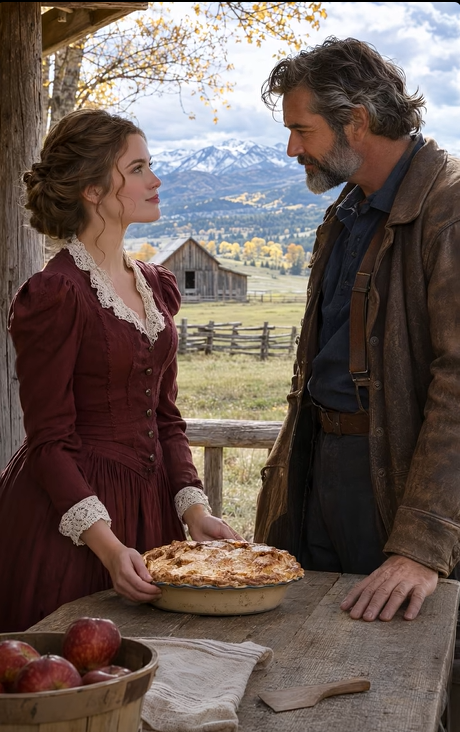
Thomas read the solicitor’s letter a second time before finally placing it on the table.
Margaret watched him carefully.
“What did Eleanor write?”
He took a deep breath.
“She left instructions that the schoolhouse should not simply become a place where children learn to read and write.”
Margaret frowned.
“What else did she want?”
Thomas looked at the old restoration drawings scattered across the table.
“She wanted me to teach there again.”
Margaret smiled.
“That is wonderful.”
“There is more.”
He picked up the letter.
“She specifically requested that I teach the first lesson, just as I did when we first opened the schoolhouse nearly twenty years ago.”
Margaret’s expression softened.
“She remembered.”
“Apparently, she remembered everything.”
Thomas looked toward the empty chair near the fireplace.
“She even remembered the first lesson I taught.”
“What was it?”
“Arithmetic.”
Margaret laughed.
“I should have guessed.”
Thomas smiled, but his expression soon became thoughtful.
“There is something else in the solicitor’s letter.”
He pointed to a paragraph near the bottom.
Eleanor had arranged for a modest sum of money to be held in a separate account for the school’s initial expenses.
It was not a fortune, but it would cover the remaining repairs, purchase books, and provide basic supplies for the first year.
The money had been saved gradually from her personal inheritance.
She had also specified that the school should remain open to children from every family in the surrounding farming community, regardless of their parents’ ability to pay.
Margaret read the paragraph twice.
“She thought of everything.”
Thomas nodded.
“She always did.”
Then he noticed a final handwritten sentence beneath the solicitor’s signature.
It was in Eleanor’s handwriting.
_Thomas, if you are reading this, please remember that you once told me the greatest happiness in your life was watching someone discover something they did not know yesterday._
_I hope you will have that happiness again._
Thomas placed the letter down.
His eyes were wet.
Margaret moved closer and rested her hand on his shoulder.
“You can do it.”
He shook his head.
“I haven’t stood in front of a classroom in years.”
“Then perhaps you should begin with one lesson.”
“What if I have forgotten how?”
Margaret smiled.
“I doubt you have forgotten how to explain something to another person.”
He looked at her.
“You have a remarkable amount of confidence in me.”
“Someone has to.”
He laughed quietly.
Then, for the first time, Thomas allowed himself to imagine standing inside the old schoolhouse again, surrounded by children whose futures had not yet been written.
Margaret began preparing for her teaching examination.
Every evening, after finishing her household responsibilities, she sat at the kitchen table with her books and notebooks.
Thomas often sat nearby, reading the newspaper or repairing small household items.
Occasionally, she asked him to test her knowledge.
“What is the difference between a noun and a verb?”
“A noun is a person, place, or thing.”
“And a verb?”
“Something a person does.”
Margaret smiled.
“Very good, Mr. Calloway.”
“I believe I may be qualified to teach arithmetic after all.”
She laughed.
Their evenings became something both looked forward to.
Thomas discovered that he enjoyed watching Margaret study.
There was a determination in her that reminded him of Eleanor, although the two women were very different.
Eleanor had been patient and reflective.
Margaret was energetic, curious, and wonderfully persistent.
She could spend twenty minutes explaining why a particular schoolroom arrangement would help younger children concentrate, then abruptly remember that Thomas had not eaten his supper.
Thomas found himself smiling more often.
One evening, he noticed that Margaret had fallen asleep over her books.
Her cheek rested against an open notebook, and a pencil remained loosely held between her fingers.
He gently removed the pencil and placed a shawl over her shoulders.
Then he looked at the pages she had been studying.
At the top of the notebook, she had written:
_My first classroom._
Beneath it were sketches of small desks, a reading corner, and a window overlooking the meadow.
Thomas smiled.
He understood something important then.
Margaret was not simply helping him recover from loneliness.
She was building something of her own.
And he wanted to be there to see it happen.
The following Sunday, Thomas accompanied Margaret to the village church.
They arrived together, walking slowly beneath the golden autumn trees.
Margaret wore a modest blue dress, while Thomas had polished his boots and carefully brushed his silver-streaked hair.
Several neighbors greeted them warmly.
Others simply watched.
After the service, an elderly woman named Mrs. Whitcomb approached them.
She had known Thomas and Eleanor for nearly thirty years.
“Thomas,” she said affectionately, “it is good to see you out and about.”
“Good morning, Mrs. Whitcomb.”
Her gaze moved toward Margaret.
“And you must be keeping him busy.”
Margaret smiled.
“Someone has to.”
Mrs. Whitcomb laughed.
Then she looked at Thomas with a thoughtful expression.
“Eleanor would have been pleased to see you smiling again.”
Thomas lowered his eyes.
“I hope so.”
The elderly woman gently touched his arm.
“I believe she would.”
Then she turned to Margaret.
“And I hope you know what a good man he is.”
Margaret nodded.
“I do.”
Mrs. Whitcomb smiled.
“Then I shall leave you two to enjoy your Sunday.”
As she walked away, Thomas looked at Margaret.
“That was kinder than I expected.”
“Perhaps people are beginning to understand.”
He nodded.
“I hope they understand that you have your own dreams, too.”
Margaret squeezed his arm.
“They will.”
Two weeks later, Margaret received a letter from the county superintendent.
She had passed her examination.
When Thomas arrived at her cottage that afternoon, he found her standing in the doorway holding the letter.
He knew immediately from her expression that something had happened.
“What is it?”
She tried to speak, but her smile gave her away.
Thomas stepped closer.
“Margaret?”
“I passed.”
For a moment, he simply stared at her.
Then his face broke into the happiest smile she had seen in years.
“You passed!”
She nodded.
“I am officially qualified to teach.”
Thomas laughed and reached for both her hands.
“I knew you could do it.”
Margaret’s eyes filled with tears.
“I couldn’t have done it without you.”
“Nonsense.”
“You helped me every evening.”
“You did the studying.”
“You helped me believe I could.”
Thomas became quiet.
Then he gently pulled her into an embrace.
It was their first embrace.
Margaret rested her head against his shoulder, listening to his steady breathing.
For a moment, neither of them needed words.
When they finally separated, Thomas looked at her with extraordinary tenderness.
“I am very proud of you.”
She smiled.
“And I am proud of you, too.”
“Whatever for?”
“For finding the courage to begin again.”
His expression changed.
He looked toward the farmhouse, where the oak tree stood beyond the fields.
“I sometimes wish I could tell Eleanor about all of this.”
Margaret considered his words.
“Perhaps you can.”
Thomas looked at her.
She smiled gently.
“Tell her when you visit her tree.”
He nodded.
“I think I will.”
The schoolhouse opening was scheduled for the first Monday of November.
During the remaining weeks, the community became involved in the preparations.
William supplied additional timber.
Sarah organized the donated books.
Mrs. Whitcomb contributed several old maps, while a local shopkeeper donated slates and writing materials.
Families brought chairs, blankets, and baskets of supplies.
Even people who had initially questioned Margaret’s relationship with Thomas began offering assistance.
They discovered that a little schoolhouse could bring neighbors together more easily than any village meeting.
One afternoon, Margaret was arranging the books when a young boy appeared at the doorway.
He was perhaps eight years old, with sandy hair and a coat that had become too short for his growing arms.
He stood uncertainly, holding a small notebook.
“Are you the teacher?”
Margaret smiled.
“I will be.”
The boy glanced around the room.
“Will children have to pay to come here?”
“No.”
“Even if their families don’t have much money?”
“Especially then.”
The boy looked relieved.
“My mother says I should learn more than she did, but she cannot afford to send me very far.”
Margaret knelt slightly so that she could speak to him comfortably.
“What is your name?”
“Samuel.”
“Well, Samuel, I think you will like our school.”
He looked toward the desks.
“Will you teach arithmetic?”
Margaret laughed.
“Certainly.”
“Can you teach me how to write my name properly?”
“Of course.”
Samuel smiled.
Then he noticed Thomas standing near the fireplace.
“Are you the man who built this place?”
Thomas chuckled.
“Not entirely.”
“Are you a teacher, too?”
Thomas looked at Margaret.
She smiled encouragingly.
“I used to be.”
Samuel considered that answer.
“Then perhaps you can teach me something, too.”
Thomas felt a warmth spread through his chest.
“I would be delighted.”
The boy returned the following afternoon with two other children.
By the end of the week, five families had expressed interest in sending their children.
Margaret began preparing lesson plans.
Thomas repaired the remaining desks.
William built a small wooden bookshelf, and Sarah volunteered to help supervise the younger children during the afternoon.
The little schoolhouse was becoming everything Eleanor had imagined.
On the evening before the opening, Thomas asked Margaret to walk with him.
They crossed the meadow just as the sun was disappearing behind the distant hills.
The air had grown colder, and Margaret wrapped her shawl more tightly around her shoulders.
Thomas carried a small wooden box.
“What is that?” she asked.
“Something I have been thinking about.”
They continued walking until they reached the enormous oak tree.
Thomas stopped.
For several moments, he said nothing.
Then he looked at the ground where Eleanor rested.
“I have been meaning to come here.”
Margaret stood beside him.
Thomas removed his hat.
“Eleanor, I hope you know that I haven’t forgotten you.”
His voice was quiet.
“I still remember the mornings when you sang while preparing breakfast, the way you laughed when the hens escaped, and how you always insisted that the garden needed more flowers.”
He paused.
“I miss you.”
Margaret gently lowered her eyes.
“But I think you would have liked what is happening.”
Thomas looked toward the schoolhouse in the distance.
“The children are coming back.”
A faint smile appeared on his face.
“And Margaret is going to be a wonderful teacher.”
He took a breath.
“I hope you will forgive me for being happy again.”
The wind moved softly through the oak branches.
Thomas stood there for a long time.
Then he placed a small bunch of wildflowers at the foot of the tree.
Margaret waited until he was ready to leave.
As they walked back toward the farmhouse, he finally spoke.
“I believe I have spent three years thinking that the best part of my life was behind me.”
Margaret looked at him.
“And now?”
“Now I think I may have been wrong.”
He stopped walking.
Then he opened the wooden box.
Inside was the gold ring that had once belonged to his mother.
Margaret’s eyes widened.
“Thomas?”
He held it carefully in his palm.
“I have been trying to find the right words for several weeks.”
He smiled nervously.
“I am fifty-five years old, Margaret, and I have discovered that asking a woman an important question is considerably more difficult than repairing a roof.”
She laughed softly.
“I imagine it is.”
Thomas looked directly into her eyes.
“I don’t want to ask you because I am lonely.”
He paused.
“I don’t want to ask you because Eleanor left me a letter.”
His voice became warmer.
“I want to ask you because I have come to love the woman who stands beside me, who challenges me, who reminds me to eat breakfast, and who has given an old farmhouse a reason to feel like home again.”
Margaret’s eyes filled with tears.
“Thomas…”
“Would you consider becoming my wife?”
She looked at the ring.
Then at the man holding it.
And she smiled.
“Yes.”
Thomas closed his eyes briefly, overcome with relief.
Margaret reached for his hand.
“Yes, Thomas Calloway.”
He slipped the ring onto her finger.
It fit perfectly.
Then they embraced beneath the autumn sky.
Neither noticed the small figure standing near the edge of the meadow.
It was William.
He had come looking for his brother with an envelope in his hand.
He waited until Thomas and Margaret noticed him.
“I’m sorry to interrupt,” he called.
Thomas laughed.
“William, you have an extraordinary talent for appearing at the most important moments.”
His brother approached, smiling.
“I believe this one is important enough to justify the interruption.”
He held out the envelope.
“It arrived from Eleanor’s solicitor this afternoon.”
Thomas looked at the familiar handwriting on the front.
Then he noticed the words written beneath his name.
_To be opened on the evening before the schoolhouse welcomes its first children._
Margaret looked at Thomas.
“What could she possibly have left now?”
Thomas carefully opened the envelope.
Inside was one final letter.
And at the bottom, beneath Eleanor’s familiar signature, was a sentence that neither of them had expected to read.
_There is one person who has never been told the full story of how Thomas and I first met._
Thomas stopped breathing for a moment.
He recognized the next name immediately.
His mother’s.
**–END OF PART 5–CLICK “NEXT” AT THE BOTTOM OF THE PAGE TO CONTINUE READING**
✓ Lynn R. Adams
Thomas read the solicitor’s letter a second time before finally placing it on the table. Margaret watched him carefully. “What did Eleanor write?” He took a deep breath. “She left instructions tha…