PART 5: The Keepsake in the Velvet Box 069
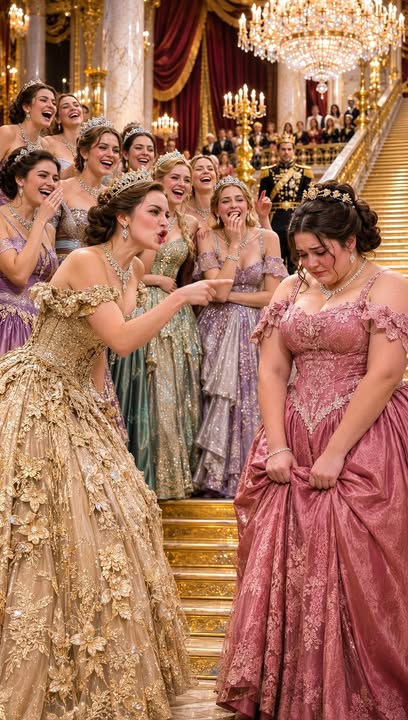
Part 5 – The Choice Between Blame and Repair
The name on the final page was Victoria’s father’s.
For several seconds, no one moved.
Victoria stared at the ink as if the letters might rearrange themselves into someone else’s name.
Lady Beatrice lowered her hand from her mouth.
“My husband?” she asked.
Mara nodded, her careful expression unchanged.
“The note is addressed to Lord Edmund.”
Alexander stepped closer to the table.
“May I read it?”
Mara held the narrow sheet toward him, but he did not take it at once.
Sophia watched Victoria’s face.
The princess’s earlier confidence had vanished, leaving her with the stunned stillness of someone discovering that a family story had another room behind it.
“Read it,” Victoria said.
Her voice was quiet.
Alexander accepted the page and unfolded it.
The writing was hurried and faint, as though its author had been interrupted.
He read silently at first, then looked up.
“It appears to be a note from your grandmother,” he said.
“To my father?” Victoria asked.
“Yes.”
“What does it say?”
Alexander glanced at Lady Beatrice, then back to Victoria.
“It says the report should not be destroyed, only removed from public circulation until the carpet had been repaired and the queen’s account could be added.”
Lady Beatrice closed her eyes.
“That is not what the transfer sheet suggests.”
“No,” Mara said.
“The transfer sheet records the papers as withdrawn from the catalogue, but it does not say they were destroyed.”
Victoria leaned over the table.
“Keep reading.”
Alexander lowered his eyes to the page.
“The note says your grandmother intended to return the papers to the archive after the repair.”
“Did she?”
Mara searched the packet again, though the answer was already in the room.
“No,” she said.
“Not according to anything we’ve found.”
Victoria looked at her mother.
“You thought she had ordered the report hidden because she feared blame.”
“I did.”
“And now?”
Lady Beatrice’s face was pale, but her voice remained measured.
“Now I know she intended to restore it, at least when she wrote this note.”
“Then why didn’t she?”
“I don’t know.”
The old explanation, once so easy to grasp, had grown more complicated.
The family had feared public embarrassment.
The record had disappeared from the catalogue.
But the paper now before them suggested that the disappearance might have begun as a temporary measure, and then become permanent through neglect, hesitation, or some choice no one had yet uncovered.
Sophia looked at the note.
“Is there a date?”
Mara turned the page toward the lamp.
“The day after the performance.”
“So the queen’s letter, Elena’s statement, and this note all belong to the same moment,” Sophia said.
“Yes,” Mara answered.
“They fit together, but they do not answer every question.”
Alexander laid the note beside the queen’s letter.
“Then we should not pretend they do.”
Victoria’s gaze remained fixed on her father’s name.
“People will assume he knew.”
“Perhaps he did,” Lady Beatrice said.
“But this note alone does not tell us what he did afterward.”
“Or whether he ever received it,” Victoria said.
Mara studied the handwriting and the fold marks.
“It appears to have been placed with the packet intentionally.”
“By whom?” Sophia asked.
No one could answer.
The archive’s high windows had begun to dim with the late afternoon.
Dust drifted in the light above the table, slow and weightless, while the old papers seemed to hold the room in place.
Alexander turned toward Sophia.
“The palace will need to decide what to do with the records.”
“The records need to be restored,” she said.
“Yes.”
“But not used to accuse a person on the strength of one note.”
“I agree.”
Victoria looked up.
“And not used to protect my family either.”
Lady Beatrice’s eyes rested on her daughter.
“No one should be protected at the expense of what happened.”
“I know.”
The words came without defiance.
Victoria seemed to have arrived at a difficult understanding: that fairness could not mean either shielding her family from every question or condemning them before the evidence was complete.
Sophia recognized the same uncertainty she felt in herself.
“My mother asked for no one to be punished,” Sophia said.
“She asked for the stairs to be fixed.”
Alexander nodded.
“Then the first thing we should do is make sure every staircase in the palace is safe.”
“That should have been done already,” Sophia replied.
“Yes.”
He did not defend the palace.
The acknowledgment seemed to matter more than a promise made for effect.
Mara placed the records back in their folders.
“I can prepare a complete account, separating confirmed facts from recollections and unanswered questions.”
“How long will that take?” Alexander asked.
“A few days, perhaps longer.”
“Then we wait for the account.”
The answer came with quiet resolve.
No proclamation.
No sudden accusation.
No attempt to force a conclusion out of a torn page.
Sophia watched him carefully.
“You won’t announce what we’ve found tonight?”
“Not without the full record, and not without speaking with you about Elena’s wishes.”
“The palace might want to get ahead of the story.”
“The palace can wait.”
That was the first time Sophia believed his choice might cost him something.
The royal household depended on polished appearances, and the truth in those folders was not polished.
It was incomplete, uncomfortable, and human.
As they left the archive, Victoria remained behind to help Mara check the packet against its inventory.
She did not ask Sophia to forgive her again.
Lady Beatrice followed more slowly, pausing at the doorway to thank the archivist.
Sophia walked with Alexander toward the chapel passage.
The silver shoe rested in its velvet box beneath his arm.
“Do you think my mother knew the record had vanished?” she asked.
“I don’t know.”
“Do you think she cared?”
“I think the way she wrote about it suggests she wanted the truth preserved.”
“But she refused a public reward.”
“She may have wanted to choose what was made public.”
Sophia touched the folded ribbon in her pocket.
“That choice should have remained hers.”
“Yes.”
“And the palace turned her silence into permission.”
Alexander did not argue.
The corridor opened into a small courtyard where the fading light settled over a stone fountain.
They stopped beneath an archway.
From somewhere inside the palace came the distant sound of staff preparing for the evening.
Sophia knew the story would not remain private forever.
There were too many records now, too many people who had seen them, and too many questions to put back into a drawer.
Still, she wanted to keep control of the way her mother’s name entered the world.
“If the account is restored,” she said, “I want the record to say Elena was a laundry worker who taught dance and helped the queen.”
“It can.”
“I want it to say she declined a public reward.”
“It should.”
“And I want it to say she asked the palace to repair the stairs, not punish the person who made the mistake.”
“I’ll make sure that is included.”
Sophia turned toward him.
“Not as a kindness to me.”
“No.”
“Not as a favor to the prince’s family.”
“No.”
“Because the record is true.”
“Because it is true.”
His answer was quiet, but it did not waver.
For the first time, the space between them felt less like a courtly distance and more like room freely given.
Then the palace steward appeared at the courtyard entrance.
“Your Highness, the council has asked for an immediate decision about tomorrow’s contest.”
Alexander’s expression tightened.
“What decision?”
“They wish to know whether the competition will continue as scheduled.”
Sophia looked at him.
The contest had already been suspended for the evening, but the final event had been planned for the following day.
The twelve princesses were expected to return, and the palace had advertised the event to its guests as the final stage of Alexander’s marriage competition.
“Tell them I will answer shortly,” he said.
The steward bowed and withdrew.
Sophia could see the decision forming in Alexander’s face.
“You can cancel it,” she said.
“I can.”
“Will you?”
He looked toward the palace windows, where the ballroom chandeliers were being lit one by one.
“I should.”
“But?”
“The contest was announced in my name, and there are people who will say canceling it now means I was influenced by you.”
“Would that be worse than letting it continue?”
“No.”
“Then why does it matter what they say?”
“It matters because the court will turn your mother’s story into a reason to judge every woman who took part.”
“The other contestants didn’t make Victoria remove my shoe.”
“No,” he said.
“And some of them tried to stop the laughter.”
Sophia remembered the uncertain faces in the ballroom, the few guests who had looked away, and the contestants who had remained silent.
She did not want to make every person in the room carry the same blame.
“Then don’t make them responsible for what Victoria did.”
“I won’t.”
“And don’t make me the reason you change the rules.”
“I don’t want to.”
“But you might be.”
Alexander studied her.
“You’re asking me to choose without using your story to justify it.”
“I’m asking you to decide what kind of prince you want to be when nobody can hide behind a tradition.”
He absorbed that quietly.
“I thought the competition would let me choose my future,” he said.
“I thought a public test would make the choice fair.”
“Was it fair?”
“No.”
“What would be fair?”
“I don’t know.”
The honesty of her answer surprised them both.
Sophia continued.
“I know I don’t want to be chosen because of my mother.”
“You won’t be.”
“I know I don’t want a title, a prize, or a place at court offered because the palace feels guilty.”
“I won’t offer those things.”
“And I know I don’t want your choice to turn into another performance.”
Alexander looked down at the velvet box.
“Then what do you want me to do?”
“I want you to stop the contest if you believe it has become unfair.”
“And if I stop it?”
“Tell them why.”
“What if the truth makes my family look careless?”
“Then tell the truth without pretending you know more than you do.”
“What if it makes the court angry?”
“Then let them be angry.”
She said it gently, but the words carried the firmness of someone who had spent the evening being asked to bend around other people’s comfort.
Alexander looked at her as if the answer had made the choice clearer, not easier.
“The competition was supposed to be about choosing a partner,” he said.
“Then why did you invite a crowd to judge?”
“I thought the crowd could witness it.”
“Witness what?”
His gaze lowered.
“Whether I could choose freely.”
“Freedom is not the same as making someone perform.”
“No.”
“Not even you.”
A small, rueful smile appeared.
“Especially not me.”
The courtyard grew quiet around them.
Sophia could hear the fountain and, beyond it, a door closing somewhere in the palace.
“Will you speak to the contestants?” she asked.
“Yes.”
“Will you tell them the final event is canceled?”
“I will suspend it until the review is complete.”
“Suspended is not canceled.”
“I know.”
“People may still think the contest will continue.”
“Then I’ll be clear.”
“Will you say the reason is the unsafe staircase and the unfairness of what happened?”
“Yes.”
“Will you say I asked you to?”
“No.”
“Will you say Elena’s story proves I deserve to be here?”
“No.”
The answer came without hesitation.
Sophia studied his face, searching for the promise beneath the words.
“What will you say?”
“That I allowed a tradition to become more important than the people standing inside it.”
For a moment, she could not find a reply.
That was not the kind of statement a court expected from its future king.
It did not make Alexander look wise or blameless.
It made him look responsible.
A bell sounded from the palace wing, announcing that the evening gathering would begin soon.
Alexander glanced toward the doors.
“I have to address the council before the guests arrive.”
“Then go.”
“Will you come with me?”
“No.”
He nodded.
The absence of disappointment in his expression made the refusal easier.
“I want to hear what you decide,” Sophia said.
“You will.”
“Not what they decide for you.”
“Not what they decide for me.”
They entered the palace by separate corridors.
Sophia returned to the laundry room, where a basket of clean linens waited beside the worktable.
The familiar work gave her hands something to do while her thoughts settled.
She folded each sheet into a clean square, listening to the rhythm of cloth meeting cloth.
Her mother had once told her that a steady rhythm could hold a person through uncertainty.
Sophia had understood the words as a child, though she had not known how often she would need them.
A little before the palace bell, she carried a stack of linen toward the ballroom corridor.
The grand doors stood open.
Inside, the contestants had gathered beneath the chandeliers.
Some wore the same gowns as the night before; others had changed into formal evening dresses.
The staircase had been roped off, and two palace workers were examining the carpet along the first landing.
Sophia stopped at the edge of the room.
She had not meant to be part of the gathering.
A few people noticed her, but no one called her forward.
Victoria stood among the contestants, her posture composed, her hands folded at her waist.
When she saw Sophia, she gave a small nod.
Sophia returned it.
There was no intimacy between them yet, but neither was there the old public rivalry.
Alexander entered through the central doors.
The conversation quieted without anyone being told to stop.
He carried no velvet box.
He wore no ceremonial sash.
He stood before the gathered guests with his hands relaxed at his sides.
“I need to correct something I said when I announced this competition,” he began.
“I called the contest a test of grace, judgment, and character.”
The room remained still.
“But last night I allowed it to become a spectacle.”
His eyes moved across the crowd, not searching for one person to blame.
“I believed that having rules made the contest fair.”
His voice tightened slightly.
“I was wrong.”
Several guests shifted.
Alexander continued.
“A participant was made part of the event without her consent, and I failed to stop it before humiliation had already been done.”
Sophia felt every gaze in the ballroom turn toward her.
She kept her shoulders square, but she did not step forward.
Alexander noticed and did not say her name.
“The staircase will remain closed until it has been fully inspected and repaired,” he said.
“And the contest is suspended.”
A murmur moved through the guests.
One of the council members stood near the first row.
“Your Highness, the remaining contestants have not completed the final event.”
“That is precisely why it cannot continue as planned.”
“But the palace has made a public commitment.”
“The palace made a public commitment to a competition whose fairness I no longer trust.”
The council member looked toward the staircase.
“Was the staircase itself unsafe?”
“We are reviewing the old records and the current inspection.”
Alexander spoke clearly, without overstating what they knew.
“We have found evidence that a carpet defect was reported before a past performance and that the record was incomplete.”
The guests murmured again.
Sophia noticed Lady Beatrice standing beside Victoria.
Neither woman looked away.
“The full account is not yet established,” Alexander continued.
“I will not accuse anyone before the evidence is complete.”
A second council member rose.
“Then perhaps the event should simply be postponed until the records are reviewed.”
“It should be suspended until the rules can be made fair to every participant.”
“Your Highness, people will say this is because of Miss Sophia.”
“They may say many things.”
Alexander’s gaze stayed on the council member.
“But the responsibility is mine.”
The answer carried through the ballroom.
“I chose the format, I permitted the contest to begin, and I failed to stop the humiliation when it was happening.”
The room had become so quiet that Sophia could hear the workers moving tools on the staircase.
“I will not use Miss Sophia’s family history to defend my decision, or to turn her into proof that the competition was noble after all.”
Her throat tightened, but she kept her face composed.
“This is not her burden to carry.”
For the first time, she saw several people in the ballroom lower their eyes in something other than embarrassment.
The council members exchanged a glance.
Then one of them nodded.
“The suspension will be recorded,” he said.
“It will.”
Alexander looked over the guests again.
“The palace will publish the corrected historical account when the archivist is satisfied that it is complete.”
He turned slightly toward Sophia, but did not ask her to come forward.
“And no person named in that account will be made a prize, a symbol, or an excuse.”
Sophia felt the words settle around her.
Not because they erased what had happened.
Because he had finally spoken of responsibility as his own.
The gathering broke apart slowly.
The contestants began to leave in small groups, their conversation subdued.
Some glanced at Sophia, but no one approached her to ask whether she had inspired the prince’s speech.
Victoria waited until the others had passed.
Then she crossed the room.
“I’m sorry,” she said.
Sophia looked at her.
“You already said that.”
“I know.”
Victoria’s expression was more honest than polished.
“I wanted to say it where no one could mistake it for a performance.”
Sophia held her gaze.
“I believe you mean it.”
Victoria’s shoulders eased slightly, but she did not reach for more than Sophia had offered.
“I will help fund the dance program the palace has been discussing,” she said.
“I don’t want it to be a gesture made because of me.”
“It won’t be.”
“Then make sure it is open to the people who work here, and to people who live outside the palace.”
Victoria nodded.
“That is fair.”
“And don’t put my mother’s name on it without asking.”
“I won’t.”
Sophia thought of the rose-colored ribbon and the letter in the archive.
Her mother had chosen what to share.
The palace should not take that choice away again, even for a good cause.
Victoria looked toward the workers on the staircase.
“My family left the record incomplete,” she said.
“I want to help restore it.”
“Then help Mara.”
“I will.”
It was not forgiveness, but it was the beginning of something less brittle than resentment.
Victoria walked away to speak with the archivist.
Alexander remained near the center of the ballroom, answering the council’s questions.
He did not look for Sophia.
She was grateful for that.
When the last guests had gone, she carried the linens to the service corridor and found him waiting near the doorway.
“You did what you said you would do,” she told him.
“I did what I should have done earlier.”
“That matters too.”
“I’m sorry that it took so long.”
“So am I.”
He glanced toward the empty ballroom.
“The staircase will be repaired before anyone uses it again.”
“Good.”
“And the contest will not resume unless every contestant agrees to the same rules.”
Sophia considered the careful wording.
“That still sounds like a contest.”
“It may not become one.”
“Then why keep the possibility?”
“Because the contestants deserve a voice in what happens next.”
She nodded.
“That is better than deciding for them.”
He looked at her with a quiet uncertainty.
“I don’t know what happens to the tradition.”
“Maybe it doesn’t need to happen.”
“Perhaps.”
They stood in the service corridor, where the palace seemed less grand and more honest.
Alexander had removed his gloves.
A faint mark from the velvet box’s clasp remained across his palm.
“I should return this to the archive,” he said.
“The shoe?”
“Yes.”
“Is that where the queen wanted it?”
“I don’t know.”
“Then perhaps you should wait until Mara has finished the record.”
“I will.”
Sophia looked down the corridor toward the laundry room.
“I should go back to work.”
“I know.”
He did not ask her to stay.
She took a step away, then paused.
“You said the contest was meant to help you choose freely.”
“It was.”
“Do you know what you want now?”
Alexander seemed to consider the question carefully.
“Not yet.”
“Good.”
“Good?”
“If you had decided in one evening, I would have wondered whether you were choosing me because you felt guilty.”
“I wouldn’t.”
“Perhaps not.”
She held his gaze.
“But you need to know the difference.”
“You’re right.”
Sophia left him there and returned to her work.
The evening passed without music in the ballroom.
The staircase was closed, and the contestants were sent home with a formal notice that the event had been suspended.
In the days that followed, workers inspected the palace steps and found several places where the old carpet had loosened beneath the gold-trimmed edges.
The damaged sections were removed and replaced.
Mara continued checking the archives, and Lady Beatrice gave a careful written account of what she remembered.
Victoria spent long hours with the archivist, sorting her family’s papers without asking to control what they revealed.
Alexander did not announce a match, choose a winner, or ask Sophia to appear beside him in public.
For a little while, the palace seemed to be learning how to wait.
Then, on the morning the staircase was reopened, a royal messenger arrived in the laundry room carrying a formal invitation.
It was addressed to Sophia.
The note asked her to meet the prince in the ballroom before the palace’s assembled guests.
At the bottom, in Alexander’s own hand, was a single sentence:
There will be no prize, no test, and no obligation—only a question I should have asked you from the beginning.
Sophia read it once.
Then she read it again.
She looked at the rose-colored ribbon beside her workbasket, its stitched flower softened by years of handling.
She did not know whether Alexander wanted to ask her to dance, to speak, or simply to explain what came next.
Whatever the question was, she would not answer it because a prince had asked.
She would answer only if it belonged to her, too.
The ballroom was filled when she arrived.
The contestants stood along one side of the room, while members of the council and palace staff gathered near the repaired staircase.
No one applauded as she entered.
No one called her forward.
Alexander waited at the foot of the steps, the velvet box resting on a small table beside him.
He had not opened it.
Sophia approached, stopping several paces away.
“You asked me here,” she said.
“I did.”
“What is the question?”
Alexander looked toward the guests, then back to her.
“I would like to dance with you.”
She studied his face.
“Why?”
“Because I want to share a dance with you.”
“That isn’t enough.”
“No,” he said.
“It isn’t.”
He let the silence remain, then continued.
“I want to ask because last night you danced for people who had no right to demand it, and I never gave you the chance to choose.”
Sophia’s expression did not soften.
“So you want to make it right.”
“I want to make the choice yours.”
“Would you still ask if I said no?”
“Yes.”
“Would you still respect the answer if everyone here watched me give it?”
“Yes.”
She looked at the repaired staircase.
The carpet lay smooth beneath the gold edges.
The steps no longer seemed like a challenge laid before her.
They were simply steps.
“I will dance,” she said.
A murmur passed through the room.
Alexander did not move closer.
“Only if the music is at a pace I choose,” Sophia added.
“Of course.”
“And I will not dance down the staircase.”
“No.”
“I will dance here, on the floor.”
“Yes.”
“And if I ask you to stop, you stop.”
“I will.”
She looked toward the musicians.
“Then let the waltz begin slowly.”
The conductor glanced at Alexander.
Alexander looked to Sophia.
She nodded once.
Only then did the orchestra raise its instruments.
The first notes drifted into the ballroom, gentle and unhurried.
Sophia stepped onto the floor in her work shoes, her hands relaxed at her sides.
Alexander remained where he was, giving her the space to decide whether she wanted him near.
She crossed the last few steps herself.
He offered his hand.
This time, she chose to take it.
They moved into the waltz without a crown, a prize, or a contest waiting at the end.
The rhythm was slow enough to hear each beat.
For a few measures, they danced without speaking.
Then Alexander said, “I’m sorry I made you carry the weight of my mistake.”
“You apologized.”
“I know.”
“Then let your next choice matter more than the apology.”
“I will.”
Sophia guided the turn, not quickly, but with certainty.
He followed her pace.
The ballroom watched in silence, though this time the silence did not demand a performance.
When the music ended, Alexander released her hand first.
Sophia stepped back, breathing evenly.
“You did not try to lead me where I hadn’t chosen to go,” she said.
“I was afraid you would tell me to stop.”
“I might have.”
“I would have.”
“That is a good beginning.”
A soft warmth passed between them, not yet trust, but something that could grow into it.
Then Mara entered through the side door carrying a sealed envelope.
“I’m sorry to interrupt,” she said, though her face suggested the news could not wait.
Alexander turned toward her.
“Is something wrong?”
“I finished reviewing the final papers from the packet.”
Mara looked at Sophia before continuing.
“The note addressed to Victoria’s father was incomplete.”
“Did you find the missing part?” Victoria asked from near the doorway.
Mara nodded.
“It had been folded into the back of the program.”
She broke the seal and drew out a narrow strip of paper.
The missing lines were written in the same hurried hand as the first note.
Mara read them silently, then looked up.
“The writer says the carpet was repaired the next morning,” she said.
“And the report was supposed to be returned to the archive.”
Lady Beatrice stepped closer.
“Then who kept it from being returned?”
Mara glanced at the final line.
“It does not name a person.”
“What does it say?” Sophia asked.
Mara held the strip toward her.
The last sentence was brief, and written with a different pen:
If the record is reopened, ask the queen who requested its silence.
**–END OF PART 5–CLICK “NEXT” AT THE BOTTOM OF THE PAGE TO CONTINUE READING**
* * *
[PREVIOUS: PART 4](https://storyly.idolsgift.com/blog/part-4-the-keepsake-in-the-velvet-box-069) | [NEXT: PART 6(THE END)](https://storyly.idolsgift.com/blog/part-6-the-end-the-keepsake-in-the-velvet-box-069)
✓ Lynn R. Adams
Part 5 – The Choice Between Blame and Repair The name on the final page was Victoria’s father’s. For several seconds, no one moved. Victoria stared at the ink as if the letters might rearrange them…