PART 5: The Heart Between Them 069
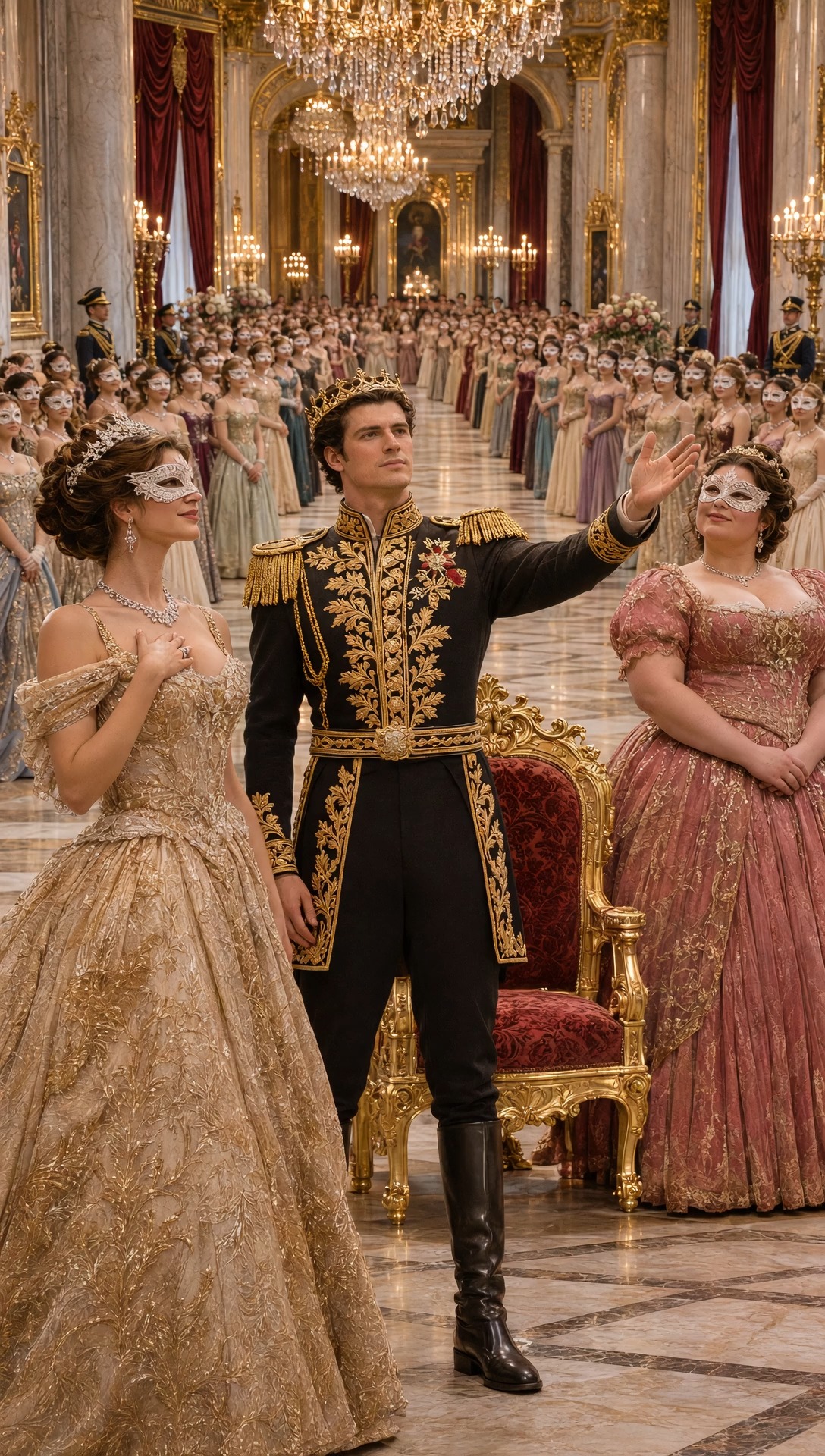
Part 5 – The Price of Silence
The bells rang again, their measured notes traveling through the kitchen walls.
The prince looked toward the door, then back at Elara.
“They will expect me in the council chamber.”
“And you will go?”
“Yes.”
“Because your father asked you to?”
“Because the court deserves an answer.”
Elara folded her mother’s note and tucked it carefully inside her apron.
“Then give them one you can live with.”
His eyes stayed on her.
“I don’t want to make you the reason I defy him.”
“Then don’t.”
“I don’t want your mother’s sacrifice to become the reason I choose you.”
“Then don’t do that either.”
He took in her words without trying to soften them.
“I want to choose you because I know you,” he said at last. “Because you were kind when you had no reason to be, and honest when it would have been easier to flatter me.”
“That was before you became a prince in my life.”
“I was already a prince.”
“You were a lonely stranger in the kitchen.”
“And you saw me.”
Elara’s expression gentled, but she did not look away.
“I saw the person you chose to show me that afternoon. I still need to know the person who has to live with the crown.”
“I know.”
“Do you?”
He paused.
“I’m trying to.”
“That is a beginning, not a promise.”
“No,” he said. “It isn’t.”
For a moment, the warmth of the ovens seemed to fill the space between them, a familiar comfort neither of them could quite reach.
The prince held out his hand, palm upward.
“I won’t ask you to come with me.”
Elara looked at his hand, then at his face.
“I know.”
“But I hope you’ll be there.”
She placed her hand in his, briefly, and felt the rough edge of the cookie half still in her apron pocket.
“I’ll come because I want to hear what you say.”
His fingers closed gently around hers, then released.
“That is enough.”
The council chamber stood at the heart of the palace, beyond a succession of carved doors and corridors lined with portraits.
It was smaller than the ballroom, but its quiet made it feel no less imposing.
The king sat at the head of a long table.
Around him gathered the chamberlain, several senior ministers, representatives of the great houses, and a handful of councilors whose faces Elara recognized from a distance.
Lady Catherine stood near one of the tall windows, her hands clasped before her.
She met Elara’s eyes and gave a small nod.
Elara took a place beside the chamberlain, where the palace staff were permitted to stand during formal proceedings.
No one asked her to leave.
That, she thought, was something.
The prince entered last.
He wore his black-and-gold uniform, but no crown.
His father watched him cross the room.
“Your Highness,” the king said, “we are ready to hear your decision.”
The prince stopped at the empty chair beside him.
“I understand the council has been waiting for a decision about my marriage.”
“We have,” the king replied. “The alliance with Lady Catherine’s family has been discussed for some time.”
Catherine lowered her eyes, but she did not retreat.
The king continued, “An agreement would bring stability to the northern provinces and strengthen the council’s confidence in the succession.”
“Those are serious matters,” the prince said.
“They are.”
“And Lady Catherine is not a treaty.”
“No,” said the king. “She is a person, and one whose family is prepared to consider the match.”
Catherine’s gaze lifted.
“My family is prepared to consider it,” she said. “I am still deciding whether I am.”
The king looked at her, then inclined his head.
“Your honesty is welcome, Lady Catherine.”
She seemed surprised by the measured response, though she did not show it for long.
The prince took his place at the table.
“I will not announce a marriage today.”
A murmur stirred among the councilors.
The king’s hands rested on the table.
“You were asked to make a decision.”
“I have made one. I will not promise to marry Lady Catherine—or anyone else—before I know that the choice is freely mine and freely theirs.”
The words were calm.
They carried farther than a raised voice would have.
One of the ministers leaned forward.
“Your Highness, the council is not asking you to marry without affection. It is asking you to consider what the kingdom needs.”
“I have considered it.”
“And you believe personal choice must come before the stability of the realm?”
“I believe a marriage made as a political convenience may look stable from this room and become a private unhappiness for the people in it.”
The king’s expression did not change, but his gaze sharpened.
“Then what do you propose?”
The prince glanced at Catherine.
She gave no sign of what he should say.
“I propose that no one be required to accept an arrangement simply because their family considers it useful.”
Catherine’s shoulders eased by the smallest degree.
“And Elara?” the king asked.
The room grew still.
The prince did not turn toward her.
“Elara has asked me not to choose her out of guilt or gratitude. I will honor that.”
The king’s gaze shifted to Elara.
“And if you were to choose her freely?”
“Then I would have to ask whether she wished to choose me.”
Elara felt the eyes of the room settle upon her.
She kept her hands folded, holding the edge of her apron between her fingers.
The prince had not offered her as an answer to the council’s question.
For that, she was grateful.
The king rose from his chair.
“Before this council discusses any future marriage, there is another matter that must be settled.”
He placed a sealed document on the table.
“The prince has asked to address the record of the late queen’s illness.”
Several councilors looked toward one another.
The prince’s attention fixed on the seal.
“I did.”
“Your request concerns a private medical matter,” the king continued. “The documents establish that the royal physicians attended the queen, and that a member of the kitchen staff also prepared an infusion at her request.”
A minister spoke carefully.
“Is there any dispute that the physicians continued their care and that Her Majesty recovered under their supervision?”
“There is not,” said the king.
“Then the existing account is accurate in its essential facts.”
“In its essential facts,” Catherine repeated.
The minister looked at her.
“The wording does not name Elara’s mother,” Catherine said. “It does not mention that the physicians’ treatments had failed to ease the fever before the queen asked for help from the kitchen.”
“The formal account was never intended to list every person who attended Her Majesty,” the king replied.
“Then why was the private note marked for omission?” Catherine asked.
The king’s eyes moved to the document.
The silence that followed did not feel like an accusation.
It felt like a room waiting for someone to tell the truth.
The king broke the seal.
“My father’s secretary instructed that the kitchen worker’s name not be included in the public account,” he said. “The note states that the queen’s recovery was to be recorded as the work of the royal physicians.”
“Why?” asked one of the councilors.
“I cannot say with certainty.”
“Would it have diminished the physicians’ work to name the person who prepared an additional remedy?” Catherine asked.
“No,” the king said.
“Would it have diminished the crown to say that the queen trusted a kitchen worker?”
The king did not answer immediately.
His eyes rested on the empty space at the end of the table, as if the person who had made the decision were seated there.
“It may have been believed that the account should remain simple,” he said. “That the public would have more confidence in the palace if the physicians received full credit.”
“Or that the palace did not want to admit it needed help,” said the prince.
A few councilors shifted in their seats.
The king’s face showed no anger, only a weariness that made him appear older than he had in the ballroom.
“That may also have been part of it.”
Elara felt the folded note against her apron.
Her mother’s words returned to her: the remedy belonged not to one person alone.
Tell it whole.
The king looked toward the prince.
“Your mother recovered through the care of many people. The physicians continued their work. The household staff maintained her comfort. Your grandmother sent for the best herbs available. Elara Bell’s mother prepared an infusion that the queen chose to drink.”
“Then the public account should say so,” the prince replied.
A councilor folded his hands.
“Would naming a kitchen worker now not imply that she alone saved the queen?”
“No,” the prince said. “We can tell the truth without making it larger than it was.”
The king looked at him.
“And what will you do if the council refuses?”
The prince’s expression tightened, but his voice remained steady.
“I will not pretend the record is complete when I know it is not.”
“Would you publish the private medical notes?”
“No. The queen’s dignity is not ours to trade for public interest.”
“Then what do you ask?”
“That the public account be corrected, that Elara’s mother be named, and that the court acknowledge why her name was excluded.”
The king’s gaze lowered to the sealed document.
“That could invite questions about other decisions made during my father’s reign.”
“Then we should answer those questions as honestly as we can.”
A minister spoke in a low, measured voice.
“Your Highness, the court has to consider the effect on the alliance and on the people’s confidence in the crown.”
“I have considered that.”
“And still you would reopen a matter that is nearly thirty years old?”
“The passage of time does not make an omission true.”
The words settled over the table.
Elara saw the prince’s fingers close around the edge of his chair.
He was not fighting to win her.
He was trying to speak for someone who could no longer speak for herself.
That distinction did not make his choice easier.
It made it more meaningful.
The king turned to Elara.
“You have read the records and your mother’s note. What do you believe should be said?”
The room seemed to draw breath.
Elara stepped forward from the wall.
“I believe my mother’s name should be restored to the record,” she said. “I do not believe she should be presented as the only reason the queen recovered.”
A councilor nodded once.
“That is a reasonable position.”
“My mother’s own words say the remedy was made from the garden, the kitchen, the physicians’ care, and the queen’s courage.”
The prince looked at her, not in surprise, but in gratitude.
Elara continued, “She did not want kindness turned into a crown placed on one person’s head. She wanted the story told whole.”
“And what does that mean to you?” the king asked.
“It means the court should admit that she helped, and that her help was once deliberately left out. It also means no one should use her service to decide what I owe the palace now.”
The king held her gaze.
“I have not asked you to owe anything.”
“You offered recognition in exchange for my withdrawal from the prince’s marriage challenge.”
A murmur moved around the table.
The king’s expression grew somber.
“I believed it would protect you from the court’s attention.”
“Perhaps it would,” Elara said. “But recognition offered as a condition is still a bargain.”
The prince rose.
“Elara does not need to answer for my choices.”
“I am answering for my own,” she said, still looking at the king.
The prince stopped.
For an instant, Elara saw the old fear in his eyes: that the palace might turn everything between them into a burden he had placed upon her.
She gave him a small, steady look.
He sat again.
The king folded his hands.
“Then let me be plain. If the court names your mother, the matter will not remain a quiet footnote. People will ask why the record was altered. They will ask who ordered it and whether other names were removed.”
“Those are fair questions,” Catherine said.
“They may weaken confidence in the monarchy.”
“Confidence built on incomplete accounts is fragile,” the prince replied.
The king looked around the table.
“Some of you will say that acknowledging this omission risks the alliance. Others will say that hiding it risks something greater.”
Catherine stepped away from the window.
“My family has benefited from the story that the great houses alone sustained the crown,” she said. “I do not believe that story is true.”
Her words were careful, but they did not tremble.
“My family encouraged me to pursue this marriage because they considered it advantageous. I thought I wanted to be chosen by the prince. After last night, I realized I wanted to know whether either of us had been allowed to choose at all.”
The prince turned toward her.
“Lady Catherine, you are not required to support my position.”
“I know.”
“You may have to answer to your family.”
“I know that too.”
She looked at him with a quiet, almost rueful smile.
“I am not supporting you because I want to marry you. I am supporting the truth because I want to be free to decide what I want.”
The king gave a small nod.
“That is your choice, Lady Catherine.”
“It is.”
The councilors began to confer among themselves.
Their voices stayed low, the words too indistinct to separate.
The prince remained standing.
He looked across the table at the king.
“If the council agrees to restore her name, I will accept the correction as the first step.”
“And if it does not?” the king asked.
The prince’s eyes moved to Elara, then back to his father.
“Then I will make the record public myself.”
The chamberlain’s face tightened.
“Your Highness, the private documents are protected by royal authority.”
“I would not release my mother’s medical notes. I would state what the records show, what they omit, and why the omission matters.”
“That could be taken as a challenge to the crown,” said a councilor.
“It would be a challenge to a false account.”
The king studied his son.
“And the succession?”
The prince’s hands rested on the table.
“I will not use the crown to hide from the truth.”
The council fell silent.
Elara felt the weight of what he had said, not as a declaration of love, but as a decision that would change the shape of his life.
The king stepped away from the table and walked toward the tall window.
Outside, the gardens were pale beneath the late afternoon sky.
“When I was a boy,” he said, “my father told me that a monarch must choose which truths the people can bear.”
No one interrupted.
“I believed him for many years.”
He turned back.
“Now I wonder whether that was wisdom, or simply fear dressed in ceremonial language.”
The prince’s face softened.
“Father—”
The king raised one hand, not to silence him, but to ask for time.
“I cannot promise that the council will agree with you,” he said. “I cannot promise that the alliance will remain unchanged. I cannot promise that the people will understand every part of this story.”
“I know.”
“But the account can be corrected.”
The prince’s breath released slowly.
“Thank you.”
“Do not thank me yet. The council must decide what form the correction will take, and I will not dictate their answer.”
One of the ministers spoke.
“The correction should be made in the royal archive and presented before the full court. If the omission was deliberate, the public account should acknowledge that as well.”
Another councilor frowned.
“Such a statement could invite unnecessary controversy.”
“It could,” Catherine said. “So could refusing to make it.”
The councilors returned to their discussion.
The king remained standing, his attention on the prince.
“If you go forward with this, you may lose the chance to take the throne without dispute.”
“I understand.”
“You may also lose the political marriage you were expected to make.”
“I understand.”
“And if you decide to marry Elara, the court will judge the choice in light of your position.”
The prince’s gaze moved briefly to Elara.
“I will not ask her to carry that choice for me.”
“What if she refuses you?”
“Then I will have to accept her answer.”
Elara felt a small ache under her ribs, sharper than she expected.
The prince did not look away from his father.
“I do not want her because the court has ignored her,” he said. “I do not want her because her mother helped mine. And I do not want her as proof that I am brave.”
He took a breath.
“I want her because she has shown me what it means to be known without being admired. But I will not ask for her answer until she can give it without being pressured by this room.”
The king’s expression changed, a flicker of recognition passing through it.
“That is the first thing you have said today that sounds entirely your own.”
The prince glanced at Elara.
“I hope it is.”
The council completed its discussion.
The eldest minister rose, holding a short written recommendation.
“The council agrees that the public record should be corrected to name Elara Bell, the late queen’s request for her assistance, and the royal physicians’ continued care,” he said. “The statement will also acknowledge that the kitchen worker’s role was omitted from the original account by instruction of the royal secretary.”
The king nodded.
“Will the correction be made public?”
“Yes, Your Majesty.”
“When?”
“Before the winter council.”
The prince’s expression remained composed, but Elara saw the tension leave his shoulders.
“And the alliance?” he asked.
The minister looked toward Lady Catherine.
“That decision belongs to Lady Catherine and her family.”
Catherine lifted her chin.
“Then I will make it myself.”
The king inclined his head.
“Very well.”
The meeting began to break apart.
Councilors gathered their papers and spoke in quiet groups.
The chamberlain stepped to the king’s side.
Catherine approached Elara.
“I owe you an apology,” she said.
“You have apologized already.”
“I was thinking of the ballroom.”
“So was I.”
“I laughed when you stepped forward.”
“I remember.”
Catherine’s eyes lowered.
“I was embarrassed, and I tried to make you feel smaller so I would feel less foolish.”
Elara held her gaze.
“Thank you for saying it.”
“I don’t expect you to forgive me immediately.”
“I don’t think forgiveness has to be immediate.”
“That is a good answer.”
“It is the only one I have.”
Catherine gave a brief nod.
“Then I will accept it.”
She glanced toward the prince, who had moved to speak with the king.
“My family will have opinions about what I said.”
“They usually do.”
“Do you think I should be frightened of disappointing them?”
Elara considered the question.
“I think you should decide whether you are more afraid of disappointing them or disappointing yourself.”
Catherine looked thoughtful.
“I may have to sit with that.”
“I think you should.”
Catherine turned toward the chamberlain.
“I will send my family a message before they hear a version of this from someone else.”
“That seems wise,” Elara said.
“It is also frightening.”
“Those can be true at the same time.”
For the first time, Catherine smiled without restraint.
“You are harder to dismiss than I expected.”
“I have been told that.”
“By whom?”
“My mother.”
Catherine’s smile softened.
She left the council chamber with her notebook tucked beneath her arm.
The prince remained with the king for several minutes.
When he finally crossed the room to Elara, the councilors had all gone.
Only the chamberlain remained near the door, speaking quietly with a clerk.
The prince stopped before her.
“The council will correct the account.”
“I heard.”
“And the king has agreed not to make any marriage decision for me.”
“He has agreed not to dictate one.”
“That is more than I expected.”
“Is it enough?”
“For today.”
Elara looked at his face.
“What happens tomorrow?”
“Tomorrow, I will have to answer questions about the succession, the alliance, and whether I am willing to remain in line for the throne.”
“And what will you say?”
“I don’t know yet.”
“Do you mean that?”
“I do.”
She searched his expression.
He no longer seemed like the stranger who had entered the kitchen trying to leave his life outside the door.
But she could still see that man in him, the one who had wanted a conversation without expectation.
“What about me?” she asked.
His face grew careful.
“I will not ask you to decide anything tonight.”
“That is not what I asked.”
He took a breath.
“I want a life with you, if you want one with me. Not as a reward. Not as an apology. Not because your mother helped mine.”
Elara’s throat tightened.
“You say that now, after the council has agreed to correct the record.”
“I would say it even if they had refused.”
“Would you?”
“Yes.”
“And if the court never accepts me?”
“Then we would have to decide what kind of life we could build without its approval.”
“You speak as if the choice were simple.”
“It isn’t.”
“Would you give up the throne?”
“I don’t know.”
“Would you expect me to live inside the court that judged me?”
“No.”
“Would you expect me to change?”
“No.”
He looked down for a moment.
“I cannot promise that love would make the palace easy. I can promise not to mistake your patience for permission, or your kindness for a debt.”
Elara felt the words reach her, but she did not let them answer for her.
“Do you love me?” she asked.
The prince’s face changed.
“I know that what I feel is real. I don’t want to call it love before I have earned the right to say the word.”
“How would you earn it?”
“By knowing you when there is no secret between us. By listening when you tell me something I do not want to hear. By choosing you without asking you to make my choices easier.”
Elara’s eyes stung.
“That sounds less like earning love and more like learning how to deserve trust.”
“Then perhaps that is where I should begin.”
The chamberlain approached with another message.
“Your Highness, the king requests you in his private study.”
“Now?”
“He says it cannot wait until morning.”
The prince accepted the folded note.
Elara saw the seal pressed into the wax.
The king’s personal signet.
He opened it and read the single line inside.
His face went still.
“What is it?” Elara asked.
The prince looked at the paper again.
“My father has found another record.”
“About your mother?”
“I don’t know.”
The chamberlain waited.
The prince glanced at Elara, and for an instant she saw the kitchen stranger in him again, searching for a quiet place to breathe.
Then he folded the note.
“He says the original royal account is not the only copy.”
“Where is the other one?”
The prince raised his eyes.
“Catherine’s family has it.”
A knock sounded at the council chamber door.
The chamberlain opened it.
A palace page stood outside, holding a small document box with the seal of Lady Catherine’s family impressed in dark green wax.
The page bowed.
“Your Highness,” he said, “Lady Catherine asked that this be delivered to you at once.”
The prince took the box.
The seal had already been broken.
Inside lay a folded sheet and a second, narrower paper, its edges browned with age.
Elara’s hand tightened around the note from her mother.
The prince unfolded the older paper.
For several seconds, he read without speaking.
Then his eyes moved to the faded signature at the bottom.
He looked up at Elara.
“Your mother wrote this,” he said.
“What is it?”
“A letter to my mother.”
The prince turned the page toward her.
The first line was clear, though the ink had softened with time.
My dear Queen, I have kept the name of the remedy’s maker out of the household account because you asked me to—but I cannot keep the truth from your son forever.
The prince’s fingers tightened on the paper.
Below the sentence, a date appeared.
It was written several months after his birth.
And beneath the date, in the queen’s own hand, was a reply.
Then let him learn it from the person who taught us both how to share a heart.
**–END OF PART 5–CLICK “NEXT” AT THE BOTTOM OF THE PAGE TO CONTINUE READING**
* * *
[PREVIOUS: PART 4](https://storyly.idolsgift.com/blog/part-4-the-heart-between-them-069) | [NEXT: PART 6(THE END)](https://storyly.idolsgift.com/blog/part-6-the-end-the-heart-between-them-069)
✓ Lynn R. Adams
Part 5 – The Price of Silence The bells rang again, their measured notes traveling through the kitchen walls. The prince looked toward the door, then back at Elara. “They will expect me in the coun…