PART 5: The Hand That Remembered 057
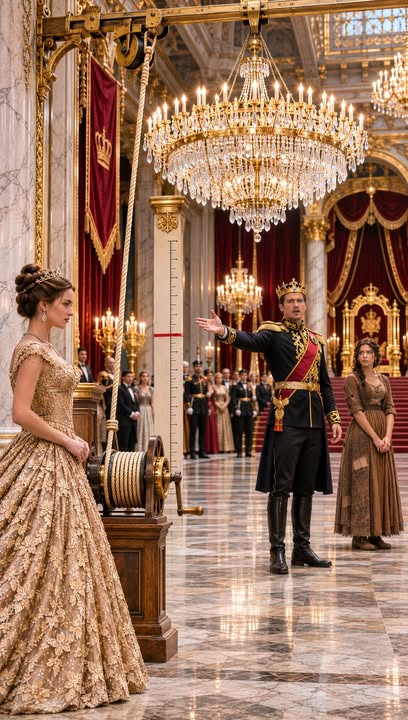
Part 5 – What a Name Is Worth
The room went still.
Elara looked from the note to Adrian.
The old report had blamed her father for a failure he had tried to prevent.
But the warning had not disappeared into some forgotten workshop drawer.
It had reached the royal household—and someone had chosen what happened to it next.
Adrian did not look away from the paper.
“May I see the date?” he asked.
The clerk placed the note beside the renovation report, aligning their edges with care.
The warning had been delivered two days before the hoist failed.
The record offered no name for the person who received it, only the office.
“The crown prince’s office,” Master Harlan said. “Not necessarily the prince himself.”
Adrian’s jaw tightened, though his voice stayed measured.
“My grandfather held that title then.”
Elara studied the note.
The handwriting was neat and spare, the words composed as though their writer had known that a warning might be read quickly—or not at all.
“Does the archive show what happened to the original?” she asked.
The clerk turned the slip over.
There was no answer on the back, only a faint impression from another page.
“We should search the office records,” Adrian said. “There may be a receipt or a response.”
“We should,” Elara replied. “But we should not decide what the absence of one means.”
Adrian nodded.
“No. We should not.”
Master Harlan carefully returned the papers to their folder.
The discovery had changed the shape of their inquiry, but it had not made the truth simpler.
Elara could see that in Adrian’s face.
He was not trying to defend his grandfather.
He was trying to understand how a warning could enter a royal office and leave no mark except this narrow slip, hidden between sheets that no one had thought to read closely.
Celestine stood by the worktable, silent.
Her gaze rested on the entry recording the recent pulley service performed by her family’s estate.
“I have sent for the original notes,” she said at last. “They may tell us whether the pulley assembly was inspected under load.”
“That will help us establish what happened recently,” Master Harlan replied. “It will not explain what happened years ago.”
“I know.” Celestine’s voice was quiet. “But I should not leave one question unanswered simply because another is larger.”
Elara looked at her.
“You’re right.”
Celestine met her eyes, and for a moment their shared attention felt more like trust than politeness.
The inspection continued into the afternoon.
The engineers examined the upper pulley assembly, measuring each bearing and checking the ropes for uneven wear.
The recent replacement had been made properly.
The equipment had not caused the old hoist failure, nor had the estate’s work made the chandelier unsafe.
It had simply brought the palace’s neglected system back into use, revealing how long it had gone without the full inspection Tomas had recommended.
When the final measurements were taken, Master Harlan closed his notebook.
“The chandelier can be raised safely once the scheduled repairs are complete,” he said. “But the hall’s other lifting equipment must be checked before it is used.”
Adrian looked toward the clerk.
“Make that a standing order. No one is to operate an uninspected hoist or lifting system.”
The clerk wrote it down.
“Have the engineers prepare a full safety review,” Adrian continued. “Every rope, drum, lock, and pulley in the palace.”
“It will take time,” Master Harlan said.
“Then we will give it time.”
Elara noticed the engineer’s shoulders ease.
A royal order could make a task possible.
It could not make the work quicker without making it worse.
The distinction seemed clear to Adrian now.
As the others began gathering the documents, Celestine approached Elara.
“My family’s records have already been requested,” she said. “I’ll make sure the foreman understands that I want the complete file, not only the parts that reflect well on us.”
“You don’t have to put your name to that,” Elara said.
“I do if I expect anyone else to put their name to the truth.”
Celestine’s words held no performance.
Elara believed her.
“Thank you,” she said.
Celestine looked down at the ledger.
“I spent yesterday believing that winning meant proving I belonged in the palace.”
“And now?”
“Now I think belonging may mean taking responsibility for what the palace asks of your family.”
“That sounds harder.”
“It is.”
Celestine gave her a small smile.
“Perhaps that is why I never thought about it before.”
Adrian came to stand beside them.
“The court will want a formal account of the inspection,” he said. “I have asked the council to meet tomorrow.”
“About the chandelier?” Celestine asked.
“About the chandelier, the records, and Tomas Vale.”
Elara felt the name enter the room differently when Adrian spoke it.
Not as an initial in the margin.
Not as a missing entry.
As a person.
“What do you intend to tell them?” she asked.
“The truth we can prove,” he said. “And the truth we still need to discover.”
“That will not be enough for everyone.”
“I know.”
His gaze held hers, steady and unguarded.
“But it is all I can promise.”
Elara had heard promises made too easily before.
This one did not ask her to trust him at once.
It left room for doubt, which made it seem more honest.
“I want to see the records before they are presented,” she said.
“You should.”
“And I will not have my father’s name used as a convenient way to make the court feel generous.”
Adrian’s expression grew solemn.
“Neither will I.”
Elara was not certain she believed him yet.
But she believed that he understood the difference between restoring a name and offering a reward.
That evening, she returned to the storeroom.
The brass token lay inside its linen wrapping, where she had left it.
She took it out and held it near the lamp.
The crown over the wheel was worn smooth at the edges, but the design was unmistakable.
Tomas had carried that token while he worked for the royal workshop.
He had designed the winding system whose lock she had trusted.
And when another piece of equipment failed, he had warned the palace before anyone was hurt.
Elara rested the token in her palm.
Her memories of him remained the same, but they had changed their meaning.
She remembered his patience, the care with which he explained a pulley, the way he asked her to watch before touching.
She remembered his silence about the court.
Now she wondered whether it had been quiet dignity, sorrow, or an effort to keep his daughter free from a grievance she could not mend.
A soft knock came at the storeroom door.
Adrian stood outside, without an escort.
He held a document folder beneath one arm.
“I was told you might still be here,” he said. “May I come in?”
Elara moved aside.
He entered, careful not to brush against the shelves stacked with folded linen.
The storeroom made his uniform seem almost out of place.
Under the lamplight, its gold trim looked less like a symbol of power and more like a reminder of the family whose old decisions they were trying to understand.
“I brought the copies of the records,” he said. “You should have a chance to read them before the council meets.”
She accepted the folder.
“Thank you.”
Adrian waited while she opened it.
The copy of the warning was there, along with the hoist report, the old design folio, and the maintenance note that had been filed away.
Elara read them slowly.
The facts did not change when written in a cleaner hand.
Her father had warned the royal household.
The separate hoist had failed.
His name had been attached to the failure, though the equipment was not his design.
His appointment had ended soon afterward.
The later recommendation to inspect the chandelier system had been set aside.
The palace records had no explanation for the choices that followed.
At the bottom of the folder lay a formal notice from the council.
It invited Elara to attend the next morning’s meeting and answer questions about Tomas’s work.
She lowered the page.
“Questions about his work, or about me?”
“Both, perhaps,” Adrian said. “The council will want to hear from the person who recognized the mechanism.”
“I’m not a court witness.”
“No. You are his daughter, and you understand how he taught you to work. If you choose to speak, that perspective belongs in the room.”
Elara looked at the notice again.
A place among the council members would be more than she had ever expected.
It would also be a place where every word could be turned into a judgment: of her father, of the palace, and of the people still working in its storerooms and workshops.
“What happens after they clear his name?” she asked.
Adrian took a moment before replying.
“I want to offer you a position in the royal workshop.”
The folder felt heavier in her hands.
“A position?”
“Overseeing the workshop’s safety and maintenance records, with a chance to train under Master Harlan. You have a gift for seeing what others overlook.”
The offer was generous.
It was also exactly the kind of reward she had feared would be used to tidy the story away.
“You think a title could make this right?” she asked.
“No,” Adrian said quickly. “I think you deserve work that recognizes your ability. But the two things must not be made into a bargain.”
“Must not?”
“They will not be,” he said. “You can refuse the position and still have your father’s name restored.”
Elara searched his face for the polished certainty of a courtly promise.
She found concern, and something like regret.
“I have spent years learning the storeroom,” she said. “I know its shelves, its broken hinges, the tools that go missing, and which workers are asked to do jobs they have never been taught to do.”
“All of that matters.”
“It matters because the people doing the work matter. They are expected to keep the palace running, but few of them are allowed to question a task or ask for proper training.”
Adrian listened without interrupting.
“If I accept your position,” she continued, “I don’t want it to be because my father’s name has become useful to the court. And I don’t want to leave the people who taught me how this place actually works.”
“I understand.”
“Do you?”
He did not answer at once.
“No,” he said. “Not entirely. But I want to.”
The honesty of that answer made her pause.
Elara closed the folder.
“I need to decide what I can accept without letting the palace decide what my father’s story means.”
“Then take the night.”
He turned toward the door, then stopped.
“Whatever you decide, I will not ask you to make your gratitude the price of telling the truth.”
Elara watched him leave.
His words stayed with her after the storeroom had returned to silence.
In the morning, the council chamber was already full.
Adrian sat at the head of the long table, with Master Harlan and two engineers beside him.
Celestine sat across from Elara, dressed in deep blue rather than the jeweled gold of the competition.
A representative from the Ashcombe estate had delivered the service records.
Celestine had placed them before the council herself.
The family’s foreman had inspected the pulleys and replaced a worn bearing, but the document showed that he had not been asked to conduct a full-load test.
There was no sign that his work had caused the danger.
Celestine answered the council’s questions plainly.
When asked whether the omission reflected poorly on her family, she said, “It reflects that we were trusted to do a narrow task and did not ask whether a wider inspection was needed.”
She did not blame the foreman.
She did not hide the limit of what the records showed.
Elara listened, grateful for her courage and wary of the attention gathering around the room.
The council clerk read aloud the old documents.
Each time Tomas’s name appeared, Elara felt herself brace.
The council members asked about the failed hoist, the warning sent to the crown prince’s office, the missing reply, and the later annotation that blamed Tomas for the equipment failure.
The archive had not yet found the original warning or any record explaining its handling.
No one could say whether the old prince had read it.
No one could say who had written the later accusation.
The unknowns remained unknown.
A senior councilor leaned back in his chair.
“We may be able to acknowledge that the surviving records do not establish Mr. Vale’s responsibility,” he said. “But a formal restoration could suggest that the crown knowingly acted against him.”
“Would that be untrue?” Adrian asked.
The councilor’s mouth tightened.
“We do not know what the crown knew.”
“Nor do we know that my father’s warning was ignored,” Elara said.
Every face turned toward her.
She had not planned to speak so soon.
But she would not let certainty be used only when it protected the palace.
“We know it reached the crown prince’s office,” she continued. “We know the hoist failed two days later. We know the report blamed my father for equipment he did not design. We know he was dismissed. And we know a later warning about the chandelier’s inspection was filed without action.”
The councilor folded his hands.
“That is a serious account.”
“It is a careful one,” Elara replied. “I am not asking you to invent what happened. I am asking you not to pretend the missing parts absolve anyone.”
The room grew very quiet.
Adrian did not intervene.
He let her words stand on their own.
A different councilor turned to her.
“What would you have the court do?”
Elara glanced at the papers in front of her.
She thought of the storeroom, where a bent hinge might go unnoticed until a door fell crooked.
She thought of the servants who carried heavy loads without being taught how to lift them safely.
She thought of Master Harlan’s engineers, expected to find the time for a proper inspection only after an accident made it urgent.
And she thought of her father, whose warning had been recorded but not preserved as a warning.
“I want you to clear his name,” she said. “Not because I can prove who caused every decision, but because the evidence does not support the blame placed on him.”
The councilor began to speak, but Elara continued.
“And I want the same care to apply to the people working here now. Safety checks must be recorded, training must be available, and no worker should be punished for reporting that equipment needs attention.”
One of the council members glanced toward Adrian.
“That would require funding and oversight.”
“Yes,” Elara said. “It would.”
The words were simple.
They carried no plea for sympathy and no demand for a reward.
Celestine rose from her chair.
“The Ashcombe estate will provide its service records for the review,” she said. “And we will cooperate with the palace engineers. I cannot speak for every choice my relatives have made, but I can speak for the work we do now.”
Her family’s representative stiffened, then lowered his gaze.
Celestine remained standing.
“I laughed at Elara because I thought skill belonged to people who looked like me. I was wrong. I will not repeat that mistake by treating the staff’s concerns as beneath my attention.”
Elara felt the room shift.
Not into approval, exactly.
Into a willingness to listen.
The senior councilor looked toward Adrian.
“Your Highness, the proposal is possible. But the royal household must be willing to acknowledge that the accusation against Tomas Vale was unfairly preserved.”
Adrian stood.
“The royal household will acknowledge it.”
The decision was not yet a proclamation.
The council still needed to review the wording and complete its search for the missing records.
But for the first time, no one at the table was speaking of Elara’s father as a suspected failure.
They were speaking of a man whose warning had been recorded, whose design had endured, and whose name had been carelessly attached to the wrong machine.
After the meeting, Adrian found Elara in the corridor outside the chamber.
“You spoke clearly,” he said.
“I spoke cautiously.”
“You did both.”
She looked through the open doorway.
The council was still gathered around the documents.
The process would take more than a morning.
The palace would need to prove its promise through action, not only words.
“About your offer,” Adrian said. “The workshop position remains yours to consider.”
“I will not accept it as a reward for my father.”
“I understand.”
“And I will not accept it if it means leaving the storeroom workers without a voice.”
“Then don’t accept it under those terms.”
His answer was immediate, but not demanding.
Elara studied him.
“Could the position include responsibility for training and safety across the palace, not only the workshop?”
“I believe it could.”
“And would the staff be allowed to report problems directly, without going through a noble household first?”
“That would need to be included in the new policy.”
“Then I will think about it.”
“That is all I ask.”
Adrian looked as though he wanted to say more, but chose not to crowd the moment.
Elara was glad.
She needed to make the choice without being hurried into gratitude, and he seemed to understand that respect sometimes meant waiting.
The council summoned them back before either could leave.
A clerk had returned from the royal archive with a small, sealed packet.
It had been found in the private office records, placed inside a box labeled “Renovation correspondence.”
The seal bore the mark of the crown prince who had held the office at the time of the hoist failure.
Adrian looked at the packet.
“Is there a register of its contents?”
“Only a date and a note that it was received,” the clerk replied. “The packet has not been opened since it was filed.”
The council members gathered around the table.
Elara stood beside Celestine, her hands clasped loosely before her.
The seal was old, but unbroken.
The clerk lifted it carefully and passed the packet to Adrian.
He examined the faded wax, then looked toward Elara.
“Would you like to be here when we read it?”
“Yes,” she said.
Adrian broke the seal.
Inside lay a folded sheet of paper, its edges browned by time.
He opened it.
The first lines were written in a formal hand, acknowledging receipt of Tomas Vale’s warning about the service hoist.
Then Adrian stopped.
His eyes moved to the final lines.
“What does it say?” Elara asked.
He looked up, and she saw his certainty falter.
“The warning was read,” he said. “And the order was to postpone the repair until after the royal reception.”
“But the hoist failed before the reception,” Master Harlan said.
Adrian lowered the page.
“Yes.”
The council chamber seemed to draw in a breath.
At the bottom of the letter was a second signature, not the prince’s, but that of the palace steward who had been entrusted with carrying out the order.
The name was familiar to Celestine.
She leaned closer to the page.
“That man was my great-grandfather,” she said.
Adrian turned the letter over.
A line on the reverse had been added in another hand, years later.
It read: Tomas Vale’s warning to be retained with the failure report; responsibility for the incident assigned as already recorded.
No one spoke.
Celestine’s face had gone pale, but she did not step back from the table.
Elara looked at the words, then at Adrian.
The record did not say who had written the added line.
It did not say whether the steward had acted alone or followed another instruction.
It did, however, show that the warning had been read, and that the repair had been delayed for the sake of a royal reception.
Adrian folded the letter with deliberate care.
“My family will have to answer for this,” he said.
Celestine drew a quiet breath.
“And mine will have to answer for my great-grandfather’s part.”
Elara looked at the two of them, then at the old sheet of paper that had waited decades to be read.
The truth had finally reached the room.
But it had arrived with more than one family standing beneath its weight.
**–END OF PART 5–CLICK “NEXT” AT THE BOTTOM OF THE PAGE TO CONTINUE READING**
* * *
[PREVIOUS: PART 4](https://storyly.idolsgift.com/blog/part-4-the-hand-that-remembered-057) | [NEXT: PART 6(THE END)](https://storyly.idolsgift.com/blog/part-6-the-end-the-hand-that-remembered-057)
✓ Lynn R. Adams
Part 5 – What a Name Is Worth The room went still. Elara looked from the note to Adrian. The old report had blamed her father for a failure he had tried to prevent. But the warning had not disappe…