PART 5: The Girl He Thought the Fire Had Taken 052
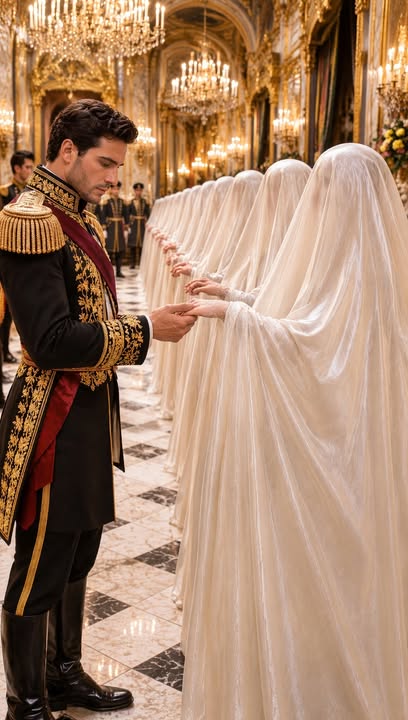
Part 5 – The Truth He Could Not Bury
“That mark belongs to the private medical office,” the archivist said. “The records for that office were transferred out of the palace years ago.”
Alexander looked at the small sheet in her gloved hands.
The sentence written there seemed to hold the weight of an entire life: If the child’s blood proves too fragile, do not return her to the palace.
“Where were they sent?” he asked.
“To a clinic that closed decades ago.”
Lena’s gaze stayed on the faded ink.
“Does anyone know where its patient files went?”
The archivist hesitated before answering.
“There is one person who might. Lord Adrian’s personal physician is still alive.”
Michael turned toward the window, where the pale afternoon light lay across the archive floor.
“Dr. Rowan,” he said. “He lives on the coast now.”
“Can he be reached?” Alexander asked.
“I believe so.”
“Then we’ll speak with him.”
Lena’s eyes lifted from the note.
“We will ask him what he remembers,” she said. “We will not decide what the answer means before he gives it.”
“I agree.”
The archivist returned the note to its protective sleeve.
“I will make a record of the discovery and prepare copies of the relevant documents,” she said. “The originals must remain here until they are fully examined.”
“Of course,” Alexander replied.
He glanced at Michael.
“Find Dr. Rowan’s current address. Arrange a meeting, but do not tell him what answer we hope to hear.”
Michael nodded and stepped into the corridor to make the necessary calls.
Lena watched the papers being secured in their box.
“You should know,” she said, “that finding Elise will not undo what happened.”
“I know.”
“And if she wants nothing to do with you, the palace, or any of this, you must let that be her choice.”
“I will.”
She studied him, searching for a promise larger than he could honestly make.
“What if she wants the truth but not a family?”
“Then she gets the truth.”
“What if she never wants to meet you?”
“Then I will know I gave her the choice.”
Lena gave a quiet nod, but her eyes remained troubled.
Alexander understood why.
He had spoken as though the decision were simple.
It was not simple for the woman who had watched the palace make choices for other people and then call those choices necessary.
“I don’t want to turn her into another royal obligation,” he said.
“Then don’t.”
“I won’t.”
The chief archivist carried the secured box toward the conservation room.
As she passed Lena, she paused.
“I’m sorry you had to learn this from a damaged page.”
“So am I,” Lena said. “But I’m glad the page survived.”
When the archivist left, the room seemed too quiet.
Alexander looked at the empty space where the box had been.
For years, he had believed the fire belonged safely to the past.
Now he understood that the past had simply been kept out of reach, its consequences carried by people who had been given no say in the matter.
Michael returned with a written note.
“Dr. Rowan is willing to meet us tomorrow afternoon,” he said. “He asked whether we could come to his home rather than bring him to the palace.”
“Then we’ll go to him,” Lena replied.
Michael glanced at Alexander, perhaps expecting an objection.
Alexander gave none.
The next afternoon, a gray sky hung over the coastal town where Dr. Rowan lived.
His house stood on a quiet street above the harbor, modest and weathered, its windows bright with the reflection of the sea.
A woman who introduced herself as his daughter led them into a sunlit sitting room.
“He’s been expecting you,” she said. “He tires easily, so I hope you won’t stay too long.”
“We’ll be careful,” Alexander promised.
Dr. Rowan sat near the window, a blanket over his knees and a walking stick resting beside his chair.
His hair was white, but his eyes were alert.
When Alexander introduced himself, the old physician inclined his head.
“Your Highness.”
“This is Lena Vale, and my adviser, Michael.”
Dr. Rowan looked at Lena for a long moment.
“Evelyn’s daughter,” he said.
Lena’s breath caught.
“You knew my mother?”
“I did.”
“Do you remember the fire?”
“I remember the years afterward more clearly than I remember the fire itself.”
He gestured for them to sit.
Alexander chose the chair opposite him.
“We found records indicating that an infant named Elise was removed from the palace during the fire,” he said. “A later note says her blood was too fragile for her to return.”
Dr. Rowan’s fingers rested on the handle of his walking stick.
“Those records should not have been hidden.”
“Can you tell us whether Elise survived?”
The old physician looked toward the sea.
“I can tell you that a baby survived the night.”
No one moved.
Lena’s hand tightened around the strap of her bag.
“Was she my mother’s patient?” she asked.
“She was.”
“Did Evelyn take her beyond the east gate?”
“Yes.”
“What happened afterward?”
Dr. Rowan’s eyes returned to them.
“She was brought to a private clinic under a false name. The clinic had been established for families who needed quiet medical care, though that is no excuse for concealing a child’s identity.”
“Why was her identity concealed?” Alexander asked.
“The infant had a rare blood condition. It was not well understood at the time, and her chances were uncertain. Lord Adrian feared that public knowledge of her illness would become a source of gossip and worry.”
“Was she declared dead because of the condition?” Lena asked.
“No,” Dr. Rowan replied. “She was declared dead because the palace wanted the matter closed.”
The words were gentle, but their effect was immediate.
Alexander felt something inside him give way.
“Did my parents agree to that?”
“Your mother knew the child had been moved. I believe she hoped she would be returned when her health improved.”
“Did she know the records would say she had died?”
“I cannot tell you what your mother was told.”
“Did my father know?”
Dr. Rowan folded his hands.
“I cannot answer for either of them.”
It was not the answer Alexander wanted, but he heard the caution in it.
The old man was not trying to protect the royal family.
He was trying not to claim knowledge he did not possess.
“Was Elise’s condition treatable?” Lena asked.
“It was manageable, with care. She needed regular monitoring and a stable home.”
“Who cared for her?”
“Evelyn did, at first.”
Lena closed her eyes briefly.
Her mother had carried a child away from the palace and spent years protecting her, while raising Lena at the same time.
“Did Evelyn tell you she had taken me too?” she asked.
“I knew there was a little girl with her. I did not know your name.”
“Why not?”
“Lord Adrian told me not to ask. I obeyed.”
The admission was not proud.
It was simply a fact the old man had carried too long.
“Where was Elise sent after the clinic?” Alexander asked.
Dr. Rowan reached toward a small table beside him.
His daughter stepped forward, but he lifted a hand to show he could manage.
He took a thin envelope from the table and held it without opening it.
“I kept copies of the first medical notes,” he said. “I should have destroyed them when I left the clinic. Instead, I kept them because I feared the child’s history would vanish entirely.”
“Do the notes name her?” Lena asked.
“Not by the name Elise. That name was removed from the clinic records.”
“Do you know the name she was given?”
“I know the name she used as a child.”
Alexander leaned forward.
“Where is she now?”
“I do not know.”
The old man’s answer carried no drama, only regret.
“She left the clinic when she was old enough to choose where she wanted to live. Evelyn had arranged for her to be raised by a family who understood her medical needs.”
“Did that family know who she was?” Lena asked.
“They knew she had been placed in their care. I do not know what they were told beyond that.”
“Did Evelyn remain in contact?”
“For a time.”
“And then?”
“Lord Adrian’s office warned her that continued contact would bring attention to the child. Evelyn stopped writing.”
Lena’s face changed.
“Did my mother tell you that?”
“Yes.”
“She never told me she had been forced to leave her.”
“I’m sorry.”
“So am I,” Lena said.
She did not raise her voice.
The quietness of her grief made the room feel even smaller.
Alexander looked at the envelope in Dr. Rowan’s hand.
“May we see the notes?”
The old physician considered him.
“You may read them here. I will not hand them over until the archivist has confirmed they are genuine.”
“That is fair.”
Dr. Rowan opened the envelope and removed several yellowed sheets.
The first contained a medical assessment written in a careful hand.
The infant’s blood condition was described in terms that seemed cautious even for the time.
The second page recorded a name given for clinic use: Elise Vale.
Lena stared at it.
“My mother’s surname,” she whispered.
“Evelyn may have chosen it as a way to keep the child connected to someone she trusted,” Dr. Rowan said. “Or it may simply have been the safest name available.”
The final page was a brief update, dated several months later.
The infant’s condition was stable.
She had been placed with a family in a neighboring state, where a physician could continue her care.
The family’s name was missing.
“Can the paper tell us who made the copy?” Michael asked.
“It was made at the clinic,” Dr. Rowan replied. “I kept it after the original records were transferred.”
“Where were those originals sent?”
“I was told they went to a records office that later merged with a regional hospital.”
“Do you know which hospital?”
“I have a name in an old address book.”
He reached for the drawer beneath the table, but his daughter moved to help.
“Thank you,” he said.
She brought him a worn address book.
Dr. Rowan turned through the pages and stopped at a yellowed card.
“St. Anne’s Medical Records Office,” he said. “The hospital still exists, though it has changed its name.”
“Then there may be more,” Alexander said.
“There may be.”
Lena remained focused on the patient notes.
“She was alive,” she said.
“Yes,” Dr. Rowan replied.
“And someone cared for her.”
“Yes.”
“Thank you for keeping this.”
Dr. Rowan lowered his eyes.
“I did not do enough.”
“No,” Lena said. “But you did this.”
The old physician accepted the distinction.
Alexander stood, then paused.
“Dr. Rowan, I have another question.”
“Ask.”
“If the palace had acknowledged Elise, would her medical condition have put her inheritance in danger?”
The physician’s gaze sharpened.
“I was never told that inheritance was the reason for the secrecy.”
“Did you suspect it?”
“I suspected many things. I had no proof.”
Michael spoke for the first time since they had arrived.
“Lord Adrian controlled the household, the records, and the public announcement. He could have believed that an unwell infant would create uncertainty around the succession.”
“Could have,” Dr. Rowan said. “But you must not turn suspicion into certainty just because it fits.”
Alexander appreciated the rebuke.
He had spent too much of his life accepting the version of events offered by people who spoke confidently.
He would not make the same mistake in the opposite direction.
“Thank you,” he said.
Dr. Rowan returned the papers to the envelope.
“I will let your archivist examine them. If they are verified, you may have copies.”
“Do you know whether Elise is still living under that name?”
“No.”
“Is there any way to find her?”
“The hospital records may identify the family who took her in. The rest is for her to decide.”
Lena looked at Alexander.
“Remember that.”
“I will.”
They left the house carrying no definitive answer about Elise’s present life, but with something far more substantial than a fragment of a ledger.
She had survived.
She had been cared for.
She had been given a name that connected her to Evelyn Vale.
And somewhere, beyond the palace’s walls, she might have built a life of her own.
Back at the palace, the chief archivist verified Dr. Rowan’s papers and began a formal request to the hospital records office.
The answer came two days later.
The original clinic file had been transferred and preserved.
It included a later address for the family who had raised Elise, but that address had changed more than once.
A specialist connected to the hospital began tracing the records through the proper channels.
Alexander insisted that no one contact Elise without first confirming who she was and asking permission through a neutral intermediary.
The decision frustrated the council.
It also troubled the palace’s remaining household officials, who argued that the matter should be contained until the family could prepare a public response.
Alexander listened to every concern.
Then he called a meeting of the household council, the archivist, Michael, and the chief legal adviser.
“I will not announce a relationship we have not verified,” he said. “But I will not hide the existence of the records.”
One senior official shifted in his chair.
“Your Highness, a private resolution may protect everyone from needless speculation.”
“Protect whom?”
“The institution.”
“And the person who was erased from its history?”
The official glanced down at his papers.
“We do not yet know whether she wishes to be found.”
“Exactly. So we will not take that choice from her.”
The legal adviser cleared her throat.
“There is also the matter of the marriage announcement.”
Alexander looked toward the prepared statement on the table.
For weeks, the council had urged him to select a bride from among the families attending the palace challenge.
The statement had never been signed.
Now it waited before him, its language polished and empty.
Lena stood near the window, listening without joining the discussion.
She had asked to attend only as an observer.
Alexander wanted to know what she thought, but he understood why he could not ask her to guide a decision that belonged to him.
“The council believes that postponing the announcement will invite questions,” Michael said.
“Questions are not the same as harm.”
“Some will say you have chosen a bride and then changed your mind.”
“I have chosen no bride.”
The words were true, though his heart had made the matter less simple.
He looked at Lena.
She gave him no sign of what she wanted him to do.
That restraint mattered.
He had begun the selection with the belief that love could be discovered by narrowing a roomful of women to a pair of hands.
He had ended it standing beside a person who would not allow him to confuse her presence with his duty.
“I will not make a marriage announcement while we are searching for Elise,” he said. “I will not use a bride, or a promise of one, to make the palace appear settled.”
The senior official spoke carefully.
“That choice may create uncertainty around the succession.”
“The uncertainty is real whether we discuss it or not.”
“And if the records expose failures by those who served the family?”
“Then we will have to answer for them.”
“You could preserve the institution’s dignity by handling this privately.”
Alexander looked down at the unsigned statement.
“Dignity built on silence is only another form of fear.”
The room fell quiet.
He picked up the statement and turned it over.
For a moment, he thought of his mother’s portrait, of the locked study, and of the names that had been erased from old pages.
Then he tore the paper once, slowly, and placed both halves on the table.
“I will not proceed with the announcement,” he said. “I will not stop the search. And I will not claim Elise as a sister in public until she knows the truth and chooses what she wants.”
Lena’s gaze met his.
There was no gratitude in it, and he was glad.
He had not made the choice for her approval.
The senior official gathered his papers.
“This decision may cost you support.”
“Then I will have to earn it honestly.”
When the meeting ended, the officials filed out.
Michael remained by the door, waiting until the others had gone.
“You could have softened the language,” he said.
“I could have.”
“Some of them will call the decision reckless.”
“Perhaps it is.”
Michael looked at the torn announcement.
“Your mother would have wanted the truth.”
“I hope so.”
Lena turned from the window.
“She would have wanted the truth to be handled with care.”
“Yes,” Alexander said. “And with Elise’s consent.”
“That matters more than what people think she would have wanted.”
“I know.”
Lena came closer, but stopped at the other side of the table.
“What you did today was the right choice,” she said.
The words reached him, but he did not treat them as forgiveness.
“Thank you.”
“Don’t mistake it for an answer about us.”
“I won’t.”
Her expression softened, though the distance between them remained.
“Good.”
A knock sounded at the door.
The chief archivist entered carrying a sealed message.
“We have a response from the hospital records office.”
Alexander stood.
“Have they located her?”
“They have located a person whose records may match,” the archivist replied. “The name used in the medical file was Elise Vale. After she left the clinic, she lived under the name Elise Wren.”
Lena’s hand moved to the table’s edge.
“Is she alive?”
“The hospital cannot disclose her current address without her consent. But they have agreed to forward a letter through a medical advocate, asking whether she is willing to hear from the family.”
Alexander let out a breath he had not known he was holding.
“Then send it.”
“The letter must come from you,” the archivist said. “It should explain who you are, what the records show, and that no meeting or public acknowledgment will happen unless she wishes it.”
Alexander looked at the message.
A name.
A possible life.
A door that might open, or remain closed.
“May I read it?” Lena asked.
“Of course.”
The archivist passed her the summary.
Lena read it once, then handed it back.
“Tell her the truth without asking her to comfort you,” she said.
“I will.”
“And don’t say that the palace wants her home.”
“I won’t.”
“What will you say?”
“That she has the right to know what was done in her name.”
Lena nodded.
The archivist placed a blank sheet of stationery on the table.
Alexander sat and began to write.
He did not call Elise his sister.
He did not ask her to forgive their family.
He told her that a record bearing her name had been found, that the palace believed she might have been born into his family, and that he would accept any decision she made about contact.
He wrote that there was no urgency except the urgency of truth.
When he finished, he read the letter aloud.
Lena listened without interrupting.
“It’s honest,” she said.
“Is it enough?”
“It is what you can offer without deciding for her.”
He folded the letter and placed it in an envelope.
The archivist sealed it and arranged for the medical advocate to deliver it.
For the next several days, the palace waited.
Alexander attended his duties, but the old routine no longer felt like a refuge.
Every time a messenger entered the room, his attention sharpened.
Every time the telephone rang, Michael glanced toward him.
Lena returned to her lodging and continued her own life, refusing to remain at the palace simply because the mystery had become part of Alexander’s family.
They met each afternoon to review new documents, but they did not speak of marriage, and neither tried to turn the growing warmth between them into a promise.
On the sixth day, the medical advocate called.
The letter had reached Elise Wren.
She had read it.
She had not yet agreed to meet Alexander.
But she had asked for one more piece of information before deciding whether to reply.
The advocate said Elise wanted to know whether her mother had ever tried to find her.
Alexander turned toward the chief archivist.
The archivist looked down at the file.
“We have no record that Princess Margaret contacted the clinic,” she said. “But we found another letter in the household register.”
She took a newly examined page from her folder.
The writing was unmistakably his mother’s.
It had been addressed to Evelyn Vale and dated shortly after the fire.
The archivist read the first line.
“‘If the child is safe, do not tell her she was forgotten.’”
The letter ended with a sentence in the margin, written in a different ink.
Alexander stared at it.
“Read the last line,” he said.
The archivist’s voice faltered.
“‘I will come for her when her brother is old enough to understand why I let her go.’”
Alexander looked at Lena.
His mother had not simply known that Elise survived.
She had expected the day her son would learn the truth.
And beneath her signature, in a hand he had never seen before, someone had written:
“She was not meant to be found.”
**–END OF PART 5–CLICK “NEXT” AT THE BOTTOM OF THE PAGE TO CONTINUE READING**
* * *
[PREVIOUS: PART 4](https://storyly.idolsgift.com/blog/part-4-the-girl-he-thought-the-fire-had-taken-052) | [NEXT: PART 6(THE END)](https://storyly.idolsgift.com/blog/part-6-the-end-the-girl-he-thought-the-fire-had-taken-052)
✓ Lynn R. Adams
Part 5 – The Truth He Could Not Bury “That mark belongs to the private medical office,” the archivist said. “The records for that office were transferred out of the palace years ago.” Alexander look…