PART 5: The Flame That Wouldn’t Bend 069
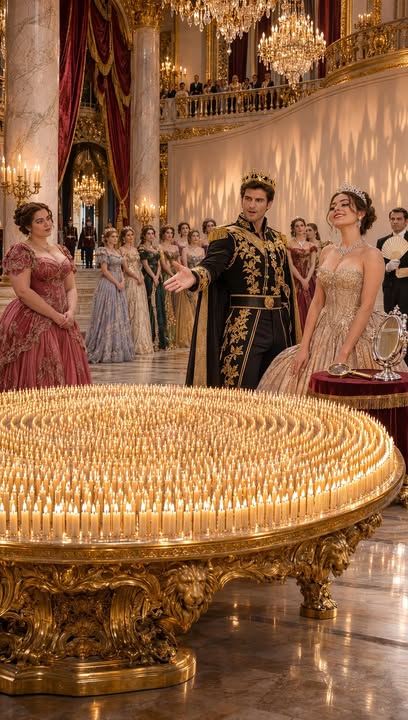
Part 5 – The Choice That Could Not Be Bought
The queen’s final sentence remained between them like a door no one had yet dared to open.
Should I fail to tell him, you must decide whether the truth can wait until he is ready.
Elara looked at the faded ink, then at King Rowan.
“Did my mother know about this letter?” she asked.
“I don’t know,” the king replied.
He sounded less like a monarch than a man standing before the limits of what he could claim to know.
“Master Fenwick believes it was placed among Marian’s papers after the queen died,” Adrian said.
“But there is no record of who moved it.”
Elara read the line again.
Her mother had been asked to decide when the truth should be spoken, but the letter did not say what she had chosen.
“Perhaps she thought you needed time,” Adrian said.
“Perhaps she thought the lesson would speak for itself.”
“Or perhaps she never saw this page,” Elara replied.
The uncertainty hurt more than a simple answer would have.
For years, she had carried her mother’s memory in small, dependable things: the smell of lamp oil, a patient hand guiding hers around a wick, a quiet voice asking what else she noticed.
Now even those memories seemed to have grown larger, threaded through the palace with choices Elara could not reconstruct.
King Rowan stood with his hands resting on the edge of the table.
“I should have told Adrian what I knew of the lesson,” he said.
“I should have told the court that the challenge could not decide a marriage.”
“And I should have listened when Marian asked me not to make the lesson a measure of anyone’s worth.”
He looked toward Elara.
“I cannot undo that.”
“No,” she said.
“But you can decide what you do now.”
His eyes lowered to the letter.
“That is what I am trying to do.”
Adrian folded his hands behind his back, a posture Elara had seen him use when he was trying not to show how deeply something had unsettled him.
“The council will meet tomorrow,” he said.
“My father intends to tell them the full truth.”
“I do,” Rowan replied.
“Then the court should hear it too.”
“It will.”
Adrian looked at Elara.
“You should be there, if you wish.”
“I’ll decide after I’ve had time to think.”
He nodded, not asking her to make the answer easier for him.
That night, Elara returned to her rooms above the old servants’ passage.
She did not sleep for a long while.
The palace settled around her in familiar sounds: a door closing somewhere below, the soft tread of the night watch, the occasional click of a cooling lamp.
She thought of the queen’s words, of Marian’s careful handwriting, and of the years in which a lesson had gradually become a tradition no one questioned.
She also thought of Adrian, who had learned that evening his mother’s memory had been used to support a choice she never intended.
He could be angry with his father and still love him.
He could tell the truth without pretending the truth made everything simple.
By morning, Elara had decided she would attend the council.
Not as a candidate.
Not as the answer to a royal question.
She would go as herself, and speak only to what she knew.
The council chamber was smaller than the ballroom, with high windows, a long oak table, and portraits of former monarchs watching from the walls.
The members had already gathered when Elara arrived with Master Fenwick.
Several wore the unsettled expressions of people who had been told a familiar story was about to change.
Lady Celestine sat near the far end of the table, her hands folded over a plain gold belt.
She had chosen a quieter gown and no jeweled ornaments.
When she saw Elara, she shifted a chair aside.
Elara sat beside her.
“I wasn’t sure you would come,” Celestine said.
“I wasn’t sure either.”
“I’m glad you did.”
“So am I.”
The words were simple, but Celestine’s face eased as if she had been waiting for them.
At the head of the table, King Rowan spoke with Adrian.
His son wore no crown, only a dark blue coat fastened at the throat.
They did not appear to be arguing, but neither did they seem at ease.
When the council had settled, the king stood.
“I asked you here because I owe you the truth about the candle challenge,” he began.
He spoke plainly, without the ceremonial flourishes that usually softened difficult announcements.
He described Queen Isolde’s original lesson, Marian Vale’s role in preserving the glass guard, and the purpose of asking students to observe what changed when air moved across the candles.
Then he explained how he had transformed that lesson into a public test and allowed the court to believe it could determine Adrian’s bride.
“I thought the challenge would show that judgment mattered more than family name,” he said.
“But I used the queen’s memory to lend authority to a choice she had never made.”
The council members listened in silence.
“I was wrong to let the contest carry that weight,” Rowan continued.
“And I was wrong to present the answer as though it could settle the future of the prince, the crown, or any woman who stood before the court.”
One of the senior councilors leaned forward.
“Your Majesty, no one disputes that Lady Elara’s answer was remarkable.”
“But a succession cannot be built on a demonstration.”
“It cannot,” the king agreed.
“Nor should it be.”
Adrian rose.
“My mother’s lesson was never a test of who deserved to stand beside a king,” he said.
“It was a reminder that a person who listens carefully may see what others miss.”
He looked around the table, meeting each councilor’s gaze.
“I accepted the challenge without asking enough questions about its origin.”
“I will not pretend that my father made the mistake alone.”
The king turned to him, a shadow of pain passing across his face.
“You were not responsible for the story I chose to tell.”
“I was responsible for repeating it.”
Adrian’s voice remained steady, though Elara could see the effort it cost him.
“I should have made clear that no answer would decide whom I married.”
A councilor at the far end glanced toward Elara.
“Then the court will expect some direction concerning the succession.”
“The succession is not in question,” Rowan said.
“My son remains the heir.”
“What is in question is whether this challenge will continue to be treated as a way to judge people.”
“It will not,” Adrian replied.
“Not as it was.”
A different councilor tapped a finger against the table.
“Then what is the purpose of preserving the challenge at all?”
“To preserve the lesson,” Elara said.
The room turned toward her.
She had not planned to speak yet, but the question seemed to call for more than a royal answer.
“The queen’s drawing is not a measure of anyone’s worth,” she continued.
“It is an invitation to notice what changes, to ask what may be causing it, and to wait before deciding.”
“That lesson belongs to the palace staff as much as it belongs to the council.”
“Perhaps it belongs to anyone who must make a decision that affects someone else.”
The councilor regarded her thoughtfully.
“And you believe the lesson should remain in use?”
“If it is used honestly.”
Elara glanced at the copied drawing Master Fenwick had placed on the table.
“It should never be used to make a person prove she deserves to be heard.”
For a moment, no one answered.
Then Celestine spoke.
“I agree with Lady Elara.”
Several council members looked surprised.
Celestine did not retreat from their attention.
“I was certain I understood the challenge because I believed I understood the room,” she said.
“I was wrong.”
“An exercise that teaches people to question their first assumptions could be useful to the council, provided we remember that the exercise is not the judgment itself.”
The king looked at her.
“That is well said.”
Celestine lowered her eyes.
“I learned it recently.”
A quiet shift passed through the room.
It was not approval exactly, nor forgiveness, but the beginning of a different kind of attention.
The council discussed the matter for the better part of an hour.
Some asked whether the old candle arrangement should be dismantled.
Others suggested it be kept in the east gallery, accompanied by a record of its true history.
There were questions about palace staffing, the preservation of the workshop ledger, and whether Marian Vale’s name should appear beside the queen’s on the display.
Elara answered only when she knew the answer.
When she did not, she said so.
Each time, the council seemed to listen more carefully.
At last, the senior councilor folded his notes.
“The challenge may continue as a lesson, not as a selection,” he said.
“No person’s rank, worth, or future should be decided by it.”
The king nodded.
“That is my intention.”
“And the council will help ensure the original purpose is preserved,” Celestine added.
The members agreed, though not without discussion.
The decision was not grand enough to change the kingdom in a single morning.
It was a beginning.
When the council adjourned, Adrian waited until the others had left before approaching Elara.
“You spoke clearly,” he said.
“I tried to speak accurately.”
“That may be the better thing.”
He looked toward his father, who remained with two councilors by the windows.
“I don’t know what happens now.”
“Neither do I.”
“People will ask whether I still intend to marry.”
“They may.”
“And they will ask whether I intend to marry you.”
“They may do that too.”
His expression tightened.
“I won’t let them turn you into an answer again.”
“Then don’t.”
Adrian took in the words without flinching.
“I mean it,” he said.
“I know.”
“But I also need to be honest about what I want.”
Elara watched him carefully.
He spoke with none of the certainty he had once used to announce the challenge.
“I want you in my life,” he said.
“I want to hear what you think, even when it makes the palace less comfortable.”
“That is not a promise of marriage.”
“No.”
“Nor should it be.”
His face softened, though there was a question still waiting in his eyes.
“I don’t know what this will become,” Elara said.
“Neither do I.”
“Then we can begin there.”
His shoulders eased, as if the answer had not given him certainty, but had offered him something more honest to stand on.
“I can do that,” he said.
Before Elara could reply, a royal secretary approached them with a sealed document.
“Your Highness,” he said.
“The king asks you to join him in the west salon.”
“Now?”
“The council has made its recommendation.”
Adrian glanced at Elara.
“I’ll come with you,” she said.
They crossed the palace together.
The west salon had been prepared for a private meeting, though several members of the council stood beside the windows.
King Rowan waited near the fireplace, holding a document with the royal seal.
When Adrian entered, his father stepped forward.
“The council supports your succession,” Rowan said.
“They also agree that the challenge must never again be presented as a way to choose a bride.”
Adrian’s gaze moved to the document.
“Then what is this?”
“A formal declaration restoring the queen’s lesson to its original purpose.”
“That seems straightforward.”
“It is.”
The king paused.
“But the council has also asked that I make a public statement before the court tomorrow.”
“I will tell them everything I told you.”
“Will you name Marian?”
“I will.”
“Will you say that she asked you not to turn the lesson into a measure of anyone’s worth?”
The king looked at Elara.
“If you believe it is right.”
“It is the truth,” Elara said.
“Then I will say it.”
The secretary held out the document.
Rowan did not take it.
“Your Highness,” the secretary said, “there is one further matter.”
Adrian looked toward him.
“The council has asked that the succession be secured by announcing your betrothal before the next assembly.”
The west salon fell silent.
The king’s expression darkened.
“I was told that recommendation had been withdrawn.”
“It was amended,” the secretary replied.
“The council believes an announced match would reassure the neighboring courts and settle the question of the prince’s future.”
Adrian looked from the secretary to his father.
“Who is the proposed match?”
The secretary held out the document.
“The council has named Lady Elara.”
Elara felt the room tilt—not from surprise that such a proposal had been made, but from the speed with which the council had taken a truth about her and tried to make it useful.
The same faces that had agreed no person should be chosen by a candle challenge now waited for her to become a symbol of stability.
King Rowan’s hand tightened around the edge of the fireplace mantel.
“I did not approve this,” he said.
“But you were willing to offer me the crown if I accepted,” Elara replied.
The king looked at her.
“I was prepared to make the offer if you chose to marry Adrian.”
“Immediately?”
“I thought an announcement might prevent the council from forcing its own arrangement.”
“But it would let you say the challenge had led here.”
Rowan closed his eyes for a moment.
“Yes.”
Adrian stepped between the secretary and Elara, not to shield her from the question, but to make certain no one mistook her silence for consent.
“This cannot be decided for her,” he said.
“The council is not asking her to decide this instant,” the secretary replied.
“The announcement is scheduled for tomorrow.”
“That is not the same as giving her time.”
“Your Highness, the council believes delay will invite speculation.”
“Let them speculate.”
The king’s voice cut through the room.
“Adrian, this is not a matter for the council to settle without your consent.”
“Nor is it one for you to settle on Elara’s behalf.”
“I know.”
“Do you?”
The question was quiet, but its weight filled the space between them.
Rowan looked at the crown on the table, where it had been placed beside the sealed declaration.
Then he looked at his son.
“If you refuse the council’s proposal, they may question your readiness to succeed me.”
“Then they may question it.”
“They could ask for another heir to be named.”
“An heir cannot be chosen to make the court feel comfortable.”
“Comfort is not what concerns me.”
“Then what does?”
The king’s face was tired.
“The stability of the kingdom.”
Adrian’s expression softened, but his answer did not.
“A kingdom cannot be stable because we ask one woman to carry the uncertainty for everyone else.”
Elara felt the words reach her before she could decide what to do with them.
She had been offered the crown once before in a different form: not as a gift, but as the reward at the end of a challenge she had never agreed to enter.
Now it had been placed in front of her again, polished and solemn, with the same expectation hidden beneath it.
Accept the place they have chosen.
Make the story easier for everyone.
Let the crown prove that the court was right to turn her into an answer.
Elara looked at Adrian.
He did not ask her to refuse.
He did not ask her to choose him.
He only waited, leaving the space hers.
“I will not accept a crown as payment for silence,” she said.
The secretary lowered the document.
King Rowan’s face tightened with grief, but he did not contradict her.
Adrian turned toward the council members.
“Then the announcement will not be made.”
A councilor by the window spoke carefully.
“If you refuse the proposed match, Your Highness, the council will require a public explanation.”
“I will give one.”
“You may lose support.”
“I know.”
“You may lose your position as heir.”
The king took a step toward his son.
“Adrian, do not answer before you understand the cost.”
“I understand enough.”
“No,” Rowan said.
“Not yet.”
The words held no threat, only a father’s fear.
Adrian looked at him.
“I know what it means to disappoint you.”
His father’s eyes glistened in the firelight.
“That is not the cost I mean.”
“What do you mean?”
“I mean the years you have spent learning to be my successor.”
“The trust you have built with the council.”
“The chance to guide the kingdom from within the crown rather than from beyond it.”
Adrian glanced at the royal declaration.
“Would I still be able to tell the truth?”
“Yes.”
“Would I still be able to say that the queen’s lesson was changed?”
“Yes.”
“Would I be allowed to challenge the council when they use people as symbols?”
Rowan did not answer at once.
Elara saw the old habit in him—the urge to preserve order by choosing the words that would cause the least immediate trouble.
Then he looked at the document in his hand and let it fall to his side.
“You must,” he said.
Adrian searched his face.
“And if they reject me for it?”
“Then I will answer to the council for the way I raised you.”
The king’s voice broke slightly on the final word.
“I cannot promise they will accept your choice.”
“I did not ask you to.”
“I can promise that I will not ask you to hide the truth to keep your place.”
For a moment, the father and son looked at one another without the court between them.
It was not reconciliation.
It was something more difficult: the beginning of trust after the discovery that trust had been built on an incomplete story.
Adrian turned to the secretary.
“Tell the council I will not accept an arranged announcement.”
“And if they ask whether you intend to marry Lady Elara?”
“I will say that marriage is not a decision the council can make for either of us.”
The secretary nodded and withdrew, carrying the sealed proposal with him.
The councilors followed, leaving King Rowan, Adrian, and Elara alone in the west salon.
The king moved toward the table where his crown rested.
“I had hoped to keep the succession from becoming uncertain.”
“I know,” Adrian said.
“You may believe I was trying to control your future.”
“I believe you were trying to protect it.”
“That does not make my choice right.”
“No.”
Rowan looked at Elara.
“Your refusal may cost you the position I offered.”
“I never asked for it.”
“I know.”
“Then do not treat it as though I have taken something from you.”
The king bowed his head, accepting the correction.
“I will tell the court the truth tomorrow.”
“And I will tell them why I refused the announcement,” Elara said.
The king looked up.
“You would speak before them?”
“If they are deciding what my silence means, yes.”
Adrian stepped closer, but stopped before reaching her.
“Only if you want to.”
“I do.”
There was no triumph in the decision.
Her hands were cold, and her stomach had tightened at the thought of standing before the same court that had laughed when Celestine mocked her.
But this time, she would not be asked to prove she deserved a place beside the throne.
She would speak because the choice was hers.
That evening, Elara returned to the east gallery.
The old brass holder stood beneath the queen’s drawing, its clear guard nearly invisible in the lamplight.
A child from the palace household had left a small paper fan beside it.
The fan rested closed on the table, its ivory ribs catching the glow.
Elara touched its edge, remembering the first sweep of air and the one flame that had not bent.
Behind her, Adrian’s footsteps slowed.
“Tomorrow will change things,” he said.
“It already has.”
“I don’t know whether I’ll still be heir by tomorrow night.”
“You may still be.”
“I may not.”
“Then you will have to decide what matters without knowing what you keep.”
He looked at the drawing under glass.
“I wish I could promise you that I’ll always make the right choice.”
“That would be a promise no one could keep.”
A tired smile touched his face.
“Then I’ll promise to keep asking.”
“That sounds more possible.”
He stood beside her, leaving a respectful space between them.
For a while, they watched the lamp flame remain steady.
Then Adrian turned toward her.
“When this is over, if you still want to, I would like us to talk about what we might choose for ourselves.”
“Without the court deciding for us?”
“Without a contest, a crown, or a promise made because everyone is watching.”
Elara let the quiet settle before answering.
“Yes,” she said.
“We can talk.”
He nodded, and did not ask for more.
At dawn, the palace bells would call the court to the great hall.
The king would reveal the history of the lesson.
Adrian would refuse the proposed betrothal and risk the future his father had prepared for him.
Elara would stand before the assembly and say that she would not be chosen as a prize.
For the first time, none of them knew what the court would decide.
As they left the gallery, Master Fenwick came hurrying toward them with a folded paper in his hand.
“Your Highness,” he said, breathless from the stairs.
“This was delivered to the archive after the council dismissed.”
Adrian took the paper.
It bore no seal, only a single line in a familiar hand.
The writing was Marian Vale’s.
He read it once, then looked at Elara.
“What does it say?” she asked.
Adrian unfolded the page fully.
Beneath her mother’s name, in faded ink, were five words:
The queen’s wishes were not the last.
**–END OF PART 5–CLICK “NEXT” AT THE BOTTOM OF THE PAGE TO CONTINUE READING**
* * *
[PREVIOUS: PART 4](https://storyly.idolsgift.com/blog/part-4-the-flame-that-wouldn-t-bend-069) | [NEXT: PART 6(THE END)](https://storyly.idolsgift.com/blog/part-6-the-end-the-flame-that-wouldn-t-bend-069)
✓ Lynn R. Adams
Part 5 – The Choice That Could Not Be Bought The queen’s final sentence remained between them like a door no one had yet dared to open. Should I fail to tell him, you must decide whether the truth c…