PART 5: The First Step Wasn’t What Anyone Expected 047
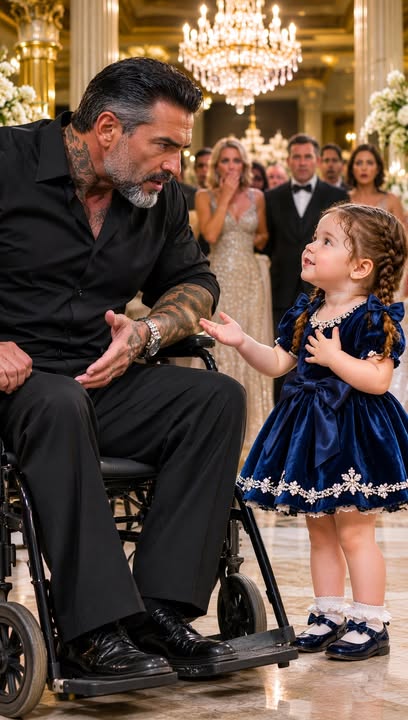
Part 5 – The Promise in Public
The name in the corner was Arthur Bell’s.
It was written beside the blurred notation, as if he had been asked to review the page before it was filed away.
Claire set the sheet beside the authorization.
“Could he have written the note about the redirection?”
“I don’t know,” I said.
My eyes moved between the two documents, searching for a certainty they could not give me.
The record claimed Elena had contacted the company.
The note claimed the family had asked for the payment to be redirected.
Yet Elena had told us she never knew about the continuing support.
“Arthur is alive,” Claire said. “We can ask him.”
I reached for my phone, but stopped before dialing.
“What if he remembers it differently?”
“Then we listen.”
“And if he doesn’t remember?”
“Then we keep looking.”
There was no accusation in her voice, only the steadiness of someone who had learned that answers sometimes required patience.
I called Arthur’s number.
It rang long enough for me to imagine him letting it go to voicemail.
Then a familiar voice answered.
“William?”
“Arthur. It’s been a long time.”
“It has.” A pause followed. “I heard about your birthday. I’m glad you’re doing well.”
“Thank you. I’d like to speak with you about Daniel Ruiz.”
The silence on the other end was small, but unmistakable.
“Daniel,” Arthur repeated.
“We found a file in the old support archive. It says a payment was approved, then redirected after a request from the family.”
“I see.”
“Do you remember handling it?”
“I remember the accident,” he said. “I remember your letter. I don’t remember any request from the family.”
“Your name is on the routing sheet.”
“My name is on a lot of routing sheets.”
It was not a defense, exactly.
It sounded like the truth as he understood it.
“Could you come to New York?” I asked. “Or speak with us privately?”
Arthur exhaled.
“I can come tomorrow. I’d rather see the documents than guess over the phone.”
“Thank you.”
“William,” he said before I could hang up, “I’m sorry this was left for so long.”
I could not tell whether he was apologizing for the lost support or for the fact that I had learned of it so late.
“Let’s find out what happened first,” I said.
When the call ended, Claire pulled a chair closer to the desk.
“You didn’t ask him whether he did it.”
“I didn’t want to begin with an accusation.”
“Good.”
“I also didn’t want him to think I had already decided what I believed.”
Claire looked at the old file.
“Do you know what you believe?”
“I believe Daniel was promised support. I believe the company failed to make sure it reached him. Beyond that, I don’t know.”
“And if the answer is that someone made a mistake?”
“Then we correct what we can.”
“And if it’s more complicated?”
“Then we find the part that belongs to me.”
She nodded, though worry remained in her eyes.
The next morning, Maya helped me through a short rehabilitation session before Arthur was due to arrive.
My legs shook during the weight-shifting exercise, and I wanted to press on after she told me to stop.
Instead, I listened.
It was a small decision, but I was learning that determination did not always mean refusing a limit.
Sometimes it meant trusting someone enough to respect it.
Claire watched from the side of the room.
“You stopped when she asked,” she said as Maya gathered her notes.
“I did.”
“I’m proud of you.”
The words were so simple that they reached me before I could prepare for them.
I looked at my daughter.
“I’m glad you’re here.”
“I’m glad I am too.”
She lowered her eyes, then glanced toward the window.
“I need to tell you something soon.”
“You said that before.”
“I know.”
“Is it something bad?”
“No.” She hesitated. “It’s important.”
I wanted to ask her to tell me then.
Instead, I said, “Whenever you’re ready.”
She gave me a grateful, uncertain smile.
Arthur arrived just after noon, carrying no briefcase and wearing the same careful expression I remembered from years of meetings.
His hair had gone silver, and he moved more slowly than he once had, but his eyes were alert.
Claire greeted him at the study door.
“I’m Claire,” she said.
“I remember you as a little girl,” Arthur replied. “You used to come to the office with your father.”
“I don’t remember that.”
“You were very good at persuading the staff to let you use the elevator.”
Claire almost smiled.
“That sounds like me.”
Arthur took the chair opposite my desk.
We laid out the file, the letter Elena had shared, and the photographs.
He read each page slowly, taking care not to lift the brittle paper by its corners.
When he reached the note about the family request, he frowned.
“I don’t recognize this handwriting.”
“You wrote the routing note above it,” I said.
“I did.” He leaned closer to the page. “This one was added later.”
“Do you remember the request?”
“I remember speaking with Daniel at the hospital. He was worried about his family, and you told me to make sure the company covered his medical costs and supported them while he recovered.”
“What did I tell you about the longer-term assistance?”
“That you wanted it arranged promptly, and that you planned to speak with him yourself.”
The words matched the fragments in the file.
“Did you ever contact Elena?”
“No.”
“Did anyone?”
“I can’t say. The support office had its own staff, and by then I was handling several departments.”
He turned the page toward the light.
“The notation here says a family request was received. But there’s no date stamp, no name of the person who took it, and no record of what was requested.”
“Could it have meant the family asked for something other than money?” Claire asked.
“It could have,” Arthur said. “They might have asked for time, for the assistance to be sent through a different channel, or for the information to be kept private. But I don’t remember it.”
“Could the request have been entered by mistake?” I asked.
“Possibly.”
He did not soften the answer.
I appreciated that.
Arthur reviewed the authorization again.
“This was approved by you,” he said. “But the recipient line is blank.”
“I had intended to confirm the details with Daniel.”
“Then your accident happened, and the file was placed on hold.”
“And after that?”
“After that, I tried to keep things moving. The company was changing quickly. When you became ill, the executive office was reorganized. I was told that the remaining cases had been transferred to the new support unit.”
“Did you check this one?”
“I should have.”
The words were quiet.
Arthur met my eyes without asking me to excuse him.
“I thought the transfer meant the file was in someone else’s hands,” he continued. “I don’t remember seeing Daniel’s name again. If I had, I would like to think I would have followed up.”
He looked down at the sheet with the incomplete note.
“But I can’t tell you that I did.”
The room held the sound of the old clock on the mantel.
I had wanted a clean answer, one that would identify the page where a promise had gone wrong.
Instead, we had a series of reasonable assumptions, each passed along without anyone making certain that the next person had finished the work.
“Do you think Daniel knew about the approved payment?” Claire asked.
“I don’t know,” Arthur replied. “He may have known the company intended to help. He may have believed it was being arranged. The record doesn’t tell us what he was told.”
I looked at the letter in my own hand.
“He believed I meant what I wrote.”
“I believe you did,” Arthur said.
“That isn’t enough.”
“No,” he agreed. “It isn’t.”
We searched the rest of the file for another hour.
There were no letters from Elena, no receipts showing a long-term payment, and no note recording a conversation with Daniel.
The phrase family contacted appeared only once.
It was not a complete account.
It was an unverified line on an old sheet, left behind by a process that had outlived the people who understood it.
When Arthur stood to leave, he paused beside my chair.
“I’m sorry, William,” he said. “I should have followed that file until it was closed.”
“I should have checked that you had.”
He gave a rueful nod.
“Perhaps we both believed a transfer was the same as completion.”
“Perhaps.”
After he left, Claire sat at the desk with the file open between us.
“I don’t think we’ll ever know exactly what happened,” she said.
“We may still find more records.”
“Maybe. But do we need every detail before we decide what to do?”
I looked at the scattered pages.
“No.”
“What will you do?”
The answer had been forming for days, but I could hear the cost of it now.
My company had spent decades cultivating an image of precision and responsibility.
We had built our reputation on the idea that we could manage complexity better than anyone else.
A public admission that a promise to an injured employee’s family had disappeared inside our systems would invite scrutiny.
It would raise questions about other cases, and whether this was an isolated failure or one example of a broader weakness.
The board would want to know whether we could settle Elena’s needs privately, replace the missing support, and avoid turning an incomplete record into a public controversy.
A quiet agreement would be easier.
It might also be generous.
But it would leave the company’s history untouched, and Elena’s family would once again be asked to trust a promise they could not see.
“I want Elena to know what we found,” I said.
“And after that?”
“After that, I want the company to acknowledge that it failed to follow through.”
“Publicly?”
“Yes.”
Claire looked at the papers, then back at me.
“That could affect your reputation.”
“It should.”
“It could affect the company.”
“It should be allowed to.”
She did not argue.
Instead, she reached for my hand and held it for a moment, careful of the tremor in my fingers.
“You’re choosing something difficult,” she said.
“I’m choosing something necessary.”
The next morning, I asked the board to meet.
I told them I would not offer a private settlement in exchange for silence, and I would not describe the missing support as a clerical detail.
The board’s counsel asked me to wait until an independent review was complete.
I agreed to the review.
I did not agree to conceal the reason for it.
The company would examine all outstanding family-support files from the same period, identify any case that had been lost in restructuring, and publish the findings when the review was finished.
Elena would be invited to help shape a lasting support program for families affected by company failures, with the right to decline any public role.
I made it clear that her family’s support would not depend on her participation.
The board did not approve every detail at once.
They asked questions about legal exposure, company precedent, and the risks of announcing a problem before knowing its full scope.
I listened to each concern.
Then I told them that the company had asked employees and families to trust its systems, and it could not demand that trust while hiding the ways those systems had failed.
When the meeting ended, nothing had been settled.
But I had said what I intended to say.
I called Elena that afternoon.
She came to the mansion with Lily the next day, carrying the envelope with Daniel’s letter.
I placed the archive records on the table and explained what we had learned, including what we still did not know.
I did not tell her that the company had a complete answer.
It did not.
“I’m sorry,” I said. “The company promised support, and it did not reach you. I believed the matter was being handled. I should have made sure.”
Elena looked down at the pages.
“Did Daniel ask for the money to be stopped?”
“We found a note saying the family requested a change, but there is nothing to verify who made the request or what it meant.”
“I never asked them to stop anything.”
“I believe you.”
Her eyes lifted to mine.
“Did you believe me before?”
“I had no reason to doubt you.”
“That’s not what I asked.”
I felt the question settle between us.
“No,” I said. “Not fully. I kept hoping the file would make everything clear.”
“And it didn’t.”
“No.”
She folded her hands on the table.
“I don’t want Daniel turned into a story people tell to make the company look generous.”
“I don’t want that either.”
“I want you to understand that he was a person, not a line in an old folder.”
“I do.”
“Do you?”
I looked at the photograph of Daniel beside the company car.
“I’m trying to.”
Elena studied me, then nodded once.
I told her about the independent review and the public acknowledgment I intended to make.
I told her the company would establish lasting support for families harmed by its failures, with her invited to help shape the program if she wished, and with no obligation to speak publicly about her own family.
She listened without interrupting.
When I finished, she looked toward Lily.
“What do you think?” she asked.
Lily had been drawing on a piece of paper, but she looked up at the sound of her name.
“Is Mr. Harrison going to tell people he made a mistake?”
“Yes,” Elena said.
Lily considered me.
“Will you say it where everybody can hear?”
“If that’s what needs to happen.”
She nodded.
“Then don’t forget.”
“I won’t.”
Elena rested her hand on top of the envelope.
“Daniel would have wanted the company to do better,” she said. “He wouldn’t have wanted anyone humiliated.”
“I won’t humiliate anyone.”
“And I won’t be made to stand beside you as proof that everything is forgiven.”
“You won’t be asked to.”
“Good.”
It was the closest she came to accepting my plan.
I understood that she was not offering forgiveness as a reward for my decision.
She was deciding whether to let me attempt the work.
Claire sat beside her, quiet but attentive.
When Elena and Lily left, Claire remained in the study.
“You gave them the choice to stay out of it,” she said.
“They deserve that.”
“They also deserve to know what you tell the company.”
“I’ll share the review with Elena before anything is announced.”
Claire nodded.
Then she drew in a breath and looked toward the window.
“My job is in Singapore.”
The words startled me more than they should have.
“What job?”
“I’ve been offered a position with an international design firm. It begins next month.”
I looked at her, trying to hold the news without letting fear turn it into a question she would have to answer for me.
“You accepted?”
“I haven’t signed the final agreement.”
“But you want to go.”
“Yes.”
She looked down at her hands.
“I kept putting off telling you because I was afraid you’d think I was leaving you.”
The first answer that came to mind was the one I had been afraid of hearing.
I wanted to ask her to wait.
I wanted to tell her that I had only just begun to ask her to stay beside me.
I wanted to say that the house would feel empty again, that the rehabilitation sessions would be harder without her, that a city an ocean away was too far.
But the old distance between us had grown from the times I had turned my needs into reasons she should change her life.
I would not build it again.
“I don’t want you to stay because you’re afraid of hurting me,” I said.
“Dad—”
“I want you to go if it’s the life you want.”
Her eyes shone.
“Are you sure?”
“No,” I said. “I’m not sure I’ll like missing you. But I’m sure I don’t want guilt to be the reason you remain.”
She lowered her head for a moment, then reached for my hand.
“I wish I’d told you sooner.”
“So do I.”
“I thought you’d hear it as abandonment.”
“I might have, once.”
“And now?”
“Now I’m trying to hear what you’re actually saying.”
She squeezed my hand.
The departure date was less than three weeks away.
The company’s public statement would be made the following Monday, after the board approved the outline of the independent review.
I asked Claire whether she would stand with me.
“Not as a performance,” I said. “I don’t want you there because people expect a daughter to hold her father’s hand.”
“Then why are you asking?”
“Because I want you beside me.”
She studied me.
“I’ll be there.”
That evening, Maya came to review my progress and discuss how I could safely approach the short walk from the chair to the meeting-room entrance.
She would remain close enough to help, and I would use a support frame until she was sure I could manage without it.
The idea of standing in front of company employees and speaking about an old failure was daunting.
The idea of taking deliberate steps toward the lectern was worse.
Maya reminded me that I did not need to prove my strength to anyone.
“I’m not trying to prove I can walk,” I said.
“What are you trying to do?”
“I’m trying to arrive on my own terms.”
She considered that, then nodded.
“That’s a better reason.”
The following Monday, I sat in the small conference room where the company had arranged to record my statement before sharing it with employees and the public.
The review was still underway.
We could not claim to know exactly who had entered the note about Elena’s request, or why the payment had never been issued.
But we could say what was certain: I had made a commitment, the company had failed to confirm it was honored, and Elena’s family had not received the support Daniel had been led to expect.
The statement acknowledged that failure without assigning blame to a person we could not identify.
It announced the review of the old support files and the creation of a new, independent program for families affected by company negligence.
Elena had read the draft.
She had asked us to remove one sentence that described Daniel as a hero.
“He was my husband,” she had told me. “Let him be more than the worst day of his life.”
I had taken the sentence out.
Claire waited beside the doorway, dressed for the flight she would take later that week to visit Singapore and finalize her arrangements.
She had not told me yet whether she would accept the position.
Maya checked the support frame and reminded me to stop if I felt pain or dizziness.
“I understand.”
The room began to fill with employees and board members.
Some had worked with me for decades.
Others had never met me before the accident.
The camera light came on.
I placed both hands on the frame.
Then I looked at Claire.
She held out her hand, not to pull me forward, but to walk beside me.
I took it.
With Maya close on my other side, I leaned into the frame and began to rise.
My knees trembled.
The room held its breath.
I steadied myself, waited until the trembling eased, and shifted my weight carefully.
Claire’s hand remained warm in mine.
I took one deliberate step.
Then another.
They were small steps, measured and difficult, but they were mine.
The company’s chair waited near the lectern, and I could have turned toward it.
Instead, I looked at Claire.
“Will you walk beside me?” I asked.
“I am,” she said.
I took a third step.
Then the conference-room door opened behind us.
Elena stood in the doorway, holding a document in a clear sleeve.
“I found the original,” she said, her face pale with disbelief. “The note about the family request wasn’t written by Arthur.”
She looked at the page in her hands, then at me.
“It was signed by someone who said Daniel had refused the money.”
Claire’s fingers tightened around mine.
Elena swallowed.
“And the signature belongs to Daniel.”
**–END OF PART 5–CLICK “NEXT” AT THE BOTTOM OF THE PAGE TO CONTINUE READING**
* * *
[PREVIOUS: PART 4](https://echoesofstories.idolsgift.com/blog/part-4-the-first-step-wasn-t-what-anyone-expected-047) | [NEXT: PART 6(THE END)](https://echoesofstories.idolsgift.com/blog/part-6-the-end-the-first-step-wasn-t-what-anyone-expected-047)
✓ Lynn R. Adams
Part 5 – The Promise in Public The name in the corner was Arthur Bell’s. It was written beside the blurred notation, as if he had been asked to review the page before it was filed away. Claire set …