PART 5: The File in the Greenhouse 047
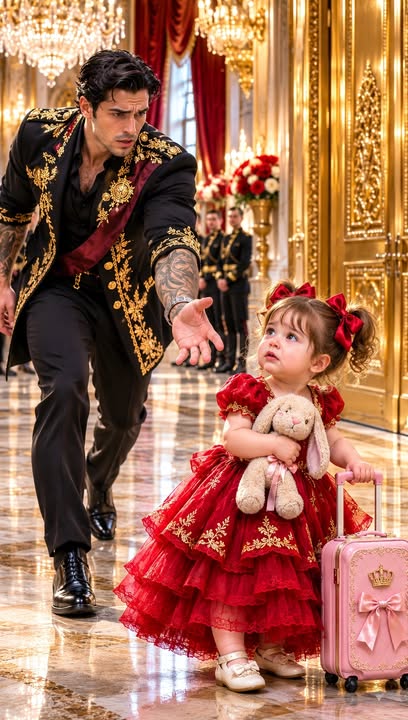
Part 5 – The Truth We Choose
The guard hesitated.
“He knew we were examining the old plans,” he said. “He didn’t say anything about a chamber.”
I looked at the open case and the papers spread across the stone shelf.
“Did he ask whether we found anything?”
“No, sir.”
“Then tell him we’ll meet him in the family library.”
The guard nodded and withdrew.
Matteo glanced at the documents.
“Rinaldi has no authority to remove the originals without a record of the transfer.”
“He knows that,” I said.
Clara gathered Daniel’s letter and the movement log, keeping them separate as the note instructed.
“Then why is he asking for them?”
“To bring them under official control,” Matteo replied.
“Which may be reasonable,” I said. “Or convenient.”
Clara folded the letter with care.
“We should make copies before we hand anything over.”
“We will.”
“And the originals stay here until an independent archivist documents them.”
I looked at her.
“Agreed.”
Matteo studied the movement log.
“If Rinaldi is connected to the old report, he may know what these documents contain.”
“Or he may be trying to prevent them from being damaged,” I said.
Clara’s gaze lifted to mine.
“You don’t have to assume the worst of him to protect the evidence.”
“I know.”
“Do you?”
I heard the question beneath the words: whether I could distinguish caution from certainty, and whether I would again turn suspicion into a verdict.
“I’m trying to,” I said.
She nodded once, accepting neither the promise nor the excuse.
We gathered the documents and carried them to the family library.
A palace archivist arrived soon after, accompanied by an independent conservator Matteo had contacted from the royal university.
They photographed every page, noted the condition of each item, and prepared secure copies.
Clara watched the work closely, asking questions about the paper, the ink, and the chain of custody.
The conservator answered with patience, never treating her as a visitor who had wandered into a matter beyond her place.
I saw how carefully she listened.
She had spent years learning to notice what other people overlooked, then had been expected to accept decisions made by people who never asked what she had seen.
When the copying was complete, the originals were placed in a temporary archival case and sealed in our presence.
Only then did I agree to meet Rinaldi.
He was waiting in the council room, a silver-haired man with a composed face and the habit of resting both hands on the back of a chair while others spoke.
He had served the royal household for more than thirty years.
He had helped arrange my company’s security contract and had been the first to bring me the evidence against Clara’s brother.
When we entered, he looked first at the document case.
“I’m glad you found the material,” he said. “The archive records have been incomplete for too long.”
“Then you knew the room existed,” I replied.
“I knew there were sealed chambers beneath the north archive.”
“Did you know Daniel had hidden a report there?”
“No.”
“Did you know the brass key was missing?”
“I knew it had been listed as missing.”
“Why was the inventory entry dated after Daniel left palace service?”
“Because the inventory was not updated promptly.”
“Who reported the key missing?”
“I don’t recall.”
“Who authorized the revised report from the fire?”
Rinaldi’s expression stayed even.
“That was a long time ago.”
“Do you know?”
“I would need to see the records.”
“We have records.”
“And I’m asking to secure them.”
“They’ve been copied and documented by an independent conservator,” Clara said. “The originals will remain sealed until the examination is complete.”
Rinaldi turned toward her.
“Mrs. Bennett, I understand this is personal.”
“It is,” she said. “That doesn’t make the documents less important.”
“I didn’t mean to suggest otherwise.”
“Then don’t.”
Her voice was calm, but there was no apology in it.
Rinaldi gave her a brief, respectful nod.
“The palace must protect the integrity of its archives,” he said.
“Then let’s do that openly,” I replied. “The conservator will examine the material, and an independent investigator will review the old report alongside the newer security file.”
Rinaldi’s eyes settled on me.
“That may not be wise.”
“Why?”
“The documents touch on a fire, an old emergency response, and the current breach. If the connection is misunderstood, speculation could damage the royal household and compromise present security.”
“Then we make sure the connection is understood before we speak.”
“Some matters are better resolved internally.”
“Was that what Daniel was told?”
A quiet pause followed.
Rinaldi’s hands tightened around the chair.
“I don’t know what Daniel was told.”
“Do you know why he left the palace?”
“I know he left after a review of his conduct.”
“Was the review fair?”
“I wasn’t involved in every detail.”
“Were you involved in any?”
“I was a junior secretary at the time.”
“That wasn’t my question.”
He lowered his hands from the chair.
“I helped prepare administrative summaries.”
“And the report from the fire?”
“I would have prepared summaries from whatever record was provided.”
“Did you notice that the record had been changed?”
“I don’t remember.”
Clara leaned forward.
“Did Daniel ask you about the missing route?”
Rinaldi’s eyes shifted to her.
“I don’t remember him asking me anything.”
“Did he bring you a discrepancy?”
“I don’t remember.”
“Did he tell you the official report didn’t match the movement log?”
“I’m sorry, Mrs. Bennett, but this was many years ago.”
Clara looked down at the copies on the table.
“My husband remembered it.”
Rinaldi said nothing.
I felt the room edging toward an argument, and I forced myself to remain seated.
“Rinaldi, I’m not accusing you,” I said. “I’m asking whether you can help us understand what happened.”
“I have served this household faithfully.”
“I know.”
“Then you know I would not knowingly endanger it.”
“I know you’ve served the household for a long time,” I said. “That isn’t the same as knowing what you knew on one particular night.”
His face tightened, though he did not raise his voice.
“I understand what you’re asking.”
“Do you?”
“Yes,” he said. “You want me to name a person when I cannot.”
“I want you to tell me whether you remember the report being changed.”
“I don’t.”
“And whether you knew the convoy had been diverted.”
“I don’t.”
“Then we’ll wait for the independent examination.”
Rinaldi looked down at the document case.
“Before you decide to take this beyond the palace, you should understand the stakes.”
“I do.”
“An open inquiry could expose weaknesses in the old security system.”
“It could also reveal that the system failed and was covered up.”
“Those are not necessarily the same thing.”
“No,” Clara said. “But hiding one won’t repair the other.”
Rinaldi’s gaze rested on her for a moment before returning to me.
“There is a way to contain the matter without public attention,” he said. “You could acknowledge that the old record was inaccurate, dismiss the accusations against Mrs. Bennett’s brother, and classify the remaining documents as restricted.”
“And Daniel?”
“His name need not be mentioned.”
“He was blamed,” Clara said. “His name is already in the record.”
“His service can be recognized privately.”
“Privately?” Her voice wavered, not with anger but with the effort of holding grief steady. “After all these years, you would clear him in a room where no one else can hear it?”
Rinaldi looked to me.
“Alessandro, a public disclosure could create uncertainty around the current security breach. If the press learns that the old palace record was altered, they will ask whether any present reports can be trusted. There are people who would take advantage of that uncertainty.”
He was not wrong.
I knew how quickly a rumor could become a threat to the people it named, and how easily a public story could obscure the real facts.
The palace was not only a building or a family.
It was the home of people who had never chosen to become part of a scandal.
I looked at the file, at the careful copies made to preserve each mark, and at Daniel’s letter lying apart from the movement log.
If I spoke, the palace might lose public confidence.
If I stayed silent, the old lie would remain useful to whoever had changed the records, and a new false accusation would continue to hang over Clara’s brother.
I had spent years believing strength meant choosing the outcome that left me in control.
But control had been the reason Clara and Lily were almost driven from their home.
Control had been the reason Daniel’s sacrifice became an error in an official report.
“What happens to the investigation if I agree?” I asked Rinaldi.
“The accusations against Mrs. Bennett’s brother can be withdrawn quietly. The report can be corrected within the palace archives. The current breach can be handled without public disclosure of the historic incident.”
“And Daniel’s letter?”
“Restricted.”
“His name?”
“Left out of the public record.”
“So the palace would correct the false report by concealing the person it falsely blamed.”
Rinaldi’s mouth tightened.
“I’m trying to protect the household.”
“I believe you.”
That seemed to surprise him.
I continued before he could answer.
“But protection cannot mean asking the person who was harmed to disappear from the account.”
Clara’s hands were folded on the table.
She did not look at me.
I knew better than to ask for approval.
Rinaldi drew a slow breath.
“You are responsible for the current security of the dynasty.”
“I am.”
“And your company is connected to the old report.”
“My company adopted the old family seal, but the record predates my firm. That distinction will have to be made clear.”
“If the public sees the seal, they may not care about the distinction.”
“Then we’ll show them the dates and the evidence.”
“And if they still doubt the palace?”
“Then we will answer their questions.”
“Even if the royal family’s position is weakened?”
“Yes.”
The word did not come easily.
It came with the knowledge that my choice could cost me the trust of the people who had hired me, and might make my company the subject of scrutiny it had never faced.
It came with the knowledge that I could still be wrong about what the documents proved.
But I could not ask Clara to believe that truth mattered while quietly arranging for the most painful part to remain hidden.
Rinaldi looked toward the window.
“Once this is made public, you cannot control how it is understood.”
“I know.”
“You may lose your position.”
“I know.”
“You may lose the palace’s confidence.”
“I know.”
Clara finally looked up.
“Do you understand what you’re choosing?”
I met her eyes.
“I understand that choosing the quiet answer would make the palace comfortable and leave Daniel’s name buried again.”
“That isn’t all.”
“No,” I said. “It isn’t.”
“It could put your company under scrutiny.”
“Yes.”
“It could put your position at risk.”
“Yes.”
“And you can’t make that choice on my behalf and call it an apology.”
“I won’t.”
She held my gaze, searching for the part of me that still wanted to turn what I chose into something she owed me for.
I tried not to look away.
“I’m choosing because I was wrong to treat an accusation as a fact,” I said. “Not because I expect you to forgive me.”
Clara’s eyes lowered.
For a moment, the room seemed to hold its breath.
Then she nodded, almost imperceptibly.
Rinaldi shifted his weight.
“If you proceed, I would advise delaying any statement until the independent report is complete.”
“That’s reasonable.”
“And keeping the historical details limited to what can be verified.”
“That’s necessary.”
He studied me, perhaps waiting for a declaration broader than I could honestly make.
I gave him none.
“We will publish the evidence when it has been authenticated,” I said. “We will identify what remains unknown. We will clear Daniel and Clara’s brother of the claims that the evidence disproves. We will also identify who altered the recent file and why.”
“Those matters may not be connected.”
“Then the investigation will say so.”
“And if the investigation implicates someone within the palace?”
“Then the finding will say so.”
Rinaldi looked down at the table.
“Understood.”
He left without demanding the document case.
After the door closed, Clara sat very still.
Matteo remained by the window, his hands clasped behind him.
I looked at the people around me and felt the weight of every unfinished answer.
“Are you all right?” I asked Clara.
“I don’t know.”
“That’s fair.”
“You could still be choosing the wrong thing.”
“Yes.”
“You could expose people who had nothing to do with the decision.”
“Yes.”
“And the person who changed the old report could still be someone you’ve trusted for years.”
“Yes.”
She gave a tired, humorless breath.
“You’re not making this easy.”
“I don’t think it should be.”
“No,” she said. “It shouldn’t.”
Matteo moved to the table.
“I need to tell the king.”
“You should,” I said. “But the evidence stays as it is, and the copies go to the independent investigators.”
“I agree.”
“Will your family support a public correction?”
“I don’t know.”
The answer no longer sounded like an evasion.
It sounded like an acknowledgment that truth could demand more from them than they wanted to give.
Clara closed Daniel’s letter inside its protective sleeve.
“He didn’t ask anyone to make him a hero,” she said. “He only asked that the first explanation not be accepted.”
“He didn’t have to ask,” I replied. “The evidence is enough.”
“For the evidence, perhaps.”
She glanced at the page with the line about the child.
“For the people who knew him, it may take longer.”
I wanted to tell her that I had spent the last hour learning how much one person’s quiet choice could change the meaning of a life.
Instead, I said, “I’m sorry I never knew his name.”
“Knowing now doesn’t give him back the years he lost.”
“No.”
“But it changes what happened.”
“I hope it does.”
Clara studied me.
“It changes what happened for you,” she said. “For me, it means I’m learning something about my husband from a letter he wrote to someone else.”
The sorrow in her voice was so gentle that it would have been easy to miss.
I did not miss it.
“I’m sorry,” I said.
She pressed the sleeve flat on the table.
“I don’t need another apology right now.”
“What do you need?”
“To know whether you’ll still tell the truth when it stops feeling like a choice that makes you brave.”
I thought about the coming days, the questions from the palace, the scrutiny of my company, and the possibility that the evidence would bring consequences no one could neatly contain.
“I don’t know how brave I’ll feel,” I said. “But I know I can’t go back to the silence.”
Clara rose.
“Then keep that answer when it becomes difficult.”
“I will.”
She did not promise to stay.
She did not ask to leave.
She only carried Daniel’s letter toward the door, choosing to keep it with her for the time being.
I let her.
Matteo followed her out after asking me to give him time to speak with the king.
I remained in the library with the documents.
Outside, the palace continued as it always had.
Staff crossed the courtyards.
A bell rang somewhere in the east wing.
Beyond the windows, the gardens brightened beneath a thin break in the clouds.
I thought of Lily asking whether I would come home too.
I had told her yes.
Now I wondered whether I knew what home meant to her, or whether I had simply wanted to believe the palace could become one again.
The independent investigators arrived before noon.
They took custody of the sealed copies and began reviewing the modern security file alongside the old report.
The first concern they raised was that the page bearing my company’s seal had been inserted after the original file was assembled.
They could not yet say who had inserted it.
They could say that the handwritten reference to the palace fire had been made with a pen and ink different from the other notes.
By late afternoon, the king’s office had confirmed that a public statement would be prepared once the findings were verified.
I stayed in the council room as the draft was revised, removing anything that implied more certainty than the evidence allowed.
We did not call Daniel a hero.
We did not accuse Rinaldi.
We did not claim to know who had diverted the convoy or who had altered the report.
We said that an old record had failed to reflect the full circumstances of the fire, that Daniel Bennett had acted to reach a child still inside the west wing, and that new evidence showed he had been blamed for a breach he may have committed while saving lives.
We said Clara’s brother had not been shown to have sold confidential information, and that the investigation into the missing file would continue independently.
The words were modest.
They were also more truthful than anything the palace had said about the fire in years.
I signed the statement shortly before sunset.
The adviser beside me placed it in a folder.
“We’ll release it after the king has reviewed the final copy.”
“When?”
“Tomorrow morning.”
I closed the file.
“Good.”
It was the first time all day that I felt I had done something I could stand behind without pretending to know how it would end.
Then an attendant hurried into the room.
“Sir, Lily is gone.”
The folder slipped from my hand.
“What do you mean, gone?”
“Her room is empty. Clara thought she had gone to the playroom, but she isn’t there.”
“Have you searched the corridor?”
“Yes.”
“The gardens?”
“Not yet.”
I was already moving.
The old garden came to mind first: the path, the greenhouse, the gate Lily had tried to reach with her little suitcase.
“Find Clara,” I said. “Tell her I’m looking for Lily.”
The attendant hurried away.
I ran through the palace, past the library and the east corridor, calling Lily’s name without raising my voice so sharply that fear would carry ahead of me.
At the outer hall, a guard pointed toward the garden doors.
“She was seen near the east passage, sir.”
I reached the doors and found no one outside except a single attendant, looking toward the distant gates.
“She went that way,” he said.
I followed the path, my steps quickening.
Near the garden entrance, something pink lay on the stone.
Lily’s small suitcase.
Its handle had been left upright, and the top was open.
Beside it, her stuffed rabbit rested on its back in the grass.
I stopped.
The palace gates stood in the distance, but Lily was not there.
“Lily?”
No answer came from the path.
I turned toward the old garden.
A small shape moved beyond the hedges, heading toward the eastern gate with slow, determined steps.
The attendant had been right.
She had gone again.
I started after her, then heard Clara’s voice behind me.
“Alessandro!”
She was running, one hand pressed to her side, her face pale.
I picked up the rabbit and handed it to her.
“She has Bunny,” I said. “The other rabbit.”
Clara looked at the toy in my hand, then toward the garden gate.
“Why would she leave?”
“I don’t know.”
She took the rabbit.
The folded paper crown she had been carrying slipped from her coat pocket and landed on the path.
I bent to retrieve it.
Inside its crooked folds was a note written in the careful, adult hand Lily sometimes asked us to use when she wanted to leave a message.
**Lily go away before Awessandro lose palace.**
Beyond the gate, Lily’s red dress disappeared between the hedges.
Clara looked at me, grief and alarm held together in her eyes.
And for the second time, our little girl was trying to protect us by making herself vanish.
**–END OF PART 5–CLICK “NEXT” AT THE BOTTOM OF THE PAGE TO CONTINUE READING**
* * *
[PREVIOUS: PART 4](https://echoesofstories.idolsgift.com/blog/part-4-the-file-in-the-greenhouse-047) | [NEXT: PART 6(THE END)](https://echoesofstories.idolsgift.com/blog/part-6-the-end-the-file-in-the-greenhouse-047)
✓ Lynn R. Adams
Part 5 – The Truth We Choose The guard hesitated. “He knew we were examining the old plans,” he said. “He didn’t say anything about a chamber.” I looked at the open case and the papers spread acros…