PART 5: The Envelope No One Was Allowed to Open 069
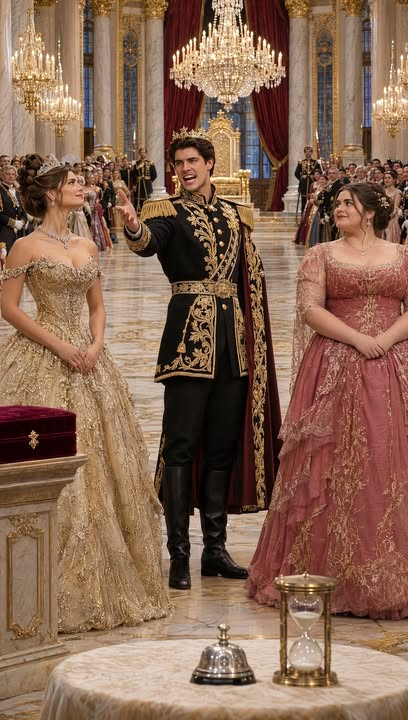
Part 5 – The Price of a Convenient Truth
The newly delivered notice rested on Justice Rowland’s table, its plain seal at odds with the weight of the words inside it.
“It concerns the day the prince was born,” the palace legal adviser had said.
Edward did not look away from the notice.
“Then let us read it,” he said.
Justice Rowland held up one hand.
“Not until the registrar’s office confirms the seal and the chain of custody. We have already learned how easily documents can be separated from their context.”
Edward’s shoulders stiffened, but he nodded.
Hannah recognized the strain in that small movement: he wanted to know, yet he understood that an answer reached carelessly could become another uncertainty.
The Queen sat beside her counsel, her hands folded in her lap.
She had not answered Hannah’s question about Eleanor and James Vale.
Perhaps she could not.
Perhaps she feared what the records might say.
The notice was logged, photographed, and placed in an evidence sleeve.
Justice Rowland asked everyone to wait while her office contacted the registrar directly.
In the pause that followed, Hannah looked again at her father’s note on the reconciliation report.
Do not authorize extension until supplier records verified.
The words steadied her.
Whatever the newly found birth attachment contained, the hospital inquiry still had a path through the evidence.
Her father had not simply signed an old payment and vanished from the story.
He had questioned the very arrangement that now threatened St. Anne’s.
But a note was not the missing report, and a warning was not proof of what happened after it.
Nothing was settled.
When the registrar confirmed the notice’s authenticity, Justice Rowland opened the sleeve under the document camera.
The attachment contained a certified birth record and a short statement from the hospital administrator who had managed Edward’s adoption.
It confirmed that Eleanor and James Vale had died in an accident shortly after their son’s birth.
The infant had been placed in temporary care while the court reviewed his guardianship.
Queen Margaret and King Robert had then adopted him through the lawful process described in the order already examined.
The record did not suggest a hidden heir or a secret exchange.
It confirmed what the adoption papers said: Edward had been adopted as a baby after his birth parents died.
He read the page in silence.
The Queen’s eyes remained on him, but she did not reach for his hand.
“Were they alone?” he asked at last.
The registrar’s statement listed a maternal aunt who had been contacted but was unable to take the infant, followed by the court’s approval of the Montgomerys as adoptive parents.
“Do you know her name?” Edward asked.
Justice Rowland read it aloud.
Edward repeated it softly, as if committing it to memory.
The fact that his birth parents had died did not lessen the shock of learning their names.
It did not make the years of silence disappear.
But the record gave him something he had never had before: a beginning that did not depend on a palace story.
“Why was the adoption order never linked to the succession register?” he asked.
“The filing note says the final registration was postponed until the court’s certified order arrived,” Justice Rowland replied. “The order was later received, but the registry does not show that the last step was completed.”
“Who was responsible for completing it?”
“The registrar’s office at the time. We’ll need to establish whether it was an administrative failure, an intentional omission, or something more complicated.”
Margaret lowered her gaze.
“I should have followed up.”
Edward looked toward her.
“Yes.”
She accepted the answer without offering a defense.
The meeting continued, but the first shock had given way to a quieter grief.
Edward asked for copies of the records and for the registrar to search for any surviving correspondence from his birth parents’ family.
Justice Rowland agreed to make the request through proper channels.
The palace legal adviser then presented the succession council’s preliminary position.
The adoption order appeared valid, and adoption itself did not disqualify Edward from the succession.
The incomplete filing, however, created a vulnerability that the council could not ignore.
Until the original registry was reconstructed and the full record reviewed, the council would not issue a final confirmation.
“They’re not removing me,” Edward said.
“No,” the adviser replied. “They are declining to rule until the evidence is complete.”
“And while they wait?”
“Your status remains subject to review.”
It was a careful answer, and not a reassuring one.
Justice Rowland turned to the hospital records.
“We also need to address the separate matter of the altered authorization,” she said. “The documents show that someone used Prince Edward’s name on a later payment attachment.”
Hannah looked at the old reconciliation report.
Her father’s objection appeared in the margin, his handwriting faint but clear.
“What is the next step?” she asked.
“Locate the original authorization and its supporting schedule,” Justice Rowland said. “Then compare them with the contract the Queen signed and the report your father filed.”
“Can the hospital safely suspend the suspect payments now?” asked Dr. Cole, who had joined the meeting by video.
“We can suspend the unverified payments,” Hannah said, “but we must preserve the ability to order essential supplies. If we freeze everything, we risk creating a new emergency.”
Dr. Cole nodded.
“We can identify which vendors are essential and make those purchases through a temporary monitored process.”
Edward leaned toward the screen.
“Will that protect patient care?”
“It will help,” Dr. Cole replied. “But we still need cash for payroll and operating costs.”
The acting director laid out the hospital’s immediate position.
St. Anne’s could continue for a short time, but it needed a bridge fund before the next payroll and supply cycle.
The finance ministry was willing to consider support if the palace approved an independent review and disclosed the records relevant to the disputed payments.
The Queen’s counsel glanced toward Margaret.
“Your Majesty, any public statement before the review is complete could complicate matters.”
Margaret looked at Hannah.
“What do you recommend?”
Hannah understood the danger in the question.
A premature statement could help St. Anne’s secure support, but it could also shape the public story before the evidence was complete.
She chose her words carefully.
“Say what is established,” she replied. “You signed the original emergency contract to keep the hospital open. The current review has found an unauthorized alteration and suspicious payments. The documents do not yet establish who made the alteration or whether the original agreement was mishandled.”
“And your father?” Margaret asked.
“He objected to extending the agreement until deliveries were verified. That is what his report says.”
“If I acknowledge that he raised concerns, will it help the hospital?”
“It may help explain why the review matters. But you should not use his name as a shield for anyone else.”
The Queen inclined her head.
“I won’t.”
Edward watched Hannah, the familiar tension in his face returning.
The evidence might clear his name.
It might also expose failures by the palace, the royal registry, or the Queen herself.
For the first time, Hannah could see that he was not only afraid of losing his place in the succession.
He was afraid of discovering that the people he loved had made choices that changed his life without letting him choose.
After the meeting, the palace legal adviser asked Hannah to stay.
Edward was called to speak privately with his mother, and he paused at the door to meet Hannah’s eyes.
“I’ll find you after,” he said.
She nodded.
The adviser remained by the table, reviewing the preliminary summary.
“The royal treasurer has requested a private meeting with you,” he said.
Hannah’s expression tightened.
“Why?”
“He says he has evidence that could resolve the succession question and help the hospital.”
“Has Justice Rowland been told?”
“Yes. She will oversee any exchange, and the records will be preserved.”
“Then I’ll speak with him only under those conditions.”
The adviser agreed.
A meeting was arranged at Justice Rowland’s office that afternoon.
The treasurer arrived with his counsel and a sealed document case.
He looked less confident than he had in the ballroom, but he was not visibly frightened.
His hands rested on the case.
“I need to make a proposal,” he said.
Justice Rowland reminded him that he was not negotiating with Hannah alone and that any evidence he provided would become part of the independent review.
“I understand,” he said. “I’m not asking for immunity.”
“Then what are you asking for?” Hannah said.
The treasurer glanced toward her.
“For you to make a statement about the Queen’s contract.”
“What statement?”
“That the original agreement she signed created the opening through which the later payments were made.”
“Did it?”
“The agreement permitted advances before delivery.”
“It also required reconciliation,” Hannah replied. “My father flagged discrepancies and opposed an extension.”
The treasurer’s gaze flickered toward the report.
“I know what the report says.”
“Then you know it doesn’t support the story you want me to tell.”
“I want you to say that the Queen’s decision created the conditions for the loss.”
“That is not the same as saying she committed fraud,” Hannah said. “But it still might not be true.”
“Publicly, the distinction will be understood.”
“Not by everyone.”
He leaned forward, his voice quieter.
“If the Queen accepts responsibility for the original contract, the council will be less likely to let the hospital matter contaminate the succession review. The records can then be presented as a narrow accounting dispute, and the prince’s claim can be confirmed more quickly.”
Edward had not yet arrived.
Hannah felt his absence like a hand pressing against the edge of the room.
“You have evidence about the succession?” she asked.
The treasurer opened the case and removed a copy of the incomplete filing register.
He turned it toward Justice Rowland, who studied the page.
“This appears to show that the final adoption record was prepared for submission to the council,” he said. “It was never filed.”
“Who prepared it?” Hannah asked.
“My office received it,” the treasurer replied. “I believe the delay was procedural.”
“Do you have proof that the council accepted it?”
“No.”
“Then it doesn’t clear Edward.”
“Not by itself.”
The treasurer placed another page beside it, an internal memorandum referring to the adoption order as valid and recommending that Edward’s succession status be confirmed.
The date was several years after the adoption.
Hannah read it twice.
“Who wrote this?”
“It came from the legal registry.”
“Is there an original?”
“The original is in the treasury archive.”
“And why are you bringing it to me instead of submitting it directly to Justice Rowland?”
“Because its value depends on context,” he said. “The Queen’s statement can help settle that context.”
Hannah looked at Justice Rowland.
“Can this memorandum be authenticated?”
“It can be examined,” Justice Rowland replied. “But we cannot yet say what legal effect it has.”
The treasurer folded his hands.
“If Hannah publicly acknowledges that the Queen’s contract created the risk, the Queen can take responsibility without being accused of altering the agreement. The prince’s claim can be separated from the hospital inquiry, and the council may feel able to confirm him.”
“And if the original contract didn’t cause the fraudulent transfers?” Hannah asked.
“It enabled them.”
“It may have created a process that someone later abused. That does not make the contract itself fraudulent.”
“Public understanding does not wait for every footnote.”
“That’s why the facts need to be clear.”
The treasurer’s expression shifted, not quite impatience and not quite appeal.
“Do you want the hospital to close while you insist on perfect wording?”
“I want it kept open without asking people to accept a false account.”
“No one is asking you to lie.”
“You’re asking me to make a claim the evidence has not established.”
He said nothing.
The silence told her more than his argument had.
He wanted the Queen’s signature to become the explanation.
He wanted the old emergency agreement to absorb the suspicion around the later payments.
He wanted the succession question handled as a separate, harmless filing delay.
It was possible those things were true.
It was also possible they were not.
But the missing records made certainty impossible, and a convenient conclusion could be as damaging as a deliberate lie.
Justice Rowland ordered the document case secured and asked the treasurer to provide a full written account of how each record had come into his possession.
He agreed, though his eyes remained on Hannah.
“You should understand the cost of refusing,” he said. “The hospital needs money now. The prince needs a clear ruling. One careful statement could help both.”
“Then give the council the evidence,” Hannah replied. “Don’t make me choose a story before we know whether it’s true.”
The meeting ended without agreement.
When Hannah stepped into the corridor, Edward was waiting with Margaret.
He looked from her to the closed meeting room.
“What did he offer?”
“Evidence and a bargain.”
“What did he want?”
“For me to blame your mother for the payments.”
Margaret’s face tightened.
Edward looked at Hannah.
“Did you?”
“No.”
The Queen exhaled, but there was no relief in her expression.
“Thank you,” she said.
“Don’t thank me,” Hannah replied. “I didn’t do it for you.”
“I know.”
Edward’s gaze moved between them.
“What evidence did he bring?”
“A registry memorandum that may support the adoption record,” Hannah said. “It still needs authentication.”
“Did he say it would clear me?”
“He said it might help the council confirm you if the hospital dispute was framed as your mother’s responsibility.”
Edward’s jaw set.
“Then it wasn’t evidence. It was leverage.”
“It may be both,” Hannah said. “That’s why Justice Rowland has it.”
Margaret looked down the corridor.
“What did you tell him about my contract?”
“That the evidence shows you signed the original agreement, and that the agreement required reconciliation. Your signature is a fact. Fraud is not established by that fact.”
The Queen nodded slowly.
“Then I should say so publicly.”
“Only if you’re willing to say the rest too,” Hannah replied. “That you didn’t know the contract had been altered, and that you should have ensured stronger oversight.”
Margaret’s chin lifted a fraction.
“I am willing.”
“Even if the council says the missing filing is your responsibility?”
“If it is.”
“Even if the hospital inquiry becomes harder?”
“If that is what the facts require.”
Edward studied his mother.
The trust between them had not returned.
But for the first time since the envelope was opened, he seemed able to look at her without seeing only the secret.
That evening, the Queen released a short statement confirming that she had signed the original emergency contract to prevent an earlier interruption of hospital services.
She also stated that she had not authorized any later alteration and supported an independent investigation into all related payments.
She acknowledged that her oversight had been insufficient and promised to provide the original records.
The statement was measured, neither an apology performed for the cameras nor an attempt to dismiss the harm.
It did not solve St. Anne’s immediate funding crisis.
Nor did it settle Edward’s position.
The finance ministry required a clear interim plan before approving the bridge fund.
Dr. Cole and the hospital team had prepared one, but it depended on suspending every unverified payment and replacing the expected funds with temporary support from the royal reserve.
The reserve could cover the hospital’s essential operations for a short period.
After that, the council would need to approve a longer commitment.
The Queen could recommend it.
Edward could endorse it.
Neither could promise the final funds until the investigation established what had been lost and who was responsible.
Hannah spent much of the night reviewing vendor lists and separating essential orders from contracts that could safely be paused.
She worked at a small desk in the palace library while the clock moved past midnight.
Edward found her there just before dawn.
He carried two cups of tea.
“You should be asleep,” he said.
“So should you.”
“I wasn’t able to.”
He placed one cup beside her and sat across from the desk.
“I spoke with my mother.”
“How did it go?”
“She told me what she remembered about the adoption. She said she never thought of me as anything other than her son.”
“That’s important.”
“It is.” He looked into the cup. “It doesn’t answer why she thought I couldn’t know the truth.”
“Maybe she believed she was protecting you.”
“Maybe she believed she was protecting the crown.”
“Both can be true.”
He let the thought rest between them.
“I can live without the title,” he said. “I don’t know if I can live with everyone deciding what I’m allowed to know.”
Hannah closed the vendor file.
“Then don’t let the title decide what you do now.”
He looked at her.
“You want me to support the full investigation, even if the council suspends my claim?”
“I want you to support what the evidence needs.”
“And if it costs me the throne?”
“Then you’ll know you didn’t keep it by asking someone else to lie.”
For a moment, the quiet library seemed to hold everything they could not promise one another.
Edward reached across the desk, stopping just before his hand met hers.
He gave her room to choose.
Hannah placed her fingers over his.
The touch was slight, but it carried more honesty than any promise either of them had made.
“I don’t want you to lose everything,” she said.
“Neither do I.”
“But I won’t make your future depend on a false accusation.”
“I wouldn’t want you to.”
She believed him.
Not because he had said the right words, but because he had not asked her to make the choice easier for him.
By midmorning, Justice Rowland had received the treasurer’s written account and the original registry memorandum.
The memorandum appeared genuine, but it was not enough to confirm that the adoption record had been formally entered with the succession council.
The council would have to decide whether the incomplete filing was a defect that could be corrected or a basis for suspending Edward’s claim.
The legal adviser summoned Edward and Margaret for an emergency session.
Hannah was asked to present her financial findings.
The council chamber was smaller than the ballroom, plain-walled and lined with shelves of legal volumes.
No spectators were allowed.
The members sat around a long table, each with a copy of the verified records.
Justice Rowland explained which documents had been authenticated and which remained under review.
Hannah described the supplier payments, the missing deliveries, and the hospital’s immediate needs.
She was careful to distinguish the confirmed facts from the open questions.
The council listened without interruption.
When she finished, one member asked whether she believed the original contract caused the current losses.
“I believe it created a process that required close oversight,” Hannah said. “I do not yet have evidence that the original agreement caused the later fraudulent payments. The surviving reconciliation report shows that my father objected to an extension until the delivery records were verified.”
“And the Queen’s signature?”
“It establishes that she approved the original emergency contract. It does not establish that she approved the alteration.”
The member glanced toward Margaret.
“Does Your Majesty accept responsibility for the oversight?”
“Yes,” Margaret said. “I signed the agreement and should have ensured that the reconciliation was completed and reviewed independently.”
Her voice did not shake.
She did not accuse the treasurer or ask the council to spare her.
“I did not authorize a later alteration,” she continued. “But I recognize that a contract bearing my signature may have given others confidence that the arrangement remained approved. I should have made certain it did not.”
Edward listened without looking away.
The council then asked him about the adoption record.
He answered the questions directly, acknowledging that he had not known he was adopted and that the legal order appeared valid.
He did not ask the council to treat his life as proof of his right to rule.
He asked them to examine the law and the complete record.
“If the filing was incomplete,” he said, “I want it corrected if the law allows. If it cannot be corrected, I want to know that honestly. I will not claim a right by concealing the facts that define it.”
Hannah felt the quiet force of his answer.
The council requested a recess.
The members would consider the preliminary evidence and determine what could be done while the full registry review continued.
The hospital could not wait for their decision.
Dr. Cole had sent a message: the payroll deadline was approaching, and the bridge fund had not yet been released.
The Queen requested that the royal reserve be made available immediately for essential operations.
The council agreed in principle but asked that the payment be authorized by the finance ministry under the independent monitoring plan.
The ministry’s response arrived before the session resumed.
It would release the bridge fund if the palace provided a complete list of suspended contracts, a verified account of the essential purchases, and an explanation of the records bearing Edward’s authorization.
The last condition stalled the decision.
Hannah read the message twice.
The disputed authorization had to be traced before the ministry would approve the funds.
“Can the treasurer identify where it came from?” Edward asked Justice Rowland.
“He says he did not create it,” she replied. “He believes it was prepared by the former treasury legal office, but his account is not yet supported by the original file.”
“Then we need the original file,” Hannah said.
The palace legal adviser checked the archive index.
“The reference number points to a closed case file. It was transferred to the succession registry.”
Justice Rowland immediately requested it.
They waited in the council chamber while the records office searched.
Outside the windows, the morning light had begun to fade beneath clouds.
Hannah thought of St. Anne’s staff waiting for word about payroll.
She thought of patients who had made appointments without knowing that the hospital’s future depended on a missing file.
She thought of Edward, whose name had been placed on records before he could write it himself.
At last, the records officer returned carrying a thin file sealed with a blue registry strip.
He placed it before Justice Rowland.
The file contained the original authorization, the supporting schedule, and a cover sheet listing the official who had submitted it.
Justice Rowland examined the strip and confirmed the record number.
The original authorization was not signed by Edward.
It was signed by the royal treasurer.
The supporting schedule showed that the funds had been routed through Meridian Medical Supply and then divided among several accounts.
The alteration had been made after the Queen’s emergency contract was signed.
Hannah leaned closer to the page.
“Is this enough to establish the treasurer created it?” she asked.
“It establishes that his office submitted the authorization,” Justice Rowland replied. “We still need to verify the account trail and determine whether anyone else participated.”
The treasurer’s counsel, present at the far end of the room, asked for a private review of the original.
Justice Rowland declined until the document had been photographed and entered into the record.
Edward’s name had been forged.
The Queen’s original contract had been altered.
Hannah’s father had objected to extending the arrangement until the deliveries were verified.
The evidence was beginning to form a coherent account, though the full financial trail was not yet complete.
Justice Rowland sent the verified findings to the finance ministry.
The ministry replied that it would release the bridge fund once the council issued a temporary determination that Edward’s status did not prevent him from authorizing the emergency hospital plan.
The council would not make that determination until it had reviewed the incomplete succession filing.
And the filing could not be corrected without the original registry confirmation, which remained missing.
The treasurer’s counsel then asked to speak.
“My client has provided a further statement,” he said. “He believes the confirmation was submitted, but he also says that it may have been filed under the temporary identity listed in the birth record.”
Justice Rowland’s expression sharpened.
“Does he have evidence?”
“He has identified a second registry ledger.”
The records officer was sent to retrieve it.
The council members resumed their seats, while Hannah, Edward, and the Queen waited under the pale light of the high windows.
Minutes passed.
Then the records officer returned with a narrow ledger and a single sheet tucked inside its cover.
Justice Rowland opened the ledger to the indexed page.
A notation showed that Edward’s adoption order had been received and approved for entry under his royal name.
For one breath, the room seemed to loosen.
Then Justice Rowland read the next line.
The entry had been canceled three days later at the request of the royal treasurer’s office, pending further review.
Hannah felt Edward’s hand find hers beneath the edge of the table.
Justice Rowland turned the loose sheet over.
On its back, in the same official hand as the cancellation, was a note:
“Do not file until the succession envelope is delivered to the treasurer.”
The Queen stood abruptly, then stopped herself.
Edward looked at the words, his face gone very still.
The note had been dated six years after his adoption.
And below it was a signature that was not the treasurer’s.
**–END OF PART 5–CLICK “NEXT” AT THE BOTTOM OF THE PAGE TO CONTINUE READING**
* * *
[PREVIOUS: PART 4](https://storyly.idolsgift.com/blog/part-4-the-envelope-no-one-was-allowed-to-open-069) | [NEXT: PART 6(THE END)](https://storyly.idolsgift.com/blog/part-6-the-end-the-envelope-no-one-was-allowed-to-open-069)
✓ Lynn R. Adams
Part 5 – The Price of a Convenient Truth The newly delivered notice rested on Justice Rowland’s table, its plain seal at odds with the weight of the words inside it. “It concerns the day the prince …