PART 5: The Date on the Paper 047
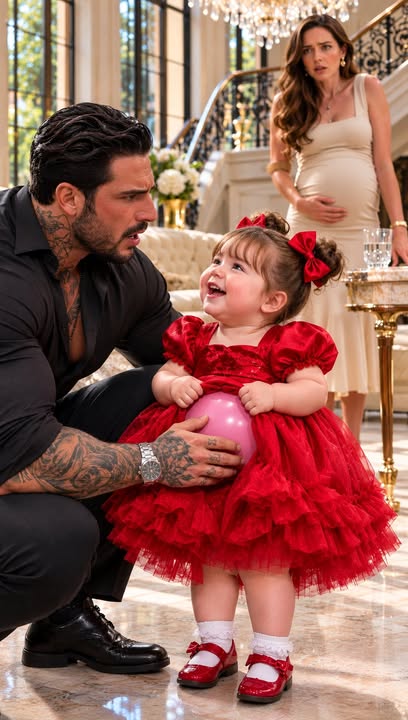
Part 5 – The Truth They Could Share
Leontine’s eyes remained on the phone while the doctor’s words settled into the quiet kitchen.
Aurelian could not hear the voice on the other end, only the faint murmur of a woman speaking carefully.
Leontine’s fingers tightened around the edge of the table.
“Yes,” she said at last. “I understand.”
She listened again, then glanced at Aurelian.
“I can come in tomorrow.”
Another pause.
“No, I won’t be alone.”
The last words were barely audible, but Aurelian heard them.
Leontine ended the call and set the phone beside the hospital summary.
“What did she say?” he asked.
“She reviewed the first scan again. There’s a note she wants to explain more clearly.”
“About the twins?”
“Yes.”
“Did she say there’s something wrong?”
“No. She said it isn’t a new medical concern, but she doesn’t want me drawing conclusions from the wording in the file without speaking to her.”
Aurelian watched her face.
“Do you want me to go with you?”
Leontine’s answer took time.
“Yes,” she said. “I do.”
He nodded, careful not to let relief make the decision feel smaller than it was.
“Then I’ll be there.”
“I don’t want you to come because you think I’m finally letting you in and you have to prove something.”
“I’ll come because you asked me to.”
“And if I don’t want to talk afterward?”
“Then we don’t talk until you’re ready.”
Leontine’s shoulders eased slightly.
Aurelian reached for the coffee pot, then stopped before pouring.
“Would you like some?”
“Please.”
He poured her a cup and placed it within reach.
Their hands did not touch, but neither of them moved away.
For the rest of the morning, they spoke about ordinary things.
Maelis needed new shoes because her toes had reached the ends of her old ones, and the pink balloon had lost some of its air.
Leontine told Aurelian she wanted to save it anyway.
He agreed.
When Maelis came into the kitchen, she climbed onto the stool beside her mother and asked whether the doctor would make her tummy feel better.
“Maybe she’ll answer some questions,” Leontine said.
“Can I come too?”
“Not this time, sweetheart.”
Maelis accepted the answer, then reached for a strawberry.
“Rabbit can come,” she decided.
“Rabbit can stay home with Daddy,” Aurelian said.
Maelis smiled.
“Then you’ll take care of him.”
“I’ll do my best.”
The appointment was scheduled for the following afternoon.
Aurelian moved two meetings and asked his assistant to hold the rest of the day clear.
He did not announce the change as a grand gesture.
He simply made room.
That evening, he sat with Maelis while she arranged her dolls around the balloon.
Leontine watched from the doorway.
“Daddy is the doctor,” Maelis said, handing him a toy stethoscope.
“I’m not sure I’m qualified.”
“You have to listen to the baby.”
Aurelian placed the plastic stethoscope against the doll’s dress.
“What do I hear?”
Maelis listened beside him.
“Quiet.”
“Is that all?”
She nodded.
“Baby is sleeping.”
Aurelian glanced at Leontine.
She looked away, but not before he saw the faintest smile.
Later, after Maelis was in bed, Leontine stood at the foot of the staircase with one hand on the rail.
“I’m glad you’re coming tomorrow,” she said.
“So am I.”
“I may not be able to tell you everything the doctor says right away.”
“I won’t ask you to.”
She studied him, as if weighing whether he meant it.
“Thank you.”
Aurelian wanted to say that she did not need to thank him for showing up.
He understood that the words would not change the fact that she had spent months expecting him not to.
So he said nothing more.
The next afternoon, they drove to the clinic together.
The drive was quiet, but it was not the same silence that had once separated them.
Leontine held a small folder on her lap, her thumb moving back and forth over its corner.
Aurelian kept his eyes on the road and his hands steady on the wheel.
When they arrived, he parked near the entrance.
“I can wait here until you’re ready,” he said.
Leontine glanced at him.
“Come in.”
Inside, the waiting room smelled faintly of clean linen and coffee.
A television played a muted daytime program above a shelf of magazines.
A young couple sat near the window, speaking softly over a phone screen.
Leontine noticed them and looked down at her folder.
Aurelian did not reach for her hand without asking.
After a moment, she placed her hand on the chair between them, palm upward.
He covered it with his own.
They waited that way until a nurse called her name.
The doctor greeted them in a small consultation room lined with shelves and framed certificates.
She was a woman in her fifties with silver at her temples and a calm, attentive manner.
“Leontine, I’m glad you came in,” she said. “And you must be Aurelian.”
“Yes,” he replied.
“Thank you for coming with her.”
Leontine placed the folder on the desk.
“You said you wanted to explain the note from the first scan.”
“I do,” the doctor said. “Before I do, I want to make clear that I’m not bringing new bad news. The records are consistent with what we’ve discussed: one embryo stopped developing early, and the remaining pregnancy later ended.”
Leontine’s lips pressed together.
Aurelian kept his eyes on her, not the doctor.
The physician continued.
“The note I wanted to clarify is about how that first scan was recorded. The language can be clinical and confusing, especially when it concerns an early loss.”
“What does it mean?” Leontine asked.
“It means there were two embryos visible at the beginning. One had stopped developing before the scan. The other continued to show growth at that time. The note was not saying that one baby had caused the other’s loss, or that anything you did had brought it about.”
Leontine let out a breath.
“I knew that.”
“I know,” the doctor said gently. “But you told me you had reread the records several times, so I wanted to make sure the wording itself wasn’t adding to the burden.”
Aurelian looked down at the folder.
The physician’s explanation was measured and clear, but he could see how the clinical language might have become a place for Leontine’s mind to search for fault.
“Is there anything in the records that says she could have prevented it?” he asked.
“No,” the doctor said. “There is nothing to suggest that. Early pregnancy loss can happen without a preventable cause. Leontine followed the advice she was given and sought care when her symptoms changed.”
Aurelian nodded.
He had known those facts in the abstract.
Hearing them from the doctor did not undo the grief, but it gave the fear a boundary.
The doctor turned to Leontine.
“How have you been feeling physically since the last scan?”
“Better,” Leontine said. “The discomfort is less frequent.”
“And emotionally?”
Leontine paused.
“Some days are easier than others.”
“That’s understandable.”
“I still have trouble when people ask about the baby.”
“You’re allowed to answer in whatever way feels right to you, including saying you don’t want to talk about it.”
Leontine looked at the folder.
“I’m not sure what I want to tell people yet.”
“You don’t have to decide today.”
The doctor reviewed the remaining follow-up instructions and explained what symptoms should prompt a call.
Aurelian listened, but he did not turn every detail into a question.
When the appointment ended, Leontine thanked the doctor and tucked the papers into her folder.
Outside, the afternoon light had turned pale against the clinic windows.
Aurelian held the door open for her.
“Do you want to go home?” he asked.
“Yes.”
During the drive, Leontine watched the road pass beyond the window.
Aurelian did not ask what she was thinking.
When they reached home, Maelis ran to meet them with Rabbit tucked beneath one arm.
“Did the doctor fix Mommy?”
Leontine crouched to hug her.
“The doctor said my body is healing.”
Maelis touched her mother’s sleeve.
“Are you happy?”
“Not all the time,” Leontine said. “But I’m glad you’re here.”
Maelis leaned against her.
Aurelian watched them and felt the old impulse to promise that everything would be all right.
He resisted.
Some things would not become all right in the way they had hoped.
That did not mean they could not find ways to keep living together.
That evening, Maelis asked to play the balloon game.
Leontine hesitated, then brought the pink balloon from the living room and sat with her on the rug.
Aurelian joined them.
Maelis placed her doll beside the balloon.
“This is the baby,” she said. “It’s pretend.”
“Yes,” Leontine replied. “It helps us remember the baby we wanted to meet.”
Maelis looked up.
“Do we still love it?”
Leontine’s eyes filled.
“Yes,” she said. “We do.”
Aurelian reached for Maelis’s hand.
“All of us do.”
Maelis leaned against her mother’s side.
“Then the balloon can stay.”
“It can,” Leontine said.
When Maelis went upstairs to put Rabbit to bed, Aurelian and Leontine remained in the living room.
The balloon rested between them on the rug.
“I’m glad the doctor explained the note,” Aurelian said.
“So am I.”
“Did it change anything for you?”
“It stopped me from trying to turn the wording into a reason.” Leontine drew one knee close to her. “For a long time, I thought if I understood every line, I would find something I could have done differently.”
“You didn’t cause this.”
“I know that in my head.”
“And not always in your heart.”
She looked at him.
“Not always.”
Aurelian sat beside her, leaving enough space for her to choose what she wanted.
“I’m sorry you had to sit with those questions alone.”
“I’m sorry I didn’t let you sit with me.”
“Both can be true.”
“They can.”
Leontine took a slow breath.
“There’s a family dinner next weekend,” she said.
Aurelian remembered the plans.
His mother had organized it as a celebration for the growing family, with cousins arriving from out of town and a meal arranged at his aunt’s house.
“I know.”
“They’ll expect the baby to come up.”
“They may.”
“Your mother has already asked whether she should buy a cradle for the nursery.”
Aurelian’s face tightened.
“I didn’t know that.”
“She asked me last week.”
“Did you answer?”
“I told her we were still deciding what we needed.”
He looked toward the balloon.
“Do you want to cancel?”
“I don’t know.”
“You don’t have to go.”
“I know.”
“Would it be easier not to?”
“Yes.”
“Would it feel better?”
Leontine considered the question.
“No.”
He waited.
“I don’t want to spend the rest of my life avoiding people because they don’t know what happened,” she said. “But I don’t want to sit through a dinner where everyone congratulates me and asks when the baby is coming.”
“We could tell them before we go.”
Her gaze shifted to his.
“We could.”
“Only if you want to.”
“What would you do if you decided?”
Aurelian understood the weight beneath the question.
He could tell the family himself.
He could explain that the pregnancy had ended, protect Leontine from being questioned, and make certain no one made her sit through another hopeful toast.
It would be easy to call that protection.
It would also mean taking the story from her before she had decided how to tell it.
“I would ask what you want,” he said.
“I’m asking what you would do.”
“I would want to tell them before the dinner so you didn’t have to hear people talking about the baby as though nothing had changed.”
Leontine lowered her eyes.
“Would you tell them if I asked you not to?”
“No.”
“Even if it meant they would keep asking?”
“I would tell them we weren’t discussing it.”
“And if your mother asked you privately?”
“I would say it wasn’t my story to share.”
She watched him carefully.
“You’d be comfortable letting them think I was still pregnant?”
“I wouldn’t correct them without your permission.”
“What if they bought something for the baby?”
“I’d return it, or we’d put it away.”
“What if they planned a toast?”
“I’d stop it.”
“Without telling them why?”
“If that’s what you wanted.”
The answer seemed to cost him something, though he did not look away.
Leontine rested her palm on the rug beside the balloon.
“I don’t want to hide forever.”
“You don’t have to.”
“I also don’t want to be the reason the dinner becomes quiet and awkward.”
“You wouldn’t be.”
“I don’t want everyone looking at me as if I might fall apart.”
“I won’t let them make you feel watched.”
She gave him a faint, tired smile.
“You can’t control how everyone feels.”
“No,” he said. “But I can control what I do.”
Leontine looked at the balloon.
“If we tell them, I want to be there.”
“Of course.”
“I don’t want you to explain it for me.”
“I won’t.”
“I want to decide what details to share.”
“You will.”
“And if I change my mind at the last minute, I want to be allowed to.”
“Then we leave.”
She looked at him for a long moment.
“I want to tell them together.”
Aurelian did not answer too quickly.
“All right.”
“I want to say plainly that I lost the pregnancy, that there had been twins at first, and that I’m still recovering. I don’t want to explain the hospital visits or the appointments.”
“You don’t have to.”
“I don’t want anyone asking what I did wrong.”
“I won’t let the conversation go there.”
“If they ask whether I’m trying again…”
“We’ll say that isn’t something we’re discussing.”
Leontine’s eyes shone.
“I need you to stand beside me without taking over.”
“I can do that.”
“I need you to listen if I say I’m done.”
“I will.”
“I may cry.”
“Then I’ll be there while you cry.”
She gave a slow nod.
“Then that’s what I want.”
Aurelian reached for her hand, then paused.
Leontine placed her fingers in his.
Their hands held together beside the balloon.
The next day, Aurelian called his mother.
He did not explain why the gathering needed a change in plans.
He told her that Leontine would speak for herself when she was ready, and that he expected everyone to respect what she chose to share.
His mother was quiet for a moment.
Then she said, “Of course. I’m sorry if I’ve put pressure on her.”
Aurelian thanked her and ended the call.
He did not tell Leontine what had been said until she asked.
When he did, he made no claim that the conversation had solved anything.
“She said she’ll respect your wishes,” he told her.
Leontine nodded.
“I hope she can.”
“I hope so too.”
The evening before the family dinner, Leontine laid out a simple navy dress and a soft gray cardigan.
Aurelian found her standing before the mirror, adjusting the fabric at her waist.
“Does it feel comfortable?” he asked.
“Yes.”
“Do you want me to go with you tomorrow?”
She met his eyes in the reflection.
“You’ll be beside me.”
“I will.”
“And Maelis?”
“She can stay with my sister if you’d rather.”
“No. I want her there.”
“Then she’ll come.”
Leontine studied her reflection.
“I don’t want her to hear people talking as though a baby is still coming.”
“We can keep her close.”
“She already knows the baby isn’t coming.”
“She does.”
“I think she’ll understand more if we tell the family plainly.”
Aurelian stood behind her, close enough that she could see him in the mirror but not touching her.
“Then we’ll tell them plainly.”
Leontine turned from the mirror.
“I’m frightened.”
“I know.”
“I’ve imagined this conversation so many times that I keep thinking something will go wrong.”
“We don’t have to make it perfect.”
“What if I can’t say the words?”
“Then I’ll wait.”
“What if your mother starts crying?”
“She can cry without asking you to comfort her.”
Leontine’s expression softened at that.
“What if someone asks whether the doctors made a mistake?”
“We’ll say the doctor explained what happened, and we’re not going into more detail.”
“And if someone says we can try again?”
“We’ll ask them not to say that.”
She reached for his hand.
“Thank you.”
Aurelian held it gently.
“Thank you for letting me stand with you.”
The next afternoon, the family gathered at his aunt’s home.
The dining room was bright with late sunlight, and the table had been set with flowers in low glass bowls.
A few relatives greeted Leontine warmly, asking how she felt and whether she needed anything.
Each time someone asked about the pregnancy, Aurelian kept his attention on her.
Leontine answered with a polite smile.
“We’ll talk about that together in a little while.”
She did not say it harshly.
She did not owe anyone more than that.
Maelis sat beside her, swinging her feet beneath the chair.
The pink balloon rested in Leontine’s handbag, tied securely to a small loop inside so it would not drift away.
Before the meal began, Aurelian’s mother raised a glass.
She looked toward Leontine with affection.
“We’ve been so happy watching this family grow,” she said. “And we can’t wait to welcome another little one when the time comes.”
The words were kind.
They were also exactly what Leontine had feared.
Aurelian saw her hand tighten around her napkin.
He did not jump in.
Leontine looked around the table, then placed the napkin beside her plate.
“I’d like to say something before we eat,” she said.
The room quieted.
Aurelian moved his chair closer, but he did not take her hand until she reached for him.
“I was pregnant,” Leontine began. “At the first appointment, we learned there had been twins. One had stopped developing early. Later, the remaining pregnancy ended too.”
Her voice faltered, but she continued.
“I’ve been receiving follow-up care, and I’m still recovering. I’m telling you because I don’t want to pretend anymore, but I’m not ready to answer questions about the medical details.”
For a few seconds, no one spoke.
Then Aurelian’s mother stood.
“Oh, Leontine.”
She looked as though she wanted to embrace her, but she stopped and waited.
Leontine nodded.
His mother came around the table and held her gently.
“I’m so sorry,” she whispered.
Leontine closed her eyes.
“Thank you.”
A cousin reached for a glass, then put it down again.
Aurelian’s aunt lowered her gaze.
Maelis leaned against Leontine’s arm.
“Mommy’s babies didn’t come home,” she said softly.
Leontine drew her close.
“No, sweetheart.”
“Daddy knows now.”
Aurelian held out his hand, and Maelis placed hers in it.
“Yes,” he said. “Daddy knows.”
The family’s grief did not arrive all at once.
It came in small expressions: a hand at the mouth, a quiet apology, the sound of someone drawing a careful breath.
No one asked for medical details.
No one told Leontine she could try again.
Aurelian’s mother sat down beside her and kept her hand close, not touching until Leontine leaned toward her.
After a while, his aunt said, “Would you like us to change the subject?”
Leontine looked around the table.
“Not yet.”
So they stayed with the truth.
Aurelian’s mother admitted she had been so eager to welcome another grandchild that she had not asked how Leontine was feeling.
A cousin said she was sorry for assuming the pregnancy was still continuing.
Leontine listened, accepting their regret without taking responsibility for making them feel better.
When she began to cry, Aurelian held her hand.
He did not speak for her.
He did not tell anyone that she was stronger than she felt.
He stayed beside her as she grieved.
Maelis sat quietly between them, her rabbit on her lap.
The pink balloon remained hidden in Leontine’s handbag.
As the dinner continued, the conversation slowly widened.
Someone asked Maelis about her new shoes.
Aurelian’s aunt brought out a bowl of sliced pears.
Leontine ate a little, then drank water.
Nothing was repaired in a single evening, but the family no longer had to pretend that a baby was coming.
When they returned home, Maelis fell asleep in the car with Rabbit tucked beneath her chin.
Aurelian carried her upstairs while Leontine followed.
He settled their daughter into bed, removed her shoes, and tucked the blanket beneath her arms.
“Mommy said the true thing,” Maelis murmured without opening her eyes.
“She did.”
“Now everybody knows.”
“Yes.”
“Are they sad?”
“They are.”
“Because they love Mommy?”
“And you.”
Maelis accepted this and drifted back to sleep.
In the hallway, Leontine was waiting.
“How do you feel?” he asked.
“Sad.”
“Anything else?”
“Tired.”
He nodded.
“Was it what you wanted?”
“Yes.”
She leaned her forehead against his shoulder.
He held her without asking her to make the moment easier for him.
After a while, she stepped back.
“I didn’t think I could say it in front of everyone.”
“You did.”
“I was afraid I’d fall apart.”
“You didn’t have to hold yourself together.”
Leontine gave a small, weary smile.
“I know that now.”
They went downstairs together.
Aurelian made tea while Leontine sat on the sofa.
The pink balloon was still tied inside her handbag.
She took it out and placed it on the table.
Its surface had dulled, and the shape was no longer perfectly round.
Maelis’s small fingerprints marked it in faint, cloudy patches.
“I thought I might throw it away,” Leontine said.
“You don’t have to decide tonight.”
“I don’t want to keep it because I’m afraid that letting it go means forgetting.”
“Then don’t let it go.”
She looked at him.
“What does it mean to you?”
“That Maelis was trying to understand. That she wanted you not to be sad alone.”
“And to you?”
He thought about the months before the confession, the secret he had mistaken for a betrayal, the questions he had asked too quickly, and the answers Leontine had offered when she felt safe enough.
“It reminds me that the truth can arrive in a form you don’t understand at first,” he said. “And that I need to listen before deciding what it means.”
Leontine touched the balloon with one finger.
“I want to keep it.”
“Then we’ll keep it.”
She leaned against the sofa cushion.
“I don’t know whether I’m ready to trust you completely.”
“I know.”
“I don’t want you to hear that as a punishment.”
“I don’t.”
“It’s just where I am.”
“Then that’s where we’ll begin.”
She studied him, then rested her head against his shoulder.
This time he did not ask whether he could put his arm around her.
He waited for her to settle, then held her carefully.
The quiet between them no longer felt like a door shut in his face.
It felt like a room they might learn to share again.
A phone rang on the coffee table.
Leontine’s expression changed when she saw the clinic’s name on the screen.
“It’s the doctor,” she said.
“Do you want me to stay?”
“Yes.”
She answered.
“Hello, Doctor.”
The physician spoke for a while.
Leontine listened, one hand resting on the balloon.
“Yes,” she said. “That’s what we discussed today.”
Aurelian watched her face.
“I understand,” she continued. “But I thought the record had been completed.”
Another pause followed.
Leontine sat straighter.
“Are you saying there’s another note?”
Aurelian took her hand.
She held it but did not look away from the phone.
“What does it say?”
The doctor answered.
Leontine’s fingers went still around his.
A moment later, she whispered, “You’re sure?”
The silence on the other end seemed to lengthen.
Then the doctor said something that made Leontine close her eyes.
Aurelian leaned closer.
“Leontine?”
She listened for another few seconds before ending the call.
“What did the doctor say?” he asked.
Leontine looked at the pink balloon, then at the folder she had brought home from the appointment.
“She found a note that wasn’t included in the summary,” she said.
“What kind of note?”
“It was written after the first scan.”
“About the twins?”
“About the hospital.”
Aurelian’s hand tightened around hers.
“What does it say?”
Leontine lifted the folder and opened it to a page she had not shown him.
At the bottom, beside a notation from a nurse, was a second date.
It was the date of the doctor’s visit Maelis had remembered, the one Aurelian had thought he understood.
Leontine stared at it.
“That wasn’t the only time she came to the house,” she whispered.
Aurelian looked from the date to his wife.
“What else happened that day?”
Leontine’s phone rang again.
This time, the clinic was not calling.
The screen displayed her sister’s name.
Leontine answered.
Her sister spoke quickly, asking whether Leontine still had the envelope from the hospital.
“I have it,” Leontine said. “Why?”
A pause.
Then Leontine’s face drained of color.
“What do you mean, you kept something?”
**–END OF PART 5–CLICK “NEXT” AT THE BOTTOM OF THE PAGE TO CONTINUE READING**
* * *
[PREVIOUS: PART 4](https://echoesofstories.idolsgift.com/blog/part-4-the-date-on-the-paper-047) | [NEXT: PART 6(THE END)](https://echoesofstories.idolsgift.com/blog/part-6-the-end-the-date-on-the-paper-047)
✓ Lynn R. Adams
Part 5 – The Truth They Could Share Leontine’s eyes remained on the phone while the doctor’s words settled into the quiet kitchen. Aurelian could not hear the voice on the other end, only the faint …