PART 5: The Dance That Remembered 069
Part 5 – The Step He Must Choose
“Ask Isolde what she promised Mara.”
The words on the music box seemed to darken beneath Adrian’s gaze.
He read them again, hoping the worn letters might rearrange themselves into something less demanding.
Isolde held the box so carefully that her fingers barely touched the silver.
“I don’t remember this being here,” she said.
“Do you remember making a promise to Mara?”
Her eyes lifted to his, then shifted toward the portrait.
“I remember many promises made in those days.”
“That isn’t an answer.”
“No,” she said. “It isn’t.”
The little melody had ended, but its last notes seemed to linger in the gallery.
Adrian thought of the letter in his pocket, of his mother’s request that he choose the final step, and of the life Mara had carried beyond the palace without explaining why she had gone.
“Was the promise about the dance?” he asked.
“I don’t know.”
“You don’t know, or you don’t want to tell me?”
Isolde closed the music box.
“I don’t know what Mara meant by those words.”
“Then we should ask her.”
The queen’s face softened with grief.
“Mara is gone.”
“I know.”
For a moment, neither spoke.
Adrian had grown used to thinking of the past as a closed arrangement: his mother’s death, Mara’s departure, Isolde’s silence.
Now he understood that each of them had carried a different part of it, and none had been able to make the whole story alone.
“I cannot ask Mara,” he said. “But Elara is here.”
Isolde’s fingers tightened around the music box.
“Do you want to ask her about a promise she may never have heard of?”
“I want to give her the chance to decide whether she wishes to know.”
The queen regarded him, and something in her expression changed.
“You are learning what your mother meant by a choice.”
“I hope so.”
He held out his hand.
Isolde placed the music box in his palm.
“Keep it with the letter,” she said.
“I will.”
“And Adrian?”
He paused.
“Do not let the court turn your mother’s life into a simple tale just because simple tales are easier to repeat.”
“I won’t.”
“Nor should you make my silence the whole of it.”
“I won’t do that either.”
Isolde nodded, though the reassurance did not seem to ease her.
The remembrance ball was three evenings away.
By then, the palace had begun to prepare the ballroom with white flowers, pale ribbons, and candles in glass cups.
It was a tradition honoring Amara’s memory, though in recent years the evening had become so carefully composed that it seemed to celebrate the portrait more than the woman.
The musicians rehearsed familiar pieces.
The courtiers discussed what the prince might say.
And the royal secretary prepared a short account of Amara’s life, polished smooth by years of use.
Adrian read the draft in the council room the next morning.
It praised his mother’s grace, her kindness, and her brief but beloved reign.
It did not mention her illness.
It did not mention Mara.
It did not mention the dance she had made for her son.
The account was not false.
That was what made it difficult.
A lie could be challenged.
A carefully chosen truth could leave everything important outside the room.
Adrian folded the page and set it on the table.
“Is this what you want the court to hear?” he asked.
Isolde sat opposite him, her hands clasped over a small notebook.
“It is what they have heard before.”
“That isn’t what I asked.”
“No,” she said. “It isn’t.”
She looked down at the draft.
“I wanted the remembrance to be gentle.”
“Gentle for whom?”
The question landed between them without accusation, but it did not spare either of them.
“For you,” Isolde said after a pause. “For the court. Perhaps for myself.”
“Did it help?”
“Not as much as I hoped.”
Adrian leaned back.
“If I tell them about the letter and the dance, they’ll ask why it was kept from them.”
“They may.”
“They’ll ask why Mara left.”
“They may.”
“And I will have to answer.”
“Yes.”
He studied her face.
“Would you rather I say nothing?”
Isolde’s thumb moved over the edge of her notebook.
“I would rather you not have to choose between honesty and kindness.”
“But I do.”
“I know.”
The queen spoke the words as if she had spent years learning their shape.
“Your mother’s illness is not a secret I can claim to own,” she continued. “Neither is Mara’s part in the dance. But I fear what people will do with the truth when they hear it.”
“They may turn it into gossip.”
“They may.”
“They may decide Mara was closer to my mother than she should have been.”
“They might.”
“Or decide you were cruel to send her away.”
Isolde’s gaze lifted.
“I was wrong to send her away without explaining why.”
Adrian had expected the admission to make the choice easier.
Instead, it made the choice heavier.
His mother’s letter had given him a voice he had never heard.
But speaking of it publicly meant speaking of Isolde’s failure, and of Mara’s pain, before a room full of people who had not earned the right to either.
“I don’t want to protect the court’s version of the past,” he said. “But I don’t want to make you stand before them as the villain in a story that was more complicated than that.”
“Then speak carefully.”
“Carefully enough that the truth disappears?”
“No.”
Isolde looked toward the window.
“Carefully enough that the truth does not become another instrument for hurting someone.”
Adrian returned the draft to the table.
“I need to speak with Elara.”
“Yes.”
The queen’s approval was quiet, without the authority of a command.
He found Elara in the greenhouse, where she was arranging fresh cuttings in a shallow basket.
Sunlight rested along the glass panes, warming the damp earth and carrying the faint scent of rosemary through the room.
She looked up as Adrian approached.
“You came to ask about the music box,” she said.
“I did.”
Elara placed the shears down.
Adrian took the box from his coat and set it on the worktable.
He did not open it.
“I found an inscription beneath the melody.”
Elara’s eyes settled on the silver lid.
“What does it say?”
“‘For the one who will ask why I stopped dancing.’”
She considered the words.
“That sounds like my mother.”
“Below it, in a different hand, someone wrote, ‘Ask Isolde what she promised Mara.’”
Elara became very still.
“Do you know what it means?”
“No.”
“Did the queen?”
“She does not remember making a promise. She does remember many promises made in the weeks around my mother’s death.”
Elara’s gaze returned to the inscription.
“My mother never spoke of a promise.”
“She also never told you why she left.”
“No.”
“I wanted you to know before I ask her more.”
Elara looked at him, a question in her eyes.
“Why?”
“Because whatever happened involved your mother. You should not have to hear it from someone else after the court has already decided what it means.”
She seemed to weigh the answer.
“Thank you.”
Adrian rested his hands on the edge of the table.
“There is something else.”
“About the remembrance ball?”
“Yes.”
“I heard they are preparing the old account of Queen Amara’s life.”
“I read it this morning.”
“And?”
“It leaves out the dance.”
“And Mara.”
“Yes.”
Elara looked down at the cuttings.
“My mother would not want her name used to make anyone feel ashamed.”
“I know.”
“But she deserved to be remembered truthfully.”
“I think so too.”
He waited, giving her time.
Elara lifted her face.
“If you tell the story, do not make my mother’s hardship the proof that the queen was wrong.”
“I won’t.”
“She was not only someone who lost her position.”
“I know.”
“She taught you the dance before you could remember it. She taught me that a step could be an invitation instead of an order. She had a life beyond what happened here.”
Adrian absorbed each sentence.
“You’re right.”
“And the queen was grieving too.”
“I know.”
“You may tell the truth without making grief an excuse.”
“I will try.”
Elara’s hands rested on the table, close to the music box but not touching it.
“Will you ask me to dance at the ball?”
“I want to.”
“That is not the same as asking.”
Adrian drew a breath.
“Will you dance the Royal Measure with me at the remembrance ball?”
Elara’s eyes softened.
“If I am free to say no.”
“You are.”
“Then I will say yes.”
The answer brought him a warmth that was not relief.
It was more like gratitude, and the fear that comes with having something precious entrusted to you.
“What about the final step?” she asked.
“I don’t know yet.”
“Your mother told you not to let anyone decide it for you.”
“Perhaps she meant I should decide alone.”
“Perhaps.”
Elara looked toward the greenhouse windows, where the garden paths curved through the late morning light.
“Or perhaps choosing freely does not mean choosing without anyone beside you.”
Adrian held her gaze.
She did not look away.
For one quiet moment, the palace seemed far off, with its titles, its expectations, and its long habit of keeping anything difficult behind a closed door.
Then footsteps sounded outside the greenhouse.
Elara stepped back, restoring a little space between them.
A footman appeared at the entrance.
“Your Highness, Her Majesty requests you in the portrait gallery.”
Adrian nodded.
“I’ll come at once.”
When he turned back, Elara had lifted the cuttings and resumed arranging them.
He took the music box with him.
Isolde was waiting beneath Amara’s portrait, holding a folded sheet of paper.
The gallery was empty except for them, the painted queen, and the faint light falling through the high windows.
“I have been thinking about the inscription,” Isolde said.
“Do you remember the promise?”
“I remember that Mara came to me after the funeral.”
Adrian stayed still.
“Was that when you told her to leave?”
“Yes.”
“What did she ask you?”
“She asked whether the waltz would be kept.”
“Kept by whom?”
“I think she meant the palace.”
The queen unfolded the paper in her hands, though it was blank.
“I told her the dance would remain a part of Amara’s memory.”
“That wasn’t what she asked.”
“No.”
Isolde’s voice grew quieter.
“She asked whether I would let the dance be taught again when you were old enough.”
“And what did you promise?”
“That I would.”
Adrian glanced up at the portrait.
“Then why did it disappear?”
“Because I could not bear to hear it.”
The queen’s fingers pressed the folded paper flat.
“At first, I thought I only needed time. Then every year that passed made the promise harder to remember aloud.”
“You could have asked someone else to teach it.”
“Yes.”
“You could have asked Mara to stay.”
“Yes.”
The queen did not reach for an excuse.
“I said I would keep the dance alive, but what I meant was that I would keep it safe from the world. I confused preservation with silence.”
Adrian looked at her.
“Did Mara remind you of that?”
“Not after she left.”
“Did she ask you to promise anything else?”
“I don’t remember.”
The answer seemed to pain her more than the others.
“Do you think she wrote the inscription?”
“The first line may have been hers,” Isolde said. “The second was not.”
“Do you recognize the hand?”
Isolde took a long time before replying.
“I cannot.”
Adrian watched her face.
The queen was trying to remember, but the past had not become clear simply because he had asked it to.
“We do not have to solve everything before the ball,” he said.
“No,” she replied. “But we should not pretend the question is settled.”
Together they looked at the portrait.
His mother’s painted hand rested upon the back of a chair, poised with the grace of someone listening for music.
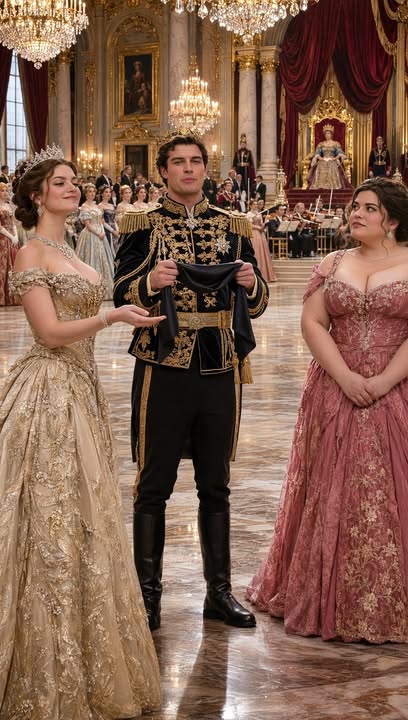
That evening, the ballroom filled with pale flowers and candlelight.
The court arrived in quiet colors, and the orchestra gathered on the raised platform beneath the musicians’ balcony.
The remembrance ball began with speeches and a measured procession past Amara’s portrait, where guests left small white flowers beneath its gilded frame.
Adrian stood beside Isolde as the royal secretary read the polished account.
Every sentence was true.
Every sentence seemed to leave his mother farther away.
When the reading ended, the queen stepped forward to speak.
She looked at the assembled court, then at the portrait above the staircase.
“I have heard Queen Amara remembered for her grace,” she began. “That memory is true, but it is not the whole of her.”
A quiet moved through the room.
Adrian watched her shoulders rise and fall as she gathered herself.
“She loved music,” Isolde continued. “She loved to change a melody until it seemed to breathe. She loved to dance, though she was never satisfied with a step that left no room for another person to answer.”
The queen paused.
“For many years, I believed that protecting her memory meant keeping it untouched. I was wrong.”
Adrian felt his hands tighten at his sides.
Isolde looked toward him.
“I cannot speak for every choice I made after her death. I can say that I let silence stand where honesty was needed, and that silence caused harm to people I should have trusted.”
She did not name Mara.
She did not point toward Elara, who stood near the edge of the ballroom among the palace staff.
But her words left no doubt that she had begun to accept responsibility.
The queen stepped back.
The court remained quiet, waiting.
Adrian moved forward.
He had prepared a speech, then set it aside.
The paper in his pocket was not the speech.
It was his mother’s letter, folded along the creases she had made when she was still alive.
“Tonight,” he said, “we remember my mother.”
His voice sounded steadier than he felt.
“I was too young to remember her as a person. For most of my life, I knew her through a portrait and through the kindness of those who spoke about her.”
The courtiers listened.
“Recently I learned that she made a dance with Mara Vale, a dance that was not finished because my mother wanted me to choose its final step when I was old enough.”
A small movement passed through the room.
Adrian continued before the murmurs could gather.
“I have read her letter. It speaks of her illness, but it speaks more of her love, her hopes, and the ordinary moments she wished I might remember.”
He looked at Isolde.
“I will not share every private word she left me. They were written for her son, not for a court.”
Isolde’s face shone beneath the candlelight.
“But I will tell you this: Mara did not cause my mother’s death, and she did nothing to deserve being forgotten. She helped my mother create a dance for me, and she kept that dance alive after leaving the palace.”
Elara stood motionless near the side wall.
Adrian could see the tension in her hands.
“The queen has told me that she sent Mara away after Amara died because she believed she was protecting her from gossip and pressure. She has also admitted that she failed to explain the truth, and that the silence hurt Mara and her family.”
He felt the weight of every watching face.
He could have named the hardship Elara had described.
He could have said that Mara had lost her place at the palace and that her daughter had grown up without knowing why.
But Elara had asked him not to turn her mother’s pain into proof against Isolde.
So he did not.
“Queen Isolde’s grief does not erase that harm,” he said. “Nor does the harm erase the love she carried for my mother. Both things can be true.”
The room remained still.
Adrian looked toward the portrait.
“I want my mother remembered not only for how she died, but for what she made while she lived.”
The words seemed to settle into the ballroom more gently than he had expected.
He turned toward the musicians.
“Please play the Royal Measure.”
The orchestra leader lowered his bow.
“Your Highness, the score is incomplete.”
“I know.”
The answer carried across the room.
Adrian walked toward Elara.
He stopped before her, leaving enough space for her to decide whether to take the hand he offered.
“Will you dance with me?”
Her gaze searched his face.
“Before the court?”
“If you wish.”
“And if I make a mistake?”
“Then I will follow.”
A faint smile appeared at her lips.
“That is not how princes are usually taught to dance.”
“Perhaps they are taught too much.”
Elara placed her hand in his.
The orchestra began the first notes of the Royal Measure.
The melody moved through the ballroom with a fragile familiarity, as if it had been waiting all these years for someone to let it sound again.
Adrian and Elara took their places beneath the portrait.
He did not ask for the blindfold this time.
He wanted to see her face.
The first measure began, and Elara guided him with a slight pressure of her fingers.
He answered with the gliding step, then the measured turn.
The courtiers watched without speaking.
Isolde stood beside the edge of the dance floor, her eyes fixed on the place where Amara’s portrait looked down upon them.
Adrian followed Elara through the old figures.
Her steps were sure, but she left room for him to listen.
The dance moved around the ballroom, gathering the court’s attention without demanding it.
When they reached the final phrase, the musicians softened.
The score held the same pause it had held the night of the first dance.
Elara eased her hand, leaving the next movement open.
Adrian felt the space his mother had left for him.
He could complete the turn as Elara had taught him.
He could step back, forward, or let the dance end there.
Every choice seemed to carry more meaning than a single step should be asked to hold.
He looked at Elara.
She did not guide him.
She did not urge him.
Her hand remained in his, warm and steady, while she waited for him to choose.
Adrian began to shift his weight.
At that instant, the orchestra’s final note faltered.
A second melody rose from the far end of the ballroom, carried by the small music box in the hands of Master Vale.
The secretary stood beneath the balcony, staring at its open lid.
Isolde had left the box in the portrait gallery.
Adrian’s gaze snapped toward him.
Master Vale looked bewildered.
The music box had begun to play by itself, its silver mechanism turning with a faint, uneven pulse.
The melody was not the Royal Measure.
It was a different tune, one Adrian had never heard.
Elara’s fingers tightened around his.
Beneath the strange melody, a small paper slip slid from the open lid and drifted to the ballroom floor.
Isolde reached it first.
She unfolded it beneath the chandelier.
The color left her face.
Adrian released Elara’s hand and stepped toward the queen.
“What is it?”
Isolde looked at the paper, then at Elara.
“It is Mara’s handwriting,” she said.
The queen’s voice was barely audible above the fading music.
And beneath the single line written there, Adrian saw his mother’s name.
**–END OF PART 5–CLICK “NEXT” AT THE BOTTOM OF THE PAGE TO CONTINUE READING**
* * *
[PREVIOUS: PART 4](https://storyly.idolsgift.com/blog/part-4-the-dance-that-remembered-069-1) | [NEXT: PART 6(THE END)](https://storyly.idolsgift.com/blog/part-6-the-end-the-dance-that-remembered-069)
✓ Lynn R. Adams
Part 5 – The Step He Must Choose “Ask Isolde what she promised Mara.” The words on the music box seemed to darken beneath Adrian’s gaze. He read them again, hoping the worn letters might rearrange …