PART 5: The Card He Begged Me to Hide 008
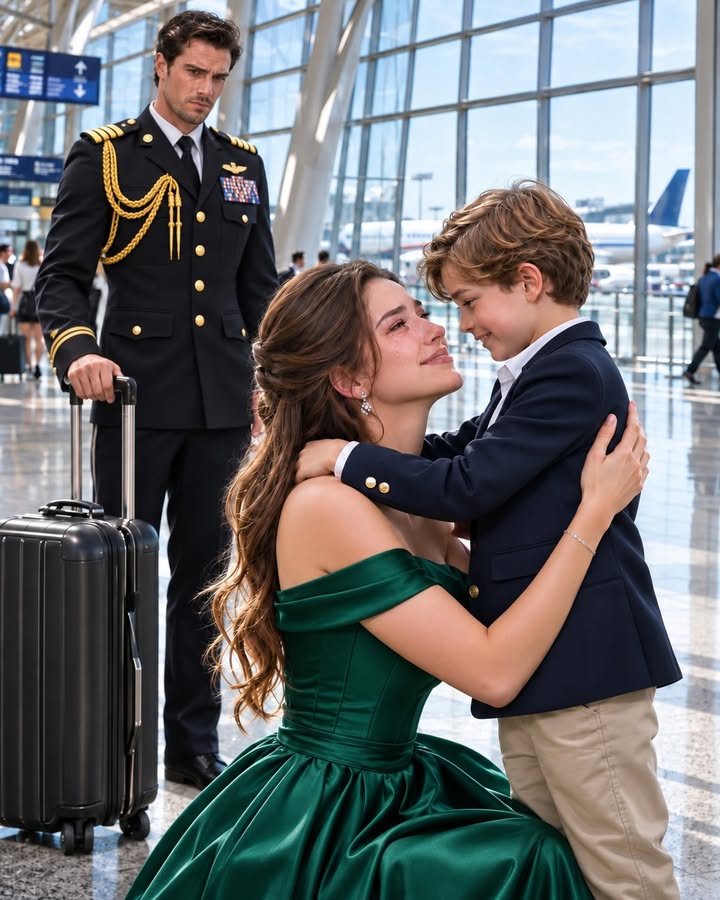
Part 5 – The Slower Road
“I don’t know,” Owen said. “But he said he already had the paper ready.”
I held the phone close, wishing I could reach through it and place a hand over his small, worried one.
“Thank you for telling me,” I said. “You don’t have to figure out what the paper means.”
“Are you going to ask Dad?”
“Not right now.”
“Is he going to be mad?”
“I don’t know, sweetheart, but you haven’t done anything wrong.”
There was a faint sound on his end, a door opening somewhere in the house.
Owen’s voice dropped.
“I’m scared he’ll think I told you everything.”
“Then we won’t discuss anything else on this call,” I said. “You can tell the child advocate what you want when you feel ready, and the adults will take it from there.”
“I don’t know what to say to her.”
“You can start with what you told me, or you can tell her you don’t know yet.”
He breathed out slowly.
“Okay.”
“And Owen?”
“Yeah?”
“You don’t have to choose between loving Dad and loving me.”
He was quiet for so long that I thought the call had dropped.
Then he whispered, “I know.”
I hoped he did.
“I love you,” I said.
“I love you too.”
The call ended, and I remained beside the kitchen table, staring at the dark screen.
The house was still around me, but I could hear the refrigerator hum and the clock tick above the stove, ordinary sounds that seemed too small for the fear Owen had been carrying.
I called Melissa.
She answered before the second ring had finished.
“He says Grant may have had another paper prepared to extend the travel,” I told her. “Owen doesn’t know what it was.”
“Did he say when he heard that?”
“No. He said Grant mentioned it, but he didn’t understand.”
“Did Grant tell him what the paper said?”
“No.”
“Then we’ll treat it as something to verify, not as proof of anything.”
I pressed my thumb against the edge of my phone.
“Do we have to wait while they keep him there?”
“We can request an expedited review. We’ll explain that Owen is anxious and has been given adult responsibilities, and ask the judge to hear from him through the child advocate.”
“What if Grant has already filed something?”
“I’m checking the docket now. If he has, we’ll respond through the court.”
“And if he hasn’t?”
“Then we’ll still ask for a review of the current arrangement. The court will decide what happens next.”
I looked at the lockbox on the shelf.
“Could I use the card to stop him from changing the trust?”
“No,” Melissa said. “The card doesn’t give you that authority, and using it could make matters worse. The trustee already has oversight. We’ll ask the court to preserve the account and prohibit any changes until the review.”
“I don’t want the money.”
“I know.”
“I don’t want to win something at Owen’s expense.”
“Then keep doing what you’ve been doing,” she said. “Tell the truth, follow the order, and let the process protect him.”
I wanted her to say that truth and patience would bring Owen home soon.
Instead, she gave me what she could promise.
“I’ll file the request first thing tomorrow,” she said. “You should also write down the call while you remember the exact words.”
I opened my notebook and wrote the date, the time, and the details as plainly as I could.
I did not write that Grant had frightened Owen on purpose.
I did not write that I knew what the paper meant.
I wrote only what my son had said and what I had asked him in response.
When I finished, the page looked almost empty.
The truth did not take up much space.
It weighed enough anyway.
The next morning, Melissa called to say Grant had filed a request to extend the approved travel period.
His paperwork described the extension as necessary to give Owen stability while Grant addressed a serious financial transition.
The request had been filed the afternoon before our call.
A separate document asked for temporary authority to manage aspects of Owen’s trust, with the stated purpose of protecting his long-term interests.
The trustee had not approved the request.
The court had not yet ruled on either filing.
I listened while Melissa explained the dates and the next procedural steps.
When she finished, I said, “So he did have another paper ready.”
“It appears so,” she replied. “We should be precise about what we know. Grant filed a request. The court has not granted it, and the trustee has not changed the trust.”
“What happens if the judge extends the travel?”
“We make the strongest, fairest case we can. But you should prepare for the possibility that the court may need time to review everything.”
Time.
It was a word that belonged to calendars, not to a mother watching her son disappear into another country.
“I’ll do whatever I need to do,” I said.
“Then we need to decide what you’re asking the judge for.”
Melissa’s voice remained level, but I could hear the seriousness beneath it.
“You can ask for Owen to be returned to Virginia immediately, with the travel order modified and Grant’s request denied.”
I waited.
“Or we can ask for a supervised review first,” she continued. “Owen could speak privately with the child advocate, the trustee’s concerns could be reviewed, and the judge could make a decision based on more than what either parent says.”
“Would a supervised review keep him there longer?”
“It could.”
“How much longer?”
“I can’t give you a reliable estimate. It depends on the court’s schedule and how quickly the advocate can meet with him.”
I closed my eyes.
“What would happen if I asked for him to come home immediately?”
“We could make that request. But the judge would want to know what has changed since the original order, and Grant would have an opportunity to respond. The court may still choose to hear Owen first.”
“Would Owen have to choose again?”
“Not in the same way. The advocate’s role would be to understand his wishes and his concerns without asking him to decide between parents.”
I thought of his face on the video call, the seam of his sleeve twisted between his fingers.
He had already been asked to choose, even if the question had been dressed up as something else.
“Which choice helps him most?” I asked.
“That’s not mine to decide,” Melissa said. “I can advise you on the legal options. You know your son, and you know what you can live with.”
I looked across the room at the spaceship drawing still resting on the table.
The yellow sun in the corner had been colored outside the lines.
Owen had always said it looked more cheerful that way.
“I want him home,” I said.
“Of course.”
“I want him back where he can sleep in his own room and know that none of this is his fault.”
“I understand.”
“But if I use everything we know to force him back before anyone hears him properly, he might think I did exactly what he was afraid of.”
Melissa was quiet.
“What are you afraid he’ll think?” she asked.
“That I used the card to take something from his dad. Or that he has to choose me now because I chose the right lawyer.”
“Those are real concerns.”
“He needs to know he can tell the truth without being punished for loving his father.”
“Yes,” Melissa said. “He does.”
I rested my hand on the table.
“Then request the supervised review. Ask the judge to preserve the trust, have the advocate speak to Owen privately, and make the court consider what he’s been carrying.”
“It may take longer than an emergency return request.”
“I know.”
“And if the judge keeps the current travel arrangement in place while the review happens?”
I swallowed.
“Then he stays there until the court decides otherwise.”
“You understand that is a possibility?”
“Yes.”
The word seemed to leave me lighter and more afraid at the same time.
Melissa asked me to confirm the decision again, and I did.
Then she began preparing the request.
For the rest of the day, I moved through the townhouse as if I were seeing it from a distance.
I folded Owen’s blanket and put it back in his room.
I stacked his schoolbooks neatly on the shelf.
I placed his drawing beside the blue pencils, exactly where he had left them.
The house looked ready for him, though I had no idea when he would return.
That evening, Grant called rather than sending a message.
His name glowed on my screen while I sat at the kitchen table.
I let it ring twice before answering.
“Rachel.”
“Grant.”
“I received notice of the request your lawyer is filing.”
“Melissa told me she would file it.”
“So you’re asking for a review instead of demanding he come home.”
“I’m asking the judge to hear from Owen and keep the trust protected.”
“And the travel?”
“The judge can decide.”
A pause followed, long enough that I could hear the faint hiss of the line.
“You know I never meant to make him choose,” Grant said.
“He told me he believed his choice could keep your family together.”
“My family isn’t just a business.”
“I didn’t say it was.”
“I love him,” Grant said.
“I know.”
The quiet returned.
He sounded different when he said it this time, less like he was defending himself and more like he was trying to understand what the words had failed to prevent.
“I thought if I could get through the next few weeks, I could fix the company and tell him everything was fine,” he said. “I thought I could keep him from worrying.”
“But he was already worried.”
“I know that now.”
“Grant, he thought the trust might stop him from being sent away. He thought you needed him to choose you so you wouldn’t lose the house.”
“I never asked him to believe that.”
“You told him he was the only one who could help.”
“I know.”
His voice thinned around the admission.
“I should have spoken to you,” he said. “Or to the trustee. Or to my lawyer. I shouldn’t have made him feel responsible for a solution.”
“No, you shouldn’t have.”
“I’m not asking you to excuse it.”
“I’m not.”
“I want you to understand that I wasn’t trying to take Owen from you.”
“I believe you didn’t want him to stop loving me,” I said. “But you asked him to carry a choice that should never have been his.”
He didn’t answer.
I could picture him in the bright room where the video calls had taken place, his son close by, the expensive windows showing a view that belonged to someone else.
“What happens now?” he asked.
“The judge hears what happened and decides how Owen can be protected.”
“And if he wants to come home?”
“Then we make a plan that lets him come home safely.”
“What if he wants to stay with me?”
“Then the court should hear that too, without him believing the business or the trust depends on his answer.”
The silence stretched again.
“I don’t want him to think he has to protect me,” Grant said.
“Then tell him the truth about what the adults are doing, in words he can understand, and don’t promise him a particular outcome.”
“I can do that.”
“Can you?”
“Yes.”
There was no certainty in his answer, but there was no performance either.
“I’ll tell him I shouldn’t have put the business on his shoulders,” he said. “I’ll tell him I’m dealing with it.”
“Good.”
“I don’t know if he’ll believe me.”
“Then you’ll have to show him.”
He breathed in, then let it out slowly.
“I know you think I’ve made this worse.”
“I think we both need to stop making him carry things alone.”
That was as close to agreement as either of us had reached in a long time.
Before the call ended, Grant said, “The trustee has offered a meeting with both lawyers and the child advocate.”
“When?”
“Tomorrow. The advocate wants to speak with Owen before the court review.”
“Will you allow that?”
“I’ve already agreed.”
The answer surprised me.
“Thank you.”
“I don’t know if I deserve that.”
“You don’t have to deserve a thank-you for doing what Owen needs.”
He was quiet.
“I’ll tell him you said that,” he began.
“Don’t,” I said, more quickly than I meant to.
He stopped.
“Don’t tell him I’m grateful or angry or anything about what I think. Let the meeting belong to him.”
“You’re right.”
After we hung up, I sat in the dim kitchen and watched the clock inch toward midnight.
The next day, a court-approved child advocate spoke with Owen privately.
I learned only that the meeting had taken place, not what he had said.
Melissa told me the advocate would prepare a summary for the judge and that neither parent should ask Owen to repeat his conversation.
I followed that instruction.
During our scheduled call, I asked about the swimming pool and whether he had found his books.
He told me the shelves were finished and that his blanket was in the laundry.
I asked whether he had eaten anything good.
“Pasta,” he said.
“What kind?”
“The kind with little shells.”
“That’s a good kind.”
He smiled.
We did not discuss the advocate, the trust, the business, or the paper Grant had filed.
Before the call ended, Owen said, “Dad told me he’s handling the grown-up stuff now.”
“What did you say?”
“I said okay.”
“How did it feel?”
“I don’t know. Better, maybe.”
“Better is good.”
He looked at the camera, his face open and uncertain.
“Are you mad that I’m still here?”
My answer came slowly, because I wanted him to hear all of it.
“I miss you every minute, but I’m not mad at you for being where the court has placed you. You didn’t make the adult decisions.”
“Are you mad at Dad?”
“I’m hurt by some of the choices he made. I also know he loves you.”
Owen thought about that.
“Can you be hurt and still love someone?”
“Yes,” I said. “Sometimes that’s exactly what happens.”
He nodded, as if he might remember the answer later.
The court review was scheduled for the following week.
Melissa and I met beforehand in her office, where she laid the filings across a conference table.
The papers made the situation look clean and orderly.
One motion requested an extension.
Another asked for authority related to the trust.
Our request asked for an independent review, the trust to remain protected, and Owen to speak with the judge through the advocate’s process.
Nothing on the table showed the way Owen had held his sleeve between his fingers while he spoke.
Nothing showed the little pause before he asked whether I would be mad.
“Are you sure you want to continue with this?” Melissa asked me.
“Yes.”
“You can still ask for the court to order an immediate return. I want you to know that option remains available.”
“I know.”
“Your choice may mean Owen stays abroad while the review is completed.”
“I know.”
“Some parents would find that impossible to accept.”
“I find it impossible,” I said. “I’m choosing it anyway.”
Melissa held my gaze.
“Why?”
“Because if he comes home before he can say what he needs to say, he may think he has to protect me next. I want him to know the adults can hear him without making him responsible for the outcome.”
She nodded once.
“Then we’ll make that clear to the judge.”
The review took place in a small courtroom with pale walls and no gallery full of strangers.
Grant sat on one side with his attorney.
I sat on the other beside Melissa.
The trustee’s representative joined by video, and the child advocate was present with a folder on her lap.
Owen did not sit between his parents.
He spoke with the advocate first, then the judge arranged to hear from him privately, without asking either of us to remain in the room.
While we waited, Grant stared at his hands.
He no longer wore the easy smile I had seen in the judge’s chambers.
When the judge asked me what I wanted, I stood.
“I want Owen to know that he is loved by both parents, and that he does not have to solve problems between us,” I said. “I want the trust preserved for his future. I want the court to consider what he has been told and what he believes he must do to keep his family safe.”
The judge nodded.
“Are you asking for the travel to end immediately?”
I looked at Melissa, then at Grant.
“I want Owen home,” I said. “But I’m asking the court to hear him through the advocate first and decide what arrangement is safe and stable. I don’t want to use the card or the account to force a result.”
The room stayed quiet.
The judge thanked me and turned to Grant’s attorney.
Grant spoke after them.
He said the company was under financial pressure and that he had asked about a possible trust modification because he believed it could help stabilize the business.
He said the trustee had refused the request.
He said he had not used the account and had not been able to access it without approval.
Then he paused.
“I also told my son too much,” he said. “I let him believe his decision could protect me from losing the house and protect him from being sent somewhere else. I should not have done that.”
His voice had no courtroom polish left in it.
“I love him,” he continued. “But I understand that love doesn’t make the pressure harmless.”
The judge listened without interrupting.
Grant then agreed to an independent review of the trust, to stop seeking a change in its terms, and to cooperate with the advocate’s recommendations.
Melissa asked that the travel order remain in place only until the judge could hear Owen and consider the advocate’s report.
Grant’s attorney asked for a continuation long enough to let the review proceed.
The judge listened to both sides and said she would not decide the child’s future based on a financial dispute.
She would hear Owen first.
Then she would issue temporary directions about travel and communication.
While the judge reviewed the documents, I saw Grant look toward me.
I did not nod.
I did not glare.
There was nothing useful either of us could say across that room.
After a short recess, the judge returned and announced that Owen’s statements would be considered through the advocate’s report.
The trust would remain untouched, and neither parent would seek access or changes while the review was underway.
The travel arrangement would remain in place until the court had reviewed Owen’s wishes and the advocate’s recommendations.
The decision was temporary.
It was also a decision.
For now, Owen would stay abroad.
My chest tightened, but I kept my face still.
The judge asked whether either parent had questions.
I looked at the papers in front of me, then at the advocate’s closed folder.
“Only one,” I said. “When will Owen be able to speak freely without feeling that he has to protect either of us?”
The judge’s expression softened.
“That is exactly what the advocate is helping us determine,” she said. “The court will not ask him to choose a parent as if he were choosing sides.”
I nodded.
I wished that answer could reach him without passing through the walls, the paperwork, and the distance between us.
The hearing ended without a dramatic order or a sudden change.
Grant and I left by different doors.
Melissa walked beside me down the corridor, explaining the next steps and the expected timing for the written decision.
I heard her, though the details blurred.
My phone vibrated as we reached the elevators.
A message from Grant appeared.
The advocate asked whether Owen could speak with the judge again tomorrow. He wants to tell her something himself.
I stared at the screen.
“What is it?” Melissa asked.
“Owen wants another chance to speak.”
“That’s his choice,” she said. “Let the advocate arrange it.”
My phone buzzed again.
This time the message was from Owen.
Mom, I want to come home.
My throat closed around a sound I couldn’t make.
Before I could answer, another message appeared.
But I need to tell the judge what Dad asked me to carry before we left.
I read the words twice.
Then a final line appeared.
I think it was the paper he said was ready.
**–END OF PART 5–CLICK “NEXT” AT THE BOTTOM OF THE PAGE TO CONTINUE READING**
* * *
[PREVIOUS: PART 4](https://puretales.idolsgift.com/blog/part-4-the-card-he-begged-me-to-hide-008) | [NEXT: PART 6(THE END)](https://puretales.idolsgift.com/blog/part-6-the-end-the-card-he-begged-me-to-hide-008)
✓ Lynn R. Adams
Part 5 – The Slower Road “I don’t know,” Owen said. “But he said he already had the paper ready.” I held the phone close, wishing I could reach through it and place a hand over his small, worried on…