PART 5: The Bell That Moved on Its Own 070
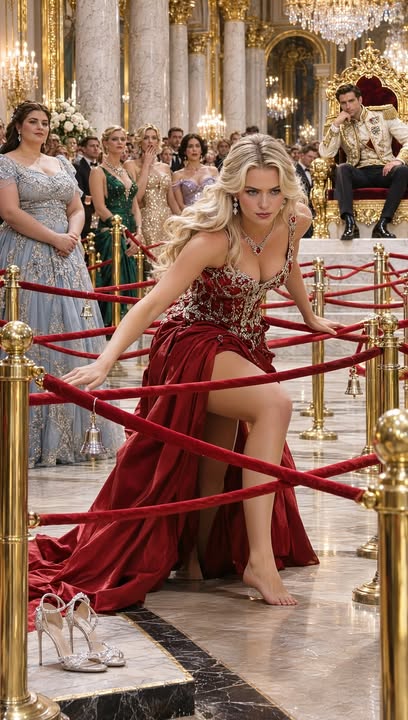
Part 5 – The Truth She Chose to Tell
The archivist’s discovery remained between them like a small, steady flame.
“If the committee restores the course to favor, keep the first design with the workshop records,” Mara read again, her voice barely above a whisper.
“Let the next candidate know what it was meant to ask.”
Her mother had written the words for someone she would never meet.
For a moment, Mara could not tell whether she felt honored or burdened by that trust.
Adrian stood beside her, leaving enough space for her to turn away if she wanted.
“You don’t have to decide what to do with this tonight,” he said.
Mara looked at the tracing paper.
“If I say nothing, the next candidate might face the same course.”
“We can pause the selection until we know what happened.”
“And if the court quietly changes the ropes and carries on, people will say the problem was only a draft or a careless knot.”
Adrian did not argue.
He looked down at the old design, where every crossing had been drawn with patience, each bell placed to invite attention rather than punish a particular shape.
“That is possible,” he said. “It is also possible to make the evidence public without making your mother’s private history public.”
Mara glanced at the letter and the notes spread across the table.
“Would that be enough?”
“It should be.”
The answer came without the confidence of someone promising an easy solution.
It was precisely why she believed him.
Vanessa had been quiet for several minutes.
Now she stepped closer, her eyes on the old design.
“People will ask why Mara recognized the problem,” she said. “If the palace refuses to explain the records, they’ll invent their own answer.”
Mara felt the old fear return: the court deciding that her mother’s work had given her an advantage, that the challenge had been made for her, that her victory did not belong to her.
She had wanted the chance to stand in the maze as herself.
Instead, the past had stepped out from behind the archive shelves and taken its place beside her.
“I don’t want them to turn my mother into an excuse,” she said.
“Then we should give them only what they need to understand the course,” Adrian replied.
Mara looked at him.
“What would you have to tell them?”
“That the setup did not match the approved diagram, that the attachment points differed, and that the maintenance record requires further review.” He paused. “We can say the course will not be used again until it has been independently checked.”
“And the old design?”
“We can acknowledge that the original course was created to test patience and judgment, not appearance. We don’t need to name your mother unless you decide that her contribution must be named to make the point clear.”
Mara turned toward the archivist.
“Could those facts be separated from the letters?”
“Yes,” Finch said. “I can prepare a record of the design’s purpose and the differences between the approved plan and today’s setup. The personal correspondence can remain in the archive.”
Her answer eased something in Mara, but only slightly.
The documents were no longer just paper.
They were her mother’s voice, preserved in a room where strangers could read it aloud.
“Would the court be able to see the letters later?” Mara asked.
“Only through the normal archive process,” Finch said. “They are not part of the public program.”
Vane, who had stood by the cabinet, had said nothing since the access register was opened.
Now he spoke in the same composed tone he had used in the ballroom.
“The committee will need to consider whether the course can be corrected without drawing the archive into the selection.”
Adrian faced him.
“Why should the archive be excluded?”
“Because the records are incomplete, and because the discovery of a former employee’s connection to the design could create an appearance of partiality.”
Mara felt the words settle over her shoulders.
She had heard their meaning before: people would wonder whether she belonged in the challenge, whether her mother had arranged some secret advantage, whether her success counted.
Vane looked toward her.
“I’m not questioning your conduct, Miss Williams. I’m trying to protect the credibility of the selection.”
“By keeping the reason for the inspection private?” Adrian asked.
“By ensuring the court does not mistake an unresolved maintenance issue for proof of deliberate interference.”
Adrian considered this.
“That is a fair concern.”
Mara had expected him to dismiss the steward’s words.
Instead, he acknowledged the part that was true without letting it decide everything else.
“But secrecy carries its own risk,” he continued. “If we change the course and resume the selection without explaining why, every candidate will have to trust a process that failed to account for its own setup.”
Vane folded his hands.
“What do you propose?”
“To suspend the challenge, publish the approved diagram and the inspection findings, and invite an independent review of the course before anyone resumes.”
The steward’s expression remained level.
“That would invite questions about who had access to the design.”
“People may ask questions,” Adrian said. “We can answer what the evidence supports.”
“And if the answers damage the court’s confidence?”
Adrian looked down at the old tracing.
“Then the confidence was already damaged. Pretending otherwise won’t repair it.”
Mara watched him.
He had spoken as a prince, but not like one accustomed to making every problem disappear behind a polished announcement.
He seemed to understand that honesty could make the palace look imperfect.
He was willing to let it.
Vane’s gaze shifted to Mara.
“Your Highness, there is another consideration.”
“Go on.”
“If the original design is presented as part of the case, Miss Williams’s victory may be questioned. Some will say she knew the design through her mother, even if she did not know its history.”
Mara felt heat rise to her face.
“Are you suggesting I should be disqualified?”
“I am suggesting that the court should protect the selection from reasonable doubt.”
“Would you ask every candidate who has seen a rope or bell before to withdraw?”
The question came from Vanessa.
She sounded less like the woman who had mocked Mara in the ballroom and more like someone who had recognized the unfairness in the room and was no longer willing to be quiet.
Vane regarded her.
“Of course not.”
“Then why should Mara be treated differently because her mother taught her to observe?”
“Because the design records may have been accessible to her.”
“I never saw them before today,” Mara said.
The words came out firm, though her hands had gone cold.
Vane bowed his head slightly.
“I am not accusing you of seeing them.”
“Yet you’re asking the court to consider whether I had an advantage.”
“I am asking that we consider every possibility.”
Mara looked at the tracing.
Her mother’s notes had not taught her how to pass a particular crossing.
They had taught her how to notice.
She had entered the maze not knowing whose design it was, and she had stopped for the moving bell because she did not want to touch a rope.
Still, a suspicion could grow from almost nothing if the court found it useful.
“I didn’t know this challenge was my mother’s work,” she said. “I didn’t know the original pattern existed. I saw the bell move, and I asked for the course to be inspected.”
“That is what the evidence supports,” Adrian said.
“But if the court publishes my mother’s name, people will think I completed the maze because of her.”
“They might,” he said.
The honesty of the answer hurt.
“And if we leave her name out?”
“Then the public record can still explain that the course was designed to reward patience and judgment. Your mother’s authorship can be addressed through a separate review.”
Mara looked at Finch.
“Would that make her contribution disappear again?”
The archivist’s eyes softened.
“It would delay the recognition, but it would not erase the documents. I can ensure they are preserved and formally catalogued.”
“Can you guarantee the court will honor her work later?”
“I can guarantee the archive will not mislabel it,” Finch said. “I cannot promise what the court will choose to announce.”
No one offered an easy promise.
Mara was grateful for that, though it left her with nothing to hide behind.
She imagined her mother hearing the challenge’s old purpose dismissed as a minor design note.
She imagined people reading the letter, repeating her mother’s private words, turning her refusal into palace gossip.
Her mother had valued her privacy.
Even when Mara had asked about the years before she was born, her mother had shared only what she wished to share.
She had never said, Make sure everyone knows what I did.
She had never said, Keep it secret forever.
She had simply left a note for the next candidate, if the course was ever made to favor someone.
Mara understood then that the choice was not between speaking and protecting her mother.
It was between speaking carefully and allowing someone else to decide what the silence meant.
“I want the course reviewed,” she said. “I want the approved design and the inspection findings made available to every candidate.”
Adrian nodded.
“And the letters?”
“I don’t want the full letters read aloud or printed. They belong to my mother.”
The room seemed to settle around her decision.
“But I do want the part that matters included,” Mara continued. “The original challenge was designed to reward thought and patience, not to favor one kind of person. The current setup must be checked against that purpose.”
Finch began making a note.
“And your mother’s name?” Adrian asked.
Mara looked down at Elena Williams’s signature.
The name seemed both intimate and enormous.
“Include her name on the record of the design,” she said. “Not the private letters. Just the fact that she created it and that she left the palace after refusing to let the course be changed to favor certain candidates.”
Vanessa drew a quiet breath.
Mara continued before doubt could turn her back.
“People should know she was the designer. But they don’t need every word she wrote to prove it.”
Adrian’s gaze remained on her.
“That is your decision?”
“It is.”
He did not praise her for it.
He only inclined his head, as if accepting that she had made a choice no one else could make for her.
Vane’s face gave little away.
“Then the court may ask whether your participation should be paused until the review is complete.”
Mara had expected the possibility.
It still felt like a door closing.
“If that is what keeps the process fair,” she said, “I’ll step back while the course is examined. But I won’t agree that my victory was invalid just because I noticed what was in front of me.”
“No one has said it was invalid,” Adrian replied.
“Not yet.”
His expression tightened.
“Then no one will say it without evidence.”
Mara wanted to believe him.
More than that, she wanted the next woman who entered the maze to have the chance she had been given: not a guarantee of success, but a fair opportunity to try.
The archivist closed the folder of private correspondence and tied the cotton tape around it.
Mara watched the bundle disappear into the cabinet.
She felt relief and grief at once.
The letters would remain private.
Her mother’s name would not.
In the corridor outside, a bell rang softly.
The sound reached them through the archive doors and seemed to make everyone turn.
Bell, the maintenance supervisor, had gone back to the ballroom to oversee the inspection.
He appeared at the archive entrance now, his face troubled.
“Your Highness, I’m sorry to interrupt.”
“What is it?”
“We found another discrepancy in the setup records.”
Adrian stepped toward him.
“What kind?”
“The central crossing was not the only section changed. Two of the lower ropes were set at different tensions from the approved diagram.”
“Could those changes have happened when the course was reset?”
“Possibly. But the adjustments don’t match the notes in the ledger.”
Mara felt the decision she had just made take on a sharper edge.
“Have you found anything that shows when the ropes were changed?” she asked.
Bell looked toward the maintenance book under his arm.
“Not yet. But there is a second copy of the setup sheet, with handwritten instructions. It was kept in the equipment room.”
Vane’s attention sharpened.
“Who signed it?”
“An attendant found the sheet beneath the measuring tools. It carries the initials S. V.”
The room went still.
Vane did not move.
Adrian’s voice remained quiet.
“Does the sheet include a signature?”
“No, Your Highness. Only the initials.”
“Bring it here.”
Bell hesitated.
“It’s already in the ballroom.”
“Then we will examine it there.”
The group returned to the long corridor together.
Mara walked beside Vanessa, with Adrian just ahead and Vane following behind.
No one spoke until they reached the ballroom doors.
The course stood silent beneath the chandeliers.
Its red ropes looked brighter than before, their crossings suddenly less like a puzzle and more like a question the palace had been avoiding.
Bell led them to the judges’ table, where a folded sheet of paper lay inside a clear protective sleeve.
“Please don’t remove it,” Adrian said.
“I won’t.”
Bell lifted the sleeve so they could see the writing.
The instructions were brief.
Retension the center crossings.
Lower the left passage.
Shift the bell attachment to preserve the intended difficulty.
At the bottom, beneath the date, were the initials S. V.
Mara looked at the steward.
He had gone very pale.
“That is not my hand,” he said.
Adrian examined the paper.
“Do you recognize it?”
Vane leaned over the sleeve without touching it.
“I recognize the initials. I did not write this.”
“Could someone have copied them?”
“Anyone in the office could have.”
“Why would they?”
“I can’t say.”
The answer sounded sincere.
That was what made the room feel colder.
The note did not prove the steward had altered the course.
It proved that someone wanted the record to point toward him.
Bell looked uncomfortable.
“The paper is older than today’s setup sheet,” he said. “The ink has faded at the edges.”
“How old?” Adrian asked.
“Several years, perhaps. It may have been tucked away with the measuring forms.”
Mara looked at the wording again.
Shift the bell attachment to preserve the intended difficulty.
The instruction was not crude or careless.
It sounded like someone trying to imitate the language of a legitimate adjustment.
“Does the handwriting match the ledger note?” Vanessa asked.
Finch, who had followed them from the archive, studied the sleeve.
“No,” she said. “The ledger note is in a different hand.”
Vane let out a slow breath.
“Then this paper does not establish that I changed the course.”
“It doesn’t,” Adrian said.
“Nor does the ledger.”
“Not by itself.”
Mara watched the steward’s face.
She could not know whether he was relieved, frightened, or simply concentrating.
The evidence had shifted again.
The initials had pointed toward him, but now someone had planted an old instruction that could make the case look like a deliberate attempt to blame him.
“Who knew the course would be inspected today?” Mara asked.
The question came before she had fully formed it.
“Everyone in the ballroom,” Bell said. “The inspection began in front of the court.”
“But who knew the old design would be found?”
The answer was no one, as far as they knew.
Then Finch looked down at the protective sleeve.
“There may be a way to establish when this instruction was filed.”
“How?” Adrian asked.
“The equipment sheets are numbered. The office keeps a register of forms issued to the maintenance staff.”
Bell nodded slowly.
“If this sheet was copied from a register, the number should be on the back.”
He turned the sleeve over.
A faint number showed through the paper.
Bell read it and looked toward the maintenance ledger.
“I’ve never seen that sequence used for current forms.”
“Could it be from the year the original design was revised?” Mara asked.
“It might be.”
The archivist had gone very still.
She looked at the number, then at the tracing paper Adrian still carried from the archive.
“Mr. Bell,” she said, “does the equipment register record who approved each form?”
“It should.”
“Where is that register kept?”
“In the records office, unless it has been moved.”
Adrian glanced toward Vane.
“Can it be brought here?”
The steward held his gaze.
“I’ll ask for it.”
“You’ll remain here while it is collected,” Adrian said.
The words were not an accusation, but they changed the room.
Vane heard the change.
“Of course.”
An attendant left to retrieve the register.
Mara looked again at the paper inside the sleeve.
The initials were meant to settle suspicion on Vane.
The mismatched handwriting suggested otherwise.
But there was another possibility: someone had copied an older instruction and placed it where it would be found, hoping the court would accept the initials before asking what the paper was.
“Your Highness,” Mara said, “could we keep the instruction and the ledger separate until the register is checked?”
“Certainly.”
“If they’re put together in people’s minds too soon, they’ll start looking like proof.”
Adrian nodded.
“You’re right.”
Vane’s eyes rested on Mara.
“Your caution is sensible.”
She could not tell whether the words were gratitude or something else.
“I’m not trying to accuse you,” Mara said.
“I know.”
“Are you?”
He held her gaze for a long moment.
“No.”
The answer was quiet, but it did not dissolve the uncertainty.
The attendant returned with a wide, cloth-bound register.
Bell opened it to the relevant section.
The number from the paper appeared in a column marked issued forms.
Beside it was a date from nearly twenty years earlier.
Mara felt the room draw tight around the old record.
Finch bent close to the page.
“The form was issued to the Selection Office during the year the challenge was redesigned.”
“Who signed for it?” Adrian asked.
Bell turned the register toward him.
The ink had faded, but the name remained legible.
Mara leaned in.
Her mother’s name was not there.
The signature belonged to someone else, a court official whose name she did not recognize.
At the bottom of the entry, a second notation had been added in a smaller hand.
Finch read it once, then looked up at Mara.
“Ms. Williams returned this form with the original design papers,” she said. “The instruction was marked as rejected.”
The room went silent.
Vane’s face had lost its careful stillness.
The old instruction was not evidence that he had altered the course.
It was a discarded proposal from the same conflict that had driven Mara’s mother out of the palace.
And someone had taken it from the records, carried it into the present, and placed it where it could be mistaken for a new order.
Mara looked at the faded initials again.
The sheet had been made to point toward the steward.
But the date and the archive record revealed something more deliberate than a simple attempt to blame him.
Someone had reached into the past, found the old plan to favor a predictable winner, and brought it back into the maze.
Whoever had done it knew exactly which history the court hoped to forget.
**–END OF PART 5–CLICK “NEXT” AT THE BOTTOM OF THE PAGE TO CONTINUE READING**
* * *
[PREVIOUS: PART 4](https://storyly.idolsgift.com/blog/part-4-the-bell-that-moved-on-its-own-070) | [NEXT: PART 6(THE END)](https://storyly.idolsgift.com/blog/part-6-the-end-the-bell-that-moved-on-its-own-070)
✓ Lynn R. Adams
Part 5 – The Truth She Chose to Tell The archivist’s discovery remained between them like a small, steady flame. “If the committee restores the course to favor, keep the first design with the worksh…