PART 5: The Bell Meant Something Else 046
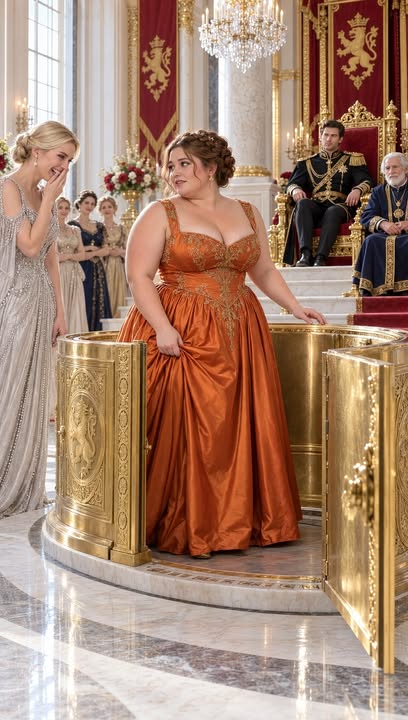
Part 5 – The Choice Beneath the Crown
The question of who had decided Clara was ready to hear the truth followed her out of the archive.
It stayed with her as she crossed the testing hall, where the golden device stood beneath the high windows with its hidden inscription exposed.
It stayed with her through the narrow corridors and down the palace steps, where Adrian walked beside her without trying to answer what neither of them knew.
By the time Clara reached her family’s carriage, the rain had stopped.
“I will have the former advisor’s records examined,” Adrian said. “The council should know who arranged your invitation.”
“Should they know before we understand why?”
He considered that.
“No. But they should know the truth once we do.”
Clara looked back at the palace.
“Your family has had a long time to decide what the truth was allowed to mean.”
“I know.”
“And the council may not be grateful when you tell them.”
“I know that too.”
She searched his face for the confidence of a prince who believed every difficult choice would somehow leave him in the same place.
She found no such confidence.
“Then don’t make the choice because you think I need you to,” she said.
“I won’t.”
“And don’t make me the reason you change anything.”
“I won’t do that either.”
Clara rested a hand on the carriage door.
For a moment, she wanted to say that she hoped he would choose wisely, but the words felt too close to giving him responsibility she could not bear for him.
Instead, she said, “Choose what you can live with when I’m not in the room.”
Adrian held her gaze.
“That may be the first useful advice I’ve received all week.”
She climbed into the carriage without offering him another answer.
As it carried her away, she looked through the window and saw him still standing at the foot of the steps, the palace rising behind him like an obligation he had inherited but not yet chosen.
The next two days passed in a quiet that was not peaceful.
Clara returned to the palace each morning to help the archivist compare the hidden records with the public register.
Lord Vey brought forward the papers he had kept at his residence and answered questions without retreating behind the phrase incomplete records.
Selene returned as well, offering to give a formal statement about what she had seen in the library.
She did not ask Clara to forgive her.
Clara did not offer a forgiveness she had not yet found.
But when Selene sat beside her in the archive and described the afternoon she had seen Lord Vey remove the page, Clara listened without suspicion.
That, they both understood, was a beginning.
The records did not produce a complete account of what had happened to Clara’s mother.
They did confirm that she had passed the device’s trial, declined the court’s interpretation, and left the proceedings by her own choice.
There was no record of a marriage offer, nor proof of what had been said to her in the days afterward.
The archive’s silence could not tell them whether she had left peacefully or with a heart full of anger.
Clara could not make herself ask Lord Vey to guess.
Her mother’s letter had told her enough about what mattered.
The result belongs to the record.
My life belongs to me.
On the third morning, Adrian asked Clara to join him in the council chamber.
The request was formal.
He sent it through an attendant and made clear that her presence was voluntary.
She almost declined.
Then she remembered his promise to correct the court if it called her his bride, and the way he had listened when she told him not to make her responsible for his choices.
She went.
The council chamber was smaller than the great hall but no less imposing.
Tall windows looked over the inner gardens, and a long table of dark wood divided the room.
The council members sat in their places, with Lord Vey at the far end and Adrian standing beside the prince’s chair rather than seated upon it.
Clara recognized several of the faces from the ceremony.
Some regarded her with curiosity.
Others looked tired, as if the matter had already become an inconvenience they hoped could be settled quickly.
Selene sat near the doorway, hands folded in her lap.
Adrian waited until Clara had taken a chair before he began.
“The device’s meaning has been misrepresented,” he said.
A low murmur passed around the table.
He did not raise his voice.
“The original records and inscription show that its bell means a person has completed the trial and may continue by their own choice. It does not select a bride, grant the crown a claim, or create an obligation.”
One councilor, a silver-haired woman in a dark green jacket, leaned forward.
“Can you prove that this is the original meaning?”
“We can show the inscription beneath the platform, the founding record, and the earlier entries in the response ledgers.”
“Are the records complete?”
“No,” Adrian said. “But the evidence we do have is clear about what the device cannot decide.”
“And Lady Clara’s mother?” another councilor asked.
Clara felt every gaze turn toward her.
Adrian answered before she could.
“The records show that she passed the trial and refused the court’s interpretation. Her result was later removed from the active register.”
“By whose order?”
“We have not identified the person who gave that order.”
The silver-haired councilor looked toward Lord Vey.
“Were you aware of the altered register?”
“I was not,” he replied. “I did, however, remove a page from an old ledger without informing the prince. That was a mistake.”
“Why did you remove it?”
“Because I feared it would be misread before we understood it.”
“And do we understand it now?”
“Not entirely,” Lord Vey said. “But we understand enough to know the old marriage interpretation was never supported by the device.”
A councilor near the windows folded his hands.
“Then the current result is not a selection.”
“No,” Adrian said.
“Nor a recommendation?”
“No.”
“Then what is it?”
Adrian glanced at Clara.
She did not nod or shake her head.
She had asked him not to choose for her, and she would not choose for him.
“It is a response from an old trial,” he said. “One whose purpose was to test whether a person could question customs that caused harm. The bell recognizes a willingness to ask what the answer cannot decide.”
The councilor’s expression hardened with thought, not anger.
“That is a difficult meaning to turn into ceremony.”
“Then perhaps the ceremony should change.”
Another murmur rose, stronger this time.
The silver-haired councilor rested her palms on the table.
“The marriage custom has been part of the succession process for generations. Families have arranged alliances around it. The public believes the device plays a role in choosing the prince’s consort.”
“The public was taught that,” Clara said.
The room quieted.
She had not intended to speak, but the words were there, and she had learned what it cost to hold them back simply because other people were more comfortable without them.
“Women were invited here believing the test could tell them whether they were worthy,” she continued. “When it stayed silent, some were told they had failed. The records show that the device may not have been judging them at all.”
The councilor’s gaze settled on her.
“And you believe changing the interpretation will repair that harm?”
“No,” Clara said. “I believe refusing to change it would continue the harm.”
No one moved.
She felt the old heat beginning in her neck, but it no longer made her want to lower her eyes.
The device had not made her brave.
It had only placed her in a room where she could no longer pretend she had nothing to say.
The silver-haired woman looked toward Adrian.
“What do you propose?”
“That we suspend the matchmaking ceremony,” he said. “We publish the records and the inscription, preserve the device, and make its meaning clear before anyone is invited to take the trial again.”
“And the candidates who have already taken it?”
“They should receive the truth,” Clara said. “Every one of them.”
Adrian turned to the council.
“No result will be used to bind anyone to a marriage, and no candidate will be presented as chosen by the crown.”
The councilor near the windows tapped one finger against the table.
“You are asking us to abandon a custom that has supported the succession for a century.”
“I am asking us to stop claiming the device supports something it was never built to do.”
“Your position as heir depends upon the council’s confidence,” the silver-haired woman said.
“I understand.”
“Do you?”
Adrian’s hands were loose at his sides.
“I understand that the council may withdraw its confidence if I speak against the tradition.”
A pause followed.
“Then you know the cost,” she said.
“Yes.”
Clara looked down at her hands.
She could feel the room waiting for her to become the reason in his argument.
The passing woman.
The daughter of the earlier candidate.
The answer to a mystery the palace had made into a prophecy.
She would not let them place that weight on her.
“Your Highness,” she said.
Adrian turned toward her.
“This is your choice,” she continued. “Not mine.”
“I know.”
“If you tell the truth only because you think it will bring me closer to you, then it isn’t the truth I asked you to tell.”
His eyes held hers.
“And if you keep the custom because you’re afraid of losing the crown, that is your choice too.”
A councilor shifted in her chair.
Clara did not look away from Adrian.
“I care what happens to you,” she said, quiet enough that the room had to listen. “But I cannot be responsible for what you do with your authority.”
Adrian took in a breath.
For a moment, the prince seemed to disappear, leaving only the young man who had asked whether the frame might hurt her and had accepted that concern did not erase his doubt.
“Thank you,” he said.
Then he turned back to the council.
“I will not announce Lady Clara as my destined bride,” he said. “She has made no such choice, and the device has no power to make it for her.”
A ripple of disapproval passed around the table.
“I will not continue the matchmaking ceremony under a false explanation. I will release every candidate from any expectation tied to it, make the evidence public, and ask the council to begin a review of the succession customs that grew from this misrepresentation.”
The silver-haired councilor’s face tightened.
“Your Highness, you are speaking as though the decision is yours alone.”
“It is not,” Adrian said. “The council will decide whether I remain its heir.”
“And if it does not?”
“Then I will step aside rather than ask the crown to protect a lie.”
The words landed with a quiet finality.
Clara felt them before she understood them.
Adrian was not threatening the council or bargaining for a better answer.
He was telling them the line he would not cross.
The silver-haired woman looked down at the papers before her.
No one spoke for several seconds.
Then she said, “The council will need time to consider your position.”
“Take the time you need,” Adrian replied. “But the public announcement will be made today.”
The councilors exchanged glances.
One of them began to speak, then stopped.
The silver-haired woman folded her hands.
“You will make the announcement before the full court?”
“I will.”
“And Lady Clara?”
“She is under no obligation to appear.”
Clara remained still.
She was not going to be displayed beside him as proof of his virtue.
Adrian understood that without her needing to say it.
“If she chooses to speak, she may,” he added. “But the announcement will be mine.”
The meeting ended without agreement.
Some councilors left in silence.
Others remained at the table, speaking in low voices as if the words might change shape once Adrian was gone.
Lord Vey gathered the records.
Selene approached Clara near the door.
“I’m sorry I laughed,” she said.
The apology was still the same, but this time Clara could hear what it had cost Selene to say it in the council chamber.
“I know,” Clara replied.
Selene’s shoulders eased.
“If they ask me to speak, I will tell them what I saw.”
“Thank you.”
Adrian stood apart from them, speaking with the silver-haired councilor.
When he finally came over, the strain in his face had sharpened.
“I’m going to make the announcement in the great hall,” he said. “You may leave before it begins.”
“Will the council let you?”
“They cannot prevent me from speaking.”
“That wasn’t what I asked.”
He understood.
“I don’t know what they will do afterward.”
Clara looked toward the archway leading to the public hall.
She could hear attendants moving chairs and the faint scrape of someone setting a lectern in place.
“If you want me there,” she said, “I will come as myself. Not as the answer to your problem.”
“I want you there only if you want to be.”
“Then I’ll decide when I get to the door.”
Adrian nodded.
He did not ask her to reassure him.
For the next hour, the palace prepared for a public address.
Word spread through the household faster than any official notice could travel.
By the time Clara reached the great hall, the galleries were already filling.
Members of the court stood in clusters beneath the high windows.
The candidates who had taken the test over the past three years had been summoned, some appearing in person and others represented by their families.
The golden device stood at the center of the room.
Its hidden inscription had been covered again, but Clara knew the words were there, waiting beneath the gold.
Lord Vey stood beside it with the original records.
Selene had taken a place near the edge of the crowd.
Clara remained by the side entrance.
No one asked her to stand beside Adrian.
That small absence of expectation felt like a kindness.
When the council entered, their faces were solemn.
The silver-haired councilor carried a folded document.
Adrian came in last.
He wore the formal coat of the heir, though the collar seemed tighter than it had that morning.
The crowd settled.
“People of the court,” he began. “The golden device has been used for generations as part of the process by which the crown seeks a consort. Its bell has been described as the device’s choice.”
A whisper stirred through the hall.
“That description is false.”
The words moved through the room more sharply than a shout.
Adrian continued.
“The original inscription and surviving records show that the device does not choose a bride. It does not name a future consort. It does not create a claim over the life of any person who takes its trial.”
Clara watched the faces around her change.
Some looked stunned.
Others looked toward the council, searching for confirmation.
“The bell means only that the trial has been completed,” Adrian said. “The person who hears it may choose whether to continue. The choice remains theirs.”
He paused.
“For three years, thirty-two candidates took the test and heard nothing. Some were told they had failed. The records do not support that conclusion.”
A woman in the front row pressed her fingers to her mouth.
Another candidate, older than Clara, stared at the device as though she had spent years waiting for it to explain itself.
“The court should have known better,” Adrian said. “I should have asked sooner.”
The hall grew still.
“My family continued a custom that turned a question into a command. We called it tradition and allowed people to believe the result could decide their futures.”
His gaze moved across the assembly.
“It cannot.”
A council member stepped forward.
“Your Highness,” she said, “the council has not yet completed its review.”
“I know.”
“Then you should not speak for the council.”
“I am speaking for myself.”
A murmur rose from the crowd.
Adrian remained steady.
“I will not name Lady Clara as my destined bride. She has made no promise to me, and she owes me nothing. The device has made no promise on her behalf.”
Clara felt the room turn toward her.
For one moment, she was once again inside the gold frame, waiting for other people to decide what a sound meant.
Then Adrian looked at the crowd, not at her.
“She has the same freedom as every person who has stood here,” he continued. “So do all of you.”
The words filled the hall.
Clara had imagined this moment as a release.
Instead, it felt like standing on the edge of a door with no certainty about what waited beyond it.
Adrian placed both hands on the lectern.
“I am asking that the records be made public, that the device’s meaning be preserved accurately, and that every candidate who was told she had failed receive a full account of what we now know.”
The silver-haired councilor stepped forward again.
“The council has not authorized that release.”
“Then I will ask the council to authorize it now.”
“You know the custom is bound to your place as heir.”
“I do.”
“And if the council withdraws its confidence?”
Adrian looked at the assembled court.
“Then I will step down from my role as heir rather than restore a false meaning to the device.”
The chamber broke into overlapping voices.
Some protested.
Others called for the records to be read aloud.
A few of the former candidates began speaking to one another, their faces full of disbelief and something that might have been relief.
Clara stayed near the doorway.
The council had not yet announced its decision.
Adrian’s authority was already changing in front of them, though no one had formally taken it away.
Lord Vey opened the first ledger and began reading the inscription beneath the platform.
His voice carried across the room.
“Let the answer be kept, not claimed. Those who hear the bell may continue by their own choosing.”
He lifted his eyes from the page.
“The measure is not obedience, nor grace, nor birth. It is the courage to ask what the answer cannot decide.”
Selene stepped forward.
“I saw Lord Vey remove a page from an old ledger,” she said. “He later brought it forward himself. The page supports what has been read.”
The advisor bowed his head.
“She is telling the truth,” he said. “I withheld the page because I feared what it would reveal. I should have brought it forward sooner.”
The hall quieted again.
Clara watched Adrian absorb the support, the anger, and the uncertainty all at once.
He looked neither triumphant nor defeated.
He looked as though he had finally stopped waiting for the room to tell him what he was allowed to know.
The silver-haired councilor withdrew to confer with the others.
The candidates began to move nearer the device, not as petitioners but as people who had once stood where Clara stood.
One of them asked Lord Vey whether her name had been recorded.
He found it in the ledger.
Another asked whether silence had meant failure.
“No,” he said. “Not according to the records before us.”
The question passed from one woman to another.
The hall became less a court and more a room full of people trying to reclaim the meaning of what had happened to them.
Clara felt Adrian’s gaze find her across the shifting crowd.
He did not call to her.
He did not reach for her hand.
He let the choice remain hers.
For the first time since entering the palace, she felt she could stand there without being turned into a symbol.
Then the council returned.
The silver-haired woman carried the folded document she had brought earlier.
Her expression was calm, but the room quieted as she raised one hand.
“By authority of the council,” she announced, “the prince’s access to the royal seal and succession records is suspended pending review of his conduct.”
The murmurs began again.
Adrian’s face did not change.
The councilor unfolded the document and continued.
“His position as heir is placed under temporary restraint. Until the council completes its deliberation, he will not speak in the name of the crown or issue public directives.”
A hush fell over the hall.
The decision had come faster than Clara expected.
Adrian stepped away from the lectern.
“Understood,” he said.
The councilor’s expression softened, though not enough to conceal the weight of what she had done.
“Your Highness, you may address the court as a private member of the royal family.”
Adrian nodded.
Clara could see the cost of the choice in the way he held himself, as if the title he had carried all his life had become something he could no longer lean on.
He walked toward her through the edge of the crowd.
“I am sorry,” he said when he reached her.
“For what?”
“For making this harder than it needed to be.”
“You didn’t make the truth harder. The palace did.”
“I still wish the cost were not falling on you too.”
“It isn’t.”
He looked as though he wanted to believe her and knew he could not decide for her whether it was true.
A bell rang behind them.
The sound was not the clear note of the device.
It came from the small bronze bell at the council table, signaling the end of the assembly.
People began to stir.
Then another sound followed from the platform.
A faint, delicate note rang from inside the golden frame.
Every conversation stopped.
Clara turned.
The device’s panels remained open, and no one stood on the circular platform.
Lord Vey stared at the frame.
The archivist stepped toward it, her face gone pale.
“It cannot have rung,” she whispered. “The mechanism was still.”
Adrian moved closer, but did not cross onto the platform.
The bell sounded once more, quieter than before.
Beneath the gold, a narrow seam appeared along the base of the device.
The archivist crouched and touched the edge of the panel.
“It’s a compartment,” she said.
Clara felt the old fear of being made into an answer rise in her chest.
Then she remembered the inscription.
The choice remains theirs.
Adrian looked at her, waiting.
“Do you want to open it?” he asked.
The question was offered, not assigned.
Clara looked around the hall at the candidates, at Selene, at Lord Vey, and at the council that had just suspended the prince for telling the truth.
Then she looked back at the hidden seam.
“Yes,” she said. “But not alone.”
Selene came to stand beside her.
Lord Vey followed, carrying the old ledger.
The archivist placed her hands beneath the loosened panel, and Adrian remained a pace behind them as they lifted it free.
Inside the compartment lay a small brass box.
It bore no royal seal.
Instead, a name had been engraved across its lid.
Clara’s mother’s.
The box had been hidden beneath the device for more than twenty years.
Adrian looked at Clara.
“Do you want me to open it?”
Clara reached toward the lid.
Before her fingers touched the metal, the archivist noticed a thin line of writing along its edge.
She leaned closer, then read it aloud.
“To the daughter who chooses what the crown could not.”
**–END OF PART 5–CLICK “NEXT” AT THE BOTTOM OF THE PAGE TO CONTINUE READING**
* * *
[PREVIOUS: PART 4](https://echoesofstories.idolsgift.com/blog/part-4-the-bell-meant-something-else-046) | [NEXT: PART 6(THE END)](https://echoesofstories.idolsgift.com/blog/part-6-the-end-the-bell-meant-something-else-046)
✓ Lynn R. Adams
Part 5 – The Choice Beneath the Crown The question of who had decided Clara was ready to hear the truth followed her out of the archive. It stayed with her as she crossed the testing hall, where the…