PART 5: “Mom Is Too Sick to Work, So I Came Instead…” — A Little Girl’s Words Stunned a Billionaire. 066
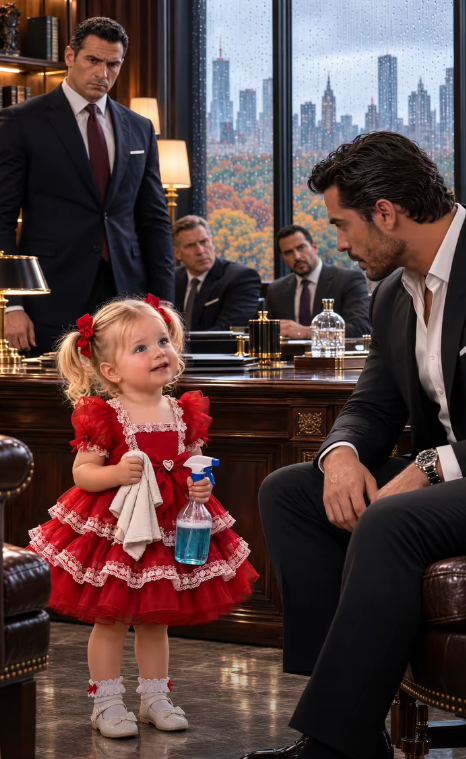
Rosa read Elena’s amendment at Alessandro’s kitchen table.
She did not sit immediately.
She stood with one hand resting on the back of a chair, staring at the paper as if it had spoken aloud.
Finally she said, “She actually filed it.”
“You knew?”
“I knew she talked about it.”
“You never signed.”
“No.”
“Why?”
Rosa looked at Alessandro.
“Because I was eighteen.”
“So?”
“So I was terrified of your father.”
That surprised him enough to silence the next question.
Rosa smiled faintly.
“You remember Giovanni Moretti as your father. I remember him as the man who could walk into a kitchen and make six adults stand straighter without saying a word.”
Marco, standing near the counter, murmured, “Genetic trait.”
Alessandro ignored him.
Rosa sat.
“Elena asked me whether I would serve on the trust. I thought she was being kind.”
“She filed your name.”
“I see that.”
“Why you?”
Rosa looked toward the study.
“Because I told her she was wrong.”
“About what?”
“The building.”
Years earlier, Elena had imagined classrooms upstairs and a formal training program.
Rosa, newly arrived from Naples and working as a junior housekeeper while taking English classes at night, had listened quietly.
Then she asked who would watch workers’ children while their parents attended classes.
Elena had stared at her.
“She had forgotten childcare,” Rosa said.
Nia, seated across the table, smiled.
“So she made you trustee.”
“She laughed first.”
Rosa’s eyes softened.
“Then she said anyone willing to tell her she had designed an educational project that parents couldn’t use deserved a vote.”
Alessandro looked at the documents.
“Why didn’t you tell us?”
“After Elena died, everything changed.”
Giovanni Moretti’s grief had been private and severe.
He closed his wife’s office.
Canceled projects.
Removed photographs from rooms where he spent time.
Not because he stopped loving her.
Because reminders made breathing difficult.
Samuel kept the reading room operating.
Rosa stayed in contact for several years.
Then life became busy.
Samuel refused to pressure her into taking the formal trustee seat.
“He said the place should never survive because people felt guilty.”
“And then?”
“Then years passed.”
The most dangerous phrase in ordinary life.
Years passed.
People intended to call.
Intended to visit.
Intended to reopen boxes.
Intended to ask questions.
Until intention hardened into history.
Nia turned to Rosa.
“Did my father give you the key?”
“No.”
“Did you put it in my apron?”
Rosa shook her head.
They still did not know how the key had appeared there.
Sofie, playing on the floor with wooden blocks, looked up.
“I did.”
Every adult turned.
Nia blinked.
“You did what?”
“I put the key there.”
The room went silent.
“Where did you get it?”
Sofie pointed toward her backpack.
“My treasure.”
Nia crouched.
“What treasure?”
Sofie opened the small backpack.
Inside were two crayons, one sock, three pebbles, a plastic dinosaur, half a sheet of stickers, and an old metal tin.
Nia stared at the tin.
“I’ve never seen that.”
“Yes you have.”
“I have?”
“Grandpa box.”
Nia’s breath caught.
She took it.
Samuel Brooks had died when Sofie was eleven months old.
Before his death, he had given Nia several boxes from his apartment.
Most remained in storage.
One small tin had contained buttons, coins, and keys.
Nia had let toddler Sofie play with it once while sorting belongings.
Somehow the child had kept it.
“Where was this?”
“In my room.”
“For two years?”
Sofie shrugged.
Time was not a meaningful concept to her.
Nia opened the tin.
The brass key had apparently been part of Samuel’s collection.
Sofie had placed it in her mother’s apron because, in her words, “Mommy loses keys.”
Marco looked at Alessandro.
“So our mysterious chain of inheritance was a toddler cleaning her bedroom.”
Sofie nodded proudly.
“I found two crackers too.”
Rosa began laughing.
Nia joined her.
Even Alessandro laughed.
The mystery had not been planned.
There had been no elaborate messenger.
No final scheme designed by Elena or Samuel.
Only an old key.
A child.
An apron pocket.
Chance.
And perhaps that made the discovery more meaningful.
Lives did not always change because someone orchestrated a revelation.
Sometimes the pieces had simply been waiting until people noticed them.
By the end of the week, the trust had its temporary trustees.
Nia accepted Samuel’s successor seat.
Rosa accepted Elena’s long-delayed nomination.
The third seat would be elected by community members within sixty days.
Moretti Holdings suspended the reversion process.
Alessandro’s legal team prepared documents permanently relinquishing the corporation’s claim to reclaim the property, subject to the building remaining a nonprofit educational facility.
It should have felt like a victory.
Instead, Alessandro found himself irritated.
His board objected.
Not dramatically.
Nobody shouted.
Nobody threatened to resign.
They simply asked the questions boards were supposed to ask.
Why surrender an asset potentially worth millions?
Why assume liability for a historic property?
Why alter a legal right when the corporation could reclaim the building and lease it back to the nonprofit?
Why not fund the reading room through the Moretti Foundation and maintain ownership?
Each proposal sounded reasonable.
That was precisely why Alessandro found the discussions difficult.
His mother’s warning returned again.
If you turn this into a foundation program, you will ruin it.
At the third meeting, Alessandro closed the financial packet.
“We’re framing the question incorrectly.”
The directors looked at him.
One woman across the table asked, “How?”
“We keep asking why the company should give away an asset.”
“That is the question.”
“No.”
He turned the old deed toward them.
“The company never paid for this asset. My mother transferred it into trust before most of our current divisions existed. We inherited a contractual route to reclaim it if the trust failed.”
“A legal right.”
“Yes.”
“Then what are you suggesting?”
“That possessing the right to take something does not automatically make taking it our best decision.”
Silence followed.
Not resistance.
Consideration.
Alessandro had once measured a meeting by how quickly he could move people toward his conclusion.
Now he waited.
The board approved the relinquishment six votes to two.
Afterward, Marco found him alone in the study.
“You look disappointed for someone who won.”
“I didn’t want to win.”
“Who are you and what have you done with Alessandro Moretti?”
“I wanted them to understand.”
Marco leaned against the doorframe.
“Some did.”
“Some didn’t.”
“That’s generally how understanding works.”
Alessandro looked at the east window.
Sofie’s streaks remained faintly visible.
“You could have made the decision without them,” Marco said.
“Yes.”
“But you didn’t.”
“No.”
Marco nodded.
“Progress.”
Alessandro looked at him.
“Is everyone giving me performance reviews now?”
“Apparently the new policy is generous.”
Two weeks later, Nia returned to work.
For one day.
Then Alessandro discovered something else.
She had been taking evening classes in building preservation at City College.
Not a full architecture degree.
A certificate program in facilities and historic preservation.
She had paused the course when medical bills and childcare costs increased.
When Alessandro learned this, his first instinct was immediate.
Pay the tuition.
The old version of him would have.
Instead, he asked.
They were standing in the reading room beneath the blue door when he said, “Do you want to finish?”
Nia knew what he meant.
“Yes.”
“What would make that possible?”
She looked at him suspiciously.
“That sounds like something from your mother’s notebook.”
“It is.”
“Are you practicing?”
“Painfully.”
Nia smiled.
“Childcare.”
“Anything else?”
“Time.”
“How much?”
“One evening a week and Saturday morning.”
“Then adjust your work schedule.”
She folded her arms.
“That sounded like an order.”
“It was an offer badly disguised as one.”
“Try again.”
Alessandro exhaled.
“Would a different schedule help?”
“Yes.”
“Would you like one?”
“Yes.”
“Good.”
“Better.”
He watched her walk toward the stairs.
“Nia.”
She turned.
“I could pay the tuition.”
“I know.”
“I’m not saying I should.”
“I know that too.”
“Would you want that?”
Her expression changed.
For a moment he saw pride rise.
Then caution.
Then something more practical.
“Not from you personally.”
“Fine.”
“If the old Open Window education fund becomes available to all household staff again, with clear rules, I would apply like everyone else.”
Alessandro nodded.
“Fair.”
“And I might not get it.”
“Also fair.”
She smiled.
“You really hate that sentence.”
“Yes.”
Over the next two months, the unfinished rooms above the reading room slowly filled with people.
Not contractors at first.
Neighbors.
Parents.
Teenagers.
Seniors.
Teachers.
They stood before Samuel’s old blackboard and answered the question Elena had written decades before.
What should this place become?
The answers were less glamorous than Alessandro expected.
Good lighting.
Reliable internet.
A working elevator.
Quiet study rooms.
Weekend childcare.
A small kitchen.
A printer that did not require five attempts.
One teenager requested a recording room.
Mrs. Alvarez rejected it immediately.
Then listened to six teenagers explain why young people wanted somewhere to record oral histories and podcasts.
She changed her mind.
Alessandro watched this happen.
That surprised him more than the request itself.
Changing one’s mind, he realized, was not always surrender.
Sometimes it was evidence that listening had actually occurred.
Nia watched him learning this.
He knew because she occasionally smiled when he stopped himself from answering too quickly.
Their conversations grew easier.
Not intimate exactly.
But honest.
She told him about Samuel.
He told her about Elena.
Nia remembered a father who fixed boilers at midnight and drew buildings after everyone slept.
Alessandro remembered a mother who left board dinners early to read him stories, then returned to her desk after he was asleep.
They began reconstructing people neither of them had fully known.
One evening, while sorting boxes behind the blue door, Nia found an envelope beneath Samuel’s drafting table.
This one was addressed to Rosa.
Rosa opened it the next morning.
The letter was from Elena.
My dear Rosa,
If Alessandro ever becomes involved with this building, please make him understand something I am afraid he may learn too late.
He will inherit my shares.
He will inherit his father’s authority.
People will tell him that responsibility means deciding quickly because he can.
Please teach him that sometimes responsibility means surrendering the chair at the head of the table.
Rosa stopped reading.
Alessandro looked away.
There was one final page.
It contained a proposed governance structure for the Open Window trust.
The Moretti family was not meant to hold a permanent trustee seat.
Elena had intended that seat to expire once the building became stable.
Afterward, the trust would be governed entirely by community and worker representatives.
Marco read over Alessandro’s shoulder.
“Well.”
Rosa folded the letter.
“You know what this means.”
“Yes.”
“You don’t have to do it immediately.”
“Yes, I do.”
Nia frowned.
“Why?”
“Because if I wait until I feel comfortable giving up influence, I’ll find a reason never to do it.”
Two days later, Alessandro signed the amendment.
His temporary advisory seat would end after the first community election.
No special veto.
No controlling interest.
No Moretti majority.
He expected to feel diminished.
Instead, walking out of the attorney’s office, he felt strangely lighter.
That evening Sofie was in his study again.
This time legally, according to her.
Nia was downstairs meeting Rosa about scheduling, and Sofie had stationed herself before the east window with her old cleaning cloth.
“You missed a spot,” Alessandro told her.
She glared at him.
“You do it.”
He took the cloth.
She supervised.
“You’re bad.”
“I own this window.”
Sofie looked up sharply.
Alessandro realized his mistake.
Then she grinned.
“You don’t own Mommy.”
“No.”
“You don’t own Rosa.”
“No.”
“You don’t own Marco.”
“Definitely not.”
From the doorway Marco said, “Correct.”
Sofie considered the hierarchy of the world.
“Do you own yourself?”
Alessandro paused.
“That is a surprisingly difficult question.”
She had already lost interest.
While wiping the wooden trim beneath the glass, Sofie’s cloth caught on something.
A thin strip of wood shifted.
Alessandro crouched.
“What did you do?”
“I found a hole.”
Behind the loose trim was a narrow cavity.
Inside lay one final envelope.
Alessandro recognized his mother’s handwriting immediately.
Unlike the others, this one had no name.
Only a date.
The date was three days before Elena Moretti died.
His hands suddenly felt cold.
Nia entered behind him.
“What is it?”
Alessandro stared at the envelope.
Then he turned it over.
On the back, Elena had written five words.
**For whoever opens the window.**
**–END OF PART 5–CLICK “NEXT” AT THE BOTTOM OF THE PAGE TO CONTINUE READING**
✓ Lynn R. Adams
Rosa read Elena’s amendment at Alessandro’s kitchen table. She did not sit immediately. She stood with one hand resting on the back of a chair, staring at the paper as if it had spoken aloud. Final…