Part 4 – Twenty Glasses and Thirty Steps-069
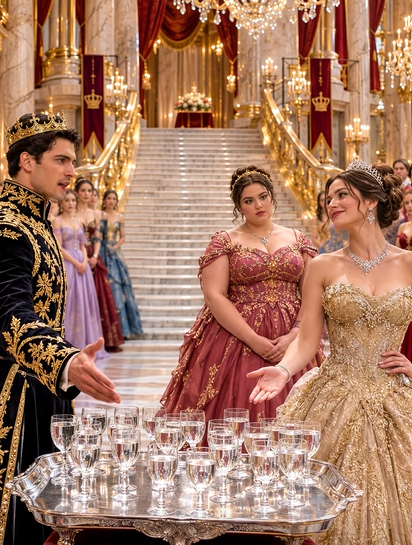
### Part 4 – The Woman Above the Bookshop
**Part 4**
Emma returned to Bellhaven the following morning.
Alexander came with her.
So did Victoria.
That arrangement would have sounded impossible only two days earlier.
Yet as the royal car traveled through rolling green countryside toward the coastal town, the three of them seemed less like rivals in a marriage contest and more like reluctant partners in a family mystery.
Victoria sat opposite Emma.
“You could have mentioned you owned a charming seaside bookshop.”
“I don’t own it.”
“You manage it.”
“Yes.”
“That is still more interesting than your official biography.”
Emma looked toward Alexander.
He examined the landscape with suspicious intensity.
“You wrote the biographies?” she asked.
“No.”
“But you read them?”
“Parts.”
Victoria smiled sweetly.
“He did not.”
Alexander sighed.
“I read summaries.”
Emma shook her head.
“And you intended to choose a wife from twenty women whose biographies you barely read?”
“I have already apologized for the structure.”
“Not enough.”
Victoria unexpectedly agreed.
“She’s right.”
Alexander stared at both women.
“This alliance is concerning.”
For the first time since the challenge began, Victoria and Emma laughed together.
Bellhaven appeared beyond the hills shortly before noon.
It was a quiet coastal town of stone houses, narrow streets, small cafés, and a harbor where fishing boats moved gently against their ropes.
Harbour & Hart stood on a corner overlooking the sea.
Its dark-blue sign creaked in the wind.
Emma loved the place immediately every time she returned.
The smell greeted her first.
Paper.
Coffee.
Wood polish.
The faint salt carried in whenever someone opened the door.
Aunt Lydia emerged from behind the counter.
She hugged Emma before remembering a prince stood two steps away.
Then she attempted a curtsy so awkwardly that Alexander stopped her.
“Please don’t.”
“Thank heaven.”
She straightened.
“My knees are terrible.”
Victoria smiled.
Emma looked toward the staircase at the rear.
“Is she upstairs?”
Lydia’s expression softened.
“Yes.”
“Does she know we’re here?”
“She heard the cars.”
Alexander glanced toward the street.
Security had tried to be discreet.
Royal security was apparently incapable of being truly discreet.
Emma climbed first.
At the top of the narrow wooden stairs stood a small sitting room.
Sunlight entered through windows facing the harbor.
Books covered nearly every flat surface.
Beside the window sat an elderly woman in a violet scarf.
Evelyn Rowan.
Or Mrs. Vale, as Emma had always known her.
She looked smaller than Emma remembered.
But her eyes were sharp.
Very sharp.
“So,” Evelyn said, “you carried them.”
Emma stopped.
“All twenty.”
“I saw.”
Evelyn pointed toward a chair.
“Sit down.”
Emma did.
Alexander and Victoria remained near the doorway.
Evelyn looked at the prince.
“You resemble Eleanor around the eyes.”
Alexander smiled faintly.
“I have been told that.”
“Usually by people trying to flatter you.”
“Yes.”
“I am not.”
“I suspected.”
Evelyn’s mouth twitched.
Then her attention returned to Emma.
“You want to know about your grandmother.”
“Yes.”
Evelyn folded her hands.
“Her name was Grace Harcourt.”
Emma knew that.
But she had known almost nothing else.
Grace died young.
Emma’s father rarely discussed her because he had only vague childhood memories.
“She worked at the palace?” Emma asked.
“For three years.”
“What did she do?”
Evelyn smiled.
“She noticed things.”
Emma almost laughed.
“That isn’t a job.”
“It should be.”
Then Evelyn explained.
Grace had been hired as an assistant in the royal household accounts office.
She was clever with numbers.
Better with patterns.
She discovered discrepancies in the early Rose Fund records.
Not missing money.
Delayed money.
Donations intended for local projects were being held for months while committees debated ceremonial details.
Grace complained.
Nobody listened.
Except Evelyn.
“I was already arguing with Eleanor,” Evelyn said. “She wanted the foundation to look respectable. I wanted it to function.”
Alexander sat now.
“That sounds like Grandmother.”
“She improved.”
Evelyn’s voice softened.
“So did I.”
Emma asked:
“What happened?”
“Grace proposed changing the way grants were approved. Smaller committees. Clearer deadlines. Local representatives.”
Victoria leaned against a bookcase.
“That sounds ordinary.”
“It is ordinary now.”
Evelyn smiled.
“It was considered revolutionary then.”
Alexander frowned.
“Why?”
“Because institutions often become attached to complicated methods merely because they are old.”
Emma glanced toward him.
He noticed.
“Yes,” he said. “I recognize the irony.”
Evelyn continued.
Eleanor created the tray challenge after watching Grace balance an overloaded tea service during a crowded charity reception.
“She carried twenty glasses?”
“Eighteen.”
Evelyn smiled.
“The legend improved with time.”
Queen Eleanor had jokingly asked Grace how she managed it.
Grace replied:
_I moved the heavy things toward the middle._
The phrase stayed with Eleanor.
So she designed the twenty-glass tray.
One glass held slightly more water.
The winner was supposed to identify the hidden imbalance and then be invited to help redesign the Rose Fund’s administration.
“Was my grandmother supposed to take the test?”
“Yes.”
“Did she?”
“No.”
Emma frowned.
“Why?”
Evelyn’s eyes turned toward the sea.
“Because of me.”
The room became quiet.
Evelyn had discovered that one senior administrator repeatedly delayed grants until influential patrons could attend public ceremonies announcing them.
No money was stolen.
But children waited for books.
Clinics waited for supplies.
Villages waited for repairs.
Evelyn wanted the practice exposed.
Eleanor wanted it corrected quietly.
Their disagreement became personal.
“I accused her of caring more about appearances than people,” Evelyn said.
“Was that true?” Alexander asked.
“Partly.”
“And what did she say?”
“That I had begun treating every compromise as cowardice.”
Evelyn smiled sadly.
“She was partly right too.”
Grace found herself between them.
Eleanor admired her.
Evelyn trusted her.
The palace expected loyalty.
Grace wanted only to fix the fund.
“She refused to choose a side,” Evelyn said.
Emma whispered, “And?”
“And everyone interpreted that as choosing the other side.”
There it was again.
Not cruelty.
Not conspiracy.
Human pride.
Evelyn resigned.
Grace resigned two weeks later.
The tray challenge was abandoned.
The twentieth glass disappeared into palace storage.
The friendship between Eleanor and Evelyn ended.
“And my grandmother?”
“She married your grandfather and moved here.”
“Did she regret leaving?”
Evelyn looked at Emma.
“She regretted leaving without finishing what she started.”
Emma felt something tighten inside her chest.
A woman she had never known suddenly seemed real.
Not a faded photograph.
Not a name.
A young woman caught between powerful personalities, trying to do useful work.
“Why did you change your name?”
Evelyn smiled.
“Vale was my husband’s name.”
“You married?”
“For fifty-two years.”
Emma relaxed slightly.
Not every hidden story needed tragedy.
“He died eight years ago.”
“I’m sorry.”
“So am I.”
The simplicity moved Emma.
Alexander asked:
“Did you reconcile with Eleanor?”
Evelyn became quiet.
“Eventually.”
“When?”
“Six months before she died.”
Helena had not known.
Neither had anyone else.
Eleanor had traveled privately to Bellhaven.
No royal motorcade.
No announcement.
She came into Harbour & Hart after closing.
Two old women sat upstairs drinking tea for four hours.
“We apologized badly,” Evelyn said.
Victoria smiled.
“What does a bad apology sound like?”
“Like two stubborn people explaining themselves for three hours before finally saying sorry.”
Emma laughed.
Evelyn smiled.
“Then we did better.”
Eleanor told Evelyn she wanted the tray challenge restored one day.
Not to select a fund administrator.
To remind the royal family of a principle.
_Move the heavy things toward the middle._
Alexander repeated the phrase.
“What did she mean?”
“Responsibility.”
Evelyn looked directly at him.
“Power.”
The room became still.
“The people carrying the greatest burden should not be left at the edges.”
Alexander absorbed that.
Evelyn turned to Emma.
“Your grandmother understood it before any of us.”
Emma thought of the twentieth glass.
Slightly heavier.
Almost indistinguishable from the others.
Unless someone paid attention.
“Why the letter to me?”
Evelyn pointed toward a small desk.
The envelope waited there.
Emma opened it.
Inside was a note written by Evelyn that morning.
Not by Eleanor.
_Dear Emma,_
_You do not owe the palace anything because your grandmother once worked there._
_You do not owe a prince marriage because you completed an absurd challenge._
Alexander cleared his throat.
Evelyn ignored him.
Emma smiled and continued.
_But if you remain involved, do not let anyone make you decorative._
_Grace was never decorative._
_Neither are you._
Emma’s eyes stung.
She looked up.
“Thank you.”
Evelyn reached across the small table.
Emma took her hand.
Only then did Evelyn look toward Victoria.
“And you.”
Victoria straightened.
“Yes?”
“You spilled water on the first step.”
Victoria’s cheeks colored.
“Yes.”
“Good.”
Victoria blinked.
“Good?”
“You needed to.”
Emma looked at Evelyn.
The elderly woman continued.
“You were so busy showing everyone how perfectly you carried the tray that you forgot the purpose was to carry water.”
Victoria looked down.
The observation was not cruel.
That made it harder to dismiss.
“I know.”
Evelyn studied her.
“Do you?”
Victoria considered.
Then nodded.
“I think I’m learning.”
“Excellent.”
Evelyn leaned back.
“Failure is expensive. Learn enough to justify the price.”
Victoria smiled.
“I like you.”
“Most intelligent people do.”
Alexander laughed.
They stayed through lunch.
Emma expected the prince to become impatient.
Instead he carried dishes to the kitchen.
Lydia nearly fainted.
Victoria helped customers downstairs when the shop became busy.
One elderly man asked her where the gardening books were.
Victoria did not know.
Instead of pretending, she asked Emma.
Another tiny transformation.
Near evening, Alexander stood with Emma outside the shop.
The harbor reflected orange sunset light.
“You’re different here,” he said.
Emma looked toward him.
“Different from what?”
“The palace.”
“You mean less terrified?”
“You didn’t look terrified.”
“I was carrying twenty full glasses.”
“Fair.”
He smiled.
Emma pulled her coat tighter.
“And you’re different here.”
“How?”
“No one bows every twelve seconds.”
“I prefer it.”
“Really?”
“Yes.”
He hesitated.
“It is difficult to know what people actually think when your title enters a room before you do.”
Emma looked at him.
“Is that why you agreed to the challenge?”
“Partly.”
“I thought your father manipulated you.”
“He did.”
“Alexander.”
He laughed.
“Fine. I agreed because I was tired.”
“Of what?”
“Introductions.”
His expression became more serious.
“Every family with influence presented someone. Every conversation felt rehearsed. Everyone knew what music I liked, what charities I supported, which university I attended.”
“So you invented a physical challenge?”
“I wanted something nobody could prepare a speech for.”
Emma smiled.
“You realize they could practice carrying trays.”
“Apparently not enough.”
She laughed.
Then he became quiet.
“When you finished, I was relieved.”
“Because the challenge worked?”
“No.”
Emma waited.
“Because it was you.”
Her breath caught.
Alexander looked toward the harbor.
“I know that is inconvenient.”
“Very.”
“I am not proposing.”
“Good.”
“I would like to take you to dinner.”
“That sounds suspiciously normal.”
“I am trying something new.”
Emma thought of Victoria saying almost the same thing.
“Dinner.”
“Yes.”
“No staircase?”
“No.”
“No glasses?”
“One each, presumably.”
“No announcement that I become your wife if dessert survives?”
Alexander smiled.
“I will speak to the restaurant.”
Emma laughed.
“Yes.”
His expression softened.
“Yes?”
“Yes.”
Behind the bookshop window, Victoria and Lydia were watching.
Emma noticed.
Victoria immediately pretended to examine a book.
Lydia did not bother pretending.
Alexander followed Emma’s gaze.
“We have an audience.”
“Welcome to ordinary life.”
He smiled.
Dinner happened that evening at a small restaurant beside the harbor.
Alexander’s security officers occupied a discreet table.
Very discreet, except everyone knew who they were.
Emma and Alexander talked.
Not about crowns.
Not about marriages.
Books.
Childhood.
His dislike of pears.
Her inability to sing.
His fear of becoming so careful in public that he forgot how to be spontaneous in private.
Her worry that people often assumed confidence came naturally to her simply because she smiled.
At the end of the evening, Alexander walked Emma home.
He did not kiss her.
He seemed to want to.
She seemed to want him to.
But neither rushed.
At the bookshop door, Emma smiled.
“Stable enough for you?”
Alexander laughed.
“Barely.”
The following morning, Victoria arrived holding a file.
“I found something.”
Emma looked toward Alexander.
He had stayed overnight at a small royal guest residence nearby.
Victoria placed the file on the shop counter.
“My grandfather’s Rose Fund records.”
Inside were correspondence, meeting notes, budgets.
And one page marked:
**GRACE HARCOURT — PROPOSED GOVERNANCE MODEL**
Emma’s heartbeat quickened.
Her grandmother’s plan.
The one that had never been implemented.
Alexander read.
His expression slowly changed.
“What?”
Emma asked.
He handed her the page.
Grace’s proposed model was nearly identical to a modernization plan the palace had announced only six months earlier.
Emma frowned.
“This could be coincidence.”
Victoria shook her head.
“There’s more.”
She opened another folder.
A recent internal memo.
The modern proposal had been credited to Lord Sebastian Vale, chairman of the current Rose Fund board.
Victoria’s uncle.
Her own mother’s brother.
Emma looked at her.
Victoria’s face was pale.
“He found my grandfather’s archive last year.”
Alexander understood.
“He used Grace’s work.”
“And claimed it as his own.”
Victoria nodded.
No stolen millions.
No dramatic crime.
Something quieter.
A woman’s forgotten idea had been repackaged decades later under a powerful man’s name.
Emma stared at her grandmother’s handwriting.
Alexander said:
“We need to verify this.”
Victoria looked toward him.
“I know.”
“You understand what happens if it’s true?”
“My family will be embarrassed.”
Alexander waited.
Victoria swallowed.
Then:
“But Grace deserves the credit.”
Emma looked at her.
The woman who, days earlier, had mocked her in the ballroom now stood ready to expose an uncomfortable truth about her own family.
Victoria placed the papers in Emma’s hands.
“I failed the first challenge.”
She took a breath.
“I don’t intend to fail this one.”
Then Aunt Lydia entered from the rear office.
She carried another envelope.
“This came by courier.”
Emma looked at the seal.
Royal Archives.
Alexander opened it.
Inside was a copy of a letter written by Queen Eleanor five years before her death.
Addressed to Grace Harcourt.
But Grace had died decades earlier.
The letter had never been sent.
Alexander read the final paragraph aloud:
_One day, if either of our families finds the courage to finish what we abandoned, the Rose Fund should belong not to the palace, not to committees, and not to those seeking credit._
_It should belong to the communities it serves._
Emma stared at Alexander.
Then Victoria.
The mystery of the twentieth glass had become something much larger.
And someone inside the palace had spent years preventing Eleanor’s final instruction from being implemented.
**–END OF PART 4–CLICK “NEXT” AT THE BOTTOM OF THE PAGE TO CONTINUE READING**
✓ Lynn R. Adams
### Part 4 – The Woman Above the Bookshop **Part 4** Emma returned to Bellhaven the following morning. Alexander came with her. So did Victoria. That arrangement would have sounded impossible onl…