PART 4: The Woman Who Wasn’t Dead 047
Part 4 – The Records Beneath the Floor
The ledger had been opened with Isabel’s code.
But Isabel was standing in the doorway, Charlotte asleep against her shoulder, and she had not been near the archive room all night.
Vincent looked at his security chief.
“Freeze the archive system,” he said. “Preserve every access record, and don’t enter that room until we know who last touched the lock.”
The chief nodded and moved down the corridor, already speaking into his radio.
Eleanor stood beside him, staring at the tablet as if the numbers might rearrange themselves into a kinder explanation.
“My code is on the cabinet,” she said. “The room’s been used for family records for years.”
“Could someone have copied Isabel’s?” Vincent asked.
“I don’t know,” Eleanor replied.
Isabel shifted Charlotte higher in her arms.
“Could the system have recorded the wrong user?”
“It could,” Vincent said. “But we won’t assume that until we check.”
She looked at him, then gave a small nod.
“Thank you.”
The security chief returned a few minutes later.
“The room is locked, and the corridor camera shows no one entering since Mrs. Whitmore secured it.”
Eleanor’s face tightened.
“Then how was the file opened?”
“The system can be accessed remotely from the estate’s administration network,” he said. “We’re checking the terminals.”
“Who has access to that network?” Vincent asked.
“Several staff members, the estate manager, and the security office.”
“Then review all of them. No one is to be questioned alone, and no one is to be dismissed without a clear reason.”
The chief hesitated.
“One of the guards has asked to speak with you.”
“Which one?”
“Officer Daniel Mercer.”
Vincent’s expression changed.
The name on the altered timestamp had been Daniel’s user account.
“Bring him to the small conference room,” Vincent said. “I’ll speak with him there.”
Isabel watched him carefully.
“Will you be questioning him because he changed the timestamp, or because you think he used my code?”
“Because we need to know what happened.”
“That isn’t quite an answer.”
“No,” Vincent said. “It isn’t.”
He considered the question rather than reaching for the certainty he wanted.
“I’ll ask him about the timestamp first. If we find evidence connecting him to the ledger access, I’ll tell you before we take any further steps.”
Isabel’s gaze remained on his face.
“Good.”
He glanced at Charlotte.
“Would you like me to stay?”
“Not while you talk to him,” Isabel said. “I want to see the room where the records are kept.”
“The archive room?”
“Yes. I want to know what was opened.”
Vincent did not answer immediately.
The old instinct rose in him: move her somewhere secure, keep her away from uncertainty, make the decision before anyone else could.
Then he remembered what she had asked of him.
“Would you like me to go with you,” he said, “or would you rather have the key and choose someone else?”
“I’ll go with you, if the room is cleared and I can leave whenever I want.”
“Agreed.”
Eleanor looked from Isabel to Vincent.
“I can wait outside.”
“You can,” Isabel said. “I’m not ready to have you in the room with me.”
Eleanor took the words without protest.
“All right.”
Vincent arranged for a guard to accompany them, then walked beside Isabel toward the archive wing.
The room had been secured with an electronic lock and an older brass keyhole.
A staff member had already sealed the access panel, and the security chief waited outside with a technician.
He opened the door only after Isabel had given her permission.
Inside, the archive smelled of old paper, beeswax, and the cedar lining of the cabinets.
A green-shaded lamp rested on the central desk.
The brass fittings gleamed softly beneath it, and framed photographs of the Whitmore family covered one wall.
Isabel paused just inside the doorway.
Vincent waited.
“Would you like to stay here for a moment?” he asked.
She looked at the nearest cabinet.
“No.”
Her voice was quiet, but she stepped inside.
The technician showed them the terminal that had registered the access.
A ledger file was open on the screen, displaying a list of transfers from the Whitmore Foundation to a series of companies with nearly identical addresses.
Isabel leaned closer.
“That’s not the full ledger.”
“How do you know?” Vincent asked.
“The dates are out of order, and several entries are missing.”
She recognized the pattern at once.
Her face had gone pale, but her attention was precise.
“This is a summary.”
“Can you tell whether it was altered?”
“Not from this screen.”
The technician pointed to the access record.
“The account used was Ms. Whitmore’s, but the terminal was not logged in under her personal profile.”
“What does that mean?” Eleanor asked from the doorway.
She had followed them only as far as the threshold and remained there.
“It means the archive system accepted a saved code,” the technician said. “Someone could have entered the code without using Isabel’s account.”
“Could a person do that remotely?” Vincent asked.
“If they were on the administration network.”
“Can you identify the terminal?”
The technician checked a second screen.
“The request came from the estate manager’s workstation.”
Eleanor drew a sharp breath.
“The estate manager has the master access.”
“He also has access to the family archive,” the technician clarified. “That doesn’t tell us who was at the computer.”
“Where is he now?” Vincent asked.
“He’s in the staff office. He agreed to remain there while we review the records.”
“Keep it that way,” Vincent said. “No accusations until we know more.”
Isabel was staring at the list on the screen.
“Those companies,” she said. “I remember two of them.”
“Do you know who owns them?”
“I suspected Richard was connected, but I never found the documents that proved it.”
Eleanor came one step nearer.
“Did you tell me about the companies?”
“I did.”
Eleanor’s face fell.
“I remember you mentioning irregularities. I remember saying Richard had an explanation.”
“You said the foundation’s accountants had reviewed the transfers.”
“He told me they had.”
“Did you see the review?”
“No,” Eleanor said.
“Did you ask to?”
Eleanor lowered her eyes.
“No.”
Isabel turned away from the screen.
The hurt in her face was not new, but now it had a name and a shape.
Eleanor did not ask her to make it smaller.
“I thought that because Richard was my son, I knew when he was telling the truth,” she said. “I treated your concern as an accusation against him instead of a warning.”
“You treated it as a family disagreement.”
“Yes.”
“And I was part of the family.”
Eleanor’s eyes filled.
“Yes,” she said. “You were.”
No apology followed.
Not because Eleanor had nothing more to say, but because she seemed to understand that another apology could not mend what she had failed to see.
The technician copied the access report onto a secured drive.
“Would you like the summary file preserved?” he asked Isabel.
“Don’t make a copy from this screen until we’ve verified it,” she said. “The missing entries could matter.”
The technician nodded.
Vincent turned to the security chief.
“Can you reach the lawyer Isabel mentioned?”
“We have a name from the older foundation records. I’m checking current addresses and contact information.”
“Do that through ordinary channels.”
The chief gave him a questioning look.
“Why ordinary channels?”
“Because if someone has been reading the archive through the estate network, I don’t want to warn them which records matter before we know what we have.”
Isabel looked at Vincent.
“Thank you for asking before deciding what to do with the evidence.”
“I’m trying.”
“You’re doing it.”
The approval was slight, but Vincent felt its weight.
As they left the archive, Eleanor remained behind the doorway.
“May I speak with Isabel?” she asked.
Isabel glanced at her.
“Not alone.”
“Of course,” Eleanor said.
Vincent did not answer for Isabel.
They returned to the sitting room, where Charlotte had begun to wake.
She stretched against the cushions and rubbed her eyes with both fists.
“Mama?”
“I’m here, darling.”
Charlotte nestled against her mother’s side, then spotted Vincent.
“Big guy too.”
“I’m here too,” he said.
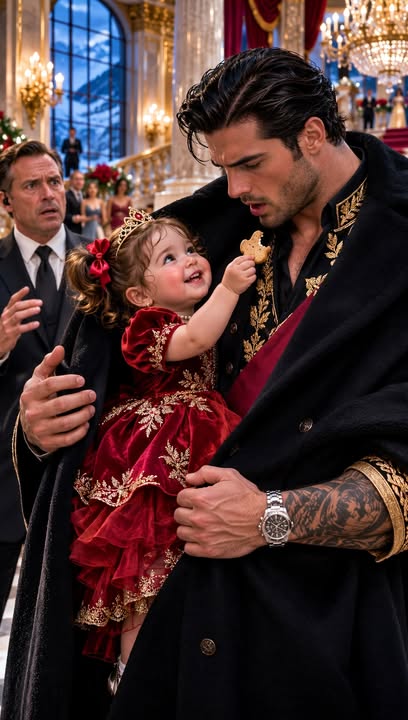
She looked at the animal-cracker tin on the table.
“Cookie?”
Vincent opened it and offered her one.
Charlotte inspected the cracker before taking it.
“Good cookie.”
“High praise,” he said.
She took a bite and leaned back into Isabel.
The security chief returned with an update.
“Daniel Mercer is waiting in the conference room.”
“Did you speak with him?” Vincent asked.
“Only to confirm he was willing to wait. He asked to talk with you before anyone else.”
Vincent looked to Isabel.
“I’ll hear what he has to say.”
“Tell me afterward,” she said.
“I will.”
He met her eyes long enough to make the promise clear, then went to the conference room.
Daniel stood by the window, his hands folded in front of him.
He was a broad-shouldered man in his late forties, with a calm face Vincent had trusted through years of difficult work.
The two of them had once spent an entire winter night searching mountain roads after a vehicle carrying Vincent’s younger sister vanished in a storm.
Daniel had found her, cold and frightened but unharmed.
Vincent had never forgotten it.
“Sit down,” Vincent said.
Daniel remained standing.
“I’d rather tell you this on my feet.”
“Then speak.”
“I changed the timestamp on the service-passage footage.”
Vincent had expected a denial.
The admission left him still.
“Why?”
“Richard asked me to correct a camera clock.”
“Did you know he was changing the time to cover the fake chauffeur?”
“No.”
“Did you know there was a fake chauffeur?”
“Not until tonight.”
“Why did you agree to alter the record?”
Daniel’s jaw tightened.
“He said the camera was six minutes slow and had caused confusion during a staff incident. He asked me to adjust the time before the gala.”
“Did you verify the fault?”
“No.”
“Why not?”
“I trusted his access to the estate.”
“And you trusted the request.”
“I did.”
Vincent rested his hands on the table.
“You know what the timestamp now appears to show.”
“Yes.”
“You understand how that looks.”
“I do.”
“Did you enter the archive system?”
“No.”
“Have you ever used Isabel’s code?”
“No.”
“Did Richard tell you that Isabel was alive?”
Daniel’s gaze dropped.
“He told me she’d been moved from a private clinic and that no one was to contact her.”
“When did he tell you that?”
“Three weeks ago.”
Vincent’s expression hardened.
“What did you understand by ‘moved’?”
“I thought she was recovering somewhere private. I didn’t know she’d been held against her will.”
“Did you know she had been declared dead?”
Daniel’s silence answered.
“I knew there was a family announcement,” he said. “I wasn’t told the paperwork was false.”
“Why didn’t you speak to me?”
“I thought it was a private matter between the Whitmores.”
“You knew Isabel was alive and did not tell me.”
“I should have.”
“Did you help Richard keep her hidden?”
“No.”
“Did you see her?”
“No.”
Daniel looked up.
“I didn’t know she was at the estate until tonight.”
Vincent studied him.
He wanted Daniel’s answer to be enough because trust had once been simple between them.
But simplicity did not make it proof.
“Why are you telling me now?”
“Because the camera change is my responsibility, and I won’t let you discover it from a system report and think I altered it to protect myself.”
“You altered the record without checking why.”
“Yes.”
“That is not a small mistake.”
“I know.”
Daniel’s shoulders sagged.
“I thought correcting a clock was harmless. I should have asked why Richard needed it changed, and I should have documented the request.”
Vincent looked at the man who had helped save his sister, then at the evidence that Daniel had made the estate’s records less trustworthy.
“What do you want me to do?” Daniel asked.
“I want the truth, whether it makes me angry or not.”
“That’s all I have.”
“Then I’ll verify it.”
Daniel nodded.
Vincent did not dismiss him or reassure him.
Instead, he asked the security chief to preserve Daniel’s access logs and the original camera files, and to have another officer review the record independently.
When Vincent returned to the sitting room, Isabel looked up from the sofa.
“Was he involved?”
“He changed the timestamp after Richard asked him to. He says he didn’t know why the time needed changing.”
“Do you believe him?”
“I believe he admitted what he did. I’m checking the rest.”
“Is he your friend?”
“He is.”
“That makes it harder.”
“Yes.”
“Does it make you more likely to excuse him?”
Vincent took a moment before answering.
“It could.”
Isabel nodded.
“Then remember that when you review his records.”
“I will.”
Eleanor sat in a chair near the far wall.
For the first time, she seemed less like the mistress of the estate and more like someone who had been given a family name and assumed it would protect everyone inside it.
“Isabel,” she said, “I remember the day you brought me those papers.”
Isabel kept her eyes on Charlotte.
“You said the figures looked strange, and I told you Richard had been handling the accounts for years.”
“I said you should ask him to explain.”
“I didn’t.”
“No.”
“I’m sorry.”
Isabel took a breath.
“I believe you regret it.”
Eleanor’s face crumpled slightly.
“Is that enough for tonight?”
“It’s all I can give you tonight.”
Eleanor nodded.
She did not reach for Isabel’s hand.
She did not ask to hold Charlotte.
For once, she let the boundary remain where Isabel had placed it.
A phone rang in the security chief’s hand.
He answered, listened, and then looked toward Vincent.
“We found the lawyer,” he said when he had ended the call. “His name is Thomas Vale. He’s alive and living in a small town near Burlington.”
Isabel sat very still.
“Did he say why he disappeared?”
“He didn’t answer that question. He said he’ll only speak with Isabel in person.”
“Is he willing to come here?” Vincent asked.
“He is, but he wants an independent attorney present.”
“Reasonable.”
The chief continued.
“He also said he kept the original records Isabel entrusted to him.”
Isabel’s fingers closed around Charlotte’s blanket.
“Did he say what was in them?”
“He said they included the foundation transfers, the original medical report from the night she disappeared, and a letter from Richard.”
Eleanor rose from her chair.
“A letter?”
“He wouldn’t discuss it over the phone.”
Vincent studied Isabel.
“Do you want him brought here?”
“No,” she said immediately. “I want to meet him somewhere neutral.”
“Where would you feel comfortable?”
“The library at the clinic, if it’s available. It has a public entrance and separate rooms.”
“We can arrange that.”
“I want to go myself.”
“I’ll make sure the choice is yours.”
Isabel looked at him, measuring the words.
“Thank you.”
The next morning, after Charlotte had slept and the estate’s doors were opened only to verified staff, Vincent drove Isabel to the clinic’s small library.
The trip was quiet.
Charlotte sat between her mother and a child seat, holding a cloth rabbit and an animal cracker.
Eleanor stayed behind at the estate.
She had offered to come, but Isabel had said no.
Eleanor had accepted without arguing.
Thomas Vale was waiting in a reading room with a woman introduced as his independent attorney.
He was in his late sixties, with silver hair and a careful, tired expression.
When he saw Isabel, he stood.
“I’m sorry I didn’t find you sooner,” he said.
“I’m glad you’re here now.”
Vale glanced at Vincent.
“Mr. Romano.”
“Mr. Vale.”
“I’d prefer to keep the meeting to the people Isabel asked for.”
Vincent turned to Isabel.
“Would you like me to wait outside?”
“Yes,” she said. “But close enough that I can call you.”
He gave a short nod.
“Of course.”
Charlotte reached for his sleeve before he left.
“Big guy stay?”
“I’ll be right outside.”
She watched him go, then leaned into Isabel.
Vale placed a leather document case on the table.
“I brought the originals,” he said. “Nothing in the case has been altered since Isabel left it with me.”
His attorney confirmed the seal and noted the time.
Isabel did not touch the papers at once.
“What happened after I gave them to you?”
“Richard contacted me,” Vale said. “He told me the documents were incomplete and asked me to return them to the family office.”
“Did he threaten you?”
“No.”
“Did he offer you money?”
“No.”
“Then why did you disappear?”
Vale lowered his gaze.
“Because I realized I had made a mistake. I should have taken the records to an independent investigator immediately. Instead, I tried to verify them quietly.”
“And when you learned I had died?”
“I knew the medical report was false.”
“How?”
“Because I had already seen the original report from the clinic.”
Isabel’s eyes sharpened.
“What did it say?”
“It said you were alive when you were taken from the house. It also said you had injuries consistent with being restrained.”
Charlotte had settled against her mother’s side, listening without understanding.
Isabel’s fingers tightened around the edge of the table.
“Who took me?”
Vale opened the case.
“Richard arranged it.”
For a moment, the room seemed to lose its sound.
Even the traffic outside the window became distant.
Isabel looked at the file in front of her.
“Show me.”
Vale withdrew several pages, placing them in order before her.
There were copies of foundation ledgers, incorporation filings, and handwritten notes.
The dates stretched back nearly two years.
The companies receiving the money had been created through a chain of business registrations connected to Richard’s office.
Some funds had been transferred through hotel subsidiaries.
Others had been routed through the Whitmore Foundation under the description of emergency property costs.
“This is why I kept looking,” Isabel said.
“Yes.”
She turned another page.
A bank record showed that one of the companies had paid for an isolated property in the mountains.
“Where is this?”
“North of the estate,” Vale replied. “It was rented through an intermediary.”
Isabel’s mouth went dry.
“Was I there?”
“Yes.”
“Were there other properties?”
“There were.”
“Did Richard know you had found the accounts?”
“He knew you suspected him. He didn’t know exactly what evidence you had.”
“Then why did he take me?”
Vale slid one last document toward her.
It was a typed agreement prepared on Whitmore Holdings stationery.
The heading read Transfer of Executive Control and Beneficial Interests.
Eleanor’s name appeared at the bottom, above a signature line that had not been completed.
Isabel read the first page, then the next.
The document gave Richard authority over the Whitmore hotels, the foundation, and several family trusts.
It was written to appear temporary.
A clause near the bottom allowed the authority to become permanent if Eleanor was unable to act.
Isabel looked up.
“He planned to make Eleanor sign this.”
“Yes,” Vale said.
“When?”
“The day after you disappeared.”
Eleanor had stayed at the estate.
But she was not in the room now to hear it.
Isabel read the date again.
“He told her I had died before she signed?”
“Yes.”
“Why would that make her sign?”
Vale turned over a note attached to the agreement.
It was in Richard’s handwriting.
He had written that Eleanor was grieving, that the family required stable leadership, and that she needed to act before the company faced a public crisis.
Below that was a second note, addressed to a legal adviser.
If Vincent became involved, the blame for Charlotte’s disappearance could be placed on him.
Isabel stared at the page.
“He wanted Vincent blamed.”
“Yes,” Vale said. “The plan was to make his people look responsible for the child’s disappearance. Richard believed the resulting dispute would pull attention away from the foundation accounts and force Eleanor to hand over control before anyone could examine the books.”
Vincent stood just outside the glass-paneled door.
He could see Isabel reading, but he could not hear what Vale was saying.
Isabel turned to the next document.
A planned payment had been scheduled for a company connected to Richard’s private office.
The payment depended on Eleanor signing the transfer.
“And the kidnapping?” Isabel asked.
“Richard intended Charlotte’s disappearance to look like an attempt by you to flee with her. When the family accused Vincent, he planned to present himself as the one trying to protect the Whitmores.”
“He would have taken Charlotte from me.”
Vale did not soften the answer.
“Yes.”
Isabel looked down at her daughter.
Charlotte was now drawing slow circles on the table with one cracker crumb.
Isabel placed a hand over the child’s small fingers.
“You knew all this while I was missing.”
“I learned the full plan after I found the transfer agreement.”
“And you didn’t come for me.”
“No,” Vale said. “I was afraid.”
The admission carried no excuse.
Isabel studied him.
“You could have told someone.”
“I should have. I failed you.”
She looked again at the papers.
The anger that rose in her did not arrive as a shout.
It was quieter than that, and heavier.
“He made my death useful,” she said.
“He wanted to make it necessary for Eleanor to sign.”
“And he used Charlotte.”
“Yes.”
“He used Vincent.”
“He intended to.”
Isabel closed her eyes.
For a moment, she was back in the first days after being taken, listening for footsteps in a house that was not her own.
She had spent months wondering whether anyone knew she was alive.
Now she understood that the lie had not simply hidden her.
It had been designed to move everyone else into place.
When she opened her eyes, Vincent was waiting by the door.
She gave him a small nod.
He came in, but did not sit until she motioned to the chair.
Vale’s attorney reviewed the documents and confirmed that the originals appeared consistent with their dates and seals.
Vincent studied the transfer agreement.
“This gives us a motive and a plan, but we need to establish what was carried out and when.”
“The bank records show the transfers,” Vale said. “The medical report establishes that Isabel was alive when she was taken.”
“And the letter?” Vincent asked.
Vale looked toward Isabel.
She nodded.
He removed a folded page from the case.
It was written to Eleanor.
The first lines were brief.
Richard had written that Isabel had found the foundation accounts and was making accusations that could destroy the family.
He said he had taken steps to prevent her from spreading false claims.
He urged Eleanor to sign the transfer the next morning, before outside investigators could become involved.
At the bottom, he had added one final sentence.
If she refused, he would make sure the family blamed Vincent for what happened to Charlotte.
Eleanor’s name was nowhere on the letter.
Her earlier signatures were.
Isabel read the page twice.
“Did you know about this letter?” she asked Vale.
“I found it with the transfer papers.”
“Why didn’t you send it to the police?”
“I wanted to understand whether it was authentic before I exposed it. By then, I had already waited too long.”
“Did you give it to Richard?”
“No.”
“Did anyone else see it?”
“My attorney and I.”
Vincent studied the lawyer.
“Are you prepared to provide a statement and preserve the originals for an investigation?”
“Yes,” she said. “We’ll do so through the appropriate legal channels.”
“Good.”
Isabel touched the edge of the letter but did not lift it.
“I want Eleanor to see this.”
“She should,” Vincent said.
“She should hear what it says from me, not from someone who can turn it into another accusation.”
“Then we’ll return to the estate when you’re ready.”
“I’m ready.”
Vale closed the document case.
“One more thing.”
Isabel looked at him.
“I found the family photograph you asked me to keep. It was with your letter for Charlotte.”
He took a smaller envelope from inside the case.
Isabel recognized the handwriting on it.
Her name was written across the front, followed by the words, For Charlotte, when she is old enough to ask.
She opened it.
Inside was a photograph of Eleanor holding a newborn Charlotte in the nursery.
Isabel stood beside them, young and smiling, one hand resting on Eleanor’s shoulder.
A note was tucked behind the photograph.
It had been written by Eleanor.
She thanked Isabel for bringing Charlotte into the family and promised that no matter what happened, the child would always have a home with her.
Isabel read it in silence.
The letter did not erase Eleanor’s choices.
But it showed that Eleanor had once written those words before Richard had convinced her that Isabel was gone and the family had to be protected from questions.
“Did Eleanor know you had this?” Vincent asked.
“No,” Isabel said.
“Does the photograph change what you want from her?”
“I don’t know yet.”
She folded the note carefully and placed it back in the envelope.
“I’ll let her know it exists.”
On the drive back, Isabel sat with Charlotte asleep beside her.
Vincent rode in the front seat and did not ask her to explain what she had learned.
When they reached the estate, Eleanor was waiting in the entrance hall.
She had not tried to enter Isabel’s room or the archive.
She looked at the document case in Vincent’s hands.
“You found Thomas.”
“Yes,” Isabel replied.
“And?”
Isabel glanced toward Charlotte, who had begun to wake.
“Richard arranged for me to be taken. He falsified my death so you would believe I was gone and sign over control of the company.”
Eleanor’s face went white.
“No.”
“The original records say otherwise.”
“He told me you had died in an accident.”
“He knew you would accept his word.”
“I thought I was protecting you.”
“You signed the papers.”
Eleanor looked down.
“Yes.”
“You wanted to believe him.”
“Yes.”
“Did you ever ask to see proof?”
“No.”
Isabel turned toward the entrance hall window.
Outside, the snow had begun to melt from the lower branches of the pines.
“I can’t decide what that means for
**–END OF PART 4–CLICK “NEXT” AT THE BOTTOM OF THE PAGE TO CONTINUE READING**
* * *
[PREVIOUS: PART 3](https://echoesofstories.idolsgift.com/blog/part-3-the-woman-who-wasn-t-dead-047) | [NEXT: PART 5](https://echoesofstories.idolsgift.com/blog/part-5-the-woman-who-wasn-t-dead-047)
✓ Lynn R. Adams
Part 4 – The Records Beneath the Floor The ledger had been opened with Isabel’s code. But Isabel was standing in the doorway, Charlotte asleep against her shoulder, and she had not been near the arc…