PART 4: The Woman Who Came Back 041
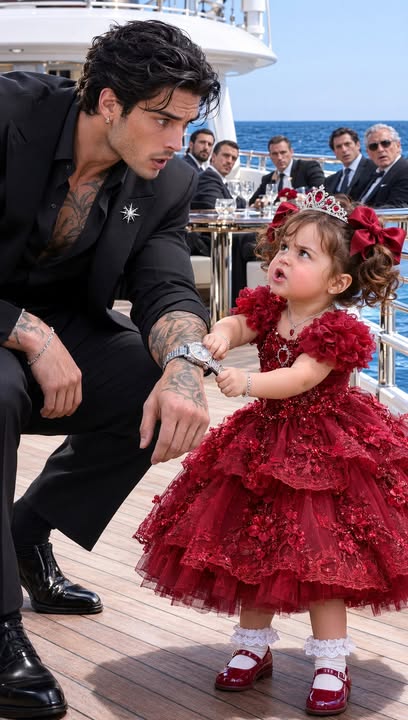
Part 4 – The Name Beneath the Photograph
“She woke before the funeral.”
I read the words again, hoping they would become less impossible the second time.
Elena stared at the photograph on the phone, her face pale in the screen’s light.
Rosie leaned sleepily against her, one hand curled around the silver bracelet at Elena’s throat.
“Is that you?” I asked.
Elena nodded.
“Do you remember the hospital?”
“I remember waking up.”
The answer was so quiet I almost missed it beneath the engine’s hum.
I moved closer, but kept my voice low for Rosie’s sake.
“What happened after you woke?”
“I was hurt. Confused. I didn’t know where I was, and I couldn’t remember everything.” Elena swallowed. “A doctor told me there had been an accident. He said I was lucky to be alive.”
“The doctor in this picture?”
“I think so.”
I studied the man standing beside her bed.
He was older than I remembered, with a narrow face and silver hair brushed neatly back.
His name had appeared in the medical report that confirmed Elena’s death.
Dr. Warren Vale.
“You recognized him?”
“Not at first.” Elena’s gaze remained fixed on the screen. “I didn’t know his name until later.”
“Later when?”
“When I saw the report.”
“You found it?”
“Months after I left the hospital.”
The words brought the hospital into sharper focus: a private clinic, the official report, the sealed coffin, and a family funeral conducted with the certainty of men who had been told there was nothing left to question.
I had trusted the documents because I had been drowning in grief and because every person around me insisted the facts were settled.
“Why would the report say you were dead?” I asked.
“I don’t know. When I woke, the doctor told me I’d been listed under the wrong name.”
“Your identification?”
“Gone. The car was destroyed, and I had no bag, no phone. He said the staff had confused my records with another patient’s.”
“That makes no sense.”
“I know.”
“What did he tell you your name was?”
“He didn’t. He kept calling me Ms. Vale.”
I looked up from the photograph.
“Vale?”
“He said it was a temporary name on my chart.” Elena’s brow furrowed, as if she were searching through a room whose furniture had been moved. “He told me not to worry about the paperwork until I was stronger.”
“And you believed him?”
“I had a concussion, a broken wrist, and a deep cut across my scalp. I believed what I could remember, and I couldn’t remember the accident clearly.”
Rosie stirred at the change in Elena’s voice.
Elena kissed her hair and softened her tone.
“Everything’s all right, sweetheart.”
Rosie’s eyes opened briefly.
“Dada here?”
“Yes,” I said. “I’m right here.”
She settled again, trusting the promise.
I returned my attention to Elena.
“What do you remember about the accident?”
“Driving along the coastal road. The weather had turned. I remember headlights behind me, closer than they should have been.” She closed her eyes for a moment. “Then the road railing. The sound of glass. After that, fragments.”
“Did you know someone had forced you off the road?”
“I suspected it later. At the time, I couldn’t be sure.”
“Why didn’t you tell me when you woke?”
“I didn’t know how to reach you.”
“You were at a hospital.”
“The doctor said there was a risk your name had been connected to the accident. He told me people were asking questions about you, and that calling you might put both of us in danger.”
“People?”
“He said he couldn’t tell me who. He said the hospital had already received calls from someone asking about my condition.”
I looked again at Dr. Vale’s face.
“Was he trying to protect you?”
“I thought so.”
“And now?”
“Now I don’t know.”
The old anger returned, but it had changed shape.
I had spent six years blaming myself for being too late, too distracted, too certain that our future could wait until the next meeting, the next deal, the next quiet evening.
If Elena had woken in a hospital and been told I was a danger to her, then the distance between us had not been only a choice she made.
Someone had built it.
“Why did you leave the hospital?” I asked.
“I didn’t, at first.” She shifted Rosie higher against her shoulder. “I stayed there for several days. The doctor told me I could go to a recovery house once I was stable, somewhere away from the city.”
“Who arranged it?”
“He said the clinic had a partner facility.”
“Did you go?”
“Yes.”
“And then?”
“I started remembering things. I asked to use a phone. I wanted to call you.”
“What happened?”
“The doctor told me I had already called you.”
I stared at her.
“What?”
“He said I’d spoken to your family and that you were too overwhelmed to talk to me.”
“I never received a call.”
“I know that now.”
“How?”
“Because I asked him to let me try again, and he told me it would only upset me. He said you had chosen not to come.”
Her voice stayed steady, but her fingers had tightened around Rosie’s dress.
The choice I thought Elena had made had been returned to me, bent and altered.
“You believed him?”
“I was injured. I was alone. I had no documents, no money, and only pieces of my memory. He had taken care of me. I wanted to believe he was telling the truth.”
“You thought I’d abandoned you.”
“I thought you might have.”
The admission hurt because it was reasonable.
For six years, each of us had been living inside a lie shaped to fit the other’s absence.
“What changed?” I asked.
“I found a nurse who remembered me under my real name.”
Elena glanced at the photograph.
“She wasn’t supposed to be working that evening. She told me that before I was moved, Dr. Vale had said I was stable and could be discharged to my family.”
“Your family?”
“His words. She remembered asking where my family was, because nobody had come to see me.”
“And what did he say?”
“That there was no family to call.”
The phone’s screen dimmed, and I touched it to keep the photograph visible.
“Did you report him?”
“I tried. The clinic had no record of me under Elena’s name. The recovery house had been arranged through a company I couldn’t trace. By then, I was starting to remember the accident, and I was frightened.”
“You went to the police?”
“I went to a small station outside the city. I told them I thought someone had tried to kill me.”
“What did they say?”
“They asked for identification, medical records, and a clear account of what happened. I had none of those. They took a statement, but they couldn’t confirm who I was.” She lowered her eyes. “I left before the doctor could find me.”
“Why?”
“Because a man came to the recovery house asking for Ms. Vale.”
A shiver passed through her voice.
“I heard him speak with the woman at the front desk. He said he was there on behalf of the family. I didn’t know which family he meant, but I knew I couldn’t stay.”
“You should have come to me.”
“I didn’t know whether the warning about your security team was true.”
“You could have sent a message.”
“I did.”
I stopped.
“What?”
“I sent one through an account we used years ago.”
“I never saw it.”
“I know. It came back undelivered.”
I remembered that account, an old address I had stopped checking after Elena’s death.
At the time, I had believed there was no one left who would write to it.
“What did you say?”
“That I was alive. That I wasn’t sure who I could trust. That I would try to contact you again.”
“When?”
“About a month after I woke.”
My breath left me slowly.
“I never knew.”
“I believe you.”
“Why?”
“Because if you had known, you would have come.”
I could not tell whether her certainty comforted or condemned me.
Rosie shifted and began to wake.
Elena gently rubbed her back.
“Can we talk later?” she murmured to her.
“Later,” Rosie echoed, then tucked her face under Elena’s chin.
I turned back to the phone.
“The photograph came from someone who knows what happened.”
“Or someone who wants us to believe they know.”
“Can we find the original file?”
“Maybe.”
I opened the message details.
The file had come from an unknown contact through an encrypted account, but the image metadata showed a date, a clinic name, and a record number.
I read the clinic name aloud.
“Harborview Medical.”
Elena’s eyes sharpened.
“That was the place.”
“Can you remember the record number?”
“No.”
I enlarged the photograph.
The number on the lower corner was partly blurred, but enough remained to search.
The image had been taken in a private room, with a paper chart visible beside the bed.
I could make out the last four digits.
“Do you know anyone who can get the clinic records?” Elena asked.
“I know a former investigator who worked for my father before I took over the business side.”
“Is he trustworthy?”
“I thought Elias was.”
The answer came out more bitterly than I intended.
Elena looked at me, then at the photograph.
“Can you call the clinic?”
“I can try.”
The phone still had no signal, but the inlet’s edge offered a faint connection.
I stepped to the bow and lifted it higher.
One bar appeared, then vanished.
I tried Elias again.
The call rang once before dropping.
A message arrived instead.
**I’m safe. Two crew members with me. The exits are open. I found a file marked VALE. Need to speak in person.**
I read it twice.
Elena watched my face.
“What does it say?”
I showed her.
“Does he mean the doctor?”
“Maybe.”
“Could it be a trap?”
“It could.”
“Could it be the first useful thing anyone has sent us tonight?”
“It could.”
I looked at the time.
The message had arrived only seconds earlier, but its wording bothered me.
Elias had said he found another message on Michael’s device, then the recording had cut off at the word named.
Now he had found a file marked Vale.
“Does Elias know about Dr. Vale?” Elena asked.
“Not that I know of.”
“Have you told him?”
“No.”
“Then he found the name on the phone.”
“Or he’s telling me he did.”
The distinction was small and enormous.
I typed a reply.
**Where are you?**
The message hung unsent for several seconds before the phone found a trace of signal.
Then the status changed.
Delivered.
A reply came almost immediately.
**Old harbor warehouse. Alone.**
Elena read it over my shoulder.
“Did he say alone?”
“Yes.”
“Why?”
“Because he knows I’d ask who else is with him.”
“Will you go?”
“I need to know what he found.”
“You don’t need to go alone.”
“I won’t.”
I looked at her.
She held my gaze, neither volunteering nor withdrawing.
“I’m not asking you to trust Elias,” I said. “I’m asking you to come with me.”
“Rosie shouldn’t be near the harbor.”
“Then we leave her somewhere safe.”
“Where?”
I had no answer.
We were in a borrowed speedboat, carrying a phone that might contain evidence and messages from someone who knew where we were going.
No secure home felt secure enough to leave Rosie behind.
“I’ll stay with her,” Elena said. “You can meet Elias.”
“No.”
“Alexander, we need information.”
“I’m not leaving either of you alone.”
“That doesn’t mean you have to take Rosie to meet a man you’re unsure of.”
The truth of it stopped me.
Elena looked toward the narrow passage between the cliffs.
“There’s a small marina at the far end. I have a friend there who can help us get to a quiet place.”
“You said you had no one you could trust.”
“I said I didn’t know who I could trust on your team.”
“That isn’t the same thing.”
“No,” she said. “It isn’t.”
“Who is this friend?”
“Someone who helped me after I left the recovery house.”
“Do I know them?”
“I don’t think so.”
“Can they be reached by phone?”
“Not safely.”
“We seem to have a great many people who can’t be reached safely.”
“I know.”
“Then I’ll go to the warehouse with you.”
She studied me.
“Are you sure?”
“No.”
It was the first honest answer I had given her all night.
Elena’s shoulders eased by a fraction.
“Then be careful.”
“I will.”
I checked the phone again, then put it in my coat pocket.
Before we reached the marina, another message came through.
**Bring the original bracelet.**
I stopped.
The words were not addressed to me by name, but there was no doubt who had sent them.
Elena had brought her bracelet with her.
The one around my wrist was mine.
“Does Elias know about our bracelets?” I asked.
“No.”
“Did you tell him?”
“Never.”
The boat’s engine had quieted, yet the inlet seemed suddenly full of sound: water against the hull, Rosie breathing, the faint pulse of my own heart.
Someone had sent us a hospital photograph that should not have existed.
Someone had found a record connected to the doctor who had told Elena she was alone.
And now someone was asking for the bracelet I had worn for six years.
“Maybe the person who sent the photo knows about the hospital,” Elena said.
“Or they’re trying to make us think they do.”
“Why ask for the bracelet?”
“I don’t know.”
She closed her hand around the silver charm at her throat.
“Don’t hand it over.”
“I wasn’t planning to.”
“Good.”
I turned the bracelet on my wrist, feeling the familiar weight of it.
The tiny scratch on Elena’s matching one had been made by my own hands.
I had always thought it was the mark of a promise between two people.
Now it felt like a clue someone had waited years for us to notice.
The boat reached the marina shortly before dawn.
Elena’s friend was not there, but she had left a key in a sealed envelope beneath the dock office’s third step.
There was no note, only a number written in pencil and the name of a small guesthouse inland.
“Your friend knew you might come?” I asked.
“She knew I might need a place to go.”
“Did you tell her about tonight?”
“No.”
“Did you tell anyone about the yacht?”
“No.”
I did not ask how she could be certain.
She had spent years measuring what a person knew by what they had been told, while I had spent those same years assuming my name and reach were enough to protect the people around me.
At the guesthouse, Elena settled Rosie in a quiet room with a glass of water and a blanket.
The child was too tired to ask questions.
She only reached for me before she fell asleep.
I gave her my hand.
“Stay,” she murmured.
“I’ll be just outside.”
Her fingers loosened around mine.
Elena watched the exchange from the doorway.
“You’re good with her,” she said.
“I don’t know what I’m doing.”
“Neither did I at first.”
“You made it look easy.”
“It wasn’t.”
The admission sat softly between us.
I wanted to tell her I would not leave again.
I wanted to make a promise large enough to cover the years we had lost.
Instead, I asked, “Will you come with me to meet Elias?”
She glanced at Rosie.
“Not until she’s settled.”
“I’ll wait.”
“No,” she said. “Go while there’s still time to speak with him before the harbor wakes up.”
I did not like leaving her, but she was right.
At the door, I turned back.
“Elena.”
She lifted her eyes.
“I don’t know what happened six years ago,” I said. “But I know I would have come if I’d known you were alive.”
“I believe you.”
“I need you to know that.”
“I do.”
There was no absolution in her answer, and I didn’t deserve any.
But there was a path forward, narrow and uncertain, and for the first time in years I wanted to walk it rather than turn away.
The old harbor warehouse stood empty except for a single work light near the loading doors.
Elias waited beside a stack of canvas-covered crates.
He looked exhausted, with a smear of soot along one sleeve and a cut on his forehead.
When he saw me, his shoulders lowered.
“I’m glad you made it,” he said.
“So am I.”
I kept a careful distance between us.
Elias noticed.
He did not argue.
“You said you found a file marked Vale,” I said.
“I did.”
“On Michael’s phone?”
“Yes.”
“Show me.”
He held out the device.
It was the phone I had seen in his hand on the yacht, its black case scraped along one edge.
I did not take it immediately.
“Where are the crew members you rescued?”
“Safe at the coast guard station. They gave statements about the blast.”
“Did you tell them you found this phone?”
“No.”
“Why not?”
“Because the phone has messages that might implicate people who weren’t on the yacht.”
“Michael?”
“I don’t know.”
The uncertainty sounded more credible than a polished denial.
“Tell me what you found.”
Elias tapped the screen and opened a folder.
Inside were scanned records, photographs, and a short list of payments to Dr. Warren Vale.
The dates began six years ago, a week before Elena’s accident.
I read the amounts.
Each payment was large enough to buy silence, but small enough to look ordinary when divided across a string of accounts.
“Where did these come from?”
“An archived account linked to the phone.”
“Who made the payments?”
“The account holder is listed as a company in Delaware. The company was dissolved two years ago.”
“Who owned it?”
“I’m still tracing it.”
“Why would Michael keep this?”
“I don’t know.”
“Could someone have planted the folder?”
“Yes.”
Elias looked at me carefully.
“I’m not asking you to believe it because I found it. I’m asking you to look at the records.”
I took the phone.
The first scan was a hospital invoice, billed to a company I didn’t recognize.
The second was a discharge form with Elena’s name crossed out and replaced by **Mara Venn**.
The third was a medical transfer authorization bearing Dr. Vale’s signature.
At the bottom, someone had added a handwritten instruction.
**No family contact. Use alternate identity until further notice.**
My fingers tightened around the phone.
“Who wrote this?”
“I don’t know.”
“Is the handwriting Vale’s?”
“I can’t say.”
“Do you have anything else?”
Elias hesitated.
“There’s an audio file.”
“Play it.”
He opened the recording.
Static filled the warehouse, followed by a man’s voice I recognized from the old video messages Elena had once received from her doctor.
Dr. Vale.
“Once she’s moved, the family will be told the patient did not survive,” he said.
A second voice replied, too faint to identify.
“And the identification?”
“Already arranged.”
The recording ended.
I stared at the screen, unable to make myself ask the question that had already formed.
Elias answered it without prompting.
“The file is dated two days after Elena’s accident.”
I played it again.
Once she’s moved, the family will be told the patient did not survive.
The words made the six years between Elena and me feel suddenly deliberate, not accidental.
“Why was this on Michael’s phone?”
“I don’t know,” Elias said. “But the folder contains a list of calls made to the clinic. One number belonged to your brother.”
The warehouse seemed to tilt around me.
“Michael called Vale?”
“Three times in the week after the accident.”
“Did you verify the number?”
“I did.”
I looked at the other records.
One was a photograph of a signed identification form.
The name on it was Elena’s.
The birth date was correct.
The photograph was hers.
Beneath it, a different line gave the cause of death as injuries sustained in the coastal-road accident.
A stamp beneath that read **IDENTITY CONFIRMED**.
I felt sick.
“She was alive when this was signed.”
“Yes.”
“Someone used her identity to certify her death.”
“Yes.”
“Who?”
“We don’t know yet.”
“Did you find the doctor?”
“I contacted an old colleague who still works at Harborview. Vale left the clinic years ago.”
“Where is he now?”
“I don’t know.”
Elias said it without evasion, but distrust had become a habit I could not easily put down.
“Why did you tell me to come alone?”
“I thought if I gave you a crowded location, you’d assume I was setting you up.”
“You could have brought the crew.”
“I wanted to show you the files before I knew whether they’d be taken from me.”
“By whom?”
“By anyone who was involved.”
“Who do you think was involved?”
“I don’t know.”
I placed the phone on the crate between us.
“You have an answer for everything.”
“No,” Elias said. “I have a few facts and a lot of questions.”
The words sounded familiar.
Elena had said the same thing in the inlet.
It did not prove Elias was innocent.
It did remind me that uncertainty was not evidence of guilt.
“What were you about to say in the voice message?” I asked.
He looked up.
“What voice message?”
“The recording you sent from the yacht. You said you found another message on Michael’s device. Then it cut off.”
“I was interrupted.”
“By whom?”
“Someone came through the passageway. I dropped the phone when I ran for the exit.”
“Was it one of the crew?”
“I couldn’t tell.”
“Did you recover it?”
“No. The phone I have now was in my jacket pocket.”
I studied him.
“You told me Michael’s phone had the override code.”
“It did.”
“Did you unlock the exits?”
“Yes.”
“Why didn’t you come to the boat?”
“I tried. The tender’s steering jammed after the blast, and we had two injured crew members aboard. I took them to the nearest emergency station.”
His voice faltered at the end.
“I should have stayed with you.”
“You made the right choice.”
“I don’t know that.”
“I would rather have you take the crew to safety than leave them in the water.”
Elias’s face softened, surprised by the answer.
For nine years, I had rewarded him for competence and loyalty.
I had rarely asked what those things had cost him.
“What was the missing message?” I asked.
“I only saw the beginning. It was addressed to a contact called M.R.”
“Michael Romano?”
“Maybe.”
“What did it say?”
“Something about the girl being moved before sunrise.”
My stomach tightened.
“Rosie.”
“That’s what I thought.”
“Did the message say where?”
“No.”
“Was there a time stamp?”
“An hour before the explosion.”
I looked again at the folder.
The files had been collected across years, but someone had added a new note tonight.
A scanned photograph showed a small cottage with a white fence and a red door.
Elena had said she recognized the room in the picture found on Frank’s jacket.
The note beside it contained two words.
**Cottage confirmed.**
“When was this added?” I asked.
Elias checked the file details.
“Tonight.”
“Before or after the yacht blast?”
“Thirty-two minutes before.”
I could feel the old pattern tightening around us.
The bomb had not been a random attempt to kill me.
The photograph of Rosie, the ticking watch, and the instructions about a child had all belonged to the same plan.
Someone had arranged for her to be found on the yacht, or expected her to be there.
Someone had been watching Elena’s cottage.
And Michael’s phone held a trail to the doctor who had helped turn a living woman into a dead one.
I called Elena.
She answered at once.
“Are you safe?” I asked.
“Yes. Rosie’s asleep.”
“I found the records.”
A pause.
“What records?”
“Payments to Dr. Vale. A hospital transfer form. An audio recording where he says your family will be told you didn’t survive.”
Elena’s breath caught.
“He said that?”
“I heard it myself.”
“Is there more?”
“An identification form made after your accident, with your name and photograph, declaring you dead.”
She was silent.
“I’m sorry,” I said.
“Don’t apologize for something you didn’t do.”
“I believed the report.”
“So did I.”
The simplicity of her answer left no room for blame, but the pain remained.
“Michael’s number appears in the clinic records,” I said. “He called Vale three times after the accident.”
“Then he knew I was alive.”
“It looks that way.”
“Did you find out why?”
“Not yet.”
“Did you find Elias?”
“I’m with him now.”
Her voice sharpened.
“Is he all right?”
“He says he is.”
“Do you believe him?”
I looked at the man standing across from me.
“I’m trying to.”
“That’s something.”
“I’m coming back.”
“Bring the phone, but don’t bring anyone else.”
“I won’t.”
“And Alexander?”
“Yes?”
“Don’t let anyone take the bracelets.”
I glanced at the silver links on my wrist.
“I won’t.”
I ended the call.
Elias had heard enough to understand.
“She knows about Vale.”
“She knows Michael was involved.”
“Does she know about the missing message?”
“Not yet.”
I looked at the files again.
One final scan sat at the bottom of the folder, unopened.
The file name was a date followed by Elena’s name.
I tapped it.
A photograph appeared, older and less clear than the hospital image.
It showed Elena seated beside a woman in a recovery-house kitchen.
The woman was holding a newborn wrapped in a pale blanket.
I could see only Elena’s profile, her face turned down toward the baby.
The date was three years ago.
Beneath the photograph was a note in Michael’s handwriting.
**She survived. The child is his. Keep them both away from Alexander until the transfer is complete.**
**–END OF PART 4–CLICK “NEXT” AT THE BOTTOM OF THE PAGE TO CONTINUE READING**
* * *
[PREVIOUS: PART 3](https://echoesofstories.idolsgift.com/blog/part-3-the-woman-who-came-back-041) | [NEXT: PART 5](https://echoesofstories.idolsgift.com/blog/part-5-the-woman-who-came-back-041)
✓ Lynn R. Adams
Part 4 – The Name Beneath the Photograph “She woke before the funeral.” I read the words again, hoping they would become less impossible the second time. Elena stared at the photograph on the phone…