PART 4 – The Third Person With a Key-059
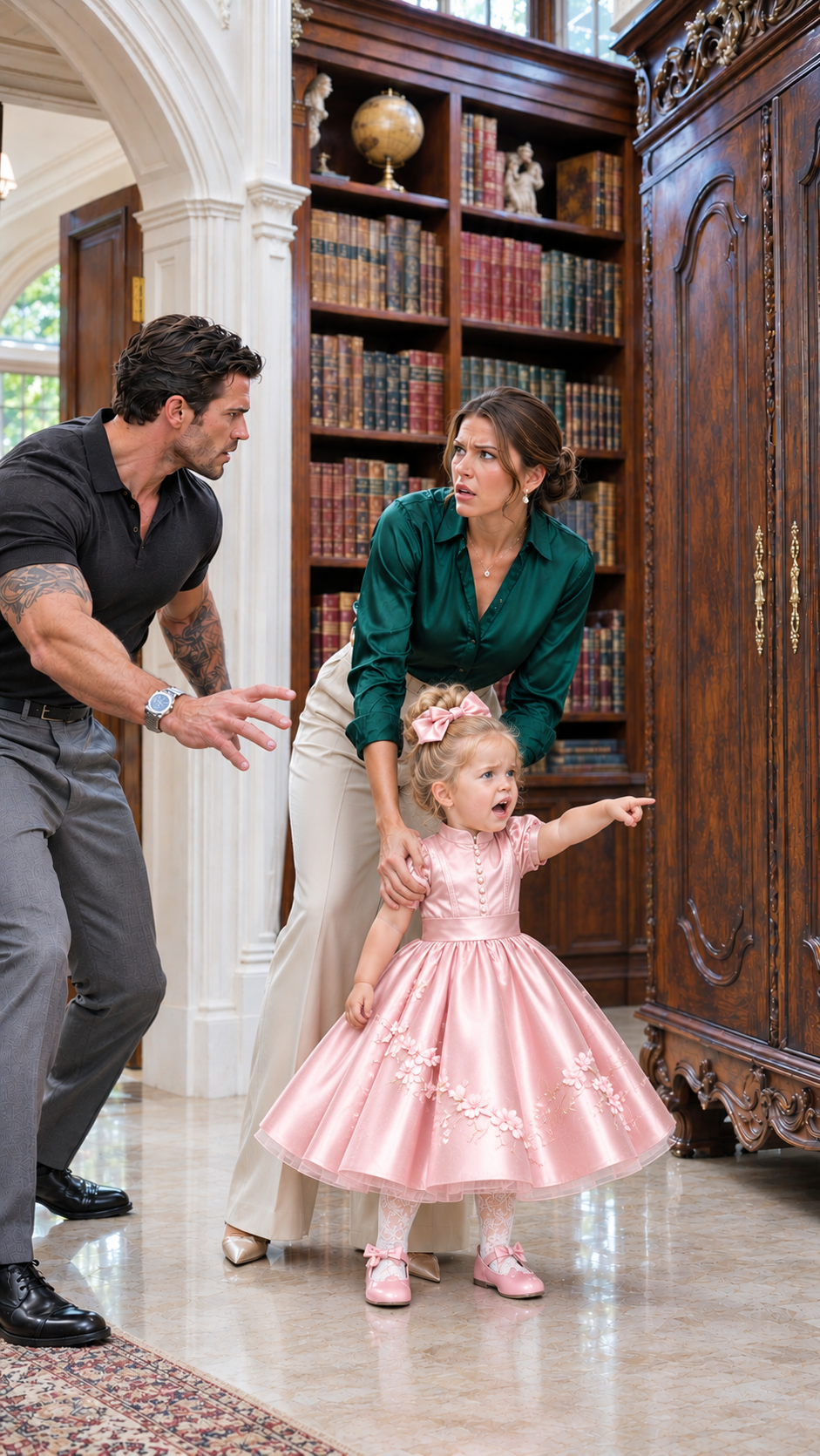
The idea that someone else knew about the hidden apartment changed the atmosphere of the house instantly.
Until that moment, everything had been painfully personal.
Claire’s injury.
Her memory loss.
Her fear.
Vanessa’s choices.
My failures.
Now there was a question none of us could answer.
Who else had been using the rooms behind our walls?
I looked again at Claire’s journal.
“What happened that day?”
“I entered from the greenhouse.”
“What time?”
“Around noon.”
“Was Vanessa with you?”
“No.”
“Then how did you know someone had been inside?”
Claire took the journal from me.
“The lamp was on.”
“That could have been Vanessa.”
“She was in Boston.”
I remembered the trip.
Vanessa had spent four days at a design conference.
Claire continued.
“There was a cup in the sink.”
“Maybe it had been there before.”
“It was warm.”
That stopped me.
“What did you do?”
“I left.”
“You didn’t look around?”
“I panicked.”
“Did you tell Vanessa?”
“Yes.”
“What did she say?”
“She thought I was mistaken.”
I looked toward the broken wall upstairs.
“Do you still have the locks?”
“The outside door was changed after that.”
“By Vanessa?”
“Yes.”
“Did anyone enter again?”
“Not that we know.”
The police had to be told.
Claire resisted at first, not because she feared trouble but because once authorities became involved, her return would no longer remain private.
I reminded her of the obvious.
“You were legally missing.”
“I know.”
“People have been searching for you.”
“I know.”
“Claire, we can’t make another decision based on being afraid of what happens after the truth comes out.”
She stared at me.
Then nodded.
“You’re right.”
It was the first decision we made together.
Not husband and wife.
Not yet.
Just two parents standing in a hallway trying, finally, not to let fear lead.
The detective who had handled Claire’s disappearance arrived shortly before midnight.
Detective Lena Ortiz had spent months following leads that went nowhere.
She entered our home carrying the expression of a person prepared to discover that reality had become absurd.
Then Claire walked into the room.
Detective Ortiz stopped.
“Mrs. Mercer.”
Claire nodded.
“I’m sorry.”
The detective looked at her for a long moment.
“You and I are going to have quite a conversation.”
“I know.”
For the next two hours, we told her everything.
She spoke to Claire alone.
Then Vanessa returned and spoke to her separately.
I sat with Destiny in the kitchen while they talked.
Destiny drank warm milk and drew a picture.
There were three figures in it.
Mommy.
Daddy.
Destiny.
I noticed Vanessa was absent.
Children understood changing relationships long before adults found words for them.
“Is Aunt Vanessa in trouble?” Destiny asked.
“I don’t know.”
“Is Mommy?”
“No.”
That answer, at least, I could give confidently.
Destiny colored Claire’s dress blue.
“Mommy said she got lost.”
“She did.”
“But she knows the way now.”
I looked at my daughter.
“I think she’s learning it.”
When Detective Ortiz finished, she surprised me by being less interested in punishing anyone than in establishing facts.
Claire was an adult.
She had voluntarily remained out of contact.
Vanessa had made serious errors in judgment, but there was no evidence she had held Claire anywhere or physically prevented her return.
The missing-person investigation could be formally closed.
The question of the unknown visitor remained.
The following morning, Detective Ortiz returned with a forensic technician.
There was little to examine after weeks had passed.
Then the technician found something behind the narrow bookcase.
A brass button.
Not a shirt button.
It had a crest pressed into its face.
I recognized it.
The uniforms worn by staff at the mansion decades earlier had used buttons just like it.
The Mercer crest was still faintly visible.
Detective Ortiz held it beneath the light.
“How old?”
“Possibly forty or fifty years.”
“So it proves nothing.”
“Maybe.”
Claire shook her head.
“I cleaned behind that bookcase.”
Everyone looked at her.
“When?”
“The week before I found the warm cup.”
The technician placed the button in an evidence envelope.
“So someone wearing or carrying something old was in here.”
That afternoon, I opened boxes from the basement that had belonged to my father.
The house had been in my family for three generations.
I had inherited it reluctantly.
Claire had loved it immediately.
She loved the windows.
The gardens.
The impossible staircases.
She once told me old houses felt comforting because they reminded people that every life was only one chapter in a much longer story.
I had responded by complaining about the heating bill.
Now she sat across from me on the basement floor while we searched through my family’s past.
It was the closest we had been physically since her return.
Destiny was upstairs with my sister.
Neither Claire nor I wanted her around dusty boxes or adult conversations.
We found photographs.
Receipts.
Construction plans.
My grandfather’s correspondence.
Then Claire pulled a leather ledger from one box.
“Daniel.”
She opened it.
Inside were staff records from the 1970s.
Near the back was a photograph.
Six people stood outside the greenhouse entrance.
The hidden door was clearly visible behind them.
A handwritten list of names appeared beneath the photograph.
Claire pointed to one.
MARA VELEZ — HOUSEKEEPER.
I stared at it.
“Vanessa’s mother.”
Claire nodded.
Vanessa rarely spoke about her childhood.
Her mother had worked in private homes before opening a small upholstery shop.
Vanessa had once mentioned that she had spent summers “around old houses.”
She had never said one of them was mine.
We called her.
Vanessa arrived twenty minutes later.
When I showed her the photograph, she sat down without speaking.
“You knew,” I said.
“Yes.”
“Your mother worked here.”
“Yes.”
“Why didn’t you tell me?”
“Because it didn’t seem important.”
Claire looked at her.
“Vanessa.”
Vanessa closed her eyes.
“All right.”
She placed the photograph on the table.
“My mother wasn’t just an employee.”
I waited.
“She lived in the hidden apartment for several years.”
The mystery began changing shape again.
Vanessa explained that my grandparents had allowed her mother to use the apartment after Vanessa’s father died.
Vanessa herself had lived there during school holidays.
That was how she knew the rooms existed.
“When you were hired to renovate this wing, you already knew?”
“Yes.”
“Then why pretend you discovered it?”
“Because I didn’t know how your family would feel about my history here.”
I stared at her.
“You were embarrassed?”
“Not exactly.”
She looked around the basement.
“My mother loved this house.”
“But she never felt it belonged to her.”
“When she left, she told me never to become attached to places where my name wasn’t on the deed.”
Claire smiled faintly.
“That sounds like her.”
“You knew her?”
“No.”
“But you’ve quoted her.”
Vanessa gave a sad laugh.
“Probably more often than I realized.”
I tapped the photograph.
“Could your mother have been the person Claire heard?”
“She died nine years ago.”
“Did anyone else have a key?”
Vanessa thought.
“My uncle Mateo.”
“Where is he?”
“Arizona.”
“Anyone else?”
She shook her head.
Then stopped.
“There was an old groundskeeper.”
“What was his name?”
“Arthur Bell.”
I remembered him.
Mr. Bell had worked for my grandfather.
When I was a boy, he taught me how to identify trees by their bark.
I had not seen him in decades.
“I thought Arthur died.”
Vanessa frowned.
“So did I.”
Detective Ortiz made several calls.
Arthur Bell had died twelve years earlier.
His son, however, was alive.
And he lived less than five miles away.
We met Thomas Bell the following day.
He was sixty-three, soft-spoken, and genuinely startled when we asked about the mansion.
Then Vanessa showed him the brass button.
His expression changed.
“That was my father’s.”
“How can you know?”
“He kept three of them.”
Thomas reached into his wallet.
Behind an old photograph, he carried an identical brass button.
“My father gave this to me when I was a boy.”
Detective Ortiz leaned forward.
“Did you ever visit the property?”
“Not since I was sixteen.”
“Did your father tell you about the hidden apartment?”
Thomas hesitated.
“Yes.”
Claire and I exchanged a look.
“Did he give anyone a key?”
Thomas sighed.
“Maybe you should see something.”
He left the room.
When he returned, he carried a small wooden case.
Inside was an old iron key.
Beside it were letters tied with string.
The top envelope was addressed to my father.
Never opened.
Thomas looked at me.
“My father kept these because he was asked to.”
“By whom?”
“Your grandmother.”
My grandmother Rose had died before I finished college.
I remembered her as elegant and impossible to hurry.
“What was in the hidden room?”
Thomas shook his head.
“Not what.”
“Who.”
A chill moved through me.
“Who?”
“Your mother.”
I stared at him.
“My mother never lived there.”
Thomas looked almost apologetic.
“Yes, she did.”
Claire moved closer.
Thomas untied the letters.
“After your mother had you, she struggled for a while.”
He chose his words carefully.
“Not because she didn’t love you.”
“According to my father, she became overwhelmed by everything expected of her.”
The wife.
The hostess.
The perfect mother.
The woman who could manage a household while smiling through dinner parties.
My grandmother had quietly given her the hidden apartment as a place to retreat.
“She would spend afternoons there.”
“Sometimes nights.”
I looked at Claire.
The parallel was impossible to miss.
Thomas continued.
“Your father hated the arrangement.”
“Why?”
“He believed problems should be handled privately.”
Thomas gave a small shrug.
“Which was exactly what your mother was doing, though apparently not in the way he preferred.”
Claire touched my arm.
I barely noticed.
“What are the letters?”
“Your mother wrote them.”
“To me?”
“Some.”
“Why didn’t I get them?”
“My father never knew.”
“Your grandmother told him to keep the box safe until your mother decided what to do.”
“But she died.”
“Yes.”
“And then?”
“My father believed the letters belonged to your family.”
“He tried contacting your father.”
“He was told to destroy them.”
I stared at the unopened envelopes.
“He didn’t.”
“No.”
“Why?”
Thomas smiled faintly.
“My father was very bad at destroying letters.”
We took the box home.
That evening, Claire and I sat in the library.
I opened the first envelope addressed to me.
My mother’s handwriting covered six pages.
She had written it when I was five.
She described watching me sleep.
She wrote about feeling guilty for sometimes needing a locked door between herself and everyone she loved.
Then she wrote something that felt intended not for a five-year-old boy but for the man he might become.
Needing distance is not the same as wanting to leave.
But distance becomes dangerous when the people who love us are forced to guess what it means.
I stopped reading.
Claire stared at the page.
“That sounds like she wrote it for me.”
“No.”
I looked at her.
“It sounds like she wrote it for both of us.”
We read until midnight.
My mother had struggled silently for years.
She had recovered.
She had wanted the hidden apartment opened someday as a private reading room.
A place in the house where nobody was expected to perform a role.
Her last letter contained instructions to my grandmother.
At the bottom she had written:
When Daniel is old enough, tell him that walls can protect people for a little while, but eventually every door has to open.
Claire cried when she read that.
So did I.
The following morning brought another revelation.
Detective Ortiz called.
The mysterious person who had entered the apartment had been identified.
It was Thomas Bell.
He admitted it immediately.
Three months earlier, after finding his father’s old key and letters, he had entered the property through the greenhouse path because he wanted to see whether the hidden rooms still existed before contacting me.
He had made tea.
He had dropped the brass button from the keepsake he carried.
Then he had left.
There was no intruder.
No conspiracy.
Just another person carrying an old piece of the house’s unfinished story.
The mystery should have ended there.
Instead, it opened something harder.
That evening, Destiny climbed into Claire’s lap while we sat in the library.
She carried a folded piece of paper.
“Mommy?”
“Yes?”
“I found this.”
Claire’s face lost its color.
“Where?”
“In your blue box.”
Claire reached for it.
Destiny pulled it against her chest.
“It has my name.”
Claire froze.
I looked at the paper.
Across the front, in Claire’s handwriting, was written:
FOR DESTINY, IF I CANNOT COME HOME.
Destiny looked up at her mother.
Her eyes were not angry.
That made the question more painful.
“Were you going to leave me again?”
**–END OF PART 4–CLICK “”NEXT”” AT THE BOTTOM OF THE PAGE TO CONTINUE READING**
✓ Lynn R. Adams
The idea that someone else knew about the hidden apartment changed the atmosphere of the house instantly. Until that moment, everything had been painfully personal. Claire’s injury. Her memory loss…