PART 4: The Step That Changed Nothing—and Everything 058
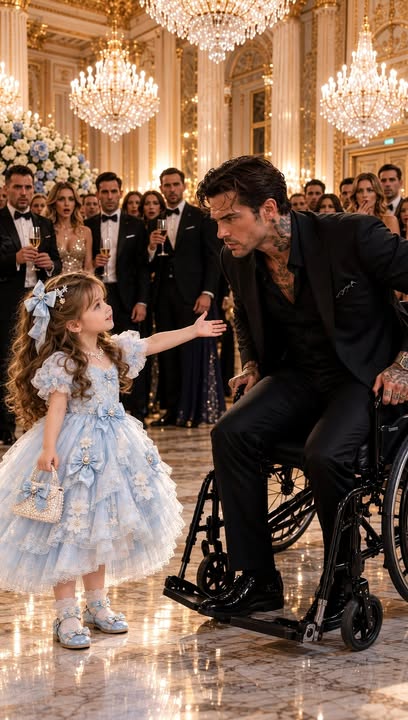
Part 4 – Eleanor’s Name
For the first time that evening, Maria’s eyes shone with tears.
She reached for the envelope on the table, then stopped before touching it.
“You don’t have to apologize for being hurt,” she said.
“I’m not apologizing for that.”
“I know.”
“I’m apologizing for forgetting you were here with me.”
Maria’s hand settled gently over mine.
“You were here, Mr. Harrison,” she said. “Just not always where people could reach you.”
I wanted to answer, but the words would not come.
The next morning, the foundation called with news about the archived file.
They had located the donation records, but the documents were fragile and had to be reviewed by their archivist before anyone could see them.
Claire arranged a time for us to visit that afternoon.
She asked whether I wanted Maria to come.
“Yes,” I said.
Then, after a pause, I added, “And if Grace is comfortable, I’d like her there too.”
Claire called Grace herself.
Grace agreed to meet us at the foundation’s office, though she made clear she wanted to understand the history, not be turned into part of a public story.
“I don’t want Lily’s name in any report or announcement,” she said.
“It won’t be,” Claire assured her. “We’re only trying to learn who made the donation.”
“And what it meant to them,” I said.
Grace looked at me for a moment.
“Then I’ll come.”
The foundation occupied several floors of an old stone building in Midtown, a quiet place with high windows and a lobby that smelled faintly of paper and polished wood.
The receptionist led us to a small conference room where a woman named Ms. Patel had arranged two archival folders and a pair of cotton gloves.
She introduced herself as the foundation’s records director.
“We found the original grant file,” she said. “The donation was made more than twenty years ago, and some of the supporting documents were kept separately.”
“Can we see the donor’s name?” Claire asked.
Ms. Patel opened the first folder.
“The initial grant was processed through a family account, so the clinic’s copy did not identify an individual donor.”
She placed a document in front of us.
A number had been typed in the donor field, followed by the name of a trust.
I recognized the trust at once.
It had been established by my family years before the accident, intended for charitable gifts that were approved jointly by Eleanor and me.
Claire leaned close to read the page.
“This is the trust my mother managed,” she said.
I had forgotten that too.
The words brought back a faint impression of Eleanor sitting at her desk, sorting through proposals with a pencil tucked behind her ear.
She had always taken more time over charitable requests than I did.
I had treated the trust as one more account, a line in a report that I rarely read.
“Was there another donor listed?” I asked.
Ms. Patel turned the next page.
“There’s a note from the original grant officer. It says the gift was made in memory of Eleanor Harrison.”
Claire’s hand went still beside the paper.
“In memory of my mother?” she asked.
Ms. Patel nodded.
“But my mother wasn’t dead when the grant was made,” Claire said.
“No,” I replied. “She wasn’t.”
The date on the document was clear.
The donation had been arranged months before the accident.
I stared at Eleanor’s name, printed in a neat hand beneath the typed entry.
For a moment, I could hear the old house around us: the soft click of her shoes on the hallway floor, the rustle of paper as she read at the dining table, the low music she played while she worked.
I had not forgotten her.
I had forgotten the parts of our life that did not end with the crash.
“Why does it say in memory of her?” Claire asked.
Ms. Patel checked the next sheet.
“There’s an explanation in the correspondence file.”
She drew out a letter and laid it in front of me.
The envelope had been addressed to the foundation’s then-director.
The handwriting was Eleanor’s.
I knew it before I read the first line.
Claire drew in a quiet breath.
“Dad,” she whispered.
I touched the paper lightly, afraid the years might crumble beneath my fingers.
Ms. Patel offered to read it aloud, but I shook my head.
“I can read it.”
The letter began with the clinic’s request for rehabilitation equipment and the foundation’s concern that the available funds were limited.
Eleanor wrote that the clinic’s work mattered to her because it served people whose lives had been interrupted by illness, injury, and circumstances beyond their control.
She had asked the foundation to approve the grant, and she had asked that our names be left out of the clinic’s records.
The final paragraph was brief.
*William believes a gift is most useful when it arrives without a debt attached.*
I stopped reading.
Claire’s face had gone pale.
“She wrote that about you?”
“I don’t know.”
I continued.
*He has been generous all his life, but he still measures too much of what he does by what can be counted or understood.*
The words were gentle, and that made them hurt.
*I hope he will come to see the clinic when the work is complete.*
*I hope he will sit with someone there and remember that people are not problems to solve.*
My vision blurred, and I lowered the page.
I had no memory of those words.
I could not recall Eleanor asking me to visit.
I could not remember agreeing to go.
But the photograph showed that I had.
“Was this letter sent before the accident?” Claire asked.
“Yes,” Ms. Patel said. “It was kept with the grant file.”
“Why was it in memory of her?”
“The request was processed later,” Ms. Patel explained. “After the accident, the foundation received a notice that the gift should remain anonymous. The grant officer entered Eleanor’s name in the memorial field, likely to preserve the connection without identifying the family.”
I read that final paragraph again.
She had not intended the donation as a memorial.
She had been alive when she wrote it, and she had wanted me to visit.
The accident had turned the gift into something the records could only describe in the past tense.
“Dad,” Claire said softly, “you went to the clinic because she asked you to.”
“I don’t remember her asking.”
“You went anyway.”
The photograph returned to my mind: the younger man with a hand on a frightened child’s shoulder.
I had not known what had brought him there.
Now I could see Eleanor beside him, not in the picture, but in the reason for it.
“Did I choose to go?” I asked.
Ms. Patel glanced at the letter.
“It appears you did.”
“Did Eleanor come with me?”
“There’s no record of that.”
Claire leaned back, gathering herself.
“She wanted you to see what the money did.”
“She wanted me to see the people,” I said.
Grace had remained quiet throughout the reading.
Now she looked down at her hands.
“I’m glad she did,” she said.
“So am I,” I replied.
“But I want to say something.”
I turned toward her.
“My mother used to take me to that clinic when I was sick,” she said. “I was too young to understand where the support came from. I only knew the staff remembered my name, and that there was always someone willing to help me stand when my legs felt weak.”
She paused.
“Lily was born years later. I never told her that our family had been helped by a wealthy donor, because I didn’t want her to think kindness was a kind of debt.”
“I understand,” I said.
“Do you?”
“I’m trying to.”
Grace met my eyes.
“I don’t want her to feel that she must give you anything because of what your family did.”
“She doesn’t.”
“And you don’t expect us to repay it with gratitude?”
“No.”
“Good.”
The firmness in her voice did not offend me.
It reminded me that the meaning of a gift belonged partly to the person who received it.
I folded Eleanor’s letter along its old crease.
“Can I keep a copy?”
“Of course,” Ms. Patel said. “We can provide copies of the full file, with any confidential patient information removed.”
Claire looked at the photograph she had brought from Maria’s home.
“Do you remember the clinic now?” she asked me.
“No.”
“Do you remember the visit?”
“No.”
She waited, not pressing.
“I remember Eleanor,” I said. “Not the day, but the way she used to talk about giving.”
Claire’s expression softened.
“She said the best help didn’t make someone feel small.”
“She was right.”
Maria, who had been silent beside Grace, reached for the photograph.
“May I see it again?”
I handed it to her.
She studied the image, then the letter.
“I kept this picture because it reminded me of the man I saw in it,” she said. “I didn’t know why you had gone. I only knew you had come.”
“I’m sorry I forgot.”
“You were not supposed to remember it for me.”
Her kindness was not an excuse.
It was a gift of its own.
When we left the foundation, the afternoon had begun to fade.
Claire guided my wheelchair to the car, and Grace walked beside Maria, talking quietly about Lily’s school.
The city moved around us, indifferent to what we had discovered.
Still, the name on Eleanor’s letter seemed to travel with me.
At home, I asked Maria to place the photograph beside the letter on my desk.
The two pieces of paper belonged together, though they came from different homes and different years.
The photograph showed what had happened.
The letter showed why.
Or at least, it showed part of why.
Claire stood by the window, reading the copied pages again.
“I used to think Mom’s donation was the kind of thing she did because she wanted to make the family look good,” she said.
“Why?”
“She never asked for credit, but I was young. I thought all the foundations and galas were just another part of our world.”
“They were, sometimes.”
“She didn’t treat them that way.”
“No,” I said. “She didn’t.”
Claire looked toward the letter.
“She wanted you to meet the people.”
“She wanted me to remember that my life could still matter.”
The sentence surprised me as I spoke it.
Eleanor had written it in another way, but that was what I heard beneath her words.
“I wish I’d remembered sooner,” I said.
“Maybe remembering now is what matters.”
I looked down at my legs.
The movement at the party had not returned.
The doctors had not found a sudden change, and there was no promise hidden in the old records.
Eleanor’s gift did not explain why I had stood.
It did explain why a child had recognized my face and decided to approach me.
“It changes the photograph,” Claire said.
“It changes me, too.”
Maria stood at the doorway.
“Grace called,” she said. “She wanted to thank you for letting her see the letter.”
“She didn’t need to thank me.”
“I told her that.”
Maria’s eyes moved to Eleanor’s name.
“She said the letter sounded like her.”
“I’m glad she heard her in it.”
“She also asked if you would mind keeping the clinic’s name private for now.”
“I don’t mind.”
“She doesn’t want people making Lily into a symbol.”
“Neither do I.”
Maria nodded.
Then she added, “Lily asked whether you remembered the little boy yet.”
“No.”
“What should I tell her?”
“Tell her I’m still trying.”
Maria’s smile was faint but warm.
“I will.”
The next few days passed without the kind of answer I had once expected from doctors or money.
Dr. Reeves reviewed the records and scheduled further tests.
He found no evidence that the brief movement at the party had reversed my condition, though he could not rule out a small change in strength or coordination.
He recommended a careful evaluation and warned me not to attempt standing without assistance.
I followed his instructions.
I also began looking at the photograph each morning.
The boy’s name, Daniel, appeared in a note from the clinic.
There was no recent contact information, and the staff did not know whether he still lived in the area.
I wondered if he remembered the frightened day.
I wondered if the man beside him had made any lasting difference.
Eleanor’s letter sat in the drawer of my desk, where I could reach it without asking anyone.
One morning, Claire found me reading it again.
“You’ve memorized it by now,” she said.
“Not yet.”
“Why keep reading it?”
“Because I want to understand the man she was writing to.”
“Do you think you’ve changed that much?”
“I know I have.”
Claire sat opposite me.
“I changed too,” she said. “After the accident, I thought protecting you meant helping you avoid anything that could hurt.”
“Did it?”
“No.”
She spoke without self-pity.
“I was trying to keep hope from hurting you, but maybe I was also trying to keep myself from watching you lose it again.”
I folded the letter and rested my palm on it.
“I’m sorry.”
“You don’t have to apologize for being in pain.”
“I’m not apologizing for that.”
She smiled a little.
“I know.”
It was Maria’s answer, spoken back to me through my daughter.
For a moment, the words made the room feel less lonely.
That afternoon, Grace brought Lily for another short visit.
Lily came carrying a picture she had drawn at preschool: three people holding hands beneath a bright yellow sun.
She showed it to me, then pointed to the smallest figure.
“That’s you,” she said.
“Why am I so small?”
“Because you’re sitting.”
I laughed, and so did Grace.
The sound surprised all of us.
Lily climbed onto the settee and studied my face.
“Did you find out who gave the clinic the machines?”
“I did.”
“Who was it?”
“My wife, Eleanor. She asked me to help her.”
“Was she nice?”
“She was very kind.”
“Is she in heaven?”
The question came without fear, only curiosity.
I looked at Claire, who had gone still beside the window.
“Yes,” I said. “I believe she is.”
Lily nodded.
“Then maybe she was happy the clinic stayed open.”
“Maybe.”
“Did you tell her thank you?”
“I wish I had.”
Lily thought about that.
“Maybe you can still say it.”
I looked at the letter on my desk.
The words had been written before I had lost Eleanor, before the accident, before the years of silence that followed.
I could not speak to her as I once had.
But I could read what she had left behind.
“I can try,” I said.
Lily smiled.
Grace placed a hand on her daughter’s shoulder, and for a while we spoke about ordinary things again.
When they left, Claire remained by the door, watching them cross the hall.
“Lily doesn’t know the story,” she said.
“No.”
“Not the whole story, anyway.”
“She shouldn’t have to carry it.”
Claire turned back toward the desk.
“Do you think Mom wanted this to happen?”
“I don’t know.”
“Do you think she meant you to meet Lily?”
“I don’t know.”
The answer was honest, and still it left something unsettled between us.
The foundation sent one final packet the following week.
It contained a copy of Eleanor’s letter, the donation record, and a short note from the clinic’s former director.
The note said Eleanor had arranged the grant, but the family had later asked the foundation to keep the donor’s identity private.
The request had been signed by me.
I stared at the signature.
It was mine.
Claire leaned over my shoulder.
“You signed this?”
“I must have.”
“Do you remember?”
“No.”
The note was dated several weeks after the photograph.
I read the line again.
*At Mr. Harrison’s request, the family’s involvement is to remain confidential.*
I sat back.
Eleanor had asked me to visit the clinic, and I had gone.
Then, after seeing the people there, I had chosen not to attach my name to the gift.
The record did not say whether Eleanor had approved.
It did not say whether we had spoken about it.
It only showed that the decision was mine.
“Maybe you remembered what she wanted,” Claire said.
“Or maybe I wanted the same thing.”
“You don’t sound sure.”
“I’m not.”
The letter and the signature belonged to two different versions of me, both of whom had made choices I could no longer recall.
I wanted to ask Maria whether she had ever heard me speak about the visit.
I wanted to ask Claire if she remembered Eleanor mentioning the clinic.
But before I could, the foundation called again.
Ms. Patel said a second document had been found in a separate file, one that had not been included in the original packet.
“It appears to be a personal note,” she said. “It was attached to the grant correspondence, but it was never filed with the letter.”
“What does it say?” I asked.
“I think it would be best if you read it yourself.”
She offered to bring it to the house.
Claire and Maria were with me when the envelope arrived that evening.
My name was written on the front in Eleanor’s handwriting.
For several moments, I could only look at it.
Then I opened it.
Inside was a small card, folded once.
The message was brief.
*William, if you visit the clinic, please go because you want to—not because I asked you to.*
I read the line twice.
Claire’s hand found my shoulder.
“What does it mean?” she asked.
I turned the card over.
There was nothing else.
The letter had said Eleanor hoped I would come.
The card said she did not want her hope to become an instruction.
I had gone.
But I could no longer tell whether I had gone because she asked, because I agreed with her, or because something in me had already begun to understand what she meant.
Maria watched me carefully.
“Does it change what the visit meant?” she asked.
I looked from the card to the photograph.
“I don’t know.”
The signature on the confidentiality request was mine.
Eleanor’s card had been placed in the file afterward, but its date was missing.
And as I sat with the two pieces of her handwriting before me, a new question emerged, one that the records could not answer.
Had Eleanor written that card before I visited the clinic—or after she had seen what the visit had done to me?
**–END OF PART 4–CLICK “NEXT” AT THE BOTTOM OF THE PAGE TO CONTINUE READING**
* * *
[PREVIOUS: PART 3](https://storyly.idolsgift.com/blog/part-3-the-step-that-changed-nothing-and-everything-058) | [NEXT: PART 5](https://storyly.idolsgift.com/blog/part-5-the-step-that-changed-nothing-and-everything-058)
✓ Lynn R. Adams
Part 4 – Eleanor’s Name For the first time that evening, Maria’s eyes shone with tears. She reached for the envelope on the table, then stopped before touching it. “You don’t have to apologize for …