PART 4: The Step He Recognized 046
Part 4 – What the Records Remembered
Adrian turned the page over.
On the back, beneath the faded handwriting, was my mother’s name.
But the words beneath it were not a dedication or a thank-you.
They were a request for the return of something the palace had never acknowledged it was holding.
“What does she ask for?” I said.
Adrian lowered the letter until we could both read it.
The ink had faded, but the request was clear: Elena Ellis wanted the return of the Westbridge program’s original records, including its accounts and the names of the families who had supported it.
At the bottom, in a different hand, someone had written a brief note: Retained by order of the household office.
I looked up at Adrian.
“Your father kept them?”
“I don’t know,” he said. “The note doesn’t say who gave the order.”
“But it was kept here.”
“Yes.”
The corridor seemed brighter than before, though nothing had changed in the tall windows.
My mother had stood in the palace, performed beneath its lights, and asked for something back.
She had never told me.
“Can I read the rest of the letter?” I asked.
Adrian studied the page, then the sealed envelope.
“I don’t know if this is all of it.”
“Then we should find out.”
He hesitated.
The pause told me he understood what I was asking, and what it might reveal about the palace as much as about my mother.
“I’ll ask the archive director to open the collection,” he said. “With you present.”
“Not because I’m connected to the program.”
“Because you have a right to see what your mother wrote.”
The answer was careful, but it was not evasive.
“I want the records because they belong to the families who built the program,” I said. “Not because I want to uncover some secret about my mother.”
“I understand.”
“Do you?”
“I’m beginning to.”
He walked with me to the archive, keeping the letter in its envelope.
Mrs. Wren was at the desk when we arrived, sorting a stack of catalog cards into wooden drawers.
She looked from Adrian to me and seemed to understand why we had come before either of us spoke.
“The director is in a meeting,” she said. “But I can send for him.”
“Please,” Adrian said. “The collection concerns my father’s work, and Mara Ellis’s mother is named in the correspondence.”
Mrs. Wren’s face softened at my mother’s name.
“I’ll see what can be done.”
She stepped into the adjoining office, leaving us in the quiet library.
Adrian stood by the table, his hands resting on the back of a chair.
He did not ask me what I thought of the letter.
I was grateful.
The ink and paper were enough to occupy me.
When Mrs. Wren returned, she brought the archive director with her.
Mr. Vale was a narrow-shouldered man with silver hair and a habit of speaking as if every word had to pass through a small gate before it could leave his mouth.
He listened while Adrian explained what we had found.
Then he examined the envelope and the handwritten note without touching the paper.
“The collection is incomplete,” he said. “Some items were transferred here from the prince’s family estate, but not all of them were properly catalogued.”
“Can we see what remains?” I asked.
“With permission from the household.”
“I am giving that permission,” Adrian said.
Mr. Vale looked at him.
“You may authorize access to the family records,” he said. “The household office records are a separate matter.”
“Then we will see the family records.”
Mr. Vale studied Adrian for a moment, then nodded.
“I’ll have the box brought down.”
We waited while Mrs. Wren retrieved it from a locked room.
When she returned, she carried a gray archival box with both hands.
She placed it on the table and opened the lid.
Inside lay folders of correspondence, small bundles of receipts, and several ledgers tied with cotton tape.
The collection smelled of paper and dust, with a trace of cedar from the old cabinet where it had been stored.
I sat beside Adrian as Mrs. Wren arranged the materials in order.
The first folder contained letters exchanged between my mother and the prince’s father, King Edward, before he became king.
They wrote about rehearsals, travel arrangements, and the practical difficulties of keeping a community program running.
There were references to borrowed studio space, repaired floorboards, and scholarship forms that had to be made simple enough for families who had never dealt with a private school.
The letters sounded familiar in a way I could not explain.
My mother’s handwriting was firm, angled slightly to the right.
She wrote in short, clear sentences, often ending with a practical question.
My mother had never seemed like someone who cared for formal letters.
But here she was, negotiating schedules with a royal household and reminding a prince that the children needed warm-up time before they performed.
“She sounds exactly like herself,” I said.
Adrian looked over the page.
“What do you mean?”
“She always went straight to the part that needed doing.”
He smiled faintly.
“My father admired that in people.”
“Did he tell you about her?”
“No. I was young when he died. I remember him speaking about the program, but not the people who ran it.”
“Did he say why it ended?”
“No.”
His answer carried no performance of certainty.
That made it easier to keep reading.
A letter from King Edward described the program’s purpose.
It had been created for girls from families who could not afford the fees or travel required by elite arts schools.
The palace would provide rehearsal rooms and some funding, while local teachers and families would choose the students and decide what they wanted to perform.
The program was not meant to make the girls into ornaments for royal events.
It was meant to give them the training and space to dance.
“They made it themselves,” I said, looking at the list of community teachers and parent volunteers.
“My father helped secure the funding,” Adrian said. “But the families shaped it.”
“Then the name on the program should have been theirs, too.”
“Yes.”
For a time, we read without speaking.
The years of letters followed a steady rhythm.
There were notes about a winter performance, a summer workshop, a girl who had won a place at a regional academy, and a teacher who had stayed late to help students prepare for an examination.
It was not the story of one grand act of generosity.
It was the record of many people showing up, week after week, so a room could remain open.
Then we reached the final folder.
Its first page was a letter from my mother, written shortly after King Edward’s death.
She expressed sympathy, then asked about the program’s next term.
The reply came from the household office, not from the king’s advisers or the program’s organizers.
It said that the palace would review its charitable commitments and that the Westbridge program should suspend activity until further notice.
A second letter, several months later, said the funds had been redirected.
The reason given was that the program’s accounts required examination.
My mother’s reply was restrained but unmistakably angry.
She asked for the accounts to be shared with the families and for the remaining funds to be returned so they could continue the lessons elsewhere.
The answer was a refusal, signed by a household secretary.
“The program didn’t close because the families lost interest,” I said.
“No,” Adrian replied.
“It was closed from here.”
He read the last page again.
“The language says suspended. It does not say who made the decision.”
“But the funds were redirected.”
“Yes.”
“And my mother asked for the accounts.”
“Yes.”
I could feel the old tension gathering in me, but beneath it was another feeling, quieter and harder to name.
My mother had not kept this from me because she was ashamed of her past.
She had kept it private because she had not wanted me to inherit a debt that was never mine.
Mrs. Wren set a ledger on the table.
“This may help explain what happened to the funds,” she said.
The cover was worn at the corners, and the binding had loosened.
Adrian opened it with great care.
The first pages listed donations and payments for studio rent, instructors, music, and travel.
The entries were clear and orderly.
Then, midway through the second year, the payments began to change.
Large sums were assigned to an administrative account with no explanation.
Smaller amounts appeared beneath headings that did not correspond to the program’s expenses.
I leaned closer.
“Could those be general palace costs?”
“Some might be,” Mr. Vale said. “But the ledger should have an explanatory index.”
He searched the box and found a thin folder tucked beneath the correspondence.
The index was missing.
The last pages of the ledger were more difficult to read.
Several lines had been crossed out and rewritten in another hand.
A note in the margin said the remaining grant had been consolidated with the household’s annual arts allocation.
No later record showed that the money had returned to Westbridge.
Adrian’s face had gone still.
“Who had authority over this account?” he asked.
“The household office,” Mr. Vale said. “Not your father personally, as far as these pages indicate.”
“Can we identify the person who authorized the transfer?”
“Possibly, if the matching authorization records still exist.”
“And if they don’t?”
“Then we may never know exactly how it happened.”
The answer sat heavily among us.
This was not a mystery of secret kinship or a hidden romance.
It was something more ordinary, and perhaps for that reason, more difficult to excuse.
People had made decisions behind closed doors.
A program had lost its funds.
The families who depended on it had not been told enough to understand why.
Adrian closed the ledger.
“I want the household office records reviewed.”
“Some of those records are restricted,” Mr. Vale reminded him.
“Then we’ll begin the process of reviewing them.”
I looked at Adrian.
“You don’t have to solve everything today.”
“I know.”
“Do you?”
He lowered his eyes to the ledger.
“I thought I was looking for a way to restore something my father began,” he said. “I didn’t understand that the palace might have been part of what stopped it.”
“Your father may not have known.”
“He may not have.”
“Then don’t decide he did before you know.”
He looked at me with quiet gratitude, though I was not sure I had offered comfort.
“I won’t.”
Mr. Vale began making notes about the pages that would need to be reviewed.
Mrs. Wren asked whether we wanted copies of the letters and ledger entries.
“Yes,” I said.
“Of everything related to the program.”
“Especially the records of the money,” Adrian added.
Mr. Vale looked at him.
“That may take time.”
“Then it will take time.”
The firmness in his voice was not the tone of a prince making a demand.
It sounded like a person finally understanding that patience was part of the work.
When the archive staff began preparing the documents, Adrian and I stepped into the corridor.
The palace was quiet around us.
From the ballroom came the faint sound of a pianist practicing the opening bars of the public dance.
“I’m sorry,” Adrian said.
“For what?”
“For wanting to restore the program without knowing what had been done to it.”
“You can’t know what nobody has shown you.”
“I could have asked sooner.”
“So could the people who approved those transfers.”
He nodded.
“That’s fair.”
We walked slowly toward the west windows.
The late afternoon light caught the edges of the garden trees, turning them pale gold.
“My mother didn’t tell me because she didn’t want the palace to become part of my life,” I said.
“Perhaps she wanted you to choose it without feeling that you owed anyone.”
“She wanted me to choose my own life.”
“That sounds like her.”
“You barely knew her.”
“No,” he said. “But I think I’m beginning to understand the kind of person she was.”
I stopped by one of the windows.
“Adrian, when you asked the staff for information about families connected to the program, what did you intend to do with it?”
His expression tightened, but he did not look away.
“I wanted to find people who could help us rebuild it.”
“Did you plan to ask them?”
“I planned to ask the community leaders.”
“And the families?”
“I thought they would be included through those leaders.”
“That is not the same thing.”
“No.”
“Did you think your father’s name would make people trust the offer?”
“I hoped it would make them believe we were serious.”
“Or make them feel they could not refuse.”
He absorbed that without interrupting.
“You’re right to ask,” he said. “I hadn’t considered that.”
I looked toward the ballroom doors, where the public dance was being rehearsed.
“People should be able to refuse the palace without losing anything.”
“Yes.”
“Especially after the palace kept their records and used their money without explaining where it went.”
“Yes,” he said again, more quietly.
The agreement did not mend what had happened.
But it felt like a place to begin.
At the rehearsal, Celeste was already there.
She wore a simple blue dress, and she stood alone beside the musicians, studying the dance order.
When she saw us, her gaze moved from Adrian to me.
“Did you find the truth?” she asked.
“Some of it,” I said.
“Enough to make you wish you hadn’t looked?”
“No.”
Celeste seemed relieved, though she tried not to show it.
“My mother asked whether the palace had spoken to you about the final selection,” she said. “I told her I didn’t know.”
“Do you?”
“I know that the families are discussing it as if the result has already been decided.”
“That must be a relief for you.”
“It should be.”
She glanced toward Adrian.
“But when people make plans for you, even pleasant ones, the result can feel like another thing you are expected to accept.”
Adrian’s expression changed.
“I’m sorry you’ve been made to feel that way.”
Celeste looked at him for a moment.
“Thank you.”
Then she turned back to me.
“I heard the archive is reviewing the old records.”
“It is.”
“My family might be able to help locate the former teachers. My grandmother supported arts programs in Westbridge.”
“Would she be willing to speak with the families?”
“If they wanted her to.”
“That distinction matters.”
“I’m learning.”
The instructor called for the candidates to take their places.
Celeste offered me her hand.
“Shall we practice?”
I took it.
We moved through the opening steps together, careful and measured, while Adrian watched from the edge of the floor.
The dance had been designed for pairs, but the final event would include each candidate with the prince.
As Celeste turned beneath my arm, her gaze met mine.
“I meant what I said about the palace turning private lives into entertainment,” she murmured.
“I know.”
“I used to think that was simply how things worked.”
“And now?”
“Now I think it is something people choose to do.”
The music carried us into the next figure.
When the rehearsal ended, the remaining candidates gathered near the doors while the instructor explained the order of the public dance.
I had learned the sequence, but my attention kept drifting to the archive, to the letters and the ledger and the people whose names had appeared in its pages.
A woman at the side of the room approached me after the others left.
She was in her sixties, with a silver scarf around her shoulders and a small notebook tucked under one arm.
“I’m Nia Bell,” she said. “My mother taught at the Westbridge academy.”
I looked at her more closely.
“Did she know my mother?”
“Very well.”
The room seemed to quiet around us.
“She told me Elena was one of the first teachers who insisted the program should be run with the families, not merely offered to them.”
I did not know what to say.
Nia’s gaze shifted to Adrian.
“Has the palace told you why the program ended?”
“We’ve found letters and some of the financial records,” he said. “We’re still learning what happened.”
“That is more than we were told at the time.”
“I’m sorry.”
Nia studied him, not unkindly, but without deference.
“An apology is a start,” she said. “It doesn’t tell us whether the program will belong to the families this time.”
“It should,” Adrian said.
“Then the families must decide how.”
“Yes.”
Nia turned back to me.
“Your mother kept a copy of the program’s founding agreement. She said the palace had lost its copy.”
I glanced at Adrian.
“Do you know where it is?”
“I don’t,” Nia said. “But she gave it to my mother for safekeeping. It may still be with our family.”
“What did the agreement say?”
Nia opened her notebook and searched among its pages.
“I’ve only seen it once. My mother wrote down the part she thought mattered most.”
She found the line and read it aloud.
“‘The Westbridge program shall remain under the direction of its participating families and instructors, with palace assistance offered only by mutual agreement.’”
Adrian’s face changed.
“That isn’t in the palace records,” he said.
“No,” Nia replied. “That’s why it matters.”
She closed the notebook.
“If the agreement is still in my family’s papers, I’ll bring it to the archive. But I will not hand it over to be locked away again.”
“It won’t be,” Adrian said.
Nia held his gaze.
“You can’t promise that by yourself.”
He took a breath.
“No. I can’t.”
For the first time, I saw him understand that good intentions were not the same as authority used well.
Nia nodded, as if that answer mattered more than a grand assurance.
“I’ll speak to my mother tonight,” she said. “Then I’ll decide what to do.”
After she left, Adrian remained silent.
Celeste had heard the exchange from a few steps away.
“The families have been carrying their own records all this time,” she said.
“Some of them,” I replied.
“Perhaps they were wiser than the palace.”
“Perhaps they had no choice.”
The public dance was scheduled for the following evening.
It would be the last formal selection before the final announcement, and every household in the kingdom seemed to have an opinion about what it would mean.
I had once thought the question was whether I could dance well enough to earn a place near Adrian.
Now I knew the more important question was what that place would ask me to say.
That night, I returned to the hotel with a copy of my mother’s letter in my bag.
My aunt read it slowly, then held the page near the lamp.
“She didn’t ask for anything for herself,” she said.
“No.”
“She asked for the records, so the families could continue without depending on the palace.”
“I think she knew the program might never reopen here.”
My aunt folded the copy along its existing crease.
“Your mother believed people should be able to stand on their own feet.”
“She believed they should be given the room to do it.”
My aunt touched my hand.
“Those are not always the same thing.”
“No.”
The next morning, Adrian sent word that he wanted to speak with me before the public dance.
I agreed to meet him in the east practice room.
He arrived without a coat or a folder, and for a moment we stood facing each other in the quiet room where we had first danced without an audience.
“I want to tell you what I’m considering,” he said.
“Go ahead.”
“After the final event, I intend to announce that the Westbridge program will be restored.”
“With what funding?”
“Royal funding to begin with.”
“And who will direct it?”
“The families and instructors.”
“Have they agreed?”
“Not yet.”
“Then don’t announce it as a decision.”
He nodded.
“I thought you might say that.”
“An announcement can make a proposal sound like something people have already accepted.”
“I know.”
“Do you?”
He met my gaze.
“I’m trying to.”
The answer did not solve the problem, but it was honest.
He took a folded sheet from his pocket.
“This is a draft of the announcement.”
I did not reach for it.
“What does it say?”
“That the palace has begun a review of the Westbridge records and will invite former participants to help shape a new program.”
“Does it say the old program was abandoned?”
“No.”
“Does it say the funds were redirected?”
“No. We haven’t confirmed every detail yet.”
“We know enough to say that the program was closed and the families were not given a full account.”
“We know the records support that.”
“Then the announcement should say so.”
“That could implicate people still working in the household office.”
“Yes.”
“And delay the restoration.”
“Yes.”
He did not look away from the difficulty.
“I want the program back,” he said.
“So do I.”
“But you don’t want me to use the announcement to make the palace look generous.”
“I want the families to decide whether they want the palace involved at all.”
He looked down at the draft.
“What if they ask the palace to fund it?”
“Then fund it under terms they choose.”
“And if they don’t?”
“Then respect that.”
He folded the paper once, carefully.
“You’re asking me to accept that the right thing may not include me.”
“I’m asking you to accept that the program never belonged to you.”
The words hurt him.
I could see that.
They also seemed to reach him.
He nodded slowly.
“You’re right.”
“Adrian, I don’t want you to feel that restoring the program is a way to earn my trust.”
“I don’t.”
“Good.”
“I want to earn your trust because I want you in my life.”
The room seemed to grow still.
I had not expected him to say it so plainly.
He took a step closer, then stopped, leaving the space between us untouched.
“But I know I can’t ask you to believe that until I’ve shown you what I’m willing to do when it costs me something.”
I looked at him, hearing the carefulness in his voice and the feeling beneath it.
“I don’t know what I want from you yet.”
“You don’t have to decide.”
“I also don’t want your title to answer questions your actions haven’t answered.”
“Then don’t let it.”
A small, almost painful smile crossed his face.
“I’m learning that being careful with the truth can still be a way of withholding it.”
I thought of my mother’s letter, sealed away in a palace collection.
“Yes,” I said. “It can.”
He glanced at the clock.
“The public dance is in two hours.”
“Are you going to make the announcement?”
“Not tonight.”
“Why?”
“Because the families haven’t been asked what they want, and because we haven’t finished the records.”
He seemed to be choosing his words as he went.
“I’ll tell the guests that the palace has begun a review and that the community will lead any next steps. I won’t present the program as restored until the people it belongs to have agreed.”
“That sounds right.”
“It may disappoint the families who were promised a quick answer.”
“Then tell them the truth about why it will take longer.”
“I will.”
For a while, neither of us spoke.
Then he offered me his hand.
“Would you still like to practice the dance?”
I looked at his hand, then at his face.
“Yes,” I said. “But no tests.”
“No tests.”
The pianist began the first phrase, and we moved together across the floor.
The dance was formal, meant for a public room and a hundred watching eyes.
Yet Adrian led without trying to control every step, and I followed without pretending I knew where every turn would end.
When the music stopped, he did not ask whether I would stay beside him at the final event.
He only thanked me for the dance.
That afternoon, Mrs. Wren called from the archive.
Nia Bell had returned with the original agreement.
The paper had been folded into quarters and kept in a family Bible since the program’s first year.
The archive director had examined it, then compared its signatures with the palace’s surviving correspondence.
It was genuine.
The agreement named my mother, two instructors, and four parents as the program’s founding committee.
The palace was listed only as a partner, and its support could be withdrawn only after the committee had been consulted.
The record of that consultation did not exist.
Neither did any evidence that the families had agreed to close the program.
The agreement changed everything.
It turned the old letters from an account of a charitable project into evidence of a partnership the palace had failed to honor.
Adrian asked for a meeting with the archive director and Nia, but Nia would not attend alone.
She wanted other former families present.
She also wanted the agreement kept in the archive, with a public copy available to anyone who asked.
The director agreed to begin the process.
On the evening of the public dance, Celeste arrived early.
She wore a pale gold dress, not the glittering gown from the selection, and carried a small envelope.
“My grandmother has found the names of three former instructors,” she told us. “She says she will contact them herself, if they wish.”
“That’s kind of her,” I said.
“She said it was overdue.”
Celeste looked at Adrian.
“My mother is still hoping the final announcement will include a match.”
“I know.”
“She will be disappointed if it doesn’t.”
“So will some of my advisers.”
“And you?”
He glanced at me.
“I don’t know yet what the announcement will be.”
Celeste’s expression softened.
“Good.”
The ballroom doors opened, and the guests began to enter.
The chandeliers blazed overhead.
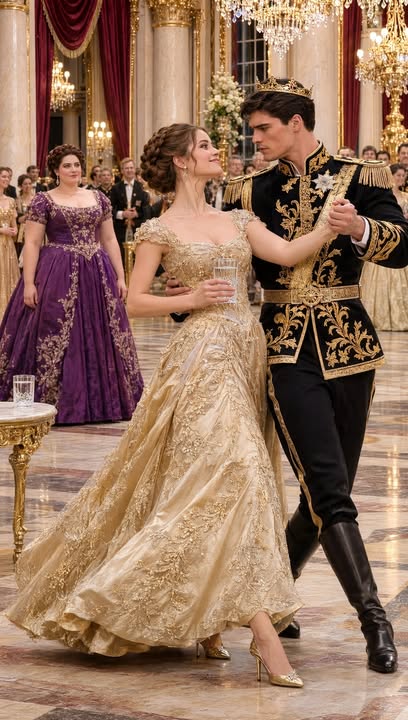
The same room where I had held a glass beneath the prince’s hand now filled with families, reporters, palace staff, and the remaining candidates.
My burnt-orange gown rustled around my ankles as I took my place.
Adrian came to stand beside me.
“You don’t have to perform if you don’t want to,” he said.
“I know.”
“Do you want to?”
“I want to dance.”
He offered his hand.
I placed mine in it.
The orchestra began, and we moved into the first turn.
The guests watched, but I did not feel their attention in the same way I had at the selection.
I was not trying to prove that I belonged.
I was trying to remember that a dance could still be mine.
The final note sounded.
Adrian released my hand, then stepped toward the small platform prepared for his announcement.
He spoke first about the Westbridge program and the records being reviewed.
He said that the palace had kept documents it
**–END OF PART 4–CLICK “NEXT” AT THE BOTTOM OF THE PAGE TO CONTINUE READING**
* * *
[PREVIOUS: PART 3](https://echoesofstories.idolsgift.com/blog/part-3-the-step-he-recognized-046) | [NEXT: PART 5](https://echoesofstories.idolsgift.com/blog/part-5-the-step-he-recognized-046)
✓ Lynn R. Adams
Part 4 – What the Records Remembered Adrian turned the page over. On the back, beneath the faded handwriting, was my mother’s name. But the words beneath it were not a dedication or a thank-you. T…