PART 4: The Song Elena Couldn’t Finish 008
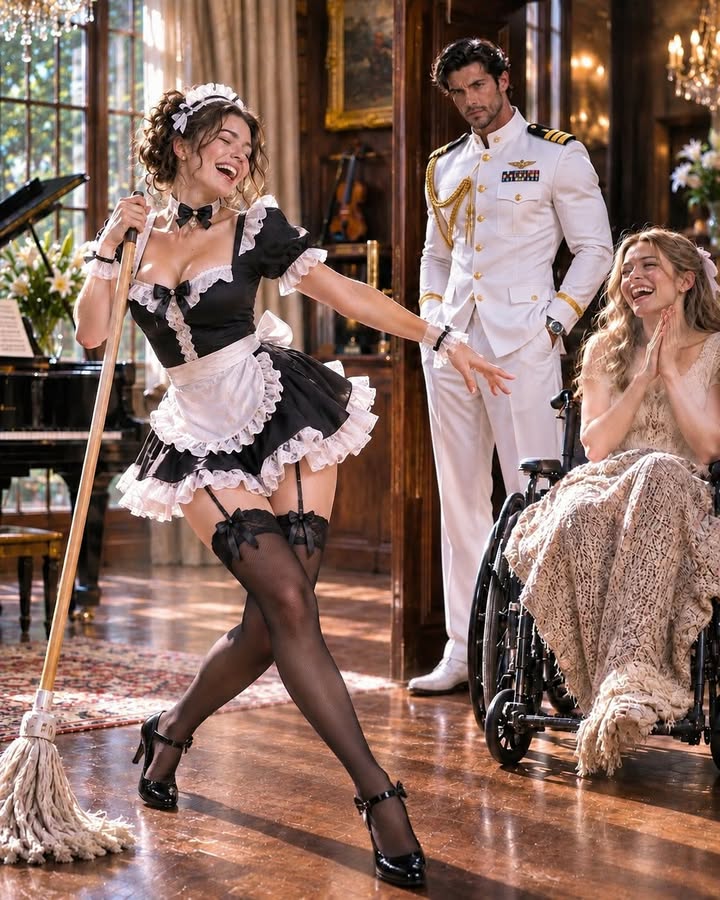
Part 4 – What Their Mother Left Behind
“I don’t know why she wrote this,” Roman said.
But his voice told me that for the first time, he had begun to remember.
Elena stared at the line addressed to her brother, her face pale beneath the afternoon light.
“Why would Mother write my name?” I asked.
Roman looked down at the paper again.
“I don’t know,” he said, though the answer seemed to frighten him more than the question.
Elena turned her chair toward him.
“You said you’d seen the handwriting before.”
“I have.”
“Where?”
He pressed his thumb against the edge of the note, careful not to crease it.
“On a card she kept in her desk.”
“What card?”
“I can’t remember exactly.”
Elena’s eyes searched his face.
“Or you don’t want to?”
The question landed gently, but it struck something all the same.
Roman looked away.
Mr. Bell had not yet left the room.
He stood near the desk with his coat over one arm, waiting without inserting himself into a family conversation.
“I can make a high-resolution copy of this,” he said at last.
“No one should handle the original more than necessary.”
Elena nodded.
“Please make a copy for me.”
“And one for Maya,” Roman said.
I glanced at him.
“I don’t need one.”
“It’s addressed to you.”
“I can read it here.”
He accepted my answer without insisting.
Mr. Bell slipped the page into a protective sleeve and left with the other records.
For a while, none of us moved.
The library felt smaller than it had a moment before, as though the note had drawn the walls inward around us.
Elena rested one hand on the arm of her chair.
“Do you remember Mother helping Maya?” she asked.
“I remember Maya coming to the house,” Roman said.
“So do I.”
“I remember her sitting with Mother in the kitchen.”
I looked at him.
“When was that?”
“Before the accident.” He rubbed the heel of his hand against his forehead. “I was in college. I came home for a weekend, and you were both in there.”
Elena’s expression sharpened with recognition.
“She was helping Mother sort the pantry.”
“That sounds right.”
“I thought she was only visiting.”
“So did I.”
The memory arrived in pieces, offering no clear explanation.
My mother had known Elena’s mother when they were younger, though their lives had carried them in different directions.
After my mother died, I had not been back to the DeLuca house.
I had not thought anyone there remembered me beyond a face and a name.
“I was in high school,” I said. “My mother brought me once or twice.”
Roman looked at me.
“She helped our mother?”
“I don’t remember much.”
I searched my own memory and found fragments of a large kitchen, a bowl of oranges, a woman’s warm hand around a cup of tea.
“She used to sit with her,” I said. “But I don’t know what they talked about.”
Elena lowered her eyes to the note.
“Maybe Mother wrote it because she knew you might come back.”
The idea made my throat tighten.
I had spent years treating every envelope as a test, every kindness as a debt waiting to be collected.
If this note was genuine, the person who had sent me money might have been trying to honor a promise made long before I knew there was one.
But a promise was still not an explanation.
“I want to know who sent the envelopes,” I said. “And I want to know why.”
Roman nodded.
“I’ll help find out, if you want me to.”
I studied him.
His hands were open on the desk, nowhere near the papers.
“Yes,” I said. “You can help investigate where they came from. But don’t contact the debt collector, my employer, or anyone else about my situation without asking me first.”
“I won’t.”
“And if what you find is about your family, I need to know that too.”
“You will.”
Elena looked from him to me.
“Then we do it together,” she said. “No one decides what the other person is allowed to know.”
Roman gave her a small nod.
“All right.”
The agreement felt fragile, but it was an agreement.
Mr. Bell returned the next morning with a folder of copied records and a request for another hour in the library.
Elena came with me, though she stopped in the doorway when she saw the papers spread across the desk.
“You can wait in the music room,” I told her.
She looked at the folder.
“No. I want to hear this.”
Roman had called Mr. Bell, but he had also asked Elena whether she wanted to be present.
That small difference mattered.
Mr. Bell laid out three documents beneath the desk lamp.
The first was the note found with the music.
The second was a birthday card from their mother to Roman, dated several years earlier.
The third was a letter Elena had kept among her own things.
Mr. Bell placed them side by side.
“The letter forms are consistent,” he said. “The way the capital M begins, the long curve on the lowercase y, and the pressure at the end of each line all match.”
He looked at Roman and Elena.
“While handwriting comparison isn’t absolute proof on its own, these appear to have been written by the same person.”
Elena’s fingertips touched the edge of the table.
“So it’s hers.”
“As far as I can reasonably determine, yes.”
Roman took a slow breath.
He looked at the note again.
“Maya, if she comes back to the house, make sure she knows she never owed us anything.”
I read it silently once more.
“I don’t remember ever owing your mother anything.”
“Perhaps you helped her,” Elena said.
“I was a teenager.”
“You might have helped in ways that seemed ordinary to you.”
I thought of my mother’s last years.
She had worked long shifts and carried the quiet fatigue of someone who did not want to burden her child with adult worries.
When I was old enough, I had started coming home after school to find meals on the counter and notes asking me to check on a neighbor or pick up groceries.
I had never called any of it helping.
It was simply what we did.
Mr. Bell opened the folder.
“I found a reference to a small account in the records Mrs. DeLuca kept at the house.”
Roman leaned forward.
“What kind of account?”
“A savings account, separate from the family’s main finances. It was opened under her name and later set up to make recurring payments.”
“To whom?” Elena asked.
“I can’t see the name in the file. The bank records themselves weren’t in the house.”
Roman’s jaw tightened.
“Can the account still be traced?”
“Possibly, if it remained active. The records I found include an account number and the name of the branch. It was opened nearly twenty years ago.”
He slid a copy toward Roman.
The account had been created years before the accident.
I looked at the date, then at the note beside the music.
“Could the envelopes have come from that account?”
“They could,” Mr. Bell said. “But we’d need confirmation from the bank.”
Roman did not reach for his phone.
He looked at me first.
“Would you like me to contact them?”
I hesitated.
The money had been appearing under my door for months.
I had chosen not to spend it because I was afraid of what it meant.
Now there was a possibility that it had come from someone who had meant for me to have it.
“I want to know,” I said.
“Would you be comfortable with me asking Mr. Bell to find out whether the account is still open?”
“Yes. But I want to see whatever records he gets.”
“You will.”
Elena rested her hand on the folded note.
“Maybe Mother wanted to help Maya without making her feel indebted.”
I looked at her.
“Why would she think I’d feel indebted?”
“Because she knew you,” Elena said.
I did not know what to say to that.
Mr. Bell placed the copies back into his folder.
“I’ll see what can be confirmed through the bank,” he said. “It may take a few days.”
“That’s fine,” I said.
Roman walked Mr. Bell to the door.
When he returned, Elena was still looking at the note.
“Do you remember that day?” I asked her.
She turned the paper slightly beneath the lamp.
“I remember the kitchen,” she said. “Mother was standing at the counter, and Maya was sitting on the floor with a bowl of potatoes.”
“I was probably peeling them badly.”
“You were making a mess,” Elena said. “Mother said you were trying your best.”
The memory stirred something in me.
A bright kitchen window.
My mother laughing quietly as she told me I was using the knife wrong.
Elena’s mother handing me another potato and saying I could keep practicing.
“I remember her,” I said. “She was kind to me.”
“She thought you were good company.”
“I was shy.”
“You weren’t shy with her.”
“I didn’t know enough to be intimidated.”
Elena smiled, but the smile soon faded.
“After the accident, I thought everything before it belonged to a different life.”
“Maybe some things carried on,” I said.
She looked down at the note.
“Maybe.”
The bank’s response came three days later.
Mr. Bell arrived at the mansion with a sealed packet and asked us to sit together before opening it.
Roman had arranged for the branch to confirm only basic account information through the proper channels.
The account had been in their mother’s name.
It had remained open after her death, managed according to written instructions filed with the bank.
No one had been authorized to withdraw from it except the person administering the account.
Roman sat at the end of the library table.
Elena was beside me, her chair turned toward the packet.
Mr. Bell opened it.
“The account paid a fixed amount each month to an address associated with Maya’s mother,” he said. “After her death, the payment was redirected to Maya.”
My fingers tightened around the edge of the table.
“How much?” I asked.
“Four hundred dollars each month.”
Roman looked at the record.
“The envelopes had eight hundred.”
“The first four payments may have accumulated,” Mr. Bell said. “Or the sender may have included additional money. The account summary suggests the amount was set aside over time.”
“Who sent the envelopes?” Elena asked.
“The records do not identify who placed them at Maya’s door,” Mr. Bell said. “But the funds came from the account.”
No one spoke.
The answer was almost too simple.
I had spent months imagining conditions, hidden motives, and a debt that would come due.
The money had come from a small account their mother created for me.
Not from Roman.
Not from the collector.
Not from someone trying to use me against the family.
I looked at the printed statement.
The payments were listed under my mother’s name, then mine.
I could not make the figures look like anything but money.
“How long has it been going on?” I asked.
“According to the account records, the first transfer to your mother was made more than a decade ago,” Mr. Bell said. “The payments continued for several years, then stopped.”
“And after she died?”
“Your name was added as the recipient last year.”
I looked up.
“Who changed it?”
“The account records show the instruction was filed by your mother before her death.”
My mother had known.
She had known there was money set aside for me and had never told me.
I sat back, unable to tell whether I felt grateful, hurt, or simply stunned.
“Why didn’t she mention it?” I asked.
Mr. Bell turned a page.
“There’s a letter attached to the instruction. It explains that she wanted the money sent quietly, without making Maya feel obliged to accept it.”
Roman’s eyes moved to the letter.
“Can we read it?”
Mr. Bell looked at me.
I nodded.
He unfolded the copied page.
The handwriting was the same as the note from the music room.
To my dear friend,
Maya has always been proud enough to refuse what she thinks she has not earned.
I know you understand that pride, because you have it too.
Please let the money reach her without asking her to explain herself.
She was with me through a difficult year when I was unwell and trying to keep our home running, and she gave me more comfort than she will ever know.
This is not a payment for her kindness.
It is simply something I can leave for her, so that if she ever needs it, she will not feel alone.
Please tell her she never owed us anything.
The final sentence was underlined once.
I stared at it until the words blurred.
My memory gave me small things: Elena’s mother’s hand shaking as she lifted a cup, the way she would sit at the kitchen table while my mother was at work, the quiet afternoons when I had read aloud to her or helped carry laundry upstairs.
I remembered having a cold once and being sent home from school.
I remembered Elena’s mother bringing me soup and insisting I stay until my mother came back from her shift.
I remembered the year my mother was working two jobs and I had started stopping at the DeLuca house after school.
I had thought I was helping my mother by spending time with a friend.
I had not understood that Elena’s mother was lonely, or that she had been ill, or that my ordinary presence might have meant something to her.
“I was just a kid,” I said.
“She knew that,” Elena replied.
“Then why would she do all this?”
“Because she loved you.”
The words were simple, and that made them harder to resist.
I turned the letter toward Roman.
“Did you know?”
“No.”
His voice was low.
“Not about the account.”
“Not about the payments?”
“Not until now.”
He kept his eyes on the page.
“I knew she had helped people without telling us,” he said. “I didn’t know she had put anything aside for you.”
“Why didn’t she tell you?”
“I don’t know.”
Elena looked at her brother.
“Maybe she knew you’d try to take care of it.”
Roman’s mouth tightened.
“Maybe.”
“Or maybe she wanted it to be hers,” I said.
The thought seemed to land with him.
His mother had chosen to help me quietly.
He had spent the first days treating the envelopes as a mystery to control, and me as someone whose life might be an entry point into his own.
Now he understood that his mother had trusted me with something he had never known about.
“I should have believed you when you said the money wasn’t mine to explain,” he said.
“You did believe me.”
“I believed you didn’t know who sent it. I didn’t believe I had no right to keep asking.”
I looked down at the letter.
The paper was thin, the ink slightly faded, but the words were clear.
“My mother would have hated the idea of me being in debt to anyone,” I said.
“She isn’t asking you to pay her back,” Elena said.
“I know.”
“Do you?”
I thought of the envelope on the piano bench, untouched because I had been afraid that accepting it would give someone a claim over me.
The fear had not been foolish.
It had helped me survive people who used kindness as leverage.
But this was different.
The money had been left by someone who had written, in her own hand, that I owed nothing.
“I’m trying to know,” I said.
Elena reached for my hand.
I let her take it.
Roman stood and walked toward the window.
His reflection looked unfamiliar there, stripped of the certainty he wore around other people.
“She trusted you,” he said.
“I didn’t know.”
“I know.”
“I didn’t do anything extraordinary.”
“You were there when she needed company.”
“That doesn’t feel like something a person should be rewarded for years later.”
“It may have been more than she could explain at the time.”
He looked back at the account statement.
“She should have told us.”
“Maybe,” Elena said. “But she had the right to keep some things private.”
Roman nodded, though he seemed to struggle with the idea.
“I thought I knew how she felt about everyone close to us,” he said. “I thought if she trusted someone, I would know it.”
“No one knows everything about the people they love,” I said.
His gaze met mine.
The truth did not sound cruel, but it did not offer him an escape.
“I’m sorry,” he said.
“For what?”
“For treating your silence like an obstacle. For going into your room. For thinking that if I understood the money, I could decide what it meant.”
I held his gaze.
“You can’t decide what it means for me.”
“I know.”
“The money can be from your mother and still be hard for me to accept.”
“I understand.”
“Do you?”
He did not rush to answer.
“I’m beginning to,” he said. “And I won’t tell you what to do with it.”
The room had gone quiet again, but the silence no longer felt like a locked door.
It felt like space in which none of us had to answer immediately.
Mr. Bell carefully placed the letter back inside its sleeve.
“The account remains active,” he said. “There are still funds available, but the instruction can be changed or closed if Maya prefers.”
I looked at the page with my mother’s name on it.
“I need time.”
“Of course,” Mr. Bell said.
Roman nodded.
“Take all the time you need.”
When we left the library, Elena asked me to come to the music room.
She did not ask me to play the song.
She simply wanted company.
We sat together beside the piano, and she told me about the day the accident happened as she remembered it.
Not the impact, or the road, or the ambulance.
She told me about the morning before, when their mother had been making coffee and humming the unfinished melody.
“She was supposed to come back that afternoon and write the rest,” Elena said. “She told me she already knew how it ended.”
I looked at the closed piano.
“Do you believe she did?”
“I used to.”
“And now?”
Elena watched the late sunlight gather on the lid.
“I don’t know. Maybe the ending wasn’t a set of notes. Maybe she thought we would find it together.”
The thought remained with us for a while.
That evening, I went back to my room and took out the old cookie tin.
The three envelopes still sat where I had left them, unopened and untouched.
I set them on the table beside my mother’s photograph.
For the first time, I did not wonder who would come asking for something in return.
I wondered what my mother had known, and what she had chosen not to tell me.
The following morning, Roman was waiting near the front hall.
He held a thin folder.
“I asked Mr. Bell to find the original instructions attached to the account,” he said. “He found something else in the same file.”
I did not take the folder from him.
“What is it?”
“A note your mother left for the account administrator.”
“About me?”
“Yes.”
He set the folder on a nearby table and stepped back.
I opened it.
The top page was a copy of a short message, dated several months before my mother died.
Roman, if Maya asks about the money, tell her the truth.
If she doesn’t ask, let her keep her pride.
Beneath it was another line, written in the same careful hand.
And if the debt collectors ever come, make sure she knows the loans were never hers.
**–END OF PART 4–CLICK “NEXT” AT THE BOTTOM OF THE PAGE TO CONTINUE READING**
* * *
[PREVIOUS: PART 3](https://puretales.idolsgift.com/blog/part-3-the-song-elena-couldn-t-finish-008) | [NEXT: PART 5](https://puretales.idolsgift.com/blog/part-5-the-song-elena-couldn-t-finish-008)
✓ Lynn R. Adams
Part 4 – What Their Mother Left Behind “I don’t know why she wrote this,” Roman said. But his voice told me that for the first time, he had begun to remember. Elena stared at the line addressed to …