PART 4: The Secret in the Locket 056
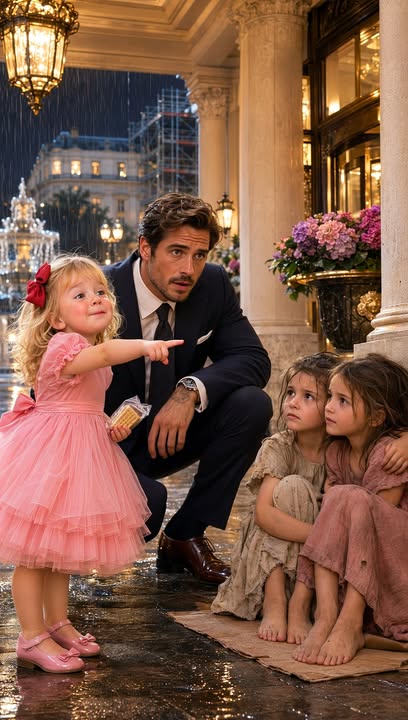
Part 4 – The Names in the Ledger
“Mom, what did you do with that letter?”
For a long moment, I heard nothing but the faint hiss of the hospital line.
Then Eunice said, “I put it away.”
“Where?”
“In the box with Lena’s things.”
“You received a letter saying the twins were alive.”
“I received a letter saying the records were being reviewed.”
“That isn’t what it says.”
Her breath trembled.
“Brett, I was told the babies had died. I had just lost my daughter. You were barely able to stand, and Valerie needed someone to bring her home.”
“You knew there was a chance the other two were alive.”
“I knew there was a mistake in the paperwork. I didn’t know what the mistake meant.”
“You didn’t tell me.”
“I thought the hospital would contact us when they had answers.”
“They wrote to you.”
“They said the charts were under review. They didn’t say where the babies were, or who was caring for them, or whether they would survive.”
“But you read that they had been transferred alive.”
Her voice broke on the word alive.
“I couldn’t read it that way then.”
I closed my eyes and pressed the heel of my hand against my forehead.
Five years of grief had taught me the shape of silence, but I had never understood how much could be hidden inside it.
“I’m coming over,” I said.
“Brett, don’t—”
“I’m not coming to accuse you. I’m coming to see the letter.”
She did not answer.
“I need to know what happened,” I continued. “So do the girls.”
After a moment, she said, “All right.”
Eunice’s house looked smaller than I remembered, though nothing about it had changed.
The white curtains were still tied back with blue ribbons, and the brass wind chime beside the door still turned in the breeze.
She opened the door before I knocked a second time.
Her face was pale, and her hands were clasped tightly at her waist.
“I’m sorry,” she said.
I could not tell whether she meant for keeping the letter, or for everything that had followed it.
“Can I see the box?”
She led me down the hall to the small room where she kept Lena’s photographs and belongings.
A wooden chest stood beneath the window, its lid polished by years of careful hands.
Eunice lifted it, then stopped.
“I haven’t looked through this in a long time.”
The box held Lena’s old scarves, a stack of greeting cards, photographs from our wedding, and the ivory shoes Valerie had worn home from the hospital.
At the bottom, beneath a folded green dress, lay a bundle of papers tied with a faded ribbon.
Eunice sat on the edge of the chair.
“I kept everything they gave me,” she said. “I told myself I would sort it when I could bear to.”
She loosened the ribbon.
The letter from Dr. Tillman was there, folded along its original creases.
Beside it were several pages stamped with the hospital’s name, an envelope addressed to me, and a small hospital wristband bearing Lena’s surname.
I recognized Dr. Tillman’s handwriting on the envelope.
It had never been opened.
My name was written on the front.
“You were sent this too,” I said.
Eunice lowered her eyes.
“I found it with Lena’s discharge papers.”
“Why didn’t you give it to me?”
“I thought it might contain the same confusion.”
“You didn’t know.”
“No.”
“Why didn’t you ask?”
She looked toward the window, where the curtains shifted gently in the breeze.
“Because I was afraid of what the answer might be.”
The truth was plain, and more painful for being so.
I sat opposite her.
“I was afraid too,” I said. “But I didn’t get to choose what I was afraid of. You chose for me.”
“I know.”
“Did you understand the letter?”
“I understood that the hospital had made an error. I believed the babies had been alive at some point, but I thought the transfer entry might have been entered before they died.”
“Why would the hospital say they were transferred if they had died?”
“I don’t know.”
“Did you call them?”
Eunice’s fingers twisted together.
“I called the records office once. They said Dr. Tillman would follow up after the review.”
“And you waited?”
“I was caring for Valerie. I was trying to help you. I was afraid that if I told you something uncertain, you would spend the rest of your life searching for children who might be gone.”
“I spent the rest of my life believing they were gone.”
“I know.”
She did not ask me to forgive her.
That was the first thing she had said in days that felt like an honest beginning.
I opened the envelope addressed to me.
Inside was a short letter from Dr. Tillman, dated nearly two months after Lena’s death.
He apologized for not reaching me sooner and explained that two infants had been transferred to a special-care nursery after an emergency review of their charts.
The hospital was attempting to reconcile the records, he wrote, but the transfer documentation had been incomplete.
He promised that an administrator would contact me once the review was finished.
There was no second letter.
No final notice.
No explanation of what had happened to the twins.
I read it twice, then set it down.
“They were alive,” I said.
Eunice pressed her knuckles to her lips.
“I should have told you.”
“Yes.”
“I thought I was sparing you another loss.”
“You spared me nothing. You left me with a story that didn’t make sense.”
She nodded, tears shining in her eyes.
“I know.”
I looked through the remaining papers.
There was a billing record, a discharge checklist, and a photocopy of a handwritten note that had been attached to the twins’ transfer form.
Two names appeared in faded blue ink: Vera and Violet.
Beneath them was a line of hospital identification numbers.
The final digit on each was smudged.
I placed the pages side by side with the copies from the hospital.
The numbers matched.
The twins had not disappeared into an unknown history.
They had been recorded, transferred, and assigned names.
The record had simply stopped at the point where someone should have followed them.
I called the hospital from Eunice’s living room.
The records clerk who answered had already spoken with me earlier in the week.
I gave her the reference numbers and told her I had found the original transfer note.
“Those identifiers are useful,” she said. “They connect to an archived nursery ledger.”
“How soon can someone review it?”
“I can submit an urgent request, but the archive is stored off-site. It may take a day or two.”
“I’ll wait.”
“There may also be a privacy review,” she added. “If the records involve more than one family, we’ll have to redact unrelated information.”
“They’re my children.”
“I understand that you believe they may be. We still have to verify that before releasing protected records.”
I swallowed my impatience.
“Please do whatever is required.”
The clerk promised to call when the archive team responded.
When I hung up, Eunice was watching me.
“If the records confirm it, what happens to the girls?”
“The social worker decides the next steps. I’ll ask for temporary guardianship, but I won’t bypass the process.”
“And if they aren’t yours?”
“Then I’ll still have to explain why their mother’s locket was with them, and why the records carry those names.”
Eunice looked down at the bundle in her lap.
“I want to see them.”
“You can ask Dana.”
“Would they want to see me?”
“I don’t know.”
She nodded, accepting the answer without trying to soften it.
“I’ll wait for them to decide.”
When I returned to the temporary home, Valerie was sitting on the steps outside with Vera and Violet.
The late afternoon had turned the wet pavement a warm gray, and the three paper stars from the hospital rested on the railing beside them.
Valerie was telling the twins about the pond in the park near our house.
She stopped when she saw me.
“Did you find the papers?”
“I did.”
“Did they say?”
“Some of them did. The hospital is still checking the original records.”
Vera stood, her face guarded.
“You said you’d know.”
“I said I would find out. I’m closer, but I don’t have the whole answer yet.”
“Were we born at the same hospital as Valerie?”
“Yes.”
Violet’s fingers moved to the locket beneath her shirt.
“Did Mom know?”
“I believe she did,” I said. “The hospital paperwork has your names written down.”
For an instant, Vera seemed unable to take that in.
Then she looked at her sister.
“Vera and Violet,” she whispered.
“Our names,” Violet replied.
Valerie reached for both their hands.
“They’re the names Mom picked.”
“I think so,” I said. “Your aunt told me she and Lena chose them before the babies were born.”
“Why did they tell us you were dead?” Violet asked.
“No one told me you were dead,” I replied. “That’s what I was told about you.”
Vera’s gaze lifted.
“Who told you?”
“Your grandmother Eunice. She was told the same thing by the hospital.”
“Did she know the hospital was wrong?”
“She received a letter saying there had been a mistake and that the records were being reviewed. She didn’t know what it meant, but she should have told me.”
“Why didn’t she?”
I thought of Eunice’s frightened hands around the old papers.
“She was grieving. She was afraid the letter meant there might be another terrible loss. She made a choice for me instead of letting me face the truth myself.”
Vera watched me closely.
“Was that a good choice?”
“No.”
The answer came more easily than I expected.
“It may have come from fear and love,” I said, “but it still hurt people. It hurt you, and me, and Valerie.”
Valerie squeezed the twins’ hands.
“Did it hurt Grandma too?” she asked.
“Yes,” I said. “But grown-ups can be hurt by the things they choose and still be responsible for those choices.”
Vera seemed to consider that.
“Will she come here?”
“If you want her to visit, we can ask the social worker to arrange it.”
“What if I don’t want her to yet?”
“Then you don’t have to see her yet.”
Vera’s shoulders lowered a fraction.
The caseworker had told them that they would remain together in the same temporary home while the investigation continued.
They had begun to settle into a routine there, though every new adult and every new form still seemed to bring another uncertain possibility.
That evening, Valerie sat with them at the kitchen table and showed them how to make stars from folded paper.
Violet’s came out too small.
Vera’s was lopsided.
Valerie kept hers between the two, comparing the creases until all three were nearly alike.
“Mom used to say you didn’t have to make things match for them to belong together,” Valerie said.
“Did she say that to you?” Vera asked.
“Not exactly. She said it about our shoes when I wore one pink sock and one yellow sock.”
Violet smiled.
“That sounds like something she would say.”
Valerie stopped folding.
“You remember her?”
Violet touched the locket.
“Not her face, not really. But I know the way she smelled in the pictures.”
“Pictures have a smell?” Valerie asked.
“Not the pictures. The box Aunt Marnie kept them in. It smelled like lavender.”
Valerie leaned closer.
“Grandma has some of Mom’s scarves.”
“Does she?”
“Yes. They still smell a little like her.”
Vera glanced toward me.
“Would Grandma let us see them?”
“I think she would.”
“Not today,” Vera said quickly. “Just someday.”
“Someday is fine,” I told her.
The next morning, the hospital called.
A records specialist named Mr. Hall said the archive team had located the original nursery ledger.
He asked me to come to the hospital, bringing any documents I had found, so the records could be reviewed with the medical records officer and a social-services representative present.
I told Dana at once.
She agreed to meet us there.
Eunice asked whether she could come too.
I hesitated.
“I don’t know if the girls are ready to see you.”
“I don’t mean to see them. I want to hear what the records say.”
“Then you can come to the hospital. We’ll keep it private.”
She thanked me quietly.
We met at the records office that afternoon.
Dana sat beside me, while Eunice waited across the table with both hands folded over her purse.
Mr. Hall set the archived ledger between us.
It was a thick, clothbound book, its pages yellowed at the edges and marked with columns of dates, numbers, and signatures.
He explained that the hospital had retained the original delivery logs but that several supporting files had been misfiled during the transition between two record systems.
“The information we have so far suggests the infants were transferred to the special-care nursery,” he said. “We’re comparing the ledger with the discharge records and the nursery’s admission book.”
“Were they discharged?” I asked.
“We don’t know yet.”
“Were they alive?”
“The ledger indicates they were alive when they arrived in the nursery.”
Eunice’s eyes closed.
I reached for the edge of the table to steady my hand.
Mr. Hall turned several pages.
“Here are the names entered at birth.”
The old ink had faded, but I could still read them.
Valerie Calder.
Vera Calder.
Violet Calder.
My breath left me.
Eunice made a small sound and covered her mouth.
Dana leaned closer to examine the page.
“This is significant,” she said. “But we’ll need to verify the identity records and complete the hospital’s review before making any conclusions.”
“I understand,” I said.
It was the same sentence I had given the social worker the week before.
This time, it was harder to say.
Mr. Hall placed three photocopies on the table.
The first showed Valerie’s nursery admission.
The second showed Vera and Violet’s transfer to the special-care unit.
Each record included an identifying band number that matched the papers from Eunice’s box.
The final page was a discharge record, but the names had been obscured by a strip of white tape.
“Why is that covered?” I asked.
“The original has a damaged section,” Mr. Hall said. “We’re trying to determine whether the tape was added later or whether the names were never entered.”
“What does the date say?”
“The infants were discharged six days after Lena’s emergency surgery.”
“Where were they sent?”
“We don’t know. The receiving unit should be listed in the corresponding placement ledger.”
“Can you retrieve it?”
“That’s what we’re doing.”
Eunice stared at the paper.
“I was told they died.”
Mr. Hall glanced at her.
“I understand that is what your family was told.”
“Who made the mistake?”
“We can’t answer that yet.”
“You must have a record.”
“We’re still searching.”
Eunice pressed one hand against her chest.
“I should have kept asking.”
I looked at her, and for a moment she seemed far older than she had the day before.
“Yes,” I said.
Her eyes filled.
She did not look away.
“Yes,” she whispered.
Dana gathered the copies and explained that the next step would include formal parentage testing.
The hospital could verify that the records belonged to the same delivery, but DNA testing would provide an independent confirmation for the guardianship process.
I agreed.
The test was arranged with consent from the caseworker and the temporary caregivers.
The girls were told what would happen in simple terms.
A nurse would gently swab the inside of their cheeks, then compare the samples with mine and Valerie’s.
Vera asked whether it would hurt.
“No,” the nurse said. “It may feel a little tickly, but it won’t hurt.”
“Will it prove we’re sisters?”
“It can help show how closely you’re related,” Dana explained. “The hospital records will help too.”
Violet looked at Valerie.
“Do you want us to be your sisters?”
Valerie took her hand.
“I already feel like you are.”
That afternoon, the nurse collected the samples.
Violet giggled when the swab tickled her cheek.
Vera watched every movement, then held still until it was finished.
Valerie went next.
When the nurse said she could return to the waiting room, Valerie looked uncertain.
“Do I have to go?”
“No,” Dana said. “You can stay.”
She sat between the twins, one hand resting over each of theirs.
The test results were expected within several days.
While we waited, I arranged another visit with Marnie.
This time, Vera and Violet asked for her.
Marnie arrived at the family-services room carrying a small canvas bag.
She did not bring toys or gifts.
She brought the twins’ old drawings and a photograph of Lena, one they had never seen before.
In it, Lena stood in our kitchen, one hand on her belly and the other holding a wooden spoon.
Vera took the photograph carefully.
“Was this our mom?”
“Yes,” Marnie said. “She was making soup, and she hated having her picture taken.”
“She looks happy,” Violet said.
“She was.”
“Did she know about us?” Vera asked.
Marnie lowered herself into the chair across from them.
“She did. She loved you before she met you.”
Vera looked at the photograph, then at the locket.
“Why didn’t you tell us everything?”
Marnie’s eyes shone.
“I was trying to find proof before I told you what I suspected. I thought I needed to protect you from being disappointed.”
“Did you know Brett was our dad?”
“I believed he might be. I wasn’t sure.”
“You left us because of a man who said he could help.”
“I did,” Marnie said. “I thought I was making a safer choice, and I was wrong.”
“Why didn’t you come back?”
“I tried. I had no phone, no money, and no identification. I went to the police, then to the shelter, and I kept asking people to help me find you.”
Violet moved closer to Vera.
“You should have come back before it got dark.”
“I know.”
Marnie did not defend herself.
“I’m sorry,” she said. “I should have found another way to keep you with me. I should have asked for help sooner.”
Vera held the photograph with both hands.
“I’m still mad.”
“You’re allowed to be.”
“I’m glad you’re here.”
Marnie’s face folded with relief and grief.
“I’m glad too.”
The visit ended with the girls resting their heads against her shoulders.
When the caseworker came to say time was up, neither twin protested.
They simply asked when she could visit again.
Marnie answered, “Whenever the grown-ups agree, and whenever you want me here.”
This time, the girls seemed to hear the difference between a promise and a plan.
The DNA results arrived four days later.
Dana called me at work and asked me to come to her office with Valerie.
The twins’ caseworker was already there.
A sealed envelope sat on the table.
Valerie watched it with both hands clasped in her lap.
“Is this the answer?” she asked.
“It’s part of the answer,” Dana said.
I opened the envelope.
The report stated that Vera and Violet were both my biological children.
It also confirmed that Valerie was their full biological sister.
For several seconds, I could not make myself speak.
The names on the page seemed to move slightly beneath my eyes.
Valerie leaned against my arm.
“They’re really my sisters?”
“Yes,” I said.
The word came out rough, but clear.
“They’re your sisters.”
Valerie began to cry, not loudly, but with a relief that seemed to have been waiting in her for days.
She turned and wrapped her arms around Vera and Violet.
Vera held on tightly.
Violet pressed her face against Valerie’s shoulder.
Dana gave us time before she spoke.
“This gives us strong evidence of parentage,” she said. “We still need the remaining records and the court process before any permanent arrangement can be made.”
“I understand.”
Vera looked up at me.
“So you’re our dad?”
“Yes,” I said.
I sat down so we were at the same height.
“I’m your dad. I should have known sooner, and I’m sorry I didn’t.”
“Did you know Mom was having triplets?”
“Yes.”
“Did you want us?”
I looked at the two girls who had waited in the rain, then at Valerie, who had been reaching for them from the first moment she saw their faces.
“Your mother wanted all three of you,” I said. “And I did too. I thought I had lost you, but I never stopped loving the family Lena and I planned to have.”
Violet touched the locket.
“Mom wrote that we were wanted.”
“She did.”
“Then why did everyone get it wrong?”
It was the question I had been asking myself since the first record arrived.
“The hospital made mistakes during a frightening, rushed time. Some records were separated, and some were never followed up. Your grandmother believed what she was told, then held onto the letter because she was afraid of what it might mean. Your aunt tried to find you, but she was afraid to tell us until she had proof.”
“Did they mean to keep us away?” Vera asked.
“No,” I said. “But the choices the grown-ups made still kept you away from us.”
“Were we bad babies?” Violet asked.
The question was so quiet that it seemed to belong to the room rather than to her.
“No,” I said. “None of this happened because of anything you did. You were wanted from the beginning.”
Valerie took one of each twin’s hands.
“We’re all here now.”
“For now,” Vera said.
I heard the caution in her voice.
She was not wrong to keep some part of herself guarded.
“We’re here now,” I said. “And I’ll keep showing up while the court and the social workers help us make the next steps safely.”
The caseworker explained that the girls would continue living together in temporary care while the court reviewed my petition for guardianship.
I would be allowed more frequent visits, and we could begin supervised family time in a setting chosen by the social worker.
“Will we live with Dad someday?” Violet asked.
“That’s what we’re working toward,” Dana said. “But we’ll take it one step at a time.”
Vera considered this.
“Will Valerie come too?”
“She already lives with me,” I said. “You won’t have to choose between your sister and your dad.”
“And Marnie?”
“She can remain part of your lives,” I said. “We’ll work out visits that feel safe for you.”
Vera looked at her twin.
Violet nodded.
“Then we can wait,” Vera said.
That evening, I called Eunice with the results.
She did not speak for several seconds.
“They’re his daughters,” I said, though I knew she understood.
“Yes.”
“The records and the DNA both confirm it.”
“I’m glad you know.”
“We’ll begin the guardianship process.”
“I hope it goes well.”
“Mom, the girls deserve the truth.”
“I know.”
“Will you tell them your part of it?”
Her breath caught.
“I will.”
“Not because the social worker tells you to. Because they should hear it from you.”
“I know,” she said again.
This time, the words carried the beginning of a decision.
Before I ended the call, Eunice asked whether she could visit the girls.
“I’ll ask them.”
“Thank you.”
The next day, I sat with Vera and Violet in the common room at their temporary home.
Valerie was beside them, drawing three small houses on a sheet of paper.
I told the twins that Eunice wanted to see them.
Vera took a long breath.
“Will she tell us what happened?”
“I think she wants to.”
“Can she promise she won’t hide anything?”
“She can promise. Then you can decide whether to believe her over time.”
Violet ran a finger along the locket’s edge.
“Can we go see her scarves first?”
“I can ask.”
“Not Grandma,” Violet said. “Just the scarves.”
I understood.
“Then we’ll start there.”
The following afternoon, Dana brought a small box from Eunice’s house.
Inside were Lena’s scarves, folded neatly and smelling faintly of lavender.
The girls sat together on the rug while Valerie carefully unfolded each one.
Vera lifted a blue scarf to her face.
For a moment, her eyes closed.
“This was hers,” she whispered.
“Yes,” I said.
“She was real,” Violet said.
I sat down beside them.
“She was real,” I told her. “And she loved you.”
Violet touched the locket.
Then she looked up at me.
“If Mom wanted us all together, why did she write ‘if we’re ever separated’?”
The room grew quiet.
I turned the question over in my mind, remembering Lena’s handwriting, the hidden note, and the hospital records that showed the twins had been alive and transferred.
“I don’t know,” I said.
Vera’s eyes narrowed.
“Could she have known the hospital might separate us?”
“I don’t know.”
“Could someone have told her something was going to happen?”
The thought had not occurred to me until that moment.
I looked at the locket in Violet’s hands and at the dates on the documents I had gathered.
The message had been written before Lena went into labor.
Before the emergency surgery.
Before the hospital told us two babies had died.
Before Eunice received the letter.
Before Marnie found the records.
Whatever Lena had feared, she had put her words where her daughters could find them.
My phone rang.
The hospital’s records specialist was on the line.
“We found the nursery placement ledger,” he said. “The discharge records for Vera and Violet are there, but the names of the receiving guardians are in a separate sealed file.”
I stood, gripping the phone.
“Can you tell me where they went?”
“Not over the phone. There’s one more complication.”
“What is it?”
“The ledger lists two different signatures for the discharge. One is from a hospital staff member. The other is from someone who appears to have collected the infants.”
My gaze moved from the locket to the
**–END OF PART 4–CLICK “NEXT” AT THE BOTTOM OF THE PAGE TO CONTINUE READING**
* * *
[PREVIOUS: PART 3](https://storyly.idolsgift.com/blog/part-3-the-secret-in-the-locket-056) | [NEXT: PART 5](https://storyly.idolsgift.com/blog/part-5-the-secret-in-the-locket-056)
✓ Lynn R. Adams
Part 4 – The Names in the Ledger “Mom, what did you do with that letter?” For a long moment, I heard nothing but the faint hiss of the hospital line. Then Eunice said, “I put it away.” “Where?” “…