PART 4: The Secret in the Hem 046
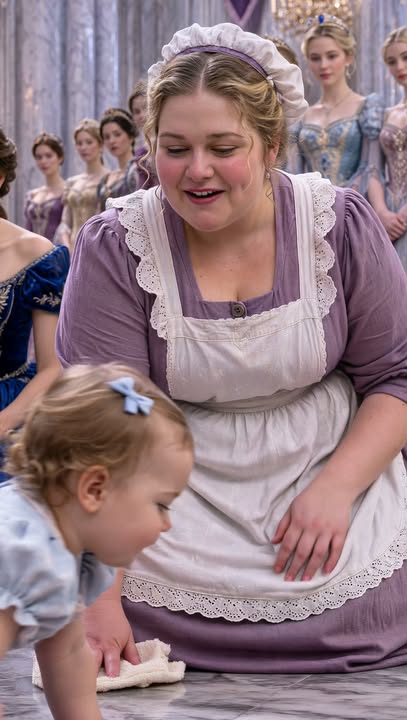
Part 4 – The Note in the Nursery Desk
“Ledger, nursery desk,” Alexander read again.
The words had been written so faintly that the ink seemed to have soaked into the handkerchief itself.
Below them, in Eleanor’s small, familiar script, was the phrase: “the note I could not send.”
Victoria stood very still beside the table.
“The nursery desk is still there,” she said. “In Eleanor’s old room.”
Alexander folded the handkerchief around the letter with care.
“Then we should go.”
He looked at me, not as if he expected me to follow, but as if he wanted to ask.
I shifted Lily higher on my hip.
“If Eleanor left something there,” I said, “I should be with you.”
Victoria nodded.
“Then we will go together.”
The old nursery sat at the end of a corridor where the windows faced the formal gardens.
Snow lay deep along the paths, softening the hedges and turning the bare trees into dark lines against the white.
The room had been kept almost as it was when Eleanor last used it, though its quiet now felt less like remembrance and more like a question no one had thought to ask.
A rocking chair stood beside the window.
A small sewing basket rested on a table.
The writing desk was tucked between the bookcase and the wall, its polished surface catching the pale afternoon light.
Alexander paused at the threshold.
“I haven’t been in here since the first month,” he said.
Victoria touched his arm lightly.
“You needn’t open anything you don’t want to.”
“I want to know what she left.”
He stepped inside.
Lily looked around, then reached toward the rocking chair.
I set her down on the rug, where she crawled to it and patted one of its curved runners.
“She remembers this room,” I said.
“She was very small,” Alexander replied.
“She remembers the sounds, if not the things.”
He looked at the chair.
“Eleanor used to hum while she rocked her.”
“So did I,” I said.
His gaze shifted to me.
“I know.”
The words were simple, but there was something different in the way he said them now.
He knew because he had listened to the letter.
Because he had finally asked.
Victoria moved toward the desk.
“Let us see what Eleanor intended us to find.”
The desk had three shallow drawers beneath the writing surface and a cabinet below them.
The first drawer contained writing paper, sealing wax, and a small stack of nursery inventories.
The second held a collection of ribbon, old invitations, and a pair of spectacles with one arm mended by thread.
Alexander picked them up.
“She used to say she would keep them until she could afford a proper repair.”
A faint smile touched his face and vanished.
“She never did.”
The third drawer was locked.
Victoria tested the handle once, then let it go.
“Do you have a key?”
“I don’t remember one,” Alexander said.
I looked at the desk’s narrow edge.
“Eleanor kept a small brass key in the sewing basket.”
I had seen it there when I helped her thread the needle for Lily’s handkerchief.
Victoria opened the basket.
Inside were spools of thread, a thimble, and a little pair of silver scissors.
The brass key was beneath a folded square of linen.
She passed it to Alexander.
He turned it once between his fingers before fitting it into the lock.
The drawer opened with a soft click.
Inside lay a nursery ledger, smaller than the one we had examined in the library, its cover worn at the corners.
Beside it was a sealed note.
Alexander did not reach for either.
He stood with his hands resting on the desk, his attention fixed on the objects as though they belonged to a stranger’s life.
“Do you want me to open them?” Victoria asked.
“No,” he said. “I should.”
He lifted the ledger first.
Its pages contained dates, names, and brief notes about Lily’s feeds, naps, and nighttime waking.
The entries were in several hands.
I recognized the nursery matron’s tidy script and my own hurried writing in the margins.
I had not known the ledger had been kept in Eleanor’s desk.
Alexander turned the pages slowly.
He stopped at the date of Eleanor’s death.
The next entries were sparse, as if the people writing them had been unsure what they were allowed to say.
Then his finger came to a line written in Eleanor’s hand.
“Keep Mara near Lily,” he read.
The words were clear, even after months in the dark drawer.
Victoria leaned closer.
Below that was another line, written in the same careful script.
“Alexander must be told that love is not a room he has to enter alone.”
The air in the nursery seemed to grow still around us.
Alexander lowered his head.
I watched his shoulders draw in, though he made no sound.
Victoria placed her hand on the desk beside his.
“I was told Eleanor had asked for quiet and no visitors,” she said.
“She did ask for quiet,” Alexander replied. “At the end.”
The distinction seemed to trouble him.
He turned to the next page.
A note had been pasted into the ledger, its lower edge secured by a strip of paper.
The writing was Eleanor’s again.
“Tell Alexander I want Mara to remain with Lily. Tell him he may grieve without shutting out everyone who loves them.”
The ink had faded along the fold.
Below the sentence, a second hand had added a short instruction.
“Message relayed to the prince.”
Alexander stared at those words.
“I never received it.”
Victoria’s face had lost its color.
“Nor did I.”
I could feel Lily’s small fingers tugging at the hem of my skirt.
I bent to gather her into my arms.
She came easily, resting her cheek against my shoulder as if nothing in the room had changed.
But everything had.
The letter beneath the handkerchief had told us Eleanor trusted me.
The ledger told us she had tried to make sure that trust remained part of Lily’s life.
And someone had made her wishes disappear between the nursery and the people she meant to hear them.
Alexander opened the sealed note.
The wax was unmarked, but the paper had been folded tightly enough to leave a crease down its center.
He read the first lines silently.
Then his eyes lifted to Victoria.
“Mother, she wrote to you too.”
Victoria’s expression softened with grief.
“What did she say?”
He handed her the note.
Victoria read it once, then pressed her lips together.
“I didn’t know,” she whispered.
“What is it?” I asked.
She placed the paper on the desk so we could all see.
The note was brief.
Eleanor had written that she was afraid her condition might worsen, and that she wanted the nursery to remain a place of warmth rather than a room guarded by sorrow.
She asked Victoria to help Alexander accept practical kindness without mistaking it for an attempt to replace her.
She asked her to make sure Mara could stay near Lily.
And she had added one final sentence:
“Please do not let the household decide what my family is allowed to know.”
Victoria’s hand rested on the paper.
“I should have seen this.”
“You were not given it,” Alexander said.
“I should have asked whether there was more.”
He looked at the ledger again.
“I should have asked too.”
The acknowledgment did not seem to make him feel better.
Perhaps it was not meant to.
He turned the page, then the one after it.
Several entries had been marked with thin slips of paper.
Each one contained a short note from Eleanor about Lily’s care or the people who would be around her.
One described a lullaby she liked.
Another said that Mara knew how to calm Lily without making her feel hurried.
A third, written on the day before Eleanor’s death, read:
“If I cannot be there, let Lily know the people who love her are still here.”
Alexander read it twice.
Then he closed the ledger.
“My whole life after Eleanor’s death was built around an instruction she never gave.”
Victoria looked at him.
“What do you mean?”
“Pembroke told me she wanted no visitors. He said she wanted the nursery kept private, and that I should not be troubled with staff questions.”
He paused.
“I thought he was protecting the last wishes she had been able to express.”
“I believed the same,” Victoria said. “He told me the changes were temporary, and that you had agreed.”
“Did you ask me?”
“No.”
Her answer was quiet and unadorned.
Alexander looked at me.
“And you were told I had sent you away.”
I nodded.
“For a while, I thought I had done something wrong.”
“You had not.”
“I know that now.”
The words carried more than reassurance.
They carried an apology he had not quite learned how to give.
He drew a slow breath.
“I asked for the nursery to be quiet because I couldn’t bear to hear people discussing Eleanor as if she were already only a memory.”
“I understand,” I said.
“I never said Mara should be kept away.”
“I know.”
“I should have noticed that the nursery changed.”
“You were grieving.”
“That explains why I didn’t ask,” he said. “It does not undo what happened.”
Victoria lifted the nursery ledger with both hands.
The room had begun to feel smaller, its familiar objects altered by what they held.
“Pembroke said he was following my wishes,” she said. “But I never instructed him to remove Mara.”
“Perhaps he believed you had,” Alexander said.
“Perhaps,” Victoria replied. “But belief is not proof, and neither is an explanation.”
The restraint in her voice did not soften the weight of her regret.
She had been the queen, the grandmother, the person whose authority should have protected the household.
She had trusted a report instead of seeking the truth herself.
Alexander looked at the sealed note in her hand.
“Why hide this in the nursery desk?”
“I don’t know,” she said. “Perhaps Eleanor thought it would be found when someone finally asked the right question.”
“Or she meant for it to be found sooner,” I said.
They both turned toward me.
I lowered my eyes to the ledger.
“She was very weak,” I continued. “The day she asked me to keep the handkerchief, she said she could not trust the wrong person with it. She may have been trying to make sure there was more than one way for you to find out.”
Victoria returned the note to the desk.
“She knew the household well enough to know a message could be stopped.”
The thought moved through me slowly.
Eleanor had not written her letter because she expected me to be powerful.
She had written because she knew I would keep a promise, even if no one else knew I had made it.
And the hidden note was not a secret plan.
It was a small safeguard, meant to survive ordinary silence and the habits of a household that had grown too accustomed to letting one person speak for everyone else.
Alexander turned back to the ledger.
There, beside the entry about keeping me near Lily, was a line in another hand.
“Instruction communicated to Mr. Pembroke.”
The date was the day before Eleanor died.
A second note, two days later, said:
“Prince informed: no nursery visitors.”
Alexander’s brow tightened.
“I was never told about the first instruction.”
Victoria examined the lines.
“The ink is different.”
“Different from Eleanor’s?”
“Yes. And different from the matron’s notes.”
I leaned closer.
The handwriting was straight and formal.
I had seen it before on household schedules and on the small notices posted near the servants’ stairs.
“It looks like Mr. Pembroke’s hand,” I said.
Victoria did not answer at once.
She studied the letters, then turned to the back of the page.
A small initial had been written beside the note.
P.
The discovery did not feel like triumph.
It felt like the room had finally stopped pretending the confusion was accidental.
Alexander closed the ledger.
“He told me she wanted no visitors.”
“Yes,” Victoria said.
“He told Mara I had ordered her away.”
“Yes.”
“And he told you I agreed to the separation.”
Victoria’s eyes fell.
“Yes.”
The repeated answer sounded like a confession.
“I trusted him to carry out instructions,” she said. “I did not ask to see the instructions themselves.”
“You thought you were helping me.”
“I did.”
“So did I, in my own way.”
He glanced toward the rocking chair, where Lily had been sitting before I picked her up.
“I thought grief meant keeping everything still.”
Victoria’s voice softened.
“It can make stillness seem safer than change.”
“Then I let the wrong person decide what ‘safe’ meant for all of us.”
He did not say it with anger.
That made the admission more painful.
A knock sounded at the nursery door.
A footman entered and bowed.
“Your Majesty, Mr. Pembroke asks whether the household records should be sent to the library.”
Victoria’s eyes went to the ledger.
“Tell him we have found the nursery records we need.”
The footman waited.
“Should I tell him what they contain?”
“No,” Alexander said. “Tell him we will speak with him after we have reviewed them.”
The footman withdrew.
For a moment, we heard only the soft crackle of the fire in the corridor.
Victoria placed the ledger beside the handkerchief.
“Alexander, we must decide what happens next carefully.”
“We should hear what he says.”
“We will.”
“And we should not let him take the records out of this room.”
“No one will.”
I shifted Lily’s weight against me.
She had grown sleepy again, her lashes lowering as the warmth of the nursery settled around her.
Alexander noticed.
“She ought to rest.”
“She usually sleeps better in the smaller room,” I said. “The one with the blue curtains.”
He looked toward me.
“I didn’t know that.”
“You do now.”
He nodded, accepting the words without trying to turn them into something else.
Victoria folded the handkerchief around Eleanor’s letter.
“We should take these to the library.”
Alexander held out his hand for the nursery ledger.
“I’ll carry it.”
Victoria gave it to him.
I expected him to reach for Lily as well, but he did not.
He waited.
“Would you like me to take her?” he asked.
The question was careful, and because it was careful, I trusted it.
“She’s almost asleep,” I said. “You can walk beside us.”
He came to my side.
We left the old nursery together, with Victoria behind us and Eleanor’s words held between us like something fragile but no longer hidden.
At the doorway, Alexander looked back at the desk.
“Do you think she knew this would happen?” he asked.
“I think she knew people could misunderstand one another when grief made them afraid to speak.”
“That isn’t the same thing.”
“No,” I said. “But it may be why she gave us more than one message.”
He considered this as we entered the corridor.
“Then perhaps she believed we would find our way back to one another.”
“I don’t know.”
It was the most honest answer I had.
By the time we reached the library, Pembroke was waiting beside the long table.
He saw the ledger in Alexander’s hands.
For a brief instant, his expression changed.
It was not fear.
It was recognition.
Then the familiar composure returned.
“Your Majesty,” he said. “Have you found what you were looking for?”
Victoria placed Eleanor’s note beside the handkerchief.
“We found what she asked us to find.”
Pembroke’s eyes went to the paper.
“You have been in the nursery desk.”
“Yes,” Alexander said.
“And the ledger?”
“Here.”
Pembroke lowered his gaze.
“I’m glad it was preserved.”
“Were you?” Victoria asked.
“I have always valued the late princess’s records.”
“Then you will be able to help us understand why her instructions were not followed.”
Pembroke glanced from Victoria to Alexander.
“I will answer what I can.”
Alexander opened the ledger to the page marked with the formal initial.
“Did you write this?”
Pembroke leaned forward, but did not touch the book.
“I wrote many household notes.”
“This one says you communicated Eleanor’s instruction that Mara stay near Lily.”
“I see that.”
“And this one says you told me no nursery visitors were to be admitted.”
“I see that as well.”
“Did you tell me Eleanor had asked for that?”
“I told you the nursery should be kept quiet.”
“That is not what I asked.”
Pembroke’s gaze remained on the ledger.
“Your Highness, the period after Princess Eleanor’s death was difficult. I was trying to keep the household from becoming a place where every decision reopened the same sorrow.”
“I know,” Alexander said.
The secretary looked up, perhaps expecting an accusation.
Alexander’s voice remained measured.
“I know you believed you were helping. I also know you told three different people three different things.”
“I did not intend to deceive anyone.”
“Intent does not change what happened.”
Pembroke’s mouth tightened, then relaxed.
“No, Your Highness.”
Victoria drew the note toward herself.
“You also told me Mara’s removal was temporary, and that Alexander had agreed.”
“I believed His Highness’s wishes were consistent with the arrangement.”
“You believed,” Victoria repeated. “You did not ask him.”
“I was responsible for keeping the household functioning.”
“And you decided that meant choosing which wishes to pass along.”
Pembroke did not answer.
The quiet that followed was not hostile.
It was simply no longer willing to make room for an easy explanation.
“I would like the original nursery correspondence,” Alexander said. “All of it.”
“I will arrange for the household office to gather what remains.”
“Not after you have reviewed it alone.”
“I understand.”
“And the nursery matron’s records?”
“I will try to locate them.”
“Try is not enough,” Victoria said.
Pembroke inclined his head.
“I will find them.”
Victoria looked at him for a long moment.
“Did Eleanor give you another instruction?”
The secretary’s gaze moved briefly to the handkerchief.
“No.”
“Did she write another note?”
“Not that I know of.”
The answer came smoothly.
Too smoothly.
Alexander heard it too.
“You said there may be other instructions that clarify her wishes,” he said. “What did you mean?”
Pembroke folded his hands.
“I meant there may have been correspondence I have not seen.”
“That is possible,” Victoria said. “But you looked at the handkerchief as if you knew where it might lead.”
“I recognized the stitching. Princess Eleanor often marked important papers in that way.”
Alexander’s eyes narrowed.
“You recognized the stitching.”
“Not the message.”
“Then why did you want to take it from Mother?”
“I did not want to take it. I was concerned that the family’s private correspondence was being handled by a member of staff.”
“My wife gave it to Mara,” Alexander said.
“So I now understand.”
Pembroke’s expression was grave, but not empty.
“I apologize for having questioned her place in this matter.”
I felt the apology reach me and stop there.
It did not restore the months when I had been told to remain away.
It did not tell Alexander who had cared for Lily at night.
But it was the first time Pembroke had spoken to me without calling me “the girl from the nursery.”
“Thank you,” I said.
The words were polite.
They were not forgiveness.
Pembroke seemed to know the difference.
Victoria gathered the records.
“We will meet again tomorrow, once the remaining papers have been found.”
“I will be ready.”
He bowed and left the library.
The door shut behind him.
Alexander looked down at the page marked with Pembroke’s initial.
“He wrote it down,” he said.
“Some of it,” Victoria replied.
“He knew Eleanor’s wishes.”
“Yes.”
“And he changed what we heard.”
Victoria’s hand rested on the closed ledger.
“He decided what each of us could bear, and called that protection.”
I thought of the sentence in Eleanor’s letter.
Do not mistake grief for a reason to keep everyone at a distance.
She had written it for Alexander.
Perhaps she had written it for the whole household.
Alexander looked at me.
“I cannot undo those months,” he said. “I cannot make you feel you should have been allowed to stay.”
“I don’t want you to promise something you can’t change.”
“Then tell me what you do want.”
The question held no demand.
It also held no easy answer.
“I want the truth,” I said. “And I want Lily’s care to be decided by the people who actually know her.”
He nodded.
“That is fair.”
“I don’t want to be used to make the household feel whole again.”
“I would never ask you to replace Eleanor.”
“I know. But other people may.”
“Then I will answer them.”
I looked at him, uncertain whether I believed that yet.
He did not insist that I should.
Victoria placed the handkerchief and Eleanor’s two notes into a shallow wooden box.
“We will keep these with the records until we know what else exists.”
Alexander glanced at the letter’s exposed edge.
“There may be another message.”
“Why do you think that?” I asked.
“The line in the handkerchief said ‘the note I could not send.’ That suggests there was more than one thing she intended to tell us.”
Victoria opened the ledger again.
“Perhaps the note was the one in the desk.”
“Perhaps,” he said.
But he did not sound convinced.
The house had grown quiet beyond the library windows.
Snow had stopped falling, and the darkening sky made the white gardens look almost blue.
Lily stirred against my shoulder and opened her eyes.
She reached for Alexander.
He came close enough for her to touch his sleeve.
Then she turned back toward me, keeping one hand on each of us.
Alexander smiled, but the expression faded quickly.
“Tomorrow, we find the rest,” he said.
I looked at the wooden box on the table.
“What if there is nothing else?”
“Then we will know what was hidden and what was only lost.”
Victoria’s fingers rested on the lid.
“And if there is more?”
No one answered.
The question remained with us as the first lamps were lit in the corridor.
Then a footman appeared at the library door, carrying a small bundle of papers.
“Your Majesty,” he said, “these were found behind the nursery desk when it was moved for cleaning.”
Victoria stood.
“Where did they come from?”
“They were tucked beneath the back panel.”
Alexander’s gaze fixed on the bundle.
The papers were tied together with a faded blue ribbon.
I recognized the ribbon.
Eleanor had used it to bind the handkerchief while she was sewing the pink letters.
Victoria reached for the bundle, but stopped when she saw the name written across the top page.
It was Alexander’s.
Beneath it, in Eleanor’s handwriting, were six words:
“Read this only after you have asked Mara why she was sent away.”
**–END OF PART 4–CLICK “NEXT” AT THE BOTTOM OF THE PAGE TO CONTINUE READING**
* * *
[PREVIOUS: PART 3](https://echoesofstories.idolsgift.com/blog/part-3-the-secret-in-the-hem-046) | [NEXT: PART 5](https://echoesofstories.idolsgift.com/blog/part-5-the-secret-in-the-hem-046)
✓ Lynn R. Adams
Part 4 – The Note in the Nursery Desk “Ledger, nursery desk,” Alexander read again. The words had been written so faintly that the ink seemed to have soaked into the handkerchief itself. Below them…