PART 4: The Secret in the Guard’s Hand 056
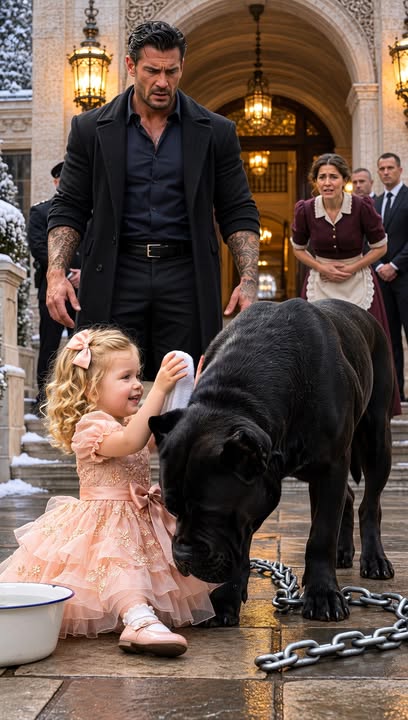
Part 4 – The Promise Beneath the Photograph
The name on the contractor’s form seemed to darken as I stared at it.
Emma Moretti.
Not listed as a child to contact in an emergency, but as the successor to an arrangement no one had explained.
Sophia’s hand closed around the edge of the desk.
“Someone put her name there,” she said.
“I’m going to find out who.”
“Not by asking Emma.”
“I know.”
I heard how quickly I had answered, and how much it sounded like a promise I needed to keep making.
Sophia placed the form beside the photograph of Emma and Bruno.
For a moment, the two images lay together: Emma’s name in a contractor’s file and her younger self, smiling solemnly beside a dog who had once stood between her and whatever frightened her.
“Could the contractor have carried the name forward from an old record?” she asked.
“Possibly. But the successor field was filled in recently.”
“Then we need to know who entered it, and why.”
I called the contractor’s representative and asked for the account’s full history, including every amendment and the identity of the person who authorized the latest one.
This time, I put the request in writing.
The representative said they would investigate and send what they could.
It was a careful answer, the kind that acknowledged a question without promising it would be answered soon.
When I ended the call, Sophia was still looking at the photograph.
“My brother never told me Bruno had been there when Emma was little,” she said.
“He may have thought you already knew.”
“I knew they had met. I didn’t know he’d been with her during an accident.”
“Neither did I.”
She lifted the photograph, examining its worn edges.
“Your brother wrote that it was after the training accident.”
“Yes.”
“Why keep it in an envelope marked ‘Keep’?”
“I don’t know.”
“Maybe he was afraid someone would throw it away.”
“Maybe.”
The answer did not satisfy either of us.
I looked again at the date on the account file.
The signature appeared to be mine, but I could not remember approving an arrangement that named Emma as a successor.
The contractor’s account had been active for years, and routine renewals had passed across my desk among dozens of other documents.
If I had signed the page, I had done so without understanding what it carried forward.
If I had not, someone had used my approval to reopen a private agreement.
Neither possibility made me feel better.
Sophia returned the photograph to the envelope.
“We should tell Emma something,” she said.
“What would you tell her?”
“That the man she remembers used to work with Bruno, and that we’re learning more about the past.”
“Would that frighten her?”
“It might. But finding out later that we hid it could frighten her more.”
I thought of Emma’s small voice in the room beside Bruno.
He said the old agreement still stands.
She had not said it as an accusation.
She had offered it the way a child offers a remembered line from a story, without knowing how much weight the words might carry.
“We can tell her when she’s settled,” I said. “Together.”
Sophia nodded.
“And we keep it simple.”
“Together,” I repeated.
She met my eyes, and for a moment the strain between us eased.
Then someone knocked at the office door.
Elena stood outside with the estate’s old lockbox open in her hands.
“I found a second key in the back compartment,” she said. “It was attached to a tag with your brother’s initials.”
I recognized the key before she reached the desk.
It was a small silver key, long and narrow, the sort used for an older filing cabinet.
Sophia looked from the key to the photograph.
“Emma said the handler had a shiny key.”
“This might not be the one she remembers,” I said.
“No,” Sophia agreed. “But it’s worth checking.”
The key fit the lower drawer of the desk, a drawer I had believed was locked by the main cabinet mechanism.
It turned with a soft click.
Inside sat a thin folder, a veterinary record, and a second envelope bearing my brother’s handwriting.
This one was addressed to me.
I did not open the envelope at once.
My brother’s handwriting had always been easy to recognize and difficult to look at after he died.
Sophia remained beside me while I drew out the letter.
The paper had yellowed along the fold.
Vincent,
If you are reading this, I have either failed to tell you something I should have said plainly, or I have run out of time to make it right.
I’m sorry for both possibilities.
Sophia’s breath shifted beside me.
I kept reading.
Bruno was not merely a dog we placed with you because he needed a home.
He chose you, but he stayed with us first because he chose Emma.
The words blurred for a moment.
I began again, slower.
My brother explained that the training accident had occurred at the estate several years earlier, when Emma was still very young.
He had hired the handler to assess Bruno’s behavior and help with controlled training.
The handler had been praised by the contractor and had come with good references.
My brother admitted that he had relied on those assurances instead of watching closely enough himself.
During one session, Emma had wandered into the courtyard.
The handler had lost control of Bruno’s chain, and the dog had been startled by a sudden movement from one of the workers.
My brother did not describe the accident in graphic detail.
He wrote only that Emma had fallen, that Bruno had moved between her and the noise, and that the dog had been struck by the chain as he tried to get her away.
The injury had left the scar along his shoulder.
Emma had been frightened but not seriously hurt.
Bruno, my brother wrote, had been more concerned with keeping her close than with the pain in his own side.
Sophia took the letter from me and read that passage again.
Her eyes shone, but she did not look away.
“He was protecting her,” she whispered.
“Yes.”
The veterinary record in the folder confirmed the injury and the date.
The clinic’s note described a deep laceration and bruising, followed by a full recovery.
The report also recorded that Bruno remained calm whenever Emma was near him.
I looked at the photograph on the desk.
My brother had not simply posed the two of them together.
He had taken a picture of the bond that had begun in the middle of something frightening.
The letter continued.
After the accident, my brother had learned that the handler had been dismissed from an earlier position for rough handling and poor judgment.
The contractor had not disclosed the dismissal when it recommended him.
My brother confronted the handler and the company.
He should have reported what happened and ended the arrangement publicly, he wrote, but he feared that the contractor would turn the incident into a dispute and that Emma’s name would become part of it.
Instead, he made a private agreement.
The handler would be removed from work around the family and would not discuss the accident.
My brother paid him to keep quiet, believing that silence would protect Emma.
It had only protected the adults from having to face the truth.
Sophia lowered the letter.
“He thought he was shielding her.”
“He was,” I said, then heard how uncertain it sounded.
“Maybe at first,” she replied. “But then he left us with a secret that could still reach her.”
I could not defend my brother’s choice.
I could understand it.
That was not the same as forgiving it.
The next lines in the letter were written more heavily, as if my brother had pressed his pen into the paper.
I sent Bruno to you because I could no longer promise the handler would stay away from our lives.
You have always trusted the people who stand beside you.
I hoped you would trust the dog, too.
Do not mistake his loyalty for obedience.
He remembers who frightened him, and he remembers who needed him.
The room seemed to grow quieter.
I had spent the past few days trying to understand why Bruno had reacted to Daniel, why he had refused my command in the courtyard, and why he had placed himself between the guard and Emma.
My brother had known the answer before I did.
Bruno’s loyalty had never meant blind obedience.
It meant he had made his own choices.
The final part of the letter was brief.
If the handler comes back, do not bargain with him again.
The old agreement is over.
Let the truth stand, even if it makes us look worse.
I read the last sentence twice.
Sophia held the paper with both hands.
“He told you not to bargain.”
“Yes.”
“Did he tell you any of this before he died?”
“No.”
“Did he tell you Bruno was sent to you because the handler might return?”
“No.”
I looked at the signature at the bottom.
My brother had signed his full name, then added a sentence in the margin.
Bruno knew what I was trying to do, even when I didn’t.
I thought of him on the courtyard stones, his injured leg trembling beneath him while Emma wiped snow from his shoulder.
He had not gone to her because she was small.
He had gone because he remembered her.
And Emma had gone to him because she saw a frightened animal, not a dangerous one.
“He was protecting her then,” Sophia said.
“He still is.”
She looked toward the door, where the faint sounds of the house reached us: a quiet footstep, a distant clock, the murmur of someone speaking upstairs.
“Does Emma remember any of it?”
“Not clearly.”
“She remembers the handler.”
“She remembers a key and a phrase.”
“Maybe she remembers more than she knows how to explain.”
I carefully returned the letter to its envelope.
The truth had changed the shape of the past.
Bruno had not been a former family dog who happened to be comfortable with Emma.
He had been the one creature who had stood by her during the accident, and my brother had trusted him to keep doing so after he could no longer be there.
Then the handler had returned to the estate.
The same man my brother had dismissed.
The same man connected to an old private settlement.
The same man Emma remembered near the stairs.
The same man Bruno had attacked after being hurt and frightened.
I had trusted him because he had come through a contractor I believed my brother trusted.
I had never asked why the account existed.
I had never checked the history behind the recommendation.
“I should have looked into it,” I said.
Sophia’s voice softened.
“You’re looking now.”
“That doesn’t undo what I missed.”
“No,” she said. “But it matters what you do with what you know.”
Before I could answer, Elena returned with a message from the contractor.
They had identified the employee who entered the recent amendment.
It had not been a clerical carryover.
The account had been reopened through a request submitted three months earlier.
I asked Elena to print the request.
She handed it to me.
The form named the handler as the person seeking reinstatement to the estate account.
His stated reason was to complete a “family matter left unresolved.”
The request had been accepted by the contractor’s account manager, then forwarded for client approval.
The approval block contained my initials.
I studied the date and remembered the day.
I had been in the back of a car between two meetings, clearing routine documents on my tablet.
A row of screens, a list of names, a signature made with my finger.
It was possible I had approved it.
It was also possible the contractor had attached my initials to a request that should never have been approved without a proper review.
Sophia read the form over my shoulder.
“Did he come back because of the agreement?”
“Maybe.”
“What did he want?”
“I don’t know.”
She looked at the phrase on the page.
Family matter left unresolved.
The wording could mean an apology.
It could mean payment.
It could mean that the handler believed the old silence still bought him something.
I thought of Emma’s name on the successor line and felt my concern harden into a different kind of unease.
“Did my brother ever say the handler had tried to contact him again?” Sophia asked.
“Not in the letter.”
“Could the old agreement have included something about Emma?”
“The letter says the handler wasn’t to discuss the accident or contact the family.”
“And the account file says Emma was his successor.”
I had no answer.
The contractor’s representative called before I could ask for one.
They had sent another document, she said, but it was marked confidential and required confirmation that I was the authorized account holder.
I gave my authorization.
The new file arrived while we were still in my brother’s office.
It was a single-page addendum, dated eight months earlier, with my electronic initials at the bottom.
The language was dense with legal phrasing, but one sentence stood out.
In the event the principal is unable to complete the family matter, the designated successor may confirm the standing agreement.
Sophia’s face lost its color.
“Emma is five,” she said.
“She cannot confirm anything.”
“Why would they put her name there?”
“I don’t know.”
“Did you see this when you signed?”
“I don’t remember seeing the addendum.”
The contractor’s representative said the amendment had been submitted by the handler, who claimed to have spoken with me directly.
The approval had been logged through my account.
I asked for the original submission, including the message that accompanied it.
The representative sent the file.
The message was short.
The family has agreed that the old arrangement remains in place.
The next generation should not be burdened with the details unless necessary.
Beneath the message was my brother’s name.
It had been copied from the old account record.
But the timestamp showed it had been written long after my brother’s death.
Sophia stared at the screen.
“Someone used his name.”
“Or copied an old message and presented it as recent.”
“Was it the handler?”
“The file says the handler submitted it.”
“Then why did the contractor accept it?”
“They may have believed the account was still active.”
“Or they believed you had approved it.”
I returned to the signature field.
My initials were there, neat and unmistakable.
I remembered the tablet, the waiting car, the stack of contractor renewals.
I remembered tapping through a series of forms while listening to a phone call.
But I could not remember whether the file had been this one.
If I had approved it, I had given the old arrangement life again without reading what it contained.
If I had not, someone had used my name and my brother’s to make it appear that I had.
Neither possibility was harmless.
Sophia moved closer to me.
“Vincent, what did your brother think the agreement would accomplish?”
“He thought the handler would stay away.”
“And what did the handler think?”
“I don’t know.”
“What if the agreement was never really about silence?”
I looked at the old letter in my hand, at my brother’s note that he had paid the handler to keep quiet, and at the new addendum that gave Emma a role she could not possibly understand.
A low sound came from the room next door.
Bruno had begun to whine.
Sophia went to him first.
I followed and found the dog standing carefully beside his blanket, his injured leg barely touching the floor.
He was facing the hall.
“Bruno, easy,” I said.
He turned his head toward me, then back toward the doorway.
A moment later, Emma appeared at the end of the corridor with her teddy bear tucked under one arm.
Sophia stepped beside her.
“Your mother and I need to talk with you,” she said gently. “Only if you want to.”
Emma looked at Bruno.
“Is he getting better?”
“He is,” Sophia told her.
“Then I can talk.”
We brought her into the sitting room and let her settle beside Sophia.
I did not ask about the handler or the key.
I told her that Bruno had known her when she was very small, and that he had once helped protect her during a frightening day.
Emma listened without interrupting.
“Did he get hurt because of me?” she asked.
“No,” Sophia said at once. “He got hurt while he was trying to keep you safe.”
Emma’s fingers curled around her teddy bear.
“Did I cry?”
“You were scared,” Sophia said. “That was nothing to be ashamed of.”
Emma looked down.
“I don’t remember.”
“You don’t have to remember,” I told her. “You don’t need to solve anything.”
She glanced at me, then at her mother.
“Will the bad man come back?”
“We don’t know,” Sophia said honestly. “But you won’t be alone if he does.”
I wanted to add that I would keep her safe.
The words were ready.
I did not say them.
A promise made in haste could become another thing Emma was expected to trust without understanding.
Instead, I said, “We’ll make sure there are grown-ups nearby who listen to you and take care of Bruno.”
Emma seemed to consider this.
Then she nodded and leaned against Sophia.
Bruno eased himself down beside her, slow and careful, until his shoulder rested against her knees.
She stroked the top of his head.
“He remembered me,” she whispered.
“Yes,” I said.
“So I remembered him.”
Sophia kissed her hair.
“That may be.”
After Emma had returned upstairs, Sophia and I went back to my brother’s office.
I placed the old letter beside the contractor’s addendum.
The first said the agreement was over.
The second claimed it still stood.
The two documents had been written years apart, but they now sat together on the same desk, each carrying a different version of the past.
“I’ll ask the contractor to preserve every record,” I said. “No one will contact Emma, and no one will speak for her.”
“Good.”
“I’ll also ask Daniel to explain why he opened the gate, but I won’t accuse him without evidence.”
“Good.”
“And I’ll review every document I approved through the account.”
Sophia looked at the signature on the addendum.
“You may have made a mistake.”
“I may have.”
“Then you’ll own it.”
“I will.”
She touched the corner of the old letter.
“Your brother was trying to protect Emma.”
“I think he was trying to protect all of us from a truth he didn’t know how to face.”
“And now we have to decide whether we do the same.”
I looked toward the hallway where Emma had disappeared, then toward the adjoining room where Bruno was resting.
“No,” I said. “We tell the truth.”
The contractor’s latest message arrived before I could call back.
It included the original request the handler had made three months earlier, along with a scanned attachment.
The attachment was a photograph of the old agreement, signed by my brother and the handler.
At the bottom of the page, my brother had written that the matter would be considered settled once the family received the full account of what had happened.
I had never seen that sentence in his letter.
It had been covered by a second page when I found the envelope.
Beneath it was the handler’s signature.
And beside the signature, in a narrow line of handwriting, was a note dated the night of the courtyard incident.
The old agreement still stands.
He had not been repeating a phrase from the past by accident.
He had been telling someone that he believed the arrangement was still binding.
Sophia read the note over my shoulder.
“Who was he speaking to?”
The file offered no name.
Only one final line, written in the handler’s hand.
The key is with the person who kept it.
**–END OF PART 4–CLICK “NEXT” AT THE BOTTOM OF THE PAGE TO CONTINUE READING**
* * *
[PREVIOUS: PART 3](https://storyly.idolsgift.com/blog/part-3-the-secret-in-the-guard-s-hand-056) | [NEXT: PART 5](https://storyly.idolsgift.com/blog/part-5-the-secret-in-the-guard-s-hand-056)
✓ Lynn R. Adams
Part 4 – The Promise Beneath the Photograph The name on the contractor’s form seemed to darken as I stared at it. Emma Moretti. Not listed as a child to contact in an emergency, but as the successo…