PART 4: The Secret Beneath the Surface 058
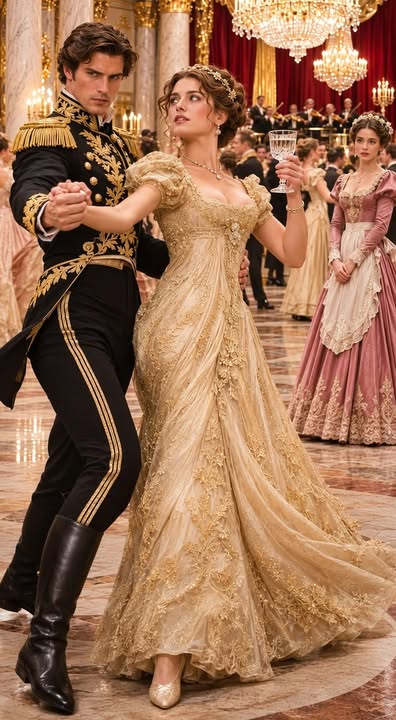
Part 4 – The Page That Was Never Lost
No one answered.
Lord Harbury’s gaze remained on me, composed but intent, while the steward closed the ledger with a careful hand.
“Miss Vale,” he said, “we are trying to establish what happened, not to take anything from you.”
“Then why does my mother’s name appear beside an accusation no one can explain?”
The steward’s eyes lowered to the cover.
“That is precisely what we hope to learn.”
I could feel the folded marker beneath my apron, pressing against my palm.
I had not told either man about it, and I was no longer sure whether keeping silent was wise or merely another way of protecting the palace from questions.
“I will not give you my mother’s book,” I said.
Lord Harbury inclined his head.
“I would not ask you to.”
“You already asked whether you could examine it.”
“I asked whether it might help clarify the record.”
“Those sound like the same thing to me.”
For a moment, his expression softened.
“Then let us say this plainly: no one here has the right to claim your mother’s belongings.”
The steward looked at him, surprised by the concession.
I was surprised too.
“May I see the ledger again?” I asked.
The steward opened it to the altered line.
The words dismissed for theft sat beside Eleanor Vale’s name in a hand darker than the writing around it.
“They were not written at the same time,” I said.
“No,” the steward replied. “The ink is different.”
“Do you know when the entry was changed?”
“Not yet.”
Lord Harbury turned slightly toward him.
“Have the page examined by the archivist.”
The steward nodded.
“I will.”
“And no further copies are to be made until we know who altered it,” I said.
The adviser looked at me.
“That is a reasonable request.”
I had expected another polished evasion.
Instead, he accepted it without argument, which left me with no easy answer.
The steward closed the ledger again.
“You may go, Miss Vale.”
I curtsied and left, the note hidden inside my apron and my mother’s name following me down the corridor like a quiet bell.
I did not go straight to the servants’ rooms.
I walked first to the linen room, where the music book had been left on the table.
It was still there, its battered cover closed.
I lifted it and held it against my chest.
The paper marker remained between the waltz pages.
Someone had known enough to search for the book, but had not taken it.
That unsettled me more than a theft would have.
It suggested a person who wanted me to find the clue.
By the time I reached my room, Alexander was waiting outside the door.
He stood alone, without his uniform, and his face carried the same careful seriousness I had seen when he first showed me his father’s note.
“I heard Lord Harbury asked to see you,” he said.
“How?”
“The steward sent word that the meeting had ended.”
“That does not explain how you knew I was here.”
“I waited.”
I did not move aside.
“Did you know about the accusation?”
“No.”
“Did Lord Harbury?”
“I don’t know.”
“Do you believe my mother took anything?”
“No.”
His answer came at once.
I studied his face, searching for the hesitation I had heard when he first spoke my mother’s name.
There was none now.
“Why?”
“Because nothing I have seen suggests that she did.”
“That is not proof.”
“No,” he said. “It isn’t.”
The plainness of his answer made me lower the book a fraction.
He did not ask to come in.
“I found a note in the linen room,” I said.
His gaze moved to the music book.
“What sort of note?”
I considered how much to tell him.
Then I remembered the words I had read in the steward’s office: a record of what she kept may matter.
“They say my mother’s copy was returned to your family’s papers after a demonstration,” I said. “And that the original page was kept with private correspondence.”
Alexander’s expression changed.
“May I read it?”
I removed the paper marker and handed it to him.
He read the lines once, then again.
“Where did you find this?”
“Inside the music book.”
“Did you put it there?”
“No.”
He looked at the passage, then at the book.
“If the original page is in the family correspondence, my father may have kept it.”
“Or someone wanted us to believe that.”
“That is possible.”
“You don’t sound surprised.”
“I’m trying not to decide before we know.”
He gave the marker back to me.
“Would you be willing to compare the book with his papers?”
“Not in the record room.”
“No.”
“And not with Lord Harbury.”
“I would not ask you to trust him before we understand why this was hidden.”
I searched his face.
“Where, then?”
“There is a cabinet in my father’s old study that has not yet been fully catalogued.”
“Why not?”
“Because it holds personal correspondence, and the palace archivist has been waiting for my permission to sort it.”
“Then your permission could make the story known.”
“It could.”
“And you still want me to come?”
“I want you to choose whether we look.”
The music book felt heavier in my arms.
“I will come,” I said. “But I keep the book in my hands.”
“Agreed.”
“And if we find something that concerns my mother, I read it before anyone else does.”
“Agreed.”
His willingness was not proof that I could trust him.
But it was a beginning.
The old study lay in a quieter wing of the palace, beyond a long gallery where portraits of former rulers watched from gilded frames.
Alexander walked beside me, neither taking my arm nor moving ahead.
At the study door, he stopped.
“My father used to sit here after council,” he said.
“Did he like the room?”
“He said it was the only place in the palace where the walls did not expect him to make a decision.”
He opened the door.
The room smelled of cedar, old paper, and the faint trace of smoke left in a hearth that had not been used for years.
A writing desk stood beneath a tall window.
On its surface lay a small stack of books, neatly arranged, and a brass letter opener shaped like a feather.
The cabinet was set into the wall beside the shelves.
Alexander unlocked it with a narrow key from his pocket.
Inside were several boxes tied with ribbon, bundles of letters, and a few loose papers bearing dates from the last years of his father’s life.
He did not touch them at once.
“I have not looked through all of this,” he said.
“Why not?”
“After he died, every letter became evidence of something. People wanted to tell me which ones mattered and why.”
He reached toward the nearest bundle, then stopped.
“I suppose I wanted to remember him without being told what to think.”
I understood the feeling.
“Then we should read slowly.”
He smiled faintly.
“That seems to be your way of doing things.”
“It has served me well.”
We began with the most recent papers, because neither of us knew where else to start.
There were account notes, invitations, and a list of repairs to the west gallery.
Alexander read aloud only when a line seemed relevant.
Most were not.
The afternoon light shifted across the desk while the room grew quiet around us.
At last, I found a folded sheet tucked beneath an envelope marked for the late king’s private secretary.
It bore the same date as the note Alexander had found earlier.
The paper was thin, its edge uneven where it had been torn from a larger page.
At the top, in my mother’s handwriting, were the words: “For the lesson to be understood, not merely repeated.”
I drew in a breath.
Alexander came to stand beside me.
“You recognize her hand?”
“I do.”
Beneath the heading was a short passage in faded ink.
“The glass will show what the feet conceal. If the hand follows the body too quickly, the water carries the mistake forward. Let the movement finish before choosing another.”
I read it twice.
The words were not a description of a dance.
They were an instruction.
A lesson my mother had made for someone.
At the bottom of the page, her name appeared beside a small musical mark.
E. Vale.
Alexander sat down slowly.
“My father kept this.”
“He kept a page written by my mother.”
“And someone removed it from the papers.”
“Or moved it.”
He looked at the rough edge.
“The paper was torn from a larger sheet.”
I turned it over.
On the back was a faint impression of another line, pressed into the paper by the page that had once rested above it.
I tilted it toward the window.
“Can you read it?” Alexander asked.
“Not all of it.”
I traced the shallow marks with my eyes.
“Waltz demonstration,” I said. “Then something about trust.”
He leaned closer.
The last word was clearer than the rest.
“Trust,” he murmured.
My mother had never spoken to me of teaching a prince.
She had told me that music could carry what a person could not say, and that careful attention mattered more than command.
Now I wondered whether those sayings had been lessons passed down from a moment she had helped shape.
“Did your father ever mention her?” I asked.
“Not that I remember.” Alexander looked toward the window. “He told me once that a person should learn to recognize when another was carrying more than they showed. I thought it was one of his general lessons.”
“Perhaps it was.”
“Perhaps he learned it from her.”
I looked down at the page.
A painful warmth rose behind my eyes, though I could not have said whether it was grief or pride.
My mother had not been merely a worker who copied music for someone important.
She had been part of the making of a lesson the royal family had kept for years.
And the record had erased her.
I placed the page beside the marker from the linen room.
The handwriting on the marker was different from my mother’s, but the paper matched the correspondence bundle.
“The person who left this knew the page was here,” I said.
“Or knew my father had kept it.”
“Could it have been the clerk?”
“It could have been someone in the family office, the records room, or the palace staff.”
“Could it have been Lord Harbury?”
“I don’t know.”
“Would he want the old page hidden?”
Alexander looked down at his father’s handwriting on another paper.
“Lord Harbury served my father for a long time. He has always believed that protecting the crown sometimes means choosing which truths are allowed to be seen.”
“That is not the same as lying.”
“No. But it can become difficult to tell the difference.”
He said it without defending the adviser, and that mattered.
I opened my mother’s music book to the waltz.
The penciled marks looked different beside the old paper.
Four short strokes, a pause, then three.
The faded sheet had a line of musical notes at its bottom edge, partly torn away.
I set the book beside it.
The notes did not match at first glance.
Then I followed the rhythm with my finger.
Four strokes, a pause, then three.
The marks were not a code.
They were a timing instruction.
“Your mother used the music to teach the movement,” Alexander said.
“She wrote the rhythm into the margin.”
“Could this page have belonged to the original score?”
I compared the torn edge with the shape of the page in the book.
The paper was different, and the missing portion would not fit.
“No,” I said. “This was written separately.”
“Then the original page may still be somewhere else.”
I looked again at the correspondence bundle.
The envelope marked private secretary had a faint notation on its flap, almost hidden beneath the ribbon.
“Waltz demonstration—inventory,” I read.
Alexander leaned closer.
The word inventory had been underlined twice.
“Perhaps the dated inventory can tell us where the original score went,” he said.
“Where is it kept?”
“In the archive.”
“The same room where the ledger was altered.”
“Yes.”
“Then we cannot simply ask for it.”
“No.”
We sat with the papers between us, each of us thinking through the next step.
The mystery no longer belonged only to my mother’s life.
It had reached into Alexander’s father’s papers, into the records of the palace, and into the competition that had placed me at the center of a ballroom.
I felt the connection without yet understanding it.
“What if the challenge was based on this lesson?” I asked.
Alexander’s face tightened.
“It may have been.”
“You made nineteen women follow your steps while holding water.”
“I did.”
“Were you trying to teach them composure?”
“No,” he said. “I wanted to know who could endure the test.”
“And what would that have told you about a wife?”
He did not answer immediately.
“I thought it would tell me whether someone could adapt under pressure.”
“Without knowing what pressure meant to her.”
“No.”
“And without listening to any of them.”
His gaze dropped to the page.
“I thought I was asking a fair question because I made the rules clear.”
“Rules can be clear and still measure the wrong thing.”
He looked at me then, and I saw the ballroom again in his expression: the glass, the dancers, and the confident turn that had made every woman’s efforts seem like a performance for his judgment.
“I see that now,” he said.
“Do you?”
“I am trying to.”
I believed he was.
That did not undo the night, but it changed the shape of it.
He had not simply set a challenge.
He had repeated a lesson without understanding its purpose, turning something meant to teach trust into a contest that asked women to prove themselves.
My mother’s work had been folded into a custom that no longer remembered her name.
“What will you do if we find the original?” I asked.
“I don’t know yet.”
“That is an honest answer.”
“I would rather give you one of those than pretend I already know what should happen.”
We searched the remaining papers until the room was dim with evening.
At the bottom of the cabinet, Alexander found a narrow inventory book wrapped in blue cloth.
Its cover bore a date from the winter my mother had worked at the palace.
He set it on the desk.
I held the music book open beside it, though I could not explain why I was doing so.
The inventory listed objects used for a demonstration in the west gallery: two crystal glasses, a small music stand, a copied score, and one packet of correspondence.
Beside the packet, someone had written a location.
“East gallery, wall cabinet,” Alexander read.
“That cabinet was removed years ago,” he said. “The gallery was renovated.”
“Then the papers may have been moved with it.”
“Or they may have been lost.”
The final entry had been added in a different hand.
“Original page to remain sealed until lesson is completed.”
Alexander stared at the line.
“What lesson?” I asked.
He ran a finger beside the writing without touching it.
“I don’t know.”
“Could it mean your father intended to show you the page later?”
“Perhaps.”
“Was there a sealed cabinet in the east gallery?”
“There was a wall cabinet behind the old music alcove.”
“Do you know what happened to it?”
“No.”
The room seemed to quiet further.
The inventory had named not just a packet, but a place where it had been kept.
The location was gone, but the palace was full of objects that had been moved, stored, or forgotten.
I folded my mother’s book closed.
“Someone at the palace may know where the old cabinet went.”
“Someone in the records office might.”
“Or someone who was there when the gallery was renovated.”
Alexander glanced toward the door.
“Lord Harbury would know who arranged the work.”
“He may also know why the ledger was changed.”
“That is possible.”
I gathered the papers into a neat stack.
“Then we need to speak with him.”
“Together?”
“If I go alone, he can tell me I have misunderstood. If you go alone, he can tell you what he thinks you need to know.”
A restrained smile touched Alexander’s face.
“And together?”
“Together, we can listen.”
He considered that.
“Then we’ll speak with him tomorrow.”
The next morning, Lord Harbury received us in his office.
He rose when Alexander entered, then bowed.
His eyes moved to me, and I curtsied.
“Your Highness,” he said. “Miss Vale.”
“We found a page in my father’s papers,” Alexander said. “It concerns Eleanor Vale and the waltz demonstration.”
Lord Harbury’s face remained still, but a pause appeared before he answered.
“What did you find?”
Alexander placed the page on the desk.
The adviser read the writing in silence.
When he reached my mother’s name, his eyes rested there.
“You recognize her?” I asked.
“I recognize the name.”
“That is not what I asked.”
He looked up.
“I remember that a woman named Eleanor Vale worked at the palace during that period.”
“Do you remember her being dismissed for theft?”
The steward, seated near the window, looked sharply at him.
Lord Harbury did not.
“No,” he said. “I have no memory of such an accusation.”
“Then how did it get into the ledger?”
“I cannot say.”
“Did you know she had helped with the waltz demonstration?”
“I knew there had been one.”
“Did you know she created the lesson?”
“I did not know she had created it.”
The distinction seemed to trouble him.
Alexander laid the inventory beside the page.
“The original was kept in a sealed packet in a wall cabinet in the east gallery.”
Lord Harbury studied the notation.
“That cabinet was removed during the renovation.”
“Where was it taken?”
“I do not know.”
“Who arranged the renovation?”
“The palace architect, under the steward’s authority.”
The steward nodded.
“Some furnishings were transferred to storage. Others were sent to the archive.”
“Could the cabinet have been sent there?” I asked.
“It could have,” the steward said. “I would have to check the old transfer lists.”
“Please do.”
Lord Harbury folded his hands.
“Miss Vale, there is another matter.”
My shoulders tightened.
“What matter?”
“The contest has drawn more attention than expected. The court is already discussing what it means for the prince’s future.”
Alexander’s expression cooled.
“Then let them discuss it.”
“Your Highness, a public challenge is easily misunderstood.”
“It was meant to be a public challenge.”
“It was meant to help you assess character.”
“Whose idea was that?”
Lord Harbury paused.
“Your father’s papers suggested that the exercise had been used to teach composure.”
“That does not answer me.”
“No,” the adviser said quietly. “It does not.”
I watched his face.
For the first time, he seemed less like a man guarding a door and more like someone who had discovered there was a room behind it he had never entered.
“Did you advise the prince to hold the contest?” I asked.
“I advised him on the practical arrangements.”
“Did you know the lesson came from my mother?”
“No.”
“Would you have told him if you had known?”
Lord Harbury looked toward Alexander, then back at me.
“I would have urged him to understand its purpose before repeating it.”
That answer was not perfect.
But it was more than I had expected.
The steward returned from the adjoining records room with a narrow volume under his arm.
“I found the transfer list,” he said. “The east gallery cabinet was moved to the old music room during the renovation.”
“The old music room?” Alexander repeated.
“It has been closed for years,” the steward said. “The cabinet may still be there.”
Lord Harbury’s composure shifted.
“That room was sealed after the renovation.”
“Why?” I asked.
“The doorway was boarded when the new gallery was built,” the steward replied. “There was no reason to keep it in use.”
Alexander looked at the inventory.
“Could the packet still be inside the cabinet?”
“It is possible,” the steward said.
For a moment, no one spoke.
The original page might be hidden in the palace, still waiting in the place my mother had left it.
Not lost.
Not destroyed.
Simply forgotten behind a wall.
Alexander turned to me.
“Would you like to look?”
I felt the old instinct to refuse anything that might draw attention toward me.
Then I thought of the false accusation in the ledger, of my mother’s name cut away and replaced, and of the sentence in her own hand about letting a movement finish before beginning another.
“Yes,” I said. “But we do it carefully.”
The steward arranged for the records staff to inspect the passage behind the old music room after the evening offices had closed.
Lord Harbury did not object.
He asked only that the work be done in the presence of the steward and the archivist, so there would be no question later about what was found.
I agreed.
Alexander agreed too.
The old music room lay behind a short corridor hidden by a pair of tall curtains near the east gallery.
The doorway had been boarded over from the gallery side, but the steward found an access panel in a service passage.
A carpenter removed the panel while the archivist held a lantern.
The boards came away with a dry sigh of dust.
Beyond them lay a narrow room, untouched by the renovations.
A pianoforte stood beneath a sheet.
The wall cabinet from the inventory remained in place, its dark wood dulled by age.
My hands were cold as the steward opened its doors.
Inside were a few empty folios, a cracked music stand, and a small packet tied with faded blue ribbon.
The archivist lifted it carefully and brought it to the table.
The seal was old but intact.
Alexander looked at me.
“Do you want to open it?”
I nodded.
The ribbon loosened under the archivist’s hands.
Inside were several letters, a copy of the waltz score, and a single page folded in half.
The first letter was addressed to Alexander’s father.
The second bore my mother’s name.
I opened that one with trembling fingers.
The letter was brief, written in the same careful hand as the music book.
“Your Highness,” it began, “I have returned the copied score and the notes for the glass exercise. I will not remain in the palace to see the lesson claimed as a court invention.”
I read the sentence again.
Alexander’s hand hovered near mine, then fell away.
The letter continued.
“I made the exercise because the prince must learn that a person’s balance cannot be judged by the path another chooses for them. He must learn to notice when another is adjusting, and when he is merely asking them to endure.”
My chest tightened.
It was not a complaint.
It was not a request for praise.
It was my mother’s clear refusal to let her work be taken from her and turned into something it was not.
The final lines read:
“I have not stolen from the palace. I have given my work freely, but I will not have my name erased from it. I am leaving of my own choice, and I ask only that the truth be kept with the music.”
The room seemed to tilt, though the floor did not move.
My mother had not been dismissed for theft.
She had left because she would not let the court claim her work and silence her.
The altered ledger had not merely misstated a departure.
It had turned her refusal into an accusation, making her look guilty when she had acted with dignity.
I could not speak.
Alexander read the letter over my shoulder.
When he reached the end, his face had gone pale.
“I made the same mistake,” he said.
I looked at him.
“I took a lesson meant to teach me how to notice someone else and turned it into a test of whether women could keep up with me.”
He did not try to soften the words.
He did not ask me to tell him he had meant well.
“You did not know,” I said.
“No. But I should have asked what the challenge was meant to teach before I made it mine.”
“That is true.”
His gaze lowered to the letter.
“I’m sorry.”
This time, the apology did not feel like an attempt to escape discomfort.
It felt like he understood what had been damaged.
The archivist lifted the final paper from the packet.
“This appears to be the original page,” she said.
A title had been written across the top.
“Waltz Demonstration: A Lesson in Attention and Trust.”
Beneath it was the outline of the exercise, followed by a note in a different hand.
“Prepared jointly by His Majesty and Eleanor Vale.”
My mother’s name was fully written, not cut away.
I placed my fingertips beside it.
For years, I had kept her music because it was the clearest piece of her I still possessed.
Now I held proof that she had made something beyond our small rooms, something the palace had hidden but not destroyed.
The truth had been found.
Or so I believed.
The archivist turned the page over.
On the back, a final line had been written in my mother’s hand.
“Should the lesson be used again, let the prince be told the name of the woman who made it.”
Alexander stared at the sentence.
Lord Harbury, standing at the edge of the room, had gone very still.
I looked from my mother’s words to the adviser.
“Did you know this page existed?”
“No,” he said.
“Did anyone?”
He did not answer.
The archivist studied the lower edge of the paper.
“There is something else here,” she said.
A second sheet had been folded behind the original, so thin it had nearly blended with it.
The archivist eased it free.
This one was not in my mother’s hand.
It was a short note dated several years later, after the king’s death.
The writing was unmistakably Lord Harbury’s.
I read the first line.
“By order of the royal household, the original page is to remain sealed until the prince has completed the lesson.”
Alexander looked at the adviser.
Lord Harbury’s face had lost its practiced calm.
“I do not remember writing that,” he said.
“But you did,” Alexander replied.
The note continued.
“Once the lesson is repeated, the page should be returned to the prince’s papers, and the staff record restored to its original wording.”
The room fell silent.
The page had not been hidden forever.
It had been kept for a reason.
Someone had intended for Alexander to find it only after he repeated his father’s exercise.
I turned the note over.
At the bottom was a second sentence, written in a smaller
**–END OF PART 4–CLICK “NEXT” AT THE BOTTOM OF THE PAGE TO CONTINUE READING**
* * *
[PREVIOUS: PART 3](https://storyly.idolsgift.com/blog/part-3-the-secret-beneath-the-surface-058) | [NEXT: PART 5](https://storyly.idolsgift.com/blog/part-5-the-secret-beneath-the-surface-058)
✓ Lynn R. Adams
Part 4 – The Page That Was Never Lost No one answered. Lord Harbury’s gaze remained on me, composed but intent, while the steward closed the ledger with a careful hand. “Miss Vale,” he said, “we ar…