PART 4: The Secret Beneath the Gold 041
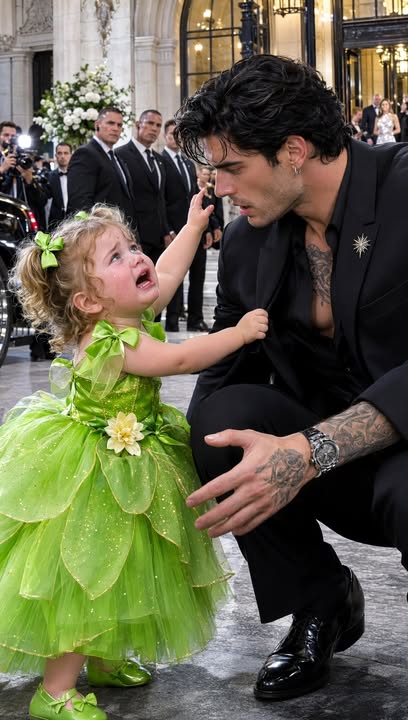
Part 4 – The Name That Waited
My mother drew the envelope from the velvet lining with the care of someone lifting a sleeping child.
The paper had grown brittle with age, and my father’s handwriting—firm, unmistakable—crossed the front.
For Alexander, when the name on the ring is no longer only a possibility.
I read the words twice, then looked at the ring in my hand.
“Who knew this letter was here?” I asked.
“No one,” Eleanor said.
Richard’s eyes remained fixed on the envelope.
“Your father put it there,” he said. “He never told me.”
“Why did you say you’d never found a letter?”
“Because I hadn’t.”
His voice held no evasion, and yet the photograph in the box had already taught me that every truth in this family seemed to arrive wrapped around another secret.
Grace came into the study with Lily in her arms.
“What happened?”
I showed her the envelope.
She looked at the handwriting, then at my mother.
“Is it about the ring?”
“I believe so,” Eleanor said.
“You believe?”
“I have never read it.”
Grace studied her face, searching for some trace of the old practiced certainty.
Whatever she found there, she did not comment.
“Should we open it?” I asked.
My mother glanced toward Lily.
“Not in front of her.”
“Why not?” Grace asked.
“Because she deserves to hear the truth without feeling she has to carry it.”
The answer seemed to surprise Grace, though it did not persuade her.
“I’ll take her to the kitchen,” she said.
Lily leaned over her mother’s shoulder to inspect the envelope.
“Papa letter?”
Richard’s mouth softened.
“It’s a letter from Lily’s grandfather.”
“Grandpa?”
“Yes.”
“Is he coming?”
The question left a hush behind it.
I crouched beside her.
“No, sweetheart. He died before you were born.”
She looked down at the ring in my hand.
“His ring?”
“It belonged to him.”
“Mine now?”
“I think he hoped it might be.”
Lily considered that, then rested her cheek against Grace’s shoulder.
“Kitchen?”
Grace glanced at me.
“Take your time,” I said. “We’ll come find you.”
She carried Lily toward the hall, and Lily lifted one hand in a sleepy wave.
Richard waited until their footsteps faded.
“Open it,” he said.
Eleanor remained beside the table, her fingers clasped together.
I slid a letter opener beneath the envelope flap.
The paper inside was folded once, with a small wax seal pressed flat against the crease.
The seal bore the Hayes crest, its edges softened by time.
My father had always believed that a message should be written as plainly as possible, even when the truth itself was difficult.
I unfolded the letter.
Alexander,
If you are reading this, then the name we once considered has become the name of a child.
The ring was not engraved because we knew who that child would be.
It was engraved because I wanted the possibility remembered.
I stopped reading.
The room seemed to draw a careful breath.
Grace was not there to hear it, and for a moment I was glad.
The first line had already begun to undo the story we had built around the ring.
I continued.
Years ago, I asked Eleanor to have a name engraved in the gold while we were planning the family trust.
Lily was one of the names your mother and I liked for a daughter or granddaughter.
There was no child then, and no promise of one.
The date is the date the ring was ordered, not the date anyone foresaw a birth.
I read the lines again, because the truth was so simple that my mind kept expecting something more complicated to appear beneath it.
“The date is the date the ring was ordered,” I said.
Richard leaned closer, but did not touch the paper.
“So it isn’t a birth date.”
“No.”
“And there was no child planned?”
“Not a particular child.”
Eleanor lowered her eyes.
The engraved name had not been proof of some mysterious knowledge, nor a warning, nor an inheritance prepared for a child who did not yet exist.
It was only a wish my father had preserved.
A name he and my mother had liked.
A possibility.
I looked at the ring, now warm from my palm.
The mystery had not vanished, but its most frightening shape had.
Grace returned to the doorway.
“Is it about Lily?”
“Yes,” I said. “But not the way we thought.”
I held the letter out to her.
She settled Lily on the window seat, where the child began examining the small wooden birds set along the sill.
Then Grace took the letter and read it in silence.
Her expression softened at first, then tightened at the mention of my mother.
“Your father chose the name,” she said.
“He and my mother chose it together.”
“And the date?”
“The date the ring was ordered.”
“So this wasn’t evidence anyone expected Lily.”
“No.”
Grace looked up from the letter.
“Then why did Richard say acknowledging her would activate an inheritance your father concealed?”
Richard’s face showed the strain of a man who knew there was no honest way to turn from the question.
“I was wrong about what the ring meant.”
“Wrong, or keeping something back?”
“Wrong,” he said. “I believed the ring was connected to the trust because your father made them at the same time.”
“And now?”
“Now I understand that the ring was a family keepsake, not the key to the trust.”
Eleanor reached for the letter.
“May I?”
Grace hesitated, then gave it to her.
My mother read the passage twice, her lips moving silently over the line about the name.
For a moment, she looked not like the woman who had managed the family’s secrets, but like someone standing beside a door she had once closed and had never found the courage to reopen.
“He wrote this after we talked about the trust,” she said.
“Why didn’t you tell me about the engraving?” I asked.
“I didn’t know your father had followed through with it.”
“But you knew he liked the name.”
“Yes.”
“Did you know the ring was meant for me to pass on?”
“I knew it was part of the trust papers. I thought it had remained among your father’s possessions.”
“Why was it hidden in the first place?”
“I don’t know.”
Grace looked at her.
“You were the one who had it.”
“I never had the ring, Grace.”
“You had the velvet box.”
“I had access to the house. That is not the same thing.”
“Then where did Lily get it?”
The question returned to the center of the room, where the letter could not answer it.
Lily had found the ring tucked inside the hidden pocket of her dress.
She had recognized the black velvet box at the gala, or perhaps the crest, or perhaps nothing at all.
She had carried the gold to me without understanding that it could summon a history adults had spent years trying to control.
“I don’t know,” Eleanor said.
“Could it have been put in her dress before the gala?” Grace asked.
“No,” I said. “The dress came from your home.”
Grace looked at me.
“I bought it secondhand.”
“From whom?”
“A children’s clothing shop near our old apartment. The owner knows me.”
Richard’s gaze shifted to the ring.
“Could the ring have been sewn into the pocket when the dress was made?”
“The pocket is new,” Grace said. “I added it myself.”
“Then someone placed it there afterward.”
Grace’s face changed.
“You think someone entered our home?”
“I don’t know,” Richard said quickly. “I’m not suggesting that.”
“Then what are you suggesting?”
“That the ring may have been given to you through someone who had no idea what it meant.”
“Or someone knew exactly what it meant,” I said.
My mother’s eyes sharpened.
“Alexander.”
“I’m not going to pretend the timing doesn’t matter.”
“The letter explains the engraving.”
“It explains the name and date. It doesn’t explain how the ring ended up with Lily.”
Grace picked up the ring from the table and turned it between her fingers.
The gold was worn smooth on the outer edge, as if it had spent years being handled.
“There’s another question,” she said.
“What?”
“Why was it hidden in the velvet box?”
Eleanor looked at the box.
“Your father may have placed the letter there because he wanted it found later.”
“Later by whom?” Richard asked.
No one answered.
I continued reading.
The letter’s next paragraph had been obscured by a crease, and I smoothed it carefully beneath my palm.
The trust is meant for our descendants, but it is not a prize to be claimed without thought.
I wanted you to have the freedom to choose what kind of future you would build, rather than inherit a decision already made for you.
If you have a child, the trust should be protected until that child is old enough to understand what it means.
I looked up.
“The trust wasn’t meant to pass automatically to the first descendant.”
“Your father wanted it held until the child could make a choice,” Richard said.
“Why would a child need to choose?” Grace asked.
“Because he believed an inheritance could become a burden,” Eleanor replied. “He wanted the person who received it to have the right to refuse.”
“That sounds like him,” I said.
My father had taught me that money could make a person comfortable, but never decent.
I had spent much of my life treating his fortune as a measure of power.
It was strange to discover that he had designed a way for his descendants to step away from it.
Grace read the remaining lines aloud.
If the family is ever asked to choose between protecting its name and protecting the people who bear it, choose the people.
I had no memory of him saying those exact words.
I remembered the feeling of them all the same.
Eleanor sat down slowly.
“He wrote that after one of Martin’s first reports,” she said.
“What report?” I asked.
“Before Richard knew there was anything to investigate, Martin warned your father that someone had found irregularities in the family accounts.”
“So my father already suspected him.”
“He suspected that someone was moving money. He did not yet know who.”
Richard’s expression grew still.
“That changes the timeline.”
“How?” I asked.
“Your father didn’t discover the wrongdoing after I began investigating. He was watching before I ever brought him the records.”
“Did he tell you that?”
“No.”
“Why not?”
Richard’s jaw tightened.
“He may have wanted to keep me from looking in the wrong place.”
“Or he knew more than he told either of you.”
Eleanor’s face turned toward the letter.
“He was trying to keep us safe.”
“That’s what everyone says when they make a decision for someone else,” Grace said.
My mother absorbed the words without looking away.
“You’re right,” she said.
Grace’s expression flickered.
It was not forgiveness.
But it was the first time Eleanor had answered her without explaining why she deserved to be understood.
My phone vibrated on the table.
The message was from our family attorney, who had been asked to review the trust after Lily’s name appeared on the ring.
I opened it.
The tone was concise, but the meaning was not.
The trust’s original records had been sealed under a court-approved agreement.
Only my father’s named executor could access them, and the executor had been Richard.
I looked at my uncle.
“You were the executor.”
“I didn’t know.”
“You signed the documents.”
“I signed a great many papers at the time.”
“Richard,” Eleanor said, “you were the executor.”
“I believed the trust had been placed under your care.”
“I was the guardian of the family records, not the executor.”
The air in the study seemed to thin.
My father had given Richard the authority to open the trust, and Richard had spent eleven years hidden from the family.
“How do we open it now?” I asked.
“With the original papers and the executor’s signature,” the attorney’s message continued. “The bank can provide the sealed file after verification.”
Richard took a slow breath.
“I can sign.”
“Not until we know what’s in it,” Grace said.
He turned toward her.
“You’re right.”
“Lily’s name is on the ring, but that doesn’t mean she should inherit a secret she never asked for.”
“I agree.”
“And it doesn’t mean she should be pulled into anything dangerous.”
“No.”
“Then we wait until we understand the trust.”
Eleanor’s hands folded in her lap.
“The trust itself is lawful,” she said. “It was created to protect the family’s legitimate holdings.”
“Are all the holdings legitimate?” Grace asked.
My mother did not answer at once.
That silence gave me more than a polished denial would have.
“There are businesses in the family that I don’t understand,” Grace continued. “And there are people whose names you’ve all been careful not to say.”
“We have spent years keeping some parts of the family separate from the rest,” Eleanor said.
“Separate from whom?” I asked.
“From you, at first.”
“Then from Grace?”
Eleanor looked at her.
“From anyone who could be used to reach the people we love.”
Grace’s expression hardened.
“You don’t protect people by making them afraid of the ones who are supposed to love them.”
“No,” Eleanor said. “I know that now.”
The admission settled quietly among us.
Outside, a gust of wind stirred the trees.
From the kitchen came Lily’s laugh, bright enough to make the room feel briefly ordinary again.
Grace glanced toward the sound.
“I want her to have a childhood that belongs to her,” she said. “Not one organized around a ring, a trust, or your family’s history.”
“So do I,” I said.
She held my gaze.
“Then don’t let the trust become the reason you keep all of this going.”
“I won’t.”
“You can’t make that promise on behalf of everyone.”
“No. I can only make it for myself.”
She turned toward the window seat.
Lily had lined the wooden birds along the sill, then arranged them facing the garden.
“Birds go outside,” she declared.
“That’s right,” Grace said, joining her.
Lily pointed to the ring on the table.
“Bird ring?”
“No, sweetheart,” Grace said. “That’s not for the birds.”
“Mine?”
“It’s yours,” I said.
Grace looked back at me.
“Only if she wants it. We don’t have to make it into something important.”
Lily reached out, and I placed the ring in her palm.
She held it carefully, as if she could sense the weight adults had given it.
Then she passed it back to me.
“Dada keep.”
The small choice moved through me more deeply than I expected.
I closed my hand around the ring.
“I’ll keep it safe.”
Eleanor rose and stepped toward Grace.
“May I talk with you alone?”
Grace’s body went rigid.
“Why?”
“Because I owe you an apology that I can’t make properly in front of everyone.”
“You have already apologized.”
“I said I was sorry. I haven’t told you what I understand now.”
Grace looked down at Lily, who was trying to make two birds stand on the same wooden branch.
“I don’t know if I want to hear it.”
“You don’t have to.”
My mother did not reach for Grace or ask her to soften.
She simply waited.
After a moment, Grace nodded toward the garden.
“Outside. Not far.”
Eleanor followed her through the glass doors.
Richard remained by the desk with me, the letter open between us.
“Your father wrote that the people mattered more than the family name,” I said.
“He believed it.”
“Then why did he let us keep living inside so many lies?”
Richard took a long time to answer.
“Because he thought the danger would end before the lies had time to take root.”
“And it didn’t.”
“No.”
“Did he know Martin was involved before you disappeared?”
“He suspected it. He didn’t have proof.”
“Then what did he give you before the funeral?”
Richard looked toward the letter.
“Nothing that I remember.”
“You were with him weeks before you disappeared.”
“Yes.”
“Are you certain he never told you about the trust?”
Richard’s face changed.
Not fear, exactly.
Recognition.
“There was a meeting,” he said.
“What meeting?”
“Your father asked me to come to his study the night before the funeral.”
“You said the photograph was the last time you were together.”
“It was the last time I saw him in person.”
“And the meeting?”
“It was a telephone call.”
“You told me you met with him.”
“I said he asked me to come to his study.”
“You left something out.”
Richard looked down at the photograph.
“I had forgotten the details.”
“Why?”
“Because he was trying to give me instructions about the trust, and I thought the trust was the least important thing in the room.”
“What did he say?”
“That the family’s future depended on someone being willing to give up control.”
My throat tightened.
“Control of what?”
“I don’t know. I assumed he meant the trust.”
“Did he mention Martin?”
“He said that if the records were ever brought into the open, they would expose more than one person.”
“Did he tell you to keep them hidden?”
“He told me not to let anyone use the trust to silence someone who wanted to speak.”
“That’s not the same as hiding the records.”
“No,” Richard said. “It isn’t.”
I looked at the photograph again.
My father’s arm was draped across Richard’s shoulder, and Richard’s younger face turned toward the camera.
The picture had been taken not long before a funeral staged for the world, but the letter and the trust had been planned long before any of us understood the danger.
My phone vibrated again.
This time the attorney had sent an attachment: a scanned page from the original trust file, retrieved from the bank’s preliminary records.
The page listed the trust’s founding beneficiaries, the date it had been sealed, and a handwritten note from my father.
The line beneath the names caught my eye.
Successor trustee: Richard Hayes, with authority to transfer control to the next generation upon proof of lawful administration and full disclosure of the underlying accounts.
Richard read the words over my shoulder.
“Full disclosure,” I said.
He nodded, but something in his expression suggested the phrase had found a place in his memory he had not wanted to revisit.
“Did you know about the accounts?” I asked.
“I knew there were discrepancies. I didn’t know how far they reached.”
“Who did?”
The attorney’s attachment included a second page, a list of the original officers who had signed the trust documents.
My father’s name was at the top.
Eleanor’s was beneath his.
Richard’s followed.
And beside one final signature, written in careful ink, was the name of Martin Vale.
“He signed the trust papers,” I said.
Richard stared at the page.
“He helped draft them.”
My mother and Grace returned from the garden.
Eleanor’s eyes were red, but her posture remained steady.
“What happened?” I asked.
“Nothing is solved,” Grace said. “But she listened.”
“I did,” Eleanor replied.
I showed them the page on my phone.
When Eleanor saw Martin’s name, she stopped walking.
“I didn’t know he had signed the original trust documents.”
Richard looked at her.
“You approved them.”
“I approved the structure. Your father handled the drafting.”
“But you signed.”
“Yes.”
Grace drew Lily closer.
The true shape of the past had shifted again.
The ring had not foretold Lily’s birth.
The name had been a possibility my father wanted to leave open, and the date recorded the day he first made room for a future no one could predict.
But the trust was not just a family inheritance.
It was a record of the choices made by the people who had built it, and one of those people had been Martin Vale.
My father’s final instruction had not been to protect the family from the truth.
It had been to bring the accounts into the open.
The phone vibrated once more.
The attorney’s message was short.
Martin Vale’s counsel has requested an immediate meeting concerning the trust, and has stated that Mr. Vale intends to exercise rights recorded in the original agreement.
Richard read it, then looked toward the old photograph.
“My father knew Martin was part of the trust from the beginning,” I said.
“No,” Richard replied quietly. “Your father knew Martin could reach the trust.”
He lifted his eyes to mine.
“And if Martin has come back now, it means he knows Lily’s name has been found.”
**–END OF PART 4–CLICK “NEXT” AT THE BOTTOM OF THE PAGE TO CONTINUE READING**
* * *
[PREVIOUS: PART 3](https://echoesofstories.idolsgift.com/blog/part-3-the-secret-beneath-the-gold-041) | [NEXT: PART 5](https://echoesofstories.idolsgift.com/blog/part-5-the-secret-beneath-the-gold-041)
✓ Lynn R. Adams
Part 4 – The Name That Waited My mother drew the envelope from the velvet lining with the care of someone lifting a sleeping child. The paper had grown brittle with age, and my father’s handwriting—…