PART 4: The Secret Beneath the Brace 008
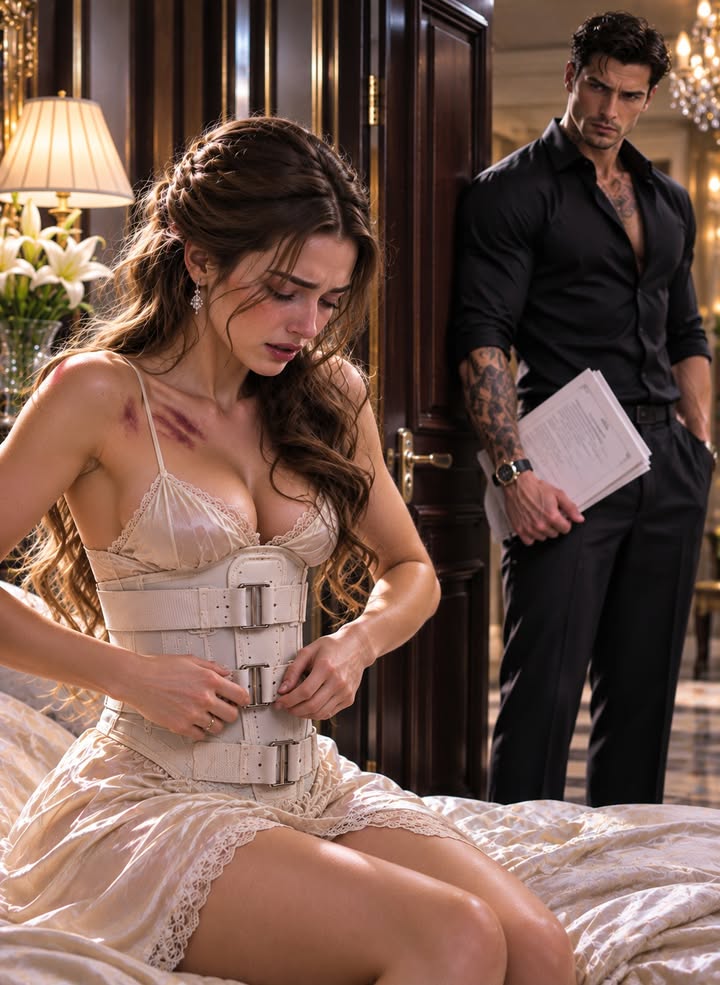
Part 4 – The Car That Followed Us
“What does Luke know about the car?” I asked.
Elena’s phone rested in her hands, the two messages bright against the dim room.
I kept my voice low, but my thoughts had already begun to race through the night of the collision: the restaurant windows streaked with sleet, headlights sliding across the road, the sedan skidding toward us.
“I don’t know,” she said again.
This time the words sounded less like uncertainty than a plea not to turn them into an accusation.
I sat back in the chair.
“We don’t have to answer him tonight.”
“He told me not to ask you.”
“That doesn’t mean we should do the opposite just to prove we can.”
Her eyes lifted to mine.
“Then what do we do?”
“We find out what the records are, and why he thinks the sedan matters.”
“And if he doesn’t tell us?”
“Then we keep asking questions elsewhere.”
She lowered the phone onto the blanket.
“I don’t want you to call your people.”
“I won’t.”
“I don’t want anyone following him or waiting outside his house.”
“I won’t do that either.”
She studied my face, searching for the old reflex to take control.
“I want to understand what happened,” I said. “I don’t want to frighten you into giving me answers you don’t have.”
Her shoulders eased a fraction.
“Then start with the specialist,” she said.
The clinic opened at eight the next morning.
Elena called herself, and I sat beside her while she asked the office to explain what Luke’s message might mean.
The receptionist said the specialist had reviewed the file and wanted to speak with both of us, if Elena agreed.
Elena looked at me before answering.
“I agree,” she said. “But I want to hear it from him.”
When the call came an hour later, the specialist introduced himself and asked Elena how she had slept.
She told him the pain had kept her awake, though it was no worse than the night before.
He reviewed the instructions for the brace and confirmed that the redness needed to be checked at her next visit.
Then he paused.
“I also looked into the note you mentioned,” he said. “There is something I think you should know, but I want to be careful not to overstate what we’ve found.”
Elena’s fingers tightened around the phone.
“What is it?”
“Your original records from the night of the collision are incomplete.”
I turned toward her.
“How incomplete?” she asked.
“The emergency department record includes your arrival, the initial examination, and your decision to leave after the immediate assessment. But the imaging referral and a portion of the transfer documentation are missing from the file we received.”
“Could they have been sent somewhere else?” I asked.
The specialist answered without irritation.
“That is possible. We requested the complete record from the hospital when you first came to us, but what we received did not include those pages.”
“Does that affect her treatment?” I asked.
“Not at this point. We have the imaging we need for her current care. The gap matters because it makes it harder to understand exactly how the first assessment was handled.”
Elena stared at the wall beyond the bed.
“Can the hospital look for the missing pages?” she asked.
“They can. I’ve already requested a records audit, but it may take time.”
“Did Luke ask you about the records?”
“No,” the specialist said. “No one from my office spoke with him, and we did not give him any information.”
“Then why would he tell me they were coming to light?” I asked.
“I can’t answer that,” the specialist said. “I can tell you that the records issue is real, and that your wife’s care should not be affected by it.”
Elena thanked him and ended the call.
For several seconds, neither of us spoke.
The missing pages were not proof of anything.
They could have been misplaced in an old system or left out when records were transferred between offices.
But Luke had known enough to refer to them, and his warning about the sedan had been too precise to dismiss as a coincidence.
“Do you want me to call him?” I asked.
“No.”
“Do you want to call him yourself?”
“Not yet.”
“All right.”
She lowered the phone into her lap.
“Can you find out whether the hospital has the records?”
“I can ask them how to request them properly.”
“Not through your people.”
“Not through my people.”
“And don’t tell them I’m sick.”
“I won’t.”
The hospital’s records department gave me a process to follow, and Elena signed the release herself.
I stayed beside her while she filled it out, reading each line aloud only when she asked.
The form requested the full emergency record, imaging reports, transfer notes, and any incident-related documentation.
Elena signed at the bottom and handed the papers back to me.
“You can send those,” she said.
“I will.”
“And then we wait.”
“Yes.”
She gave a faint, tired smile.
“You’re learning.”
“I’m trying.”
The request went through just before noon.
By late afternoon, the hospital had confirmed it received the form and would send the available documents within several business days.
Nothing in the call told us whether the pages existed, whether they had been lost, or whether anyone had deliberately removed them.
The waiting gave my mind too much room to return to the collision.
I remembered the sound of the impact and the way Elena had fallen, then pushed herself upright before the paramedics arrived.
I remembered standing over her, asking if she could breathe, while she kept looking past me toward the road.
At the time, I had thought she was disoriented.
Now I wondered what she had seen.
“Do you remember the sedan’s headlights?” I asked.
Elena was resting against the pillows with her eyes half closed.
“What about them?”
“Were they on?”
“I think so.”
“Did you see the driver?”
“No. It was too dark.”
“Did you hear the brakes?”
She opened her eyes.
“Dominic, I don’t know.”
“I’m not asking you to guess.”
“You keep going back over it as if I might suddenly remember something useful.”
“I’m sorry.”
She shifted her hand on the blanket, careful not to twist.
“I remember you saying the car had been following you.”
“I don’t remember saying that.”
“You said you thought the driver had lost control.”
“Not that it had been following me.”
“Maybe you asked the police whether it had.”
I tried to summon the memory.
The aftermath was a blur of sleet, flashing lights, and fear.
“Did I?”
“I don’t know. You were angry, and I was in pain.”
Her voice softened.
“I don’t remember every word either.”
I left the question there.
That night, Luke did not message again.
The next morning, Elena received a call from the clinic confirming that her appointment remained scheduled for Tuesday.
She asked them not to share any information with anyone, and they assured her that they had added a note to her file.
When she hung up, she looked at me.
“I don’t want to go alone.”
“I’ll take you.”
“Not your driver.”
“I’ll drive.”
“And don’t bring anyone else.”
“I won’t.”
She studied me, then nodded.
The appointment was three days away.
Until then, we tried to keep the house quiet.
I brought Elena her meals and asked before changing the pillows or adjusting the room.
She told me when she wanted company and when she needed silence.
Neither of us pretended that one careful night had repaired months of suspicion.
But the distance between us had changed shape.
It was no longer a locked door.
It was a question we were both learning to approach without forcing an answer.
On the second evening, Luke called.
His name appeared on Elena’s phone while she was reading the clinic’s instructions.
She looked at the screen, then at me.
“Do you want to answer?” I asked.
“I don’t know.”
“You can let it ring.”
She waited until the call stopped.
A message arrived a moment later.
I should explain what I can.
Elena read it twice.
“Would you like to reply?” I asked.
“Not while I’m tired.”
“All right.”
She set the phone aside.
I returned to the chair, and we left the message unanswered.
The following morning, the hospital’s records department called.
They had located an archived incident file and would send it through the secure portal.
They could not tell me over the phone what it contained, only that the file had been reviewed and released to Elena.
When I gave her the update, she said she wanted to read it herself.
“I’ll sit with you,” I said.
“Only if I ask.”
“Of course.”
The documents arrived near midday.
Elena opened the portal on her tablet, then entered the password the hospital had sent.
A list of scanned pages appeared.
The first was the standard emergency intake form.
The next described her injuries and the initial examination.
Several pages were missing between the medical assessment and the discharge summary.
Then, near the end, a scanned incident note appeared, dated the night of the collision.
Elena tapped it open.
The handwriting was faint, but readable.
She read in silence, her face growing still.
“What does it say?” I asked.
She turned the tablet toward me.
A hospital clerk had recorded a brief statement from a responding officer.
The officer reported that the sedan had been seen traveling behind my car for several blocks before the collision.
It had not been approaching from the opposite direction.
It had been following us.
I read the sentence again, unable to make it fit with the story I had carried for six months.
Elena lowered the tablet.
“You told me it had lost control.”
“That’s what I believed.”
“Maybe it did.”
“Maybe.”
But the officer’s note said the sedan had remained behind us, then accelerated when our car slowed near the restaurant.
The description did not prove why the driver had followed us.
It did not even prove that the collision was deliberate.
It did mean the danger had not begun with a random car sliding across an icy road.
For six months, I had blamed the storm, the slick pavement, and chance.
Now the night had opened beneath us again.
“Did the police ever speak to you?” Elena asked.
“I don’t remember.”
“You were there.”
“I know.”
“Did they ask what happened?”
“I must have answered.”
“You don’t remember?”
“I remember the paramedics. I remember the hospital. I remember wanting to find the driver.”
My voice came out quieter than I expected.
“I don’t remember anyone telling me the sedan had followed us.”
Elena studied the note.
“Could the officer have been wrong?”
“Yes.”
“Could someone have left this out by mistake?”
“Yes.”
“Could someone have wanted us not to see it?”
I looked at her.
“I don’t know.”
She set the tablet down on the blanket.
The room was silent except for the faint hum of the heater.
I had spent months thinking the worst danger came from what Elena would not tell me.
Now I understood that another truth had been kept from both of us.
The discovery did not excuse my suspicion.
It did not make her secrecy harmless or my accusations fair.
It only changed the meaning of the road we had been trying to cross.
“Luke knew about the sedan,” I said.
“His message makes it sound like he did.”
“He knew about the missing records too.”
“Maybe.”
“I need to ask him.”
Elena’s gaze sharpened.
“Ask him. Don’t decide what he did before he answers.”
“I won’t.”
“And don’t make this about whether I should have told you about the fracture.”
“I won’t.”
She looked down at the brace beneath her loose clothes, her palm resting lightly over the place where it held her still.
“I didn’t hide it because I thought you deserved to be kept in the dark,” she said. “I hid it because I was afraid of what your world would do with the truth.”
“I understand.”
“Do you?”
“I understand why you were afraid. I still wish you had let me stand beside you.”
“So do I,” she said. “But I can’t change the way I survived those months.”
“I’m not asking you to.”
She reached for my hand, then paused as if the movement surprised her.
I held still.
She laid her fingers across mine.
The touch was light, and it carried no promise that everything between us would be simple again.
It was enough to make me stay where I was.
“I don’t want to be the reason you go looking for a fight,” she said.
“I’m not looking for a fight.”
“You used to say that before you went looking for one.”
She was right.
“I’m going to ask questions,” I said. “I’m going to keep them from turning into orders.”
“And if what you learn is worse than you expect?”
“Then I’ll have to decide what to do with the truth.”
She held my gaze.
“Not before we’ve heard it.”
“Not before.”
I put the records away, and Elena asked me to bring her the water glass.
I did.
When I returned, she had opened Luke’s message again.
I should explain what I can.
She read it aloud, then placed the phone beside the tablet.
“He knew the records were missing,” she said. “He knew about the car. He called my clinic. He asked about my Tuesdays.”
“And he told you not to ask me.”
“Because he thought I was protecting you from the truth.”
“Or because he was trying to control what you knew.”
“Those aren’t the only possibilities.”
“No,” I said. “They aren’t.”
She took a careful sip of water.
“I want to speak with him after the appointment.”
“Together?”
“Not yet. I want to hear what he says first.”
“I’ll respect that.”
She nodded, then leaned back against the pillows.
That afternoon, I asked Luke to meet me in the small office at the house.
I did not tell him Elena was there.
I did not tell him about the medical records.
I asked only whether he knew anything about the missing hospital pages and the sedan that struck her.
He arrived without his usual easy confidence.
He looked tired, and for the first time in years I wondered whether the tiredness had been there all along.
“I know you’ve been asking questions,” he said.
“I want you to answer them.”
“Did you read the hospital note?”
“Yes.”
His gaze flicked toward the closed bedroom door.
“Is Elena all right?”
“She’s being treated.”
“Does she know what happened?”
“She knows what we know.”
Luke lowered his eyes.
“You called her clinic.”
“I did.”
“Why?”
“To make sure the appointment information stayed private.”
“You asked whether she still had appointments on Tuesdays.”
“I did.”
“Why?”
“Because I wanted to know whether the person who hit her knew where she would be.”
“You had no right to contact her clinic.”
“I know.”
“Why didn’t you tell me?”
“Because you were looking for the driver.”
“I was.”
“You wanted names. You wanted someone to answer for what happened.”
“I still don’t know what happened.”
“Exactly.”
I studied him.
“You knew the sedan was following my car.”
“I knew what the officer’s note said.”
“When did you find out?”
“Two days after the collision.”
“Why didn’t you tell me?”
“Because I thought you’d go after the people connected to it before anyone knew who they were.”
“You decided I couldn’t be trusted with the truth.”
“I decided you were grieving and angry.”
“I was.”
“You had just watched Elena get hit because she pushed you out of the way.”
The words struck with the force of a memory I had tried to keep separate from everything else.
Luke went on.
“You wanted to find the driver that night. You wanted to know where he lived, who he worked for, who had put him behind the wheel. I thought if I told you he’d been following your car, you’d make a choice you couldn’t take back.”
“And instead you let me believe it was an accident.”
“I told myself the records would explain it once they came through.”
“But they didn’t.”
“No.”
“And you didn’t tell me they were missing.”
“No.”
“Why?”
“Because I didn’t want you searching for what I thought might not exist.”
“Then why were you asking Elena about her schedule?”
His jaw tightened.
“I heard you two were barely speaking. I heard she kept leaving on Tuesdays. I was worried the people who had targeted you might notice the pattern.”
“You told her I thought she was meeting another man.”
“I told her you were suspicious.”
“You told her I wanted you to investigate her.”
“I thought I was helping both of you.”
“By making my suspicion worse?”
“I didn’t know what else to do.”
“You could have spoken to me.”
“I had been speaking to you. You weren’t listening.”
The words found their mark because they were partly true.
I looked at him, at the man I had trusted to anticipate every threat and every weakness around me.
“You could have told me about the sedan.”
“I should have.”
“You could have told Elena the risk was real.”
“I should have.”
“You could have asked her what she wanted instead of asking the clinic where she’d be.”
“I should have.”
He did not defend himself again.
The quiet between us felt different from the silences I had shared with Elena.
This one was filled with the weight of choices I could not undo.
“Did you cause the collision?” I asked.
Luke met my eyes.
“No.”
“Did you know who was driving?”
“No.”
“Did you arrange for someone to follow me?”
“No.”
“Did you have the missing records removed?”
“No.”
I listened to each answer, not because I trusted it automatically, but because I owed the question its own space.
“Why did you tell Elena not to ask me about the sedan?”
“Because I knew what the answer would do to you.”
“That wasn’t your choice to make.”
“No.”
“Or hers.”
“No.”
He leaned forward, hands clasped.
“I thought I was protecting you both.”
“You kept us apart.”
“I know.”
“You let me believe she was betraying me.”
“I never told you she was.”
“You didn’t correct me either.”
Luke’s eyes lowered again.
“No,” he said. “I didn’t.”
The admission left me without the clean, simple anger I had wanted to bring into the room.
Luke had not struck Elena’s car.
He had not put her in the brace.
But he had made the silence between us useful to himself, convincing me that my suspicion was a distraction and her secrets were safer left unexplained.
He had chosen what each of us was allowed to know, and called the choice loyalty.
“Why?” I asked.
“Because I thought you were going to burn your life down chasing the people who had come after you.”
“My life nearly ended on that road.”
“I know.”
“Elena’s did not end, but it changed completely.”
“I know.”
“Then why keep the truth from us?”
He was quiet for a long time.
“Because I was afraid you’d go back to the person you were before her,” he said. “The one who thought fear could be solved by making someone else afraid.”
I looked toward the bedroom door.
Elena had not made me gentle by force.
She had given me something I had never known how to protect without controlling: a life that mattered beyond my own decisions.
And Luke, trying to keep me from losing it, had hidden the very truth that could have helped me understand what she was carrying.
“You don’t get to decide what keeps my family safe,” I said.
“I know.”
“Do you?”
“Yes.”
I stood.
“Then tell me everything you know about the sedan.”
Luke looked up at me.
“I know it was behind your car before the collision. I know the officer’s note disappeared from the file sent to the specialist. And I know someone called the hospital the next morning asking whether a full incident report had been made.”
“Who called?”
“I don’t know. The hospital wouldn’t tell me.”
“Did you ask them to keep the records private?”
“I asked them not to release information to anyone who called without authorization.”
“Why?”
“Because I thought someone might be trying to trace Elena’s treatment.”
“Did you tell her?”
“No.”
“Did you tell me?”
“No.”
His answer left another hollow place in the story.
“You were trying to protect us from a threat you never explained.”
“I thought if I could keep the records private, I could keep the threat from finding either of you.”
“And the Tuesday appointments?”
“I thought the pattern might make her easier to locate.”
“So you called her clinic.”
“Yes.”
“Without her permission.”
“Yes.”
“Then you asked her questions that made it sound like I was accusing her.”
“I did.”
“You made our worst fears worse because you thought you were preventing a different fear.”
He closed his eyes briefly.
“I know.”
I let him leave without giving him an answer about what would happen next.
When I returned to Elena’s room, she was awake.
She watched my face before asking anything.
“He admitted he contacted the clinic,” I said. “He says he was trying to keep the appointment information private because he feared the person who followed my car might track your visits.”
“And the records?”
“He knew an officer’s note mentioned the sedan had been following us. He says he learned that two days after the collision.”
“Why didn’t he tell us?”
“He thought I’d go after whoever was responsible before we knew who they were.”
“Did he know who was responsible?”
“No.”
“Did he have anything to do with the collision?”
“He says he didn’t.”
“And you believe him?”
“I believe he didn’t cause it. I don’t know what he’s kept from us beyond what he admitted.”
Elena looked down at her hands.
“He made me think you were watching me.”
“I made you think that too.”
“He gave my fear a shape.”
“I gave it a reason.”
She looked at me, and neither of us reached for the easier answer.
“He was wrong to call the clinic,” she said.
“Yes.”
“He was wrong to tell me not to ask you.”
“Yes.”
“He was wrong to use my appointments to keep you distracted.”
“Yes.”
“But he wasn’t wrong that your world might reach me.”
“No,” I said. “He wasn’t.”
The truth had turned over in my hands, and the underside was no cleaner than the first.
I sat beside her bed, leaving the careful space she had asked me to keep.
“I’m not going to use what he did as proof that I should decide everything for you,” I said.
“Good.”
“I won’t have anyone follow him.”
“Good.”
“And I won’t hide what I learn from you.”
She watched my face, then laid her fingers across my hand again.
“Then tell me if you find out who was driving.”
“I will.”
“Even if it frightens me.”
“Especially then.”
The hospital’s full records arrived the next afternoon.
Elena asked me to open them beside her, and I waited while she read the first page herself.
The archive included the emergency notes, the officer’s report, and the initial dispatch summary.
The sedan’s plate number was incomplete.
The driver had left before officers arrived.
One witness had described the car as dark gray, with a damaged left headlight and a temporary registration tag.
The officer’s note again stated that the sedan had been following us before it accelerated.
At the bottom of the dispatch summary, a final handwritten entry had been added the morning after the collision.
I read it once, then again.
Elena noticed the change in my face.
“What is it?”
I turned the page toward her.
The note identified the sedan’s temporary plate as belonging to a vehicle connected to an old dispute among the people I had once worked with.
Not a random driver fleeing an accident.
Not a storm-blinded stranger who had lost control.
The sedan had been following my car.
And beneath the officer’s notation, in the margin, was a name Elena and I had never expected to see.
Luke Bell.
**–END OF PART 4–CLICK “NEXT” AT THE BOTTOM OF THE PAGE TO CONTINUE READING**
* * *
[PREVIOUS: PART 3](https://puretales.idolsgift.com/blog/part-3-the-secret-beneath-the-brace-008) | [NEXT: PART 5](https://puretales.idolsgift.com/blog/part-5-the-secret-beneath-the-brace-008)
✓ Lynn R. Adams
Part 4 – The Car That Followed Us “What does Luke know about the car?” I asked. Elena’s phone rested in her hands, the two messages bright against the dim room. I kept my voice low, but my thoughts…