PART 4: The Secret Behind Every Tuesday 027
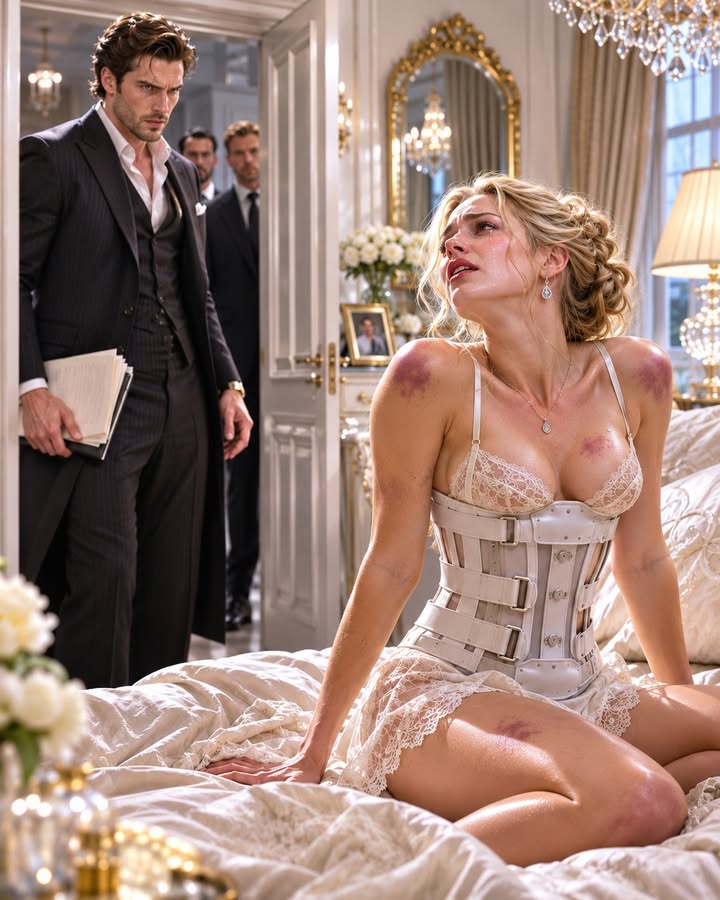
Part 4 – The Warning Before the Impact
“Could the routes have been changed to keep me from reaching the clinic?” Serena asked.
I looked at the report, then at her.
“They could have.”
“But we don’t know that.”
“No. We don’t.”
The words felt unfamiliar in my mouth, but I needed to say them.
For months I had turned uncertainty into certainty whenever Caleb offered me an explanation that fit my fears.
I would not do that to Serena again.
She rested her hands on the table, one over the other.
“Ask Tomas whether there’s a record of who saw the clinic address,” she said.
“I will.”
“And whether the changes were made before or after I started going there.”
“I’ll ask.”
She studied the logs again.
“If Caleb was trying to keep me away from the clinic, there should be a reason.”
“Maybe he thought he was protecting you.”
“From what?”
“I don’t know.”
“That’s the part that frightens me.”
I reached toward her hand, then stopped before touching it.
“Would you like me to stay?”
“Yes.”
I settled into the chair across from her, close enough to be present but not close enough to crowd her.
The question of Caleb’s motives hung over us, but it was not the only thing in the room.
The divorce papers remained in the dresser drawer.
The brace still circled Serena’s body beneath her clothes.
And the space between us, though narrower than it had been, was not something I could cross by wanting to.
Tomas sent the remaining records that evening.
Serena asked me to wait until she had rested before we opened them.
So I did.
The next morning, she came downstairs slowly, leaning on the banister as she descended.
I stood at the foot of the staircase, hands at my sides.
“Do you want help?” I asked.
“I want you to walk beside me.”
I moved to her side without taking her arm.
She set the pace, pausing once on the landing to breathe through a flare of pain.
When we reached the sitting room, she lowered herself into the chair and closed her eyes until the discomfort eased.
I waited.
“Bring the records,” she said.
The new file contained the route history, a list of server transfers, and an archive index for the Euclid Avenue cameras.
Tomas had also included a copy of the original recording file, though he warned that the system had marked it as incomplete.
Serena read the note twice.
“Can we view it?”
“Not yet,” I said. “Tomas says the archive is corrupted. He’s checking whether a backup exists.”
“Then we’ll wait for him.”
I could hear the effort it cost her not to ask me to call someone else, someone who might make the problem disappear faster.
Instead, she opened the route history.
A date near the top caught her attention.
“This was the week before the collision.”
I leaned closer but kept my hands on my own side of the table.
The record showed that a black sedan had been added to a temporary vehicle list under a security-office account.
Its description included a dent in the rear quarter panel.
Serena’s breathing changed.
“That’s the car I described.”
“It might be.”
“Same color. Same damage.”
“Yes.”
A second entry showed that the sedan had been marked for removal from the list two days later.
No explanation had been entered.
Serena went still, her gaze fixed on the screen.
“Was the car registered to someone in your organization?” she asked.
“I don’t know.”
“Can Tomas find out?”
“He may be able to trace the vehicle record.”
“Ask him.”
I made the call in front of her, explaining that we were trying to identify a car listed in the security archive before the collision.
I did not mention my suspicions about Caleb.
Tomas said he would check the old fleet files and call back.
When I ended the call, Serena rubbed her thumb over the edge of the table.
“I kept thinking I’d misremembered the description,” she said.
“You told the police what you saw.”
“I was in pain. I was frightened. I wondered whether I’d confused the car with another one.”
“You don’t have to doubt your memory because someone changed a report.”
She looked at me, and something in her expression softened, though it did not become trust all at once.
“That’s what I needed to hear.”
I wanted to ask why she had never said so before.
I understood the answer well enough.
She had tried.
I had failed to listen.
Tomas called back just after noon.
The sedan had belonged to a small transportation contractor the security office occasionally used.
It was not part of our regular fleet, and the records did not show who had hired it.
The contractor had gone out of business several months after the collision.
The file listed no police report connected to the vehicle.
“Can you find the driver?” I asked.
“Not from this database,” Tomas said. “There’s a name on the temporary assignment sheet, but it’s incomplete.”
“Send it to me.”
“I can, but Vincent, there’s something else.”
“What?”
“The assignment sheet was removed from the shared archive the night it was created.”
I looked at Serena.
She was watching my face.
“By whom?” I asked.
“The account belongs to Caleb’s office.”
I thanked Tomas and ended the call.
For a few seconds, neither of us spoke.
Then Serena said, “That still doesn’t tell us why.”
“No.”
“It tells us Caleb had access.”
“Yes.”
“And that the car was recorded before the accident.”
“Yes.”
“Don’t turn that into a confession.”
“I won’t.”
She let out a slow breath and looked down at the table.
The evidence was no longer a handful of mismatched details.
It was a line of choices made around a vehicle, a report, and the footage of the night I had nearly lost her.
But we still did not know whether Caleb had arranged anything, whether he had been covering for someone, or whether he had made poor decisions while trying to protect me.
A knock came at the sitting-room door.
Tomas entered carrying a sealed envelope and a small external drive.
“I found an old dispatch log,” he said. “It was stored separately from the camera archive.”
“Why separately?” I asked.
“It predates the current system. The dispatch office kept paper copies, then scanned them when the servers were replaced.”
He set the envelope on the table.
“I thought you should review it before I send anything outside the estate.”
Serena looked from the envelope to me.
“Is it a routine log?”
“It looks routine,” Tomas replied. “There are vehicle checks, pickup times, and instructions. But I recognized the date.”
He turned toward me.
“It’s from the night of the collision.”
The room seemed to contract around those words.
Tomas opened the envelope and placed a scanned printout on the table.
The page was faded, with several lines blurred from the old copy.
At the top, the date matched the night Serena had shoved me away from the car.
Halfway down the page, a typed entry listed a vehicle and a time.
The sedan had been instructed to circle the Euclid Avenue block at 10:56.
The collision occurred shortly after eleven.
I read the line again, trying to make it mean something else.
“Who entered the instruction?” Serena asked.
Tomas pointed to the initials in the margin.
“C.R.”
The inked letters looked ordinary.
They could have been written by someone else.
They could have been copied from a form.
I did not know.
“Is this the same vehicle?” Serena asked.
Tomas nodded toward the description at the bottom.
“Dark sedan. Damaged rear quarter panel.”
Serena’s hand moved to the edge of the paper but did not touch it.
I felt the old instinct surge through me—the urge to stand, to call Caleb, to demand an explanation before fear could take root.
I stayed seated.
“This is a dispatch entry,” I said. “It doesn’t tell us what he intended.”
“No,” Serena answered. “It doesn’t.”
Tomas kept his voice measured.
“There’s another page.”
He removed a second sheet from the envelope.
This one was a handwritten instruction attached to the dispatch entry.
The words were brief and precise.
“Make the pass visible. No contact. Clear the route after.”
I stared at the note.
The instruction was too specific to dismiss as routine.
But the signature at the bottom was not a name.
It was the same angled C and long-legged R from the vehicle clearance form.
Serena looked at me.
“Does that look like Caleb’s handwriting?”
I remembered years of notes from Caleb, written on the backs of schedules and reports.
The shape of the C was familiar.
So was the way the R swept down.
“I believe it’s his,” I said.
“Believe, or know?”
I forced myself to meet her eyes.
“I believe.”
She held my gaze for a long moment, then looked back at the dispatch sheet.
“What does ‘make the pass visible’ mean?”
“It could mean he wanted us to notice the car,” I said. “The instruction says no contact.”
“But it did hit us.”
“Yes.”
“Was that intentional?”
“I don’t know.”
Her jaw tightened, though she did not raise her voice.
“Vincent, I need the truth, not the answer that helps you decide what to do.”
“I know.”
“I’m asking you to stay with what we have.”
I looked at the two pages.
A vehicle matching the one Serena had described was sent to circle the block minutes before it struck her.
The instruction said there should be no contact.
That could have been a warning gone wrong.
It could have been a reckless attempt to frighten me.
It could have been something else.
“I can’t tell you what Caleb meant to happen,” I said. “I can tell you he authorized that car to make a visible pass, and that it was on our street before the collision.”
Serena’s face grew pale.
For a moment she seemed to forget the papers and the room around us.
I waited for her to look at me.
When she did, her eyes were bright but steady.
“I thought I had made it worse by pushing you,” she whispered.
“You saved my life.”
“I put myself in the car’s path.”
“You saw what was coming and moved me out of it.”
“I didn’t know it was supposed to be a warning.”
The words struck me harder than the discovery itself.
I reached across the table, then paused.
“Can I take your hand?”
She watched me for a moment, then placed her fingers in mine.
Her grip was light, and I held it without closing my hand too tightly.
“You were hurt because someone sent a car toward us,” I said. “You did nothing wrong.”
“I know that in my head.”
“I know.”
“I don’t know what to do with the rest.”
“Neither do I.”
The honesty did not make the truth easier.
It only left us both standing in it.
Tomas shifted in his chair.
“Would you like me to call the police?” he asked.
Serena withdrew her hand gently.
“Not yet,” she said. “I want to know whether the camera backup exists.”
“That’s reasonable,” I replied.
She looked at me.
“And I want the original records preserved. Nothing altered. Nothing moved without a copy.”
Tomas nodded.
“I’ll secure the files and document every transfer.”
“Thank you,” she said.
When Tomas left, Serena remained at the table.
I wanted to tell her Caleb could not have meant for her to be injured.
I wanted to tell myself he had intended only to scare me, that the impact had been a mistake, that the friend I had trusted for two decades had not knowingly placed my wife in danger.
But any version of the story that comforted me too quickly would be another lie.
“Did you know he was sending the car?” I asked.
“No.”
“Did you ever suspect it?”
“After the accident, I wondered whether the sedan had been connected to the family.”
“Why didn’t you tell me?”
“I told you the report didn’t match what I remembered. You said Caleb had handled it.”
I closed my eyes.
“I remember.”
“You also told me not to make trouble over a mistake in the paperwork.”
The memory came back clearly now.
We had been in the kitchen, the report between us, and I had dismissed her concern with a few impatient words.
“I’m sorry.”
“I know you are.”
“That doesn’t undo it.”
“No.”
I opened my eyes.
“Why did you keep looking into the records?”
“Because I couldn’t make the story fit. The car disappeared. The report changed. Then I saw the route file.”
“You thought Caleb had done this?”
“I thought something was wrong. I didn’t know what.”
“Why didn’t you tell me what you suspected?”
She lowered her gaze.
“Because I was afraid that if I accused him, you’d believe him instead of me.”
The words were quiet, but they carried the weight of six months.
“Or that you’d confront him before we knew what the records meant,” she continued. “He was always near you. He knew where you went and who traveled with you. I didn’t want to give him a reason to think I was watching him.”
“You thought keeping quiet would protect me.”
“I thought it might.”
“You were alone with this.”
“I was already alone with the injury.”
I had no answer that could make the past smaller.
I looked toward the hall, where Caleb’s office remained open and familiar, full of the folders and schedules he had managed for years.
“He’s my oldest friend,” I said.
“I know.”
“I trusted him with every part of my life.”
“I know.”
“I don’t know how to look at him now.”
“Then don’t decide before we know everything.”
Her words were steady, not forgiving and not accusing.
They gave me a direction when I had none.
“Will you let me speak to him?” I asked.
“Not alone.”
“Together?”
“Not yet. First, we find the original footage.”
The external drive Tomas had left sat beside the envelope.
I picked it up and turned it over in my hand.
The old recording might have shown the sedan approaching.
It might have shown what happened after the collision.
It might have answered the one question neither of us could face without fear.
Had Caleb planned a harmless warning that became a tragedy, or had he known the risk all along?
Serena rested a hand against her side, over the brace.
“I need to lie down,” she said.
“Would you like help getting upstairs?”
“Yes, but don’t pull on my arm.”
“I won’t.”
She rose slowly, and I walked beside her.
On the stairs, she paused, one hand gripping the rail.
I waited until she was ready to continue.
At her bedroom door, she turned toward me.
“Don’t call Caleb tonight.”
“I won’t.”
“Don’t tell yourself he couldn’t have done it just because you loved him.”
I felt the truth of that settle between us.
“I won’t.”
“And don’t decide I should forgive you because you finally believe me.”
“I won’t ask you to.”
She searched my face, then nodded.
“I know you’re trying,” she said.
It was not forgiveness.
It was not an invitation to begin again.
It was an acknowledgment that I had, at last, started listening.
I helped her settle against the pillows, then placed the clinic notes on the nightstand within reach.
Before I left, she took my hand.
“I’m glad you stayed,” she said.
“So am I.”
I returned to the sitting room and found that Tomas had sent a message.
The camera archive contained a partial backup.
He had recovered a file from an old storage drive, but the recording needed to be checked for damage.
I typed back that he should preserve the original and make a working copy.
Then I sat at the table, the dispatch log open before me, and waited for the file to finish transferring.
The first seconds showed the wet street beneath a wash of streetlight.
A bus passed, trailing spray.
A figure crossed at the far corner.
Then a dark sedan entered the frame.
Its rear quarter panel was dented.
It slowed near the curb, circled the block, and returned.
The timestamp placed its first pass several minutes before the collision.
The footage skipped.
When the image returned, I saw Serena and myself stepping out beneath the awning.
The car was already in motion.
I leaned toward the screen, not breathing.
The sedan came down the street, passed us, and disappeared beyond the edge of the camera’s view.
The recording jumped again.
When it resumed, Serena was on the pavement and I was on my knees beside her.
The sedan was gone.
I replayed the clip once.
Then again.
The visible pass before the collision could have been the warning Caleb had ordered.
The image ended before it showed the impact.
I called Tomas and asked him to check the recording frame by frame.
He said he would.
Then he sent another message.
There was a second file on the same storage drive.
It had been placed in a folder labeled with the date of the collision, but it was not part of the security archive.
I opened it.
The video showed a view from inside a vehicle.
The image was dark and uneven, as though the camera had been mounted low on the dashboard.
A voice spoke from somewhere near the recorder.
“Keep it visible,” the voice said. “No contact.”
Then another voice answered, faint but clear enough to recognize.
“I understand.”
The first voice was Caleb’s.
The second belonged to the driver.
The car moved forward.
The recording captured the street, the awning, and the moment the sedan began its turn toward us.
The image blurred at the instant of impact.
A sharp breath sounded behind the camera.
Then Caleb’s voice came through the speaker again, strained and disbelieving.
“Stop. That wasn’t supposed to happen.”
The file ended.
I watched it a second time, unable to move.
Caleb had known the sedan was coming.
He had instructed the driver to make the pass visible, with no contact.
And when Serena was struck, his voice had not sounded surprised that the car was there.
It had sounded surprised that the warning had become real.
A new message appeared on my screen.
It was from Caleb.
“Vincent, whatever you’ve found, don’t let Serena go to the police before we talk.”
I stared at the words, then at the frozen image of the sedan.
Caleb knew we had found something.
But how could he have known the second file still existed?
**–END OF PART 4–CLICK “NEXT” AT THE BOTTOM OF THE PAGE TO CONTINUE READING**
* * *
[PREVIOUS: PART 3](https://puretales.idolsgift.com/blog/part-3-the-secret-behind-every-tuesday-027) | [NEXT: PART 5](https://puretales.idolsgift.com/blog/part-5-the-secret-behind-every-tuesday-027)
✓ Lynn R. Adams
Part 4 – The Warning Before the Impact “Could the routes have been changed to keep me from reaching the clinic?” Serena asked. I looked at the report, then at her. “They could have.” “But we don’t…