PART 4: The Seam Beneath the Marble 057
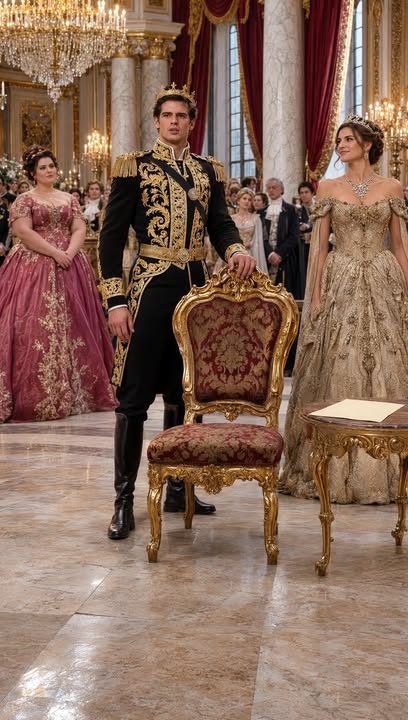
Part 4 – The Report in the Chair
“My father would have been the one to approve that request,” Celestine said.
She stood motionless in the archive doorway, her gaze fixed on the clerk’s note as though the words might rearrange themselves if she waited long enough.
Mara felt the old, familiar tightening beneath her ribs.
For years, she had carried the sense that some part of her mother’s story had been kept from her.
Now it seemed that the silence had names attached to it.
The prince folded the brittle slip along its existing crease, taking care not to damage it.
“We don’t know exactly what Lord Vale’s request meant,” he said.
Celestine looked at him.
“You’re trying to give me room to explain something I don’t yet understand.”
“I’m trying not to decide what happened before we know.”
“I appreciate that,” she replied. “But I won’t pretend my family’s name isn’t on the trail.”
Mara watched Celestine’s face, searching for the familiar polish that had once made every answer seem rehearsed.
It was gone.
What remained was a young woman caught between loyalty to her family and the growing certainty that loyalty could not mean refusing to look.
The prince placed the slip in the folder.
“Master Pell will continue searching,” he said. “For now, we should leave the records untouched and see what can be retrieved through the proper channels.”
“Then we may wait weeks,” Celestine said.
“Perhaps.”
“And the report may no longer exist.”
“Perhaps,” he repeated, without offering false reassurance.
Mara looked at the archive shelves, their dark rows disappearing into the fading light.
“If someone wanted the report forgotten,” she said, “would they keep it where anyone could request it?”
The prince considered her question.
“No,” he said. “They might keep it somewhere no one thought to look.”
Celestine’s eyes moved to the folder.
“Do you have another idea?”
“Not yet.”
Mara thought of the palace workshop, with its crowded shelves and boxes of pieces waiting to be identified.
Her mother had taught her that things were often hidden in the place where they seemed most ordinary.
“Could there be a record outside the archive?” she asked. “A note tucked into an invoice or a repair ledger that was never catalogued properly?”
Master Pell, who had remained near the doorway, inclined his head.
“That is possible. The palace workshop kept its own working books. Some were never transferred to the main archive.”
The prince looked at Mara.
“Would you know where to find them?”
“I know the workshop,” she said. “I don’t know what your staff kept.”
“I can ask the current master carpenter to let us inspect the old books.”
“Then do that,” Celestine said.
The prince glanced at her.
“You’re certain?”
“No,” she said. “But uncertainty is not a reason to stop.”
They left the archive with the folder and the fragile slip secured in a protective sleeve.
The palace corridors had grown dim, and the servants were beginning to light the wall lamps.
As they walked, Celestine kept close to Mara.
Neither seemed ready to speak about Lord Vale or Celestine’s father.
At the turn toward the inner courtyard, Celestine finally broke the silence.
“I’m sorry,” she said.
Mara looked at her.
“You didn’t seal the report.”
“No, but my family may have helped.”
“You don’t know that for certain.”
“I know my father trusted Lord Vale with matters that reflected on the court. If Lord Vale asked for a report to be sealed, it is likely my father agreed.”
The prince slowed his pace.
“Your father may not have known what the report contained.”
“He may not have,” Celestine said. “But he should have asked.”
She looked down at the stone floor as they crossed beneath an arch.
“I’ve spent years being told that our family’s duty is to protect the stability of the crown. I never thought about how easily that could become a reason to protect appearances instead.”
Mara understood the distinction.
She also knew that understanding did not undo what had happened.
“I’m not ready to say your family harmed my mother,” she said.
Celestine met her eyes.
“Neither am I.”
“But we can find out what they knew.”
“Yes,” Celestine replied. “We can.”
The workshop occupied a long building on the palace’s eastern side, separated from the formal rooms by a narrow courtyard and a row of old lime trees.
Warm light shone through its high windows.
The scent of wood shavings, polish, and beeswax reached them before they entered.
A broad-shouldered carpenter named Tomas greeted the prince at the door.
He was older than the three of them, with silver beginning to show at his temples and a pencil tucked behind one ear.
“Your Highness,” he said. “I was told you wanted to see the old ledgers.”
“I’m sorry to bring you out so late,” the prince replied.
“I was finishing a cabinet hinge. The ledgers can wait a little longer.”
Tomas’s gaze shifted to Mara.
She had visited the palace workshop once when she was young, though the memory was indistinct, formed mostly from the smell of sawdust and her mother’s hand holding hers.
“You’re Elinor’s daughter,” Tomas said.
Mara grew still.
“You knew her?”
“I knew of her,” he replied carefully. “She came through here during the ballroom work.”
“What do you remember?”
Tomas looked toward the rows of tools arranged along the wall.
“That she noticed everything. Not just cloth and seams. She could tell when a drawer had been forced, or when a table had been moved before the polish had dried.”
A pang of affection warmed Mara’s chest.
“That sounds like her.”
“I was an apprentice then,” Tomas said. “She once stopped me from carrying a panel through the ballroom because she thought the marble was shifting near the west wall.”
The prince’s expression sharpened.
“What did you do?”
“I told her I had been given a different task and that the floor crew would know better.”
Tomas’s mouth tightened with regret.
“She didn’t argue. She just asked me to tell the foreman.”
“Did you?” Mara asked.
“I did.”
“And?”
“The foreman said the tiles had been checked. He told me to get back to my work.”
Mara lowered her eyes.
It was not a confession, exactly.
It was a small piece of the past, offered without defense.
Tomas led them to a storage room at the rear of the workshop.
Inside, several shelves held dusty boxes, unused handles, broken molds, and stacks of old account books.
He set a brass lamp on a table.
“These are the books that never made it into the main archive,” he said. “Some are only lists of materials. Some hold notes from individual jobs.”
The prince removed his gloves and opened the first volume.
Celestine took another from the shelf.
Mara chose a thinner book bound in cracked brown leather.
Its pages were crowded with measurements, sketches, and short instructions written by several different hands.
She scanned the entries, searching for any reference to the ballroom renovation.
The first few pages concerned a set of chairs, then a carved screen, then the repair of a cabinet door.
A note near the middle mentioned a shipment of marble wedges.
She turned the page.
There, beside an entry about the ballroom, was the diagonal mark.
Mara’s breath caught.
“Here.”
The prince came to stand beside her.
The entry had been written in a hurried hand.
It read: “West course settling again after the king’s alterations. Elinor reports a second shift beneath the central run.”
Celestine leaned over Mara’s shoulder.
“That names your mother.”
Mara read the line again.
The words were plain, without any hint of blame or alarm.
Her mother had noticed the movement and reported it.
Below the entry, another line had been added in different ink.
“Report prepared for the household office.”
The prince turned the page carefully.
No further detail appeared.
“Can we tell who wrote the first note?” he asked.
Tomas looked at the handwriting.
“That may have been the master carpenter at the time. I can’t be sure.”
“Was there a report number?” Celestine asked.
Mara examined the margin.
There it was: R-17.
She touched the edge of the page.
“It’s the same report.”
The prince’s face had grown serious.
“Then your mother didn’t merely witness the work. She made a report about the floor.”
“She must have given them measurements,” Mara said. “Perhaps she saw where the cloth draperies were being moved and noticed the settling.”
Tomas nodded.
“She could have understood the movement from the way the room’s fittings sat. Sometimes a curtain rail tells you more about a wall than a mason’s level does.”
The prince looked at the page.
“Why would a palace seamstress be asked to report on the floor?”
“Because she noticed it,” Mara said. “Or because the workers dismissed her observation until they saw the measurements.”
She looked at the diagonal mark her mother had used in her own notebook.
The mark no longer seemed like a private habit.
It had been part of the work.
Tomas brought a small box from a lower shelf.
“These old books have loose inserts,” he said. “The pages were often reused for quick notes.”
He set the box beside them.
Mara helped sort through the folded scraps while the prince continued reading.
Most were lists of materials or reminders about unfinished work.
One bore a sketch of a curtain bracket.
Another contained a record of a chair’s broken leg.
Then Mara found a small piece of paper with her mother’s name on it.
The writing was cramped and hurried.
“East frame moved to storage; report copy beneath lining.”
Mara’s pulse quickened.
“Your Highness.”
He looked up.
She showed him the note.
Celestine leaned closer.
“An east frame,” she said. “What does that mean?”
Tomas frowned.
“There was an old chair kept in the workshop storage at the time. It may have been one of the ceremonial chairs from the ballroom.”
“Where is it now?” the prince asked.
Tomas pointed through a doorway toward a back room.
“Some older pieces are kept there until we decide whether to restore them or use them for parts.”
Mara folded the note along its existing crease.
The prince looked at her.
“Do you want to examine it?”
“Yes.”
The back room was colder, with high shelves and a single narrow window.
Several old chairs rested against the walls, their carved frames darkened by age.
Mara walked slowly along them, trying to remember her mother’s sketches.
The prince and Celestine followed, while Tomas lifted the lamp to light the corners.
“East frame,” Mara murmured. “It may mean the chair was stored on the east side of the workshop, or that the frame itself was from the east gallery.”
She stopped before a heavy armchair with a faded blue cushion.
Its wooden frame was carved with leaves and small birds.
The prince stepped closer.
“Is that the chair from the ballroom?”
“I don’t know,” Tomas said. “It has been here longer than I have.”
Mara looked beneath the seat.
A small brass tag had been nailed to the lower rail.
The number stamped into it was R-17.
No one spoke.
Tomas set down the lamp.
“That number may identify the piece, not the report.”
“It may,” the prince said. “But it is worth checking.”
Mara crouched beside the chair.
The cushion had been fastened with small upholstery tacks.
She examined the frame without touching the fabric.
“This has been opened before,” she said. “The tack heads don’t match. Someone removed the lining and put it back.”
Tomas lowered the lamp.
“Could the paper be underneath?”
“Possibly.”
Mara turned to the prince.
“I would need to remove the lining carefully. May I?”
“Of course.”
Tomas found a narrow tool and handed it to her.
Mara worked slowly, loosening the tacks one at a time.
The room settled into silence around the small sounds of metal lifting and fabric easing away from wood.
When the last tack came free, she folded the lining back.
A sheet of paper had been tucked beneath it, protected from dust and the wear of the seat.
Mara looked to the prince before reaching for it.
He gave a slight nod.
She lifted the paper free.
The sheet was creased in half and faintly yellowed, but the writing remained clear.
At the top, in her mother’s steady hand, were the words: “Report on the ballroom floor, following the renovation.”
Mara’s fingers began to tremble.
She rested the paper on the chair’s seat to steady it.
The report was several pages long, folded together and held by a narrow strip of linen.
Celestine looked at Mara.
“Your mother wrote it?”
Mara nodded.
The prince read the first lines over her shoulder.
Elinor had recorded where the marble shifted, how the movement changed under different conditions, and which seams were likely to widen if the floor was left as it was.
Her notes were precise and practical.
She had included a simple drawing of the ballroom and marked the diagonal course with the same stroke Mara had seen in the ledger.
The final paragraph began with a warning.
“The floor has not settled evenly because the stone was reset before the lower bedding had cured. The weight of the central section is resting on an unstable course. This should be corrected before the next full assembly.”
Mara stopped reading.
The prince’s hand tightened at his side.
Celestine’s lips parted, but no words came.
Mara continued.
The report stated that her mother had shown the measurements to the work foreman and asked that the marble be inspected again.
At the bottom was a signature: Elinor Vale.
Below it, someone had added a short note in another hand.
“Concern acknowledged. Renovation schedule to proceed as ordered.”
The prince’s face went pale.
“Who wrote that?” Celestine asked.
Tomas examined the ink.
“I can’t say.”
The note carried no name or seal.
Mara turned to the final page.
There, in the corner, her mother had added one more sentence.
“I have been told the stone was checked and the report is not required.”
A long silence followed.
The prince looked away from the paper, toward the old chair.
“My father ordered the renovation,” he said.
The words were quiet, but they seemed to occupy the whole room.
Celestine turned to him.
“You don’t know who wrote the reply.”
“No,” he said. “But the work continued under my father’s order.”
He rubbed one thumb along the edge of his palm, a small, restrained movement that Mara recognized as an effort to stay composed.
“If the schedule continued despite this warning, then the defect was known.”
“Known by someone,” Celestine said. “We still don’t know who dismissed the report.”
“But the king’s order carried the weight,” the prince replied.
Mara studied her mother’s signature.
Elinor Vale.
She had seen the name on work invoices, on a few old sketches, and once on the inside cover of a small notebook.
She had never seen it attached to a warning that the palace had chosen to ignore.
“What happened after this?” Mara asked.
The prince looked back at the report.
“I don’t know.”
The answer was honest, and still it hurt.
Mara read the bottom of the last page again.
A final line had been written in her mother’s hand, nearly hidden beneath the fold.
“If a guest is injured, the fault will be placed on the person who first noticed it.”
Her mouth went dry.
“What does it mean?” Celestine asked.
“I don’t know,” Mara said. “But it sounds as though she expected to be blamed.”
The prince lowered his head.
“Your mother tried to protect the palace from a preventable danger.”
“And the palace did not protect her,” Mara replied.
He met her gaze.
“No,” he said. “It did not.”
There was no attempt to soften the truth.
That, at least, mattered.
The prince reached for the report but paused.
“May I read the rest?”
Mara handed it to him.
He examined the pages, then set them down carefully.
“There is a reference to an incident in the ballroom several days later,” he said. “It doesn’t explain what happened, only that a royal guest was involved.”
Celestine drew a breath.
“Was anyone injured?”
“The note doesn’t say.”
Tomas leaned against the workbench, troubled.
“I remember people speaking about an accident,” he said. “I was young, and no one told apprentices details. I only remember the ballroom being closed for a few days.”
Mara looked at him.
“Did you hear my mother’s name?”
“I heard that a member of the staff had been held responsible,” he said. “I never knew who.”
The words seemed to pull the air from the room.
Mara stared at her mother’s report.
“She knew they might blame her.”
“Perhaps she feared it,” the prince said. “That doesn’t mean she knew what would happen.”
“But she warned them,” Mara replied.
The prince did not argue.
He looked down at the signature again.
“My father was wrong to let the work continue.”
The confession came without ceremony.
Celestine’s expression tightened, though not with accusation.
“Do you know what he believed at the time?”
“No.” The prince’s gaze moved to the note beneath the report. “But I know what the record says. He ordered the schedule to proceed. Someone decided my mother’s warning could wait, and the floor was left as it was.”
Mara’s eyes stung.
The prince did not call her mother brave or promise that the past could be repaired.
He simply stood beside her, looking at the evidence of a choice his family had made.
Celestine rested one hand on the edge of the table.
“I’m sorry,” she said.
Mara nodded, unable to speak.
Celestine’s voice grew quieter.
“If my father helped keep this hidden, then I will help you find out why. I won’t ask you to excuse him.”
Mara looked at her.
“I don’t know what I can forgive yet.”
“You don’t have to know tonight.”
The prince lifted the report and placed it back on the chair.
“We should preserve this before anything else happens to it.”
Tomas brought a clean document folder from the next room.
The prince slipped on his gloves again, and Mara helped protect the pages between two sheets of archival paper.
As she did, one of the folded corners sprang open.
A smaller sheet slid free from inside the linen binding.
It was a personal letter, written on the back of an old work order.
Mara recognized her mother’s handwriting at once.
The letter was addressed to “His Majesty,” and the date was several days after the report.
The prince held the paper carefully by its edges.
“Is this also part of the report?” Celestine asked.
“It appears to have been tucked inside it,” Mara said.
The prince unfolded the letter.
His eyes moved over the first few lines, and then he stopped.
“What does it say?” Mara asked.
The prince looked up, his expression altered by something beyond sorrow.
“It’s from my father.”
He read in a voice that barely carried beyond the table.
“‘Miss Vale, I have reviewed your account of the ballroom floor and understand that you raised the concern before the work was declared complete.’”
Mara’s fingers curled against the edge of the chair.
The prince continued.
“‘The inspection should have been delayed until the stone had settled, and you were right to insist that the west course was unsafe.’”
Celestine closed her eyes briefly.
The prince looked down again.
“‘When the guest slipped, the court’s explanation was not the truth. You did not cause the defect, and I will not allow you to carry the blame for it.’”
Mara felt the room recede around her.
The letter trembled once in the prince’s gloved hand.
“My father knew,” he said.
“He knew your mother was innocent,” Celestine whispered.
The prince read the final lines.
“‘I will correct the record when the household is no longer occupied by the state visit. Until then, I ask you to remain silent for the sake of the court.’”
Mara could hear the last sentence in her mind long after the prince stopped reading.
For the sake of the court.
Her mother had kept the letter, but she had never shown it to Mara.
She had carried both the proof of her innocence and the knowledge that the king had asked her to wait.
“What happened to the public record?” Celestine asked.
The prince turned the letter over.
The back was blank except for a faint circular stain from an old seal.
“There’s no indication that it was corrected.”
“Then he never made good on the promise,” Mara said.
The prince’s silence answered her.
His father had acknowledged the truth in private and allowed the court’s version to remain.
Mara pressed a hand to the chair’s carved arm.
Her mother’s shame had not come from a lack of proof.
It had come from being told that the truth would be made right someday, then left to wait while everyone else moved on.
The prince looked at the letter as if it had become heavier than the crown he had left in the archive.
“I thought my father had asked for the report to be sealed because he believed it was unimportant,” he said.
“Perhaps he was afraid of what the report would show,” Celestine replied.
“Perhaps,” he said. “But he knew what happened to Elinor.”
Mara looked at him.
“Knowing and correcting are not the same thing.”
“No,” the prince said. “They aren’t.”
Tomas stood quietly by the shelves, giving them room without leaving.
Outside the workshop windows, the palace lamps glowed against the deepening dusk.
The report had answered the question Mara had carried since childhood.
Her mother had not been careless.
She had warned the palace, and the palace had ignored her.
The king had known she was innocent, and the court had still let her leave under the weight of blame.
Mara had come back seeking a reason.
She had not expected to find a letter that confirmed how deliberately the truth had been left unfinished.
The prince placed the king’s letter beside the report.
“Tomorrow I will speak with the household secretary and request every record connected to this incident.”
Celestine touched the edge of the folder.
“And I will ask my father what Lord Vale did with the report.”
Mara met her eyes.
“If you ask, be ready to hear that he remembers it differently.”
“I will.”
The prince looked at Mara.
“What do you want to happen now?”
She considered the question.
There were a dozen things she could have said.
She wanted her mother’s name cleared.
She wanted to know why the letter had stayed hidden in the chair.
She wanted to understand why her mother had never told her, and why the king had believed that silence would protect anyone.
Most of all, she wanted the truth to be spoken where the lie had been allowed to stand.
“I want the record corrected,” she said. “Not just in a private letter. I want people to know she told them the floor was unsafe.”
The prince nodded once.
“You should have that.”
Mara closed the folder over the report.
As she did, the small brass tag on the chair caught the lamplight.
R-17.
Beneath the number, a second line of engraving became visible where the dust had been rubbed away.
It read: “Reserved by order of the king.”
Tomas leaned closer.
“That tag was added after the chair was moved into storage,” he said.
The prince’s expression tightened.
“Do you remember who placed it there?”
“No,” Tomas answered. “But it means the chair wasn’t forgotten.”
Celestine looked from the tag to the sealed report.
“Someone knew the evidence was here.”
Mara kept her hand on the folder.
The chair had been stored, preserved, and marked.
Her mother’s report had not vanished.
It had been hidden in plain sight, waiting for someone who knew how to look beneath the lining.
The prince turned the tag toward the light.
“Then the question is not only why my father kept the report,” he said.
He met Mara’s eyes.
“It’s who made sure it survived.”
**–END OF PART 4–CLICK “NEXT” AT THE BOTTOM OF THE PAGE TO CONTINUE READING**
* * *
[PREVIOUS: PART 3](https://storyly.idolsgift.com/blog/part-3-the-seam-beneath-the-marble-057) | [NEXT: PART 5](https://storyly.idolsgift.com/blog/part-5-the-seam-beneath-the-marble-057)
✓ Lynn R. Adams
Part 4 – The Report in the Chair “My father would have been the one to approve that request,” Celestine said. She stood motionless in the archive doorway, her gaze fixed on the clerk’s note as thoug…