PART 4: The Roots Beneath the Bark 058
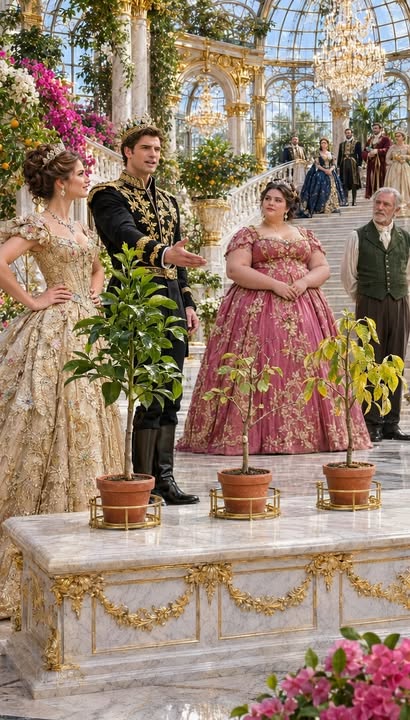
Part 4 – The Orchard Beyond the Palace
The old nursery register contained Mara Vale’s name beside the living tree.
For a moment, no one spoke.
The gardener kept one finger on the entry, as if the ink might shift if he let it go.
The prince looked from the page to the woman in pink.
“Mara Vale was your mother?”
“Yes,” she said.
Her voice sounded steadier than she felt.
The noblewoman lowered her copied sheet.
The gardener glanced at the prince, then at the woman.
“I didn’t know the name was yours,” he said. “The entry was made years ago, and the register is kept in the nursery office.”
“What does ‘label replaced’ mean?” the prince asked.
The gardener leaned over the page again.
“It means the original tag was damaged or lost, and someone made a new one.”
“And the name retained by request?”
“I can’t say. The register doesn’t explain.”
The prince’s eyes returned to the woman in pink.
“Did your mother ever work here?”
“Not that I know of.”
She tried to summon every conversation she had ever had with her mother about the palace, the orchard, or the queen.
Nothing came clearly.
There had been stories about plants, certainly, but they had always seemed like small, ordinary memories: a stubborn pear tree, a cutting wrapped in damp cloth, a winter when the garden had nearly frozen.
Her mother had never mentioned the royal orchard.
Not once.
The noblewoman looked at the register.
“Could the name refer to someone else with the same surname?”
“It could,” the gardener said. “Mara Vale is not an uncommon name.”
But the woman knew it was uncommon enough in their district.
More than that, the entry’s date was two years after her mother had stopped taking outside work.
She stepped closer to the register.
“What date was it?”
The gardener turned back a page to check the heading.
“Three years after the queen’s death.”
The prince’s expression grew still.
“By then the orchard had been cleared.”
“That is what I was told,” he added, though the words seemed directed toward himself.
The woman in pink felt the old uncertainty stir.
She remembered her mother’s hands, stained green at the nails, closing a notebook whenever she entered the room.
She remembered asking once why her mother kept so many labels from plants that no longer existed.
Her mother had replied that names mattered, especially when people forgot where something had begun.
At the time, the answer had seemed like one of her mother’s gentle oddities.
Now it felt like a door that had been left closed.
“I need to look at her notebook,” the woman said.
The prince nodded at once.
“Of course.”
“I don’t want to claim the tree belongs to my family because our names appear together in an old book.”
“No one is asking you to claim anything,” he said. “We’re trying to understand why the record was written.”
His measured voice eased something inside her.
The gardener closed the nursery register carefully.
“I can bring the orchard ledger and nursery book to the records room,” he said. “We should compare the dates before drawing conclusions.”
The noblewoman gathered her copied page.
“I’ll help, if you want me to.”
The woman in pink looked at her.
The offer was unadorned, without the polished confidence the noblewoman had worn during the test.
“If the prince agrees,” she said.
“I do,” the prince replied. “We need every detail we can find.”
The noblewoman gave a small nod.
“Then I’ll meet you in the records room.”
She left the shade house with the copied entry tucked under her arm.
The gardener carried the two books after her.
The prince stayed beside the sapling, and the woman in pink remained with him.
The small green bud below the graft seemed no different from the day before, but the tree had acquired a history neither of them had expected.
“Would you like to go home and find the notebook?” the prince asked.
“I should.”
“I can have a carriage arranged.”
“Thank you, but I can make my own way.”
He accepted her answer without insisting.
“Would you come back afterward?”
“If I find something.”
“And if you don’t?”
She looked at the sapling.
“I’ll come back anyway.”
A quiet warmth appeared in his expression.
“Then I’ll be here.”
The promise was gentle, and she believed he meant it.
She left the palace carrying the question of her mother’s name through the city.
At home, the garden behind the house was still, the old fruit trees bare except for a few leaves that had held on through the cold.
The beds were overgrown, and rainwater had gathered in the cracked rims of the pots.
Her mother’s gardening notebook sat in a drawer beneath a stack of linen.
It was smaller than she remembered, bound in faded blue cloth with a threadbare spine.
She carried it to the kitchen table and opened it where the pages had softened from use.
The first entries were ordinary instructions: when to prune, which herbs tolerated shade, how to coax new growth from a stubborn cutting.
Her mother’s handwriting leaned forward across the page, as if always hurrying toward the next thought.
The woman found the little circle crossed by a diagonal line on the fourth page.
It appeared beside a list of seedlings, then again beside a sketch of an orange tree.
She turned to the page dated the year her mother had begun helping in the garden more often.
There it was again.
The mark stood beside a note written in darker ink.
For the narrow graft, keep the label separate.
A chill passed over her skin.
She read it again, then turned the page.
The paper had been torn close to the binding, leaving only a narrow strip of writing.
She angled it toward the window.
The remaining words were faint but legible.
If the orchard is cleared, take the last cutting before the frost.
Her breath caught.
She sat down slowly, the notebook open in both hands.
The memory of her mother’s garden returned with a new shape.
A small orange tree had once stood behind the kitchen, sheltered against the brick wall.
It had been moved after her mother became ill, when the garden was being cleared for repairs.
The woman remembered her mother asking her to water it carefully, though it had looked no different from any other young tree.
After her mother died, the little tree had failed.
She had thought it was simply too weak to survive the move.
She had not known there had been another cutting.
Her fingers moved over the page without touching the ink.
There were other notes in the same section, written in the private shorthand she had never understood.
One mentioned a place, abbreviated to two letters.
Another carried a date matching the year the queen’s orchard was cleared.
Beneath them, her mother had written:
She trusted me with what she could not keep at court.
The woman closed the notebook.
For a few seconds, she sat without moving, listening to the small sounds of the house settling around her.
Her mother had never told her that she had known the queen.
She had never said that their friendship had been hidden, or that the tree in the palace might have been saved by her.
The silence had not been emptiness.
It had been protection, or caution, or a story her mother had been unable to finish.
She wrapped the notebook in a clean cloth and returned to the palace.
The prince was waiting in the records room with the gardener and the noblewoman.
The old orchard ledger lay open on the table beside the nursery register.
A window high in the wall admitted a narrow bar of afternoon light, and dust floated through it like slow-falling pollen.
The prince rose when she entered.
“Did you find something?”
“I found the mark in my mother’s notebook.”
She set the cloth-wrapped book on the table but did not open it at once.
The gardener leaned forward.
“Is it the same mark?”
“Yes.”
The prince’s face changed, though he kept his voice even.
“Can you show us?”
She unwrapped the notebook and opened it to the page.
The gardener bent over the handwriting.
His expression sharpened as he read.
“‘For the narrow graft, keep the label separate,’” he murmured.
The prince looked at the next line.
“‘If the orchard is cleared, take the last cutting before the frost.’”
He read the words a second time.
“Your mother wrote this?”
“Yes.”
The woman watched his face as the meaning settled.
“My mother kept a tree from the orchard?” he asked.
“I think she kept a cutting. The note says the last one.”
“Did she ever tell you where she took it?”
“No.”
The gardener opened the orchard ledger again and compared the dated entry with the notebook.
The dates aligned.
He turned to a page marked with a faded ribbon and found a note at the bottom of the column.
“Here,” he said. “The queen’s orchard record mentions a final cutting assigned to a private keeper.”
The prince leaned over his shoulder.
“What does it say?”
The gardener read slowly.
“‘The narrow-marked graft is entrusted to M. Vale until the orchard stock can be restored.’”
The prince did not move.
The woman felt the room grow smaller around the table.
“Your mother knew mine,” the prince said.
“I believe so.”
The gardener continued reading.
“‘No public label is to be used. The cutting must remain outside the palace grounds until the dispute is settled.’”
“What dispute?” the noblewoman asked.
The gardener checked the entries around it.
“I don’t know. There’s no explanation here.”
The prince’s gaze stayed on the page.
“She trusted your mother with it.”
The woman looked down at the notebook.
“It seems that way.”
He took a breath that sounded almost like a question, then let it out quietly.
“All these years, I thought the orchard ended when it was cleared.”
“I thought my mother’s garden ended when we lost her,” the woman said.
Their eyes met.
Neither of them offered comfort that could erase the discovery.
The gardener turned to the nursery register.
“The tree was entered here three years after the queen’s death,” he said. “The note says its name was retained at Mara Vale’s request.”
“But the tag we found carried a common variety name,” the prince said.
“Yes. The current label is not the one recorded when the tree arrived.”
The noblewoman studied the two books.
“Could the later label have been a mistake?”
“It could,” said the gardener. “Or it could have been changed because the original name was not meant to be public.”
The woman looked at the mark in her mother’s notebook.
“Did the queen’s records say what the graft was called?”
“Not in the pages I’ve found.”
The gardener turned several leaves and stopped at an entry written in a smaller, older hand.
“This may be why,” he said.
The prince came around the table.
The gardener tilted the ledger so they could read.
A line had been struck through, but the ink was faded enough to reveal the words beneath.
“‘The Vale cutting is to remain unlisted until the orchard claim is settled.’”
The prince’s eyes lifted.
“The orchard claim?”
The gardener looked troubled.
“I had forgotten there was a dispute at all. It was a disagreement over the land and the maintenance funds after the queen died. The court wanted the orchard cleared. Her Majesty’s household had hoped to preserve it.”
“Who made the claim?” the woman asked.
“I don’t know,” the gardener said. “The old files may say.”
The prince rested one hand on the edge of the table.
“My mother must have thought the cutting would be safer with your family.”
The woman’s throat tightened.
“She may have known my mother could keep it alive.”
The gardener’s eyes moved from the notebook to the prince.
“They were friends, then.”
The woman searched the pages for another clue.
Near the back, the faded name she had seen years ago was clearer now that she knew what she was looking for.
It was written beside a sketch of the graft, in her mother’s hand.
Her Majesty and I chose this one together.
Below it, in smaller letters, she had added:
Let it belong to the garden, not to the quarrel.
The woman read the sentence aloud.
The prince turned toward the window.
For a moment, he looked less like a prince than someone standing at the edge of a memory he had never been allowed to inherit.
“My mother wanted the tree kept out of that dispute,” he said.
“She may have wanted more than that,” the noblewoman said.
The others looked at her.
She pointed to the ledger.
“If the cutting was kept outside the palace and left unlisted, it might have been protected from the people fighting over the orchard.”
The gardener nodded slowly.
“That would explain the separate label.”
“And the replacement tag?” the prince asked.
“We still don’t know when it changed,” the gardener said. “The nursery register says the original label was retained by request, but someone later attached a different one.”
The woman studied the current tag in her mind.
The small symbol had survived, even though the name had changed.
Perhaps someone had wanted to hide the tree’s identity while preserving a way to recognize it.
“Who replaced the label?” the prince asked.
The gardener closed the register halfway.
“The nursery book may list who handled the tree during each repotting. I’ll check the work orders.”
The prince looked down at the old ledger.
“What will you tell the court?”
“Only what we can verify,” the gardener said. “That the sapling is a graft from your mother’s orchard and was entrusted to Mara Vale.”
The woman felt the weight of her mother’s name in the room.
She had spent years remembering her as a woman with dirt under her nails and a habit of saving seeds in envelopes.
Now she could see her as someone trusted with a piece of the queen’s past.
“Did my mother know the tree was important?” she asked.
The gardener thought before answering.
“From the notebook, I believe she did.”
The prince stepped beside her.
“Did she tell you why she kept it secret?”
“No.”
“Would you like me to find out what happened to the old orchard records?”
She looked at him.
“I’d like to know what happened, but I don’t want the tree turned into a court symbol before we understand why my mother kept it.”
His expression softened with recognition.
“Neither do I.”
The noblewoman lowered her gaze to the ledger.
“I have spent years thinking the palace preserves everything that matters,” she said. “It appears I was wrong.”
The prince looked at her.
“So was I.”
The admission eased the strain in the room.
The gardener gathered the books into a careful stack.
“I’ll search the remaining nursery files and the old correspondence,” he said. “There may be a letter from the queen or a record of the transfer.”
“Please do,” the prince replied.
The gardener left the room with the ledgers.
The noblewoman stayed long enough to return the copied sheet to her folder.
“I’m sorry I treated the test as though it were only about choosing a tree,” she said.
The woman in pink closed her mother’s notebook.
“It was about the tree.”
“It was also about how people look at one another.”
The noblewoman met her eyes.
“I saw your quietness and mistook it for uncertainty.”
“I was uncertain.”
“But you still looked carefully.”
The woman let the words settle.
“Thank you for saying that.”
The noblewoman gave a small, sincere nod, then followed the gardener out.
The prince and the woman remained alone with the afternoon light and her mother’s notebook between them.
He reached for it, then stopped.
“May I?”
She nodded.
He turned to the page where the words had been written.
The prince read the final line again, moving his lips silently.
Let it belong to the garden, not to the quarrel.
“My mother would have said something like that,” he said.
“Did she?”
“She believed a garden belonged to the people who cared for it, not the people who owned the land.”
The woman felt a sudden ache of closeness to a woman she had never known.
“My mother believed something similar.”
“Perhaps that was why they trusted each other.”
The prince closed the notebook gently.
For a few breaths, the room was quiet.
Then the gardener hurried back in, holding a small envelope.
His face had changed.
“What is it?” the prince asked.
“I found the transfer file.”
He placed the envelope on the table.
The paper was brittle at the edges, and the seal had been broken long ago.
A note inside was written in the queen’s hand.
The prince recognized it at once.
His fingers tightened around the edge of the table.
The gardener read the first lines silently, then looked at the woman.
“This was attached to the original nursery record.”
The prince reached for the note.
The handwriting was unmistakably his mother’s.
He read it once, then again, his face paling.
“What does it say?” the woman asked.
The prince lowered the paper.
“‘Mara has agreed to keep the cutting beyond the palace while the claim is settled,’” he said. “‘She and I chose it together, and neither of us wants it used as proof of ownership.’”
The woman felt her mother’s notebook press against her palm.
The prince continued.
“‘If I cannot return for it, let the tree go where it can do the work we intended.’”
He stopped.
The gardener’s eyes lowered to the remaining lines.
“There’s more,” the prince said.
He read the last sentence, and his voice changed.
“‘When the proper time comes, tell my son that the cutting was never meant to be his inheritance alone.’”
**–END OF PART 4–CLICK “NEXT” AT THE BOTTOM OF THE PAGE TO CONTINUE READING**
* * *
[PREVIOUS: PART 3](https://storyly.idolsgift.com/blog/part-3-the-roots-beneath-the-bark-058) | [NEXT: PART 5](https://storyly.idolsgift.com/blog/part-5-the-roots-beneath-the-bark-058)
✓ Lynn R. Adams
Part 4 – The Orchard Beyond the Palace The old nursery register contained Mara Vale’s name beside the living tree. For a moment, no one spoke. The gardener kept one finger on the entry, as if the i…