PART 4: The Room Behind the Portrait 069
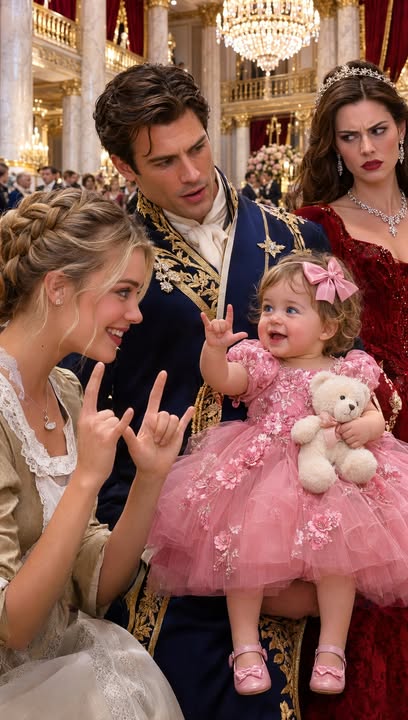
Part 4 – The Physician’s Letter
“It says that on the morning after the correction, an infant named Mary was delivered to a household beyond the palace walls,” Mr. Ashcombe said.
He turned the slip toward them.
“And beside the child’s name, someone wrote, ‘Returned in place of the princess.’”
For a moment, no one moved.
The words seemed too small to carry the weight they had gathered, yet Sophia could not look away from them.
Returned in place of the princess.
Alexander read the line again, his expression tightening as he tried to make it fit the facts he knew.
“Who was Mary?” he asked.
Mr. Ashcombe ran a careful finger beside the faded writing without touching it.
“The record gives no surname. The household is listed only by its district.”
“Could the note have been added later?” Sophia asked.
“It may have been,” the archivist replied. “The ink differs from the entry above it, though the hand is difficult to identify.”
Alexander turned toward the rest of the papers.
“Is there a record of the infant’s mother?”
“Not among these pages.”
“And the child who was entered as Sophia?”
Mr. Ashcombe looked down at the nursery register.
“That is what we must establish.”
Sophia’s hands had gone cold.
For years, her mother had been the center of the little world they shared.
Now a faded note suggested that even the beginning of that world might have been built on a name someone else had chosen.
“Does it mean I was the princess?” she asked.
No one answered quickly enough.
Alexander came to her side.
“It means someone thought a child had been returned in place of a princess,” he said. “It does not yet tell us who either child was.”
“But my name is in the record.”
“Yes.”
“And Mary was sent outside the palace.”
“Yes.”
The measured gentleness in his answers helped, though it could not quiet the question forming beneath them.
Mr. Ashcombe gathered the papers into their folders.
“I can search the old transfer registers,” he said. “The household district may lead us to a name.”
“Please do,” Alexander replied. “And keep these records together. No one else should remove them until we know what they show.”
The archivist nodded.
“I will return them to the secured cabinet myself.”
Sophia watched him close the folders and slide them beneath his arm.
The archive had seemed a place of patient, harmless memory when they entered.
Now every ledger felt like a room with a locked door inside it.
Alexander walked her back to the corridor.
He did not ask what she was thinking.
Perhaps he understood that the question was too large to answer in a hallway.
At last, Sophia said, “If I was the princess, why did my mother raise me as an ordinary child?”
“I don’t know.”
“Did she know?”
“I don’t know that either.”
The honesty in his voice hurt less than a comforting guess would have.
Sophia touched the silver swan.
“I keep thinking of her hands,” she said. “She used to tie this around my neck before we went out. She always checked the clasp twice.”
“She may have been protecting the pendant.”
“Or protecting me from what it meant.”
Alexander considered that.
“Both may be true.”
They reached the turn that led toward the servants’ quarters.
Beyond it, the palace was quiet, though the distant household bells marked the passing of the hour.
Sophia paused.
“I need to speak with my mother.”
“Of course.”
“She has been gone for years.”
“I’m sorry,” Alexander said softly. “I meant that you should have the chance to speak about her, if you want to.”
Sophia looked at him, and some of the tension left her shoulders.
“I want to remember her as she was before all this.”
“Then we will.”
For the first time that night, his promise did not sound like a royal assurance.
It sounded like something personal, offered between two people who understood that love could coexist with unanswered questions.
The next morning, Sophia returned to Eleanor’s chambers with Alexander and Lily.
The nursery record had been left in Alexander’s study, but the photograph and Eleanor’s letter were back inside the green velvet box.
They had not wanted Lily’s first visit to the room to be only an encounter with a mystery.
The sunlight through the tall windows softened the furniture and warmed the blue shawl on the chair.
Lily went straight to the portrait that had hidden the loose panel.
She touched the frame, then looked at Sophia.
“You found it,” Sophia said.
Lily nodded and lifted her hands.
Sophia answered with the family gesture.
I will find you.
Lily’s face brightened, and she leaned into Sophia’s side.
Alexander watched them.
“She knew where to look before we did.”
“Perhaps Eleanor showed her,” Sophia said.
“She could have taught Lily the gesture without showing her the hiding place.”
“Then how did Lily know?”
Alexander glanced at the portrait.
“Perhaps she saw Eleanor place something there.”
The thought brought them both back to the open box.
Sophia took out the photograph and held it carefully.
The two girls in the garden seemed to look past the glass, their matching silver swans catching the light.
Lily climbed onto the chair beside her and rested her head against Sophia’s arm.
“Would you like to see your mother?” Sophia asked, though she knew Lily had heard the words before.
Lily looked at the photograph and touched Eleanor’s face.
Then she touched the silver swan at Sophia’s neck.
Alexander pulled a chair close and sat with them.
For several quiet minutes, they looked at the photograph together.
No one tried to fill the silence.
When the moment had passed, Alexander asked, “May I see the letter again?”
Sophia unfolded it.
She read the lines quietly to herself, lingering over Eleanor’s confession that she had seen her sister and lacked the courage to approach.
In the ballroom, the Queen Dowager had said Eleanor’s memory could not be trusted.
The letter now seemed both tender and troubling.
Eleanor had not merely hoped to find a sister.
She had feared that someone had deliberately buried the story.
Sophia read the last line once more.
“I loved you before I knew your name, and I never stopped.”
Her eyes stung, but she did not cry.
“She knew me,” Sophia said. “Even if she couldn’t reach me.”
Alexander lowered his gaze.
“She deserved the chance to tell you herself.”
“So did I.”
“Yes.”
He did not ask her to soften that truth.
Lily lifted one hand and placed it over Sophia’s fingers on the letter.
Sophia turned her palm upward, and Lily nestled her hand there.
It was a small, steady comfort.
Later that morning, Alexander summoned Mr. Ashcombe to his study.
The archivist brought a map of the palace district and several pages from the transfer records.
The household mentioned on the nursery receipt had once belonged to a retired royal physician, Dr. Alistair Vale.
His residence stood in a village beyond the eastern gardens, though the building had since passed into private hands.
“Dr. Vale served the royal family during the late king’s reign,” Mr. Ashcombe explained. “He recorded births, illnesses, and the care of the royal children.”
“Is there anything that says he took Mary?” Alexander asked.
“There is a payment entered under his household account on the same date as the transfer.”
The archivist laid a small account book on the desk.
The entry did not mention a child, but it listed a payment for a nurse, clothing, and a carriage.
Sophia studied the page.
“Could he have taken in an orphan?”
“Certainly,” Mr. Ashcombe said. “But the phrase on the receipt suggests the infant was connected to the palace.”
Alexander looked at her.
“I want to find the original of that note.”
“If it still exists,” the archivist said, “it may be in Dr. Vale’s papers.”
“Can you contact his family?”
“I can send a formal inquiry.”
Sophia turned the account book toward herself.
A thought had been gathering in her mind since the night before.
“What if the papers were kept by someone who knew the truth?”
Mr. Ashcombe folded his hands.
“That is possible.”
“Would the former physician have written down what happened?”
“If he was responsible for the transfer, he might have.”
Alexander straightened.
“Then we should ask his family to let us see his papers.”
Mr. Ashcombe made a note.
“I will write today.”
The old physician’s papers did not arrive that day, nor the day after.
In the meantime, Alexander continued searching the archive.
He found a report on the royal nursery staff, a list of furnishings sent to the eastern district, and several pages of household expenses that referred to Eleanor’s childhood without mentioning another child.
Some records supported one interpretation.
Others made it impossible.
The Queen Dowager sent no further message.
Victoria, when she crossed paths with Sophia in the corridor, offered a quiet greeting and did not ask for news.
Her apology had not made them friends, but it had given them a more honest beginning.
Sophia found herself grateful for that.
The palace was not only a place where secrets had been kept.
It was also a place where people could choose what to do after discovering them.
On the third morning, a reply arrived from Dr. Vale’s family.
The physician had died long ago.
His granddaughter, Mrs. Miriam Vale, still lived in the village and had kept a number of his personal papers.
She was willing to meet with the prince and Sophia, but asked them to come without attendants.
Alexander agreed.
They traveled by carriage that afternoon.
Lily remained at the palace with her nurse, though she gave Sophia a solemn wave from the nursery window before the carriage departed.
The village lay beyond the eastern gardens, where the palace walls gave way to low fields and stands of beech trees.
The road was damp from an early shower.
Bare branches crossed above it, and pale winter sunlight glimmered in the puddles.
Sophia sat opposite Alexander, the silver swan tucked beneath the collar of her coat.
“You don’t have to come with me,” she said.
“I know.”
“Mrs. Vale may only have ordinary family papers.”
“Then we will have learned something ordinary.”
She watched him for a moment.
“Do you always answer fear by making it smaller?”
“Not always,” he said. “Sometimes I answer it by pretending I’m not afraid.”
The admission surprised her.
“What frightens you?”
“That the truth will prove I have failed Eleanor in ways I never understood.”
Sophia looked through the carriage window at the fields.
“You loved her. You can’t be blamed for what no one told you.”
“I know that in my mind.”
“And in your heart?”
He gave a faint, rueful smile.
“My heart is less reasonable.”
She understood that better than she wanted to.
The carriage reached a neat stone cottage with a low garden wall and a blue door.
Mrs. Vale was waiting beneath the porch roof.
She was a woman in her late sixties, with silver hair braided along the back of her head and a manner that suggested she had spent much of her life listening before she spoke.
She greeted Alexander with a respectful curtsey, then turned to Sophia.
“I know your name,” she said. “My grandfather wrote it in a letter that was never sent.”
Sophia felt the swan beneath her coat.
“Did he write about me?”
“Not by name in the letter I found. He wrote about an infant who should never have been made to carry the weight of grown people’s fears.”
Alexander and Sophia exchanged a look.
Mrs. Vale stepped aside.
“Please come in.”
The cottage smelled of tea and beeswax.
A narrow staircase led to the upper rooms, and the sitting room was lined with books and family photographs.
Mrs. Vale brought them tea, but she seemed unwilling to begin until they were seated and warm.
“My grandfather kept records long after he left the palace,” she said. “He believed that a physician’s duty did not end when the illness was over. He wrote down what he had seen, even when it brought him no comfort.”
“Did he deliver the royal children?” Alexander asked.
“He attended the royal household when the late king was ill and when the princesses were born.”
Sophia’s fingers tightened around her cup.
“Was I one of those children?”
Mrs. Vale did not answer at once.
“I cannot tell you that with certainty,” she said. “But I believe my grandfather thought you were.”
Alexander set down his tea.
“Why would he write otherwise?”
“Because believing something and proving it are not the same.”
She rose and crossed to a small cabinet beside the window.
From it, she took a cloth-wrapped bundle.
“I did not know what these papers meant until your letter arrived,” she said. “My grandfather never spoke of the matter to me. He only told me that some documents should be kept, even when no one seemed ready to read them.”
She placed the bundle on the table.
The ribbon had faded to a soft gray.
Mrs. Vale untied it and removed a slim ledger, several folded notes, and one sealed envelope.
The envelope bore the royal crest.
Alexander recognized the handwriting at once.
“It is addressed to the Queen Dowager,” he said.
“Was it ever delivered?” Sophia asked.
“I don’t know,” Mrs. Vale replied. “I found it among my grandfather’s papers after he died.”
The seal was intact.
Alexander looked at Sophia before touching it.
“May I?”
She nodded.
He broke the seal and unfolded the letter.
His eyes moved over the page.
The color left his face.
“What does it say?” Sophia asked.
He read the first lines aloud.
“Your Majesty, I must put in writing what I have told you in person, because the child’s future must not depend upon a promise that can later be denied.”
He paused.
Mrs. Vale sat down again, her hands folded in her lap.
Alexander continued.
“‘The two infant girls are both living. Princess Eleanor is healthy, and her younger sister has been placed temporarily in the palace nursery while the matter of her care is decided.’”
Sophia could hear her own heartbeat.
Alexander read on.
“‘The child’s mother has not abandoned her. She has asked to take her home, and I have advised that this request be granted unless a direct danger to the infant can be shown.’”
The words seemed to rearrange the room around them.
“My mother was here,” Sophia whispered.
Alexander continued, his voice lower.
“‘I do not believe the danger is to either child. I believe the danger is to the household’s reputation, and those are not the same thing.’”
Mrs. Vale looked down at the table.
“Dr. Vale was an honorable man,” she said. “He did not like being asked to write one thing in the medical record and hear another spoken behind closed doors.”
Alexander reached the end of the letter.
His gaze stopped.
“What is it?” Sophia asked.
“There is a second page.”
He unfolded it.
The paper had been tucked into the envelope, but its crease had hidden it from view.
Alexander read silently first.
Then he looked at Sophia.
“The Queen Dowager wrote a reply.”
“Do you know what she said?”
He passed the page to Sophia.
The handwriting was firm, deliberate, and unmistakably the same hand that had altered the nursery record.
She recognized the shape of the letters from the old signature in the archive.
The reply was brief.
*Dr. Vale,*
*The infant must be placed with the mother beyond the palace household.*
*The elder princess is to be told that her sister has been taken away for her safety, and the mother is to be told that the palace cannot keep the child.*
*No public record is to describe the arrangement as a separation.*
*When the child is old enough to ask, she must be permitted to know her name and her family.*
*I will not have the girls made into a court scandal.*
Sophia reached the end of the page.
Her hands trembled.
The Queen Dowager had known.
She had known that Sophia was Eleanor’s sister.
She had known that their mother wanted to take her home.
She had known the girls would grow up apart.
Alexander’s voice was heavy.
“She did not say your mother left willingly.”
“No,” Sophia whispered.
“She ordered the separation.”
Mrs. Vale leaned toward them.
“There is more.”
She removed a final folded note from the bundle.
This one was not addressed to the Queen Dowager.
It had been written in Dr. Vale’s hand, and its date came several years after the transfer.
“My grandfather’s note,” Mrs. Vale said. “He wrote it after the Queen Dowager refused to let Princess Eleanor see her sister.”
Sophia looked at the paper but did not touch it.
“Read it,” she said.
Mrs. Vale unfolded the note.
“‘I have learned that the elder girl has begun asking where her sister lives. I was told to say nothing. Her Majesty believes another separation would reopen an old wound, but silence does not heal what has not been allowed to close.’”
Alexander’s face tightened.
“Eleanor tried to find me as a child.”
Mrs. Vale nodded.
“My grandfather believed she did.”
Sophia lowered her gaze to the note.
The ache she had felt in Eleanor’s room returned, but now it had changed.
Eleanor had not simply failed to reach her.
The path between them had been blocked while they were both too young to understand why.
The Queen Dowager’s silence had not started after Eleanor’s death.
It had shaped the sisters’ childhoods.
Sophia thought of the old woman in her sitting room, insisting that her mother had left willingly.
Perhaps the Queen Dowager had repeated the story until she could almost believe it.
That did not make it true.
“Did Dr. Vale ever write that my mother took me home?” Sophia asked.
Mrs. Vale turned to the slim ledger.
“He recorded a transfer to the household listed in the nursery receipt.”
“Was it my mother’s household?”
“I think so.”
Alexander leaned over the ledger.
“Could the district be identified?”
Mrs. Vale examined a faded line near the bottom of the page.
“It is the same district as the town where your mother later lived.”
Sophia’s breath caught.
The child taken from the palace had gone to the very place where she was raised.
The note about Mary being returned in place of the princess had begun to make sense, though not yet completely.
“What happened to Mary?” she asked.
Mrs. Vale looked through the papers.
“Dr. Vale’s notes say that Mary was the daughter of a woman who worked in the palace laundry. The infant had become ill, and her mother was afraid she would not survive the winter. Dr. Vale cared for her while the mother found a safe place to stay.”
“So Mary wasn’t another princess,” Alexander said.
“No. She was an ordinary child whose name was used in the nursery record to hide Sophia’s transfer.”
Sophia closed her eyes.
The revelation was almost too much to hold.
She had feared she was an impostor, a name pasted over another child’s life.
Instead, her own name had been erased so that the palace could pretend she had never been there.
And Mary, a vulnerable infant with no royal claim, had been entered in her place.
A deception built to protect the family’s reputation had left two girls surrounded by false explanations.
“Was my mother forced to leave?” Sophia asked.
Mrs. Vale looked at the physician’s letter again.
“She wanted to take you home. Dr. Vale advised that she be allowed to.”
“That does not answer the whole question.”
“No,” Mrs. Vale said. “It does not.”
Alexander traced the edge of the letter with his gaze.
“The Queen Dowager said she believed my mother and aunt were safer outside the palace.”
“Perhaps she did,” Mrs. Vale replied. “But she decided what safety meant without allowing either child’s mother to decide for herself.”
Sophia looked up.
“Why would the Queen Dowager keep the truth from Eleanor for so long?”
Mrs. Vale folded the note carefully.
“My grandfather believed she thought the secret could be contained. He also believed she was afraid that acknowledging the separation would expose the people who arranged it.”
“Who arranged it?”
Mrs. Vale did not know.
She searched the ledger and found no name beyond the Queen Dowager’s order.
The room fell quiet.
Alexander rose and moved to the window.
Outside, a child was running along the lane with a wooden hoop, laughing as it bounced ahead of him.
The ordinary sound carried through the glass, bright and unguarded.
Sophia watched Alexander’s reflection in the window.
He looked like a man seeing his family’s history without the protective curtain of royal custom.
“Eleanor knew I existed,” he said.
“She did,” Sophia replied.
“She knew you had been separated.”
“She may not have known where I was.”
“But she searched.”
“Yes.”
He turned from the window.
“And I never asked enough to understand how much it mattered.”
“You loved her,” Sophia said. “That part is not in question.”
“I should have listened more carefully.”
“You cannot go back and change what you did not know.”
“But I can listen now.”
There was no grand declaration in his answer.
Only a quiet decision.
Sophia felt something in her chest ease, though the grief remained.
Mrs. Vale wrapped the papers in their cloth again.
“You may take copies,” she said. “The originals should stay here, but I will allow Mr. Ashcombe to compare them and certify what he finds.”
“Thank you,” Alexander said.
Sophia placed a hand over the bundle before Mrs. Vale tied it shut.
“May I see the Queen Dowager’s letter once more?”
Mrs. Vale passed it to her.
Sophia read the last line again.
*When the child is old enough to ask, she must be permitted to know her name and her family.*
The promise had been written.
It had not been kept.
As they prepared to leave, Mrs. Vale handed Sophia a small, worn envelope.
“This was tucked inside the ledger,” she said. “It has no address, and I cannot say who was meant to receive it.”
Sophia opened it.
Inside was a small square of paper covered in a faded drawing of two silver swans.
One had been drawn larger than the other.
Beneath them, in a child’s uneven handwriting, were the words:
*I will find you.*
Sophia recognized the shape of the letters from Eleanor’s old practice notes in the palace room.
Her throat tightened.
“Was this Eleanor’s?”
“I believe so,” Mrs. Vale said. “My grandfather kept it with his records.”
Alexander leaned close enough to read the words.
“She knew the gesture,” Sophia said. “She was trying to remember me before she could understand what had happened.”
The carriage ride back to the palace was quieter than the journey out.
Sophia held the drawing in her gloved hands.
Alexander sat beside her this time, close but not crowding her.
They had found the truth that mattered most.
They were sisters.
Eleanor had been Sophia’s sister, not only in the family photograph, but in the life that had been taken from them.
Their mother had not abandoned her.
The Queen Dowager had chosen separation and then guarded the choice with silence.
Sophia felt grief for the years, anger at the lie, and a tenderness for Eleanor that seemed to deepen with every new detail.
At the palace, Alexander went first to Lily’s nursery.
The little girl was sitting on the rug with her white teddy bear in her lap.
When she saw Sophia, she dropped the bear and held up both hands.
Sophia crouched and returned the gesture.
I will find you.
Lily smiled, then leaned her forehead against Sophia’s.
Alexander watched them from the doorway.
The warmth in his expression did not erase the sorrow, but it gave it somewhere to rest.
That evening, he asked the Queen Dowager to meet them in the small music room.
He did not bring the entire archive.
He brought only the letters from Dr. Vale.
Sophia carried Eleanor’s drawing.
The Queen Dowager arrived without her cane, though she moved carefully.
When she saw the papers on the piano, her expression changed.
For several seconds, she did not speak.
“You have the physician’s records,” she said.
“We do,” Alexander replied.
The Queen Dowager looked at Sophia.
“You know the truth now.”
“I know that my mother did not abandon me,” Sophia said. “I know she asked to take me home. I know Eleanor tried to find me.”
The old queen’s face tightened with grief.
“Your mother took you away from the palace.”
“Because you ordered her to.”
The Queen Dowager closed her eyes.
“I believed I was protecting you.”
“From what?”
“From a court that would have turned your parents’ tragedy into a weapon. From a family already weakened by scandal. From a life in which every mistake would be measured against your birth.”
“Did you ask my mother what she wanted?”
The Queen Dowager did not answer.
“Did you ask Eleanor what she needed?”
Still, the old woman remained silent.
Alexander spoke quietly.
“You promised Dr. Vale that Sophia would be allowed to know her name and family when she was old enough to ask.”
“I meant it.”
“But you never told her.”
“I thought the truth would hurt her.”
“It did hurt her,” Sophia said. “It hurt both of us. It hurt Eleanor too.”
The Queen Dowager looked at the drawing in Sophia’s hand.
“I know.”
The admission was small, but it seemed to take something from her.
“You told me my mother left willingly,” Sophia said.
“I told you what I had allowed myself to believe.”
“Why?”
“Because the alternative was that I had made a choice that could never be undone.”
Sophia held Eleanor’s drawing against her palm.
“You did make that choice.”
“Yes.”
The Queen Dowager lowered her gaze.
“I was afraid,” she said. “The family had endured years of uncertainty. I believed that if the child remained at court, she would become another subject of dispute. I believed Eleanor would be safer if she had no memory of her sister.”
“You cannot protect someone from grief by taking away the truth,” Alexander said.
“No,” she replied. “I understand that now.”
“Did you keep Eleanor from searching for Sophia?” he asked.
The Queen Dowager’s eyes lifted to his.
“I did not tell her where Sophia was.”
“That is not an answer.”
“I thought I was sparing her a pain she could not solve.”
Eleanor’s letter sat between them, a record of the pain she had carried anyway
**–END OF PART 4–CLICK “NEXT” AT THE BOTTOM OF THE PAGE TO CONTINUE READING**
* * *
[PREVIOUS: PART 3](https://storyly.idolsgift.com/blog/part-3-the-room-behind-the-portrait-069) | [NEXT: PART 5](https://storyly.idolsgift.com/blog/part-5-the-room-behind-the-portrait-069)
✓ Lynn R. Adams
Part 4 – The Physician’s Letter “It says that on the morning after the correction, an infant named Mary was delivered to a household beyond the palace walls,” Mr. Ashcombe said. He turned the slip t…