PART 4: The Promise in the Photograph 041
Part 4 – The Name Beneath the Seal
“Which child?” Alexander asked.
The question seemed to take the warmth from the office.
Emma stood near the open door, one hand still resting on the frame, while Victor watched the words on the envelope as if they might rearrange themselves into something less troubling.
“Grandma never told me his name,” Emma said. “She said the new name was the only way to keep him safe.”
“Did she say where he went?” Alexander asked.
“No. She only said he was loved, and that the people who protected him couldn’t stay beside him forever.”
Emma’s voice caught at the end.
She turned her face away, as if she feared the next thing she said might become a confession.
Alexander set the envelope on the desk.
“We’ll find out what’s inside before we decide what it means.”
Victor shook his head.
“If we open it here, we may damage something.”
“Then we’ll take it to the archive and have it handled properly.”
“The archive isn’t secure enough for this.”
“You said it was kept there.”
“I said the folder was kept there.”
“Then bring the folder here.”
Victor’s eyes moved to Emma.
“This concerns the family.”
“It concerns Rose,” Emma replied. “And your mother. If my grandmother was part of it, it concerns me too.”
“I’m not asking you to leave.”
“You keep acting as though I’m an inconvenience to the truth.”
Victor looked away.
For a moment, Alexander thought he might answer sharply, but the words never came.
Instead, he picked up the envelope with both hands.
“There’s a private records room in the east wing,” he said. “It’s quiet, and the files can be examined there.”
“Can Lily stay downstairs?” Emma asked.
“She can stay with Mrs. Collins,” Alexander said. “No one needs to tell her more until we understand what this is.”
Emma nodded, though her gaze stayed on the envelope.
“I don’t want her to hear another word about being connected to a secret.”
“Neither do I.”
Victor led them out of the office.
Alexander followed with the envelope, keeping it flat against his palm.
The east wing had been closed to visitors for years, its rooms used now for storage and business records rather than family life.
As they walked, Alexander remembered the house as it had been when his mother was alive: sunlight spilling across the long hall, voices carrying from the kitchen, the sound of his mother’s steps approaching before he saw her.
He had not known then that someone was making promises about children.
He had not known that a boy might be living somewhere under another name.
The records room smelled of cedar shelves and paper dust.
A narrow table stood beneath a shaded lamp, and the tall cabinets along the walls held decades of ledgers, correspondence, and property documents.
Victor set the folder he had brought from the archive on the table.
“This is everything I found in the file.”
Alexander did not sit.
“Everything?”
“Everything I was able to locate.”
“That’s not the same answer.”
Victor opened the folder.
Inside were several handwritten letters, a small collection of copied records, and one folded sheet with the Reed family crest in its corner.
Emma remained at the far end of the table, close enough to see the pages but not yet touching them.
“Where did you find the photograph?” Alexander asked.
“Between the account sheets and the letters.”
“And the envelope?”
“Behind the last page.”
“You didn’t think to bring all of this when you came to the office?”
“I thought the envelope would be enough to make you listen.”
Alexander looked at him.
“You could have said that.”
“I could have.”
The admission sat between them, plain and uncomfortable.
Victor turned to the old letters.
“They’re from Mother to Rose.”
Emma drew nearer.
“My grandmother kept them?”
“It appears so.”
“Why were they with your family records?”
“Perhaps they were returned after Rose left.”
“Or perhaps your mother wanted them kept here,” Alexander said.
Victor made no reply.
The first letter was dated several weeks before Alexander’s mother died.
The paper was thin, the ink a little blurred, but the handwriting unmistakable.
Alexander read the opening lines silently, then passed it to Emma.
She held it as carefully as if the page were alive.
“Dear Rose,” she read aloud, her voice low.
“Thank you for coming so quickly.”
The letter continued with a description of a winter storm, a reference to a physician, and a request that Rose keep a small bag ready.
Emma’s fingers trembled slightly at the edge.
“Why would she ask Rose to keep a bag ready?” she asked.
“To leave,” Victor said. “Or to be prepared.”
Alexander read over Emma’s shoulder.
The next lines were more difficult to make out.
Whatever happens, do not let them decide the child’s future for him.
He looked toward Victor.
“Who are ‘they’?”
“I don’t know.”
“Could it mean our father?”
“Possibly.”
“Or the family?”
“Possibly.”
Emma lowered the letter.
“Your mother was afraid someone would decide what happened to the child.”
“Or she was afraid the child would be caught in the feud,” Alexander said.
They examined the remaining letters one at a time.
Most contained ordinary details: household arrangements, a request to send medicine, a note about a closed road.
But beneath the ordinary phrases ran a current of concern.
A child had arrived.
A name had been chosen.
Rose had promised to keep him safe.
In one letter, Alexander’s mother wrote that the boy was strong enough to travel.
In another, she said Rose should trust no one who asked for the family register.
Victor rubbed his brow.
“I never saw these before.”
“Then why were you searching the accounts?” Emma asked.
“An auditor found a discrepancy in an old trust.”
“What kind of discrepancy?”
“A transfer that should have been recorded under one name was filed under another.”
Alexander’s attention sharpened.
“What trust?”
“An education fund.”
“For whom?”
“The record doesn’t say. The account was closed years ago.”
“Who closed it?”
Victor looked at the copied page.
“Father.”
The room fell silent.
Their father had been gone nearly a decade, leaving behind a complicated collection of businesses and family arrangements that Alexander had spent years untangling.
He had thought the old man’s secrets were mostly about money.
Now each document seemed to open onto a life he had never known.
“Did Father know about the boy?” Alexander asked.
“I don’t know.”
“Did he know Mother and Rose were arranging for him to be raised elsewhere?”
“I don’t know.”
“Victor, you brought this to me. Don’t stop answering the questions now.”
Victor met his gaze.
“I don’t have answers I can prove.”
Emma put the letter down.
“Then we need the records that can.”
Victor opened the folded sheet with the family crest.
It was a hospital record, copied onto a form that had yellowed at the edges.
The name on it had been partially obscured by a dark stain, but the date and the details of a birth remained legible.
A boy had been born prematurely.
The record listed a fever, an extended stay, and then a note indicating that the infant had been transferred to the care of a guardian.
Alexander leaned closer.
“This says the child survived.”
Victor looked at the faint line.
“Yes.”
“The envelope says the same.”
“Yes.”
Emma pressed her lips together, eyes fixed on the record.
“Was he my grandmother’s child?”
“No,” Victor said. “She was already an adult.”
“Was he her relative?”
“I don’t know.”
“Was he your father’s?”
“I don’t know.”
Alexander looked from the hospital record to the letters.
“Mother and Rose knew him. They planned for him. They gave him another name.”
“That’s what it appears to say,” Victor replied.
“Do we have the name?”
Victor shook his head.
The documents seemed to offer them a truth and withhold its most important piece.
Emma drew a slow breath.
“Grandma told me the child was loved.”
“Perhaps that’s all she knew,” Alexander said.
“Or all she could tell me.”
Her expression had changed.
The guarded worry remained, but beneath it there was recognition, a sense that some long-buried words were beginning to take shape.
Alexander reached for the final page in the folder.
It was a narrow sheet folded in half, its corners softened from handling.
At the top, in his mother’s handwriting, was a single word.
“Afterward.”
He unfolded it.
The page held only a few lines.
Rose, if you cannot stay, make certain he is not alone.
Tell him the truth when the danger has passed, and only if knowing it will not put him at risk.
If he has a child, see that the child is protected too.
Alexander read the lines again.
The words did not become easier.
“His child,” Emma whispered.
Victor turned toward her.
“Your grandmother may have known the boy’s name.”
“She may have known him,” Emma said. “She may have raised him.”
The sentence came out unsteady, but she did not take it back.
Alexander’s gaze moved to the hospital record.
“You said Rose left after my mother died to care for your mother.”
“That’s what I was told.”
“Could the child have been your mother?”
“No.” Emma shook her head. “My mother was born years before this.”
“Could Rose have taken the boy with her?”
“I don’t know.”
“Did your mother ever mention a brother?”
Emma stared at the page.
“Not once.”
“Did Rose have other children?”
“Not that I know of.”
Victor’s voice was careful.
“If the boy was raised under another name, your mother may never have been told.”
Emma pressed a hand against the table.
“My grandmother raised my mother in a small house on the edge of town. She worked constantly, and she never spoke about the years before.”
“You could have had family you never knew,” Alexander said.
“I could have.”
She looked at the hospital record again.
“But that doesn’t make him Lily’s father.”
“No,” Alexander said. “It doesn’t.”
The possibility had already formed in him, immediate and unwelcome.
He did not let it reach his voice.
Lily was not a riddle, not a claim, not a piece of a family ledger.
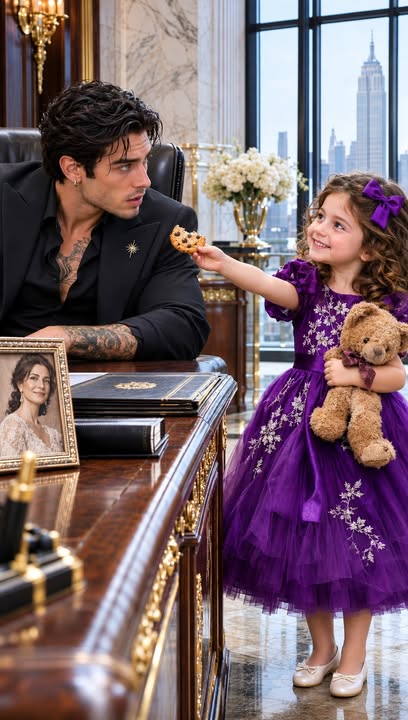
She was a little girl who had offered him a cookie and a teddy bear.
Whatever the records said, she deserved to be met as herself.
Emma’s eyes searched his.
“You’re thinking it.”
“I’m thinking we need to know who the boy became.”
“And if he was my father?”
“Then we’ll understand more about your family.”
“And Lily?”
Alexander held her gaze.
“Lily is Lily.”
Emma looked down.
“I’ve never known who her father was.”
The admission changed the room.
Victor’s expression softened, while Alexander felt a quiet ache behind his ribs.
“Did he leave?” he asked gently.
“I never met him.” Emma’s voice was low. “My mother said he was gone before Lily was born. She wouldn’t tell me more.”
“Was there a name?”
“Only a first name, and even that might not have been true.”
“Your mother knew him?”
“She said she did.”
Emma gathered the edge of her sleeve between her fingers.
“She was sick by then. She didn’t have the strength to explain. I was trying to keep the house and the bills together, and I told myself I could ask later.”
She swallowed.
“Later came after she was gone.”
Alexander understood the shape of that regret.
He had built a whole life around questions he had not asked in time.
He wanted to offer her some easy comfort, but nothing in the records was easy.
“Did Rose ever tell you that the boy had a child?” he asked.
“No.”
“Did she ever mention Lily’s father?”
“No.”
“Then we don’t know.”
Emma nodded once.
Her face was pale, but her voice held.
“Then we don’t guess.”
“Agreed.”
Victor lowered his eyes to the documents.
“The trust account may have a beneficiary name in the archived ledger.”
“Then we find it,” Alexander said.
“It might take a day.”
“Then it takes a day.”
“There may also be records at the hospital.”
“The hospital is unlikely to keep files from that long ago,” Emma said. “Not originals.”
“Perhaps not,” Victor replied. “But the transfer record may have been copied.”
Alexander looked at the date on the hospital document.
It matched the date on the note inside the photograph frame.
The same day his mother had written that the children must be kept safe.
“Why was the date hidden?” he asked.
“Maybe it wasn’t meant to be hidden,” Victor said. “Maybe the frame was simply a place to keep it.”
“Then why conceal the hospital record in an envelope?”
Victor’s gaze shifted.
“Because it could identify the child.”
“Or because someone wanted to make sure it was never found.”
Neither answer brought comfort.
Emma stepped away from the table and paced to the narrow window.
Outside, the evening had settled over the grounds, turning the glass dark enough to reflect the room.
“Grandma told me promises were made for the children,” she said. “I always thought she meant my mother and me.”
“Maybe she did,” Alexander replied.
“Or maybe she meant the boy and whatever children he might have.”
The words hung between them.
Alexander could see the path forming in her thoughts.
If Rose had protected the boy, if he had grown up under another name, if he had later fathered a child, then Lily might be connected to the Reeds.
But no record had named the boy.
No letter said where he went.
No one could yet prove whether Emma’s family and Alexander’s family met again after Rose left.
The mystery was beginning to press against their lives, but it had not earned the right to define them.
“We’ll be careful,” Alexander said.
Emma looked back at him.
“Careful how?”
“By verifying each thing before we act on it. By keeping Lily out of the speculation. By making sure no one uses a possibility to claim her.”
“You mean Victor?”
“I mean anyone.”
Victor accepted the rebuke without protest.
“You should also know,” he said, “the trust was tied to the family estate.”
“Meaning?”
“If the beneficiary’s identity was concealed, revealing it could affect the current ownership.”
Alexander’s attention sharpened.
“Is that why you came to me with the envelope?”
“I came because I thought the papers might change the way the business was divided.”
“Between us?”
“Among the family.”
“You mean you were worried the boy, or his descendants, could make a claim.”
“I was worried about what the documents meant.”
“That isn’t the same as being worried about the people in them.”
Victor’s face tightened.
“I know.”
It was the first time he had said those words without defending himself.
For a moment, Alexander saw the brother he had grown up beside, the one who had learned to treat every uncertainty as a future loss.
Their father had taught them that family was something to protect by holding it tightly.
Their mother, it seemed, had believed protection might mean letting someone go.
“Did Mother tell you anything about this?” Alexander asked.
Victor shook his head.
“Not directly.”
“Did you know she was close to Rose?”
“Only that Rose had worked here.”
“Did you know she left with a child?”
“No.”
“Then this is new to both of us.”
Victor looked toward Emma.
“It is.”
Emma turned from the window.
“My grandmother kept the promise for years. Maybe she believed the danger would pass.”
“Or maybe it did,” Alexander said.
“And the boy got to live his life.”
“Possibly.”
“But then he died before Lily was born.”
The realization came from Emma, not from any document.
Alexander watched her face as she followed the thought to its end.
“Did your mother ever say Lily’s father had died?” he asked.
“Not directly.” Emma’s voice had thinned. “She said he was gone, and that I should stop looking for someone who had chosen not to stay.”
“That could mean he left.”
“It could.”
“Or that she was protecting you from something.”
Emma’s eyes filled, but she did not cry.
“My mother never spoke cruelly about him. She only stopped talking.”
Alexander remembered the letter’s instruction.
Tell him the truth when the danger has passed, and only if knowing it will not put him at risk.
The wording might have referred to the boy.
It might have referred to his children.
It might have been the reason Emma’s mother had kept silent.
He looked at the papers scattered across the table.
“Could Lily’s father have been the boy’s child?” he asked.
Emma’s hand tightened around the back of a chair.
“I don’t know.”
“I’m not saying he was.”
“I know.”
“I’m asking whether your mother ever hinted at it.”
“She said he was older than me. That he had a complicated family. She told me not to go looking for him.”
Victor turned sharply.
“Did she say his name?”
“No.”
“Did she say what family?”
“No.”
“Did she say when he died?”
Emma closed her eyes, searching memory.
“She said he was gone before Lily came. I thought she meant he’d left. I was young, and I was angry with her for not telling me more.”
Her voice grew quieter.
“I didn’t know she was trying to keep me from something.”
“You don’t know that she was,” Alexander said.
“No. I don’t.”
Emma opened her eyes.
“That’s the worst part. Every silence could mean anything.”
Alexander placed the hospital record beside the letters.
“Then we find the missing name.”
Victor gathered the pages into a neat stack.
“There is one more record I haven’t shown you.”
Alexander’s expression hardened.
“You said this was everything.”
“I said everything I found in the folder.”
“What record?”
Victor opened the smaller pocket at the back and withdrew a thin, folded sheet.
“I found this in the trust ledger after I left the archive.”
“You came here before going back?”
“Yes.”
“Why didn’t you tell us?”
“I wasn’t sure it belonged to the same file.”
“Show me.”
Victor placed the paper on the table.
It was a carbon copy of a transfer notice, dated several years after the boy’s birth.
The handwriting was not Alexander’s mother’s, but the document carried the same family seal.
At the bottom, one line had been underlined.
The education trust was to continue under the child’s new name, with Rose Parker listed as guardian until the beneficiary reached adulthood.
Emma leaned forward.
“Does it say the name?”
Victor shook his head.
“The copy is damaged. The first name is unreadable.”
“Can we make it out?” Alexander asked.
“Not from this.”
“Who signed it?”
“Father.”
Alexander’s jaw tightened.
“So Father knew the boy survived.”
“He knew the trust existed,” Victor said. “That does not prove he knew who the child was.”
“But he signed the transfer.”
“Yes.”
“Could the original be in the ledger?”
“It should be.”
“Then we search for it.”
Victor reached for the documents.
“I’ll go back tonight.”
“No,” Alexander said. “We’ll go together in the morning, with someone from the records office to authenticate everything.”
Victor looked surprised.
“You don’t trust me to search alone?”
“I don’t trust any of us to decide what a record means before we can verify it.”
Emma nodded.
“That’s fair.”
Alexander looked at her.
“You should be part of the search if you want to be.”
“I do.”
“I don’t want you to feel obligated.”
“I’m not obligated. I need to know what my grandmother was trying to protect.”
“And Lily?”
“I need to keep her safe from whatever this turns out to be.”
“Then that comes first.”
A faint, uncertain warmth passed through Emma’s expression.
“I’m glad you said that.”
The records room door opened, and Mrs. Collins appeared in the corridor.
“Lily has had her cookie and is asking whether the bear is coming back upstairs,” she said.
Alexander looked down at the old teddy in his hand.
“I told her he could visit.”
“She says he might be lonely here.”
Emma’s expression softened despite the strain.
“He isn’t lonely,” she said. “He’s with Alex.”
The ordinary tenderness of the remark reached Alexander more deeply than he expected.
He glanced at the bear’s worn face.
“I’ll bring him down.”
The others remained with the papers while Alexander walked toward the front sitting room.
Lily was perched on a chair beside Mrs. Collins, her feet swinging beneath her purple dress.
She looked up as he entered.
“You found the secret?”
“We found some of it.”
“Is it a good secret?”
“I don’t know yet.”
She took the bear from him and hugged it close.
“Secrets should be nice.”
“Sometimes they’re just old.”
“Old secrets can still be nice.”
“Maybe.”
Lily examined his face.
“You look sad again.”
“I’m thinking.”
“Thinking can make your eyebrows do that.”
He tried to relax them.
“Better?”
“A little.”
She patted the bear’s head.
“You should come sit with Mommy.”
“I will.”
“Not because she’s in trouble.”
“No.”
“Because she’s worried.”
Alexander looked toward the hall.
Emma stood at the far end, watching them.
“I’ll go talk with her,” he said.
Lily nodded, then leaned close to the bear as if sharing confidential advice.
“Don’t let him be alone.”
“I’ll try.”
When Alexander returned to the records room, Emma was beside the table again.
She had laid the old letters in date order, her careful hands aligning the edges.
Victor was standing over the transfer notice.
“We have a name,” he said.
Alexander stopped.
“What?”
Victor pointed to the faded line on the copy.
“The first name is mostly gone, but the surname survived in the ledger impression.”
He set a blank sheet beneath the page and angled a light across it.
A series of shallow grooves appeared, pressed into the paper by a document that had once rested above it.
Victor traced the letters without touching the page.
“Parker,” he said.
Emma went very still.
“My family’s name.”
Alexander looked at the transfer notice.
“Was the child raised as a Parker?”
“The record says the trust was transferred under a new name,” Victor replied. “The visible surname is Parker.”
Emma’s face had gone pale.
“Grandma Rose kept him.”
“It looks that way,” Victor said.
“Or she arranged for someone else to raise him.”
Alexander studied the document.
The wording was careful, legal, and incomplete.
Beneficiary retained under the name assigned by guardian.
The name itself had been obscured by the fold.
“Could the original surname still be in the ledger?” he asked.
“It may be.”
“Then we need to see it.”
Victor touched the edge of the transfer notice.
“There’s another line.”
Alexander leaned over.
Below the transfer instruction, in his father’s hand, was a note added years later.
Beneficiary deceased; remaining funds to be held for surviving issue.
Emma took one slow step toward the table.
“Surviving issue,” she repeated.
“Children or grandchildren,” Victor said.
The phrase seemed to open a space around them, making every earlier silence feel newly deliberate.
Alexander looked at the paper, then at Emma.
“If the beneficiary had children, the trust could have continued for them.”
“Would Lily be entitled to it?” Emma asked.
“Not necessarily,” Victor said. “We’d have to identify the beneficiary and understand how the trust was written.”
“Is that why the account was hidden?” Emma asked.
“I don’t know.”
“You keep saying that.”
“Because I won’t pretend to know what the records don’t tell me.”
Emma looked down at the line about the beneficiary’s death.
“My mother said Lily’s father was gone before she was born.”
“Those words could mean many things,” Alexander said.
“I know.”
“Do you remember when your mother told you?”
“I was seventeen. She had already started getting sick.”
“Did she say he was dead?”
“No.”
“Did she say he had another name?”
Emma’s breath caught.
“She said, ‘He was never supposed to be found.’”
Alexander looked at her sharply.
“Why didn’t you tell us that before?”
“I didn’t remember it until now.”
Her eyes moved to the transfer notice.
“Maybe I thought she meant he had left us.”
The room fell quiet.
The surname Parker stood between them, familiar and strange.
Alexander felt the first edge of certainty, followed at once by the fear of being wrong.
He would not turn that fear into a claim on Emma or Lily.
“Do we know whether Rose had a son?” he asked.
“No,” Emma said. “She never spoke of one.”
“But the document names her as guardian.”
“It could mean she protected him without raising him.”
“Could the child have been your mother’s brother?”
“My mother never said she had a brother.”
“She may not have known.”
Emma stared at the date on the record.
“Or she knew and couldn’t say.”
Alexander could not tell whether the possibility comforted or frightened her.
Victor gathered the pages with deliberate care.
“We need the original ledger. We can’t build a conclusion from a damaged copy.”
“Agreed,” Alexander said.
“And the hospital record needs to be authenticated.”
“Agreed.”
“Until then, no one outside this room hears about the beneficiary.”
Emma looked toward the hallway where Lily waited.
“No one should hear about Lily either.”
“They won’t,” Alexander said.
“You can’t promise what the documents will do once they’re in the hands of lawyers.”
“I can promise we won’t hand them to people who don’t need them.”
“That’s something.”
Victor looked from one to the other.
“The trust could draw attention if its surviving issue has a claim.”
“Then we protect the issue before we decide what the claim is,” Alexander said.
Emma’s expression tightened.
“I don’t want Lily’s life changed because of money.”
“Neither do I.”
“She doesn’t need an inheritance to be safe.”
“No,” Alexander said. “She needs adults who don’t use her as an argument.”
He heard the sharpness in his own voice and softened it.
“I’m sorry. I know you aren’t doing that.”
“I’m afraid everyone will.”
“Then we make the decisions slowly.”
Emma held his gaze.
“And if the truth is that Lily’s father was connected to your family?”
“We tell her when she’s old enough to understand, and only what she needs to know.”
“What if
**–END OF PART 4–CLICK “NEXT” AT THE BOTTOM OF THE PAGE TO CONTINUE READING**
* * *
[PREVIOUS: PART 3](https://echoesofstories.idolsgift.com/blog/part-3-the-promise-in-the-photograph-041) | [NEXT: PART 5](https://echoesofstories.idolsgift.com/blog/part-5-the-promise-in-the-photograph-041)
✓ Lynn R. Adams
Part 4 – The Name Beneath the Seal “Which child?” Alexander asked. The question seemed to take the warmth from the office. Emma stood near the open door, one hand still resting on the frame, while …