PART 4: The Photograph in the Suitcase 046
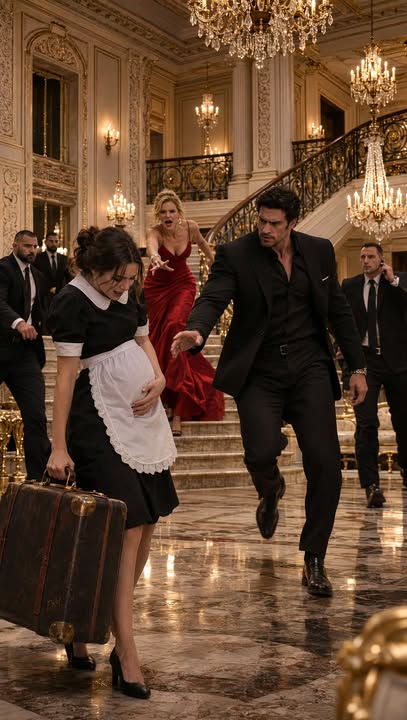
Part 4 – The Child Who Lived
“Now I’m not sure she meant Lucia.”
Vanessa’s words fell into the library, leaving the three of us suspended in the pale morning light.
Vincent kept one hand on the receipt.
“What do you mean, you’re not sure?”
“When Margaret told me Ruth had taken a child away from the hospital, she didn’t say which one.”
“You just said you thought it was my sister.”
“I did. I assumed she meant Lucia because Lucia was the girl in the photograph.”
“Then why change your mind now?”
Vanessa looked down at the faded note.
“Because the receipt says ‘the living child,’ not ‘the girl.’”
Vincent’s eyes narrowed, not with anger but with concentration.
“How long have you been remembering this?”
“Since I saw the words on that paper.”
“You said you remembered the rest.”
“I remembered the words. I didn’t remember what they meant.”
He pulled out a chair and sat, as if the room had become too uncertain for standing.
“Tell me exactly what Margaret said.”
Vanessa took a breath.
“I was young, and I asked her why she had kept Eleanor’s letters. She said one of the children had lived, and Ruth had taken that child away before the Morettis could claim them.”
Vincent’s gaze remained fixed on her.
“Before we could claim them?”
“She didn’t say it that way. She said before the family could find them.”
“Why would the family be looking for a baby they believed had died?”
“I don’t know.”
“Why would Ruth take the child away?”
“I don’t know.”
The repetition sounded different now, less like evasion and more like a confession of how much of their history had been built from scraps.
Vincent stood again and walked to the window.
For a moment, the only sound in the library was the soft tick of the clock above the mantel.
Then he turned back.
“We need to find Ruth.”
“I can help,” Vanessa said.
He looked at her, considering.
“You may come, but you won’t fill in gaps with guesses.”
“I won’t.”
“And if you remember something else, you tell me immediately.”
“I will.”
He looked at me.
“Clara, you’re not coming.”
“I didn’t ask to.”
“You’re still supposed to rest.”
“I know.”
“I’ll have someone bring you breakfast here, and Dr. Shah will check on you before noon.”
“I’m fine, Vincent.”
“I’m not taking chances with you or the baby.”
There was no command in his voice, only worry.
I put one hand over my stomach.
“The baby is moving.”
“That’s good.”
His shoulders lowered slightly.
“But you’ll stay here,” he said. “Please.”
I heard the difference between a request and an order, and it mattered.
“I’ll stay.”
He nodded, grateful in a way he did not put into words.
The solicitor’s old records gave them a starting point.
St. Anne’s had closed years ago, but its remaining files had been transferred to a medical archive in Queens.
The receipt carried a nurse’s name in the margin, written so faintly that it took a magnifying glass and several attempts to read.
Ruth Hale.
The address on the envelope was more than twenty years old.
Still, the solicitor found Ruth listed in a later city directory, retired and living in a small town north of the city.
Vincent arranged a car and left with Vanessa before noon.
He called me from the road, telling me the drive was uneventful and that he would let me know when they arrived.
I tried to make myself useful by drinking the tea the nurse brought and resting as the doctor had ordered.
Yet the library had changed for me.
The old suitcase stood closed again beside the reading table, and its worn leather no longer looked like an object someone had simply forgotten.
It felt like a room sealed for years, full of words that had waited for the right person to find them.
Eleanor had known that the night might take more than her life.
She had left names behind.
She had left instructions.
And she had trusted someone called Ruth with a child.
The thought made me press my palm against my belly.
I knew what it was to feel the shape of a future inside me while the rest of the world remained uncertain.
I knew what it was to wonder whether I could keep a child safe with little more than stubbornness and hope.
That afternoon, Vincent called again.
“We found her,” he said.
“Ruth?”
“Yes.”
“What is she like?”
“Small. Calm. She lives in a cottage with a garden and an old dog.”
“Did she recognize your name?”
A pause followed.
“She did.”
“What did she say?”
“She said she’d been waiting a long time for someone from the family to ask the right question.”
I sat straighter.
“What question?”
“Who survived.”
“What did she tell you?”
“She agreed to speak with us, but she wants to see the letters first.”
“Why?”
“She said the truth should be approached carefully, not dragged out of someone.”
The answer sounded like Ruth had already understood more about Vincent than he had expected to show her.
“When are you going back?”
“Tomorrow morning.”
“Will you tell me what she says?”
“Yes.”
He sounded tired, though he had been gone only a few hours.
“Are you all right?”
“I don’t know yet.”
“That’s allowed.”
Another pause.
“Thank you, Clara.”
He ended the call before I could ask whether he meant for listening, or for staying, or for reminding him that he did not have to know everything at once.
The next morning, Vincent and Vanessa returned to the library carrying the letters in a document case.
Neither of them looked angry.
Both looked as if the road home had been longer than the distance between the cottage and the city.
“Did Ruth tell you?” I asked.
Vincent sat beside the table.
“She did.”
Vanessa took the chair across from him and folded her hands in her lap.
“She’s ready to speak again,” she said. “But she asked Vincent to come alone next time.”
“Why?”
“Because she said she owed him an explanation before she owed one to the family.”
Vincent looked at me.
“She didn’t ask me to leave,” he said. “She said I could be here if I wanted.”
“I do want to be here.”
“You should sit comfortably.”
“I am.”
He waited until I settled against the cushions before opening the document case.
The old letters lay inside, their folds fragile from age.
“I read the first one to her,” he said.
“What did it say?”
“That Eleanor believed the fire was planned.”
Vanessa drew in a quiet breath.
“Planned?”
“Not by someone she named directly.”
Vincent unfolded the letter.
He read it slowly, pausing wherever the handwriting had blurred.
“‘Sal has begun speaking of the children as if they are pieces on a board, rather than lives to be protected.’”
Vanessa’s fingers tightened around one another.
“Eleanor wrote that before the fire?”
“Yes. The date is two weeks earlier.”
“Why didn’t you tell me about this yesterday?” she asked.
“I didn’t know it yesterday.”
He continued.
“‘I will not let him use Vincent’s future to control me, and I will not let him take the little one from my arms.’”
The room became very still.
Vanessa looked at the paper as though it had just accused her.
“What did Ruth say?” I asked.
“She said Sal had been trying to pressure Eleanor for months.”
Vincent’s voice had gone flat with concentration, but his expression gave away the cost of each word.
“He wanted her to leave the country house and bring me into the city. He said I was too young to be around the family business.”
“Why would that matter to him?” Vanessa asked.
“She thought he wanted control of the household and the trust my father left me.”
“Could he have been concerned for you?” I asked.
“Perhaps,” Vincent said. “But Ruth said he made it clear Eleanor would have to choose which child came with her.”
Vanessa’s eyes lifted.
“Which child?”
“Me, or Lucia.”
“I can’t imagine Eleanor choosing.”
“She didn’t.”
Vincent looked down at the next letter.
“She wrote that she would take both of us.”
He turned the page.
“But Sal said the family would never accept two heirs with different claims, and he warned her that if she challenged him, the children would be taken from her.”
I saw Vincent’s hand tighten on the page.
“What happened the night of the fire?” I asked.
“Ruth said Eleanor had arranged for her to meet them at the country house.”
“Why there?”
“Because Sal was watching the city residence, and Eleanor thought the country house would be easier to leave unnoticed.”
“But the house caught fire.”
“Yes.”
He looked at the photograph of his mother and the little girl.
“Ruth believes the fire was meant to frighten Eleanor into surrendering Lucia.”
“Did she say Sal started it?”
“No.”
“Does she believe he did?”
“She said she never saw who set it, and she won’t accuse someone without proof.”
Vanessa lowered her eyes.
“That sounds like her.”
Vincent’s gaze moved to her.
“You knew Ruth well?”
“No. I only heard stories from Margaret.”
“Then don’t pretend to know what she sounds like.”
Vanessa flinched, but did not argue.
“Were you told the fire was an accident?” I asked.
“Yes,” Vincent replied. “The official report said a fuel line failed near the garage.”
“Could it have been an accident?”
“Ruth said it could have been. She said she never knew for certain.”
The unanswered question settled among us, but Vincent did not let it distract him from the letter.
“Ruth arrived after the first flames had taken the rear wing,” he said. “She found Eleanor in the courtyard with me.”
“Were you hurt?”
“I had a cut on my forehead, but nothing serious.”
His gaze softened, as though he could almost see the scene his memory had never retained.
“Eleanor had carried me out through a service passage. She went back inside.”
“For Lucia?”
“Yes.”
The word left him almost inaudible.
“Ruth tried to stop her, but Eleanor said she had to go back for the baby.”
“What happened then?” Vanessa asked.
“Eleanor never came out.”
Vanessa closed her eyes.
“Ruth took you to St. Anne’s,” I said.
“She says she did. My father’s men found me there the next morning.”
“And Lucia?”
“Ruth found her in an upstairs nursery, alive but weak from smoke.”
I pressed a hand to my mouth.
“She was only a baby.”
“She was a few months old,” Vincent said.
The age matched the child in the photograph.
“Why didn’t Ruth bring her to the hospital with you?”
“She tried.”
He looked at the letter again.
“Sal’s men were already there. They believed both children were in the car with Eleanor.”
“But they knew you had survived.”
“They knew by then.”
“And they were looking for Lucia?”
“They were looking for the baby, but Ruth couldn’t tell whether they wanted to protect her or take her.”
Vanessa leaned forward.
“Why would Sal want a baby?”
“Ruth said Eleanor believed he would use Lucia to control her.”
“But Eleanor was dead.”
“She may not have known that would happen.”
Vincent stopped reading for a moment.
Then he continued.
“Ruth took Lucia to a private room at St. Anne’s. She told the staff the baby had been brought in by a relative.”
“What about the record?” I asked.
“She used a different name.”
“Lucia’s?”
“No. The name on the record was Mary Hale.”
“Ruth’s own surname.”
“Yes.”
Vincent’s thumb pressed against the paper.
“The Moretti family believed the baby had died before morning. The funeral was arranged without them seeing a body.”
“Was there a body?” Vanessa asked.
“Ruth says there wasn’t.”
Vanessa’s face went white.
“I remember being told there were two small coffins.”
“No,” Vincent said quietly. “You remember being told that.”
She looked down.
“I suppose I do.”
The difference mattered.
It did not erase the years she had kept the suitcase hidden, or the fear that had silenced her, but it changed the shape of what she had carried.
“Ruth took Lucia away from the city,” I said.
“She did.”
“Why?”
“Because she believed Sal would keep searching. He had men at the hospital, and he controlled the family’s information. Ruth thought Lucia would only be safe if no one could connect her to the Morettis.”
“Did Eleanor ask her to do that?”
“Not directly. But she had left instructions.”
Vincent lifted a smaller letter from the case.
It was addressed to Ruth in Eleanor’s handwriting and had been folded into the lining of the suitcase.
“She wrote that if anything happened, Ruth should take the baby somewhere Sal would never think to look.”
Vanessa stared at the letter.
“Then the suitcase was meant for you.”
“Not at first,” Vincent said.
“What do you mean?”
“Ruth said Eleanor asked Margaret to keep it until I was old enough to understand what had happened.”
“Why didn’t Margaret give it to you?”
“She became ill before she could.”
“And then she left it with Vanessa.”
Vanessa nodded.
“Margaret asked me to hold it until she found a way to reach him.”
“Did she say why you?”
“She said I wasn’t part of the Moretti family, so Sal wouldn’t think I mattered.”
“That was a dangerous assumption,” Vincent said.
“Yes.”
“Why did you wait so long?”
“Because Sal found out about the letters.”
Vincent’s attention sharpened.
“When?”
“Years ago. He asked me if Margaret had left anything behind. I said no.”
“Why would he ask you?”
“Because he knew I had visited her before she died. I told him she was confused, but he did not believe me.”
“Did he threaten you?”
“He never said what he would do. He only told me that families could suffer when old stories were brought back into the open.”
Vanessa’s voice remained controlled, but her eyes had filled.
“My parents were still alive then. I was scared. I thought keeping the suitcase hidden would protect them and you.”
“You thought silence would protect everyone,” Vincent said.
“I did.”
“And did it?”
“No.”
She looked toward me.
“I was wrong.”
The apology did not ask anyone to absolve her.
For the first time, Vanessa seemed to understand that fear could explain a choice without making it harmless.
Vincent read the final page of Eleanor’s letter.
The writing grew uneven near the bottom, as if she had been in a hurry.
“If my son is ever given these words, tell him that I did not leave him willingly. Tell him his sister is not a ghost or a burden. She is a child, and she deserves the chance to grow beyond this family’s fear.”
Vincent let the page rest in his hands.
His face remained composed, but tears brightened his eyes.
He did not wipe them away.
I reached across the small space between us and rested my fingertips on the edge of the table.
He looked at my hand, then at me.
“I’m sorry,” I said.
“For what?”
“For the years you spent believing the story ended differently.”
He lowered his eyes.
“I used to think I was lucky to have survived.”
“You can be grateful you lived and still be angry about what was taken from you.”
A small, unsteady breath escaped him.
“Eleanor would have liked you.”
“You didn’t know that.”
“She liked people who told the truth gently.”
The words touched something deep in me.
Vanessa looked at the letters.
“What did Ruth say about finding Lucia?”
“She said she has kept track of her from a distance.”
Vincent’s eyes returned to the page.
“Lucia lives under another name, in a place far from the city. Ruth never told her who her family was while she was a child.”
“Does she know now?” I asked.
“Yes. Ruth told her the truth when she became an adult.”
“And what does she want?”
“She wants to decide for herself whether she meets me.”
The room felt quieter, though nothing in it had changed.
“Does she know you’re coming?” Vanessa asked.
“She knows I found the letters. Ruth called her last night.”
“And?”
“She said she might agree to meet.”
“That’s good,” I said.
“It’s not the same as being ready.”
“No,” I replied. “It isn’t.”
Vincent looked at me with the tired gratitude of someone relieved not to be pushed toward a convenient answer.
He placed the letter beside the photograph.
The girl’s silver bracelet glimmered in the daylight.
“Ruth said there was something else,” he said.
“What?”
“She believes Eleanor gave her the other half of Lucia’s bracelet.”
He glanced toward the small silver piece in the suitcase.
“She has kept it all these years.”
Vanessa’s eyes widened.
“So the bracelet was a way to prove it was Lucia?”
“Yes.”
“Does Ruth still have it?”
“She does.”
Vincent took out his phone.
A message had arrived while we were speaking.
He read it once, then looked up.
“Ruth says she has the bracelet ready.”
The room’s quiet shifted.
A proof of the truth was waiting beyond the city, small enough to fit in a hand.
Vincent looked at the photograph again.
His mother had held Lucia close in that picture, unaware—or perhaps already afraid—that one day her daughter’s identity would have to be pieced together from letters and keepsakes.
“Do you want to see her?” I asked.
“I want her to have the choice.”
“That’s not quite what I asked.”
He considered his answer.
“Yes,” he said. “I want to see her.”
His voice caught on the last word, but he did not look away.
“I also want her to feel no obligation to me.”
“That’s the right place to start.”
Vanessa rose from her chair.
“I should go.”
Vincent looked at her.
“Where?”
“Home.”
“You don’t have to leave.”
“I do.”
She paused beside the doorway.
“I kept that suitcase because Margaret asked me to, but I also kept it because I was afraid to face what it meant.”
Vincent did not answer.
“I’m not asking you to forgive me,” she continued. “I only want you to know that I’m ready to tell the truth now.”
He looked at the letters, then at her.
“Then tell it when someone asks.”
Vanessa nodded.
It was not forgiveness, but it was a path that did not require either of them to pretend nothing had happened.
After she left, Vincent remained beside the table.
The afternoon light had shifted across the floor, reaching the open suitcase and the photograph at its bottom.
“I thought I remembered the fire,” he said.
“What do you remember?”
“Smoke. A hand over my face. My mother telling me to hold on.”
He stared at the silver bracelet.
“I thought I had forgotten the rest.”
“Maybe you were too young to keep it.”
“Or maybe everyone else decided what I should remember.”
He sat down opposite me.
For the first time, he looked less like he was searching for proof and more like he was trying to accept the person who had survived.
“Do you think she knew she wouldn’t come back?” he asked.
“I don’t know.”
“I wish I did.”
“So do I.”
He took Eleanor’s letter and read the last lines again.
A long silence followed.
Then his phone rang.
He looked at the screen and answered.
“Ruth?”
I could hear nothing from the other end, but Vincent’s expression changed.
“What happened?”
He stood.
“Is Lucia all right?”
A pause.
“Did she say why?”
His free hand tightened against the table.
“No, I understand.”
He listened without speaking.
When the call ended, he set the phone down carefully.
“Lucia has agreed to meet me,” he said.
A breath I hadn’t realized I was holding left me.
“When?”
“Tomorrow.”
“That’s wonderful.”
“She has one condition.”
“What is it?”
“She wants to meet somewhere private, without guards, without family, and without anyone calling her by the name she was born with until she says it herself.”
“That seems fair.”
“It is.”
He picked up the old photograph and studied it one more time.
“She has also asked me not to bring the bracelet.”
“Why?”
“Ruth says Lucia believes she already knows what it would prove.”
“Then why did she agree to meet?”
Vincent turned the photograph over, though he knew there were no words on the back.
“Because she has a question for me.”
“What question?”
“She didn’t tell Ruth.”
He looked toward the open suitcase, where the letters waited beside the little silver bracelet.
“What do you think she’ll ask?”
“I don’t know.”
Outside the library, the house seemed to hold its breath.
Vincent folded the letter along its old crease and set it beside the photograph.
For the first time, the truth had a living name.
But Lucia had chosen the terms of their first meeting, and one of them was that Vincent leave the past’s most tangible proof behind.
The question she carried into tomorrow would have to be answered without the bracelet, without the family’s version of the story, and without knowing whether she wanted a brother at all.
**–END OF PART 4–CLICK “NEXT” AT THE BOTTOM OF THE PAGE TO CONTINUE READING**
* * *
[PREVIOUS: PART 3](https://echoesofstories.idolsgift.com/blog/part-3-the-photograph-in-the-suitcase-046) | [NEXT: PART 5](https://echoesofstories.idolsgift.com/blog/part-5-the-photograph-in-the-suitcase-046)
✓ Lynn R. Adams
Part 4 – The Child Who Lived “Now I’m not sure she meant Lucia.” Vanessa’s words fell into the library, leaving the three of us suspended in the pale morning light. Vincent kept one hand on the rec…