PART 4: The Photograph in His Wallet 046
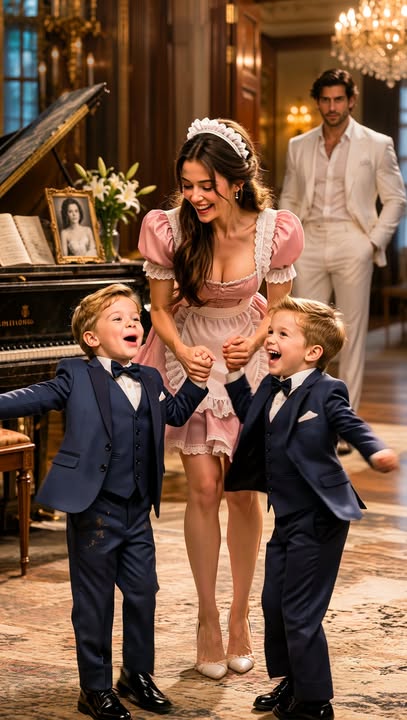
Part 4 – The Child They Thought They Lost
The hospital card lay between us, its faded blue lettering almost swallowed by time.
Adrian held it with both hands, careful not to crease the brittle paper.
The date was three days before I was born.
Beneath the name of the hospital, someone had written a number in dark ink.
I stared at it, searching my memory for a reason it might mean something.
“I’ve never seen this before,” I said.
“Neither have I.”
Adrian’s voice was quiet, but his expression had changed.
The questions between us no longer felt like distant echoes from another family’s past.
They had begun to point directly at us.
The envelope addressed to Rosa remained open in his other hand.
He glanced at the date once more, then at me.
“May I read what’s inside?”
I nodded, though my mouth had gone dry.
He eased the folded letter from the envelope.
The paper was thin, and the ink had faded unevenly, as if it had been written in haste.
Adrian began reading silently.
After a few lines, his fingers tightened around the page.
“What does it say?” I asked.
He looked toward the hallway, where the twins were resting upstairs.
Then he turned the letter so we could read it together.
Rosa,
If you receive this, it means I have not found the courage to say it aloud.
I know what we agreed, and I know what I asked you to do.
But I need you to hear this from me, even if the words reach you too late.
The babies are here.
Both of them.
I read the lines again, unable to make them mean anything other than what they said.
“Both of them,” I whispered.
Adrian lowered the letter.
“Clara had twins?”
“I thought—”
He stopped.
The rest of his sentence seemed to vanish in the room.
I looked down at the hospital card.
The date.
The number.
My hands began to shake.
“Adrian, what does this have to do with me?”
“I don’t know.”
He sounded as frightened as I felt.
We read the rest of the letter.
Clara wrote that the delivery had been difficult, that she was recovering, and that the babies were being watched closely.
She named no one.
She did not explain what she and Rosa had agreed.
The final lines were almost impossible to read.
If anything changes, keep her safe.
Please don’t let them decide her life before she has one.
I read the words once, then again.
“Her,” I said.
Adrian did not answer.
The letter slipped slightly in his hand.
He pressed it flat against the desk, as though a steady palm could keep the meaning from shifting.
“Clara had two babies,” I said.
“It appears so.”
“And one was a girl.”
“Yes.”
“Do you know whether the twins—”
“They were born years later.”
He spoke as if reminding himself as much as me.
“Leo and Tomas are Clara’s sons.”
“Then who was the girl?”
The question hung between us.
Neither of us was ready to give it a name.
Adrian picked up the hospital card.
The number written on it was not a room number, as we had first assumed.
Under the hospital’s name, the faded print read: Newborn Unit.
He turned the card over.
On the back, the handwriting was smaller.
Baby M.
Beside it was another date, a few days later.
No name.
No explanation.
I gripped the edge of the desk.
“My birthday was three days after the date on the front.”
Adrian looked at me.
“What year?”
I told him.
He compared it with the date on the card, then closed his eyes for a moment.
The room seemed to contract around us.
“Your mother gave birth to you at that hospital?” he asked.
“I don’t know where I was born.”
The answer came out faintly.
“Rosa never told you?”
“She said I was born in the city, but she never gave me the hospital’s name.”
I had never questioned her about it.
There had been no reason to.
My birth certificate had always been enough.
Adrian placed the card beside the letter.
“Do you have your birth certificate?”
“Yes.”
“Could the hospital be listed there?”
“I think so.”
“Would you be willing to check?”
I looked at the letter again.
Clara’s handwriting seemed to tremble on the page.
The babies are here.
Both of them.
Then the plea: keep her safe.
“I will.”
A sound came from upstairs, followed by the housekeeper’s gentle voice.
The boys were awake.
Adrian folded the letter again but did not return it to the envelope.
“Not in front of them,” he said.
“No.”
We slipped the card and letter into the desk drawer.
Neither of us closed it all the way.
The twins came into the playroom a few minutes later, still sleepy, their hair tousled from their nap.
Leo hurried to the train.
Tomas came straight to me and leaned against my side.
“Did you find the river words?” he asked.
“Not yet,” I said.
Adrian crouched to meet his eyes.
“We found some of your mother’s writing,” he told him. “We’re going to read it carefully.”
“Did she write the song?”
“She did.”
Tomas looked pleased by this, as if the answer gave him something solid to hold.
“Can we hear it tonight?”
“We’ll see,” Adrian said.
The afternoon passed carefully.
I helped the boys repair the train bridge while Adrian made a few phone calls in his study.
Each time he returned, I could tell he had learned something, though he did not speak about it in front of the children.
When it was time for me to leave, he asked the housekeeper to bring the twins upstairs for dinner.
Leo hugged me with both arms.
“Will you come tomorrow?”
“Yes,” I said, and glanced at Adrian.
“If your father says it’s all right.”
Adrian met my eyes.
“I want you to come.”
The words were simple, but they landed differently than they had the day before.
Tomas held on to my hand until the housekeeper coaxed him toward the hall.
Then the boys were gone, and the mansion settled back into its old quiet.
Adrian took the hospital card and letter from the desk.
“I don’t think we should guess at what they mean,” he said.
“I agree.”
“We need records.”
“And I need to know what’s on my birth certificate.”
“I’ll help you find out.”
I studied his face.
“Why?”
“Because Clara’s letter may concern you.”
He paused, then added, “And because you deserve answers whether it does or not.”
The next morning, Adrian arranged for us to meet with the hospital’s records office.
He did not ask the family lawyer to come.
He did not tell Vivienne.
He said the first step should be understanding what the documents actually showed.
I brought my birth certificate in a plain envelope.
The hospital named on it was the same one printed on the old card.
For a moment, I could only look at the two documents side by side.
One had been carried through my entire life.
The other had been hidden in Clara’s piano drawer.
They belonged to the same story.
At the records office, a woman named Ms. Patel listened as Adrian explained that we were trying to clarify a historical family record.
She looked over the hospital card, then my birth certificate.
Her expression remained professional, but her attention sharpened.
“Some records from that period were transferred to the regional archive,” she said. “We can request them, but it may take time.”
“How much time?” Adrian asked.
“A few days for the initial search, perhaps longer for sealed files.”
“I understand.”
Ms. Patel looked at me.
“Are you comfortable with us beginning the search?”
I swallowed.
“Yes.”
She noted my consent, then checked the date against the information on my birth certificate.
A pause followed.
“Your birth certificate lists your mother as Rosa Marquez,” she said.
“That’s correct.”
“Your father is not named.”
“He wasn’t part of my life.”
Ms. Patel gave a small nod, neither prying nor surprised.
She entered the information into the computer.
The old system took time to respond.
At last, she turned the screen slightly so we could see the result.
“There is a record under the date you provided,” she said. “But it appears to have been filed as a transfer rather than a standard birth record.”
“Transfer from where?” Adrian asked.
“I can’t tell from this screen. The original file is in the archive.”
“Could the hospital card help?”
“It may. The notation on the back suggests a newborn-unit entry.”
She glanced at the handwritten words.
“Baby M.”
Then she frowned at a second line we had not noticed before.
“What is it?” I asked.
“I believe this may be a linked record number.”
She copied it carefully.
“If the archive finds the corresponding file, it could tell us more.”
“What does ‘transfer’ mean?” I asked.
“It can mean several things,” she replied. “A move between units, a change in the attending physician, or an administrative correction. It doesn’t necessarily mean anything unusual.”
Her caution was sensible.
Still, it did not make the number feel less important.
“How long?” Adrian asked.
“Two or three business days, if the file is accessible.”
“We’ll wait.”
Outside, rain had begun to fall.
Adrian walked with me beneath the covered entrance, holding the old hospital card in its protective sleeve.
“I’m sorry,” he said.
“For what?”
“For bringing you into something before we knew what it was.”
“You didn’t bring me into it.”
“My wife’s letter, my mother’s silence, and now your birth record.”
He looked down at the card.
“You came here to work, and instead you’re being asked to question the beginning of your life.”
“I’ve wondered about my father,” I said. “I never wondered whether Rosa was my mother.”
“I’m not suggesting she wasn’t.”
“No. But the letter makes me wonder whether she raised me because she chose to, or because she had to.”
The thought was harder to say aloud than I expected.
Adrian stopped beneath the awning.
“I don’t believe those are the only possibilities.”
I looked at him.
“Clara asked Rosa to keep a child safe,” he continued. “If Rosa took you in, it may have been because she loved you, because she made a promise, or because both were true.”
“I want to believe both were true.”
“You don’t have to decide what to believe today.”
The rain gathered in silver lines along the curb.
I thought of Rosa’s hands around a cup of tea, her voice carrying the moon song into my bedroom.
Love had been present in every ordinary thing she had done.
No record could erase that.
“No matter what the papers say, she was my mother,” I said.
Adrian nodded.
“No paper can take that away.”
The archive called two days later.
Adrian was at the mansion when I answered.
The records officer had found a file, but the hospital needed me to confirm my identity before releasing it.
I gave my details, answered the required questions, and listened as the officer explained that there were discrepancies in the file.
“What kind of discrepancies?” I asked.
“We need to review the original documents before we can explain.”
“Can you tell me whether they involve my birth?”
A pause.
“Yes.”
My hand tightened around the phone.
The officer said the records would be ready the following morning.
When the call ended, I looked at Adrian.
He had heard enough to understand.
“We’ll go together,” he said.
The archive office was housed in a low stone building behind the hospital’s newer wing.
Ms. Patel met us there with a folder sealed in a clear protective cover.
Before she opened it, she confirmed my name and asked once more if I wanted to see the records.
I said yes.
The first pages were routine.
A transfer form.
A nurse’s note.
A discharge sheet bearing Rosa’s name.
Then came a document dated the day I was born.
The heading read: Birth record correction.
Below it, the original entry had been struck through with a single line.
The child’s name was blank.
The date of birth matched mine.
The mother’s name read Clara Vale.
I looked up.
Adrian had gone very still.
The next page was a hospital note, written in hurried script.
Twin delivery.
Two infants, both female.
Infant A stable.
Infant B transferred for observation.
A later note recorded that one infant had died.
The name beside the notation was not mine.
It was a blank space followed by the words presumed infant B.
Presumed.
The word seemed to pulse on the page.
I could hear the room, but not the ordinary sounds in it.
“I don’t understand,” I said.
Ms. Patel leaned closer to the file.
“This appears to be a record correction made several days after the birth. The original entry lists two infants. The corrected record refers to one surviving child and one presumed deceased infant.”
“Presumed?” Adrian repeated.
“Yes. The handwriting is difficult to read, but that is the word.”
He reached for the next page.
It was a transfer form, signed by Rosa Marquez.
The receiving physician’s name had been written in the margin.
Beneath it, someone had added a note in a different hand.
Baby B transferred to private care pending clarification.
“Private care,” I said.
My voice sounded unfamiliar to me.
Ms. Patel turned another page.
There was a statement, signed by the physician, that the infant had been moved to a separate unit because of a mix-up in the identification bands.
A second note, dated the following day, said the band discrepancy had been resolved.
But the records did not say how.
They did not say which baby had gone where.
They did not say who had been told.
They did not say why the birth record had been changed.
“I was listed as Clara’s child,” I said.
“The record suggests that the infant later registered as you may have been born in this delivery,” Ms. Patel replied. “But the file is incomplete.”
“Can the hospital confirm I’m her daughter?”
“Not on this material alone.”
Adrian had not moved.
He was staring at the name on the corrected record, as if the ink itself had become a voice he could not bear to hear.
“Clara had a daughter,” I said.
“Yes,” Ms. Patel replied gently.
“And she was told that daughter died.”
“We can’t determine exactly what was communicated from these records.”
“But that is what the correction says.”
“It says one infant was presumed deceased. That is not the same as proof of death.”
The sentence struck the room like a hand on a bell.
Adrian’s eyes lifted from the page.
“Could the other infant have been Elena?”
“It is possible,” Ms. Patel said. “It is also possible that the records refer to another child. We need the original medical file and any family documents that may correspond to it.”
“My mother’s name is on the transfer form,” I said.
“Yes.”
“Why would Rosa have taken me home?”
“I don’t know,” Adrian said.
He spoke the words with painful honesty.
We left the archive with copies of the documents and no clear answer.
The rain had stopped, leaving the street washed and pale.
Adrian walked beside me without speaking.
At the car, he opened the passenger door but did not urge me inside.
“Do you want to go back to the house?” he asked.
“I want to understand what I’ve just read.”
“I know.”
“I don’t want the boys to hear about this until we know what’s true.”
“Neither do I.”
“But they deserve to know if I’m their sister.”
His face shifted at the word.
He seemed unable to accept it and unable to reject it.
“If this is true,” he said, “then the boys have a sister who was never meant to be lost to them.”
“And Clara had a daughter she believed she had lost.”
He nodded once.
The grief in his expression belonged to a woman who had been gone for years, yet the records had made her absence suddenly new.
Back at the mansion, the boys were in the playroom.
They had spread colored pencils across the floor, and Leo was drawing a bridge while Tomas drew a moon with a face.
When they saw me, they both came over.
Tomas took my hand.
“You look sad,” he said.
“I’m thinking about something.”
“Is it the song?”
“Partly.”
He looked toward his father.
“Can we sing it?”
Adrian crouched beside them.
“Not tonight,” he said. “But soon.”
Leo studied him.
“Is something wrong?”
“Something old,” Adrian replied. “Not something you did.”
The boys seemed to accept this, though Leo kept watching his father’s face.
I sat with them while they finished their drawings.
The ordinary details of the afternoon felt newly precious: Tomas choosing the wrong shade of blue, Leo insisting that a bridge needed two entrances, the way they leaned against me without asking permission first.
I thought of Clara’s daughters, two babies in the same room, their identities uncertain in the hospital’s hurried notes.
The children were grown now.
One had died, according to a record that admitted it was only presumed.
The other had been raised by Rosa.
That was the possibility the pages offered.
It was not yet proof.
Adrian joined us on the floor.
He did not speak of the file.
Instead, he listened to Leo explain why the train needed a second track and helped Tomas draw the moon’s missing eye.
His hands shook once as he passed me a pencil.
I took it without comment.
When the twins were called upstairs for dinner, they left their drawings on the rug.
Leo’s bridge stood between them, stretching from one sheet to the other.
Adrian remained beside me.
“We need Clara’s letters,” he said. “And we need to find out who signed the transfer.”
“The hospital may have more records.”
“I’ll ask them to continue the search.”
“I want to speak to Vivienne.”
“You think she knows something?”
“I don’t know,” I said. “But she remembers Rosa leaving, and she was frightened by those letters.”
Adrian considered that.
“I’ll speak to her first.”
“Why?”
“Because she’s my sister. And if I ask her to open a memory she has kept closed for years, I want to do it without making you feel responsible for the result.”
I appreciated the care in his words, though it did not ease the questions.
“Do you believe I could be Clara’s daughter?”
He looked toward the hall where the twins had disappeared.
“I believe the records are asking us to consider it.”
“That isn’t what I asked.”
He met my gaze.
“Yes,” he said. “I do.”
The answer held no certainty, only a kind of quiet fear.
He reached into his jacket and took out the old hospital card.
The number on its back matched the transfer reference in the archive file.
At the bottom of the card, nearly hidden beneath the fold, was another mark we had not noticed before.
A small handwritten initial.
C.
Adrian stared at it.
“Clara,” he whispered.
Then he turned the card over, and the last line came into view.
It read: Infant B released to Rosa Marquez by instruction of Clara Vale.
For a long moment, neither of us spoke.
Then I looked at Adrian.
“If Clara gave me to Rosa, why did she spend the rest of her life believing I was dead?”
**–END OF PART 4–CLICK “NEXT” AT THE BOTTOM OF THE PAGE TO CONTINUE READING**
* * *
[PREVIOUS: PART 3](https://echoesofstories.idolsgift.com/blog/part-3-the-photograph-in-his-wallet-046) | [NEXT: PART 5](https://echoesofstories.idolsgift.com/blog/part-5-the-photograph-in-his-wallet-046)
✓ Lynn R. Adams
Part 4 – The Child They Thought They Lost The hospital card lay between us, its faded blue lettering almost swallowed by time. Adrian held it with both hands, careful not to crease the brittle paper…