PART 4: The Numbers That Changed 058
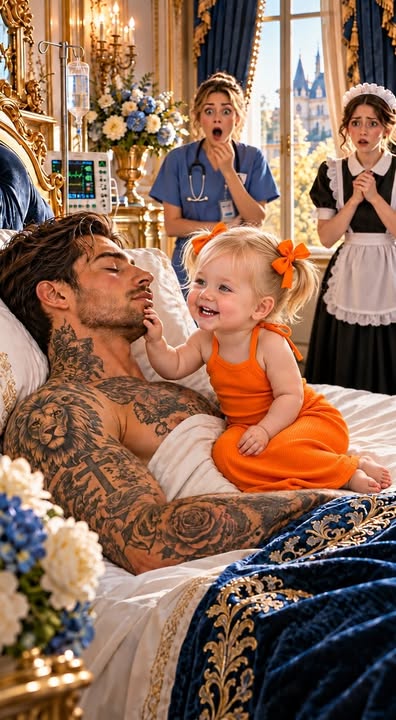
Part 4 – The Note Beneath the Floorboards
“The car was reported off the road before the official emergency call was made.”
For a moment, the words seemed to settle over the room without finding anywhere to land.
Isabella lowered the music box onto the table.
“By how long?” she asked.
Elena listened to the voice on the phone, then glanced toward the open doorway.
“Nearly twenty minutes,” she said after hanging up. “The records office found two separate time stamps on the original dispatch paperwork.”
“Could there be an innocent explanation?” I asked.
“There could,” Elena replied. “A reporting error, a clock that wasn’t synchronized, a preliminary call that never made it into the official log. We don’t know yet.”
Isabella’s fingers rested on the bent lid of the music box.
“Then we find out.”
She said it quietly, without the force of a command, but there was something newly resolved in her voice.
Rafe had returned to the estate before dinner.
He was in the study, reviewing a stack of documents, when Isabella asked him to join us in the sunroom.
He came with a leather folder under one arm and a question already forming in his expression.
“What happened?”
Elena explained the discrepancy as carefully as she had explained the monitor readings, distinguishing what the records said from what they might mean.
Rafe listened without interrupting.
When she finished, he set his folder on a chair.
“Old dispatch records are notorious for inconsistencies,” he said. “The car’s location could have been reported by a passerby long before anyone knew who was inside.”
“Then there should be a record of that call,” Isabella replied.
“There may be.”
“Will you help us get it?”
Rafe looked at her, then at Elena.
“Of course. I’ll ask the firm to request the full file.”
His easy agreement surprised me.
I had expected him to dismiss the question, as he had dismissed the monitor readings.
Instead, he spoke with measured concern, as if the discrepancy were another administrative problem he could resolve with the right telephone call.
“Thank you,” Isabella said.
“But I want to be clear,” Rafe continued. “An inconsistent timestamp does not mean anyone did anything wrong.”
“No one has said it does,” Elena replied.
“Good. We should keep it that way.”
He picked up his folder and left the room.
I watched him go, uneasy not because he had argued, but because he had been so careful not to.
Afterward, Isabella asked Elena to make a copy of the inventory and the dispatch notes.
She asked that the copies be kept with Lorenzo’s medical records, not the estate files.
Rafe did not object.
For the next two days, the household returned to its quiet routine, but the discrepancy remained between us like a door that had been closed without being locked.
Elena made calls to the records office and to the physician, who advised us to avoid drawing conclusions until the complete emergency file could be reviewed.
Isabella waited for word from Rafe’s firm.
I tried to focus on my work and on Mia, who had discovered that the wooden blocks could be stacked into towers tall enough to collapse dramatically onto Bunny.
Each time the tower fell, she clapped and announced, “Again.”
The sound helped me remember that the house still contained ordinary things.
A child who wanted another block.
A kettle that whistled at the wrong moment.
The sun moving across the kitchen floor.
But when I passed the study, I found myself glancing at its closed door.
On the third morning, Elena asked me to come to the medical wing without Mia.
She was standing beside Lorenzo’s bed with a slim recording device in her hand.
“His physician approved a review of the family’s old materials,” she said. “Not as treatment. Just as background information, in case it helps us understand which sounds he might recognize.”
“Isabella found something else?”
“A recording in the study.”
She set the device on a small table near the window.
“It’s an old voice memo. The storage system copied it from a cassette years ago. The file was labeled with Lorenzo’s mother’s name.”
Isabella stood near the bed, her gaze fixed on the device.
“I didn’t know it was there,” she said. “The cassette was in a box of family recordings.”
“Have you listened to it?”
“Once, with Elena. I thought you should hear it too.”
Elena looked toward me.
“You can leave at any time.”
“I’ll stay.”
She pressed the play button.
At first there was only a soft hiss, then the faint scrape of something being moved across a table.
A woman’s voice came through the speaker, warm and unhurried.
She said a few words I could not make out, followed by a breathy laugh.
Then she began to sing.
The melody was unmistakable.
It was the lullaby Mia had hummed beside Lorenzo’s bed, the same song my mother had sung to me and the music box had carried in its tiny, wavering mechanism.
The recording was not long.
The woman sang one verse, paused, and then spoke a boy’s name.
“Lorenzo, darling, you always ask me to sing that one again.”
A child answered from farther away.
His voice was faint, but the word was clear.
“Again.”
The recording ended with a little click.
Isabella had closed her eyes.
I felt my throat tighten, though I had never met the woman whose voice now filled the room.
“She loved that song,” Isabella said. “I knew she sang to him, but I had never heard this.”
Elena stopped the recording from replaying.
“How did the song get into my family?” I asked.
No one answered.
The question was no longer merely about a familiar tune.
It had traveled from Lorenzo’s childhood into some other life, through some unknown hand, until it found its way to my mother and then to Mia.
Isabella opened her eyes.
“We may never know.”
“I’d like to.”
“So would I,” she said. “But I don’t want an answer badly enough to invent one.”
She reached for the recording device and turned it over, checking its label.
The date was printed in faded type.
It was more than thirty years old.
“Was the recording made at this house?” Elena asked.
“I think so,” Isabella said. “The date is from before Lorenzo inherited the estate.”
“Could it have been made at the old family property?”
“Possibly. His mother moved between both homes.”
Isabella held the device as if it had become fragile.
Then she looked toward Lorenzo.
“He has carried pieces of his mother with him for years.”
I watched the steady rise and fall of his chest beneath the covers.
The room seemed full of voices now, though only the machines were speaking.
“Would it be all right if we played the recording once more?” I asked.
Elena considered it, then checked the physician’s written guidance.
“Once,” she said. “At a low volume.”
Isabella nodded.
Elena pressed play.
The woman sang the lullaby again.
Lorenzo did not open his eyes.
No clear movement passed through his face or hands.
The monitor continued its steady pattern, then showed a modest rise in his pulse near the same phrase where the reading had changed before.
Elena recorded the time and did not look at us.
When the song ended, she stopped the device.
“That could be a normal fluctuation,” she said.
“I know,” Isabella replied.
There was no disappointment in her voice, only the difficult acceptance that hope could exist without becoming proof.
Later that afternoon, Rafe came to the medical wing with the requested emergency records.
He brought them himself, placing the folder on the desk in the adjoining room.
The documents included the official call log, the dispatch summary, and a sheet of handwritten notes from the responding unit.
The discrepancy was real.
A private road supervisor had phoned in a report of a car off the highway at 11:18 p.m.
The official emergency call had been logged at 11:37 p.m.
According to the dispatch notes, the first caller had been unable to identify the vehicle or see whether anyone was inside.
“The road supervisor says he saw the car beyond the guardrail and called the non-emergency line,” Rafe explained. “The dispatcher told him a patrol car would be sent when one became available.”
“Was an ambulance called at 11:18?” Isabella asked.
“No. The supervisor didn’t know there was an injured driver.”
“Why did the official report say the crash was discovered at 11:37?”
“It says the emergency response began then,” Rafe replied. “The summary apparently treated the first call as a general road hazard report.”
Elena studied the notes.
“Was the vehicle visible from the road?”
“Not clearly,” Rafe said. “The embankment is steep. It could have been missed.”
“Who made the 11:37 call?” Isabella asked.
“The estate’s security office.”
A silence followed.
Rafe opened the folder to a second page.
“The security log says a driver called the office after seeing broken brush and tire marks near the west turnoff. He reported the location at 11:31, but the office did not contact emergency services until six minutes later.”
“Why the delay?” Isabella asked.
“The note says the security officer called Lorenzo’s personal driver first, then called emergency services when he couldn’t reach him.”
The explanation was plausible.
It was also not an explanation for the difference between the first report and the later one.
“Did anyone go out to look?” Elena asked.
“The log doesn’t say.”
“Can you find out?”
“I can ask the guard who was on duty,” Rafe replied. “Some of the staff have moved on, but I’ll try.”
His manner remained calm and helpful.
Still, I noticed that he did not ask to see the music box or the recording.
He had been told they existed, but he gave them no attention.
Perhaps he thought they were irrelevant.
Perhaps he simply preferred to keep the conversation on facts that fit neatly into a file.
“I appreciate you bringing this,” Isabella said.
Rafe closed the folder.
“Whatever happened that night, the uncertainty is not helping Lorenzo. The physician should handle the medical questions. The police can deal with the traffic report if they think it warrants review.”
“Do you think it warrants review?” I asked.
He turned toward me.
“I think every discrepancy deserves an explanation. That doesn’t mean it deserves a suspicion.”
His answer was reasonable enough that I felt foolish for asking.
Yet when he left, Isabella remained standing beside the desk, looking down at the two different times.
“There was a first call,” she said.
“There was,” Elena answered.
“And then another.”
“Yes.”
Isabella rubbed her thumb over the edge of her wedding ring.
“Lorenzo was already hurt when the first caller saw the car.”
“We don’t know that,” Elena said carefully. “The car may have left the road before the caller reached it. We have no medical assessment from that time.”
“I know.”
She closed her eyes for a moment.
“I keep thinking that every missing detail is one I should have noticed.”
“That isn’t fair to yourself,” I said.
She looked at me.
“You weren’t there, Isabella. You couldn’t have known what the records would say.”
“I was his wife.”
“You were not his emergency dispatcher.”
For the first time that day, her mouth softened into something almost like a smile.
“Thank you.”
Over the following days, Elena continued speaking with the records office.
The doctor reviewed the old recording and the monitor notes, then repeated his warning that neither established a meaningful recovery response.
He did, however, agree that familiar music could be played quietly if it caused no distress and if the family did not treat it as a substitute for care.
Isabella accepted that boundary without question.
Clara, she said, would decide whether Mia visited, and Mia would decide whether she wanted to sing.
I was grateful for the care she took with both of us.
I was also beginning to feel that I had entered a story whose edges kept widening.
The lullaby had led us from Mia to my mother, from my mother to Lorenzo’s mother, and from Lorenzo’s childhood to a music box in a wrecked car.
The timeline had led us to two different calls and a delay no one could yet explain.
Each clue showed us a piece of the past, but none of them showed us the whole.
On the sixth evening after the recording, Isabella asked me to come to the study.
She had found a wooden box beneath the lower shelf of the desk.
The box contained old letters, a stack of photographs, and several folded papers tied together with a faded blue ribbon.
“I was looking for the original title records to the clinic property,” she said. “Rafe asked for them earlier.”
“Why?”
“He says he needs to know which assets are attached to the estate. He believes the property may have been included in an old trust.”
“Is it?”
“I don’t know.”
She untied the ribbon.
The top paper was a letter in Lorenzo’s handwriting, addressed to his mother.
It was not dated, but the writing looked younger than the notes he had written after their marriage.
Beneath it was a photograph of a low brick building with a small garden and a sign above the entrance that read MORETTI CHILDREN’S CLINIC.
I had heard staff mention the clinic once, but never in detail.
“What was it?” I asked.
“His mother helped establish it,” Isabella said. “It offered free care to families who couldn’t afford regular treatment. Lorenzo kept it open after she died, though he rarely spoke about it.”
“Is it still operating?”
“The clinic is. It’s smaller now, and the estate covers part of its expenses.”
She turned over the photograph.
On the back, Lorenzo’s handwriting read: For the children who need a safe place to be heard.
The words were simple, but they seemed to hold more tenderness than he allowed himself to show in the rest of his life.
“There are more papers here,” I said.
At the bottom of the box, beneath the letters, lay a sealed envelope with Isabella’s name written across it.
The seal was intact.
She went very still.
“I’ve never seen this.”
The handwriting was Lorenzo’s, this time unmistakably adult.
I could tell because the letters had the firm, slanted shape of the signatures on the estate papers.
Isabella did not open it at once.
She set it on the desk and looked toward the medical wing beyond the study door.
“Could he have written it before the accident?” I asked.
“I don’t know.”
“Do you want Elena here?”
“Yes.”
She called for the nurse, then waited with both hands resting on the desk.
Elena arrived a few minutes later.
Isabella showed her the envelope and explained where it had been found.
“Should we open it?” Elena asked.
“I think we should,” Isabella said. “If he wrote it for me, I don’t think he meant it to stay hidden forever.”
She slid a small knife beneath the flap and opened it carefully.
Inside was a single folded page.
The first line read:
Isabella, if you are reading this, I have failed to arrive before Rafe moves on the clinic property.
Isabella’s face drained of color.
Elena reached for the edge of the desk, steadying herself.
I felt the room tilt around the sentence.
Isabella continued reading in silence.
Her eyes moved down the page, stopping once, then again.
At last, she set the letter on the desk.
“Lorenzo believed Rafe was diverting money from the estate,” she said.
She spoke slowly, as if each word had to be tested before she could trust it.
“He found payments routed through two companies that were supposed to be handling renovations at the clinic.”
Elena bent over the letter.
“Did he say what the payments were for?”
“He believed Rafe was using them to cover losses elsewhere. He also wrote that Rafe had arranged to sell the land the clinic stood on.”
“Was the property sold?” I asked.
“No,” Isabella said. “The clinic is still there.”
She scanned the page again.
“Lorenzo wrote that the buyer’s agreement was waiting on his signature. He refused to sign it.”
“And the night of the crash?” Elena asked.
Isabella looked toward the letter.
“He was supposed to meet me with the records. He said he was driving to the city because he didn’t trust anyone to deliver them.”
“Did he mention the crash?”
“No.”
“Did he say Rafe knew he was coming?”
Isabella read the letter’s final lines.
“He says he told Rafe he would be at the house that evening. He does not say whether he told him about the evidence.”
We stood around the desk, reading the same page and arriving at different fears.
The letter did not prove what had happened on the road.
It did not prove Rafe had caused the crash.
It did reveal that Lorenzo had been carrying a secret which could have threatened Rafe’s control over the family’s finances and the clinic property.
“He may have been driving to meet you,” I said.
“He was,” Isabella replied. “He wrote it here.”
“Then why was the music box in the car?”
“I don’t know.”
She folded the letter along its old crease, then unfolded it again.
“Perhaps he took it because he was thinking of his mother. Perhaps he meant to bring it to me. Perhaps he had no reason beyond keeping it with him.”
Elena pointed to a line near the bottom.
“Is that a date?”
Isabella leaned closer.
The page ended with a short note, written in smaller script, beneath the main letter.
A date and a time had been added.
11:05 p.m.
Under it were the words:
I heard the brake pedal sink again.
The room fell silent.
I read the line once, then again.
Isabella covered her mouth with one hand.
“That could mean the brakes were failing,” Elena said. “It doesn’t tell us why.”
“Or when he wrote it,” Isabella replied.
The note appeared to be in the same ink as the letter, but the date might have been added later.
No one could tell from looking.
Elena called the physician and asked him to secure the document as part of Lorenzo’s personal records.
She did not ask us to make accusations.
Isabella did not make any.
She simply sat down in the chair beside the desk and held both hands together until the trembling in them eased.
The letter had changed the meaning of the night.
Lorenzo had not been driving toward some ordinary meeting.
He had been carrying evidence about money and the future of a children’s clinic, and he had written that his brakes had failed before he crashed.
But there was still no proof that the failure had been deliberate.
The next morning, Elena met with the physician and a lawyer who had not worked with Rafe.
They agreed the records should be given to the police for an independent review, along with the conflicting dispatch times and the note about the brake pedal.
The physician advised us not to question Rafe ourselves or to let the letter disappear into the estate’s filing system.
Isabella accepted the recommendation.
She asked me to keep Mia with me while she and Elena arranged the transfer.
I did not mind.
In the playroom, Mia made a small bed for Bunny beneath a folded blanket.
“He sleepy,” she told me.
“Yes,” I said. “He can rest.”
She looked at the empty patch of rug beside her.
“Big man sleepy too?”
I paused.
“Yes,” I said gently. “He is.”
“Bunny visit?”
I looked toward the hall, where Elena had promised that the medical wing would remain quiet.
“Not today.”
Mia considered this, then tucked the blanket around the rabbit’s ears.
“Later.”
“Maybe later.”
When I carried her upstairs for her nap, I heard voices in the study.
Rafe’s was among them.
I could not hear what he was saying, but I heard Isabella answer.
Then there was a pause, followed by the sharp scrape of a chair against the floor.
I stopped at the landing.
The study door opened.
Isabella stood there with the sealed letter in her hand.
Rafe was behind her, his expression composed but his eyes fixed on the paper.
He had seen it.
He had read enough to know what it contained.
“Clara,” Isabella said, her voice controlled. “Please take Mia to your room.”
I carried my daughter away without asking a question.
Behind me, the study door closed.
A few minutes later, I heard no shouting, only the low murmur of voices through the old walls.
Then the front door opened.
Footsteps crossed the hall and went out into the cold afternoon.
When Isabella came to find me, the letter was no longer in her hand.
“Where is Rafe?” I asked.
“He left.”
“Did he say anything?”
She looked at Mia, who was asleep against my shoulder.
“Not much.”
“What will happen now?”
“The records are going to the police,” Isabella said. “The clinic’s property documents are being reviewed by an independent solicitor. No one will sell anything while the ownership is in question.”
She glanced toward the staircase.
“And Lorenzo’s doctor will keep caring for him, regardless of what the investigation finds.”
I understood then that she was not only trying to protect the clinic or the estate.
She was trying to protect the fragile, ordinary life still unfolding around Lorenzo’s bed.
That evening, Elena brought the music box into the medical room.
It had been repaired enough to play, though the final notes remained uneven.
The physician had approved one quiet listening session, and Isabella asked whether I wanted to bring Mia to the doorway.
I looked at my daughter, who had awakened from her nap and was pressing Bunny’s ear against her cheek.
“Do you want to say hello to the sleepy man?” I asked.
She nodded.
“Just a little,” I reminded her. “We can leave whenever you want.”
We stood at the open doorway together.
Elena placed the music box on the bedside table and wound it once.
The lullaby began, fragile and slow.
Mia started humming along.
Isabella stood behind us, one hand resting on the doorframe.
The monitor changed.
Elena recorded the time, then checked the leads.
Lorenzo remained still.
No one spoke until the melody faded.
Then the small monitor beside the bed gave a brief, different pattern.
Elena leaned toward the screen.
“Wait,” she said softly.
We all held our breath.
Lorenzo’s right hand shifted beneath the blanket.
Not enough to lift.
Not enough to grasp.
But his fingers curled once, slowly, around the empty space where Mia’s rabbit had been the first night she visited.
**–END OF PART 4–CLICK “NEXT” AT THE BOTTOM OF THE PAGE TO CONTINUE READING**
* * *
[PREVIOUS: PART 3](https://storyly.idolsgift.com/blog/part-3-the-numbers-that-changed-058) | [NEXT: PART 5](https://storyly.idolsgift.com/blog/part-5-the-numbers-that-changed-058)
✓ Lynn R. Adams
Part 4 – The Note Beneath the Floorboards “The car was reported off the road before the official emergency call was made.” For a moment, the words seemed to settle over the room without finding anyw…