PART 4: The Note Caroline Left Behind 055
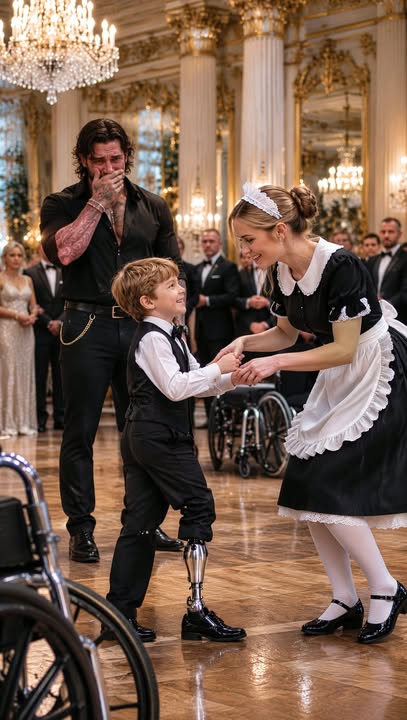
Part 4 – The Truth Beneath the Ink
“I believe it belongs to Victoria.”
Mrs. Patterson’s words seemed to settle over Caroline’s dressing room like dust.
Alexander held the photograph near the window, turning it slowly until the afternoon light caught the dark strokes on its back.
He knew Victoria’s handwriting from years of holiday cards, household notes, and the neat lists she used to organize family events.
This could be hers.
But knowing a hand was not the same as knowing what it meant.
“Could you be certain?” Amara asked.
Mrs. Patterson leaned closer without touching the photograph.
“I’ve seen her write often enough to recognize the way she crosses her t’s,” she said. “But this is old, and the ink has faded.”
Alexander studied the line again.
The inspection was canceled. Do not let them take Oliver in this car.
The handwriting looked similar to Victoria’s, but the message sounded like a warning.
“Why would she have written this?” he asked.
“I don’t know,” Mrs. Patterson replied. “Perhaps Caroline copied it from a note someone left for her.”
“Or perhaps Victoria was trying to protect them,” Amara said.
Alexander looked at her.
She had not defended Victoria, exactly.
She had simply refused to let suspicion become certainty before the evidence did.
“That’s possible,” he said.
“Then we need to find out who canceled the inspection, and why,” Amara replied.
He nodded.
The photographs and letters went back into the box, each one placed where it had been found.
Alexander locked the lid, then gave the key back to Mrs. Patterson.
“Keep it somewhere safe,” he told her. “And don’t tell Victoria what we found until we know more.”
Mrs. Patterson’s expression grew troubled.
“You believe she may be involved?”
“I believe we have a question to answer.”
It was a careful distinction, but not an easy one.
They returned to the study with Caroline’s letter and the photograph of the canceled inspection.
Amara insisted that the letter remain with her until they had made a copy.
“It belongs to your family,” Alexander said.
“It belonged to my father, too.”
He considered that, then nodded.
“You’re right.”
Daniel was called in and asked to make secure copies of the documents, while preserving the originals.
Alexander also asked him to retrieve the old household logs from the estate office.
When Daniel left, Amara stood beside the desk, looking down at the line in Victoria’s handwriting.
“If she wrote this, it could mean she knew the car was unsafe,” she said.
“Or that she was warning Caroline.”
“Either way, she knew something.”
“Yes.”
“And if she knew something, why didn’t she tell you?”
Alexander had no answer.
He had spent years believing the family’s grief had left everyone with the same unanswered questions.
Now he wondered how many answers had been kept from him—not only by others, but by his own habit of accepting whatever let him keep moving.
“I’ll ask her,” he said.
“Not yet,” Amara replied.
He frowned slightly.
“If she is involved, waiting could give her time to hide something.”
“If she isn’t, accusing her without proof could make her stop helping us.”
Alexander looked toward the study door, where Daniel had disappeared.
“You think she might help?”
“I think we don’t know what she did or didn’t do. That’s why we need the records first.”
Her voice carried no anger, only the steady caution of someone who had learned what it cost to be wrong about powerful people.
Alexander let the silence sit between them.
“You’re asking me to wait,” he said.
“I’m asking you not to make this about what you feel she deserves.”
He looked at the photograph again.
For years, Victoria had been the person who kept the estate running after Caroline died.
She had arranged appointments, handled bills, and made herself indispensable to Alexander’s household.
She had also dismissed Amara in the ballroom with a few sharp words, certain no one would challenge her.
Both things could be true.
“I’ll wait for the records,” he said.
Amara’s shoulders eased by a fraction.
A quiet knock sounded at the open door.
Oliver appeared, carrying a book under one arm.
He paused when he noticed the documents spread across the desk.
“Are you still looking for clues about Mommy?”
“We are,” Alexander said.
Oliver came in but stayed near the doorway.
“Did you find something?”
Alexander glanced at Amara before answering.
“We found a note saying your mother’s car shouldn’t be used.”
“Who wrote it?”
“We’re not certain.”
Oliver looked from the photograph to his father.
“Could it have been Aunt Victoria?”
“It could have been,” Alexander said. “But we don’t know what it means yet.”
Oliver absorbed that quietly.
“Was she trying to keep Mommy safe?”
“I don’t know.”
“Or could she have been trying to stop her from finding something out?”
Alexander felt the question like a hand closing around his heart.
He crouched so they were eye to eye.
“That’s possible, too. We’re going to find out before we decide.”
Oliver’s gaze moved to the letter in Amara’s hands.
“Did her father help Mommy?”
“Yes,” Amara said gently. “He noticed that something was wrong with a car, and he warned her.”
“Was he brave?”
“He was,” she answered. “But he was also a father who wanted to come home to his family.”
Oliver lowered his eyes.
“I wish he had.”
“So do I,” Amara said.
The boy took a careful step toward the desk.
“Can I see the picture?”
Alexander looked at Amara.
She nodded.
He turned the photograph around and held it where Oliver could see the writing.
Oliver read the words slowly, moving his lips as he went.
“The inspection was canceled. Do not let them take Oliver in this car.”
He tapped the edge of the photograph.
“Why would someone cancel it if they knew the car was unsafe?”
“We don’t know,” Alexander said.
“Maybe they thought it had already been checked.”
“That’s possible.”
Oliver looked at his father, his expression serious.
“You said you’d tell me when you knew.”
“I will.”
“Even if it’s bad?”
“Especially if it’s bad.”
Oliver nodded once, taking the promise in the way children do when they have learned that adults sometimes make promises to comfort them rather than keep them.
“I’m going to read in the sitting room,” he said. “Can Miss Amara help me practice my steps later?”
“If your therapist says it’s safe,” Alexander replied.
Oliver gave a small smile.
“You remembered.”
“I’m trying to.”
After Oliver left, Alexander returned to the papers.
Not long afterward, Daniel came back carrying two old binders and a thin folder.
“The estate office had these in storage,” he said. “The binders are household logs from the year Caroline died. The folder contains maintenance invoices.”
Alexander opened the first binder.
The pages were filled with routine entries: deliveries, staff schedules, vehicle assignments, and reminders about appointments.
The handwriting changed from one page to another, but many entries had been initialed.
Mrs. Patterson came in to help identify the older staff members’ writing.
Together, they found the date on the photograph.
A household log entry for that morning read: Mrs. Whitmore’s car inspection postponed at Mrs. Langford’s request. Replacement vehicle arranged.
The line was written in Victoria’s hand.
Amara looked from the log to the photograph.
“So Victoria did cancel the inspection.”
“Yes,” Alexander said.
“But the note on the picture says not to let them take Caroline in that car,” Amara said. “That sounds like a warning.”
“Maybe she canceled the inspection because she knew the vehicle was unsafe,” Mrs. Patterson suggested.
Alexander read the entry again.
The phrase at Mrs. Langford’s request was underlined once.
The replacement vehicle was listed below it.
A gray sedan from the estate’s reserve fleet.
The same car that, according to the accident file, Caroline eventually drove.
“Why would she cancel the inspection and arrange a different car, only for Caroline to end up in the original one the next day?” Amara asked.
“No one has said she did,” Alexander replied.
He found the vehicle assignment in the second binder.
Caroline’s car had been returned to the estate garage that afternoon.
The replacement sedan was listed as being sent to the family’s town house for a routine service.
The entry had been initialed by a driver whose name Alexander did not recognize.
“Could the car have been switched later?” Daniel asked.
“It’s possible,” Alexander said.
He turned to the maintenance invoices.
The two inspections at the Queens garage were listed under different vehicle registration numbers.
The first belonged to Caroline’s car.
The second belonged to a dark blue sedan owned by a company that had done contract work for the estate.
Amara stared at the number.
“Is this the other car my father wrote about?”
“It may be.”
Alexander reached for the accident report, comparing the registration details.
The blue sedan had been involved in a minor collision three months before Caroline’s death.
No one had been injured.
The insurance claim had been settled privately through the company, with no explanation recorded in the estate files.
“Why would my father inspect a car connected to the Whitmore family and then write that the Whitmore car was not the only one?” Amara asked.
“I don’t know,” Alexander said. “But it means the note could refer to more than one vehicle.”
Daniel took the file and checked the company name.
“This business was dissolved six months after the crash,” he said. “Its records may still be available through the state archive.”
“Find out,” Alexander said. “Quietly and through proper channels.”
Daniel nodded.
He began to put the binders back in order, but stopped when he reached the inside cover of the first one.
“There’s something here.”
A small sheet had been tucked into the binder’s lining.
It was a carbon copy of a typed memorandum, stained along one corner.
The date was two days after the accident.
Alexander read the first line.
Please ensure all outstanding documentation related to the vehicle inspection is removed from the active household file.
He stopped.
The memorandum had no signature, only the initials V.L. at the bottom.
Amara’s face tightened.
“Does that mean Victoria ordered the records hidden?”
“It means someone using her initials requested that they be removed from the active file,” Alexander said. “It doesn’t tell us why, or whether the request was carried out.”
“Could someone else have used her initials?”
“Yes.”
“Could it have been an ordinary filing instruction?”
“Yes.”
Amara studied him.
“You’re leaving room for every possibility.”
“I’m trying not to turn a clue into a verdict.”
She accepted that with a small nod.
Mrs. Patterson lifted the paper toward the light.
“I remember the office being reorganized after Caroline died,” she said. “Victoria wanted the household papers sorted so the insurance company could review them.”
“Would this have been part of that?” Alexander asked.
“I can’t say.”
The memorandum looked like one more piece of ordinary office work.
Yet beside the note on Caroline’s photograph, it seemed to carry a different weight.
Alexander put it in a clear document sleeve.
“Until we know what it is, we treat it as evidence, not proof.”
That evening, Oliver’s therapist approved a brief practice session, with no more than a few supervised steps.
Alexander watched from the edge of the sitting room while Amara and Oliver stood beside the sturdy rail installed near the sofa.
Oliver wore his brace, and Mrs. Patterson stayed close enough to help if he needed her.
“Would you like to try the first step?” Amara asked.
Oliver looked at his father.
“Do you think I should?”
“I think your therapist’s instructions matter,” Alexander said. “And I think it’s your choice whether you want to try today.”
Oliver drew in a breath.
“I want to.”
“Then we’ll go slowly,” Amara said.
She showed him how to shift his weight, keeping one hand near his elbow without pulling him forward.
Oliver moved his foot a few inches.
He wobbled.
Alexander began to step toward him, then stopped himself when Amara said, “You’re all right. Take your time.”
Oliver steadied himself at the rail.
“I did it.”
“You did,” Alexander said.
The boy looked over, bright with pride.
“Can you try one too, Daddy?”
Alexander came to stand beside them.
He had been invited into the dance once already, but this felt different.
This was not a moment Oliver was offering him to repair the past.
It was a small choice, made in the present.
“If you want me to,” Alexander said.
Oliver nodded.
Together, they practiced one slow step, Alexander awkwardly mirroring his son while Amara watched their balance.
When Oliver’s leg grew tired, they stopped.
No one treated the pause as failure.
Later, after Oliver had gone to bed, Alexander returned to the study.
Amara was still there, reading through a copy of Caroline’s letter.
He found her gaze resting on the passage about her father’s promise to keep the family safe.
“My father never told me he had saved Oliver before,” she said.
“Caroline wrote that he stopped someone from tampering with the car.”
“He must have been afraid.”
“I think he was.”
“And still he helped her.”
Alexander moved to the window.
Outside, the garden lay quiet under the glow of the lamps.
“I believed the crash was an accident because that was what the investigation concluded,” he said. “I believed Victoria had been helping me hold the family together because she was there when I couldn’t manage much more than work.”
“Both beliefs may have been true when you formed them.”
“But they may not be true now.”
Amara closed the letter.
“You can be grateful for what someone did and still ask what they knew.”
He looked back at her.
“And you can mistrust someone’s power without assuming every action of theirs is cruel.”
“I didn’t say that.”
“No,” he said. “You didn’t.”
For a moment, a weary understanding passed between them.
They had both been shaped by what they could not afford to lose.
A soft sound came from the hall.
Daniel appeared at the doorway, holding his phone.
“I found the driver listed in the household log,” he said. “His name is Martin Keene. He worked for the estate for eleven years, then left shortly after Caroline’s funeral.”
“Where is he now?” Alexander asked.
“Retired in Connecticut. I spoke with him briefly. He remembers the replacement car, but he says the vehicle was never sent to the town house.”
“Where was it sent?”
Daniel checked his notes.
“He says it was taken to a private garage on the morning of the crash. He doesn’t remember who ordered it.”
“Did he say anything else?”
“He said Mrs. Langford came to the estate office that afternoon and asked whether the car had been returned.”
Alexander exchanged a glance with Amara.
“That could mean she was checking on it,” she said. “Or checking whether it had been used.”
Daniel nodded.
“He also remembers that the driver who brought the car back was not one of the regular staff.”
“Did he give you a name?”
“No. He said he might recognize it if he saw the old staffing records.”
“Ask him whether he’s willing to review them,” Alexander said. “Don’t press him if he isn’t.”
Daniel left to make the call.
Amara rose from her chair.
“Your father’s letter says he saw someone tampering with the car before the crash,” she said. “The household records say a different vehicle was moved around that same time. And now a driver remembers an unidentified person bringing it back.”
“We need to know whether those things connect.”
“And whether Victoria was trying to prevent harm or conceal what happened.”
Alexander looked at the photograph, the log, and the memorandum arranged across his desk.
The story they told was not complete.
But it was no longer possible to pretend there was no story at all.
He gathered the documents into separate folders.
“I won’t confront her tonight,” he said.
“Good.”
“If we’re wrong, I don’t want to destroy the only relationships Oliver has left.”
“And if we’re right?”
Alexander looked toward the ceiling, toward the room where his son slept.
“Then I have to be prepared to hear what she did, and why.”
The next morning, Victoria arrived at the estate carrying a folder of her own.
She found Alexander in the library with Amara and Daniel.
Her gaze went first to the papers, then to the document sleeve bearing the old memorandum.
“You’ve been looking through Caroline’s files,” she said.
“We found them in the household records,” Alexander replied.
Victoria set her folder on the table.
“I expected you would.”
Her calmness troubled him more than anger would have.
“What did you expect to find?” Amara asked.
Victoria looked at her.
“Questions.”
“And do you have answers?”
“I have records of my own,” she said.
She opened the folder and removed several pages.
The top document was an employment report from the Queens garage.
It listed Daniel Johnson’s name, alongside a note stating that he had been dismissed for falsifying repair records and taking money from a customer.
Amara read it once, then again.
“My father never worked for that customer,” she said.
Victoria kept her voice even.
“The report is what I was given.”
“By whom?”
“An investigator hired after Caroline’s accident.”
Alexander looked closely at the document.
The date was four days after Caroline died.
The report might have been real.
It might have been created to discredit a mechanic who had questioned the official account.
“Did you know my father had warned Caroline about her car?” Amara asked.
Victoria’s expression held.
“I knew a mechanic had raised a concern.”
“Did you know he was my father?”
“I didn’t know you were connected to him until I saw your name on the staff application.”
The answer sounded plausible.
It also left a great deal unsaid.
“Then why did you dismiss me?” Alexander asked.
Victoria glanced toward the open library door, where Oliver’s drawing rested on a side table.
“I thought you were getting too close to him, and to the questions surrounding Caroline.”
“By letting him believe she had been forced to leave?” Amara asked.
“I was trying to keep a complicated situation from becoming more complicated.”
“That isn’t an answer.”
“No,” Victoria said. “It isn’t.”
Alexander looked again at the report.
The accusation against Amara’s father was serious, but it was not proof.
The handwriting on the warning could be Victoria’s.
The canceled inspection carried her name.
The memorandum bore her initials.
And now a document appeared that painted the dead mechanic as dishonest.
“What did you want to tell us?” Alexander asked.
Victoria met his eyes.
“That the person who wrote the note on Caroline’s photograph was not me.”
The room went quiet.
She pointed to the photograph in its sleeve.
“I wrote the household entry about canceling the inspection. I did that because Caroline told me the car was making a strange sound, and I wanted it checked before she drove Oliver anywhere.”
Alexander felt the statement loosen one knot and tighten another.
“Then why does the note say not to let them take Oliver in that car?”
“Because Caroline wrote the words first,” Victoria replied. “I copied them onto the back after the mechanic called me.”
Amara leaned forward.
“You said your handwriting was on the photograph.”
“I said it looked like mine. I didn’t say I remembered writing it.”
“Why didn’t you tell us that earlier?”
Victoria’s face changed.
For the first time, the composure she had carried into the room began to crack.
“Because I was afraid you’d ask what happened next.”
“And what happened next?” Alexander asked.
Victoria looked down at the report in her folder.
“The car was taken to the garage anyway,” she said. “Caroline insisted on driving it the next morning.”
“Why?”
“She said the problem had been fixed.”
“Who told her that?”
Victoria’s eyes lifted to Alexander’s.
“I did not.”
“Who did?”
Before she could answer, a soft footstep sounded beyond the library.
Oliver stood in the doorway, one hand holding the rail for support.
He had heard enough to understand that the adults were talking about his mother.
“Who told Mommy the car was safe?” he asked.
Victoria’s face went pale.
Alexander moved toward his son, but Oliver kept his eyes on Victoria.
She opened her mouth, then closed it.
When she finally spoke, her voice was barely above a whisper.
“The man who signed the inspection report.”
Amara looked at the document in Victoria’s folder.
A name was printed beneath the mechanic’s signature.
Alexander recognized it.
The same investigator who had declared Caroline’s crash an accident had approved the car for use the morning before she died.
Victoria turned the report toward him.
“He was the one who told Caroline she could drive it,” she said.
“And he was also the man your father argued with about the second car,” Amara murmured.
Alexander stared at the signature.
Then he saw the date.
The report had been signed three days after Caroline’s death.
**–END OF PART 4–CLICK “NEXT” AT THE BOTTOM OF THE PAGE TO CONTINUE READING**
* * *
[PREVIOUS: PART 3](https://storyly.idolsgift.com/blog/part-3-the-note-caroline-left-behind-055) | [NEXT: PART 5](https://storyly.idolsgift.com/blog/part-5-the-note-caroline-left-behind-055)
✓ Lynn R. Adams
Part 4 – The Truth Beneath the Ink “I believe it belongs to Victoria.” Mrs. Patterson’s words seemed to settle over Caroline’s dressing room like dust. Alexander held the photograph near the window…