PART 4: The Note Behind the Photograph 047
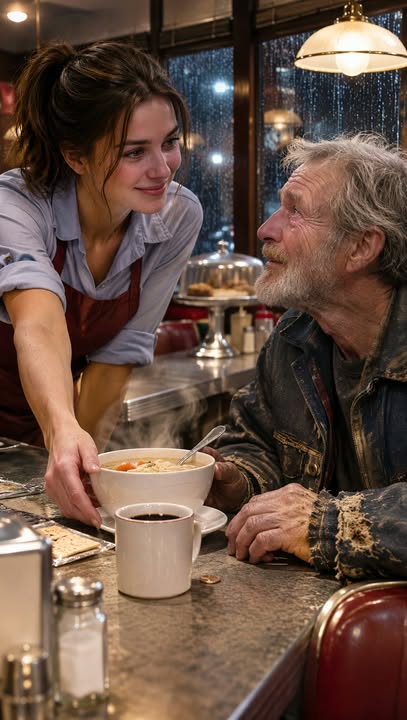
Part 4 – The Name in the Letter
“They’ve found another letter in Arthur’s medical records,” Alexander said.
“It’s addressed to you.”
Harper looked down at the slip in her hands, at her mother’s request to let her daughter know who her grandfather was.
For a moment, the words seemed too large to fit on the paper.
“Where is the letter?” she asked.
“At the hospital.”
“Then we should go.”
Alexander nodded, already stepping toward the stairs.
Harper tucked the little slip into the envelope with Eleanor’s torn letter, careful not to bend either one.
Her heart was beating quickly, but beneath the rush of it was something quieter and more frightening: the sense that her life had been moving toward this truth without her knowing.
At St. Catherine’s, a nurse met them outside Arthur’s room.
“He’s resting,” she said. “The letter was among the belongings he had when he was brought in. We found it while cataloguing his personal effects.”
She held up a clear plastic sleeve.
Inside was a folded sheet of paper, creased so deeply that the edges had begun to soften.
Harper recognized her name on the front.
The handwriting was Eleanor’s.
“Was it meant for me?” she asked.
“That’s what we’re hoping to learn,” the nurse replied. “Your father asked us to keep it safe.”
The word father caught Harper before she could answer.
The nurse glanced between her and Alexander, then seemed to understand that the family’s history was not as simple as the names on their charts.
“Arthur asked for both of you,” she said. “He was awake a little while ago.”
Harper’s fingers tightened around the strap of her bag.
“Can we see him?”
“Briefly. He’s been tiring easily.”
Arthur had his eyes open when they entered the room.
He looked from Harper to the letter in the nurse’s hand and gave a small nod.
“I carried that a long time,” he said.
Harper moved to the side of his bed.
“Do you remember what it says?”
“Not all of it.”
“Do you remember writing it?”
Arthur considered the question.
“I remember writing something for Eleanor. I don’t remember whether this is the same paper.”
The nurse placed the sleeve on the bedside table.
“Would you like Harper to read it?” she asked.
Arthur looked at Harper.
“Only if you want to.”
She nodded.
The letter’s paper had yellowed at the folds, but the ink remained legible.
Harper drew it from the sleeve and opened it carefully.
The first lines were addressed to her by name.
My dear Harper,
If you are reading this, then either I finally found the courage to tell you something I should have said long ago, or circumstances have spoken before I could.
Harper stopped.
She glanced at Arthur, whose eyes had closed as if he were gathering strength.
Alexander stood quietly at the foot of the bed.
Harper continued.
Your mother and I were separated by more than distance.
For a long time, I believed she wanted no part of me, and she believed I had chosen to forget her.
Neither of those things was true.
The room became very still.
Harper read on, her voice growing softer.
I was young when Eleanor was born, and I thought I could protect her by letting her mother take her away.
I told myself a child needed a steady home, and I had no idea how to build one.
I thought I would be able to find her again when I was ready.
Then years passed, and every year made it harder to explain why I had waited.
Harper’s eyes lifted from the page.
Arthur’s face was turned toward the window.
“Dad,” Alexander said gently.
Arthur opened his eyes.
“Keep reading,” he murmured.
The letter continued.
When I finally tried to write, I learned that my letters had not reached Eleanor.
I was told she had moved on and wanted no contact.
I believed that, because I thought it was what she deserved.
But I never stopped hoping she was well.
If I am not there to tell you myself, I want you to know this clearly.
Eleanor was my daughter.
You are her daughter, and you are my granddaughter.
Harper lowered the letter.
Her vision had blurred, but she could still hear the steady beep of the monitor beside Arthur’s bed.
For several seconds, she did not speak.
The word granddaughter had changed the shape of everything she thought she knew.
She had never known her mother had a father who might have loved her from afar.
She had never known the man at stool four was more than a friend, more than the person who had paid for Eleanor’s school.
He was family.
A grandfather she had met first as a stranger in a wet mechanic’s jacket.
Harper looked at Arthur.
“You knew?”
“Not all of it,” he whispered. “Not at first.”
“But you knew my mother was your daughter?”
Arthur’s face tightened with effort.
“I knew Eleanor was my little girl.”
The words seemed to travel back through decades before reaching the room.
“I lost her,” he said.
Alexander came closer.
“You didn’t lose her on purpose.”
“I let too much time pass.”
“You were trying to do what you thought was right.”
“That does not always make it right.”
Harper sat beside the bed.
She was not ready to call him Grandpa.
The word had spent her whole life belonging to an empty place in her family story.
But she did not want to retreat from it either.
“Why didn’t you tell me at the diner?” she asked.
Arthur’s gaze moved to the tarnished penny resting on the table.
“I wasn’t certain.”
“Certain of what?”
“Of who you were.”
He swallowed, and the nurse stepped nearer, but he lifted one hand to show he was all right.
“Your face reminded me of Eleanor,” he continued. “But memory is unreliable. Sometimes it gives you what you want instead of what happened.”
Harper thought of his confusion at the hospital, the scattered details, the way a name might surface and then vanish again.
“You didn’t want to tell me something that might not be true.”
“No.”
She looked at the letter.
“Did my mother know you were her father?”
Arthur’s expression became troubled.
“I don’t know.”
“Did you ever tell her?”
“I tried.”
“Your letter says someone told you she wanted no contact.”
Arthur closed his eyes briefly.
“I believed it.”
Alexander’s jaw tightened, but he kept his voice calm.
“Who told you?”
“I don’t remember.”
The answer was not evasive.
It was a gap in a mind still recovering from injury, and Harper could see the frustration it caused him.
“Could it have been someone in the family?” Alexander asked.
“Perhaps.”
“Or someone handling your mail?”
“Perhaps.”
Arthur’s hand moved slowly across the blanket.
Harper took it.
“I remember writing to her,” he said. “I remember waiting for answers.”
“Did she answer?”
“I don’t know.”
“Did you keep the letters?”
“I kept what I could.”
Harper turned to Alexander.
The note in Eleanor’s handwriting, the line about her daughter’s grandfather, the letters that had gone unanswered—all of it pointed toward a story neither she nor Alexander had known existed.
“My mother wrote that she hoped she could tell me the whole story,” Harper said. “Maybe she was trying to reach him too.”
“Maybe,” Alexander replied.
“What if she thought he had left her behind?”
Arthur’s eyes filled.
“Then I failed her twice.”
“No,” Harper said, surprising herself with the firmness of her voice. “You made a mistake when you were young. Then someone may have kept the truth from both of you.”
Arthur looked at her, as if weighing whether she could know that.
Harper could not know it yet.
But she did know what it felt like to live with a story that had been cut short by circumstances no one had explained.
Her mother had been sick for years.
There had been days when Eleanor could barely climb the stairs, and months when money went first to medicine and then to rent.
Perhaps she had been waiting for a moment when Harper was older, stronger, ready to understand.
Perhaps the moment had never come.
“Your mother was proud of you,” Arthur said.
Harper swallowed.
“Did she write to you about me?”
“Yes.”
“What did she say?”
Arthur looked away, searching.
“She said you were stubborn.”
“That sounds right.”
“She said you wanted to take care of everyone, even when you had nothing left for yourself.”
Harper looked down at the hands joined between them.
Alexander sat in the chair near the window.
He had not tried to step between her and the revelation, or fill the silence with explanations.
That restraint gave her room to feel the sorrow without being watched too closely.
After a few minutes, Arthur’s eyes began to droop.
The nurse suggested they let him rest.
Harper tucked the letter into its sleeve and placed it back in her bag.
At the doorway, she turned around.
Arthur was looking at her.
“Harper,” he said.
“Yes?”
“I’m glad you came to stool four.”
She felt tears prick her eyes.
“So am I.”
Outside the room, Alexander walked with her to the waiting area.
The rain had stopped, but the windows still held the dark shine of it.
Harper sat in one of the chairs and unfolded the letter again.
The last part had been written in a different ink, as if Arthur had added it years after the rest.
I did not learn about Eleanor’s nursing school until after she had finished.
I sent what I could, and when she asked no questions, I told myself she understood why.
I should have written to ask whether she was safe.
I should have gone to see her.
I should have trusted her with the truth.
Harper read the final line twice.
“I don’t know whether my mother ever knew he was trying to help her,” she said.
“Neither do I.”
“Maybe the tuition was the only time they saw each other.”
“Dad remembered a last meeting.”
“Before I was born?”
“I think so.”
She looked at the photograph again.
Eleanor stood beside Arthur in the garden, comfortable enough to rest her hand on his arm.
That was not the posture of a daughter who had only recently met a stranger.
It was not proof of anything, but it was a tenderness Harper could no longer pretend not to see.
“Do you remember hearing about a family member who handled his letters?” she asked.
Alexander’s eyes shifted toward her.
“There was an aunt,” he said. “My father’s older sister, Miriam. She helped him with bills and correspondence for a while.”
“Is she alive?”
“No. She died years ago.”
“Did you know her?”
“I met her when I was young, but not often. She lived in another state.”
He paused.
“Dad used to say she was practical. She took care of things when he couldn’t.”
“Could she have intercepted the letters?”
“I don’t know.”
His answer came cautiously.
He was not eager to condemn someone based on a theory, even one that might explain years of silence.
“I don’t want us to decide what happened until we have more than guesses,” he said.
“I don’t either.”
Harper understood the danger of letting anger write the missing parts of a story.
Her mother had never spoken of Arthur with anger.
If she had believed he wanted no relationship, perhaps she had chosen to let the past rest.
The two of them left the hospital at dusk.
Alexander drove Harper to the storage unit, where the remaining boxes were still stacked along the walls.
They searched through the letters again, following dates and addresses.
Some were simply notes about school or work.
Others had been returned unopened, their envelopes stamped with faint marks Harper had not noticed before.
One bore the words ADDRESS UNKNOWN.
Another had no postmark at all.
A small bundle tied with faded thread contained only blank cards and two envelopes with the same address in Eleanor’s handwriting.
Harper sat back on her heels.
“She tried to write.”
“It looks that way,” Alexander said.
“Or someone wanted it to look that way.”
He considered this, then shook his head slightly.
“We can’t know yet.”
Harper rubbed her forehead.
She was tired, but the more she learned, the less she could return to the simple life she had thought she understood.
The bills, the work, the search for Arthur—those things remained.
But underneath them was a family history shaped by choices and missed chances.
She looked at the old letter to Eleanor, the one with the torn corner.
“You told me the child would always have—”
The missing words might have explained the promise Arthur remembered.
“Could your father have kept a copy?” she asked.
“Possibly.”
“Where?”
“He had a house in Westchester before he went to assisted living. It’s still there, but most of his personal papers were moved into storage when he disappeared.”
“Could we search them?”
“Yes, but not tonight.”
She nodded.
The decision felt less like a delay than a promise to keep going.
“I want to know what my mother was trying to tell me,” she said.
“And I want to know what my father was trying to tell her.”
For the first time since they had started searching, Harper felt that their questions were beginning to point in the same direction.
The next morning, the hospital called to say Arthur had slept well and wanted to see them.
Harper arrived with a container of homemade soup from her kitchen.
She had made enough for three people, though she had not told Alexander that she’d packed him a serving too.
Arthur was more alert, but he tired quickly.
He listened as Harper described the letters they had found.
When she mentioned the returned envelopes, he closed his eyes.
“Maybe I sent them to the wrong place,” he said.
“Maybe,” Harper replied.
“Maybe someone told me not to send more.”
“Do you remember who?”
“No.”
He seemed to search for the thought, then let it go.
“My sister used to help with the mail,” he said after a pause. “Miriam was better at keeping track of things than I was.”
“Did she know Eleanor?”
“I think she did.”
“Did she like her?”
Arthur’s expression grew uncertain.
“I hope so.”
Alexander moved closer to the bed.
“Dad, do you remember telling Miriam that Eleanor wanted no contact?”
“I remember being told.”
“By Miriam?”
“I don’t know.”
The answer left them with another blank space.
Arthur looked at Harper.
“If Miriam said it, she may have believed it.”
“Or someone gave her the same story,” Harper said.
“That’s possible.”
He squeezed her hand.
“Don’t turn her into a villain just because she’s not here to explain herself.”
Harper was struck by the care in his request.
Even after decades of hurt, even with his memory in fragments, Arthur did not want his sister judged by what they could only guess.
“I won’t,” she said.
Arthur let out a long breath.
“Your mother would have liked you.”
Harper’s eyes burned.
“She did like me.”
“I mean the woman you are now.”
The words caught her off guard.
Alexander looked toward the window, giving her privacy without leaving.
Harper placed the container on the bedside table.
“I wish she could have met you again.”
“So do I.”
Arthur’s gaze rested on the photograph, which Harper had brought in a protective sleeve.
“I thought I had lost the right to be part of her life,” he said.
“Maybe she thought the same thing.”
“Then we both waited too long.”
Harper did not try to soften the truth.
She only held his hand.
A week passed as the doctors continued to monitor Arthur’s recovery.
His memory came back in brief, uneven pieces.
He remembered the name of the street where he had once lived, but not the number.
He remembered Eleanor’s laugh, but not the words she had said before leaving.
He remembered paying part of her tuition, but could not recall whether he had given the money to her directly or sent it through someone else.
Each fragment made the story clearer in one place and more complicated in another.
During those days, Harper returned to Belle’s Diner for a meeting with the accountant.
He reviewed the ledger and the receipts, confirmed that the meal charges had been paid, and discovered that several deductions had been entered without authorization.
Stan did not argue when the accountant asked him to explain the records.
He said he had believed the discrepancy was a paperwork error.
The review was still ongoing, and Harper’s hours had not yet been restored, but the facts were beginning to speak for themselves.
Harper did not ask Alexander to intervene.
He did not offer to replace her lost wages or make the problem disappear.
Instead, he asked whether she wanted a ride to the diner after visiting Arthur.
Sometimes she accepted.
Sometimes she took the bus.
That, too, became a kind of trust.
One evening, after Harper had spent the day sorting through Eleanor’s boxes, Alexander brought her a small folder from his father’s storage unit.
Inside were photocopies of several old letters.
“I found these in a box marked personal,” he said.
Harper opened the folder.
The top letter was addressed to Eleanor and bore a date from the year before she entered nursing school.
She recognized the careful writing, the narrow loops of the lowercase letters.
The letter was from Arthur.
He told Eleanor that he had enclosed a cashier’s check to cover the tuition deposit.
He wrote that he did not expect gratitude and did not want her to feel obligated to keep in touch.
Near the bottom, he had added a sentence in a different ink.
I’ll always be here for you, and for the child, if you ever need me.
Harper read the line aloud.
For a long moment, Alexander did not respond.
Then he sat beside her.
“Was that the promise?” he asked.
“Maybe.”
She looked at the signature.
Arthur’s handwriting was firm, but the final letters were uneven, as if he had written the line after thinking about it for a long time.
Another paper slipped from the folder and landed on the table.
It was a copy of an envelope addressed to Eleanor at the Linden Street apartment.
A red stamp crossed the front.
RETURN TO SENDER.
Harper turned it over.
A second stamp showed that the letter had been redirected to a different address.
The new address was not in Eleanor’s handwriting.
It was written in neat block letters, and no name had been added.
“I don’t understand,” Harper said.
Alexander leaned over the paper.
“Whoever redirected it knew she had moved.”
“Or thought they did.”
The date was two years after the first letter.
Harper looked at the written address.
The street name was familiar, but the number was smudged.
She recognized the neighborhood because it appeared on one of the postcards from Eleanor’s box.
Her mother had lived there for a short time, before Harper was born.
“She was nearby,” Harper said.
“Near where?”
“Near my mother’s old apartment.”
Harper compared the handwriting on the envelope with the short note Eleanor had left about her grandfather.
The block letters were different.
Whoever had redirected the letter had taken care to make the address legible, but had not signed a name.
“Could it have been Miriam?” Alexander asked.
“Maybe.”
Neither of them sounded convinced.
Harper returned the letter to the folder.
She was beginning to see how easily a single quiet decision could alter the course of a family.
A letter delivered might have brought Eleanor and Arthur together again.
A letter returned might have convinced Arthur that she wanted him gone.
A message kept from one person could become a truth the other person lived with for decades.
She looked at Alexander.
“Do you think your father knew I was his granddaughter when he started coming to the diner?”
“I don’t know.”
“He might have remembered something.”
“He might have remembered your mother’s name, then seen your face.”
“That isn’t the same as knowing.”
“No,” Alexander said. “It isn’t.”
Harper closed the folder.
The name had changed everything, but it had not repaired the years.
Arthur was her grandfather, yet she had no memories of him from childhood.
Her mother had been his daughter, yet the two of them had lived their lives separated by a story neither had fully understood.
Alexander was her uncle, though only recently he had been a stranger who arrived at the diner with a photograph and a missing-person search behind him.
Family, Harper was learning, was not always a thing people inherited whole.
Sometimes it was a truth they had to approach carefully, with patience and the willingness to hear what hurt.
That night, she returned to the hospital alone.
Arthur was awake, watching the late light fade from the window.
Harper showed him the letter with the promise.
He read it slowly.
When he reached the final line, his fingers trembled.
“I remember writing that,” he said.
“Do you remember what you meant?”
“I meant what it says.”
“To be there for my mother and me?”
“Yes.”
He looked at Harper.
“I never meant for you to owe me anything.”
“I know.”
“Your mother deserved help without a price attached.”
Harper thought of the seven dollars she had spent, of the way Arthur had left pennies as thanks, and the way Alexander had offered a cab without turning it into a debt.
“I think she understood that.”
“I hope so.”
Arthur handed the letter back.
“I wish I could tell her now.”
“So do I.”
His face grew sad.
“I don’t remember every year I missed. But I know they were years.”
Harper sat beside him.
“Remembering them won’t bring them back.”
“No.”
“But it can change what happens next.”
Arthur looked at her with quiet gratitude.
“That sounds like something Eleanor would say.”
Harper smiled through the ache.
The next morning, the doctor told them Arthur would need longer-term care while he continued to recover.
He was no longer in immediate danger, but his memory and mobility were still uncertain.
Alexander began asking the hospital’s care coordinator about options.
Harper sat with him in the corridor while they reviewed the first set of forms.
She glanced at the list of private facilities, home-care services, and rehabilitation programs.
Arthur would need more support than either of them could provide alone.
The scale of it was daunting.
“I can help pay for whatever he needs,” Alexander said.
“I know.”
“You don’t have to decide anything today.”
“I know that too.”
Harper looked through the glass at Arthur’s room.
He was sitting upright, trying to fold a paper napkin into a square.
The simple sight made her feel both tenderness and fear.
She wanted him close.
She wanted him safe.
She wanted to continue working toward nursing school, a dream she had carried for years and placed aside whenever life demanded something more urgent.
The old pattern rose in her before she could stop it: if someone needed her, she should give everything she had.
Then she remembered her mother’s letter.
I hope one day I can tell my daughter the whole story.
Eleanor had wanted Harper to know where help came from, not to become trapped by it.
Harper turned to Alexander.
“I need to think about what I can offer,” she said. “Not what you can pay for.”
“I understand.”
“I don’t want this to become a debt between us.”
“It won’t.”
She studied his face.
He did not say it as a promise meant to settle her quickly.
He said it as something he was willing to prove with time.
The care coordinator stepped into the corridor with a new folder.
“We’ve located a document among Arthur’s belongings that may help with his next steps,” she said. “It appears to be a letter he wrote years ago, before the accident.”
Alexander stood.
“What kind of document?”
The coordinator glanced down at the page.
“It’s addressed to a person named Eleanor.”
Harper felt the old pattern of hope and fear rise again.
“Can we read it?”
“I believe so, but there is something unusual about the envelope.”
“What?”
The coordinator turned it over.
A name had been written on the seal, in Arthur’s own hand.
Not Eleanor’s.
Not Harper’s.
Alexander’s.
It was addressed to Alexander Whitmore, and beneath his name Arthur had written a line neither of them had ever seen before.
If Harper comes looking, tell her why I kept the photograph.
**–END OF PART 4–CLICK “NEXT” AT THE BOTTOM OF THE PAGE TO CONTINUE READING**
* * *
[PREVIOUS: PART 3](https://echoesofstories.idolsgift.com/blog/part-3-the-note-behind-the-photograph-047) | [NEXT: PART 5](https://echoesofstories.idolsgift.com/blog/part-5-the-note-behind-the-photograph-047)
✓ Lynn R. Adams
Part 4 – The Name in the Letter “They’ve found another letter in Arthur’s medical records,” Alexander said. “It’s addressed to you.” Harper looked down at the slip in her hands, at her mother’s req…