PART 4: The Name Walter Would Not Forget 061
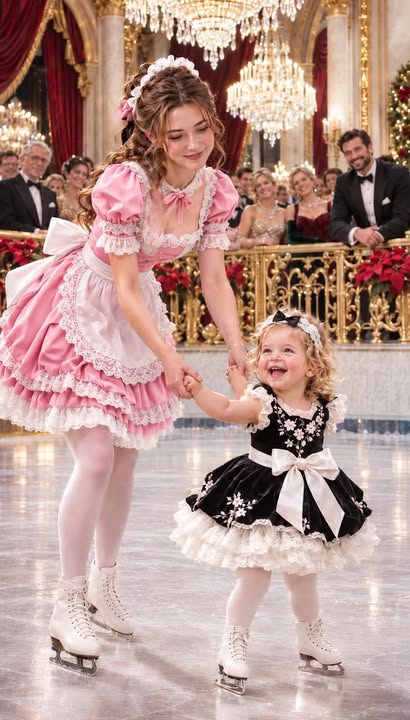
Part 4 – The Barrier Between Them
I stared at Noah’s message until the words seemed to shift beneath my fingers.
Sophia, I saw the video.
I’m not angry that you skated.
I just need to ask you something about that night.
Did you ever find out who moved the safety barrier?
For a moment, the dining room disappeared.
I was seventeen again, standing in the cold corridor outside the rink with my brother’s jacket clutched in my hands, trying to understand how a familiar place could suddenly feel dangerous.
I read the message twice more, searching for a question I could answer.
I had never found out who moved the barrier.
I had never asked.
My thumb hovered above the screen.
Walter and Damian waited without speaking.
“I thought you said you didn’t want anyone to find him,” Damian said gently.
“I didn’t,” I replied. “He found me.”
The distinction mattered, though I couldn’t explain why.
Noah had chosen to reach out.
That choice belonged to him.
I typed, deleted, and typed again.
No.
I never found out.
I’m sorry.
I sent it before I could reconsider.
The reply did not come immediately.
I placed the phone facedown, then turned the program sleeve over in my hands.
The date on the cover was still visible through the thin paper.
“How long has it been since you heard from him?” Damian asked.
“Since the day after the accident.”
Walter’s eyes lifted.
“You never spoke again?”
“Not after I left.”
I tried to say it evenly, as if the distance were a simple fact rather than a wound I had learned to live around.
“He was still in the hospital when I went,” I continued. “My mother told me he was stable. I thought I would come back once things were calmer.”
“And then?” Damian asked.
“Then I didn’t.”
The words fell between us, plain and unadorned.
I had told myself I was protecting Noah from the pressure of my guilt.
I had told myself my presence would only remind him of the rink, of the accident, of everything that had gone wrong.
Then weeks became months.
Months became years.
At some point, staying away had begun to feel like the only way I could keep from making things worse.
My phone buzzed.
Noah’s name appeared on the screen again.
I picked it up.
I don’t know either, he wrote.
I just remember there was supposed to be a barrier.
I swallowed.
I remembered it too.
Not the exact shape of it, or the way the posts had been fixed to the floor, but the pale line that separated the practice area from the maintenance corridor.
I remembered noticing it leaned slightly outward.
I remembered telling a rink employee.
“I warned someone,” I said.
Walter’s expression sharpened.
“What do you mean?”
“The barrier didn’t look right. I told a worker before Noah went onto the ice.”
“You told the staff?” Damian asked.
“I think so.”
“You think so?”
“I was tired. I’d been training all day, and the final was that night.” I pressed my fingertips to the table. “But I remember telling someone it needed to be secured.”
Walter drew a slow breath.
“Did they respond?”
“I don’t know.”
The old memory had always come in pieces, but now the pieces seemed to be rearranging themselves.
I remembered the rink lights reflecting on the ice.
Noah leaning on the boards to call for me.
A man in a dark jacket lifting one hand as if to say he had heard.
Then I had turned away.
“Did you tell your family?” Walter asked.
“I told my mother afterward that the barrier had looked loose. She said she knew I’d been worried about it.”
“That isn’t the same as saying you were responsible,” Damian said.
“I know.”
But the words did not release their hold on me.
My phone buzzed again.
Can we talk?
I looked at the message, then at the silent program sleeve.
I wanted to say yes.
I wanted to say no.
Most of all, I wanted to hear his voice and discover that five years had not made us strangers beyond recognition.
“Would you like me to leave?” Damian asked.
“No.” I shook my head. “I don’t want to do this alone.”
He nodded, accepting the answer without making it a promise.
I typed to Noah.
Yes.
When would you like to talk?
His reply came a few minutes later.
Tomorrow?
I’m in town for a few days.
I pressed my hand to my mouth.
“He’s here,” I whispered.
Walter looked toward the window as though Noah might appear in the snowy garden.
“Would you like me to arrange a place for you to meet?” Damian asked.
“No.”
“All right.”
“I don’t want this turned into a rescue.”
“I know.”
“I can meet him myself.”
“You can.”
I studied Damian’s face, expecting to see some sign that he thought the decision unwise.
There was only patience.
“Thank you,” I said.
He glanced at the program.
“Do you want to keep that out?”
I looked down at it.
“Yes.”
The paper felt more fragile now, as if the date itself had thinned with age.
I returned the program to its sleeve and tucked it into my bag.
That evening, I tried to work as usual.
I cleared dishes, checked the nursery, and helped the nanny prepare Rosie for bed.
But every ordinary task seemed to contain a question.
When Rosie reached for me, I wondered how much a person could love someone while still being unable to tell them the truth.
When she wrapped her small hand around my finger, I wondered if Noah had done that too when we were children.
I remembered teaching him to skate on the public rink near our first apartment.
He had been small enough that I could hold both of his hands while he shuffled over the ice.
He hated falling, so I told him the ice was simply teaching his feet to listen.
He had laughed at me and asked whether I had learned to listen yet.
I had told him I was still practicing.
The memory came back with such brightness that I had to sit down.
After Rosie was asleep, I went downstairs and found Damian in the sitting room.
He had a book open on his lap, though his attention seemed to be elsewhere.
“Do you ever think about what happened to Noah?” he asked.
I stopped by the doorway.
“Every day.”
“I’m sorry.”
“You don’t have to be.”
“I know.”
He closed the book.
“I was thinking about Rosie’s mother,” he said. “There were things I thought I could have prevented. I spent a long time believing that if I replayed every decision, I’d eventually discover the moment when the outcome could have changed.”
I sat in the chair opposite him.
“Did you?”
“No.” He glanced toward the dark window. “I found reasons to blame myself. That wasn’t the same as finding the truth.”
I looked down at my hands.
“Sometimes guilt feels more useful than not knowing.”
“How?”
“If it’s my fault, then it means I could have done something. It means the world wasn’t simply careless and unpredictable.”
Damian listened without trying to interrupt.
I had never said it that clearly before.
“I thought blaming myself kept me close to Noah,” I continued. “If I stopped feeling responsible, I was afraid it would mean I’d stopped caring.”
“Caring about him doesn’t require punishing yourself.”
The words were quiet.
I did not answer.
They seemed too simple to hold everything I had carried, yet I couldn’t dismiss them.
The next morning, snow lay across the gardens in a smooth, unbroken sheet.
I changed into a dark green sweater and jeans, then checked my phone.
Noah had sent an address for a small café near the river.
I told Damian where I was going.
“Would you like me to drive you?” he asked.
“No, thank you.”
“Would you like someone to know where you are?”
“I’ll tell you when I get there.”
“That’s fine.”
He did not press.
I paused at the front door, one hand on the brass handle.
“What if he’s angry?”
“Then you’ll hear what he has to say.”
“And if he doesn’t want to see me again after today?”
“Then you’ll have done what you could to meet him honestly.”
I drew a breath and let it out slowly.
“I don’t know how to do this.”
“Neither of you has to do it perfectly.”
I nodded and stepped into the cold.
The café was small and warm, with fogged windows and a low hum of conversation.
I arrived ten minutes early and chose a table in the back.
My hands stayed folded around a cup of tea I barely tasted.
When the door opened, I looked up.
Noah stood just inside.
For one terrible instant, I could not reconcile the young man in the doorway with the boy I had left behind.
He was taller than I remembered, his hair a little longer, his shoulders broader beneath a gray wool coat.
But his eyes were the same.
He spotted me and stopped.
I stood.
Neither of us moved for a few seconds.
Then Noah came across the room.
“Hi, Soph,” he said.
The old nickname broke something open inside me.
“Hi, Noah.”
We stood facing each other, both reaching for an embrace and then stopping, uncertain about whether we still knew how.
He solved it by stepping forward.
I held him tightly.
He was solid and warm, no longer the fragile figure I had seen in a hospital bed.
His arms came around me, but there was a carefulness in the gesture that told me he had learned to live without expecting me.
“I’m glad you came,” he said against my shoulder.
“I’m glad you’re here.”
We sat down.
For a little while, we spoke about the safest things.
The weather.
His apartment.
The fact that he had moved twice since I last knew where he lived.
He told me he was working as a sound technician for a small theater company.
He talked about the people he had met, the places he liked, the kind of life he had made for himself.
He did not make it sound grand.
That made it feel real.
I listened and tried not to search every sentence for what I had missed.
At last, Noah rested both hands around his coffee cup.
“I saw the video because someone sent it to me,” he said. “I recognized your turn before I saw your face.”
“Walter said the move was distinctive.”
“Of course he did.” A faint smile touched his mouth. “He used to tell you that every week.”
“He did.”
Noah’s smile faded.
“I wasn’t angry that you skated.”
“I didn’t know what you’d feel.”
“I was happy to see you doing something you loved.”
The sentence was so simple that I could only stare at him.
“I don’t know if I love it anymore,” I said.
“That’s allowed.”
“I thought you might blame me for leaving.”
“I did, sometimes.”
I lowered my eyes.
“But I was a kid,” he continued. “I didn’t understand what you were carrying. I only knew you were gone.”
“I’m sorry.”
“I know.”
He said it without dismissing the apology, but without asking me to keep repeating it.
I pressed my hands together.
“Your message asked whether I ever found out who moved the barrier.”
Noah looked at the table.
“I wanted to ask you before I talked to anyone else.”
“I remember telling someone the barrier was loose.”
“I remember you saying something about it.”
“You do?”
“I remember you calling over a rink worker. You pointed toward the service corridor, and he looked at it.”
My pulse quickened.
“What happened after that?”
“I don’t know.”
“I remember that too,” I said. “I remember thinking he’d heard me.”
Noah rubbed his thumb along the edge of his cup.
“I asked for the records a few months ago.”
“What records?”
“The rink’s incident report. The accident was serious enough that there had to be one.”
“You got it?”
“Eventually.”
“What did it say?”
“That a safety barrier had been moved during a maintenance check.”
I stared at him.
“Moved by whom?”
“That’s what the first report didn’t say.”
He took a folded sheet of paper from his coat pocket and placed it on the table.
“I was able to get an amended report.”
I didn’t touch it.
“How?”
“I asked the rink. I didn’t go after anyone. I just wanted to know what had happened.”
His voice was measured, almost careful.
“Did they tell you?”
“Not at first. They said the original staff records had been archived. Then I found an email attached to the report.”
He pushed the paper a little closer.
I looked at the printed page.
The report was dated the morning after the accident.
A note near the bottom described the barrier as having been left unsecured after an inspection.
Attached was a short statement from the rink supervisor.
I recognized the name.
I had seen it printed on staff schedules and posted beside the rink office.
The statement said that a maintenance employee had acknowledged moving the barrier to reach a light panel, then failed to lock it back into place.
My vision blurred.
“They knew,” I said.
“They found out the next morning.”
“And no one told us?”
“They said they informed Mom.”
“Did she know it was the same barrier I warned them about?”
“I think so.”
The café seemed to grow quieter around us.
I forced myself to read the page again.
The report did not say the worker had meant for anything to happen.
It did not claim a conspiracy or a deliberate decision.
It described a simple, serious failure: someone had moved a barrier and not secured it.
The kind of mistake that could have been prevented.
The kind of mistake I had spent five years believing I should have prevented.
“I could have asked,” I whispered.
“You were seventeen,” Noah said. “You had just watched me get hurt.”
“I could have asked later.”
“You didn’t know there was anything to ask.”
“But Mom knew.”
Noah’s expression softened.
“She knew the rink had accepted responsibility. She didn’t want you carrying their explanation around like another reason to blame yourself.”
I looked at him.
“Did she tell you that?”
“Not exactly. She told me she’d asked the rink for the report. She said the worker had admitted it was left unsecured.”
“Why didn’t she tell me?”
“Because you’d already decided the accident was yours to carry.”
The words landed gently, but their truth was unmistakable.
I stared at the page, unable to look at him.
For years, I had remembered my warning as something useless.
A small gesture before a catastrophe.
But I had warned them.
Someone had heard me.
And the barrier had still been left unsecured.
I had not failed to protect Noah.
I had been a frightened teenager in a place where the adults were responsible for the safety of everyone on the ice.
“I should have known,” I said.
“You weren’t the one who moved it.”
“I should have kept asking.”
“You were trying to get through the days.”
“I left you alone with it.”
Noah’s jaw tightened, though his voice stayed calm.
“You did leave.”
“I know.”
“But that isn’t the same as not loving me.”
I closed my eyes.
There it was, the distinction I had never been able to make for myself.
The truth did not erase the years of silence.
It did not bring back the evenings when Noah might have wanted his sister.
It did not give me those years to live differently.
But it lifted the weight of the accident from my hands.
When I opened my eyes, Noah had not looked away.
“Why didn’t you contact me earlier?” I asked.
“I tried once.”
“When?”
“A year after the accident. I sent a letter to the last address I had for you.”
“I never got it.”
“I know. It came back.”
His words held no accusation.
“After that, I thought maybe you didn’t want to hear from me.”
“I thought you were better without me.”
“I wasn’t better because you were gone.”
The café’s front door opened, letting in a brief gust of cold air.
Neither of us turned.
“I don’t expect everything to go back to how it was,” Noah said. “We don’t get those years back.”
“I know.”
“But I don’t want us to spend the next five years pretending we can’t talk.”
My throat tightened.
“I don’t want that either.”
He folded the report and returned it to his coat pocket.
“Then we can start with today.”
I nodded.
We stayed at the café for another hour, though neither of us tried to fill every silence.
Noah told me about the theater, and I told him about Rosie.
I showed him a photograph of her in the yellow dress, her golden ribbons crooked and her smile bright.
“She sounds like she loves you,” he said.
“She does.”
“That’s good.”
“I’m afraid she’ll get hurt if I leave.”
“She’ll miss you.”
I looked at him.
He continued carefully.
“But that doesn’t mean you have to build your whole life around preventing every sadness she might feel.”
I thought of Damian’s promise that I could remain part of Rosie’s life, whether I stayed in the house or not.
“I don’t know what I’ll do.”
“You don’t have to decide today.”
The words, coming from Noah, seemed to meet something in me that had been waiting to hear them.
Before we parted, he gave me his new number and asked me to call when I wanted.
I promised I would.
This time, I meant it.
When I returned to the Blackwood house, Damian was in the front hall.
He looked at my face and did not ask for details.
“Would you like tea?” he said.
“Yes.”
We went to the kitchen together.
He set a cup in front of me and waited while I wrapped my hands around it.
“He’s all right,” I said.
“I’m glad.”
“He’s working. He has his own place. He’s built a life.”
“That’s good.”
“The accident wasn’t my fault.”
Damian’s expression changed, not with surprise but with recognition of how much the words cost me.
“No,” he said. “It wasn’t.”
“The rink moved the barrier during maintenance. Someone forgot to secure it.”
“I’m sorry no one told you.”
“My mother knew there had been a failure. She thought I would blame myself more if I knew.”
“Did it work?”
I let out a breath that almost became a laugh.
“No.”
He sat across from me.
“Are you angry with her?”
“I don’t know.” I looked down into the tea. “I think she was trying to protect me. She couldn’t see that the silence had become part of what hurt.”
Damian nodded.
“Sometimes people choose the comfort they can offer, even when it isn’t the comfort someone needs.”
I looked at him.
“Is that what happened with Rosie’s mother?”
He was quiet for a moment.
“Sometimes,” he said. “And sometimes I thought being strong meant keeping difficult things to myself.”
“Did it help?”
“No.”
The quiet between us felt different now.
Not like a place where truths were being withheld.
More like a place where each of us was deciding what could safely be said.
“I don’t want you to make plans for me,” I said.
“I won’t.”
“I don’t want you to treat skating like it will fix everything.”
“I don’t think it will.”
“I might never skate again after that night.”
“That would still be your choice.”
I watched his face, looking for disappointment.
There was none.
Only a calm attentiveness that left me free to be uncertain.
That evening, I brought the program into the library and placed it on the table beside the envelope.
My mother’s note lay open beneath the photograph of my younger self.
You were ready before the world asked you to prove it.
I read the words again, then folded the paper carefully.
For the first time, I understood that she might not have meant ready to compete.
She might have meant ready to choose.
I was still sitting there when Damian came in carrying a small cream-colored envelope.
He stopped when he saw the program.
“Walter left this with me,” he said. “He thought you might want it.”
“What is it?”
“I’m not sure.”
The envelope had no name on it, only an embossed mark from the national skating federation.
I opened it.
Inside was a letter addressed to Elena Vale.
The first line invited me to skate in an Olympic-qualifying exhibition, presented as a special return performance.
The second paragraph stated that the organizers were holding a place for me until the end of the month.
I read it twice.
“They’ve already heard about the video,” Damian said.
“Who sent it?”
“Walter was contacted this afternoon. He asked them not to make any public announcement.”
The letter’s final paragraph included a date, a deadline, and a number to call if I wished to accept.
I pressed the page flat against the table.
The past had not returned as a memory this time.
It had arrived with a decision attached.
And I had only a few weeks to decide whether I could step into it again.
**–END OF PART 4–CLICK “NEXT” AT THE BOTTOM OF THE PAGE TO CONTINUE READING**
* * *
[PREVIOUS: PART 3](https://storyly.idolsgift.com/blog/part-3-the-name-walter-would-not-forget-061) | [NEXT: PART 5](https://storyly.idolsgift.com/blog/part-5-the-name-walter-would-not-forget-061)
✓ Lynn R. Adams
Part 4 – The Barrier Between Them I stared at Noah’s message until the words seemed to shift beneath my fingers. Sophia, I saw the video. I’m not angry that you skated. I just need to ask you some…