PART 4: The Name on the Empty Chair 046
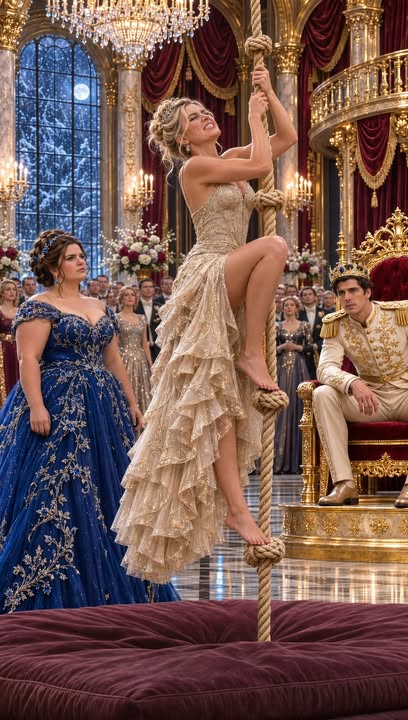
Part 4 – The Truth in the Letter
“Keep Eleanor’s name beside Mara Williams.”
I read the instruction again, hoping the words might rearrange themselves into something less personal.
They did not.
Mrs. Bell held the seating record by its edges, as though even the copy had become fragile.
“Who had access to the plan?” I asked.
“Several people in the household office,” she said. “The event coordinator, the staff who prepared the room, and the person who revised the seating.”
“Could you recognize the handwriting?”
“I can compare it with other records, but I can’t identify it from this alone.”
Adrian joined us, his attention fixed on the instruction.
“May I see it?”
Mrs. Bell passed him the page.
He read the line in silence, then looked at me.
“I didn’t know about this.”
“I believe you.”
The answer came more quickly than I expected.
Perhaps because his surprise was plain, or perhaps because I had grown tired of treating every uncertainty as proof of someone’s guilt.
“Can the original be found?” I asked.
“Possibly,” Mrs. Bell replied. “But the event file may have been returned to the household office.”
“Then we should ask for it.”
Adrian nodded.
“I’ll speak with my mother and the event coordinator.”
“Please don’t ask them to explain it away before you know what happened.”
“I won’t.”
He handed the copy back to Mrs. Bell.
For a moment, no one spoke.
The corridor was quiet except for the soft ticking of a clock somewhere beyond the dining room.
I looked at the words once more, then turned away.
“I need to call my mother.”
Mrs. Bell offered the small sitting room again.
Adrian did not follow.
He seemed to understand that this conversation belonged to me, even if the palace had managed to make it part of his concern.
My mother answered after several rings.
“Mara?”
“I found the seating plan.”
I heard her inhale, then let it go.
“What did it say?”
“Someone moved Eleanor’s chair beside mine and wrote, ‘Keep Eleanor’s name beside Mara Williams.’”
The silence on the other end lasted long enough for my hand to tighten around the phone.
“Mom, who did that?”
“I don’t know.”
“Did you ask the palace to put her name near mine?”
“No.”
“Did you ask anyone to make sure I received an invitation?”
“No.”
“Then why does the palace know about me?”
My mother’s voice softened.
“I don’t know what they know.”
“You told me the palace contacted you once.”
“I did.”
The admission seemed to settle into the room.
I sat down on the edge of the sofa.
“When?”
“Before you were born.”
The words made the quiet around me feel suddenly enormous.
“Why didn’t you tell me?”
“I should have.”
“What did they want?”
“To speak with me about Eleanor.”
“Why?”
“I’m not ready to answer that without the letter.”
“What letter?”
“The one they sent.”
My mother’s voice trembled, though she tried to steady it.
“I kept it.”
“Where?”
“At home, in the box with the things I could never decide whether to throw away.”
I pressed my free hand against my forehead.
“You’ve had a letter from the palace all this time, and you never told me.”
“I was trying to give you a life that didn’t begin with a secret.”
“That secret still shaped my life.”
“Yes,” she whispered. “I know.”
For a moment, I could hear only the faint hum of the line.
“Who was Eleanor to you?” I asked.
“She was my mother.”
I stopped breathing.
The answer was so quiet that for an instant I thought I had imagined it.
“Your mother?”
“Yes.”
“Eleanor Williams was your mother?”
“She was.”
I stared at the carpet beneath my shoes.
The gold vines on my gown seemed to catch the light whenever I moved, a pattern I had worn all my life without knowing it had been a family inheritance.
“Then she was my grandmother.”
“Yes.”
I covered my mouth with my hand.
The palace’s old photograph came back to me, Eleanor standing on the steps in the dress with the same curling vines.
I had seen her face before I knew I had any right to miss her.
“Why didn’t you tell me she existed?”
“I wanted to,” my mother said. “I thought I would tell you when you were older, then when things felt settled, then when I could explain without asking you to carry all the parts I had never sorted out myself.”
“You could have started with her name.”
“I know.”
“Did you love her?”
“I did.”
“Did she love you?”
My mother’s breath caught.
“Yes, Mara. She loved me.”
The answer came with such certainty that my eyes filled.
I looked away from the empty sitting room, trying to keep my voice even.
“Then why did you leave the palace?”
“I didn’t leave the palace. I left the life I had there.”
“Why?”
“Because Eleanor had died, and I had to decide what kind of life I wanted for you.”
“You hadn’t had me yet.”
“No,” she said. “But I knew I was going to.”
I heard the scrape of something being moved on her end of the line.
Perhaps she was standing now, perhaps pacing through the small house where I had grown up.
“Eleanor wasn’t a princess,” she continued. “She wasn’t part of the royal family. She was an adviser, and a good one.”
“Mrs. Bell said she worked on community programs and charitable grants.”
“That was the work she cared about most.”
“Was the letter about a baby?”
My mother was quiet.
“I think so.”
“Was the baby you?”
“No.”
The answer surprised me enough to sit straighter.
“Then who?”
“The letter was sent after Eleanor died. It was addressed to me, but it was about the charitable trust she had helped establish and the people who were supposed to protect it.”
My mother paused.
“Eleanor had uncovered that a court official was changing records and steering money away from the families the trust was meant to help. She brought the evidence to the palace, but the official had already begun telling people she was careless with the accounts.”
“Why would anyone believe that?”
“Because he had access to the records, and because Eleanor had spent years trusting people who did not deserve it.”
My mother’s voice remained level, but sorrow ran beneath it.
“She was trying to protect the trust and the families who depended on it. She wanted the palace to investigate quietly before the official could destroy the records.”
“Did they?”
“They did investigate, eventually. But by then the story had become tangled. Some people believed Eleanor had made mistakes. Others thought she was trying to protect her own position.”
“Was she?”
“No. She was trying to protect the trust.”
I remembered the old photograph, the kind face turned toward someone beyond the frame.
“Did the palace believe her?”
“Some people did. Some didn’t. She died before the matter was fully settled.”
“What happened to the official?”
“He left the palace. I never knew every detail, and I was young. Eleanor didn’t want me caught in the middle of it.”
My mother’s voice faltered.
“After she died, I was told to wait while the palace sorted out the records. Then the letter came.”
“What did it say?”
“I don’t remember every word. It asked me to come back and help clarify Eleanor’s papers. It said the trust needed a family representative.”
“Did they mention a baby?”
“I think one note may have. Eleanor had taken in a child for a time, a baby from one of the families she was helping. The baby was entrusted to relatives while Eleanor dealt with the trust and her own work.”
The old envelope returned to my mind.
For the family who kept the child safe.
The phrase had seemed to point toward me.
Now it seemed to point somewhere else, toward a child whose life had briefly crossed Eleanor’s.
“Was that why you didn’t answer?”
“Yes.”
“Because you were afraid of being blamed for something?”
“Partly. I was afraid the official’s story would become mine, too. I was grieving, and I didn’t want to spend my life proving that my mother had been honest.”
She paused.
“And I was tired of the palace deciding what our family owed it.”
“So you ignored the letter.”
“I didn’t answer it.”
“Did you know the records were still there?”
“I knew there were papers. I didn’t know what had survived or what the palace kept.”
“You said you wanted me to have a life that belonged to me.”
“I did. I still do.”
“Then why let the palace invite me without explaining any of this?”
“I didn’t know it had.”
The answer was firm, without hesitation.
“Mara, I had no idea your name was going to be on a list. If I had known the palace was bringing you into this, I would have told you before you arrived.”
I wanted to believe her.
What I heard in her voice was not evasion but regret.
“Did you ever tell anyone at the palace where you went?”
“No. I moved away, took work, and raised you. That was all I wanted.”
“Did you ever tell Eleanor about me?”
My mother’s answer came slowly.
“She knew about you before I did.”
I closed my eyes.
“How?”
“Eleanor was gone by the time I knew I was pregnant.”
The room seemed to tilt, though I was sitting still.
“Then how could she have known?”
“She didn’t know you, Mara. She knew I might have a child someday. She used to say that if I ever had one, I should raise them somewhere they could choose their own path.”
My mother let out a small breath.
“She had a way of speaking about a future as if it were already waiting for us.”
I felt grief for a grandmother I had never met, mixed with anger that her name had been kept from me, and a strange tenderness for the person she had been.
“Why did you give me her pattern?”
“I didn’t know it was hers.”
“You made the dress.”
“I used a drawing your grandmother had left among her things. It was tucked into a sewing book with no name on it. I thought it was simply a pattern she liked.”
“Why didn’t you look into it?”
“I was a teenager when she died. By the time I found the drawing again, I had already left the palace behind.”
I remembered my mother leaning over the blue cloth at our kitchen table, turning the fabric beneath the needle.
She had never told me where the vines came from because she had not known.
“What should I do now?” I asked.
“I can’t choose for you.”
“That’s the first thing anyone has said all day that makes sense.”
A small, broken laugh came through the phone.
“Come home after the selection,” she said. “I’ll show you the letter and every paper I kept.”
“I want to see it sooner.”
“I understand.”
“Can you send me a copy?”
“I’ll find it tonight and take a photograph.”
“Thank you.”
She hesitated.
“Mara, I’m sorry I let you believe there was nothing to ask about.”
“I know.”
“I wanted to protect you from the palace.”
“But you also protected yourself.”
The honesty hurt both of us; I could hear it in the pause that followed.
“Yes,” she said. “I did.”
I looked at my hand, still marked faintly from the rope.
“Thank you for telling me.”
“I love you.”
“I love you too.”
When the call ended, I remained seated for a long while, holding the phone against my palm.
The truth had changed the shape of the mystery, but it had not finished it.
Eleanor was my grandmother, not a princess.
The empty chair had belonged to a woman invited in memory, not to a secret royal heir.
The vines on my gown were a family pattern, not proof that I had been hidden from the world.
Still, someone had moved Eleanor’s name beside mine.
Someone had made certain the connection would be seen.
When I returned to the corridor, Vanessa was waiting outside the sitting room.
She did not ask what my mother had said.
Instead, she took one look at my face and opened her arms.
I hesitated, then stepped into the brief embrace.
She held me gently, without pressing for an explanation.
“I know this isn’t the same,” she said when she let go, “but I’m glad you don’t have to wonder whether you imagined the connection.”
“I still have a lot to wonder about.”
“Then we’ll start with the thing we know.”
“Which is?”
“Your grandmother mattered.”
I nodded, surprised by the tears that rose again.
“And the palace has unfinished business with her,” Vanessa added.
“That may not be the same thing as unfinished business with me.”
“No,” she said. “It may not.”
Adrian was waiting at the end of the corridor.
He saw our faces and did not try to make light of them.
“I spoke with the event coordinator,” he said. “The original seating instruction was added before the plan reached the ballroom staff.”
“Do you know who wrote it?” I asked.
“No. The coordinator says the note came with the revised list.”
“From your family?”
“From the household office.”
“Does the household office know who sent it?”
“He’s checking.”
I watched him carefully.
“Did your family arrange my invitation?”
He drew a breath.
“My mother asked the selection committee to review Eleanor’s old records when the palace began preparing the program that would honor her.”
“That doesn’t answer the question.”
“No,” he said. “It doesn’t.”
He looked toward Vanessa, then back at me.
“I’ll find out exactly what the committee was told.”
“I don’t want the palace to decide that the truth can wait because it would be more convenient.”
“Neither do I.”
“Do you?”
He seemed to understand that I was not asking whether he wanted to appear honest.
“I don’t know everything my family has done,” he said. “But I know I can ask, and I can keep asking if the first answer is incomplete.”
It was a small promise, but it was a real one.
Mrs. Bell arrived carrying a shallow archive box.
“I found the letter from Eleanor’s file,” she said. “It is not the same as the envelope you saw yesterday. This one is addressed to your mother.”
My chest tightened.
“May I read it?”
“With your permission, and with a protective sleeve beneath the paper.”
She brought us back to the archive room and placed the letter on the table.
The handwriting was Eleanor’s, the same careful slant as the name on the place card.
My mother’s name was written on the front.
Mrs. Bell slid the letter into a transparent sleeve, and I began to read.
My dear Anne,
If this reaches you, I hope it finds you in a quiet moment, far from the people who will ask you to carry what I should have carried myself.
The trust must be kept safe for the families it was made to serve.
If I cannot finish the work, please do not let anyone make you believe the fault was yours.
You have always been braver than I was at your age.
If one day you have a child of your own, let them choose their life before anyone gives them a place in ours.
With all my love,
Mother
I read the final lines twice.
My mother had known the words for years, and so had the palace.
“Was there another letter with the envelope about the baby?” I asked Mrs. Bell.
“There was a note, but it appears to concern the child Eleanor had helped place with relatives while she worked on the trust.”
“Not me.”
“No,” Mrs. Bell said gently. “Not you.”
A strange looseness came over my chest, followed by a heaviness I had not expected.
The palace had not been hiding a royal identity from me.
It had been hiding a history of work, doubt, and unfinished responsibility.
And my mother had not stayed away because she had been ashamed of Eleanor.
She had stayed away because the palace had once made grief feel like a debt she could never repay.
I turned the page over.
A smaller note had been written in the margin, nearly lost beneath a crease.
Mrs. Bell leaned closer.
“Can you read that?”
She adjusted the lamp and examined the faint ink.
“‘When the record is restored, let the household make room for the name, not the title.’”
“What does that mean?”
“I don’t know,” Mrs. Bell replied.
Adrian’s face had gone still.
“Perhaps it means Eleanor never wanted to be remembered as something she wasn’t.”
“Then why did the palace invite her to the selection?” I asked.
“To honor her work,” he said. “That was the explanation I was given.”
“Why was her chair moved beside mine?”
No one answered.
Mrs. Bell looked down at the seating record.
“The note may have been written by someone who knew the family connection.”
“My mother says she never asked anyone to put my name there.”
“I believe her,” Adrian said.
“Then the palace did it on its own.”
He lowered his eyes.
“I’m afraid that may be true.”
The next morning, Mrs. Bell came to find me before the candidates gathered.
She carried a slim folder and a copy of the household office’s original request.
“We found the file,” she said.
“Who wrote the instruction?”
“The event coordinator received it from the committee secretary.”
“Who received it from?”
“The prince’s mother.”
Adrian had arrived behind her and stopped at the words.
“My mother?”
Mrs. Bell nodded.
“She authorized the placement of Eleanor’s name beside yours.”
I felt the room draw close around us.
“Why?”
“She wrote that she wanted the connection between Eleanor’s service and your invitation to be visible.”
“What did she know about me?”
Mrs. Bell opened the folder.
“According to the committee record, the palace found your mother’s name in Eleanor’s papers while researching the trust.”
Adrian looked as if he had not known where the sentence would end.
“And the invitation?” he asked.
“The committee was told to invite Mara Williams because she was Eleanor’s granddaughter.”
I stared at the page.
The words were plain.
The reason behind them was not.
“They invited me because of my family,” I said.
“They invited you because they believed your presence would honor Eleanor,” Mrs. Bell replied. “The selection committee still assessed every candidate by the same criteria.”
“But no one told me.”
“No,” Adrian said. “They did not.”
His voice was quiet, and the hurt in it seemed directed as much at his family as at himself.
“What did your mother think I was supposed to do?” I asked. “Stand beneath a portrait and smile?”
“I don’t know.”
“Did she think I’d be grateful?”
“I don’t know.”
The answer made him look younger, stripped of the certainty the palace usually placed around him.
I looked at the letter again, at Eleanor’s instruction that her child should choose a life before anyone gave her a place in theirs.
My grandmother’s words had arrived too late to protect my mother from the palace’s silence.
But they had reached me.
“Does your mother understand what this means?” I asked.
“I think she believed the truth would be a kindness once you were here.”
“Then she confused being honored with being told the truth.”
“Yes,” he said. “She did.”
Mrs. Bell closed the folder.
“There is one more entry in the records.”
“What is it?”
“Eleanor’s trust was never formally restored to the families it was meant to serve.”
My gaze moved from the letter to the folder.
The palace had invited me to honor my grandmother while the work she had died trying to protect remained unfinished.
Adrian looked at the page in Mrs. Bell’s hands.
“If that’s true, then the ceremony is not enough.”
The words were almost a question, but I heard the decision forming beneath them.
I turned back to Eleanor’s letter.
Let them choose their life before anyone gives them a place in ours.
“Then we need to find out what happened to the trust,” I said.
Adrian met my eyes.
“And we need to tell the truth about why you were invited.”
Before he could say more, Mrs. Bell turned over the last page in the folder.
A handwritten note lay beneath the official record, signed with a name no one in the room expected to see.
Eleanor’s daughter, Anne Williams, had written it years earlier.
I do not wish my child entered into any palace record until she is old enough to choose for herself.
Beneath that line was a second sentence, added later in a different hand.
The child’s name is Mara. The record must remain sealed until the family returns.
I looked up at my mother’s name on the old letter.
The palace had not discovered me by accident.
Someone had known who I was, and someone had kept that knowledge waiting for my return.
**–END OF PART 4–CLICK “NEXT” AT THE BOTTOM OF THE PAGE TO CONTINUE READING**
* * *
[PREVIOUS: PART 3](https://echoesofstories.idolsgift.com/blog/part-3-the-name-on-the-empty-chair-046) | [NEXT: PART 5](https://echoesofstories.idolsgift.com/blog/part-5-the-name-on-the-empty-chair-046)
✓ Lynn R. Adams
Part 4 – The Truth in the Letter “Keep Eleanor’s name beside Mara Williams.” I read the instruction again, hoping the words might rearrange themselves into something less personal. They did not. M…