PART 4: The Name on the Card 046
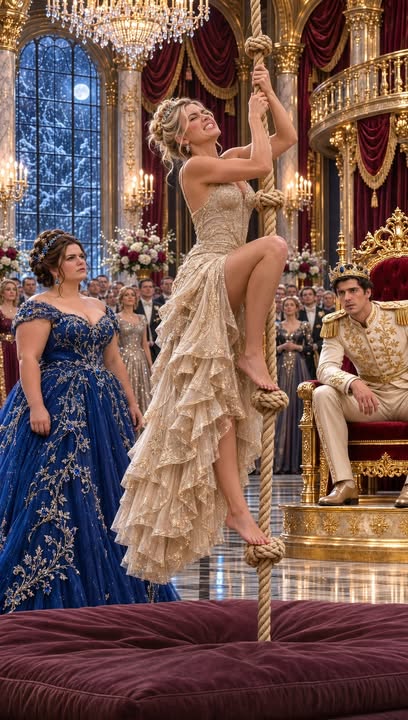
Part 4 – The Pattern’s True Story
“A paper?” I asked.
My mother’s voice softened, as if she were speaking from the kitchen with the sewing box open before her.
“It’s folded up inside the fabric.”
“What does it say?”
“I haven’t opened it yet.”
“Why not?”
“I thought you should see it first.”
For a moment, neither of us spoke.
The palace’s quiet reading room seemed to recede around me, leaving only the sound of my mother’s breath on the line and the image of the faded gold vines on my phone.
“Could you bring it here?” I asked.
“I can.”
“Are you sure?”
“I’m sure I want to know what it says.”
Her words carried a tremor, but not fear alone.
There was something else in them, a willingness to let the past become more than a handful of careful family stories.
“I’ll ask Elias to make time for us,” I said.
“Will that be all right?”
“If he’s willing.”
“I’ll come tomorrow morning.”
After we ended the call, I showed the photograph to Elias.
He leaned close to the screen without touching it, studying the old design.
The central flower was small enough to miss at first, tucked among the curling leaves.
But once I saw it, I could not look away.
“It is the same pattern,” he said.
“Can you tell whether it was made for the palace?”
“Not from a photograph.”
“Could someone have copied it from the palace?”
“That is possible.”
He looked up at me.
“So is the opposite.”
The possibility settled between us.
My mother’s photograph showed a scrap of cloth Eleanor had kept, not a palace record or a court garment.
For all we knew, the design had begun at our kitchen table—or at a workroom far beyond it.
“Did the ledger say when the pattern went missing?” I asked.
“It refers to a loss and a later recovery, but the entries are incomplete.”
“And the letter we found?”
“The torn sheet mentions a charitable workshop, though it does not explain who designed the pattern.”
Elias closed the folder with care.
“If your mother has a note, it may help us understand why Eleanor kept the fabric.”
“Do you think it will tell us what happened?”
“I hope it tells us what she wanted someone to understand.”
He did not promise more than that.
I had begun to value his restraint, even when it left me wanting answers.
That evening, I returned to the guest wing assigned to the candidates.
My palms were healing, though the rope had left two tender lines across each hand.
I found Vanessa in the small sitting room by the window, reading a card she had turned facedown on her knee.
She looked up as I entered.
“Anything new?” she asked.
“My mother found a note tucked into the fabric.”
Vanessa’s fingers tightened around the card.
“Do you know what it says?”
“Not yet.”
“Do you think it concerns my father?”
“I don’t know.”
She looked down at the card again.
“I spoke to him.”
I sat across from her.
“What did he say?”
“He remembers Eleanor Williams.”
Her answer arrived so quietly that I almost missed it.
“What did he remember?”
“That she was talented.”
Vanessa’s mouth shifted as if she were deciding whether to continue.
“He said she had been asked to make a pattern for a charitable sewing program, but the project was canceled after the design went missing.”
“Did he say who created the pattern?”
“He said he didn’t know.”
“Did he explain the name in the ledger?”
“No.”
She turned the card over, then back again.
“He said he wrote a note in the file when he was an assistant, but that it was only a reference to the office handling the review.”
“That could be true.”
“Yes.”
The word seemed to hurt her.
“He was careful not to say anything that could be checked.”
“Maybe he was trying to remember.”
“Maybe.”
Vanessa set the card on the table between us.
It was an invitation to a reception held after the next trial, printed in deep blue ink.
“I asked him whether he knew why Eleanor was dismissed.”
“What did he say?”
“He said the palace did not accuse her of stealing anything.”
“That sounds important.”
“It does.”
She looked toward the window.
“But it doesn’t explain why the household register says her position ended after the pattern went missing.”
“Did he know the pattern was recovered?”
“He said he had heard that it was found in a workroom.”
My thoughts returned to the line Elias had shown me.
Pattern recovered from the west workroom.
“Did he say why she still left?”
“No.”
Vanessa rubbed the card’s edge with her thumb.
“He told me the household had been going through a review and several workers were let go.”
“Was Eleanor one of them?”
“I asked him that.”
“And?”
“He said yes.”
She lifted her eyes to mine.
“He also said that by then she had already decided to leave.”
That was not what the ledger implied.
It was not proof of a lie, either.
There were too many pieces missing, and every account seemed to leave a different shape in the space between them.
“Do you believe him?” I asked.
“I believe he remembers her,” Vanessa said.
“I don’t know if I believe the rest.”
The honesty in her answer was quiet and hard-won.
“He didn’t sound angry,” I said.
“No.”
“Did he seem worried?”
“He seemed tired.”
For the first time, her expression showed how much she wanted the story to be simple.
“If he did something wrong, I want to know,” she said.
“If he didn’t, I don’t want people to decide he did just because his name is there.”
“That’s fair.”
“Is it?”
“Yes.”
She let out a breath.
“I keep thinking that if I ask the right question, he’ll give me the answer that settles everything.”
“Maybe there isn’t one answer that settles everything.”
“I know.”
She leaned back and stared at the pale ceiling.
“I just wish knowing that made it easier.”
The next morning, my mother arrived at the palace carrying her old sewing box in both hands.
She wore a simple gray coat and the expression she had always worn before an appointment she could not afford to be late for.
When I reached the visitors’ entrance, she held the box against her waist as though it might open by itself.
“You came all this way with that?” I asked.
“I wasn’t going to put it in the mail.”
“You could have told me what was inside.”
“I wasn’t sure myself.”
She looked past me at the palace windows.
“Your grandmother never talked about working here.”
“Elias says she was a seamstress for the royal household.”
“I heard you the first time.”
There was no sharpness in her voice, only the careful effort of someone trying to fit a new fact into an old memory.
“She told me she worked for a family with more rooms than sense,” my mother said.
“I thought she meant one of the people she sewed for in Philadelphia.”
“Did she mention leaving?”
“Not that I remember.”
She shifted the sewing box in her arms.
“Maybe she didn’t want her work to become the most interesting thing about her.”
We walked together through the side corridor to the reading room.
Elias was waiting with a small table cleared for the box.
When my mother saw the open ledger, she stopped at the doorway.
“You must be Mr. Bell.”
“I am,” he said, rising to greet her.
“Thank you for bringing the fabric.”
“I’m not sure it’s important.”
“Neither am I,” he replied.
“But we’ll look at it with care.”
That answer seemed to put her at ease.
She set the sewing box on the table and opened its brass clasp.
Inside lay the ordinary treasures of a person who had mended for most of her life: spools of thread in soft, faded colors, a thimble, several packets of needles, and buttons saved in paper envelopes.
At the bottom, beneath a folded length of muslin, rested the square of fabric from the photograph.
My mother unfolded it with both hands.
The gold thread had darkened over time, but the pattern was still graceful.
It looked as if the vines were growing across the cloth rather than lying upon it.
Elias drew a breath.
“May I examine the weave?”
My mother nodded.
He studied the back of the fabric, where the stitches were finer and less visible than on the front.
“Do you recognize the technique?” she asked.
“It is consistent with handwork done for a ceremonial garment,” he said.
“Does that mean it belonged to the palace?”
“It means it could have been made for one.”
He turned the fabric in the light.
“There is no maker’s mark.”
My mother’s shoulders lowered a little.
“I don’t know why I expected a label.”
“Labels are often less reliable than hands,” I said.
She looked at me, and the tension in her face eased.
Elias asked permission before lifting the folded paper from the box.
It was yellowed, small, and creased so deeply that one corner had softened almost to a tear.
My mother watched him unfold it.
The ink had faded to brown.
He placed the note on a clean sheet and weighted the corners with two glass rests.
The writing was Eleanor’s.
I recognized the tall, narrow letters from the handful of birthday cards my grandmother had sent me as a child.
Elias read silently first, then looked at my mother.
“Would you like to read it yourself?”
She swallowed.
“Yes.”
He turned the note toward her.
My mother bent over the table, one hand braced beside the fabric.
I read over her shoulder.
My dearest Ruth,
Keep this piece safe, not because it belongs to the palace, but because it belongs to the women who made it possible.
I drew the vines for the sewing circle so that those who had never been taught could learn a pattern with their hands before they learned to trust their own work.
They have told the household that the design was meant for a ceremonial robe, and I have let them believe it for now.
The pattern was never stolen.
It was taken from the program and put forward as another person’s work.
I have copies of the first drawing and the notes from the women who helped me make it.
If the paper is ever found, let the record be set right.
I will not leave this work without the truth, but neither will I let them frighten the women who learned beside me.
Your loving mother, Eleanor.
My mother pressed her lips together.
Her eyes remained on the note, but I saw her fingers trembling against the table.
“She left this for me,” she said.
“Yes,” I answered.
“Why didn’t she tell me?”
“Maybe she hoped to tell you when the time was right,” Elias said.
“Or maybe she thought the note would be enough.”
My mother looked at him.
“She told me the palace had been a difficult place.”
“Did she say why?”
“She said people with fine clothes sometimes believed they had invented the needle.”
A faint, disbelieving smile touched my mother’s face.
“She could be funny when she was angry.”
Elias reread the note, then examined the back.
“There may be more written here.”
He turned it carefully toward the window.
Faint pencil marks had been pressed into the paper from a sheet that might once have rested above it.
He placed a thin piece of tracing paper over the note and moved a soft graphite stick across it.
At first, nothing appeared.
Then a few pale words emerged in the softened lines.
“Pattern for the sewing circle,” Elias read.
Beneath that, a name.
He leaned closer.
“Martin Vale.”
My mother frowned.
“Who is that?”
“I don’t know,” I said.
Elias’s face had gone still.
“Martin Vale was a senior household official at the time,” he said.
“He oversaw the ceremonial wardrobe and the palace’s charitable program.”
“Was he the person who took Eleanor’s design?” I asked.
“I cannot say that yet.”
The words in the note told us the design had been taken and credited to another person.
The faint pencil name might identify that person, or it might be a reference to someone who managed the work.
It was a clue, not a verdict.
Still, the distinction in the note mattered.
The pattern had not been lost.
It had been repurposed.
“Why would the household describe it as a ceremonial robe pattern?” my mother asked.
Elias looked at the ledger open on the nearby table.
“Because it was entered into the records under that description.”
“Who entered it?”
“I don’t know.”
He returned to the note.
“Your grandmother says she let them believe the pattern was for a ceremonial garment.”
“Why would she do that?”
“To protect the sewing circle,” I said.
Elias nodded slowly.
“That is how I read it.”
My mother stared at the gold vines.
“She was trying to teach women who had never been taught.”
“She created a program,” Elias said.
“And someone took the work from it.”
For a moment, none of us spoke.
The mystery that had begun with an empty chair now had a face in an old note, though the name on the page was only a faint trace.
My grandmother had not stolen a ceremonial pattern.
She had made one for women learning to sew, then watched someone reshape its purpose and claim it as court work.
The record had preserved her dismissal but not the reason she gave.
The palace had kept the stain of suspicion and lost the part that might have cleared her.
“Could the person who took it be Martin Vale?” I asked.
“He held the authority to move the design into the ceremonial office,” Elias said.
“Authority is not proof.”
“Did he receive credit for it?”
“I have not found a record that says so.”
My mother touched the edge of the fabric.
“Then what does it mean that she kept this?”
“It means she did not want the original work erased,” I said.
“She believed someone would need to know.”
My mother’s eyes shone, but she did not cry.
She had spent her life doing the kind of work that did not announce itself.
She knew how many careful stitches could go unnoticed until one came loose.
“She should have been able to tell her story while she was alive,” she said.
“Yes,” I replied.
The quiet that followed was not empty.
It held the weight of what we could not return to her and the possibility that we might still correct what had been left wrong.
Elias asked whether he could keep the note in the archive for examination.
My mother shook her head.
“No.”
He paused.
“I understand.”
“I don’t mean I won’t let you study it,” she said.
“I mean I don’t want it taken away from the family again.”
Her voice was firm without being unkind.
“You can make a copy here, and you can compare it with the records.”
“That is fair,” Elias said.
“We will handle it in this room, under your supervision.”
My mother looked at me.
“Is that what you want?”
“It’s your note.”
“I know.”
“But I want the record set right.”
“So do I.”
She turned the page toward Elias.
“Make your copy.”
While he worked, I returned to the reading room to collect the ledger.
My mother followed, carrying the fabric in its cloth cover.
She seemed steadier now that she had seen Eleanor’s words.
The note had not answered everything, but it had changed the shape of every question.
In the ledger, Eleanor’s dismissal had looked like a consequence of a missing design.
Now I could see how a false description might have made a charitable project look like palace property, and how a woman who objected could be dismissed before anyone recorded what she had said.
Elias found another folder in the cabinet.
“Could you look at this entry?” he asked.
It was a letter from the household office, dated three months after Eleanor left.
The letter referred to “the ceremonial vine arrangement” and credited its design to Martin Vale.
My mother leaned over the page.
“That’s the same pattern.”
The small flower at the center matched the one on the fabric.
The letter described it as a new motif for formal court garments.
There was no mention of the sewing circle.
There was no mention of Eleanor.
Elias’s voice grew more somber.
“This is the first record I’ve found that assigns credit.”
“Does it prove she designed it?” I asked.
“Her note says she did, and the fabric matches the design credited here.”
He checked the date and the old inventory mark.
“It is strong evidence, but we still need to establish how the document entered the record and who made the decision.”
My mother looked at the official credit.
“He knew her name.”
“It is possible,” Elias said.
“Did he dismiss her?”
“We know she left after the pattern was recovered.”
“That isn’t what I asked.”
“No,” Elias said gently.
“We do not yet know who decided she should leave.”
My mother’s hand moved to the cloth cover, where the pattern was protected.
“Eleanor says she would not leave without the truth.”
“She may have meant she would make the truth known,” I said.
“But the note was hidden inside the fabric.”
“Perhaps she had no safe place to leave it.”
Elias lifted the letter from the folder and placed it beside the note.
“These two records belong together.”
As he aligned them, a narrow slip of paper fell from between the folded pages.
It had been tucked inside the letter’s crease, invisible until the paper was moved.
Elias caught it before it reached the floor.
The slip was marked with a later date and a brief line in a different hand.
He read it once, then again.
“What is it?” I asked.
“It is a note from the household office.”
He passed it to me.
The words were spare and formal.
“Pattern restored to the charitable sewing program by order of the palace secretary.
Credit for the design is to remain with Mr. Vale pending review of the original commission.”
My mother turned pale.
“Pending review,” she whispered.
“Was there a review?”
“I don’t know,” Elias said.
He looked at the date.
“This was written less than a month before Eleanor was dismissed.”
The line changed the meaning of the page.
Someone in the palace had recognized that the design belonged to the sewing program and had ordered it returned.
But the credit had remained with Vale while the records were reviewed.
And Eleanor had been dismissed before that review could be completed.
“Why would they return the pattern but not her work?” I asked.
Elias had no answer.
My mother pressed the fabric against her chest.
“She waited for them to set the record right.”
I thought of Eleanor’s line: I will not leave this work without the truth.
Maybe she had believed the palace would correct the credit.
Maybe she had kept the scrap because she wanted the truth to survive even if the official record did not.
The first version of her story had been a seamstress dismissed after a pattern went missing.
The truth was more complicated and more painful.
She had created a design to help women learn, and an official had claimed it as his own.
The palace had later returned the pattern to the charitable program but left his name attached to it, as if restoring the object were the same as restoring its maker.
It was not.
Elias sat down slowly.
“I need to find the original commission,” he said.
“Will it show who approved the credit?” I asked.
“It should.”
“Can you find it?”
“The file may be in the older administrative records.”
“Then we should look.”
He glanced toward the clock.
“The next trial begins in an hour.”
I looked at my mother.
She had come here to bring a note, expecting perhaps a family memory or an old receipt.
Instead, she had discovered that Eleanor’s work had been taken and that the palace’s own papers preserved a half-finished effort to correct it.
“Go to the trial,” my mother said.
“I can stay with Mr. Bell.”
“I don’t want you to have to manage this alone.”
“I’m not alone.”
She gave my hand a quick squeeze.
“Neither am I.”
When I returned to the competition hall, Vanessa was speaking with Adrian near the windows.
Both of them turned when I entered.
“You found something,” Vanessa said.
“My grandmother created the gold-vine pattern for a sewing program.”
Her face changed.
“Not for the ceremonial wardrobe?”
“The palace later recorded it that way and credited Martin Vale.”
“Who was he?”
“A senior official in the household office.”
Vanessa’s gaze dropped to the floor.
“My father worked for that office when he was young.”
“He says he remembers Eleanor,” I said.
“He told me she left during a review.”
“Did he know she designed the pattern?”
“I don’t know.”
Vanessa looked up at me.
“Did she prove it?”
“She left a note, and the pattern was eventually returned to the charitable program.”
“That sounds like proof.”
“It sounds like evidence.”
The distinction mattered to Elias, and I was beginning to understand why.
Adrian had been listening without speaking.
“Did the palace know the design had been taken from the program?” he asked.
“A note says it was returned by order of the palace secretary,” I said.
“But the credit remained with Vale pending review.”
Adrian’s expression tightened.
“Was the review completed?”
“We don’t know.”
“Then we need to find out.”
“We do.”
He glanced toward the trial room.
“You should not have to choose between continuing the competition and finding the record.”
“I’m not choosing yet.”
“Good.”
His voice held no instruction, only support.
Vanessa looked between us.
“If the records show my father knew, I will tell you what I know.”
“Even if it affects the competition?” I asked.
“Especially if it affects the competition.”
She seemed to hear the certainty in her own words and stood a little straighter.
“I won’t pretend I know what he did,” she continued.
“But I won’t pretend the question isn’t there.”
The trial officials called the candidates into position.
I could still feel the rope’s rough braid against my palms, though the marks had faded.
The first trial had asked whether I could climb.
The next ones asked for patience, memory, judgment, and composure.
Now another question had taken hold of me: what did it mean to succeed in a court that had once mistaken silence for agreement?
I stepped toward the line with the other candidates.
Adrian remained near the judges’ table, but his attention followed me.
Vanessa took her place beside me.
“I’m sorry about your grandmother,” she said.
“Thank you.”
“And I’m sorry my family name is part of the record.”
“You didn’t write it.”
“No.”
She looked ahead.
“But I may be the one who has to decide whether to help set it right.”
The official raised his hand to begin the trial.
I drew one slow breath.
Across the room, Elias had appeared at the doorway, carrying a newly copied sheet of paper.
He did not interrupt the proceedings, but when our eyes met, he lifted the page just enough for me to understand that he had found something else.
After the trial, I went straight to him.
“What is it?”
He waited until the candidates had moved out of earshot.
“I found the original commission.”
“Who signed it?”
“Martin Vale did.”
My stomach tightened.
“And the review?”
“The review was never completed.”
“Why not?”
Elias looked down at the page.
“Because the review was closed by the palace secretary after Eleanor’s dismissal.”
“Why?”
“That is the question I hoped the document would answer.”
He turned the page toward me.
There was a line at the bottom, written in a hurried hand.
The official record would be amended once the original designer’s family was located.
My gaze stopped on the words.
“They knew there was a family?”
“They appear to have known.”
“Why didn’t they find us?”
“I don’t know.”
Elias checked the reverse side.
A second line had been written there, almost hidden beneath the fold.
He read it, and his face changed.
“What does it say?” I asked.
“It says the original designer was to be invited back to the palace when the selection of a royal bride next brought her family into the household.”
I looked toward the ballroom, where the candidates were gathering again beneath the chandeliers.
My grandmother had not merely left a pattern and a note.
Someone in the palace had written that her family should be invited back.
Elias lowered the page.
“I think the empty chair was not only an invitation to you,” he said.
“It was meant to fulfill an old promise.”
I stared at the words.
“Who made that promise?”
Elias turned the page over once more.
At the bottom, beneath the order to invite Eleanor’s family, was a name he had not shown me before.
Adrian’s great-grandmother had signed it.
**–END OF PART 4–CLICK “NEXT” AT THE BOTTOM OF THE PAGE TO CONTINUE READING**
* * *
[PREVIOUS: PART 3](https://echoesofstories.idolsgift.com/blog/part-3-the-name-on-the-card-046) | [NEXT: PART 5](https://echoesofstories.idolsgift.com/blog/part-5-the-name-on-the-card-046)
✓ Lynn R. Adams
Part 4 – The Pattern’s True Story “A paper?” I asked. My mother’s voice softened, as if she were speaking from the kitchen with the sewing box open before her. “It’s folded up inside the fabric.” …