PART 4: The Name I Remembered 035
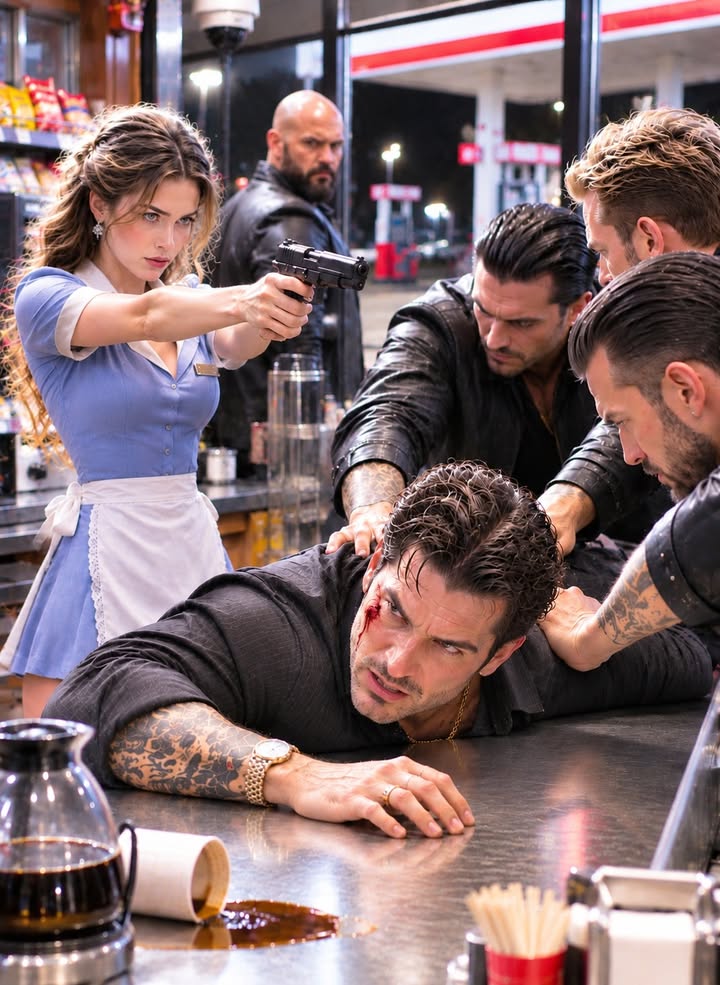
Part 4 – What the Case Preserved
“If I am unable to finish this…”
The words seemed to draw the warmth from the room.
My father’s handwriting ran across the exposed strip of paper, steady and unmistakable, though the ink had faded to the color of old tea.
Beneath it, the next line waited in the light.
“Rafael was framed by someone inside the department.”
Carmine did not move.
The leader held the case in both hands, and for the first time since he had entered the station, he looked less certain than angry.
“Keep reading,” he said.
“I can’t,” I replied.
My voice sounded small against the hum of the lights.
“Not without opening it properly.”
The leader glanced at the exposed note.
“It’s already open.”
“Not all the way.”
Carmine’s eyes stayed on the writing.
“Your father sealed it,” he said. “We should know what else he wrote.”
The leader gave a short, impatient exhale.
“We don’t have time to be careful.”
“We have no idea how old this paper is,” I said. “If you tear it, we may lose something important.”
He looked at me, then down at the case.
The gray-bearded trucker shifted his chin against his sleeve.
“She’s right,” he said. “Old paper can fall apart.”
The leader studied the edges of the note.
His impatience gave way, a little, to caution.
“Can you open it without damaging it?”
“I can try.”
He set the case on the counter but kept one hand on it.
I did not reach for the note.
“May I?”
After a pause, he removed his hand.
I lifted the paper from the tin with both hands, careful not to pinch the softened fold.
The note opened in three uneven sections.
The first bore only the line we had already seen.
The second contained a short paragraph.
“Rafael Zito did not arrange the meeting described in the report.”
I read the words aloud, and Carmine’s gaze lifted from the paper.
My throat tightened.
The note continued.
“He was trying to leave the organization and was carrying information that could expose the men who had used the department as cover.”
The leader leaned closer.
“Which men?”
The next line was crossed out, not with anger, but with a single careful stroke.
Beneath it, my father had written, “The original records and the photograph with Voss will identify them.”
The room seemed to narrow around the open note.
I glanced at the faded photograph beside it.
My father stood at the entrance of the brick building with Daniel Voss, both of them looking toward the camera as if someone had caught them between words.
The photograph had not been kept as a memento.
It was evidence.
Carmine’s mouth had gone tense.
“Did your father know Rafael was trying to leave?” he asked.
“I don’t know,” I whispered.
“Did he know the report was false?”
“I don’t know.”
The words broke in my mouth this time.
For years I had lived beside the edges of my father’s work, close enough to notice when a case followed him home, but not close enough to know what it meant.
Now his handwriting was opening one old silence after another.
“He wrote that Rafael was framed,” Carmine said. “He knew.”
“He suspected it,” the leader corrected.
“You don’t know that.”
“Neither do you.”
I looked down at the note again.
The next lines were cramped, as if my father had been writing in haste.
“Voss kept a duplicate record after the file was altered.”
“The report was changed?” I asked.
The leader’s expression sharpened.
Carmine answered before he could.
“That was what I was told.”
“By the person who contacted you?”
“Yes.”
“What else did they say?”
“That Voss had preserved the original statements and a record of the payments made to the detective assigned to Rafael’s case.”
The leader’s gaze shifted to the phone in his pocket.
“Payments from whom?”
“I don’t know.”
“Did they give you a name?”
“No.”
The leader looked back at the note.
“Your father didn’t write one either.”
“There may be more,” I said.
I smoothed the second fold with the side of my finger.
The paper was fragile but holding.
A final section appeared beneath the first two.
“Voss feared the deputy who took his place had already been compromised.”
My eyes stopped on the sentence.
The leader leaned over my shoulder.
“Who took his place?”
There was no answer on the page.
The sentence ended there, followed by a blank space and my father’s signature.
The last paragraph had been written separately, at a slight angle.
“If this reaches Gemma, I failed to finish what I promised Daniel.”
I stopped breathing for a moment.
The station’s lights buzzed overhead.
The rain tapped the windows.
Somewhere behind us, my manager shifted his weight in the office doorway.
I read the sentence again.
“If this reaches Gemma…”
My father had written my name.
I had been part of the possibility he was trying to prepare for.
“He knew I might find it,” I said.
No one answered.
“He knew this could reach me.”
Carmine’s expression softened, but he did not try to comfort me with words he could not support.
The leader looked at the paper as though it had become more dangerous than the people in the room.
“Your father promised Voss he’d finish the case,” he said.
“It appears so.”
“Why didn’t he?”
“I don’t know.”
“Was he sick then?”
“He became ill later.”
The answer came too quickly.
I corrected myself.
“I don’t know when he wrote this. The ink could be older than the note, or the other way around.”
The uncertainty was unbearable, but it was honest.
Carmine looked at the photograph.
“Voss trusted him enough to leave this with him.”
“Maybe,” I said.
“Or your father took it from him.”
The leader’s eyes turned toward Carmine.
“Why would he?”
“I don’t know.”
“Then don’t fill the gaps with guesses.”
Carmine accepted the rebuke without argument.
I appreciated that he did not pretend the note had solved everything.
It had only moved the mystery into my family.
The manager stood by the open office door, one hand braced against the frame.
“I’m sorry, Gemma,” he said.
I kept my attention on the note.
“I heard you.”
“I should have opened the door sooner.”
“You should have called sooner.”
“Yes.”
“Why didn’t you?”
He looked down at the floor.
“I panicked.”
“So did I.”
“I know.”
“No,” I said, finally looking at him. “You don’t.”
His face reddened, but he did not defend himself.
“I’m not asking you to forgive me,” he said.
“Good.”
The words were hard, but they did not feel cruel.
I had no room left to make his shame easier for him.
The gray-bearded trucker spoke gently.
“Maybe the important thing is he called when he could.”
I looked at him.
“Maybe.”
He had no reason to protect my manager, yet he was trying to keep the room from breaking into smaller pieces.
The other trucker raised his head.
“Are the police coming?”
“My manager said he called,” I replied.
The leader’s eyes moved to the window.
“Then we don’t know who’s coming.”
“We know someone was called,” the trucker said.
“Those aren’t always the same thing,” the leader answered.
The gray-bearded man made no reply, but his hands stayed visible.
I looked at the note again.
The words had altered the past, but they had not made it simpler.
My father had not abandoned the case.
He had not forgotten Rafael.
He had promised a missing deputy that he would finish what they had started.
Then something had stopped him.
Illness, fear, evidence he could not safely use, or a failure of judgment I could not yet understand.
“Why did you believe your brother had been framed?” I asked Carmine.
He turned toward me.
“Because Rafael had been trying to leave.”
“You already said that.”
“He called me the night before he disappeared. He told me he had something important to say.”
“What did he say?”
“That he couldn’t keep living the way we had.”
Carmine paused, and the years between that call and this room seemed to gather in his face.
“He asked me to meet him the next day. I said I would.”
“Did you?”
“No.”
The answer was quiet.
“Why not?”
“Someone had called me about a problem at one of my businesses. I thought I could settle it quickly, then meet him afterward.”
He looked down at his hands.
“By the time I got there, the police had already found him.”
The leader watched him, unreadable.
I could not tell whether Carmine had shared the truth because he wanted me to understand his brother, or because the note had made silence impossible.
Perhaps those motives were not separate.
“You thought he wanted to tell you he was leaving,” I said.
“I hoped he did.”
“And now?”
“Now I think he was trying to give me the chance to help him.”
The words settled between us.
A man could spend years believing he had been denied a brother’s last chance because of a frame-up, only to discover he had missed the meeting through his own choices.
The note did not erase that regret.
It only gave it a different shape.
“Did you blame yourself?” I asked.
“For a long time.”
Carmine looked at the paper.
“I also blamed the sheriff who handled the case.”
“My father.”
“Yes.”
“And now you know he tried to finish it.”
“I know he wrote that he promised he would.”
“That isn’t the same as finishing it.”
“No,” he said. “It isn’t.”
I studied his face.
He had come to the station expecting evidence that might clear his brother, though he had not known who would give it to him.
He had also come carrying a case that linked my father to a deputy who vanished.
He had no reason to trust me.
I had even less reason to trust him.
But there was something honest in the way he let the unanswered parts remain unanswered.
The leader closed the metal case again.
“Whatever your father believed, the note names no one.”
“The original records might,” I said.
“Those records could have been destroyed.”
“Then the photograph and the note still matter.”
“They’re not enough to prove a conspiracy.”
“I didn’t say they were.”
“Good.”
The leader slid the case toward himself.
Carmine moved at last, but only enough to put his hand flat on the counter beside it.
“Leave it here.”
The leader’s gaze settled on his hand.
“You don’t get to decide that.”
“Neither do you.”
“Carmine,” I said.
He looked at me.
“Don’t make this worse.”
“I’m not.”
“You’re both treating the case like it belongs to you.”
“I’m treating it like evidence.”
The leader’s voice was controlled, but beneath it lay a strain I had not noticed before.
“Evidence disappears when it gets into the wrong hands.”
“Then it should go to the right ones,” I replied.
“And who decides who those are?”
The question held more weight than I expected.
The old report had been altered by someone inside the department.
My father’s note said a detective had been paid.
The deputy who preserved the duplicate record had vanished.
Even if the police arrived, handing the case to the first uniformed officer might repeat the same mistake.
But keeping it from the authorities could destroy the chance to investigate it properly.
I thought of my father’s handwriting: “If this reaches Gemma…”
He had not written what he wanted me to do.
He had not left me a clean instruction, only the proof that he had tried.
“I don’t know yet,” I said.
The leader’s mouth tightened.
“At least you’re honest.”
“You should try it sometime.”
Carmine glanced toward me, and for a second I saw a trace of amusement in his eyes.
It disappeared quickly.
The store alarm panel remained within reach behind the counter.
I had not touched it.
The red cover reflected the overhead lights, bright as a warning.
The leader noticed where my gaze had gone.
“Don’t.”
“I haven’t.”
“But you’re thinking about it.”
“I’m thinking about a lot of things.”
“Then think about what happens if the alarm brings the wrong people.”
“If nobody calls, that’s a choice too.”
The manager stepped farther into the doorway.
“The call went through,” he said. “They told me help was on the way.”
The leader’s attention snapped to him.
“How long ago?”
“I don’t know. A few minutes.”
“Did they ask for details?”
“Yes.”
“And you gave them?”
“I told them there were men with guns.”
The room went silent.
My manager looked sick with fear.
The leader did not move toward him.
He simply put the phone away and lowered his gaze to the metal case.
“You should have mentioned that sooner,” he said.
“I know.”
“Did they say who was coming?”
“No.”
The leader looked toward the highway.
“Then we don’t know whether it’s a patrol car or someone from the department.”
“Emergency services,” I said. “They’ll send whoever is available.”
“Someone who might know your father’s old case?”
“Not everyone in the department is corrupt.”
“Not everyone,” he agreed.
It was the first time I heard him make room for that possibility.
The gray-bearded trucker lifted his head.
“My phone’s in my pocket,” he said. “If you need another call.”
“No one’s touching it,” the leader replied.
“I’m offering.”
“I heard you.”
The trucker gave a slow nod and fell quiet.
Carmine looked toward the case.
“Voss kept a duplicate record,” he said. “If the original file was altered, that may be the only copy.”
“Where would he keep it?” I asked.
“He didn’t tell me.”
“Could the photograph point us somewhere?”
“Maybe.”
The leader tapped the edge of the note.
“Or it could be bait.”
Carmine looked at him.
“The message bringing you here could be a trap,” I said. “The case itself might still be real.”
“That distinction doesn’t make it safe.”
“No, it doesn’t.”
I folded the note carefully along its old creases.
The paper felt light in my hands, but the words pressed hard against my thoughts.
My father had kept this secret from me.
He might have believed he was protecting me.
He might have been afraid that I would ask questions he could not answer.
He might have had no chance to tell me before illness took his strength and changed the shape of our lives.
I could not know which explanation was true.
I could know that his last years had been full of unfinished things.
The leader held out his hand for the note.
I hesitated.
“Give it to me.”
“Why?”
“Because I’m leaving with the case.”
“No.”
His eyes settled on mine.
“Gemma, I don’t want you hurt.”
“That doesn’t mean you get to take it.”
“I’m not asking your permission.”
Carmine’s voice stayed calm.
“You should listen to her.”
The leader gave him a look.
“Why? Because you suddenly trust her?”
“No.”
“Then why?”
“Because she’s right.”
The answer surprised him.
It surprised me too.
Carmine continued.
“If the evidence is real, we should preserve it. If it’s false, taking it away only makes us look guilty.”
“You already look guilty,” the leader said.
“I know.”
The room grew still.
The leader seemed to weigh the choices, the words in the note, the time, and the uncertainty outside.
Then a faint sound came from the road.
A siren, distant enough to be difficult to place.
The gray-bearded trucker shut his eyes for a moment, then opened them again.
“Help,” he whispered.
The leader looked through the window.
The sound faded, then returned, moving closer.
He placed the metal case on the counter.
Not in front of me.
Not in front of Carmine.
Exactly between us.
“Don’t touch it,” he said.
No one moved.
The siren grew louder.
My manager slipped back behind the office door, though this time he left it open.
I wanted to tell him to stay where he was, but my attention had turned to the case.
The note lay beside it.
The photograph was faceup.
My father’s younger face looked out at me from another life, certain and tired at once.
Then something shifted beneath the photograph.
A second piece of paper had been caught in the lining of the case, pressed flat against the metal.
It was so thin that I had mistaken it for part of the lining.
I pointed.
“There’s something else.”
The leader looked down.
Carmine leaned forward but kept his hands on the counter.
The note beneath the photograph bore a different kind of writing, smaller and more hurried than my father’s.
I knew the signature before I could fully read it.
My father’s initials were not at the bottom.
The last line was signed with a name Carmine recognized.
He stared at it, and the color drained from his face.
“What is it?” I asked.
He swallowed.
“Voss.”
The siren reached the edge of the lot.
The leader lifted the hidden note, turning it carefully toward the light.
At the top, beneath the date, were six words.
“Boon, the deputy who replaced me is…”
**–END OF PART 4–CLICK “NEXT” AT THE BOTTOM OF THE PAGE TO CONTINUE READING**
* * *
[PREVIOUS: PART 3](https://puretales.idolsgift.com/blog/part-3-the-name-i-remembered-035) | [NEXT: PART 5](https://puretales.idolsgift.com/blog/part-5-the-name-i-remembered-035)
✓ Lynn R. Adams
Part 4 – What the Case Preserved “If I am unable to finish this…” The words seemed to draw the warmth from the room. My father’s handwriting ran across the exposed strip of paper, steady and unmist…