PART 4: The Name Hidden in the Recording 008
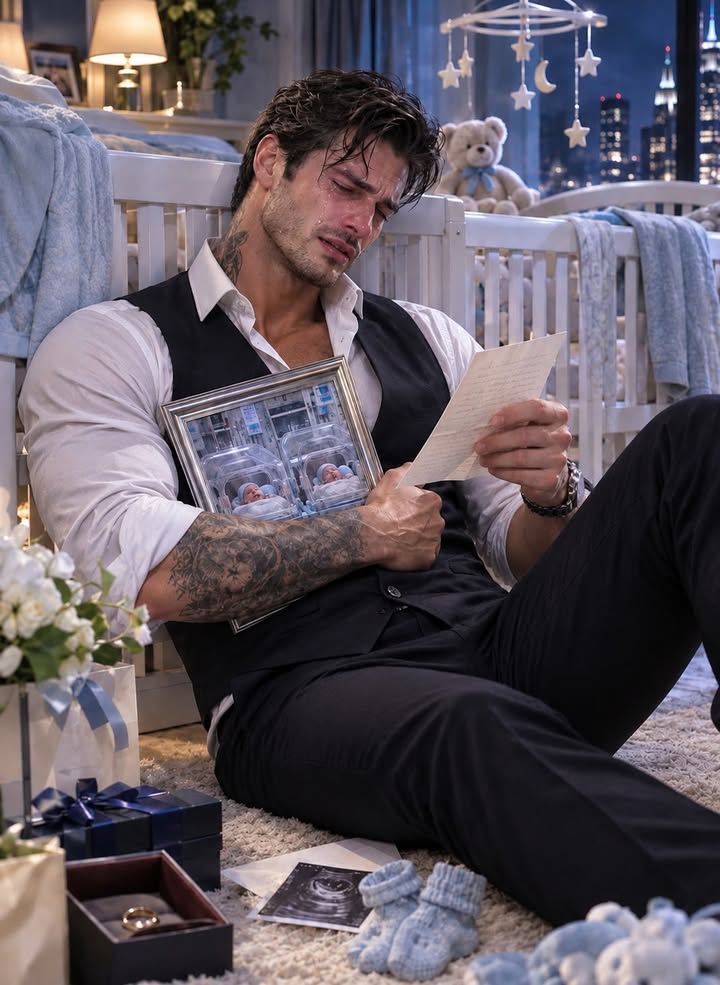
Part 4 – The Decision Before California
The question in Amelia’s handwriting stayed with me long after Nia had returned to her desk.
Did he ever mean the promise he made about our family?
I could have answered easily once.
I would have said yes, because I had meant it when I made it.
But meaning a promise at the beginning was not the same as keeping it when life became difficult, or busy, or inconvenient.
I had confused the sincerity of my intentions with the faithfulness of my actions.
That evening, I placed the social worker’s note beside the necklace receipt and Madison’s letter.
The three pieces of paper formed a small, unflattering history: Amelia had needed help and feared the company would expose her; Madison had known I was ignoring calls; and I had bought her a diamond necklace while my wife was asking me to come home.
None of it was new.
Yet together, they made it harder to pretend the story had begun in California.
At the next pediatric appointment, I arrived on time and waited where Amelia had asked me to wait.
She came with Sofia and the twins, carrying the same worn canvas bag she always brought, its pockets filled with bottles, spare clothes, and folded appointment notes.
I offered to take the bag.
“No, thank you,” she said.
I let my hand fall.
The appointment was brief, and the doctor’s report was encouraging.
Caleb had gained weight steadily, and Grace’s breathing had improved enough that the next checkup could be several weeks away.
Amelia listened closely, asking questions I would not have known to ask.
I wrote down the answers.
When the doctor left, Amelia checked the twins’ blankets and tucked a loose corner around Grace’s feet.
“You remembered the feeding schedule,” she said, glancing at my notes.
“I’ve been practicing.”
“Practicing what?”
“Reading the instructions instead of assuming I’ll remember later.”
A small smile touched her face, then passed.
“That’s sensible.”
I wanted to tell her how much I had learned since the last appointment, but I knew that learning the twins’ routines was not a favor to her.
It was the least I owed them.
Outside the examination room, Sofia received a call and stepped into the hall.
Amelia remained beside the window, watching the rain bead against the glass.
“I saw the note from the social worker,” I said.
Her face did not change.
“Nia showed you.”
“She thought I should know.”
“She shouldn’t have.”
“I’m sorry.”
Amelia turned toward me.
“You keep saying that when someone tells you something painful.”
“Because I am sorry.”
“I believe you’re sorry.”
The words should have comforted me, but they did not.
“Why didn’t you tell me you felt watched by the company?” I asked.
“Would it have changed anything?”
“I would have wanted to fix it.”
“That isn’t what I asked.”
I looked down at my notes.
“Maybe not.”
“You had built a life where every problem had a person assigned to solve it,” she said. “If I told you something was wrong, you might have called three people and changed the policy. But I needed you to notice that I was lonely before I had to explain it like a business problem.”
I looked back at her.
“I should have noticed.”
“Yes.”
“I should have asked.”
“Yes.”
“I don’t know what to say.”
“You don’t have to say anything.”
The room seemed smaller than it had a moment earlier.
I had wanted the note to explain her refusal, as if knowing the reason would make the past more manageable.
Instead, it made the distance between us clearer.
Amelia had not rejected help because she was proud.
She had rejected it because the help came from a world I had built around her without asking whether she felt safe inside it.
“Was the social worker kind to you?” I asked.
“She was.”
“Did she pressure you?”
“No.”
“Then why—”
“Because I didn’t want the people who worked for you to know what was happening in my body, in my home, or in my marriage.”
Her voice remained calm.
That calm made me hear the effort beneath it.
“You deserved privacy,” I said.
“I did.”
“I’m sorry I made you feel that you had to protect it from me.”
She looked away again.
“I didn’t feel I had to protect it from you at first.”
The sentence settled between us.
I waited, though every part of me wanted to fill the silence.
“When did that change?” I asked.
Amelia’s fingers tightened around the handle of her bag.
“Before you went to California.”
I felt my breath catch.
“Before I left?”
“Yes.”
Sofia returned then, and Amelia stopped speaking.
She lifted Grace from the carrier, checked her position against her shoulder, and began gathering the things that had been spread across the chair.
I helped only when she asked me to hold a folder.
At the entrance, she said she would send the next appointment time through Sofia.
I told her I would be there.
She nodded, and the three of them left.
I remained under the clinic’s awning until their car had turned the corner.
That night, I called Sofia.
“I need to understand what Amelia meant,” I said.
“You need to understand that she may not want to explain it to you.”
“I know.”
“Do you?”
“I’m not asking you to tell me anything she hasn’t allowed you to share.”
Sofia was quiet for a moment.
“Amelia has been carrying a sealed note since before the twins were born.”
“Is it the note in the photograph?”
“No. That photograph was something she wrote later, after she had already made her decision.”
I looked at the dark window beside my desk.
“Does she want me to read it?”
“Not yet.”
“Then I won’t ask.”
“She told me I could tell you that it exists.”
“Why?”
“Because she wants you to stop treating California as the beginning of the story.”
I heard the phrase in Sofia’s voice and understood its weight.
“Do you know what it says?”
“Yes.”
“Can you tell me?”
“I could,” she said. “But it belongs to Amelia.”
I closed my eyes.
“I understand.”
“Do you?”
“I’m beginning to.”
Sofia gave a quiet breath that might have been a sigh.
“She will decide whether you see it.”
The next morning, I returned the social worker’s note to Nia and asked her to keep the review of the family-support program confidential.
The changes could proceed without Amelia’s name or circumstances being discussed.
It mattered that the company make its support easier to accept.
It mattered more that I not use the change as a way to ask Amelia for praise.
For the rest of the week, I kept my promises in small ways.
I arrived on time when Sofia asked me to drop off a box of diapers and formula at her apartment.
I did not ask whether Amelia was there.
I sent the payment for the twins’ uncovered medical expenses to the account her attorney had provided, without adding a note or attaching a message.
I read the care instructions Sofia had copied for me, then read them again until I could follow them without reaching for my phone.
None of this brought me closer to Amelia.
That was the point.
On Sunday afternoon, Sofia called and asked me to meet her at the café near Union Square.
When I arrived, she had a small envelope in front of her.
She did not offer it to me right away.
“Amelia says you’ve been following the boundaries,” she said.
“I’m trying.”
“She says you haven’t used the children’s appointments to ask for time with her.”
“I haven’t.”
“She noticed that you paid the medical expenses through the arrangement her lawyer set up.”
“I didn’t want her to have to chase anyone.”
Sofia nodded, but her expression remained serious.
“She also said you’ve stopped asking me to tell you where she is.”
“I don’t want to make you choose between being her friend and answering my questions.”
“That matters.”
She rested two fingers on the envelope.
“Amelia wrote this before the emergency C-section.”
I stared at the paper.
The envelope was sealed, and my name was written across the front in Amelia’s familiar hand.
“Why is she giving it to me now?”
“She says you can read it here, with me present, or you can give it back unopened.”
“Does she want me to read it?”
“She wants you to have the choice.”
I did not reach for it.
“What happens if I don’t?”
“Then I return it to her.”
I thought of the sentence in the photograph.
I had already decided before California.
I had spent weeks trying to imagine what I might have missed, but imagination offered too many comfortable possibilities.
Perhaps Amelia had been afraid.
Perhaps she had been angry.
Perhaps she had planned to leave only because she thought I would never come home.
Any of those explanations might have softened my guilt by making my absence the cause.
The sealed note offered no promise of softness.
“Will you stay?” I asked.
“I will.”
I took the envelope.
My fingers felt clumsy as I opened it.
Inside was a single sheet folded twice.
The date at the top was three days before my flight to California.
I recognized the day because it was the day Amelia had told me the doctor was worried about an early delivery.
The note began without greeting.
Harrison,
I have spent months trying to decide whether I am frightened because the pregnancy is difficult or because I no longer believe we are building the same life.
I read the lines slowly, hearing her voice in every careful sentence.
She wrote that she had loved me through the years when our future was uncertain.
She had believed that the company’s growth would give us more time together, but each new success had made me less available.
At first, she had told herself I was tired.
Then she had told herself I was under pressure.
Then she had told herself that a marriage could survive on old promises while one person kept waiting for the other to return to them.
The writing grew less even near the bottom of the page.
I have decided to leave when I am strong enough and the babies are safe enough.
I am not making this decision because I think you will go to California.
I am making it because I have been leaving in my heart for a long time, and I can no longer pretend that I am waiting for you to come back to me.
The room seemed to tilt.
Sofia did not speak.
I read the final lines.
If you are away when they arrive, I will not tell them that you chose the work trip over us.
I will tell them the truth when they are old enough to understand that someone can be loved and still fail to show up.
I hope I can give them a kinder beginning than the one I have had.
I folded the paper along its creases, then unfolded it again because my hands would not settle.
For weeks, I had carried the thought that California had ended my marriage.
I had believed that my absence had taken something intact and broken it.
Amelia’s letter told me the marriage had already been failing, quietly, through missed evenings and unanswered questions and years of choosing everything urgent over everything intimate.
The trip had not created her decision.
It had confirmed it.
I lowered the page.
“She had already decided,” I said.
“Yes.”
“She was going to leave even if I had come home when she asked.”
Sofia’s eyes were steady.
“She had decided she could not keep living as she was.”
I looked down at the letter.
“But she was still asking me to come home.”
“She was asking you to show her whether the marriage still mattered to you,” Sofia said. “That wasn’t a test. It was the last honest request she had left.”
The word test had been waiting in my mind, ready to turn Amelia’s plea into something I could resent.
I let it go.
“I thought the babies would bring us back together,” I said.
“Did you?”
“I thought if I came home and held them, I could become the person I’d promised to be.”
Sofia leaned forward.
“A baby can’t repair a marriage for the people who had it.”
“I know that now.”
“She doesn’t need you to become the man she married in one dramatic moment.”
“I know.”
“She needs you to be honest about the man you’ve been.”
I pressed the folded note against the table.
“I don’t know how to make this right.”
“You may not be able to make the marriage right,” Sofia said. “That isn’t the same as having no responsibilities.”
“I want to be their father.”
“Then be their father without making Amelia responsible for your hope.”
I nodded.
The answer hurt because I could not argue with it.
Sofia picked up her cup and held it without drinking.
“She still loves the person you were when you both believed the promise,” she said. “That’s what makes this hard.”
I looked up.
“Does she still love me?”
“She said she loves who you used to be.”
I waited.
“She also said she doesn’t trust the person you became.”
The distinction was gentle, and more painful than anger would have been.
I folded the letter once more.
“Can I keep it?”
“She said you could.”
I slid it into my coat pocket, taking care not to crease the page further.
Outside, the late afternoon light had faded into a cool blue that made the shop windows seem warmer than the street.
I walked home instead of calling the car.
For the first time, I understood that there was no single moment I could revisit and correct.
There was no call I could make now that would erase the calls I had ignored.
There was no sentence I could say that would return Amelia’s trust to her.
The past was not a locked door with one missing key.
It was a path of small choices, and I had walked away from her long before my flight to California.
When I reached the mansion, I found an email waiting from my chief operating officer.
The board had moved up the emergency meeting.
A major system failure at one of our largest clients had put the company under intense pressure, and the board wanted me in New York immediately to lead the response.
The crisis had already cost the company a key contract.
If it worsened, it could put thousands of employees’ jobs at risk.
My chief operating officer had attached the board’s demand: I was expected at headquarters before dawn.
I read the message twice.
Then Sofia’s phone number appeared on my screen.
“Amelia needs you at the hospital tomorrow morning,” she said without greeting. “There’s a decision about the twins, and the specialist wants both parents there.”
“What decision?”
“She’ll explain it herself.”
The call ended.
I stood in the silent hall with Amelia’s letter in one hand and the board’s message glowing on my phone.
For the first time, the question was not whether I could go back and become the husband she had once trusted.
It was whether, when the next important moment arrived, I would choose to be present without asking what it would earn me.
**–END OF PART 4–CLICK “NEXT” AT THE BOTTOM OF THE PAGE TO CONTINUE READING**
* * *
[PREVIOUS: PART 3](https://puretales.idolsgift.com/blog/part-3-the-name-hidden-in-the-recording-008) | [NEXT: PART 5](https://puretales.idolsgift.com/blog/part-5-the-name-hidden-in-the-recording-008)
✓ Lynn R. Adams
Part 4 – The Decision Before California The question in Amelia’s handwriting stayed with me long after Nia had returned to her desk. Did he ever mean the promise he made about our family? I could h…